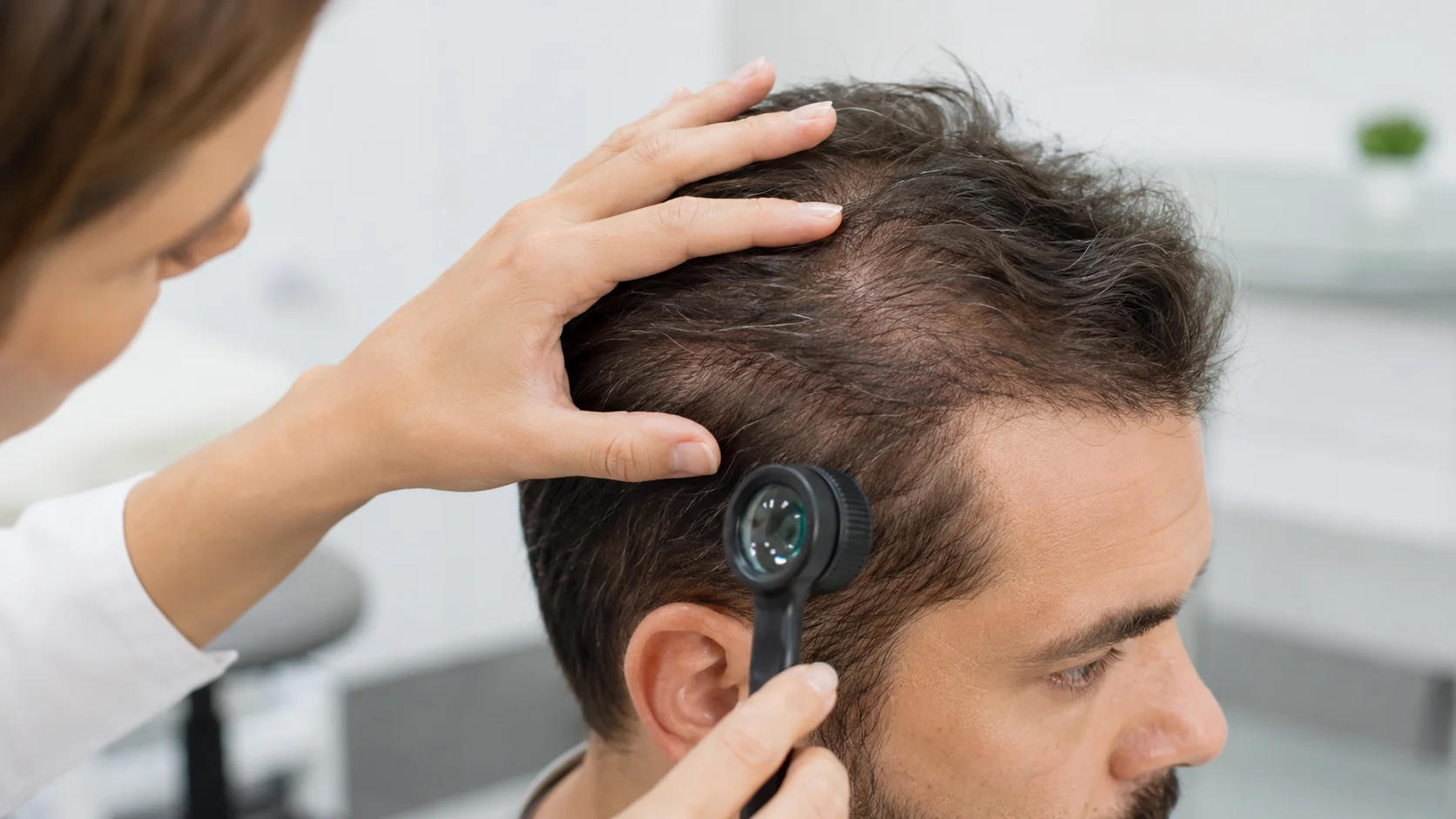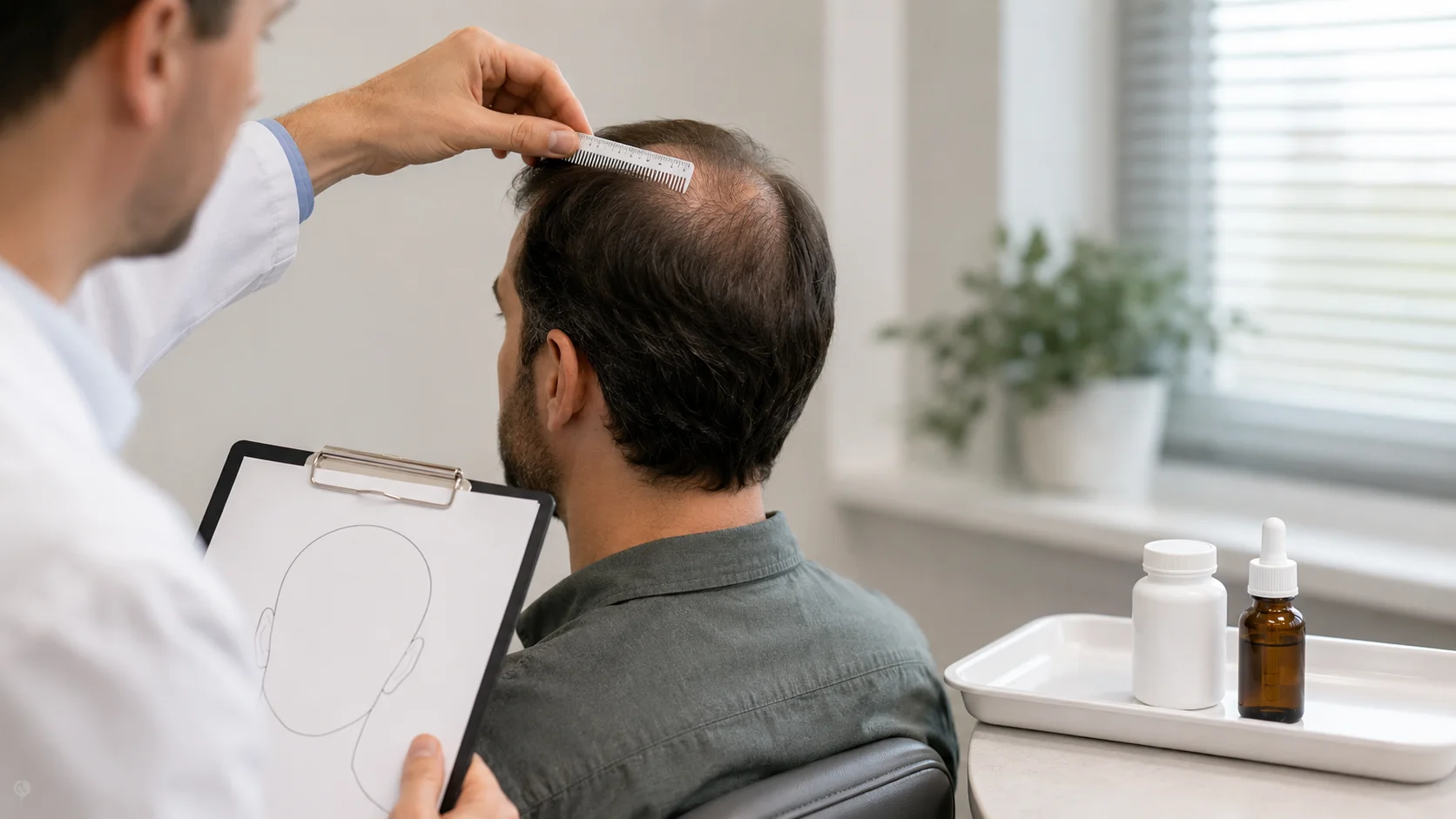
For many people with progressive androgenetic alopecia, medication should be evaluated before a hair transplant. Medical treatment may slow ongoing loss, preserve miniaturizing follicles, and reveal how stable the pattern is before permanent donor hair is used.
A transplant may be the more appropriate next step when hair loss is correctly diagnosed, expectations are realistic, donor supply is adequate, and medical treatment cannot create the desired coverage. The two approaches are not mutually exclusive. They often play complementary roles.
What Hair Loss Medications Can Do
Medications aim to preserve existing follicles, slow progression, and improve the performance of miniaturized hair. Depending on the person and diagnosis, options may include topical minoxidil, low-dose oral minoxidil, oral or topical finasteride, spironolactone, or other specialist-directed treatments.
The available choices differ by sex, age, health history, pregnancy potential, and regional approval. Not every medication is appropriate for every patient.
For androgenetic alopecia, medication may:
- Reduce or stabilize shedding
- Slow DHT-related miniaturization
- Improve hair diameter and density
- Preserve hair behind a receding hairline
- Reduce the apparent size of a thinning area
- Delay or reduce the scale of surgery
Medication cannot reliably revive every severely miniaturized follicle or rebuild an advanced hairline. Its greatest strength is often preservation.
What a Hair Transplant Can Do
A hair transplant relocates follicles from a donor region, usually the back and sides of the scalp, into thinning or bald areas. The transplanted follicles retain many characteristics of their donor origin and can provide long-lasting growth.
Surgery can create coverage where medical treatment is unlikely to restore enough hair. It can reshape a hairline, strengthen the frontal area, or add density to selected regions.
A transplant does not generate new follicles. Donor supply is limited, while the potential area of future loss may be large. Every surgical plan must therefore account for how the pattern could progress over many years.
Why Medication Often Comes First
Starting with appropriate medical treatment can provide valuable information before surgery.
It May Stabilize Active Loss
If surrounding native hair continues to miniaturize after a transplant, the transplanted hairs may remain while the untreated hair behind them disappears. This can produce thinning gaps or an isolated band of transplanted hair.
It Can Preserve Donor Resources
Improving or maintaining native density may reduce the number of grafts required. Donor hair saved during an early procedure remains available for future needs.
It Clarifies the Baseline
After several months of treatment, the patient and surgeon can better judge which areas remain cosmetically important and which have improved enough to avoid surgery.
It Tests Long-Term Commitment
Androgenetic alopecia is progressive. A person unwilling or unable to use medication may still be eligible for surgery, but the design must be more conservative because continued native hair loss is likely.
When Surgery Might Be Considered Without a Long Medication Trial
Medication-first is a useful principle, not an absolute rule. A transplant may still be considered when:
- The hair-loss pattern is established and relatively stable
- The bald area contains little responsive native hair
- Medications are contraindicated
- Adverse effects make treatment unacceptable
- The patient makes an informed decision not to use medication
- A stable scar, injury, or certain non-progressive conditions caused the loss
- Donor supply and long-term planning support surgery
Even then, the diagnosis must be secure. Surgery into an active inflammatory or scarring condition can fail and may worsen disease activity.
Age and Pattern Stability
There is no single perfect age for a transplant, but very young patients require particular caution. Early recession may progress into extensive future loss that cannot yet be predicted accurately.
A low, dense hairline designed for a young adult can consume substantial donor hair and become difficult to support later. A mature, conservative design usually ages better and preserves options.
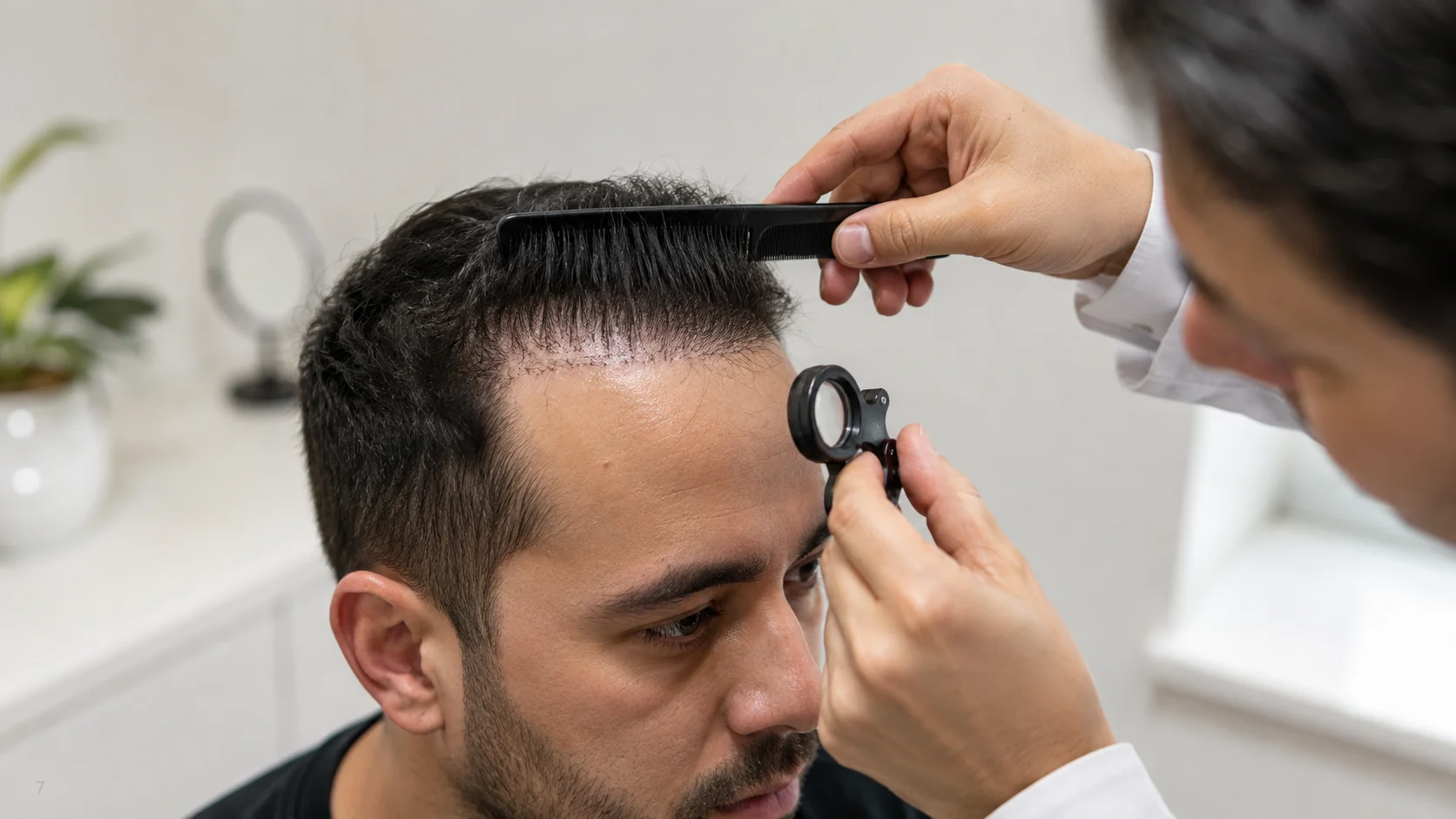
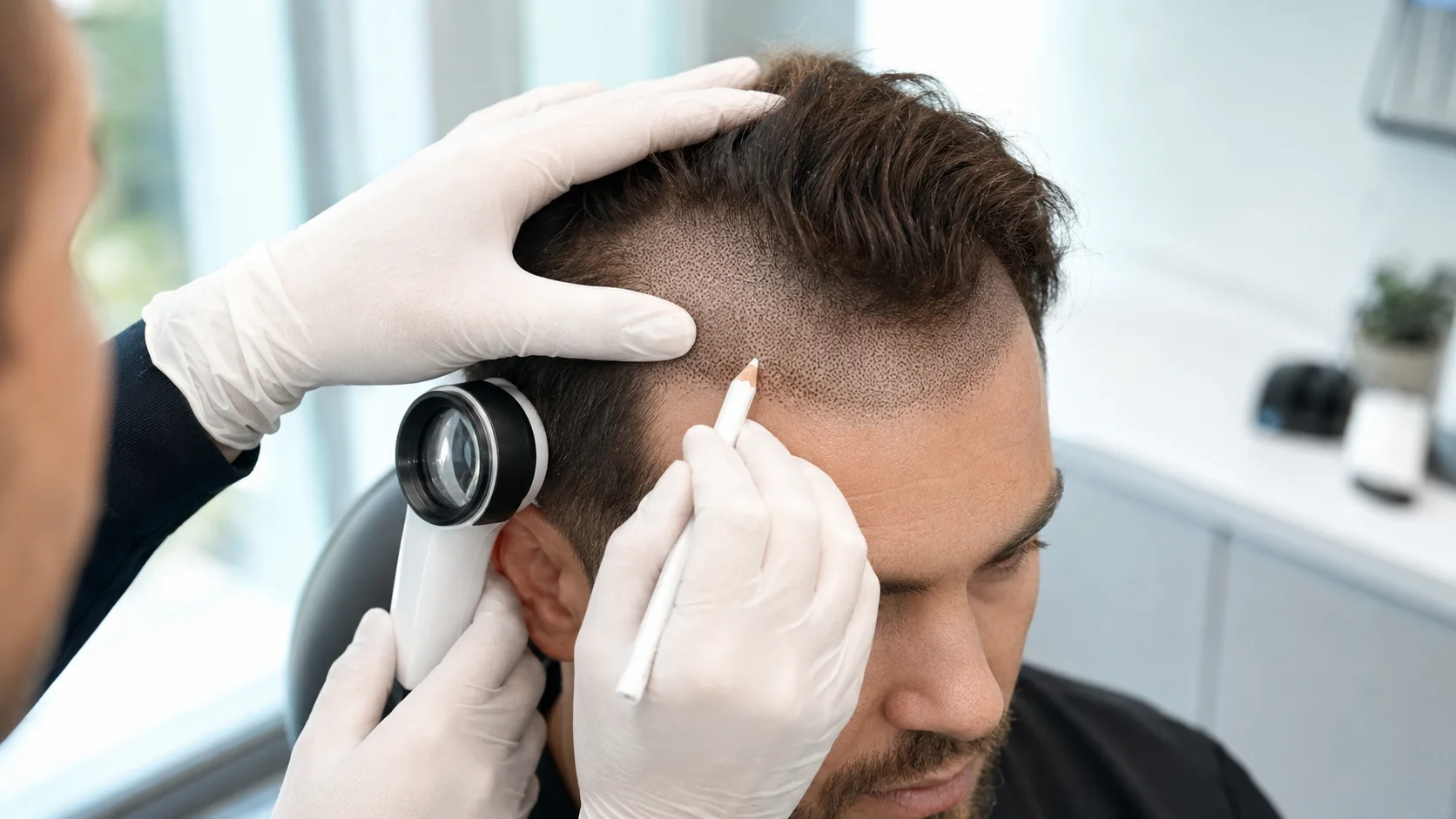
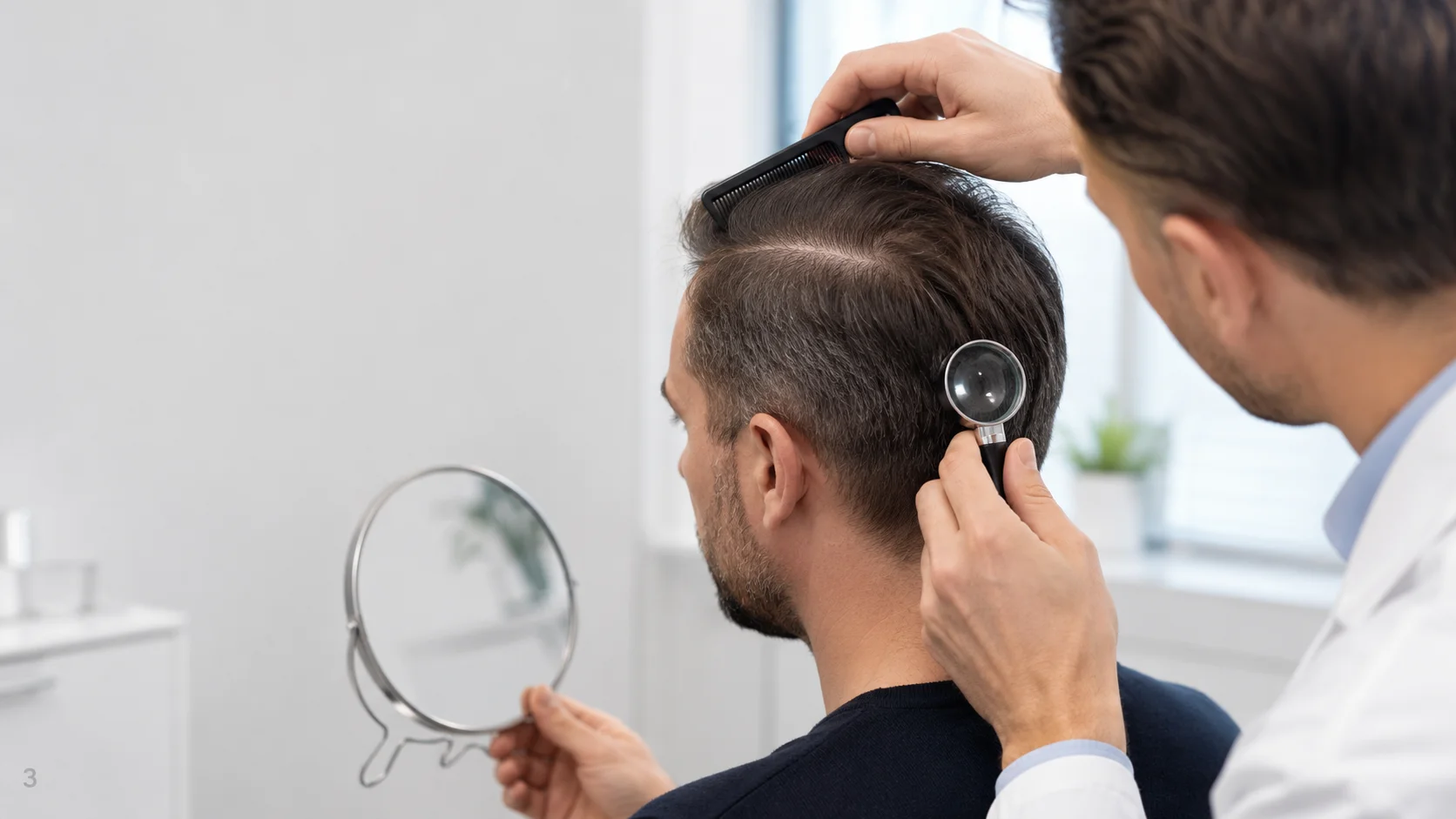
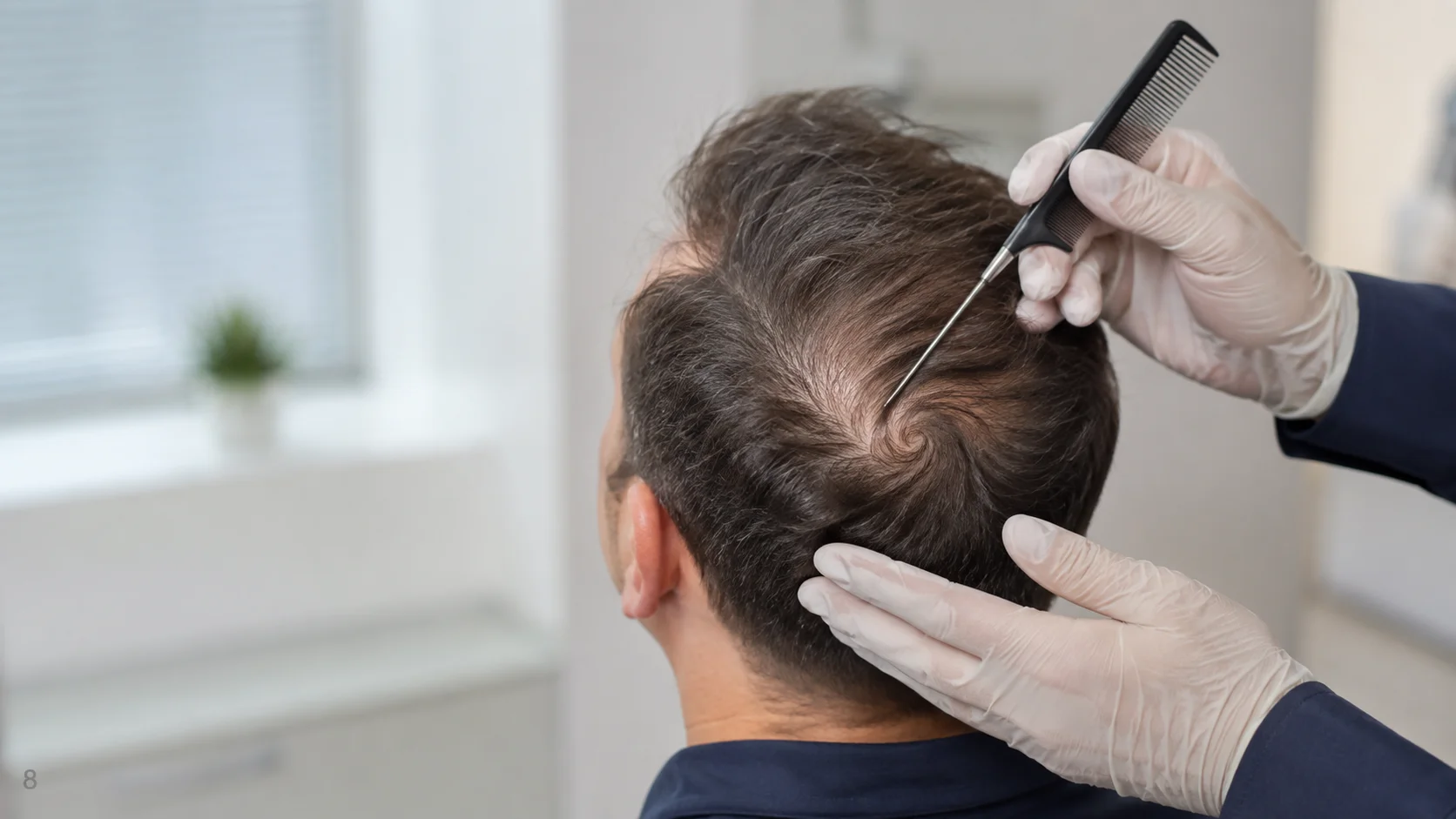
Pattern stability does not simply mean that the patient has stopped noticing shedding. Magnified scalp examination may reveal active miniaturization even when photographs appear unchanged.
Comparing Results
Medication Results
Medication preserves and improves existing follicles. Benefits can appear natural because the person’s own hair becomes thicker, but response varies and continued use is normally required.
Transplant Results
Surgery can place hair in areas that no longer respond adequately to medication. The result depends on graft survival, donor characteristics, hair caliber, curl, color contrast, scalp condition, surgical planning, and future loss.
A transplant creates an illusion of density rather than restoring the original number of follicles. Bright light, wet hair, and close inspection may still reveal scalp.
Comparing Timelines
Medical treatment commonly requires 6 to 12 months for a meaningful assessment. Some benefits continue developing beyond the first year.
A transplant also requires patience. Transplanted shafts often shed during the early recovery period. New growth usually begins gradually after several months, with maturation continuing for roughly a year or longer depending on the treated region and individual healing.
Surgery is not the faster option in the way many people assume. It creates a different kind of result.
Comparing Risks
Hair-loss medications have route-specific risks. Topical treatments may irritate the scalp, while oral medications can cause systemic adverse effects involving blood pressure, sexual function, mood, fluid balance, electrolytes, or pregnancy.
Transplant risks can include bleeding, infection, scarring, numbness, swelling, folliculitis, poor growth, unnatural direction, overharvesting, visible donor thinning, and temporary shock loss of nearby hair. Corrective surgery may consume additional donor follicles.
Neither approach is risk-free. The relevant question is whether the expected benefit justifies the specific risks for the individual.
Can Medication Improve a Transplant Result?
Medication cannot make transplanted grafts unlimited, but it can improve the overall appearance by protecting surrounding native hair.
In a controlled study, men who used finasteride around the time of transplantation showed better hair counts and photographic improvement in the surrounding scalp than those receiving placebo. The medication supported non-transplanted hair rather than replacing the surgical work.
Minoxidil may also be used before or after surgery in selected patients. Timing should be directed by the surgical team because application to healing skin can cause irritation and may complicate postoperative care.
Do Transplanted Hairs Need Medication?
Finasteride and minoxidil are usually prescribed primarily to support susceptible native hair, not because every transplanted follicle requires them to survive.
Donor-region follicles are generally more resistant to DHT, but “resistant” does not mean biologically indestructible. Donor thinning can occur with age or diffuse conditions, and poor donor selection can compromise longevity.
Stopping medication after surgery may allow untreated native hair to continue receding. The cosmetic result can deteriorate even when the transplanted grafts remain.
Women and the Medication-First Decision
Women may be good transplant candidates, but diffuse thinning presents special challenges. If the donor region is also miniaturizing, relocating those follicles may not provide durable coverage.
Medical assessment is particularly important to distinguish female pattern hair loss from telogen effluvium, hormonal conditions, traction, alopecia areata, and scarring disorders. Topical minoxidil commonly plays an early role, while oral medications require individualized consideration.
A transplant is more suitable when there is a stable pattern, adequate permanent donor density, and a defined area that can benefit from redistribution.
When Medication Is Unlikely to Be Enough
Surgery may become more relevant when:
- A hairline has receded substantially
- A bald area has few viable miniaturized follicles
- Medical treatment has stabilized loss but cannot restore the desired frame
- The frontal forelock needs structural reinforcement
- The diagnosis and future pattern are well understood
- Donor capacity can support both current and future needs
The goal is not to declare medication a failure. Medical stabilization and surgical redistribution solve different parts of the problem.
Questions to Answer Before Choosing
A useful evaluation should establish:
- What type of hair loss is present?
- Is it active, stable, or inflammatory?
- Are miniaturized follicles still responsive?
- Which medications are medically appropriate?
- What side effects or long-term commitments are acceptable?
- Is donor density genuinely sufficient?
- How might the pattern progress?
- Would the proposed hairline still look natural with future loss?
- Are expectations compatible with the available donor supply?
A responsible plan should remain credible under less favorable future scenarios, not only in ideal postoperative photographs.
Frequently Asked Questions
Should everyone use medication before a hair transplant?
No, but many people with progressive pattern hair loss benefit from evaluating medication first. Contraindications, side effects, stable bald areas, and informed preferences can justify a different sequence.
How long should medication be tried before surgery?
A period of approximately 6 to 12 months often provides useful information about stabilization and response. The appropriate duration depends on the diagnosis, severity, age, and urgency of the surgical plan.
Can a transplant replace finasteride or minoxidil?
A transplant can cover selected bald areas but does not stop native hair loss. Medication may still be recommended to protect susceptible hair around and behind the grafts.
Can medication eliminate the need for surgery?
Sometimes. If thinning is early and responsive, improved density or stabilization may meet the person’s goals. Advanced recession is less likely to be fully corrected medically.
What happens if hair loss continues after surgery?
Native hair may thin around transplanted follicles, creating gaps or an uneven appearance. Further medication, another procedure, or a revised hairstyle may be needed.
Is a hair transplant permanent?
Transplanted follicles can provide long-lasting growth, but the overall appearance is not guaranteed to remain unchanged. Native hair loss, donor aging, scalp disease, and surgical quality all influence longevity.
Which option is more cost-effective?
The answer depends on duration, response, medication costs, procedure size, and the possibility of future surgery. A transplant has a larger upfront cost, while medication creates an ongoing expense.
Choosing the Sequence, Not Just the Treatment
Medication is usually worth considering first when androgenetic alopecia is still active and miniaturized hair remains. It can preserve density, clarify the long-term pattern, and make surgical planning more efficient.
A hair transplant becomes more useful when stable or medically managed loss has left a structural cosmetic problem that medication is unlikely to solve. For many patients, the strongest strategy is not medication or surgery, but carefully timed use of both.
This content is for general informational purposes and does not replace individualized medical advice, diagnosis, or treatment.