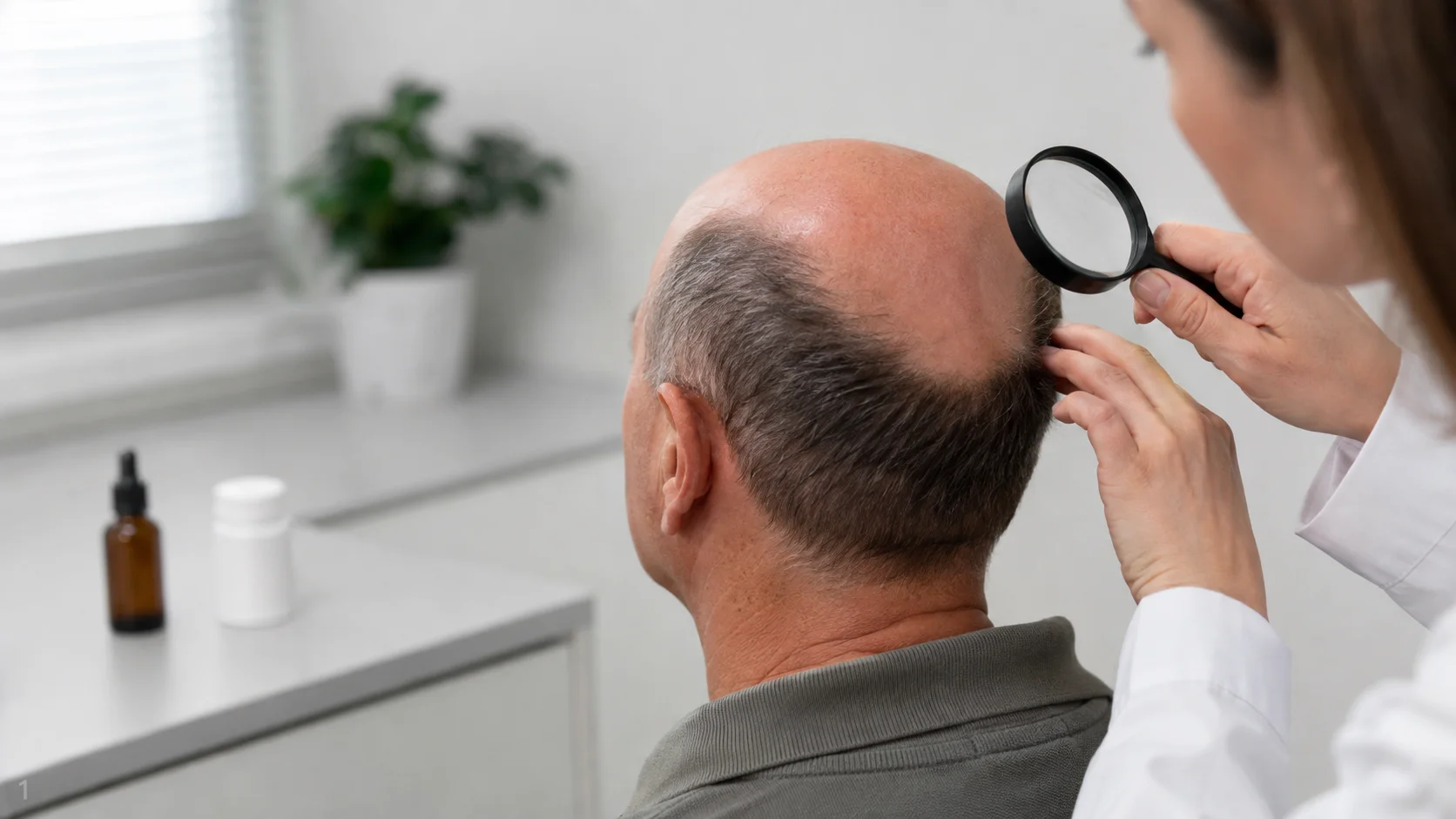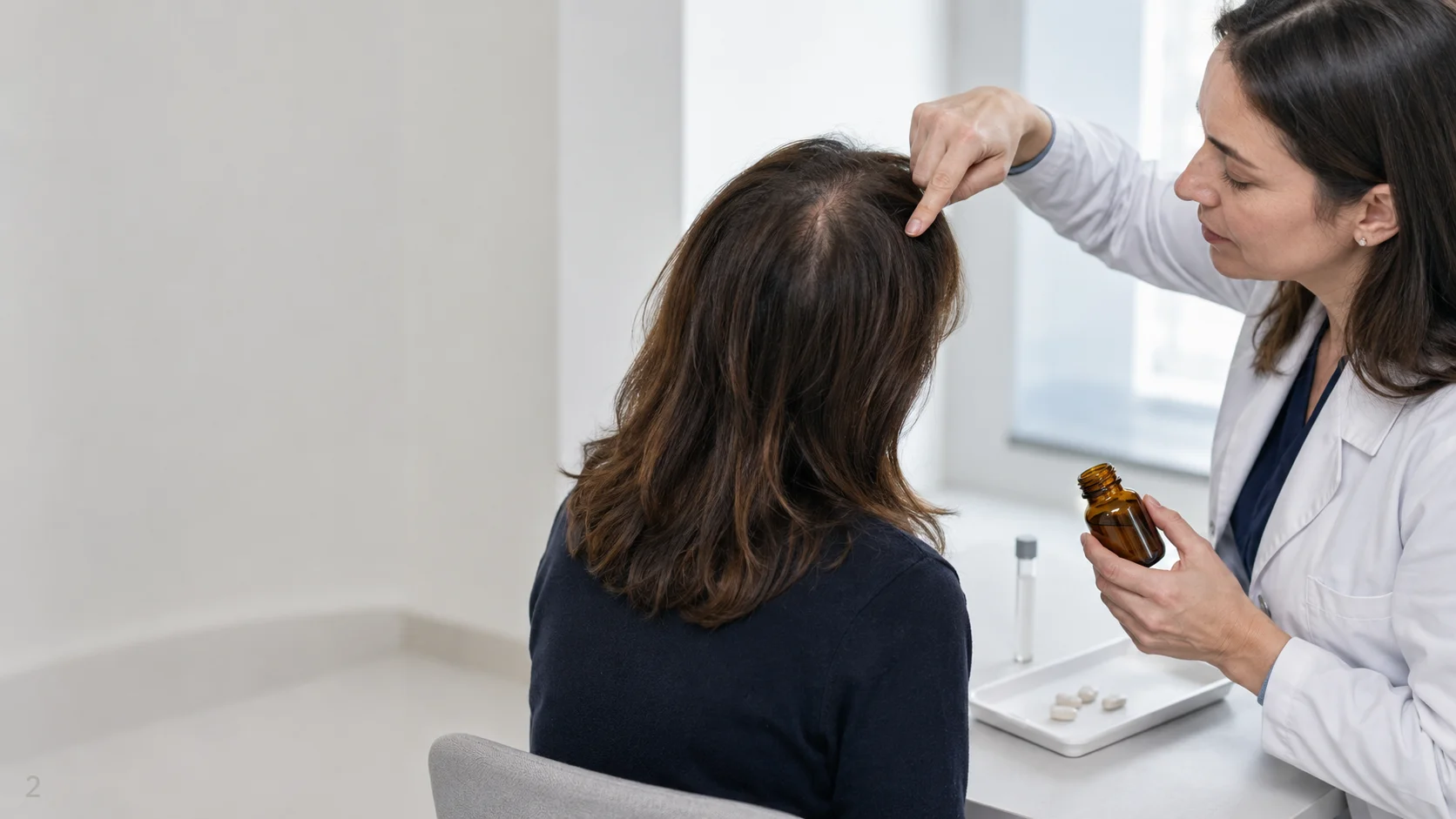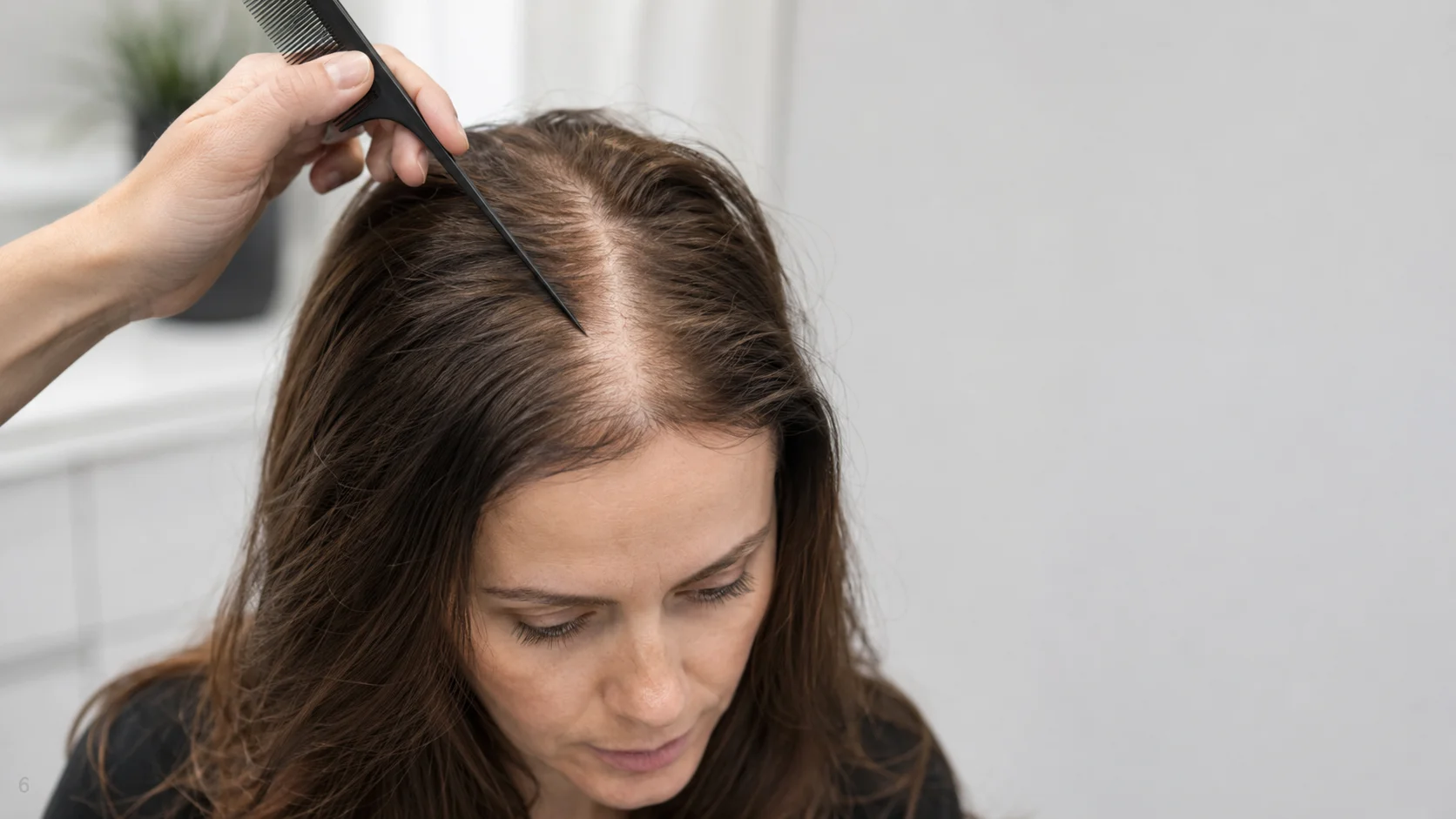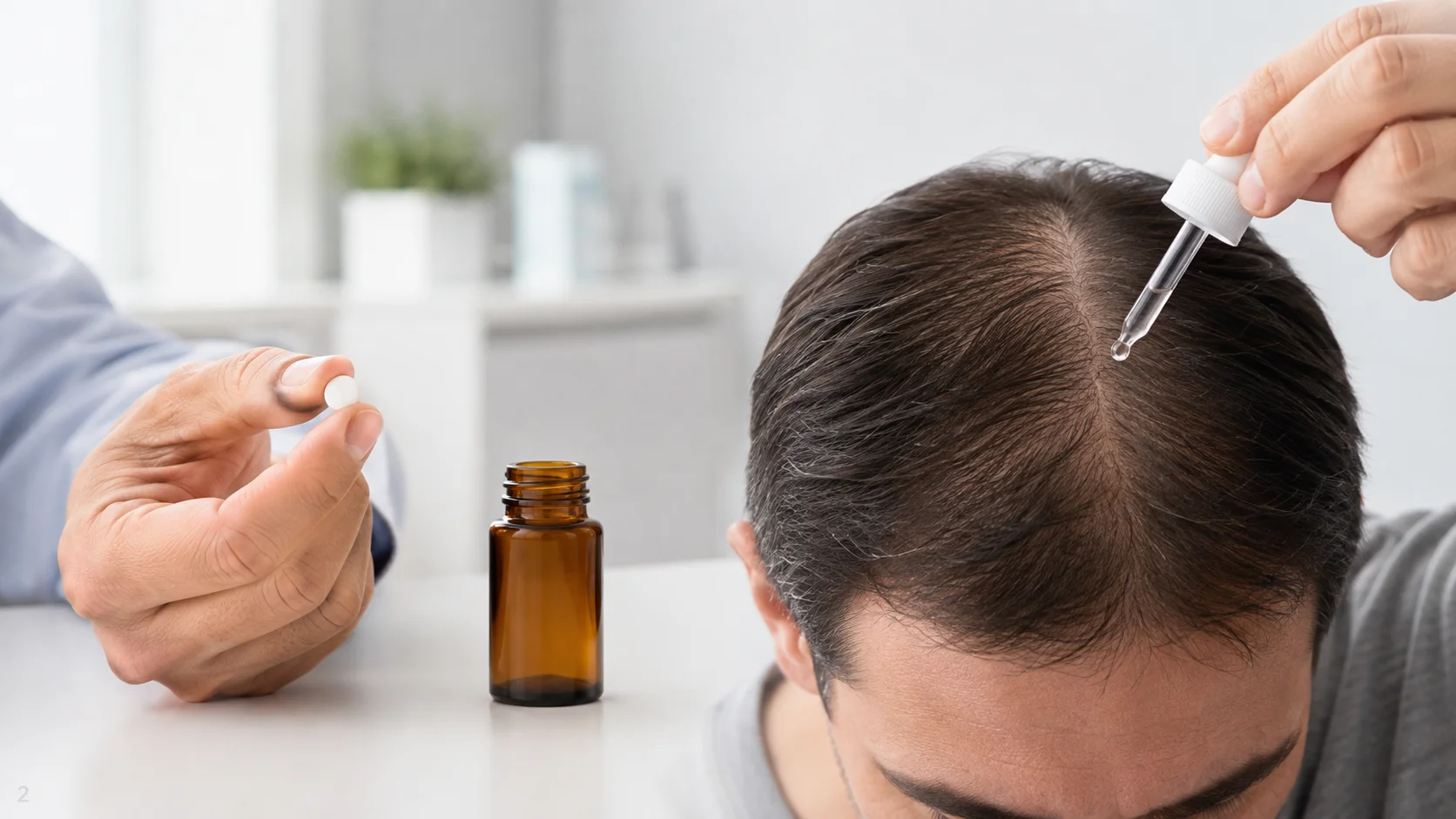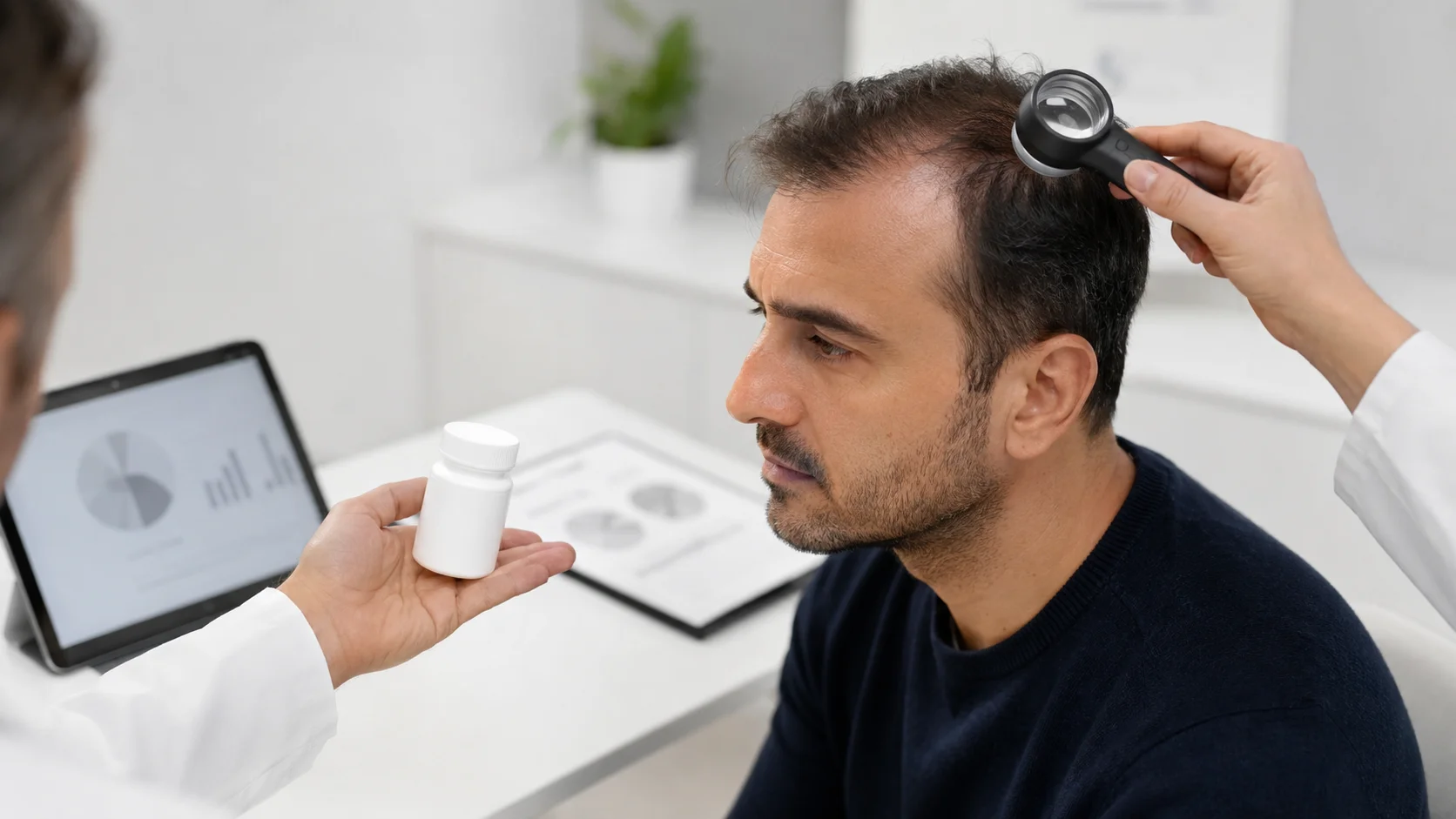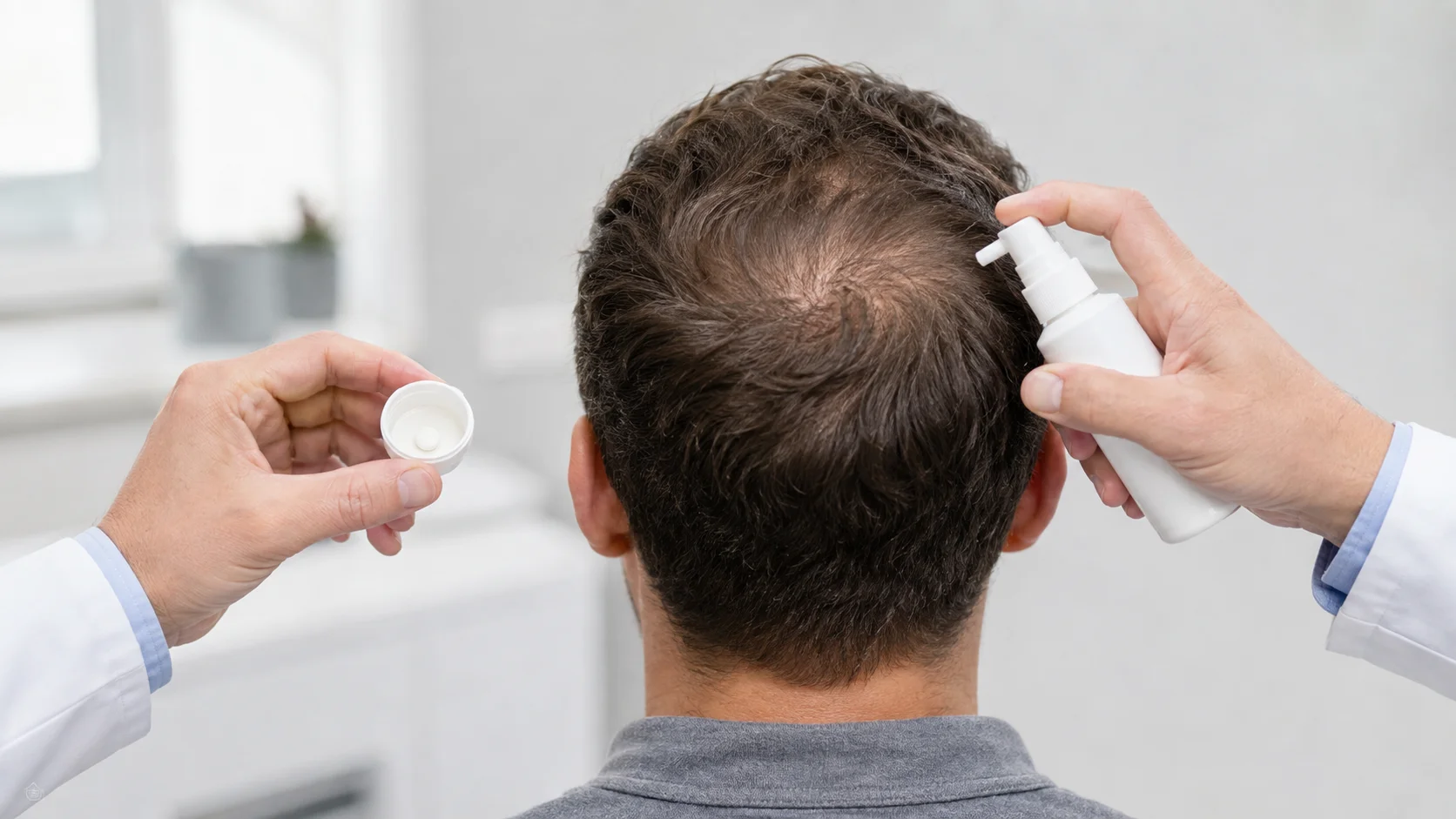
Topical and oral finasteride target the same biological pathway, but they deliver the medication differently. Oral finasteride circulates throughout the body, while topical finasteride is designed to concentrate exposure at the scalp and reduce the amount reaching the bloodstream.
Both can reduce the effects of dihydrotestosterone, or DHT, on genetically susceptible follicles. Current evidence suggests that a properly formulated topical product can improve male androgenetic alopecia, with some trials reporting hair-count changes similar to oral treatment over several months. Topical use still causes systemic absorption, however, and cannot be considered free from finasteride-related risks.
Why DHT Matters in Pattern Hair Loss
Finasteride inhibits type II 5-alpha-reductase, an enzyme that converts testosterone into DHT. In androgenetic alopecia, DHT contributes to progressive follicle miniaturization in genetically sensitive areas of the scalp.
Reducing DHT can slow further loss and allow some miniaturized follicles to produce thicker hair. Treatment is generally better at preserving vulnerable follicles than rebuilding an advanced bald area. Results develop gradually and must usually be maintained with continued therapy.
Finasteride addresses androgenetic alopecia. It is not an appropriate treatment for every form of shedding, including many cases of telogen effluvium, alopecia areata, scarring alopecia, or hair breakage.
How Oral Finasteride Works
Oral finasteride is taken as a tablet and creates systemic enzyme inhibition. It is an established treatment for male pattern hair loss in appropriate adult patients.
Its main practical advantage is consistency: taking a tablet is simple, dosing is standardized, and the treatment has extensive clinical evidence. Oral finasteride can help stabilize loss and improve density in some men, especially when treatment begins before extensive miniaturization has occurred.
It is not a quick treatment. Several months may pass before stabilization or visible improvement is apparent, and longer follow-up is often needed to judge the outcome.
How Topical Finasteride Works
Topical finasteride is applied to the scalp as a solution or spray. The goal is to inhibit DHT activity near affected follicles while reducing systemic exposure.
In a large controlled trial in men, topical finasteride improved target-area hair count compared with placebo and produced a result numerically similar to oral finasteride at 24 weeks. Blood finasteride concentrations were much lower with the studied topical formulation, and serum DHT declined less than with oral therapy.
That difference supports the rationale for topical delivery, but results from one tested formulation cannot automatically be applied to every compounded liquid, gel, spray, or concentration. Dose, application volume, vehicle, scalp condition, and formulation quality can all affect absorption.
Is Topical Finasteride as Effective as Oral Finasteride?
The evidence is encouraging but not definitive for every product or long-term scenario. Short- and medium-term studies suggest topical finasteride can improve hair counts and may approach oral efficacy when delivered in a validated formulation.
Oral finasteride still has a larger and longer-established evidence base. Topical treatment has fewer long-term comparative data, and there is no universal topical formulation used across all countries or pharmacies.
The most accurate conclusion is that topical finasteride is a credible treatment option, not that every topical product is equivalent to oral therapy.
Comparing Systemic DHT Reduction
Oral finasteride generally produces greater suppression of circulating DHT. This systemic action is part of its established effectiveness, but it also explains concerns about adverse effects beyond the scalp.
Topical finasteride is intended to produce meaningful scalp activity with less reduction in serum DHT. It may therefore reduce the likelihood of systemic effects, but it does not eliminate them. Applying too much, using a high concentration, treating a large area, or applying to damaged skin may increase exposure.
More medication is not necessarily more effective. With topical finasteride, dose and application technique are central parts of the risk-benefit calculation.
Side Effects of Oral Finasteride
Most users do not report major problems, but potential adverse effects require informed discussion. Reported effects include reduced libido, erectile or ejaculatory difficulties, reduced semen volume, breast tenderness or enlargement, and mood changes.
Controlled research indicates that sexual adverse events are uncommon but occur more often with oral finasteride than with placebo. Many resolve after treatment is stopped, although persistent symptoms have been reported and remain an area of continued investigation.
Finasteride also lowers prostate-specific antigen, or PSA. Clinicians interpreting a PSA test need to know that the medication is being used.
Side Effects of Topical Finasteride
Topical treatment can cause local effects such as irritation, redness, dryness, itching, or flaking. The vehicle or additional ingredients may be responsible for some reactions.
Sexual, reproductive, breast, or mood-related effects remain possible because systemic absorption still occurs. Comparative studies suggest exposure and systemic DHT reduction may be lower with certain topical formulations, but risk cannot be assumed to be zero.
Hands should be washed after application, and the product should be allowed to dry as directed. Transfer to another person through wet skin, hands, surfaces, or shared bedding should be prevented.
Pregnancy and Exposure Precautions
Finasteride can interfere with development of the male fetal reproductive system. It is generally contraindicated during pregnancy, and people who are or may become pregnant should not use it unless under highly specialized medical direction.
Pregnant individuals should avoid contact with crushed or broken tablets and should not handle wet topical finasteride. Product transfer is an especially important consideration in households with a pregnant partner or children.
Finasteride use in women requires specialist assessment. Evidence and regulatory approval differ from those for adult men with androgenetic alopecia.
Convenience and Adherence
Oral finasteride is usually easier to integrate into a routine. Topical treatment demands accurate scalp application and enough drying time, and it may leave residue depending on the formulation.
Topical finasteride may still appeal to someone who wants lower systemic exposure or prefers not to take a tablet. Oral treatment may suit someone who finds topical application unsustainable.
Consistency matters more than theoretical preference. Either approach is likely to disappoint when used intermittently.
Can Finasteride Be Combined With Minoxidil?
Finasteride and minoxidil act through different mechanisms. Finasteride reduces DHT-related miniaturization, while minoxidil supports follicle growth activity. They are sometimes used together when appropriate.
Combination topical products may be convenient, but they also make it harder to identify which ingredient caused irritation or another adverse effect. Concentrations and product quality vary, especially among unregulated or customized formulations.
A combination should follow an accurate diagnosis and a plan that accounts for contraindications, expectations, and long-term adherence.
Who May Prefer Each Form?
Oral finasteride may be considered for an appropriate adult man who wants a standardized, convenient treatment with extensive supporting evidence and accepts systemic exposure.
Topical finasteride may be considered when lower systemic exposure is a priority, oral treatment has not been tolerated, or a clinician believes a validated topical formulation offers a better individual balance.
Neither form should be selected solely from online reports. Baseline symptoms, fertility plans, medication use, mood history, scalp condition, and household exposure should inform the decision.
Frequently Asked Questions
Does topical finasteride have sexual side effects?
It can. Studied topical formulations generally produce lower blood exposure than oral finasteride, which may reduce risk, but systemic absorption and sexual adverse effects remain possible.
Is topical finasteride approved for hair loss?
Regulatory status varies by country and formulation. Some regions have authorized specific topical products, while compounded or customized versions may not have undergone equivalent evaluation.
Does topical finasteride lower blood DHT?
Yes, it can lower serum DHT. In comparative research, the reduction was smaller with a studied topical spray than with oral finasteride, but the amount depends on formulation and dose.
Which form works faster?
Neither should be expected to work quickly. Early stabilization may take several months, and meaningful comparison usually requires consistent use over a longer period.
Does hair loss return after stopping finasteride?
The protective effect is not permanent. After treatment ends, DHT-related miniaturization can resume, and benefits may gradually be lost.
Can topical finasteride be applied to a receding hairline?
It may be prescribed for miniaturizing frontal areas, but expectations should remain realistic. Severely miniaturized or inactive follicles are less likely to produce substantial regrowth.
Making an Informed Choice
Oral finasteride offers standardized dosing and the strongest long-term clinical history. Topical finasteride may reduce systemic exposure while still improving pattern hair loss, but outcomes depend heavily on the formulation and application.
The decision should account for effectiveness, systemic and local risks, reproductive considerations, product quality, and the likelihood of consistent long-term use. A dermatologist can confirm whether the loss is androgenetic and help determine which route provides the more appropriate balance.
This content is for general informational purposes and does not replace individualized medical advice, diagnosis, or treatment.