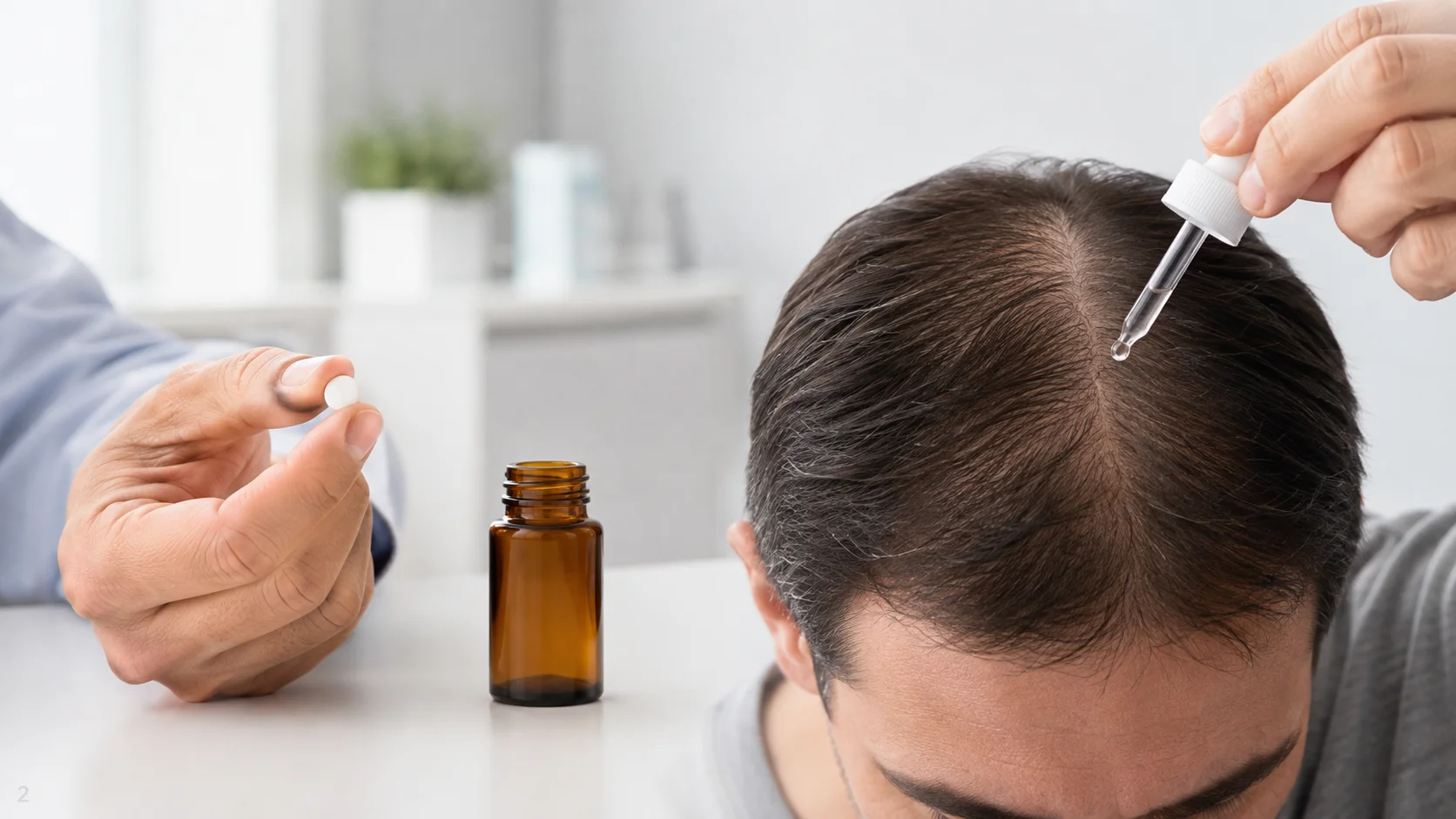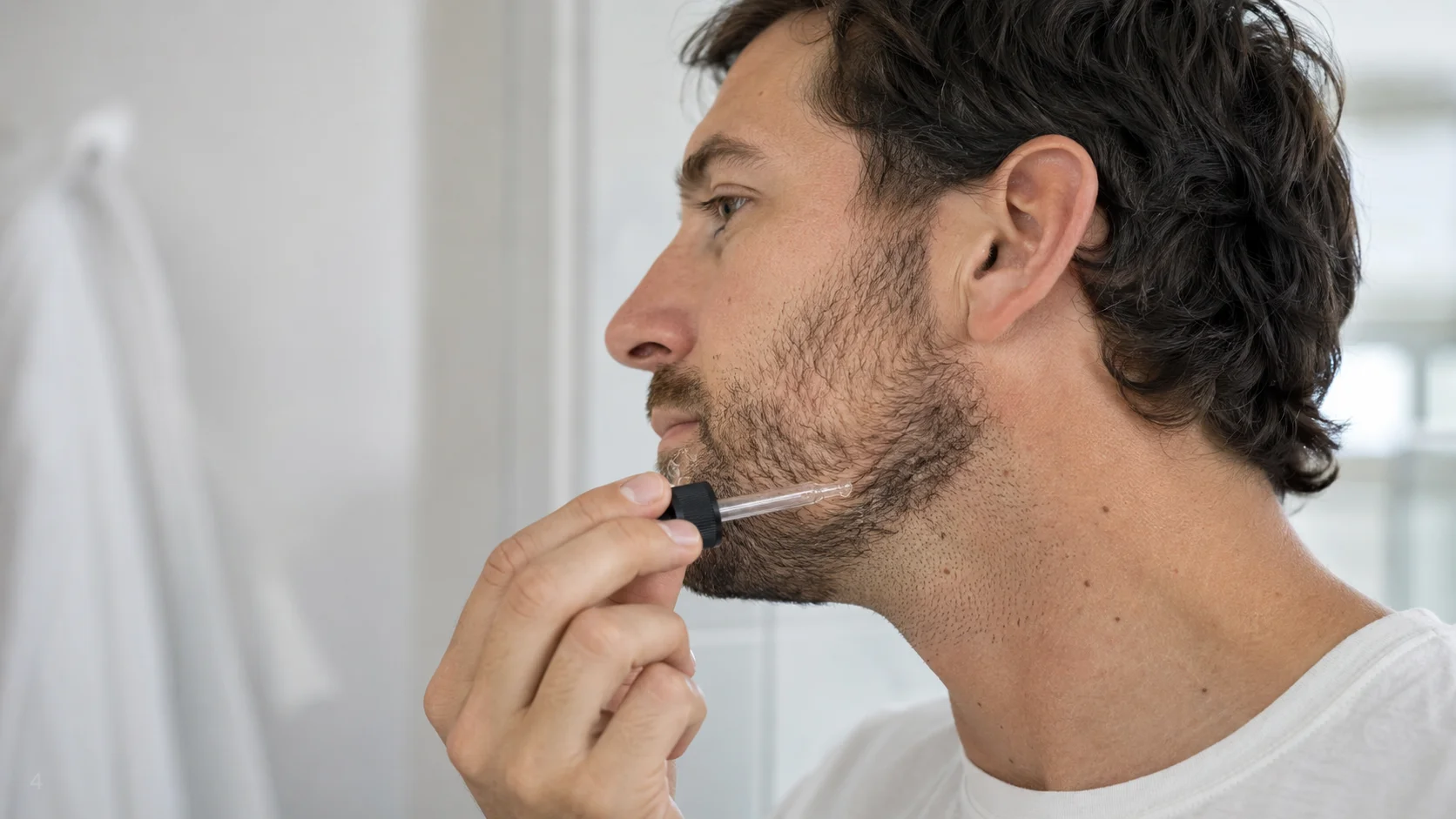
Topical minoxidil may improve beard density in some people, but its use on the face remains off-label in many countries. It is primarily authorized for certain forms of scalp hair loss, not beard enhancement.
Small clinical studies provide evidence that topical minoxidil can increase facial hair density and improve assessments of beard growth over several months. The research base is still much smaller than it is for scalp hair, and important questions remain about ideal dosing, long-term safety on facial skin, and whether gains persist after treatment ends.
Why Minoxidil Might Affect Beard Hair
Minoxidil can influence the hair cycle and encourage responsive follicles to remain in or enter the active growth phase. It may also increase the size and diameter of some hairs.
Scalp hair and beard hair are not biologically identical. Androgens such as testosterone and DHT tend to promote terminal facial hair development but can miniaturize genetically susceptible scalp follicles. Minoxidil does not create new follicles and does not replace the androgen signaling required for normal beard maturation.
The most plausible benefit is stimulation of existing follicles that are capable of producing hair but currently generate fine, short, or less visible strands.
What the Current Evidence Shows
Research on beard use remains limited, but it is no longer based solely on personal reports.
A small randomized, double-masked, placebo-controlled study found that topical minoxidil improved photographic beard-growth scores and hair counts compared with a vehicle treatment over several months. Subsequent studies in people receiving gender-affirming testosterone therapy have also reported improvements in facial hair density or clinical beard-growth assessments.
A more recent randomized controlled trial in transgender men receiving stable hormone therapy found increases in beard and mustache density and hair diameter after 12 weeks compared with placebo.
These results suggest a genuine biological effect. However, the available studies involve modest participant numbers, relatively short follow-up, and specific populations. They do not prove that every person with a sparse beard will respond or that gains will remain indefinitely.
Who Might See a Benefit?
Minoxidil may have more potential when facial follicles are present but produce fine or uneven hair. Response can be influenced by genetics, age, hormonal status, treatment consistency, and individual follicle sensitivity.
Some people continue developing a fuller beard naturally through their twenties or beyond. Starting minoxidil during this period makes it difficult to separate treatment effects from normal maturation.
Minoxidil is unlikely to overcome every cause of absent facial hair. Areas with no viable follicles, established scar tissue, certain congenital conditions, or active inflammatory disease may not respond.
What Results Are Realistic?
Possible changes include:
- Increased density in areas with existing fine hair
- Greater hair diameter
- Improved continuity between beard regions
- Darker or more visible facial hair
- Faster apparent growth during treatment
A dramatic, fully connected beard should not be promised. Early fine hairs do not always mature into stable terminal hairs, and the cosmetic result varies widely.
Changes are gradual. Clinical studies have assessed outcomes after roughly three to six months, but an individual may need longer to judge response. Photographs taken under consistent lighting, angle, facial-hair length, and camera distance can provide a more reliable comparison.
Is Beard Growth Permanent After Stopping?
This is one of the largest unanswered questions.
With scalp androgenetic alopecia, minoxidil-dependent gains commonly fade after treatment stops because the underlying miniaturization process continues. Beard biology differs, and some users believe hairs that become fully terminal may persist. Available clinical evidence does not establish a dependable rule.
Until better long-term studies are available, permanent retention should not be assumed. Stopping may lead to partial or substantial loss of treatment-associated gains.
Common Side Effects on the Face
Facial skin may react differently from the scalp. Potential local effects include:
- Dryness and flaking
- Redness or burning
- Itching
- Irritant or allergic contact dermatitis
- Acne-like breakouts
- Unwanted hair beyond the application area
Liquid formulations may contain alcohol or propylene glycol, which can contribute to irritation. Applying more product does not guarantee more growth and may increase absorption or skin reactions.
The product should be kept away from the eyes, lips, inside of the nose, and broken or inflamed skin. Hands should be washed after application, and the medication should not be allowed to transfer to other people.
Can Facial Application Cause Systemic Effects?
Yes, although significant systemic reactions appear uncommon with limited topical use. Minoxidil can be absorbed through the skin, and the amount may increase with excessive application, damaged skin, large treatment areas, or use of methods intended to increase penetration.
Possible systemic symptoms include:
- Dizziness or faintness
- Palpitations or a fast heartbeat
- Headache
- Swelling of the hands, feet, or face
- Unexplained weight gain related to fluid retention
- Chest discomfort or shortness of breath
These symptoms require prompt medical attention. People with heart disease, low blood pressure, kidney disease, fluid-balance problems, or relevant medication use should seek medical guidance before considering off-label facial application.
Should Minoxidil Be Used With Microneedling?
Microneedling is sometimes promoted as a way to enhance minoxidil penetration. Evidence from scalp hair loss cannot automatically be transferred to beard growth.
Applying minoxidil immediately after microneedling may increase irritation and systemic absorption. It also introduces infection and scarring risks when technique or hygiene is poor. Combining these approaches without professional guidance is not advisable.
Oral Minoxidil Is Not a Beard-Growth Shortcut
Oral minoxidil can produce generalized hypertrichosis, including increased facial hair. This is a systemic drug effect rather than targeted beard enhancement.
Using oral minoxidil solely to grow a beard exposes the entire body to cardiovascular risks and unwanted hair growth in other areas. It should not be obtained or dosed without a clinician simply because topical use is inconvenient.
When Sparse Beard Growth Needs Medical Evaluation
Beard density is strongly genetic, and natural variation is common. A sparse beard alone does not necessarily indicate low testosterone.
Medical assessment may be appropriate when limited facial hair occurs with:
- Delayed or incomplete puberty
- Reduced libido or erectile difficulties
- Reduced muscle development
- Infertility concerns
- Loss of previously established facial hair
- Patchy, sharply defined bald areas
- Scaling, redness, pain, or scarring
- Other sudden changes in body hair
Patchy beard loss may be caused by alopecia areata, fungal infection, inflammatory disease, traction, or scarring conditions. Minoxidil alone would not address all of these causes.
Minoxidil and Gender-Affirming Care
People receiving gender-affirming testosterone therapy may consider minoxidil when beard development is incomplete. Early studies suggest that topical use can enhance facial-hair growth in some individuals on stable hormone therapy.
Treatment should still be coordinated with a knowledgeable clinician. Minoxidil is not a substitute for appropriately managed hormone therapy, and increasing testosterone beyond a prescribed plan can create serious health risks without guaranteeing a fuller beard.
Frequently Asked Questions
Does minoxidil create new beard follicles?
No. It may stimulate existing responsive follicles, but it cannot manufacture new follicles in skin where they are absent.
How long does minoxidil take to work on a beard?
Studies have detected improvement within approximately 12 to 16 weeks, with further assessment often occurring around six months. Individual response and visible timing vary.
Can minoxidil fill completely bare beard patches?
It may help if fine, responsive hairs are present, but a completely bare area may reflect limited follicle density, scarring, or another condition. Results cannot be predicted from appearance alone.
Is minoxidil foam safer than liquid for the face?
Foam may be less irritating for some people because of differences in inactive ingredients, but it can still cause local and systemic effects. Neither form is universally safer for off-label facial use.
Can women use minoxidil for facial hair?
Facial-hair enhancement may be sought in specific gender-affirming contexts, but unwanted facial hair is usually considered an adverse effect in women using minoxidil for scalp loss. Goals, hormonal health, and pregnancy considerations require individualized evaluation.
Can shaving make minoxidil work better?
No. Shaving cuts hair above the skin and does not change follicle number, hair diameter, or the biological response to minoxidil.
A Balanced View of Beard Minoxidil
Current evidence indicates that topical minoxidil can enhance beard growth in some people. Nevertheless, the studies remain relatively small, facial use is commonly off-label, and long-term persistence after discontinuation is uncertain.
Anyone considering it should weigh a possible cosmetic improvement against skin irritation, unwanted hair growth, systemic absorption, and the need for sustained use. Sudden, patchy, inflamed, or otherwise unexplained beard loss should be diagnosed before a growth stimulant is tried.
This content is for general informational purposes and does not replace individualized medical advice, diagnosis, or treatment.