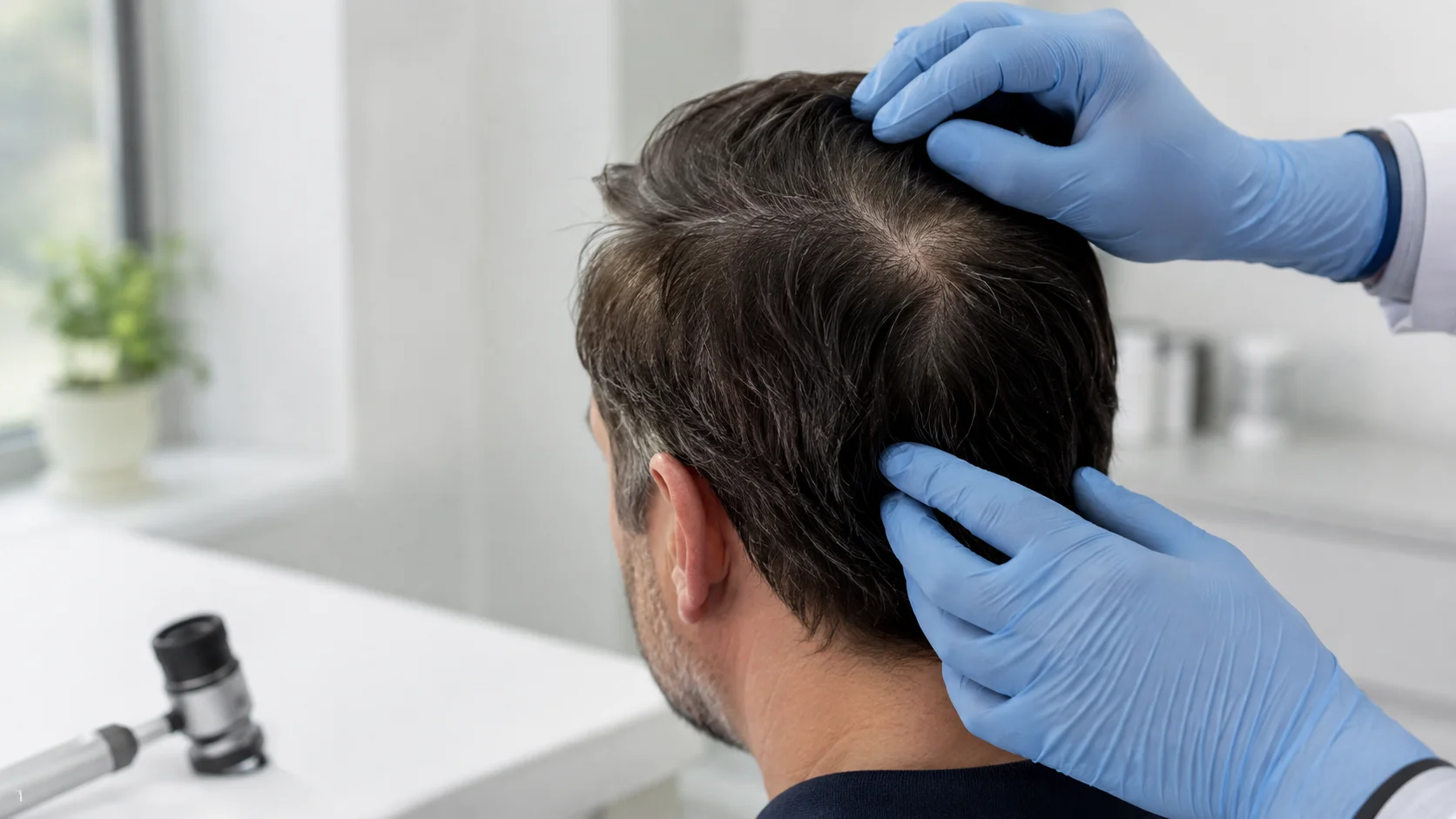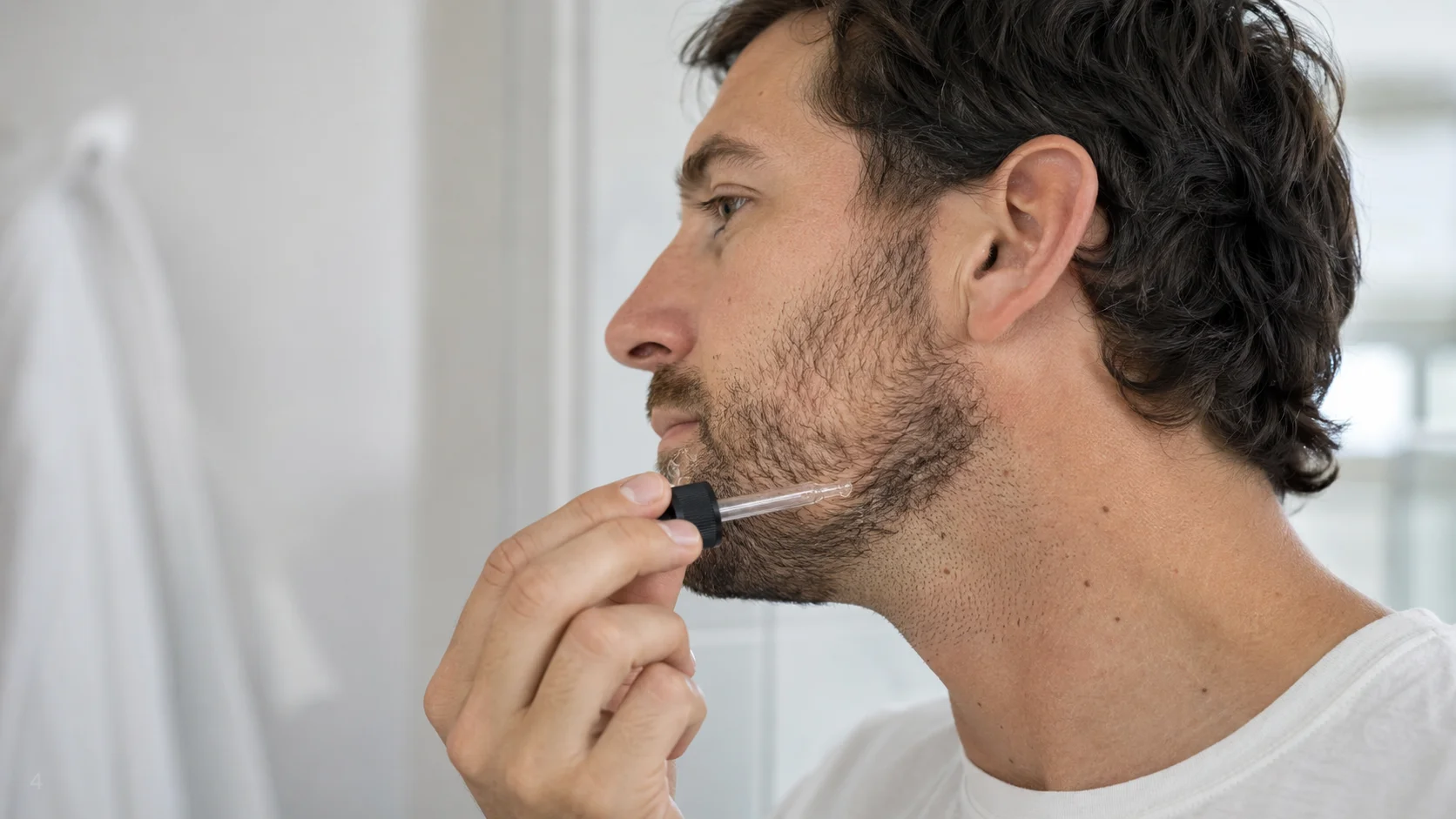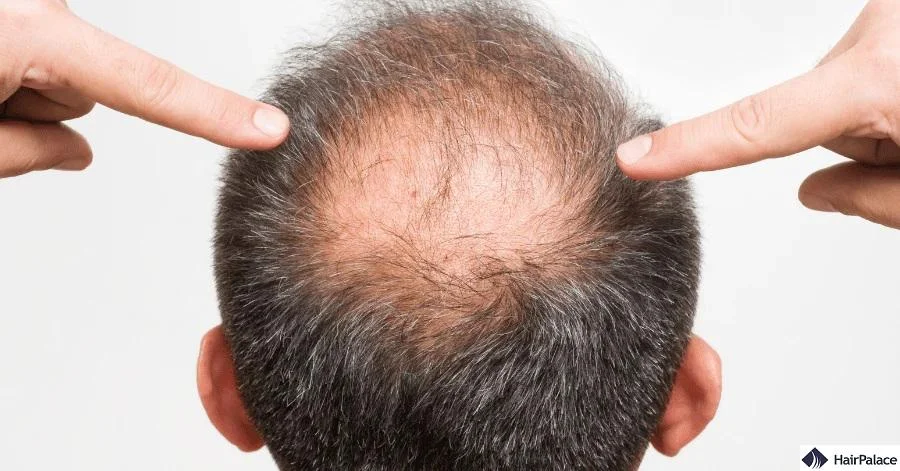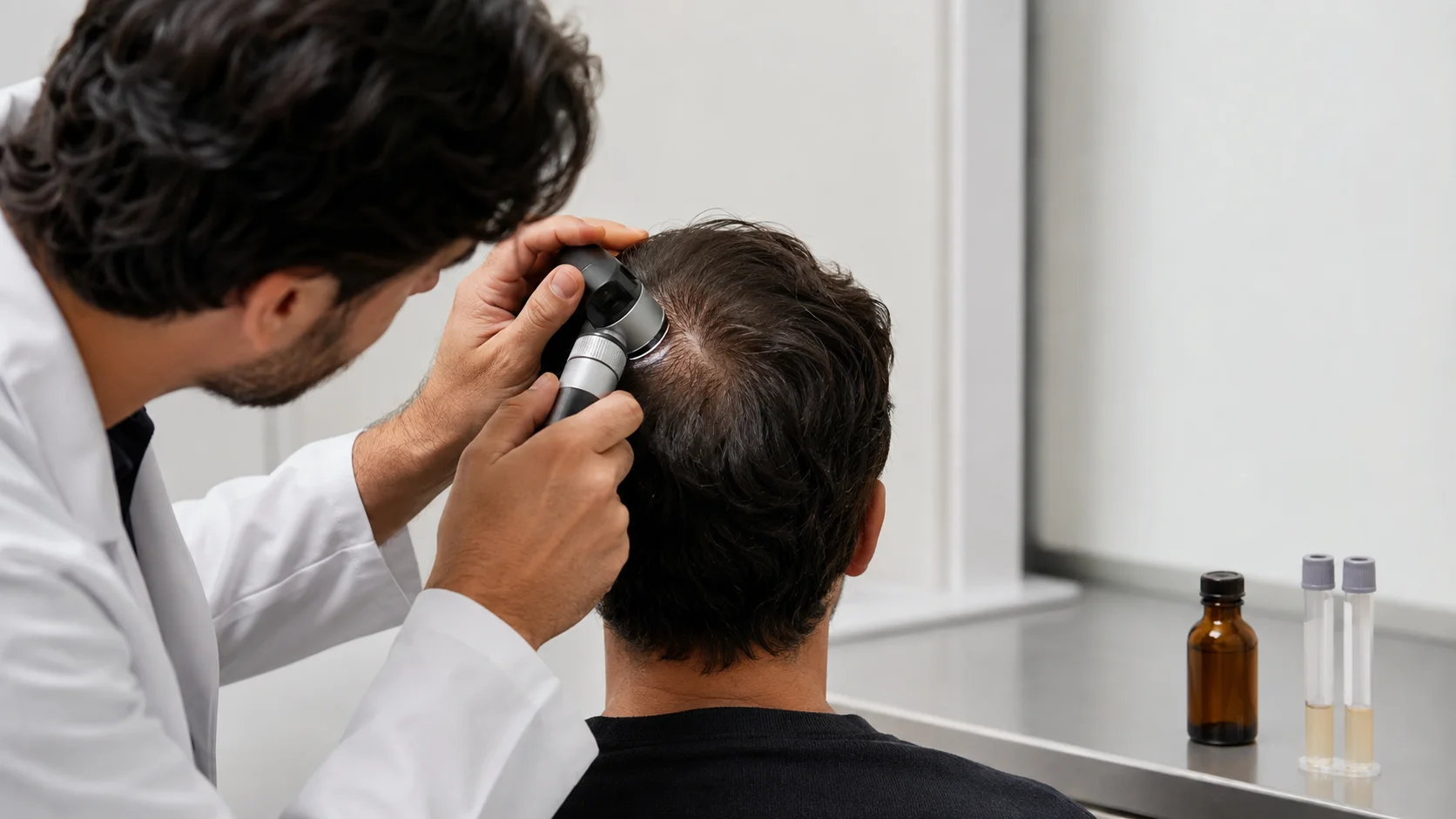
DHT can miniaturize susceptible scalp follicles while promoting beard growth because hair follicles from different body sites are biologically programmed to respond differently to androgens. The hormone is the same, but the receiving follicles use different receptors, enzymes, genes, and growth signals.
This regional response is a normal feature of human hair biology. During and after puberty, androgens help fine facial hairs develop into thicker terminal beard hairs. In genetically susceptible scalp regions, androgen signaling can gradually produce the opposite transformation.
Hair Follicles Have a Regional Identity
A hair follicle is not a generic structure that behaves the same wherever it grows. Follicles retain characteristics associated with their anatomical origin.
These characteristics influence:
- Hair length
- Diameter
- Curl
- Pigmentation
- Growth-cycle duration
- Sensitivity to androgens
- Local hormone metabolism
- Response to growth factors
A beard follicle, an eyebrow follicle, and a frontal scalp follicle may all encounter circulating DHT, yet their growth patterns remain very different.
The Dermal Papilla Interprets the Signal
The dermal papilla is a cluster of specialized cells at the base of the follicle. It communicates with surrounding epithelial cells and helps control the size and activity of the growing hair.
Androgens act largely through receptors in or around this regulatory compartment. After DHT binds to the androgen receptor, the activated receptor influences gene expression.
The resulting message depends on the origin of the dermal papilla cell. Beard papilla cells can release growth-promoting signals in response to androgens. Papilla cells from balding scalp can produce signals that suppress growth and favor miniaturization.
How DHT Promotes Beard Development
Before puberty, facial hair is often fine and lightly pigmented. Rising androgen activity can transform responsive facial follicles so that they produce larger, darker, terminal hairs.
DHT contributes to:
- Increased beard-hair diameter
- Greater pigmentation
- Enlargement of androgen-responsive follicles
- Development of terminal rather than vellus-like hair
- Expansion of visible facial-hair coverage over time
Genetics still determines the density, distribution, color, and timing of beard development. High DHT cannot create follicles where none exist, and it does not guarantee a dense beard.
How DHT Miniaturizes Scalp Hair
In androgenetic alopecia, DHT activates a different signaling program in susceptible frontal and crown follicles. Research using balding dermal papilla cells has identified increased production of growth-inhibiting signals, including transforming growth factor pathways, after androgen stimulation.
Other experimental work suggests effects on:
- Epithelial-cell growth
- Hair-inductive signaling
- Wnt-related pathways
- IGF-related growth support
- Inflammatory mediators
- Premature cellular aging
Across repeated cycles, the active growth phase becomes shorter and the follicle becomes smaller. The resulting hairs are progressively finer, shorter, and less visible.
No single molecular pathway explains every feature. The effect is produced by a network of local signals.
Androgen Receptors Are Only Part of the Answer
Both beard and susceptible scalp follicles can express androgen receptors. The difference is not simply that one area has receptors and the other does not.
What matters includes:
- Receptor density and regulation
- Local co-activator and co-repressor proteins
- Genes activated after receptor binding
- Growth factors released by dermal papilla cells
- Local 5-alpha-reductase activity
- Enzymes that deactivate DHT
- Developmental identity of the follicle
A receptor starts the conversation, but the cellular context determines what is said.
Local DHT Production Also Differs
Testosterone can be converted to DHT inside follicular tissues. Research has found particularly active androgen metabolism within the dermal papilla and important differences between beard and scalp follicles.
Beard dermal papilla cells can generate DHT and respond with growth-promoting activity. Balding scalp areas can also have increased local DHT production or androgen signaling compared with resistant scalp regions.
Circulating DHT is therefore only one source. The follicle participates in creating and regulating its own local androgen environment.
Why DHT Does Not Usually Thin Donor Hair
Follicles at the back and sides of the scalp are generally less susceptible to androgen-driven miniaturization. They retain this relative resistance when transplanted to the frontal scalp, a principle known as donor dominance.
Resistance is not absolute. Diffuse unpatterned alopecia, age-related donor thinning, inflammatory disease, or overharvesting can reduce donor density. Careful examination is necessary before surgery.
The contrast between susceptible frontal follicles and resistant occipital follicles is another demonstration that location-specific programming matters more than bloodstream exposure alone.
Why Some Men Have a Thick Beard and Full Scalp Hair
Strong beard growth does not prove that scalp loss will occur. A person may have androgen-responsive facial follicles and androgen-resistant scalp follicles.
Likewise, a sparse beard does not guarantee protection from male pattern hair loss. Beard density depends on facial follicle number, genetics, age, androgen exposure, and local responsiveness, while scalp loss depends on a different regional susceptibility.
The two features can coexist in any combination.
Does Finasteride Reduce Beard Growth?
Finasteride lowers DHT by inhibiting type 2 5-alpha reductase. In adults with an established beard, major visible loss of mature facial hair is not a typical expected effect, although individual changes in growth rate or density are possible.
DHT is particularly important during the developmental transition of facial hair. The effects of reducing DHT during adolescence or before full beard maturation may differ from treatment after the beard is established.
Finasteride should not be used by minors for cosmetic hair concerns without specialist medical direction.
Can Minoxidil Override Beard Genetics?
Topical minoxidil may improve beard density in some people, and small controlled studies support a possible effect. It acts through a different pathway from DHT and may stimulate existing responsive follicles.
It cannot create new follicles, guarantee terminal maturation, or reproduce another person’s genetically determined beard pattern. Facial use is off-label in many regions and can cause irritation, unwanted hair growth, or systemic effects.
Do Women Have the Same Scalp-Beard Difference?
Women also have regional follicle responses to androgens. Increased androgen activity may promote coarse facial hair while contributing to pattern scalp thinning in susceptible women.
New facial hair combined with rapid scalp thinning, irregular periods, severe acne, or voice changes warrants hormonal evaluation. Many women with female pattern hair loss, however, have androgen levels within ordinary ranges.
Frequently Asked Questions
Why does DHT grow body hair but reduce scalp hair?
Body sites contain follicles with different developmental programming. Their dermal papilla cells produce different growth signals after androgen-receptor activation.
Does a thick beard mean high DHT?
Not necessarily. Beard density also depends on genetics, follicle number, receptor sensitivity, age, and local androgen metabolism.
Does a thick beard predict baldness?
No. Beard follicles and scalp follicles have distinct regional responses. A thick beard may coexist with either dense scalp hair or androgenetic alopecia.
Can lowering DHT make a beard fall out?
Substantial loss of an established adult beard is not a typical finasteride effect, but individual changes are possible. DHT reduction may matter more during beard development.
Why are temple hairs more vulnerable than beard hairs?
Temple follicles in susceptible people respond to androgens with miniaturizing signals, while beard follicles respond with growth-promoting signals.
Can DHT make eyebrows grow?
Eyebrows have their own growth cycle and regional programming. They are not generally stimulated by androgens in the same way as beard follicles.
One Hormone, Different Biological Instructions
DHT does not carry a universal instruction to grow or remove hair. It activates androgen receptors, after which each follicle’s regional biology determines the outcome.
Beard follicles tend to interpret the signal as an instruction to enlarge and produce terminal hair. Genetically susceptible scalp follicles interpret it as a signal that eventually shortens growth and promotes miniaturization. Understanding this distinction resolves the apparent contradiction without treating DHT as either entirely beneficial or entirely harmful.
This content is for general informational purposes and does not replace individualized medical advice, diagnosis, or treatment.