DHT can contribute to hair loss in women, particularly when follicles are androgen-sensitive or when the body is producing excessive androgens. However, female pattern hair loss is more biologically varied than classic male pattern baldness, and many affected women have normal DHT and testosterone levels.
DHT should therefore be considered one possible contributor rather than a universal explanation. Hormonal, genetic, nutritional, medical, inflammatory, and age-related factors can overlap.
How DHT Affects Female Scalp Follicles
DHT is produced when 5-alpha reductase converts testosterone into a more potent androgen. Women normally produce testosterone and DHT in smaller quantities than men.
In a susceptible follicle, androgen-receptor signaling can shorten the growth phase and contribute to miniaturization. The hair shaft becomes finer, and overall density gradually decreases.
This process does not require an abnormal serum DHT result. Follicles may be unusually sensitive to ordinary hormone exposure, while local scalp metabolism may differ from what a blood test shows.
What Female Pattern Hair Loss Looks Like
Female pattern hair loss commonly produces:
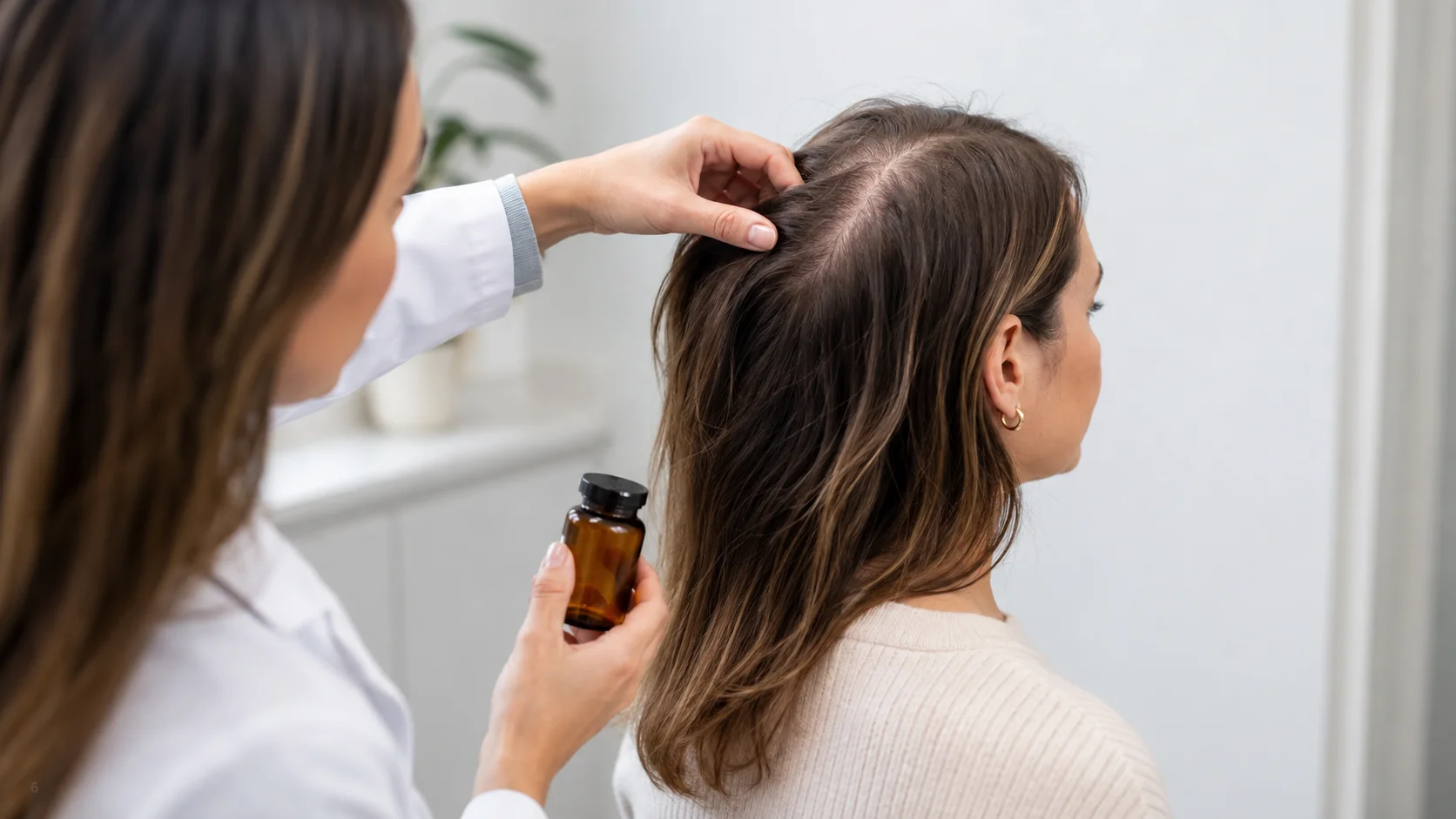
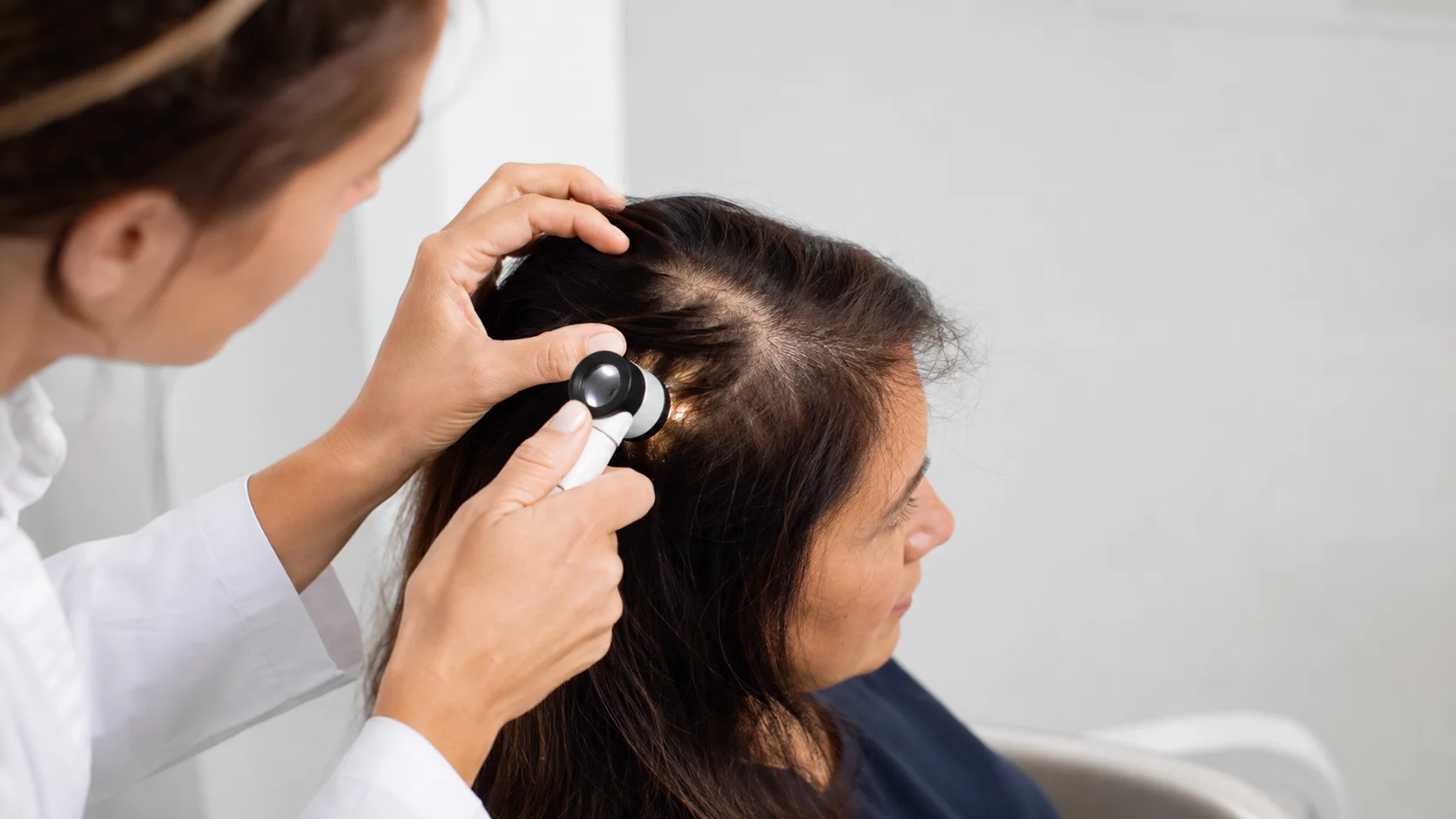
- Widening of the central part
- Reduced density over the crown
- A thinner ponytail
- Increased visibility of the scalp under bright light
- Preservation of at least part of the frontal hairline
- Gradual rather than sharply patchy progression
Some women develop frontal or temporal recession, but a rapidly receding band may suggest another condition, including traction or frontal fibrosing alopecia.
Pattern loss can coexist with diffuse shedding, making the onset seem sudden even though miniaturization developed gradually.
Can Women Have High DHT?
Yes. Elevated androgen activity can occur with polycystic ovary syndrome, certain adrenal or ovarian disorders, exogenous hormone use, and some medications or supplements.
Possible accompanying signs include:
- Irregular or absent periods
- New or increasing facial hair
- Severe or sudden acne
- Reduced fertility
- Voice deepening
- Increased muscle development
- Rapidly progressive scalp loss
Rapid virilization requires prompt medical assessment because it can occasionally indicate a significant hormone-producing disorder.
Most Women With Pattern Loss Do Not Have Markedly High DHT
Many women with female pattern hair loss have androgen results within laboratory reference ranges. This has led clinicians to use the term “female pattern hair loss” rather than assuming every case is directly caused by androgen excess.
Possible explanations include:
- Increased follicle sensitivity
- Local scalp conversion of testosterone to DHT
- Genetic variation in androgen receptors
- Changes in estrogen-androgen balance
- Age and menopause-related changes
- Non-androgen growth-cycle pathways
- Multiple simultaneous causes of thinning
A normal blood result does not invalidate the diagnosis or mean that the thinning is purely cosmetic.
Does Menopause Increase DHT-Related Hair Loss?
After menopause, estrogen levels decline substantially while androgen production changes differently. The relative hormonal balance may make androgen effects more noticeable in susceptible follicles.
Age-related reductions in hair diameter and density can occur at the same time. A woman may therefore experience a combination of female pattern hair loss, hormonal change, and general follicle aging.
Postmenopausal thinning should still be evaluated rather than automatically attributed to DHT.
When Hormone Tests Are Useful
Hormone tests are most useful when the history suggests androgen excess or another endocrine disorder. Depending on symptoms, a clinician may consider total testosterone, free testosterone or an equivalent calculation, DHEAS, and other targeted tests.
DHT is not always the most informative test. A normal serum DHT result cannot exclude local androgen sensitivity, and a high result does not prove that it is the only cause.
Testing may be particularly appropriate when thinning is rapid, begins unusually early, or occurs with menstrual and virilizing symptoms.
Other Common Causes of Hair Loss in Women
Several conditions can resemble or worsen female pattern hair loss:
- Iron deficiency
- Thyroid disease
- Postpartum telogen effluvium
- Rapid weight loss
- Severe illness or surgery
- Medication-related shedding
- Alopecia areata
- Traction from tight hairstyles
- Inflammatory scalp disease
- Scarring alopecia
- Hair-shaft breakage
A diagnosis based only on hormone assumptions can miss a treatable trigger. Scalp examination, history, and selected laboratory tests provide a more reliable foundation.
Treatment Options
Minoxidil
Topical minoxidil is a widely used treatment for female pattern hair loss. It supports follicle growth activity rather than lowering DHT.
Low-dose oral minoxidil is also prescribed off-label in selected patients, but it can cause unwanted facial or body hair, swelling, palpitations, headache, and blood-pressure effects.
Spironolactone
Spironolactone has antiandrogen activity and may help selected women, especially when androgen sensitivity or related symptoms are suspected. It can affect blood pressure, potassium, kidney function, menstrual cycles, and pregnancy.
Finasteride and Dutasteride
These medications reduce DHT production but are not routine treatments for all women. Evidence is mixed across female populations, and pregnancy-related risks are substantial. Use requires specialist selection and reliable pregnancy prevention when relevant.
Addressing the Underlying Cause
Iron deficiency, thyroid disease, nutritional inadequacy, or inflammatory scalp disease requires diagnosis-specific treatment. Lowering DHT will not correct these conditions.
Pregnancy Considerations
DHT-lowering and antiandrogen medications can interfere with male fetal development. Finasteride, dutasteride, and spironolactone are generally avoided during pregnancy.
Women who can become pregnant need a clear contraception and medication plan developed with a clinician. Topical products can also create exposure and should not be assumed safe merely because they are applied to the scalp.
Treatment plans may need to change before conception, during pregnancy, and while breastfeeding.
Does Lowering DHT Always Help Women?
No. Some women respond to antiandrogen treatment, while others show limited improvement. The variation reflects differences in diagnosis, follicle biology, hormonal status, treatment duration, and concurrent causes.
Reducing DHT may be rational when androgen sensitivity is an important part of the condition. It is less likely to help when shedding is driven by iron deficiency, thyroid disease, acute illness, traction, or autoimmune inflammation.
Combination treatment may be considered because growth stimulation and androgen reduction address different pathways.
Frequently Asked Questions
Can women lose hair with normal DHT?
Yes. Most women with female pattern hair loss do not need an elevated serum DHT result to develop thinning.
Does high DHT cause a receding hairline in women?
It can contribute, but frontal recession also raises concern for traction, frontal fibrosing alopecia, and other diagnoses.
Does facial hair plus scalp thinning indicate high androgens?
The combination can suggest androgen excess and may justify testing, especially with irregular periods, acne, or rapid progression.
Can women take finasteride for hair loss?
It is used off-label in selected women under specialist care. Pregnancy risks, limited evidence in some groups, and individual health factors must be considered.
Is spironolactone a DHT blocker?
Spironolactone primarily reduces androgen effects through receptor-related and hormonal actions. It is not the same type of enzyme inhibitor as finasteride.
Can menopause cause female pattern hair loss?
Menopause may make pattern thinning more noticeable through hormonal balance and age-related changes, but other causes should still be evaluated.
Should every woman with hair loss get a DHT test?
No. Testing should be guided by symptoms and the suspected diagnosis. Serum DHT alone rarely explains female hair loss.
A More Complete Explanation
DHT can participate in female pattern hair loss, but it is not a complete explanation for every woman. Normal blood levels can coexist with sensitive follicles, and non-androgen causes frequently contribute to shedding.
The best treatment begins with distinguishing gradual miniaturization from temporary shedding, breakage, autoimmune disease, and scarring. Hormone-directed treatment should follow that diagnosis rather than replace it.
This content is for general informational purposes and does not replace individualized medical advice, diagnosis, or treatment.