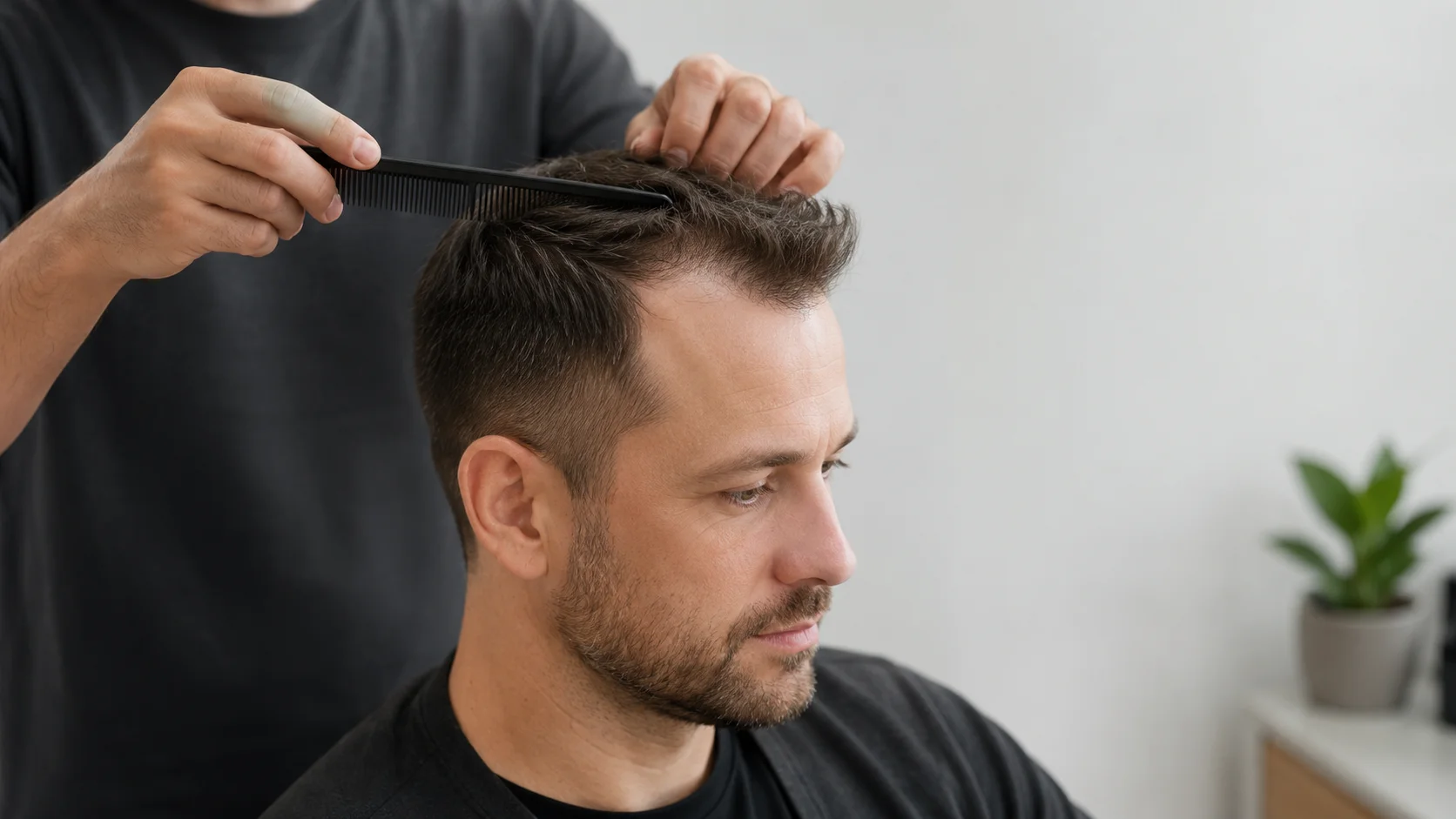
Finasteride can slow a receding hairline and may produce modest regrowth in some men with androgenetic alopecia. Clinical trials have shown improvement in frontal and temporal scalp regions, not only at the crown. However, complete reconstruction of a youthful hairline is uncommon, particularly when recession is advanced or the area has been bare for years.
The most reliable benefit is often preservation. Keeping miniaturizing hair from disappearing can make a major long-term difference even when the hairline does not visibly move forward.
Why the Hairline Recedes
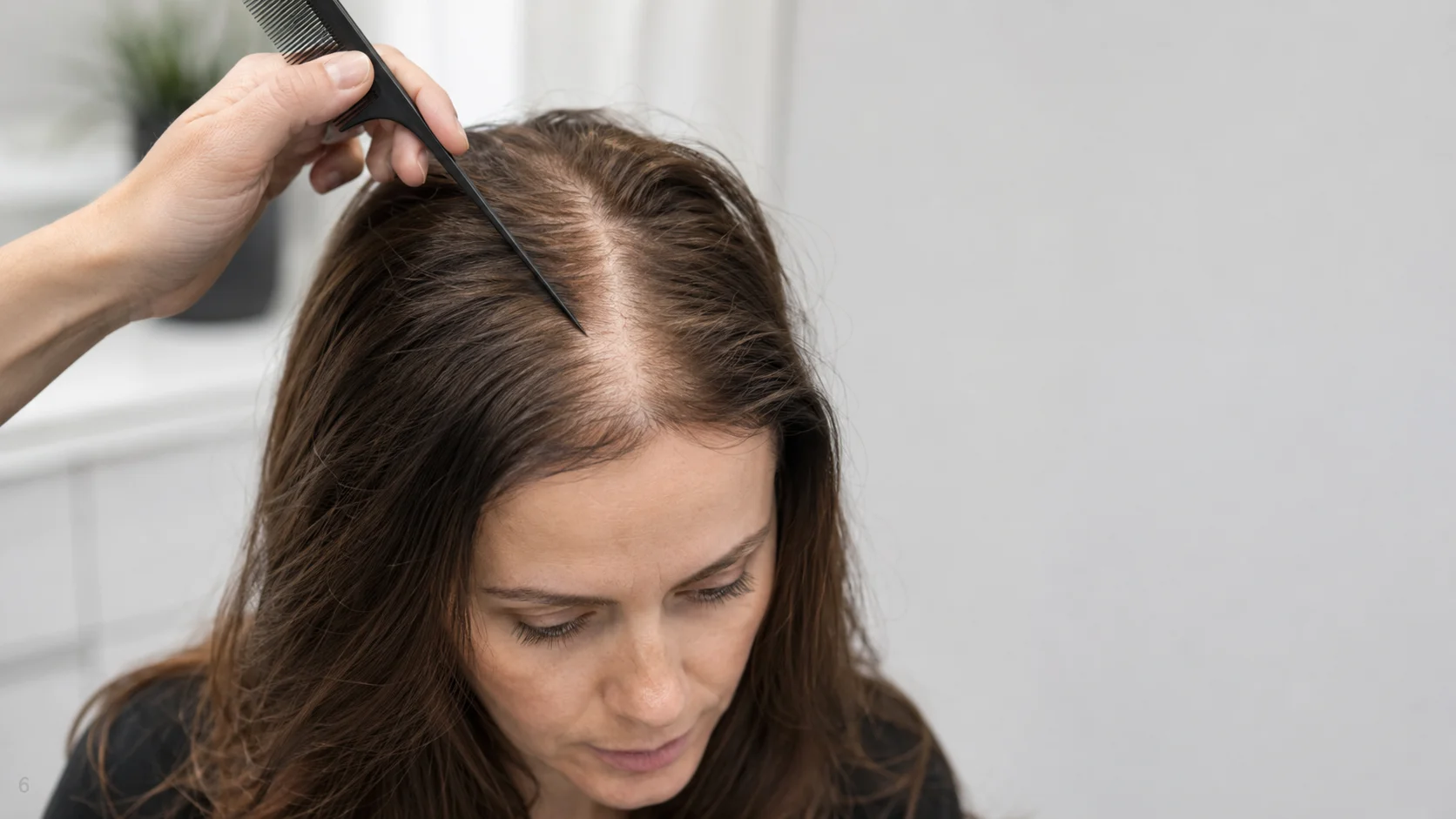
A receding hairline is a common feature of male androgenetic alopecia. Genetically susceptible follicles respond to dihydrotestosterone, or DHT, by becoming progressively smaller.
As miniaturization advances, hairs become:
- Shorter
- Finer
- Lighter in color
- Less capable of growing to a normal length
- Increasingly difficult to see
The temples often recede first, followed by thinning in the frontal forelock or mid-scalp. The pattern and rate vary considerably between individuals.
Finasteride can help only when DHT-related miniaturization is the correct diagnosis. It does not treat every cause of frontal loss.
How Finasteride Works
Finasteride inhibits type II 5-alpha-reductase, reducing the conversion of testosterone to DHT. Lower DHT exposure can slow miniaturization and allow some affected follicles to produce thicker hair.
Oral finasteride has the longest-established evidence for male pattern hair loss. Topical finasteride can also reduce scalp DHT and improve hair counts, although systemic absorption still occurs and formulations differ.
Neither form creates new follicles. Treatment depends on the presence of viable, responsive follicles in the receding area.
What Frontal Hair Studies Show
Finasteride is sometimes described as a crown-only treatment, but that is not an accurate summary of the evidence.
A controlled study of men with frontal and anterior-mid scalp thinning found that finasteride increased frontal hair counts compared with placebo and improved investigator, patient, and photographic assessments. Benefits were maintained or improved during a second treatment year.
A separate analysis using standardized photographs assessed several scalp regions over 24 months. Finasteride produced statistically significant improvement compared with placebo across the evaluated regions, including frontal and temporal areas.
These results show that frontal hair can respond. They do not mean that every receded temple will fill in or that the original adolescent hairline will return.
Stabilization vs Regrowth
People often judge treatment only by whether new hairs appear below the current hairline. That overlooks finasteride’s primary value.
Stabilization
If the hairline remains visually similar over several years while untreated loss would have progressed, the medication has provided a meaningful benefit. Stabilization may preserve styling options and reduce the size of any future transplant.
Thickening
Miniaturized hairs behind or along the hairline may become thicker and more visible. This can improve the appearance of density without moving the boundary dramatically.
Visible Regrowth
Some men develop new visible coverage in recently thinning frontal areas. The response is usually less dramatic in deeply bare temple corners where follicles have been severely miniaturized for a long time.
Who Is Most Likely to Respond?
A better response is generally more plausible when:
- Recession is recent or still progressing
- Fine miniaturized hairs remain in the area
- The frontal forelock is thinning rather than completely absent
- Treatment begins at an earlier stage
- Use is consistent over an adequate period
- The diagnosis is androgenetic alopecia
Age alone does not determine success. Follicle condition and duration of loss may be more informative.
A smooth, shiny area without visible miniaturized hairs is less likely to show substantial medical regrowth.
How Long Should Finasteride Be Tried?
Hair growth is slow, so early judgment can be misleading. Reduced shedding or stabilization may become apparent within several months, but visible assessment often requires 6 to 12 months.
Some improvements continue into the second year. Monthly mirror checks are unreliable because lighting, hair length, moisture, and styling can change the apparent hairline.
Standardized photographs every three to six months provide a more useful record. The same camera distance, angle, lighting, and hairstyle should be used each time.
Does Finasteride Cause Initial Shedding?
Some users report increased shedding after starting treatment, although a predictable finasteride-specific shed is not as firmly characterized as the early shedding associated with minoxidil.
Temporary cycling changes may occur, but heavy, persistent, patchy, or symptomatic loss should not automatically be labeled normal. It may reflect ongoing androgenetic alopecia, telogen effluvium, inflammation, or another diagnosis.
Combining Finasteride With Minoxidil
Finasteride and minoxidil address different aspects of pattern hair loss. Finasteride reduces DHT-related miniaturization, while minoxidil encourages follicle growth activity.
Using both may offer a stronger strategy for some men than either alone. Topical minoxidil can be applied to frontal thinning, although it should not be expected to reconstruct a deeply receded hairline.
Low-dose oral minoxidil is used off-label for hair loss but requires medical evaluation because of systemic cardiovascular effects.
A combination increases treatment complexity and potential adverse effects, so it should reflect individual priorities rather than an assumption that more medication is always better.
Side Effects and Safety Considerations
Potential finasteride adverse effects include reduced libido, erectile or ejaculatory difficulties, reduced semen volume, breast tenderness or enlargement, and mood changes. Controlled studies suggest that sexual effects occur in a minority of users but are more frequent than with placebo.
Many reported effects resolve after treatment is discontinued, although persistent symptoms have also been reported and continue to be investigated. Fertility plans and baseline sexual or mood symptoms should be discussed before treatment.
Finasteride also lowers PSA levels. Anyone undergoing prostate evaluation should tell the clinician that finasteride is being used.
The medication can affect development of a male fetus. People who are or may become pregnant should avoid handling crushed or broken tablets and should not contact wet topical finasteride.
What Happens If Finasteride Is Stopped?
Finasteride controls DHT activity only while treatment continues. After discontinuation, DHT levels and follicle miniaturization can return toward their untreated course.
Hair maintained or improved because of treatment may be lost gradually over the following months. Stopping does not usually cause hair loss beyond the underlying genetic process, but the change can look dramatic when several years of preserved hair begin to disappear.
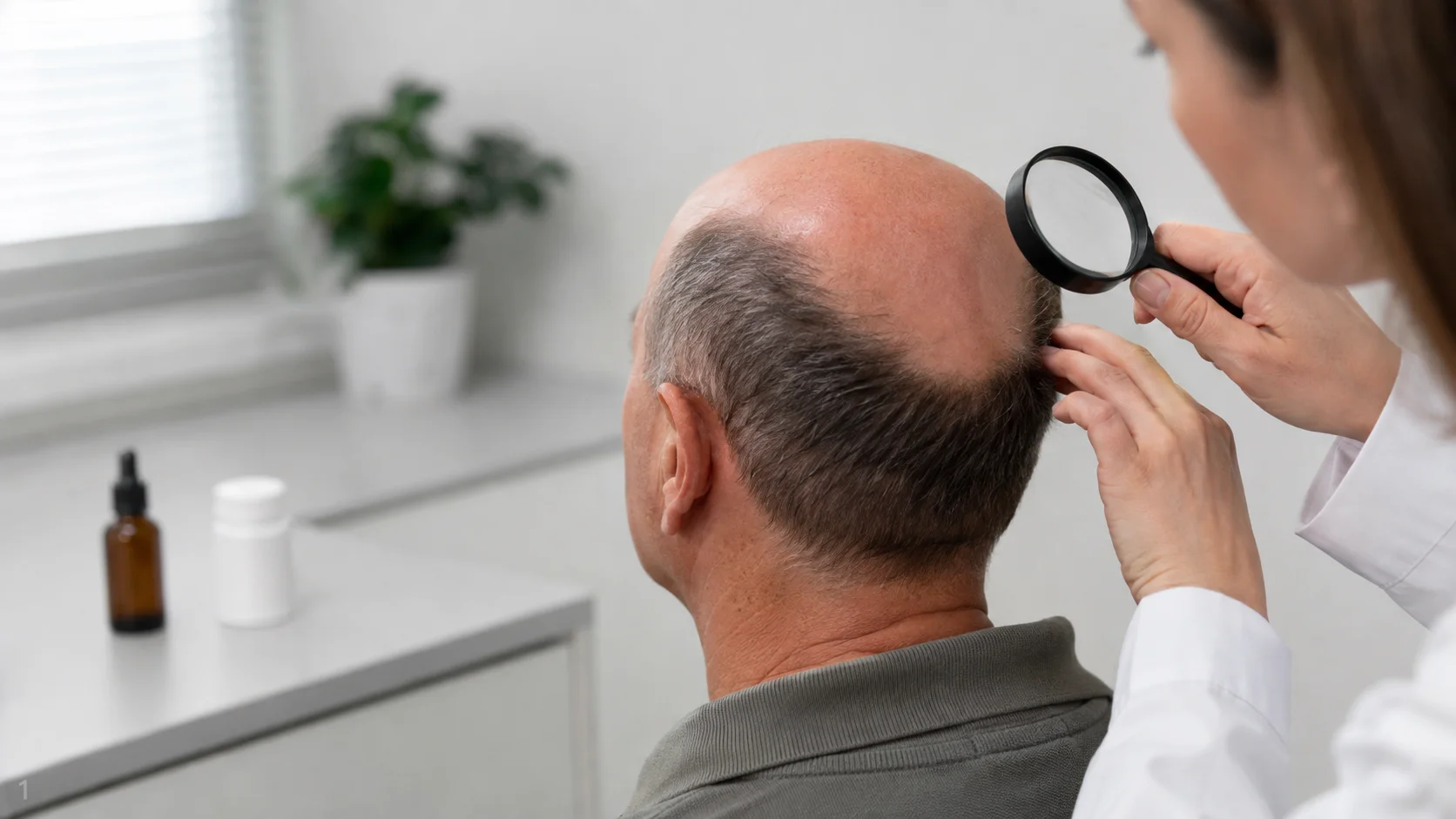
When a Receding Hairline Is Not Male Pattern Hair Loss
Not every frontal change should be treated with finasteride. Other possibilities include:
- Traction alopecia
- Frontal fibrosing alopecia
- Alopecia areata
- Scalp infection
- Inflammatory or scarring alopecia
- Hair breakage
- A naturally mature, stable hairline
Redness, scale, itching, pain, loss of eyebrow hair, isolated patches, or a smooth band of recession warrants professional evaluation. Scarring conditions require early diagnosis because permanently damaged follicles cannot be recovered by finasteride.
Finasteride vs a Hair Transplant
Finasteride preserves and may thicken existing hair. A transplant relocates follicles from a donor area to create coverage in a receded region.
They are not direct substitutes. Medication may be the sensible first step when loss is active and miniaturized hair remains. Surgery may address a stable, established hairline that cannot be restored sufficiently with medication.
Even after transplantation, finasteride may be considered to protect vulnerable non-transplanted hair. Without stabilization, continued recession can create an unnatural gap behind transplanted follicles.
Frequently Asked Questions
Can finasteride regrow temple hair?
It can improve miniaturizing temple hair in some men, but temple regrowth is variable and often modest. Long-standing bare corners respond less predictably.
Is finasteride better for the crown than the hairline?
Crown response is often more noticeable, but controlled evidence shows benefits in frontal and temporal regions as well. It should not be described as working only at the vertex.
Will finasteride restore my teenage hairline?
Usually not. The realistic objectives are slowing recession, preserving the frontal forelock, thickening miniaturized hairs, and achieving possible partial regrowth.
Does topical finasteride work on a receding hairline?
Validated topical formulations can improve androgenetic alopecia, including frontal thinning, but product quality and dosing vary. Topical treatment still produces some systemic exposure.
When is a hair transplant more appropriate?
Surgery may be considered when recession is established, donor supply is adequate, expectations are realistic, and future loss has been carefully planned. Medication is often assessed first when loss remains active.
Can finasteride make the hairline worse?
Finasteride is intended to slow androgenetic loss, but not everyone responds fully. Continued recession may reflect incomplete response, inconsistent use, another shedding trigger, or an incorrect diagnosis.
Realistic Expectations Matter
Finasteride can help a receding hairline, particularly when treatment begins while miniaturized follicles remain. Evidence supports frontal stabilization and improvement, but the likely result is preservation or thickening rather than complete hairline restoration.
A dermatologist can confirm the diagnosis, document miniaturization, discuss adverse effects, and determine whether medication, combination therapy, transplantation, or observation best fits the pattern and goals.
This content is for general informational purposes and does not replace individualized medical advice, diagnosis, or treatment.