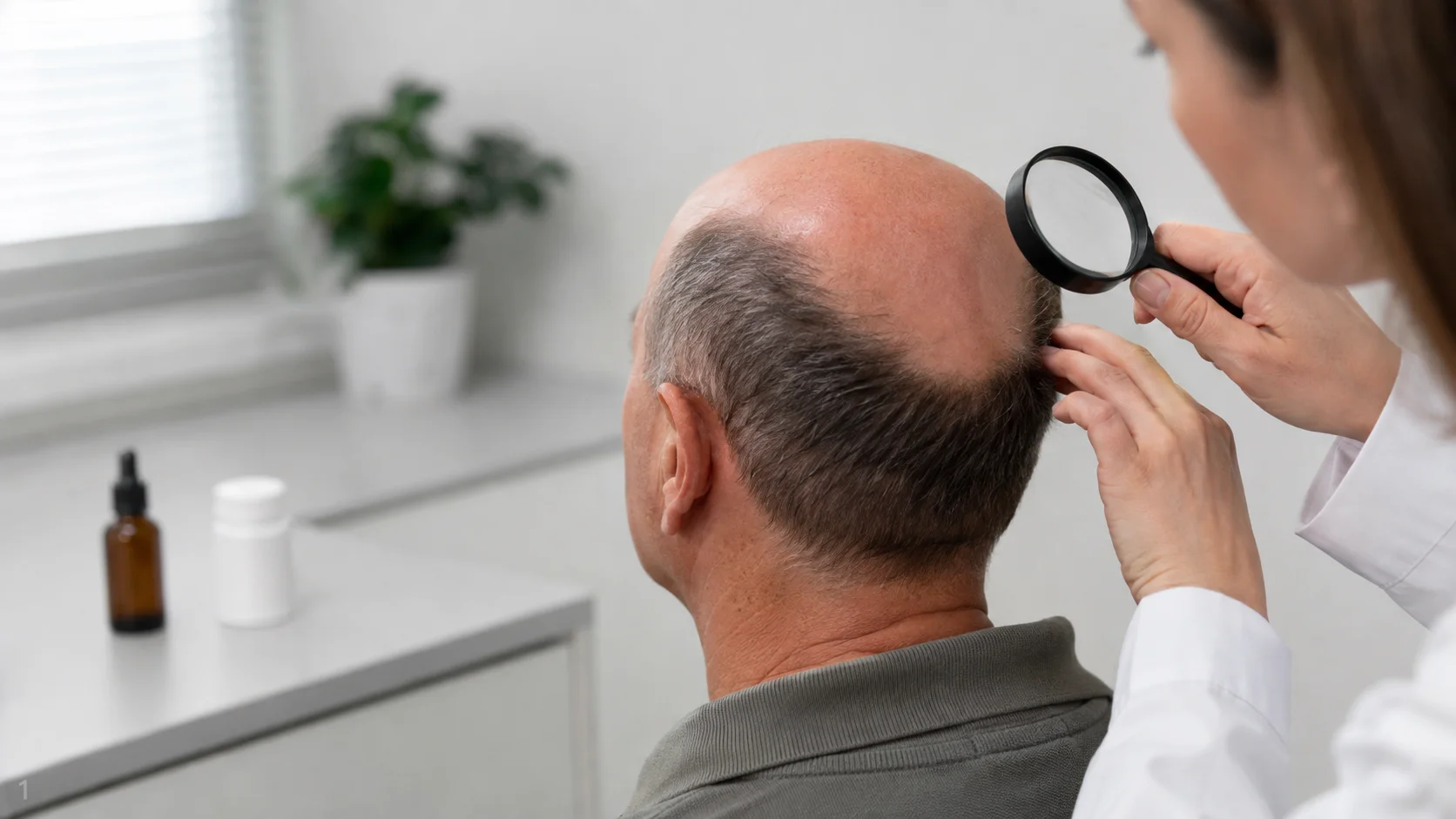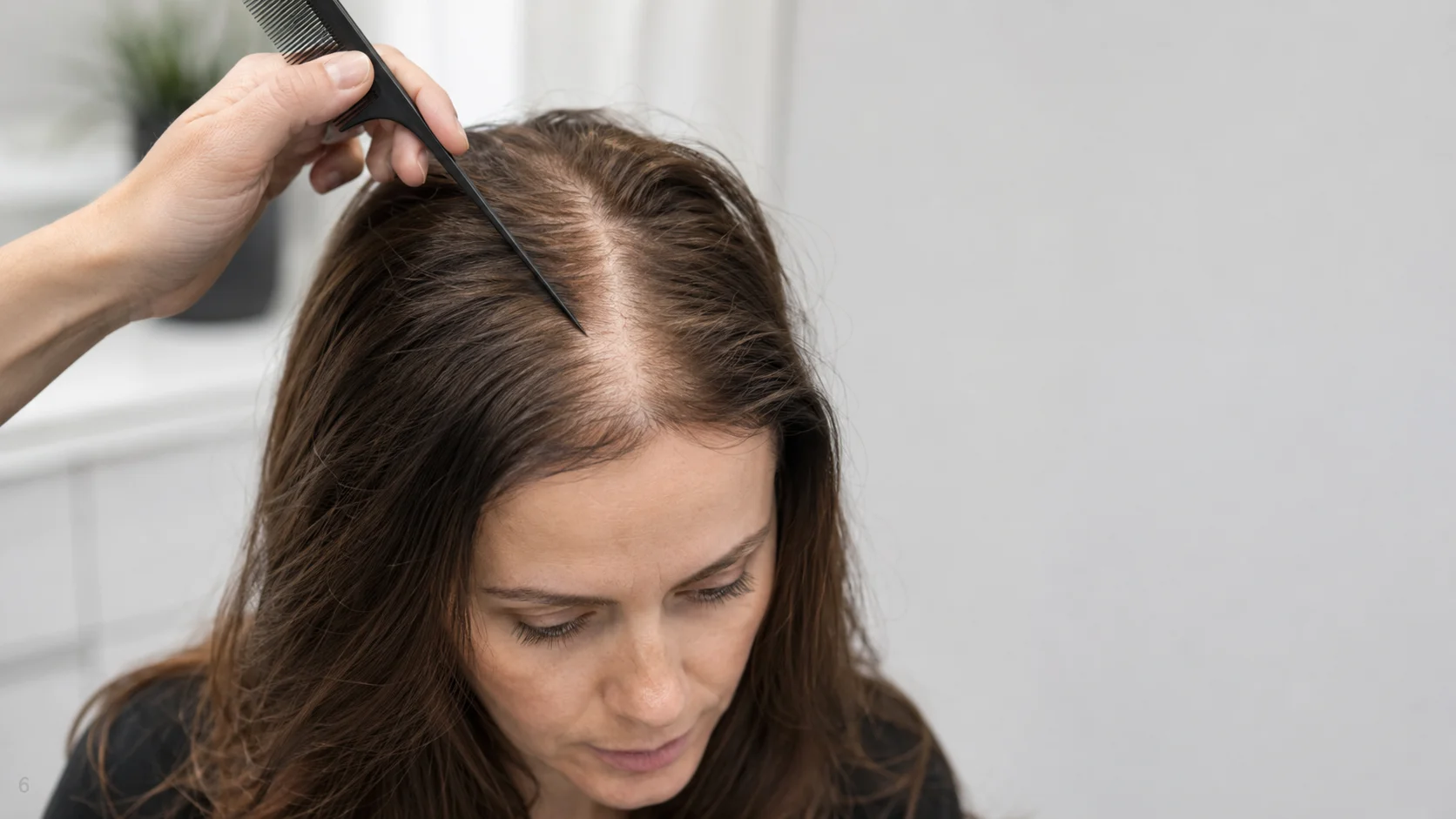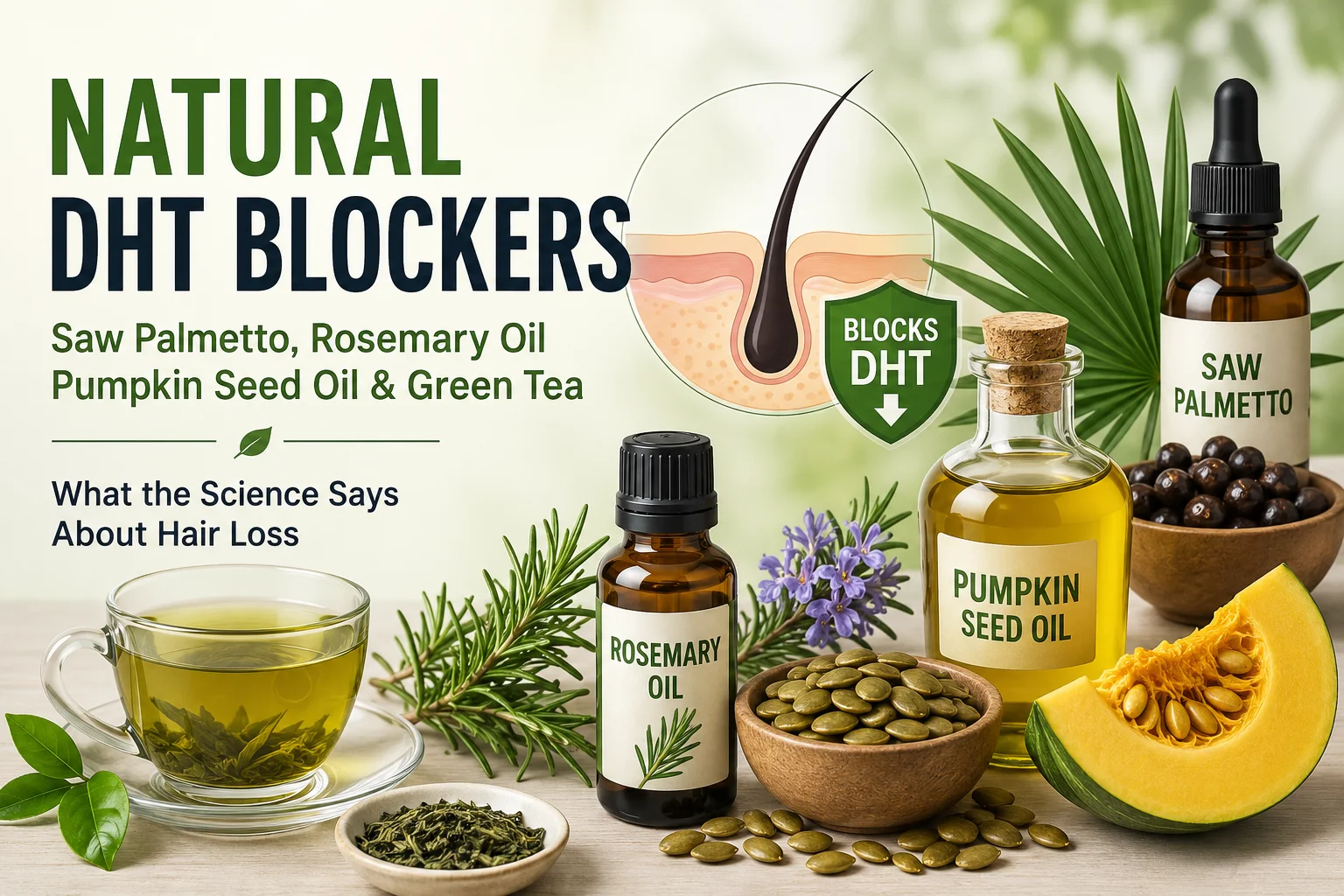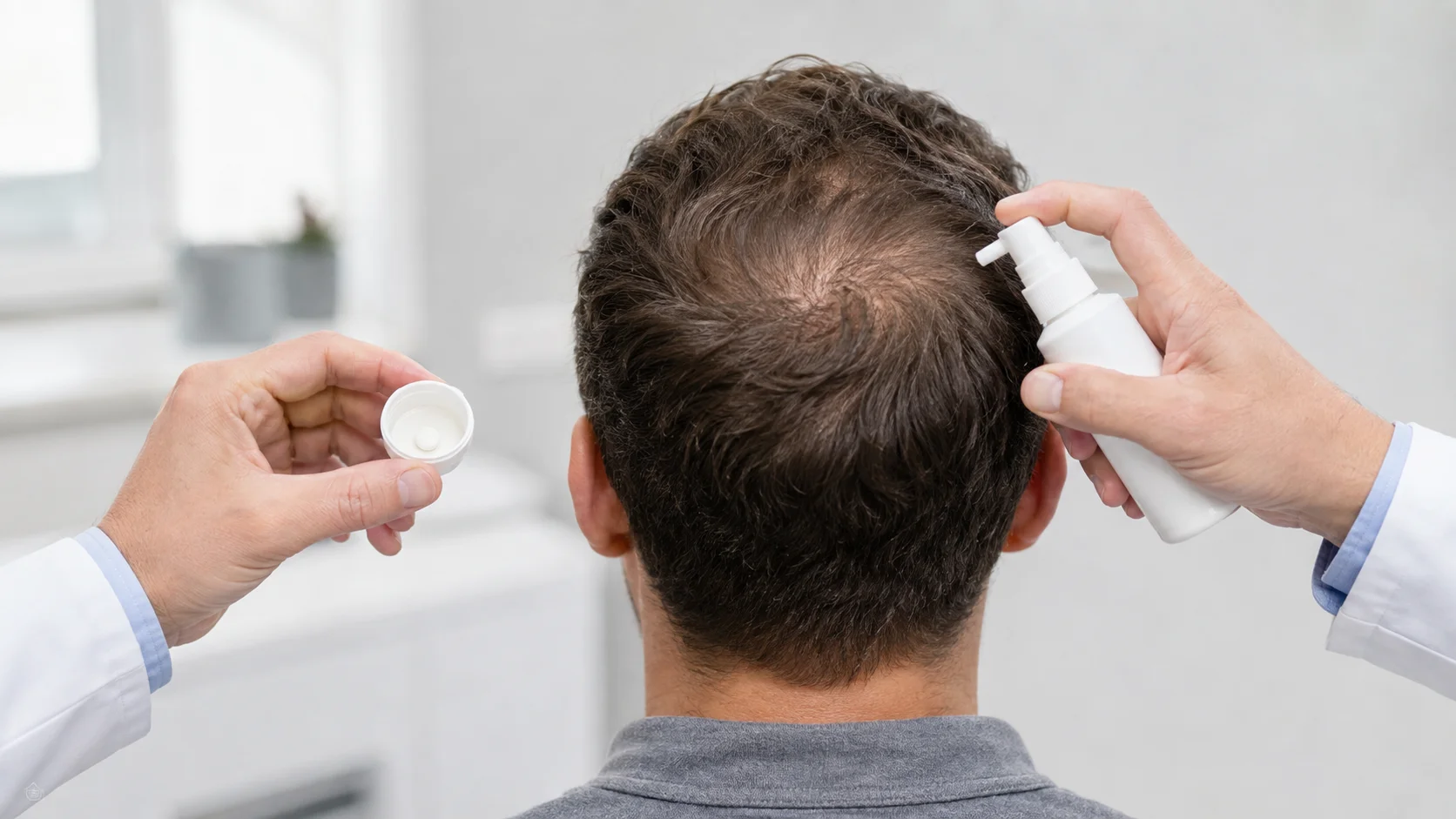
Finasteride has substantially stronger evidence than saw palmetto for treating male androgenetic alopecia. Saw palmetto has shown possible benefits in small studies, but the research is limited by modest sample sizes, variable formulations, short follow-up, and the frequent use of combination supplements.
Calling saw palmetto a “natural finasteride” oversimplifies the comparison. The two may influence related androgen pathways, but they are not equivalent in potency, standardization, regulation, or clinical evidence.
How Finasteride Works
Finasteride is a 5-alpha-reductase inhibitor. It reduces conversion of testosterone into dihydrotestosterone, or DHT, particularly through inhibition of the type II enzyme.
DHT contributes to gradual follicle miniaturization in genetically susceptible areas of the scalp. By reducing DHT, finasteride can slow progression and help some miniaturized follicles produce thicker hair.
Oral finasteride has extensive clinical evidence for male pattern hair loss. It is primarily a maintenance treatment: preventing or slowing additional loss is often a meaningful success even when dramatic regrowth does not occur.
How Saw Palmetto May Work
Saw palmetto is an extract derived from the fruit of a palm species. Laboratory research suggests that certain extracts may have antiandrogenic activity, including possible inhibition of 5-alpha-reductase.
The biological effect depends on how the plant material is extracted and standardized. Two supplements displaying the same ingredient name may contain different fatty-acid profiles, doses, purity levels, or additional substances.
A plausible mechanism does not establish clinical equivalence. The relevant question is whether a specific preparation has consistently improved hair outcomes in well-controlled human trials.
What the Evidence Says About Finasteride
Finasteride has been evaluated in large randomized trials and long-term follow-up studies in men with androgenetic alopecia. It can improve hair counts, slow progression, and produce visible improvement in some users.
Response varies by person and scalp region. Crown and mid-scalp thinning often respond more predictably than an advanced receding hairline, although frontal areas may still stabilize or improve.
Benefits generally require continued treatment. After finasteride is stopped, DHT activity returns and the underlying miniaturization process can resume.
What the Evidence Says About Saw Palmetto
Reviews of saw palmetto for alopecia have identified several small trials and prospective studies reporting reduced shedding, improved hair counts, or better clinical appearance. These findings justify further research, but they do not establish saw palmetto as a first-line equivalent to finasteride.
Many studies have one or more important limitations:
- Small participant groups
- Short treatment periods
- Inconsistent outcome measures
- Different oral and topical formulations
- Combination products containing other active ingredients
- Limited comparison with established treatments
- Potential manufacturer involvement
A two-year comparative study reported improvement with both treatments but favored finasteride, particularly for a larger proportion of participants. The study was relatively small, so it should not be treated as a definitive head-to-head answer by itself. Its result is nevertheless consistent with the broader difference in evidence quality.
Which Is More Effective?
For an appropriate adult man with confirmed androgenetic alopecia, finasteride is the better-supported option. It has more robust trials, standardized dosing, clearer prescribing information, and stronger evidence for slowing progression.
Saw palmetto may offer modest benefit for some people, but the expected magnitude and reliability are uncertain. It should not be presented as providing the same protection against ongoing miniaturization.
Someone who chooses saw palmetto because finasteride feels unacceptable should understand that this is a preference for a less established option, not a medically equivalent substitution.
Comparing Side Effects
Finasteride
Potential adverse effects include reduced libido, erectile or ejaculatory difficulties, reduced semen volume, breast tenderness or enlargement, and mood changes. These effects are reported by a minority of users, and many resolve after discontinuation, although persistent symptoms have also been reported.
Finasteride lowers PSA levels, which matters when prostate screening results are interpreted. Pregnancy-related precautions are essential because exposure can affect development of a male fetus.
Saw Palmetto
Saw palmetto is often marketed as gentle because it is plant-derived. Natural origin does not guarantee safety.
Reported effects include digestive discomfort, nausea, headache, fatigue, dizziness, and reduced libido. Product contamination, inconsistent concentration, or undeclared ingredients may add risk. Supplement quality can vary considerably between manufacturers and regions.
Saw palmetto may also be inappropriate during pregnancy or when antiandrogenic effects would be a concern. People taking anticoagulants, antiplatelet drugs, hormones, or other medications should discuss possible interactions and bleeding considerations with a clinician, even though interaction data remain limited.
Does Saw Palmetto Avoid Sexual Side Effects?
There is not enough high-quality evidence to guarantee that it does. Because saw palmetto may influence androgen pathways, sexual or reproductive effects are biologically possible and have been reported.
The true rate is difficult to calculate. Supplement studies may be too small or too short to detect uncommon problems, and adverse-event reporting is often less systematic than it is in prescription-drug trials.
Choosing saw palmetto solely on the assumption that it cannot cause sexual effects is therefore not evidence-based.
Prescription Medicine vs Dietary Supplement
Prescription finasteride must meet standards for dose consistency, manufacturing, and labeling. Its recognized risks are documented through clinical trials and post-marketing surveillance.
Saw palmetto supplements do not necessarily undergo the same premarket evaluation for hair-loss effectiveness. A label may state the amount of extract without showing that the formulation matches one used in a clinical study.
This difference affects both benefit and risk. Uncertainty about side effects is not the same as proof of greater safety.
Can Saw Palmetto and Finasteride Be Combined?
There is no strong evidence that adding saw palmetto to finasteride produces a meaningful additional benefit. Because both may affect related pathways, combining them may add uncertainty without providing a proven advantage.
People should disclose supplement use to their clinician. Products marketed for hair often contain multiple botanicals, vitamins, or minerals, making cumulative effects and interactions harder to assess.
Where Minoxidil Fits Into the Comparison
Minoxidil works differently from both finasteride and saw palmetto. It supports follicle growth activity rather than primarily lowering DHT.
For some people with androgenetic alopecia, finasteride and minoxidil are considered together because one addresses androgen-related miniaturization and the other promotes growth. Saw palmetto should not automatically replace either established treatment.
Treatment selection still depends on sex, age, diagnosis, health history, pregnancy potential, preferences, and tolerance of risk.
Who Should Avoid Self-Treatment?
Professional assessment is particularly important when hair loss is sudden, patchy, painful, inflamed, or accompanied by scarring. Diffuse shedding may be related to iron deficiency, thyroid disease, illness, medication changes, rapid weight loss, or other triggers that neither finasteride nor saw palmetto addresses.
Finasteride is not routinely appropriate for everyone, and its use in women requires specialist consideration. Saw palmetto also should not be assumed suitable for women, adolescents, pregnant individuals, or people with complex medication regimens.
A correct diagnosis is more valuable than choosing between two products based only on marketing claims.
Frequently Asked Questions
Is saw palmetto a natural DHT blocker?
Certain extracts may inhibit 5-alpha-reductase in laboratory settings, but the strength and clinical relevance vary by formulation. The term “natural DHT blocker” does not prove that a product treats hair loss effectively.
Is saw palmetto as effective as finasteride?
Current evidence does not support equivalence. Finasteride has stronger and more consistent evidence for male androgenetic alopecia.
How long does either treatment take to work?
Hair growth changes are slow. Finasteride commonly requires at least several months for a meaningful assessment. Saw palmetto studies have used varying timelines, and there is no well-established standard for expected response.
Does saw palmetto cause shedding at first?
An initial shed is not as clearly established for saw palmetto as it is for some hair-growth treatments. New or persistent shedding should not automatically be interpreted as proof that a supplement is working.
Can women take saw palmetto for hair loss?
Evidence in women is limited, and antiandrogenic or pregnancy-related concerns may apply. Women should obtain a diagnosis and professional guidance before using it.
Will either option regrow a receding hairline?
Finasteride may stabilize or modestly improve a miniaturizing frontal area, but complete restoration of an advanced hairline is unlikely. Evidence for saw palmetto at the hairline is insufficient to support a reliable prediction.
The Practical Conclusion
Finasteride is the more evidence-based choice for eligible men seeking medical treatment for androgenetic alopecia. Its potential adverse effects deserve clear discussion, but those risks are supported by a much more developed body of safety data.
Saw palmetto remains an unproven or supplementary option rather than a comparable replacement. Anyone considering it should evaluate the exact formulation, avoid exaggerated claims, and recognize that supplement status does not guarantee effectiveness, purity, or freedom from side effects.
This content is for general informational purposes and does not replace individualized medical advice, diagnosis, or treatment.