Vasodilators are medicines or naturally occurring substances that widen blood vessels. They do this by relaxing vascular smooth muscle or changing biological signals that control vessel tone. Widening a vessel can reduce resistance to blood flow, lower blood pressure, or improve circulation in a targeted part of the body.
Minoxidil is the vasodilator most closely associated with hair-loss treatment. However, it is important not to conclude that all vasodilators promote hair growth or that increasing scalp blood flow alone can reverse every form of hair loss.
How Vasodilation Works
Arteries and veins contain smooth muscle in their walls. When this muscle contracts, the vessel becomes narrower. When it relaxes, the vessel widens.
Dilation of arteries reduces the resistance against which the heart pumps and can lower blood pressure. Dilation of veins allows more blood to remain in the venous circulation, reducing the amount returning to the heart.
Some medicines act directly on vascular smooth muscle. Others alter calcium movement, nitric oxide signaling, the renin-angiotensin system, or nerve signals involved in vessel constriction.
The cardiovascular result depends on which vessels are affected, how strongly they respond, and the person’s underlying condition.
Major Types of Vasodilating Medicines
“Vasodilator” is a functional description rather than one single drug class. Medicines can produce vasodilation through different mechanisms.
Direct-Acting Vasodilators
Direct vasodilators act on vascular smooth muscle. Minoxidil and hydralazine are examples used systemically in selected cases of hypertension.
Systemic minoxidil is a powerful arterial vasodilator. Its blood-pressure effects can trigger fluid retention and a faster heartbeat, which is why its approved cardiovascular use requires careful medical management.
Calcium Channel Blockers
Some calcium channel blockers relax arterial smooth muscle and are used for high blood pressure, angina, or other cardiovascular conditions. Their effects and clinical uses vary within the class.
These medicines are not standard treatments for androgenetic alopecia simply because they dilate blood vessels.
Nitrates and Nitric Oxide-Related Medicines
Nitrates can dilate veins and, at certain doses, arteries. They are commonly associated with the treatment or prevention of angina.
Headache and low blood pressure are well-known limitations. Combining nitrates with certain erectile-dysfunction medicines can cause a dangerous fall in blood pressure.
Nitrates have no established routine role in treating pattern hair loss.
Medicines Affecting the Renin-Angiotensin System
Angiotensin-converting enzyme inhibitors and angiotensin receptor blockers reduce signals that promote vasoconstriction. They are used for conditions including hypertension, heart failure, and kidney protection in selected patients.
Their medical benefits should not be confused with direct stimulation of scalp hair growth.
What Are the Medical Benefits?
Vasodilating medicines can be useful when excessive vascular resistance contributes to disease. Depending on the medication and clinical context, potential benefits include:
- Lowering high blood pressure
- Reducing the heart’s workload
- Improving symptoms of angina
- Supporting treatment of heart failure
- Relieving certain forms of vascular spasm
- Managing specific pulmonary vascular disorders
The correct medicine depends on which circulation needs to be affected. A drug appropriate for severe hypertension may be unsuitable for a healthy person seeking hair growth.
Why Minoxidil Is Used for Hair Loss
Minoxidil was originally developed as an oral treatment for severe hypertension. Increased hair growth was observed during systemic treatment, leading to the development of topical scalp formulations.
Although minoxidil is a vasodilator, its hair-growth effect is not adequately explained by “more blood flow” alone. Its active metabolite appears to influence follicular signaling, prolong the anagen growth phase, and increase the performance or diameter of some miniaturized hairs. The complete mechanism remains incompletely understood.
Minoxidil does not correct every underlying cause of hair loss. It does not replace follicles destroyed by scarring, eliminate autoimmune activity in alopecia areata, correct nutritional deficiency, or stop repeated traction.
Topical Minoxidil
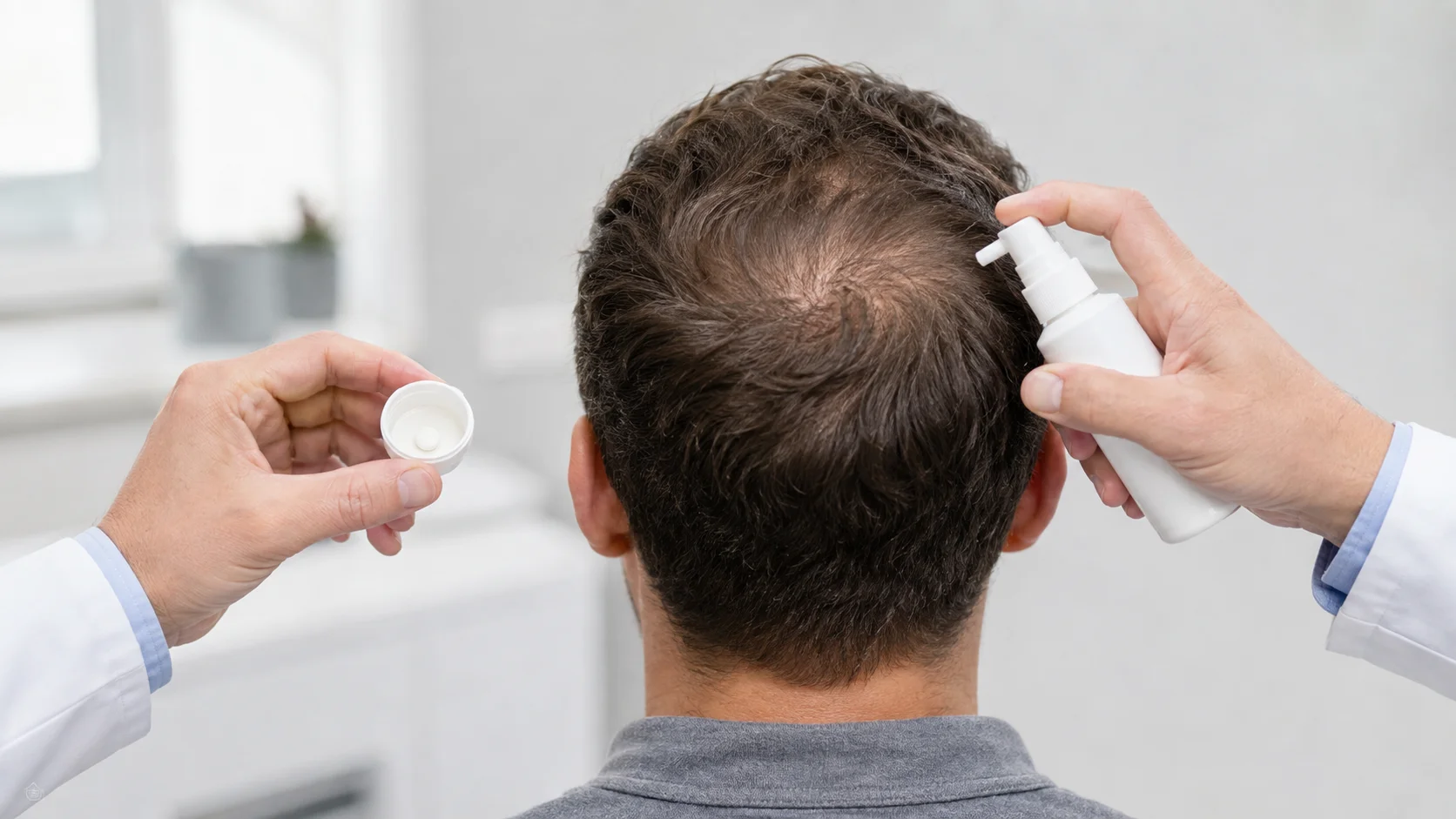
Topical minoxidil is used primarily for gradual pattern hair loss in suitable adults. It is applied directly to the scalp and has substantially less systemic exposure than oral treatment when used correctly.
Expected limitations include:
- Several months may be needed to assess benefit.
- Temporary early shedding can occur.
- Improvement varies between individuals.
- Continued use is generally needed to maintain results.
- Advanced longstanding loss is less likely to respond fully.
Scalp irritation, dryness, flaking, contact dermatitis, and unwanted facial hair growth can occur. Foam and liquid formulations may differ in tolerability because of their inactive ingredients.
Applying extra medication does not accelerate growth and may increase adverse effects. Topical minoxidil should not be applied to an inflamed, infected, injured, or severely irritated scalp without medical guidance.
Low-Dose Oral Minoxidil
Low-dose oral minoxidil is prescribed off-label by some clinicians for selected hair-loss patients. Oral treatment avoids application difficulties and may help individuals who do not tolerate or respond adequately to topical therapy.
Because oral minoxidil enters the systemic circulation, it can produce cardiovascular and fluid-related effects even at lower doses. Possible adverse effects include:
- Unwanted facial or body hair
- Ankle swelling or fluid retention
- Dizziness or lightheadedness
- Rapid heartbeat or palpitations
- Headache
- Blood pressure reduction
- Weight gain related to fluid
Rare but serious complications require particular caution. Suitability depends on blood pressure, heart and kidney history, other medicines, pregnancy considerations, and the ability to monitor treatment.
Oral minoxidil should not be treated as an ordinary supplement or used without a prescription.
Do Other Vasodilators Treat Hair Loss?
There is no general rule that a vasodilator improves hair density. Most medications in this broad category have not demonstrated a clinically useful effect on androgenetic alopecia.
Hair follicles are regulated by genetics, hormones, immune activity, growth-cycle signaling, inflammation, nutrition, and local tissue biology. Blood supply is necessary for healthy follicles, but widening vessels does not override these other factors.
Products marketed as “circulation boosters” should not be assumed to treat hair loss. Warmth, tingling, or temporary scalp redness is not evidence that follicles are being restored.
General Risks of Vasodilators
Adverse effects depend on the specific medicine and route of administration. Possible class-related effects include:
- Headache
- Flushing
- Dizziness
- Low blood pressure
- Fainting
- Reflex rapid heartbeat
- Fluid retention
- Swelling
- Interactions with other blood-pressure medicines
Some vasodilators can worsen angina or place stress on the heart if compensatory changes are not controlled. Others have medicine-specific risks unrelated to vasodilation.
A person taking antihypertensives, diuretics, nitrates, heart-rhythm medicines, or erectile-dysfunction treatment should discuss possible interactions before using systemic hair-loss medication.
When Hair Loss Should Be Diagnosed First
Over-the-counter topical minoxidil labeling is intended for specific presentations of gradual pattern thinning. Medical assessment is appropriate when hair loss is sudden, patchy, unexplained, associated with childbirth, or accompanied by pain, redness, infection, heavy scale, or scarring.
Diagnosis is also important when the person is younger than the labeled age, has cardiovascular disease, is pregnant or breastfeeding, or takes medicines that affect blood pressure.
Using a growth stimulant without identifying the cause can delay treatment for inflammatory, endocrine, nutritional, or scarring disorders.
Frequently Asked Questions
Are vasodilators blood thinners?
No. Vasodilators widen blood vessels, while anticoagulants and antiplatelet medicines reduce blood clot formation through different mechanisms.
Does increased scalp circulation always improve hair growth?
No. Adequate circulation is necessary, but most hair disorders are not caused simply by insufficient scalp blood flow.
Is minoxidil’s hair effect entirely due to vasodilation?
Probably not. Its follicular effects involve growth-cycle and cellular signaling mechanisms that are not fully explained by wider blood vessels.
Is oral minoxidil the same as topical minoxidil?
They contain the same active medicine but create different exposure and risk. Oral minoxidil has systemic cardiovascular effects and is used off-label for hair loss.
Can topical minoxidil affect blood pressure?
Systemic absorption is usually limited when it is applied correctly, but dizziness, rapid heartbeat, swelling, chest symptoms, or faintness require medical attention.
Do natural vasodilators treat pattern hair loss?
A substance’s ability to affect vessels does not establish that it can preserve or regrow scalp hair. Clinical evidence and safety matter more than the vasodilator label.
Understanding the Connection
Vasodilators have important cardiovascular uses, but their effects are medication-specific. Minoxidil occupies a special place because it has demonstrated hair-growth activity, not because every drug that widens vessels treats alopecia. Selecting it safely requires the correct diagnosis, an appropriate route, realistic expectations, and attention to cardiovascular risk.
This content is for general informational purposes and does not replace individualized medical advice, diagnosis, or treatment.