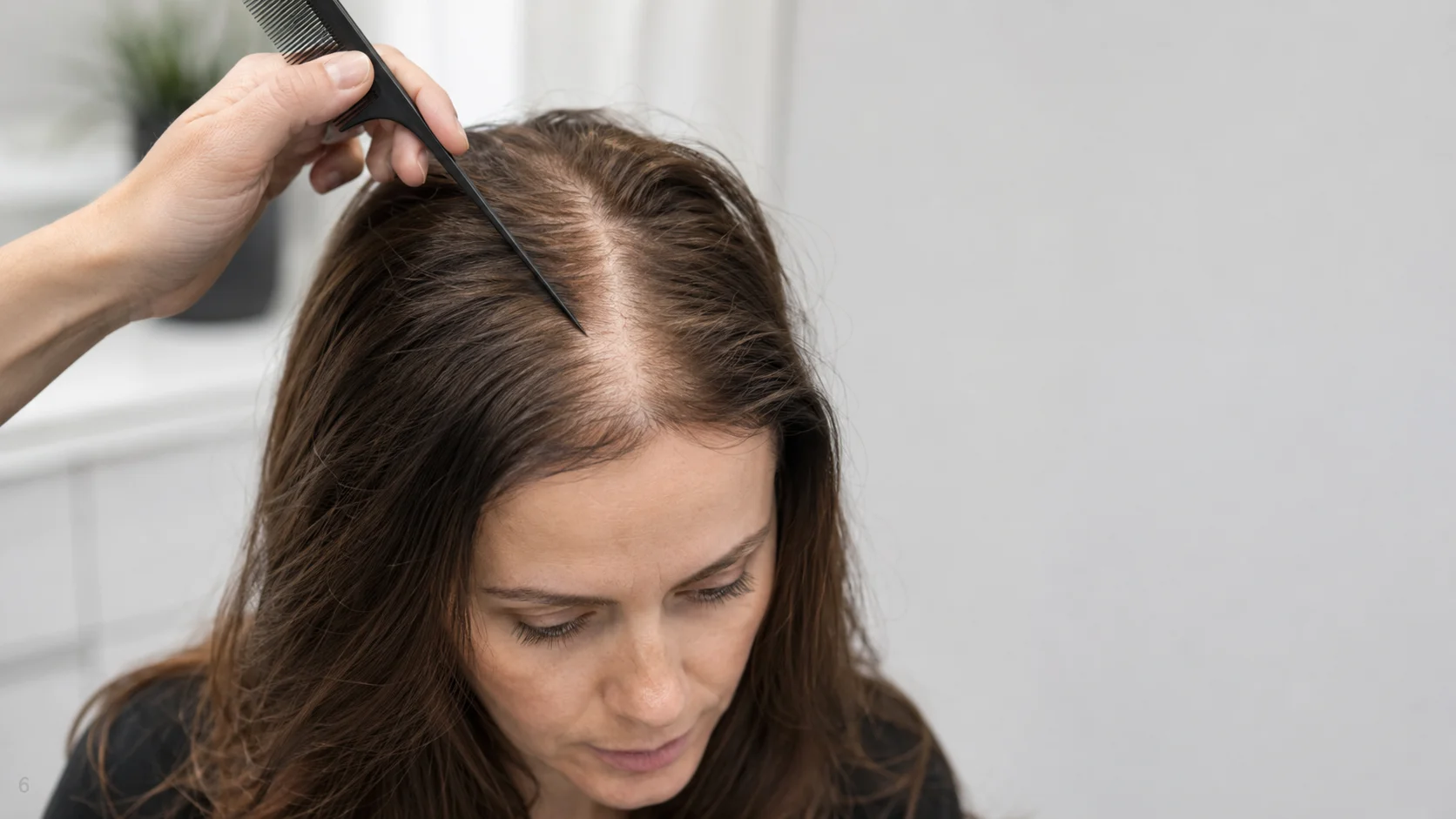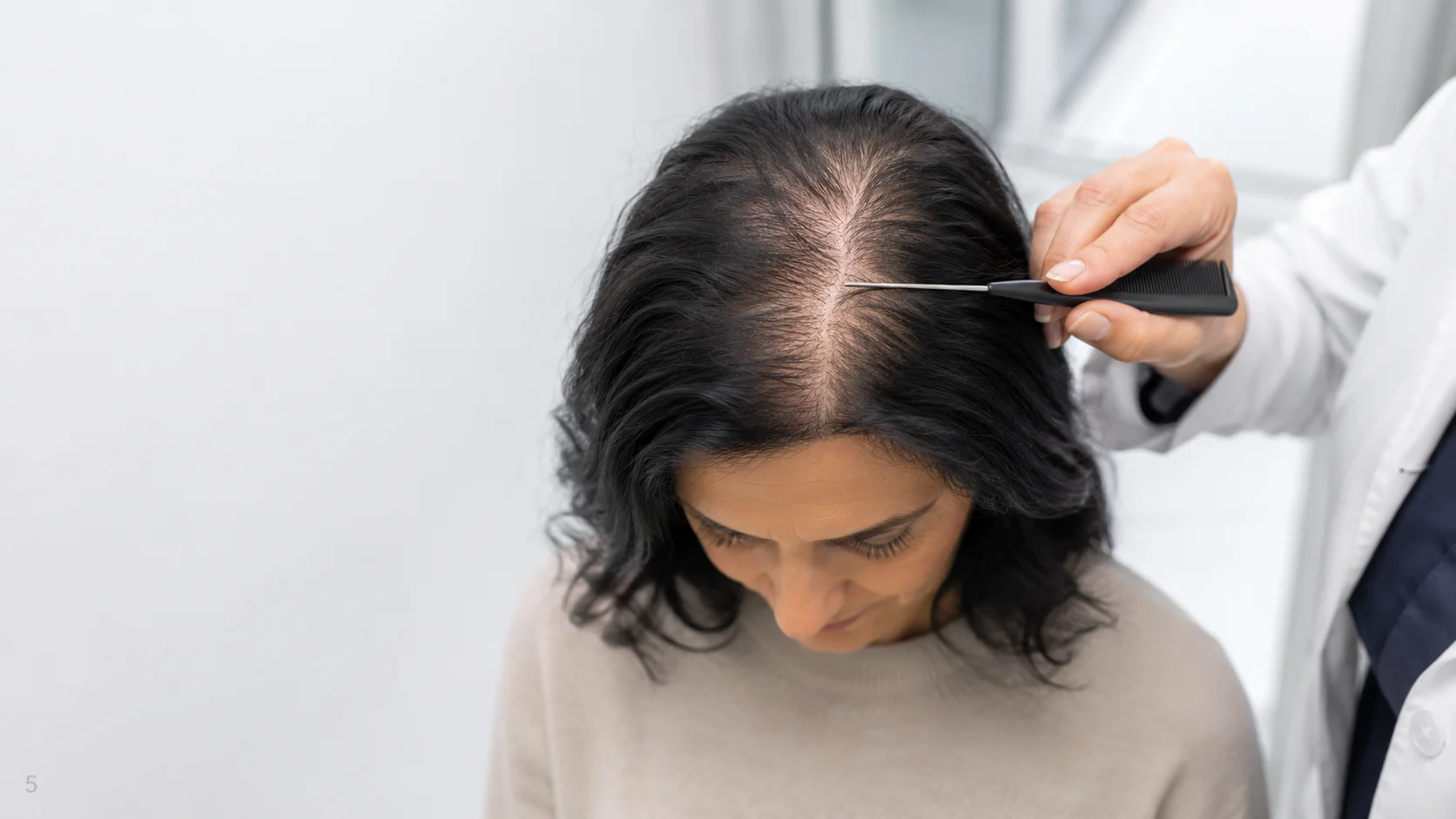
The Ludwig scale is a three-stage visual classification used to describe the severity of female pattern hair loss across the crown and upper scalp. It provides shared language for recording visible thinning, discussing progression, and comparing changes over time.
The scale is useful, but it is not a diagnosis and cannot determine the cause of thinning on its own. A person may resemble one of its stages while also having excessive shedding, nutritional deficiency, inflammatory scalp disease, or another condition requiring different management.
What the Ludwig Scale Measures
The Ludwig system focuses on diffuse reduction in density over the central and upper scalp. In the classic pattern, the frontal hairline is relatively preserved while the part becomes wider and the crown becomes increasingly visible.
The three grades represent progressively greater loss of visible coverage:
- Ludwig I: mild thinning
- Ludwig II: moderate and readily visible thinning
- Ludwig III: severe loss of density over the affected region
These stages describe appearance rather than the number of hairs lost, speed of progression, follicular health, or likelihood of responding to treatment.
Ludwig Stage I
Stage I involves mild thinning over the crown or central scalp. The part may begin to widen, and the scalp can become more visible under bright overhead light or when the hair is wet.
At this stage, the overall hairstyle may still provide good coverage. Changes are sometimes noticed through a smaller ponytail, reduced volume, increased use of styling products, or difficulty maintaining a previous part.
Stage I can be overlooked because gradual miniaturization does not always cause dramatic shedding. It is also the stage at which people may have already lost a meaningful amount of volume compared with their personal baseline.
Early recognition is valuable because active follicles are generally more responsive to preservation-focused treatment than areas with advanced miniaturization.
Ludwig Stage II
Stage II describes more pronounced thinning across the crown. The central part is noticeably wider, and scalp visibility is less dependent on harsh lighting or wet hair.
Hair remains present throughout the region, but many strands may be finer and shorter. Styling becomes less effective at concealing the reduction in density.
This stage can have a substantial emotional impact even though it is categorized as moderate. A visual grading system does not measure distress, social effects, or the amount of change relative to a person’s former density.
Ludwig Stage III
Stage III represents advanced thinning or near-complete loss of visible coverage within the classic crown area. The affected scalp is clearly exposed, although hair around the sides and back may remain denser.
Severe female pattern hair loss does not necessarily create the same distribution commonly seen in advanced male pattern baldness. The Ludwig scale was designed specifically around diffuse upper-scalp thinning.
Treatment may still help stabilize progression or improve some miniaturized follicles, but complete density restoration is unlikely. Donor density may also limit surgical options if thinning extends beyond the visible crown.
Symptoms Associated With Female Pattern Hair Loss
Female pattern hair loss usually develops gradually over months or years. The scalp skin typically appears normal, and follicular openings remain visible because this is a nonscarring condition.
Common signs include:
- Progressive widening of the central part
- Reduced density over the top of the scalp
- Finer and shorter hairs in affected regions
- Greater scalp visibility
- Loss of styling volume
- Variable increases in shedding
- Relative preservation of the frontal hairline
Marked itching, burning, pain, scale, pustules, or shiny areas without follicular openings are not explained by a Ludwig grade. These findings should prompt assessment for inflammatory or scarring disease.
Why Self-Grading Has Limitations
Hair color, scalp color, curl pattern, length, styling, lighting, and camera exposure all influence visible density. Two people with similar follicle counts may appear to have different Ludwig stages.
The categories are broad and may not capture subtle progression. They also do not describe every female pattern. Some women develop a frontal “Christmas tree” distribution, temporal recession, or a pattern resembling male-pattern loss.
Other grading systems may be more suitable in these situations. Clinicians may also rely on part-width measurements, dermoscopy, hair-density counts, diameter variation, and standardized photographs.
How Female Pattern Hair Loss Is Diagnosed
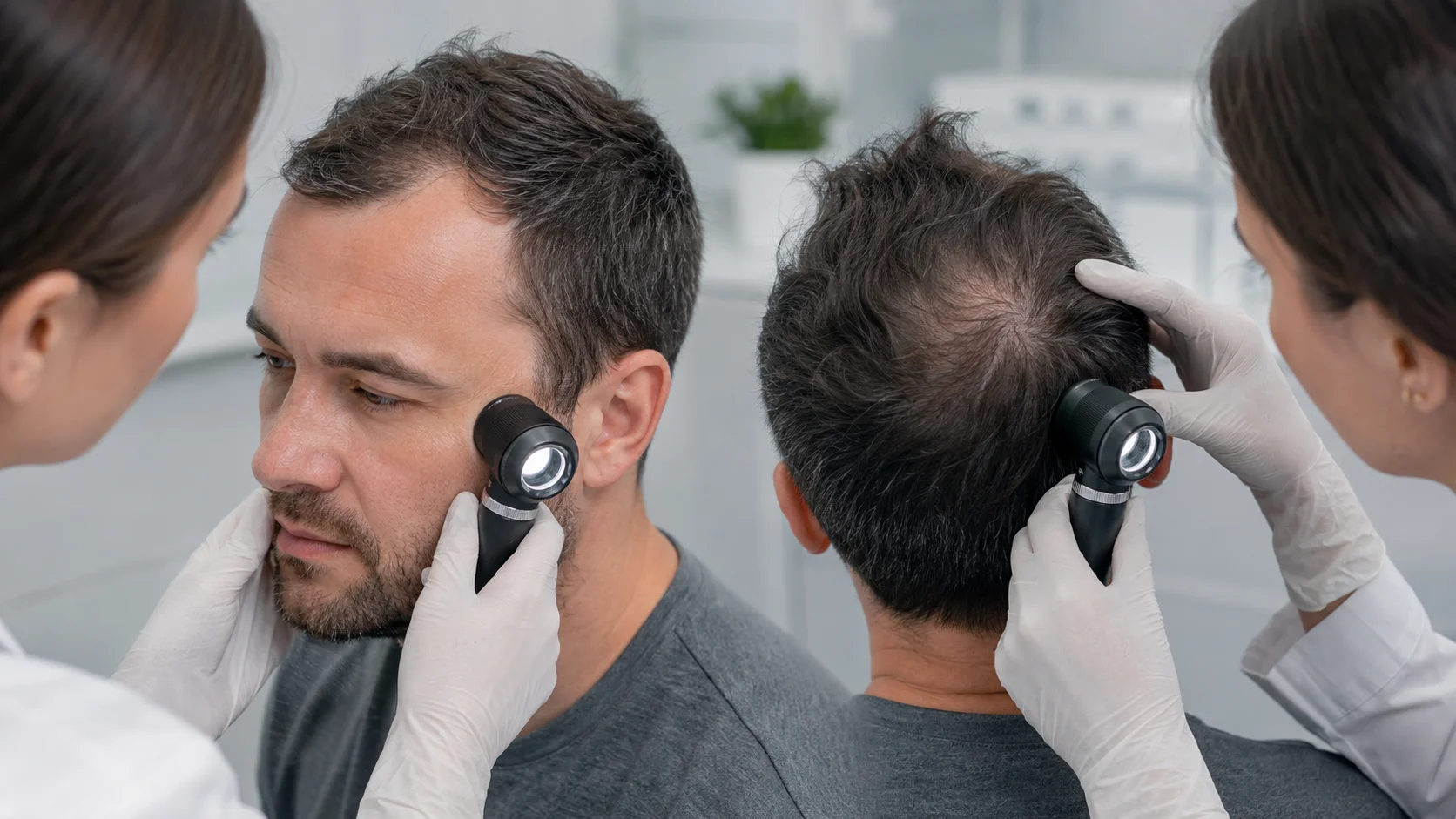
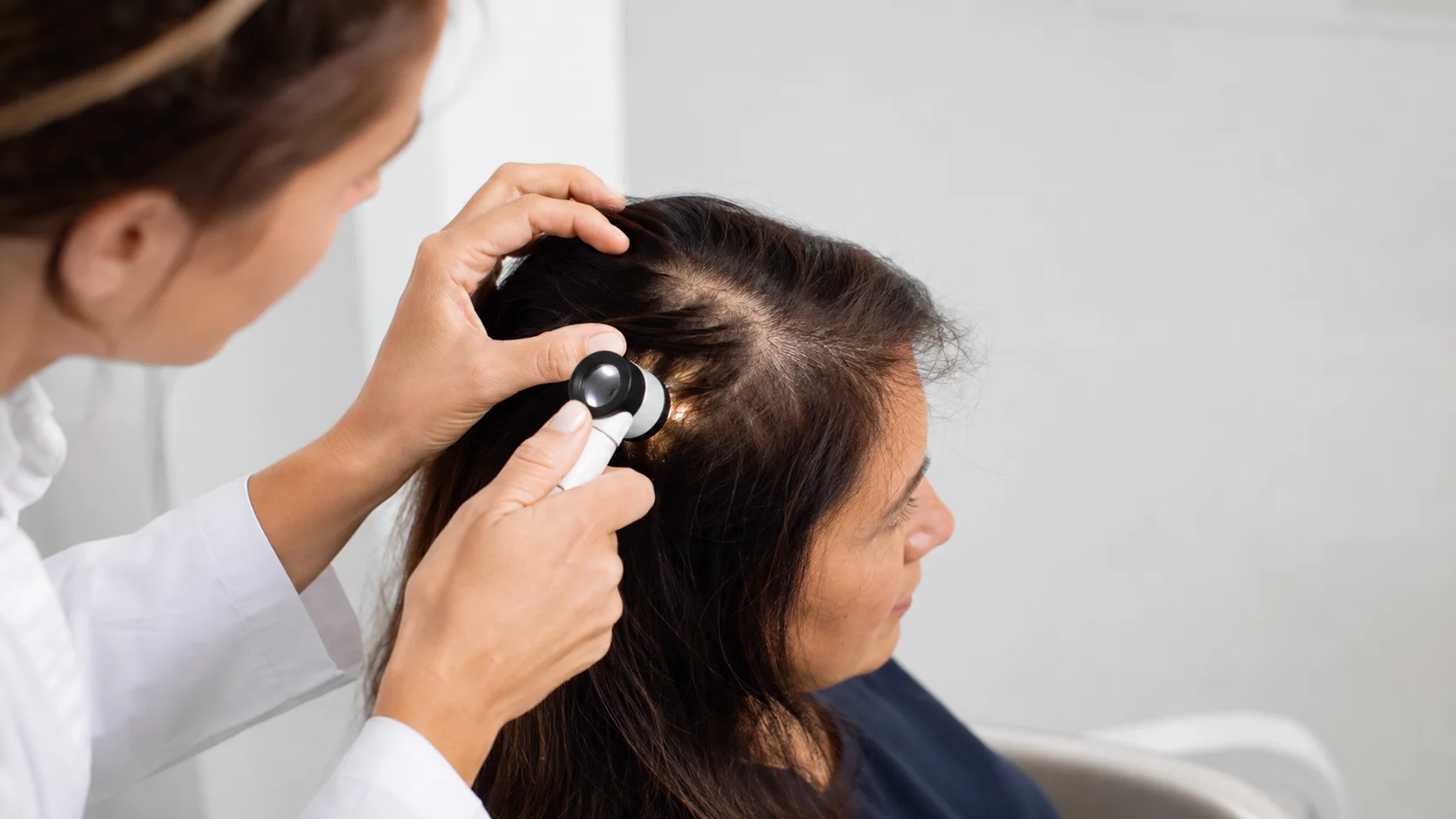
A clinician evaluates the pattern, timing, family history, shedding, medications, reproductive history, recent illness, diet, and hair-care practices. Examination looks for miniaturization and for signs inconsistent with uncomplicated pattern loss.
Dermoscopy commonly shows variation in shaft diameter and more miniaturized hairs in the affected region than in relatively preserved areas.
Laboratory tests may be considered when there is heavy shedding, fatigue, dietary risk, menstrual irregularity, new facial hair growth, acne, or another reason to suspect iron deficiency, thyroid disease, nutritional problems, or androgen excess.
A biopsy is reserved for uncertain cases or suspected scarring alopecia.
Treatment Options Across the Ludwig Stages
Treatment is not selected solely by stage. Age, medical history, pregnancy potential, scalp condition, rate of progression, and personal preferences are equally important.
Topical Minoxidil
Topical minoxidil is a commonly used treatment for female pattern hair loss. It may prolong the growth phase and increase the diameter of some miniaturized hairs.
Consistent use for several months is usually needed before benefit can be assessed. Temporary early shedding and scalp irritation can occur. Improvement generally diminishes if treatment is discontinued.
Prescription Oral Treatment
Low-dose oral minoxidil is used off-label for selected patients. Because it can affect blood pressure, heart rate, fluid balance, and body-hair growth, it requires medical assessment and monitoring.
Antiandrogen medicines may be considered for suitable women, particularly when clinical features suggest androgen involvement. Pregnancy prevention and reproductive counseling are essential with medicines that could affect fetal development.
No oral option is appropriate for everyone, and combining treatments should be based on medical judgment rather than Ludwig stage alone.
Hair Transplantation
Hair transplantation may help selected women with stable loss and adequate donor density. Diffuse thinning within the donor region can make surgery inappropriate or limit the achievable result.
Surgery redistributes existing follicles and does not stop continued miniaturization. Long-term planning must account for possible progression around transplanted hair.
Cosmetic Density Management
Hair fibers, scalp powders, volumizing products, hairpieces, and strategic styling can reduce visible contrast. These approaches may provide immediate cosmetic improvement, but they do not alter the biological progression of female pattern hair loss.
Tracking Progress Accurately
A stage should not be assigned from one casual photograph. Useful monitoring involves consistent hair preparation, camera distance, part placement, lighting, and angles.
Photographs taken every three to six months are often more informative than daily observation. Clinicians may combine images with dermoscopic measurements and reports of shedding or treatment tolerance.
Remaining within the same Ludwig stage does not necessarily mean nothing has changed. Density can improve or decline without crossing the broad boundary between grades.
Frequently Asked Questions
Does Ludwig I always progress to Ludwig III?
No. Progression varies, and treatment may slow or stabilize loss. The scale cannot predict an individual’s future stage.
Can the Ludwig scale diagnose female pattern hair loss?
No. It grades a visible pattern. Diagnosis requires consideration of history, scalp findings, and possible alternative causes.
Can treatment move someone to a lower stage?
Improved density may change the visible grade in some cases, especially when treatment begins early. A full-stage improvement should not be expected or guaranteed.
Is severe shedding part of every Ludwig stage?
No. Miniaturization can reduce density gradually without obvious heavy shedding. Sudden shedding may indicate an additional condition.
Which stage is best for starting treatment?
Assessment is worthwhile as soon as persistent widening of the part or reduced density becomes apparent. Earlier intervention generally offers more opportunity to preserve active follicles.
Using the Scale Constructively
The Ludwig scale is best treated as a descriptive reference rather than a verdict. It can document the visible severity of crown thinning, but it cannot explain why loss is occurring or prescribe the correct treatment. Combining standardized grading with a proper diagnostic evaluation leads to more realistic goals and safer treatment decisions.
This content is for general informational purposes and does not replace individualized medical advice, diagnosis, or treatment.