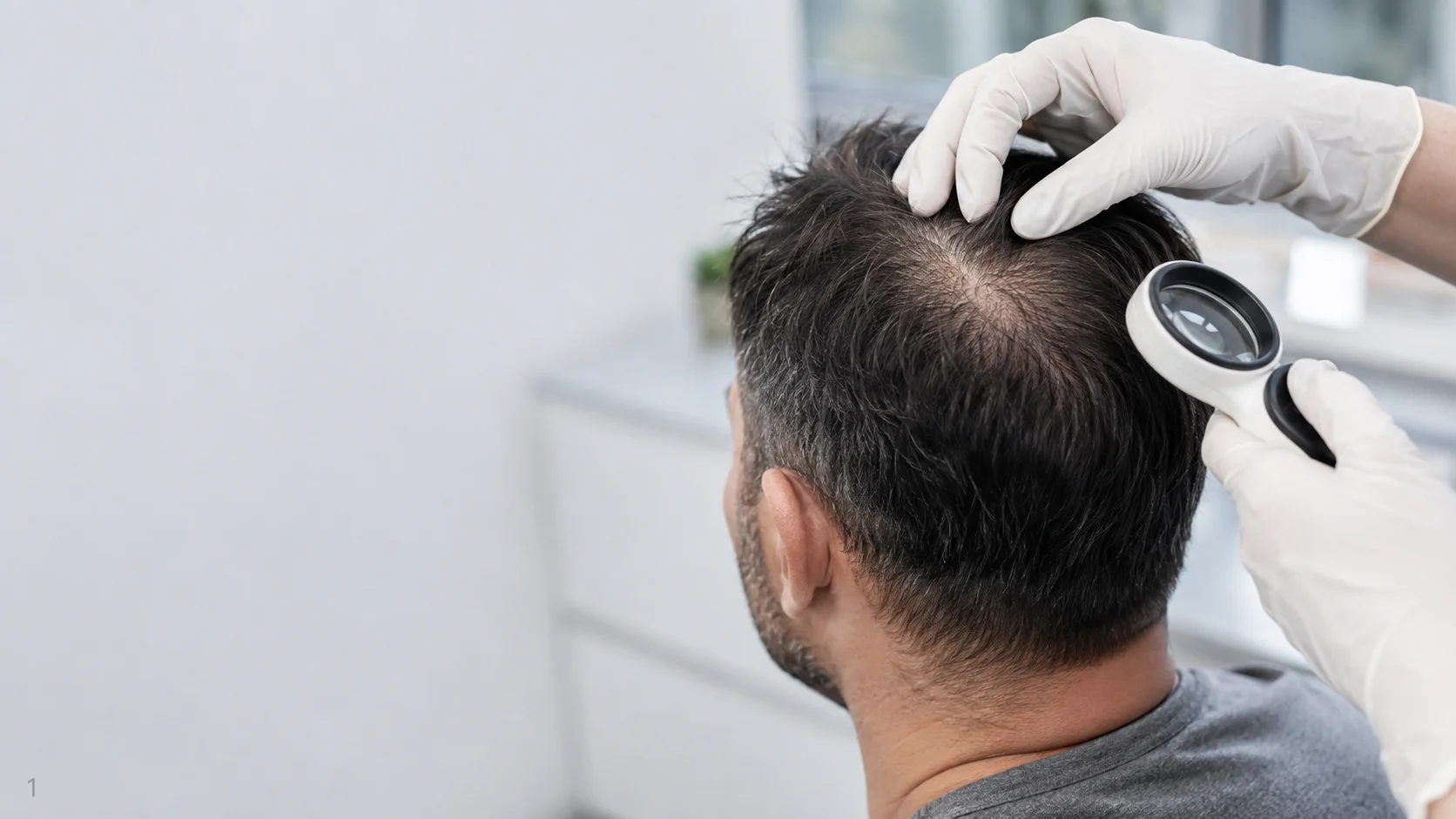
Androgenetic alopecia is the most common form of progressive hair loss. It affects people of all sexes, although its appearance and rate of progression vary considerably. The condition is often called male pattern hair loss or female pattern hair loss, depending on the pattern in which thinning develops.
This is a nonscarring form of alopecia. Hair follicles become smaller over time, but they are not usually destroyed. Early assessment matters because treatment is generally better at preserving existing hair than restoring density after advanced miniaturization.
What Causes Androgenetic Alopecia?
Androgenetic alopecia develops through a combination of inherited susceptibility, hormonal influences, age, and changes within the hair follicle.
In susceptible follicles, androgens—particularly dihydrotestosterone—can shorten the active growth phase of the hair cycle. Successive hairs become shorter, finer, and less pigmented. This process is known as follicular miniaturization.
Genetics can be inherited from either side of the family. A person may develop pattern hair loss even without an obvious family history, and having affected relatives does not predict exactly when it will begin or how far it will progress.
Hormonal involvement is not identical in everyone. Many women with female pattern hair loss have normal circulating androgen levels. Increased follicular sensitivity may be more important than an abnormal hormone concentration.
Common Symptoms and Patterns
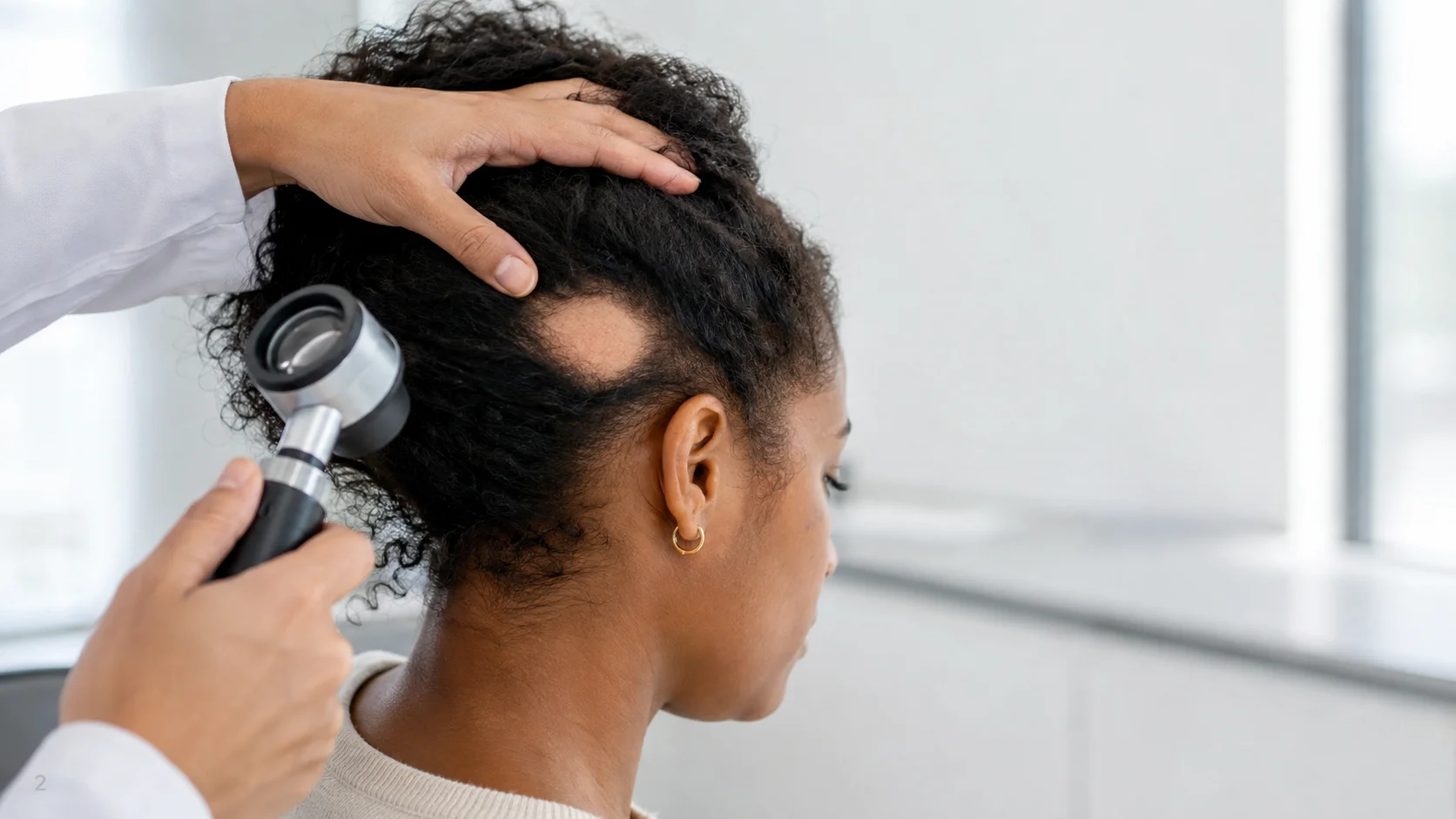
Androgenetic alopecia usually progresses gradually rather than causing sudden, clearly defined bald patches. The scalp generally looks normal, without the marked redness, scale, pain, or loss of follicular openings associated with some inflammatory and scarring disorders.
Common signs include:
- Reduced hair density in a recognizable distribution
- Increasing visibility of the scalp
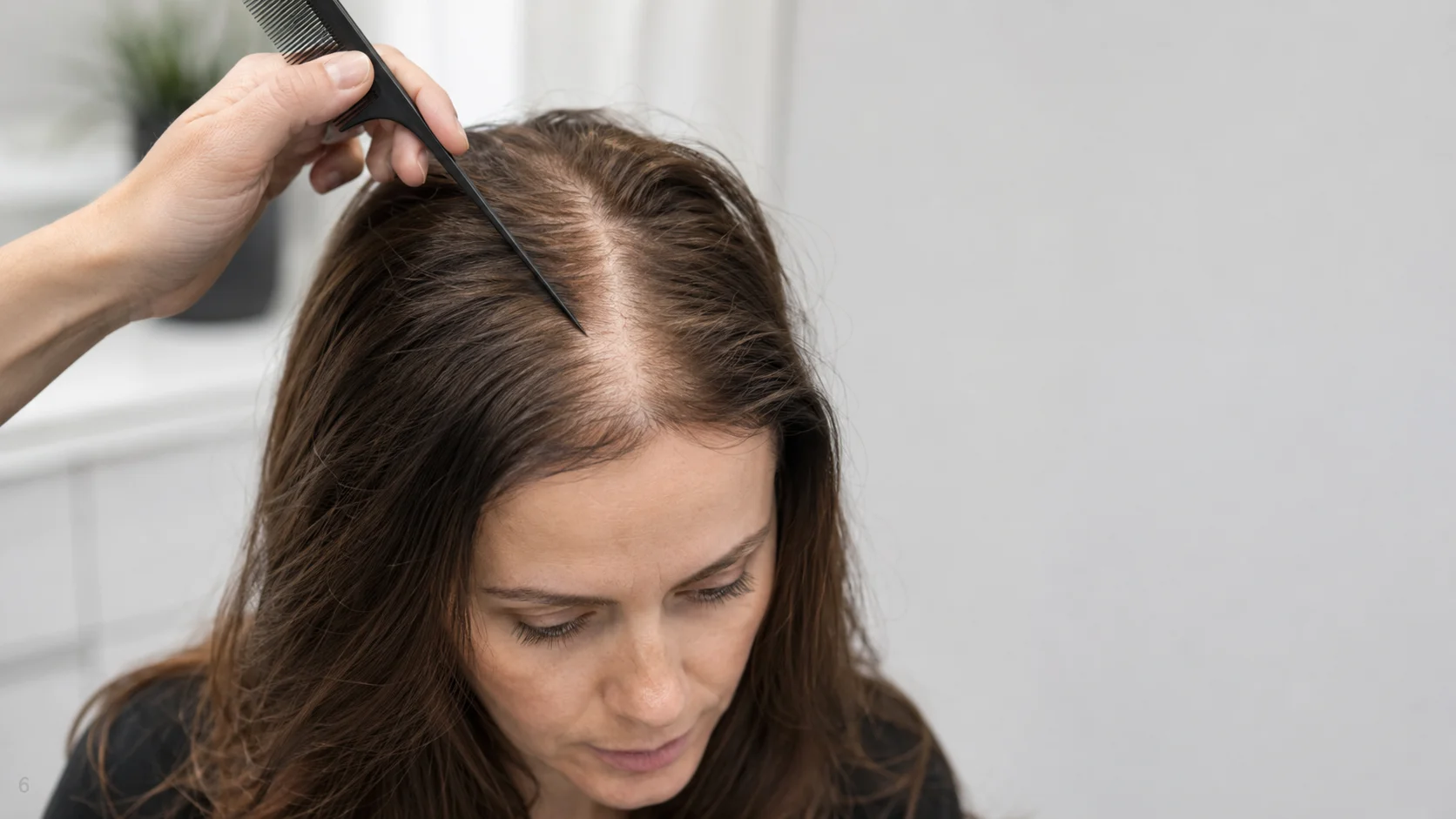
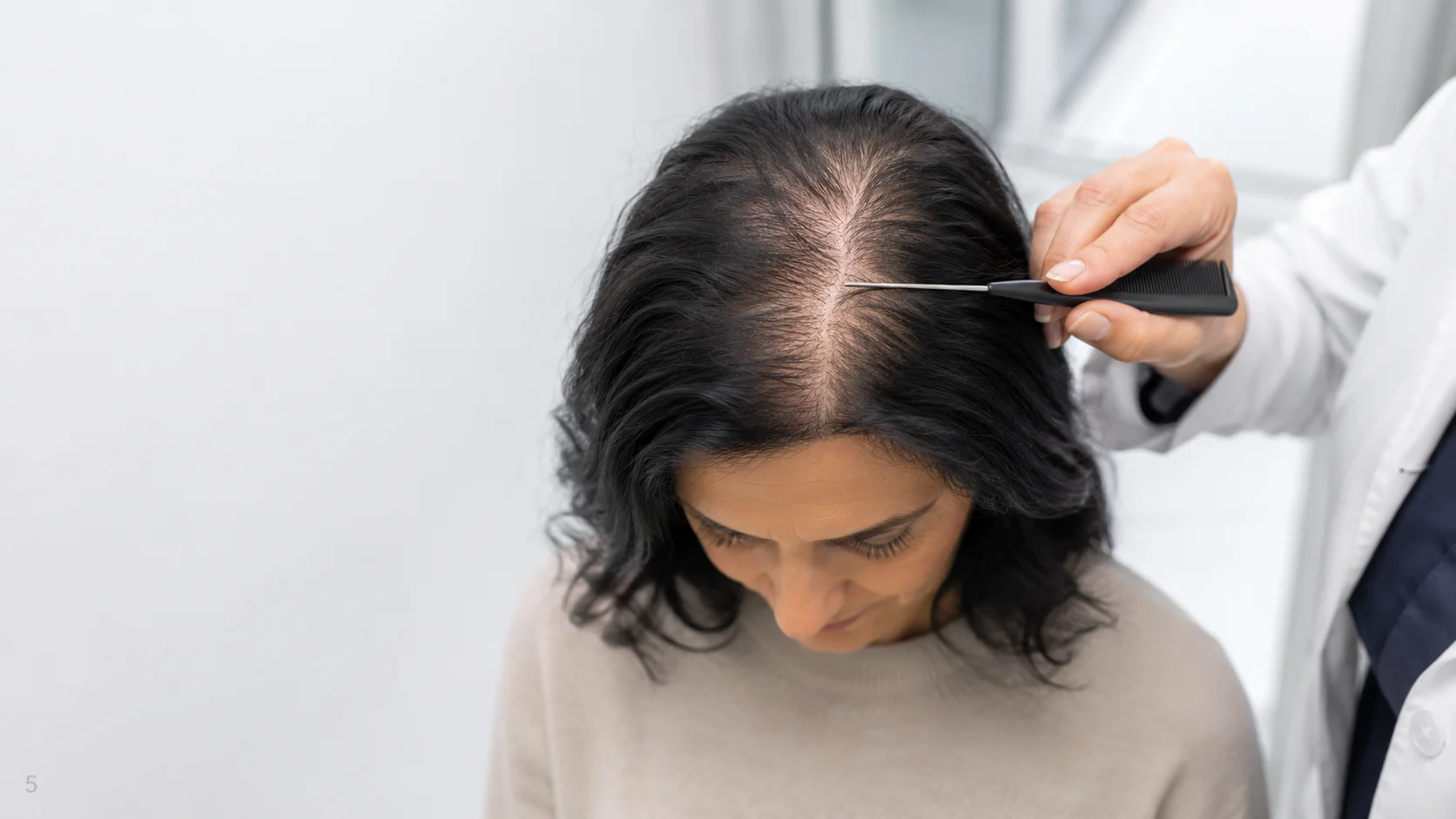
- A wider central part
- Recession at the temples or frontal hairline
- Thinning over the crown
- Finer, shorter hairs in affected areas
- Greater difficulty achieving previous hairstyles or volume
Some people notice increased shedding, but heavy shedding is not required. Hair may become visibly thinner because miniaturized strands provide less coverage even when the daily shedding rate has not changed dramatically.
Typical Male Pattern
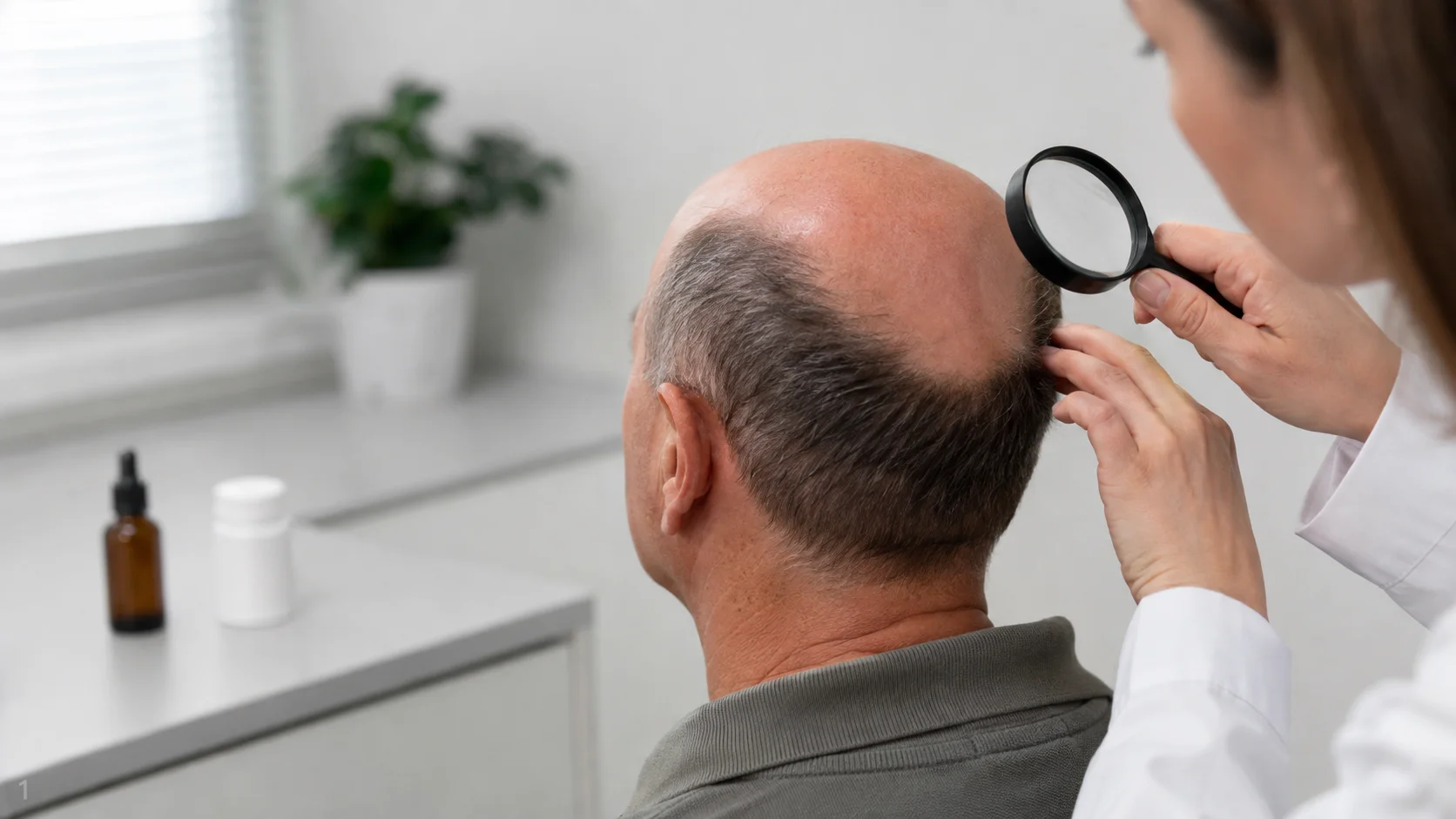
Male pattern hair loss often begins with recession at the temples, thinning of the frontal scalp, or reduced density at the crown. These areas may expand and eventually meet, while hair around the sides and back is relatively preserved.
Typical Female Pattern
Female pattern hair loss commonly produces diffuse thinning across the central and upper scalp. Widening of the part is often an early sign. The frontal hairline may remain relatively intact, although some women develop frontal accentuation, temporal recession, or another variation.
How the Condition Progresses
Progression is highly individual. Some people experience slow change over decades, while others develop substantial thinning over a shorter period. The process may also appear to accelerate during periods of hormonal change, illness, nutritional deficiency, or stress if another type of shedding occurs at the same time.
Hair follicles do not usually disappear immediately. They produce progressively finer hairs through repeated growth cycles. Treatment started while follicles are still active has a better chance of maintaining or improving visible coverage.
Pattern hair loss does not automatically progress to complete baldness. Age of onset, inherited susceptibility, pattern, treatment response, and other health factors all influence the outcome.
How Androgenetic Alopecia Is Diagnosed
Diagnosis usually begins with a medical history and scalp examination. A clinician considers the distribution and speed of thinning, family history, medications, health changes, hair-care practices, and associated symptoms.
Scalp magnification may reveal variation in hair diameter and an increased proportion of miniaturized hairs. Standardized photographs can document changes over time.
Blood tests are not necessary for every person. They may be appropriate when the history suggests iron deficiency, thyroid disease, nutritional problems, or hormonal imbalance. Women with irregular menstrual cycles, new facial hair growth, persistent acne, or other signs of androgen excess may need additional evaluation.
A scalp biopsy is occasionally used when the diagnosis remains uncertain or when inflammation and scarring must be excluded.
Treatment Options
Treatment should match the person’s diagnosis, medical history, degree of hair loss, reproductive considerations, and preferences. No option can guarantee full restoration.
Topical Minoxidil
Topical minoxidil is widely used for male and female pattern hair loss. It may prolong the growth phase and improve the performance of miniaturized follicles.
Temporary increased shedding can occur after treatment begins as follicles shift between growth phases. Results usually require months of consistent use. Benefits generally diminish after treatment is stopped.
Scalp irritation, unwanted facial hair growth, and difficulty maintaining the routine are possible limitations.
Oral Medications
Finasteride may be prescribed for suitable men to reduce the conversion of testosterone to dihydrotestosterone. Sexual adverse effects and other potential risks should be reviewed with a clinician. It is generally inappropriate during pregnancy and requires careful reproductive counseling.
Some women may be offered antiandrogen treatment, such as spironolactone, when clinically appropriate. Oral minoxidil is also used off-label in selected patients. These medicines can cause systemic adverse effects and require individualized medical supervision.
Medication choice should never be based on the visual pattern alone. Blood pressure, cardiovascular history, other medicines, pregnancy potential, and laboratory findings may affect suitability.
Hair Transplantation
Hair transplantation redistributes follicles from a donor area to regions with reduced density. It does not stop ongoing loss in untreated native hair.
Suitability depends on donor density, stability of the condition, scalp health, pattern, expectations, and the likelihood of future progression. Diffuse miniaturization can limit candidacy, particularly when the donor region is also affected.
Cosmetic Approaches
Hair fibers, scalp concealers, volumizing techniques, hairpieces, and carefully chosen hairstyles can reduce the visible contrast between hair and scalp. These options manage appearance but do not treat follicular miniaturization.
Monitoring Progress
Monthly mirror checks can be misleading because lighting, hair length, styling, and moisture affect apparent density. Photographs taken every few months under consistent conditions provide a more useful comparison.
Treatment should be assessed over an appropriate period. Early changes may involve stabilization rather than obvious regrowth, and cosmetically meaningful improvement can take time.
Frequently Asked Questions
Can androgenetic alopecia be cured?
There is no universal permanent cure. Available treatments may slow progression, preserve hair, and improve density while they remain effective and are used consistently.
Is pattern hair loss caused by high testosterone?
Not necessarily. Follicular sensitivity and local androgen metabolism can matter even when blood hormone levels are normal.
Can lost hair grow back?
Miniaturized follicles may produce thicker hairs in response to treatment, particularly when intervention begins early. Areas that have remained extensively bald for years are generally less responsive.
Does shampoo treat androgenetic alopecia?
Ordinary cosmetic shampoo can improve cleanliness and manage breakage or volume, but it does not reverse genetically driven follicular miniaturization.
When should hair loss be evaluated promptly?
Seek assessment when loss is sudden, patchy, painful, inflamed, heavily scaly, associated with systemic symptoms, or accompanied by smooth areas where follicular openings are no longer visible.
A Practical Perspective
Androgenetic alopecia is progressive, but its course is not predetermined. A confirmed diagnosis allows treatment to begin before avoidable density is lost and helps distinguish pattern hair loss from shedding disorders or inflammatory scalp disease. Realistic goals usually focus on stabilization, preservation, and gradual improvement rather than complete restoration.
This content is for general informational purposes and does not replace individualized medical advice, diagnosis, or treatment.