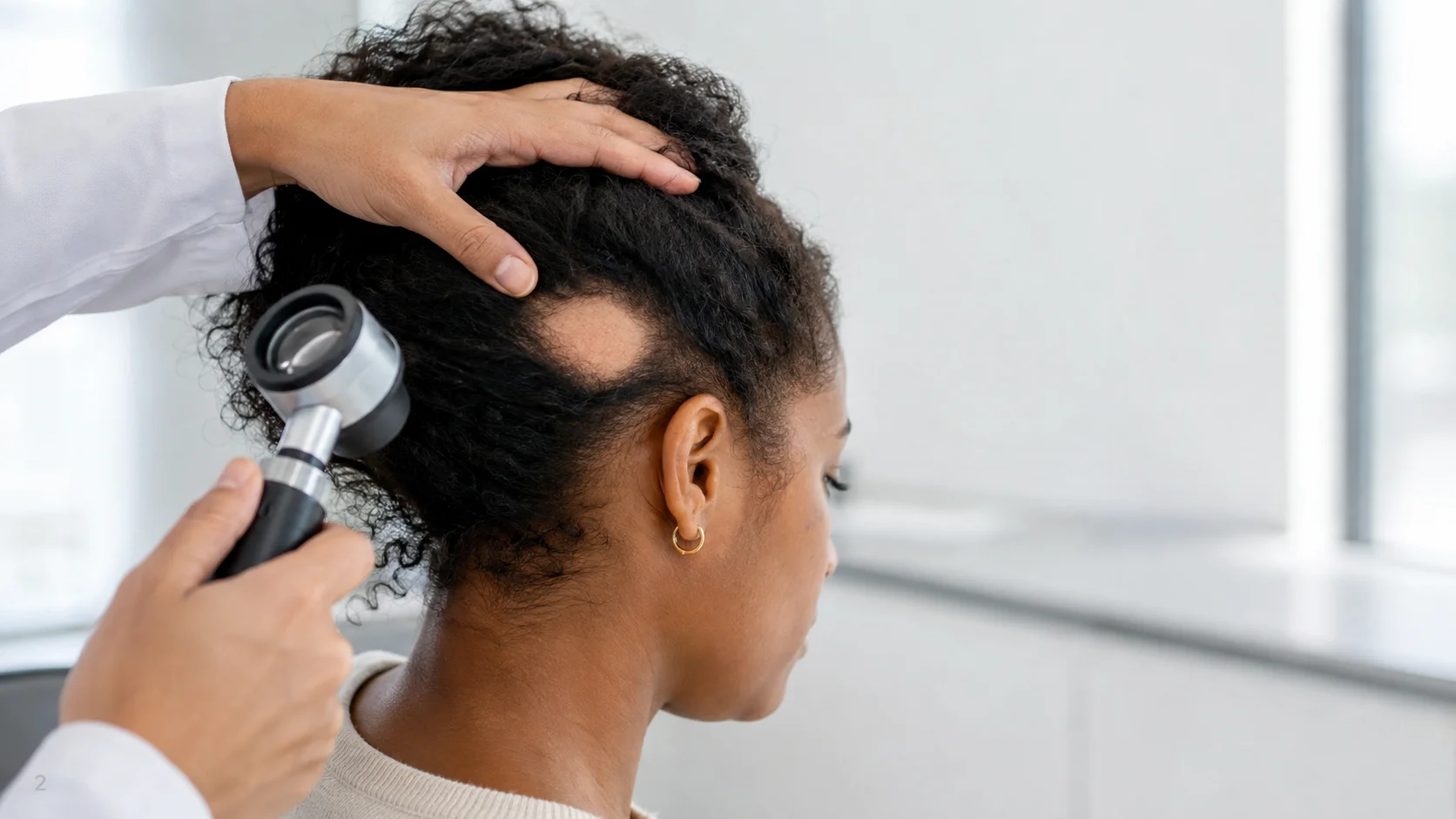
Cicatricial alopecia, also called scarring hair loss, is a group of disorders in which inflammation damages the hair follicle and replaces it with scar-like tissue. Once a follicle is permanently destroyed, it usually cannot grow hair again. This makes early recognition and treatment especially important.
Scarring alopecia is different from more common non-scarring hair loss conditions such as androgenetic alopecia or telogen effluvium. In non-scarring hair loss, the follicles may still be alive and capable of producing hair if the cause is treated. In cicatricial alopecia, the goal is usually to stop progression, control inflammation, reduce symptoms, and preserve the remaining hair.
What Happens in Cicatricial Alopecia?
The hair follicle is a small but complex structure. In scarring alopecia, inflammation targets part of the follicle, especially the area where stem cells help regenerate the hair cycle. When that area is damaged, the follicle can lose its ability to produce new hair.
Over time, the follicle opening may disappear. The scalp may look smooth, shiny, pale, red, darker, or scarred depending on the type and stage. Some people have symptoms such as itching, burning, tenderness, pain, scaling, pustules, or crusting. Others notice gradual thinning before symptoms become obvious.
The process can be slow or active and aggressive. Because permanent loss can occur, suspected scarring alopecia should be assessed by a dermatologist, ideally one experienced in hair and scalp disorders.
Primary vs Secondary Scarring Alopecia
Cicatricial alopecia is often divided into primary and secondary forms.
Primary cicatricial alopecia occurs when inflammation directly targets the hair follicle. Examples include lichen planopilaris, frontal fibrosing alopecia, central centrifugal cicatricial alopecia, discoid lupus erythematosus, folliculitis decalvans, and dissecting cellulitis of the scalp.
Secondary cicatricial alopecia occurs when follicles are destroyed by another process, such as burns, radiation, trauma, tumors, severe infections, or advanced inflammatory skin disease. In these cases, scarring hair loss is a consequence of broader tissue damage.
Main Types of Cicatricial Alopecia
Different types of scarring alopecia behave differently and may require different treatments. Diagnosis is important because one treatment plan does not fit all forms.
Lichen Planopilaris
Lichen planopilaris is an inflammatory condition that can cause patchy scarring hair loss, often with redness, scaling around follicles, itching, burning, or tenderness. It may progress gradually or flare unpredictably.
Frontal Fibrosing Alopecia
Frontal fibrosing alopecia typically causes recession of the frontal hairline and may also affect eyebrows. It is more common in postmenopausal women but can occur in other groups. The skin near the hairline may appear smooth, and symptoms can include itching or redness.
Central Centrifugal Cicatricial Alopecia
Central centrifugal cicatricial alopecia often begins near the crown and spreads outward. It is more commonly reported in women of African descent. Genetics, inflammation, hair grooming practices, and follicle vulnerability may all contribute. Early treatment may help prevent further permanent loss.
Discoid Lupus Erythematosus
Discoid lupus can affect the scalp and cause inflamed, scaly plaques that lead to scarring. Sun sensitivity, pigment changes, and tenderness may occur. Diagnosis is important because lupus-related skin disease can require specific medical management.
Folliculitis Decalvans
Folliculitis decalvans involves inflammation around follicles, often with pustules, crusting, redness, and tufted hairs, where multiple hairs emerge from one follicular opening. It may be associated with abnormal immune response to bacteria on the scalp.
Dissecting Cellulitis of the Scalp
Dissecting cellulitis can cause painful nodules, draining areas, abscess-like lesions, and scarring hair loss. It is often chronic and may overlap with other follicular occlusion disorders.
Symptoms to Watch For
Scarring alopecia may cause visible hair loss, but symptoms on the scalp are often the clue that the process is inflammatory.
Possible signs include:
- Hair loss with a smooth or shiny scalp surface
- Loss of visible follicle openings
- Redness around follicles
- Scaling or crusting
- Itching, burning, pain, or tenderness
- Pustules or bumps
- Hairline recession with eyebrow thinning
- Patchy loss that expands over time
- Tufted hairs
- Darker or lighter areas of scalp pigmentation
Any hair loss with pain, inflammation, pustules, or scarring changes should be evaluated promptly.
How Cicatricial Alopecia Is Diagnosed
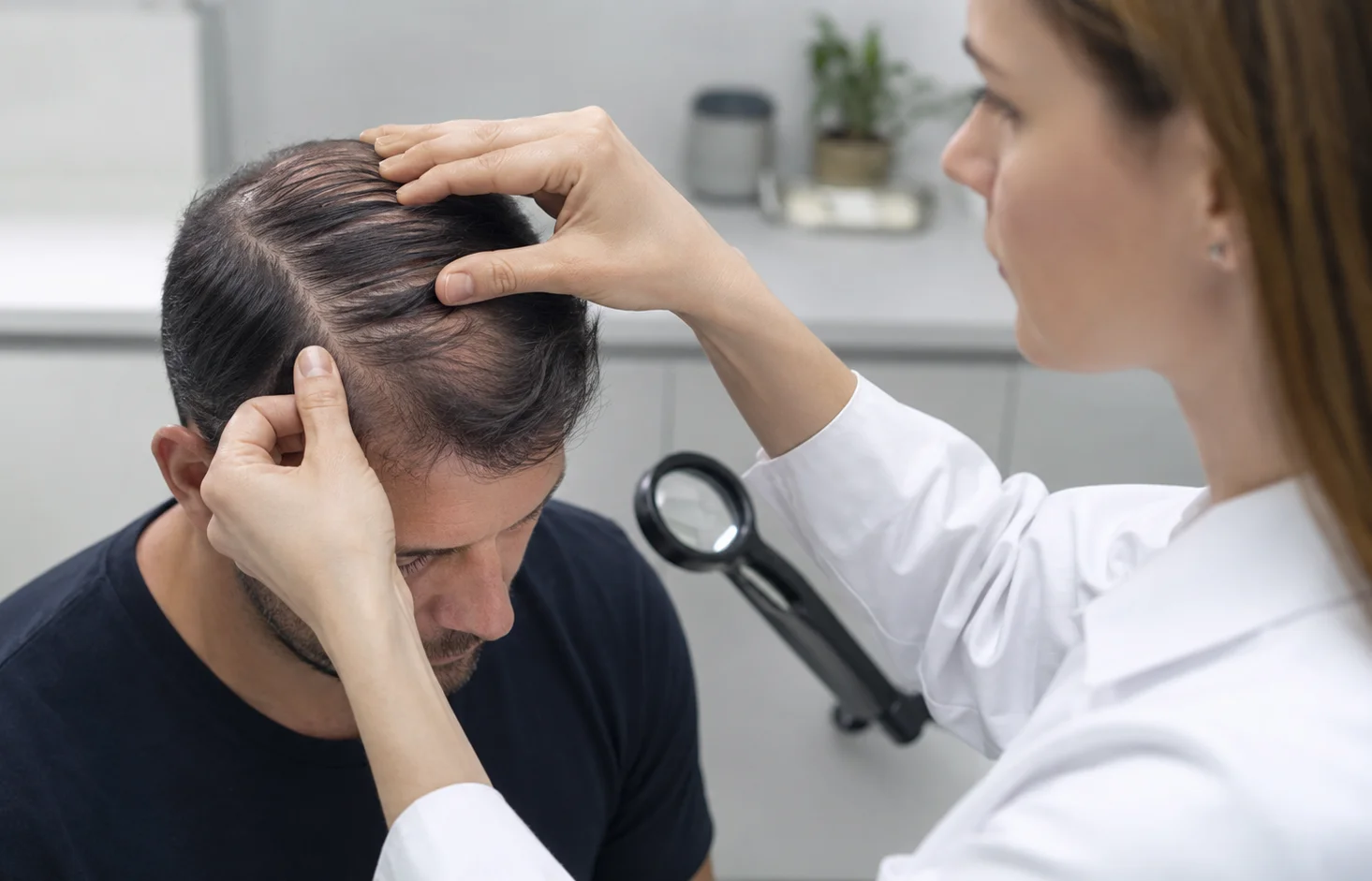
Diagnosis usually begins with a scalp examination and medical history. A clinician may ask about symptoms, timing, family history, autoimmune disease, medications, styling practices, chemical treatments, scalp infections, and previous trauma.
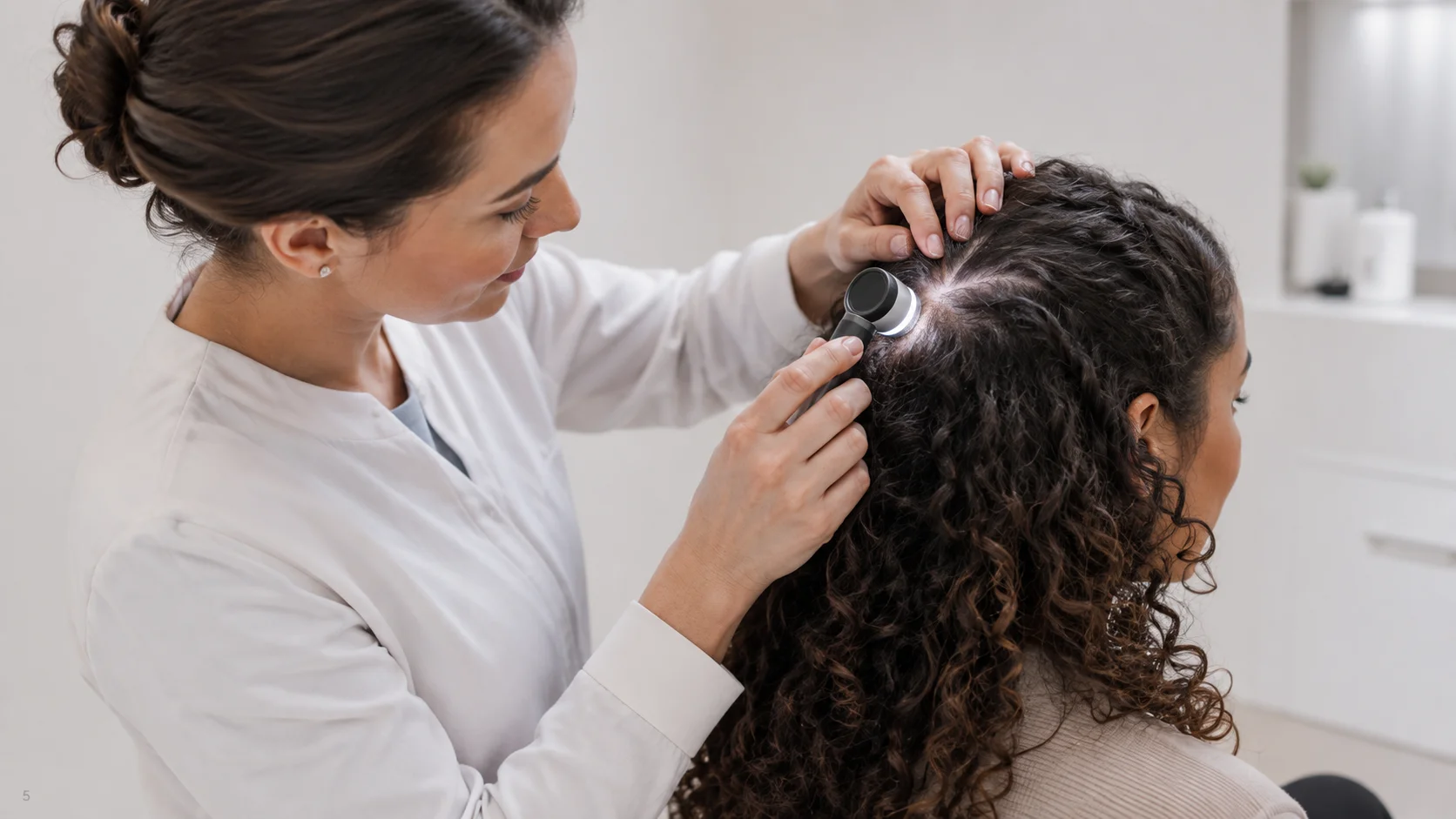
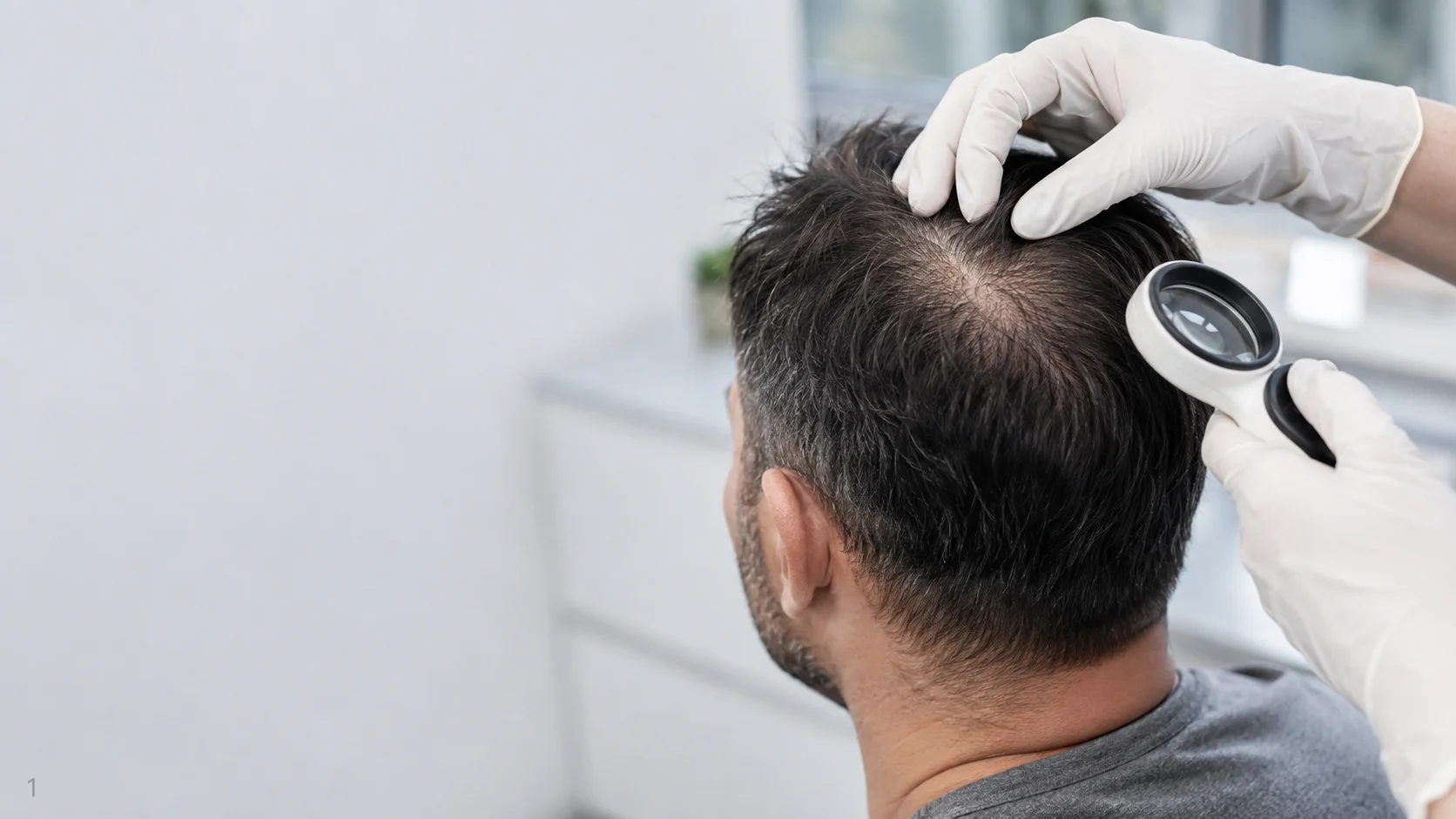
Dermoscopy or trichoscopy can help show follicular scale, redness, loss of follicle openings, broken hairs, pustules, or other patterns. In many cases, a scalp biopsy is needed to confirm the diagnosis and identify the type of inflammation. The biopsy is usually taken from an active edge of the affected area rather than the center of a fully scarred patch.
Blood tests may be considered when lupus, autoimmune disease, nutritional issues, or other systemic factors are suspected.
Treatment Goals
The main goal of treatment is to stop or slow further follicle destruction. Regrowth in already scarred areas is usually limited because the follicle has been replaced by scar tissue. This is why early diagnosis matters.
Treatment may include anti-inflammatory medications, antimicrobial therapy, immune-modulating medications, symptom control, and changes to hair care practices. The plan depends on the type of scarring alopecia and how active it is.
Treatment Options
Topical corticosteroids, corticosteroid injections, and anti-inflammatory scalp medications are commonly used in several forms. Oral medications such as hydroxychloroquine, doxycycline, isotretinoin, or other immune-modulating drugs may be used depending on the diagnosis.
Folliculitis decalvans and dissecting cellulitis may require antimicrobial or anti-inflammatory approaches. Lupus-related scarring alopecia may need therapies that address autoimmune skin inflammation. Treatment often takes time, and the goal is disease control rather than instant cosmetic change.
Hair transplantation may be considered only when the disease has been inactive for a sustained period and donor hair is suitable. Transplanting into active scarring alopecia is risky because inflammation may damage transplanted follicles as well.
Cosmetic options such as hair fibers, scalp concealers, wigs, toppers, and carefully selected hairstyles can help with appearance. These do not treat the disease but may support quality of life.
Hair Care and Lifestyle Considerations
Gentle hair care is important. Avoid tight hairstyles, harsh chemical processing, excessive heat, aggressive brushing, and scalp irritation. People with textured hair or a history of traction should consider styles that reduce tension on the scalp.
If the scalp is inflamed, avoid applying essential oils, strong exfoliants, or irritating products without guidance. “Natural” products can still cause contact dermatitis and worsen symptoms.
Sun protection may be important for lupus-related scalp disease or exposed areas of scalp. Emotional support also matters because permanent hair loss can be distressing.
FAQ
Is cicatricial alopecia permanent?
Hair loss in fully scarred areas is usually permanent because follicles have been destroyed. Treatment focuses on preventing further loss.
Can scarring alopecia be cured?
Many forms are chronic and managed rather than cured. With early diagnosis and appropriate treatment, progression may be slowed or stabilized.
Does scarring alopecia always hurt?
No. Some people have itching, burning, tenderness, or pain, while others have few symptoms. Lack of pain does not rule it out.
Can hair grow back after cicatricial alopecia?
Regrowth is limited in areas where follicles are scarred. If inflammation is caught early, some partially affected follicles may recover, but expectations should be realistic.
Is hair transplant possible after scarring alopecia?
Sometimes, but only after the condition has been inactive for a significant period and the scalp is carefully evaluated. It is not usually recommended during active disease.
The Bottom Line
Cicatricial alopecia is a serious category of hair loss because it can permanently destroy hair follicles. The most important step is early recognition. Hair loss with scalp redness, scaling, pain, pustules, tenderness, or loss of follicle openings should not be treated as ordinary shedding.
Treatment can often help control inflammation and protect remaining hair, but it must be matched to the exact diagnosis. Cosmetic options may improve appearance, yet they do not replace medical management when disease is active.
This article is for general informational purposes only and does not replace individualized medical advice, diagnosis, or treatment. If you suspect scarring hair loss, consult a qualified healthcare professional promptly.