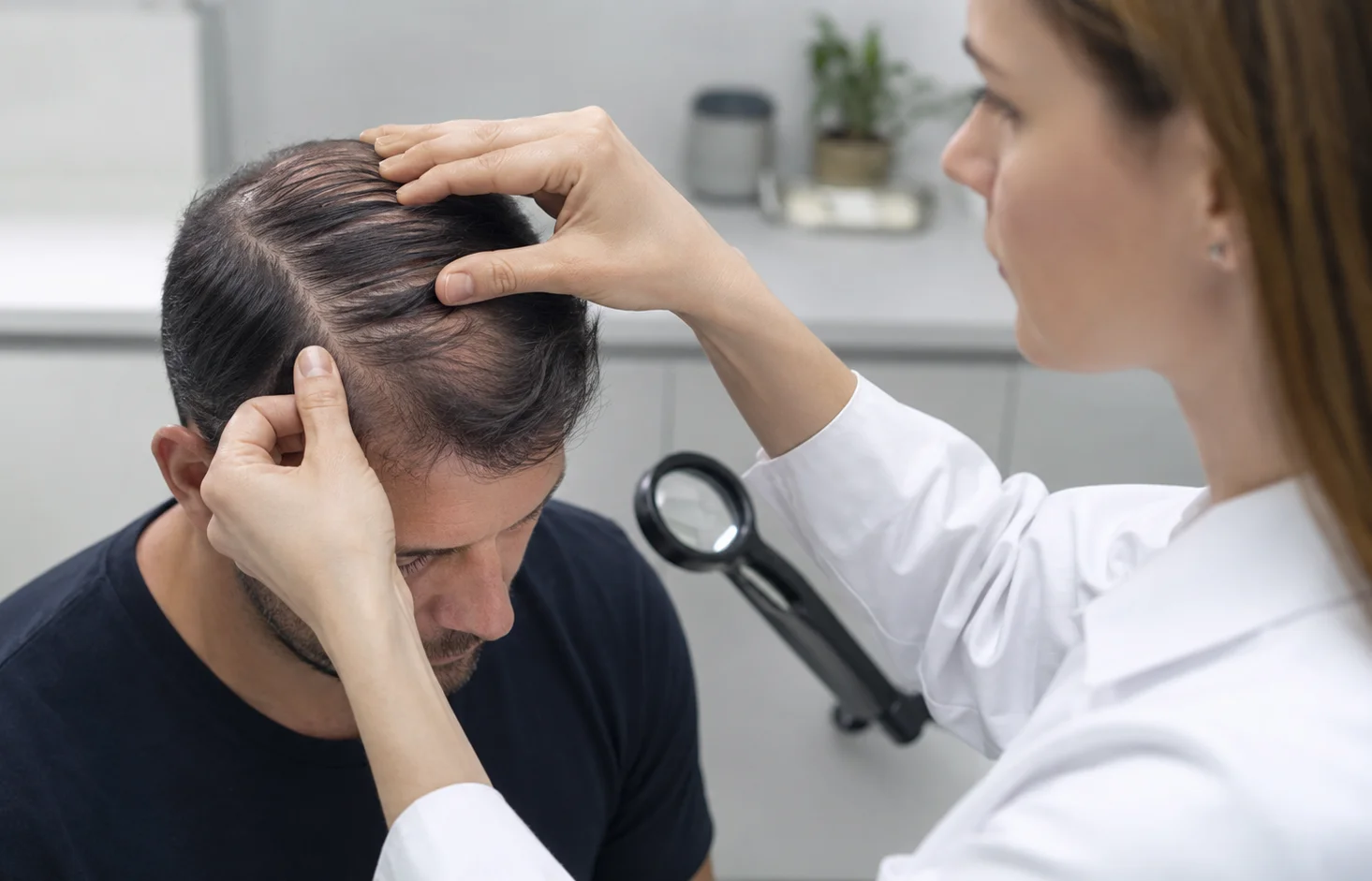
Diffuse hair loss, sometimes called alopecia diffusa, describes hair loss that affects the scalp more generally rather than forming one clear bald patch. People often notice more hair in the shower, on the pillow, in a brush, or around the home. Others notice that their ponytail feels thinner, their part looks wider, or the scalp is more visible under bright light.
Diffuse hair loss is not one diagnosis. It is a pattern that can occur for several reasons, including telogen effluvium, female or male pattern hair loss, nutritional deficiency, thyroid disease, medication effects, illness, postpartum changes, inflammatory scalp disease, and less commonly anagen effluvium. Because the causes differ, treatment depends on identifying what is driving the shedding or thinning.
What Does Diffuse Hair Loss Mean?
Alopecia is the medical term for hair loss. Diffuse alopecia means the loss is spread across a broader area of the scalp rather than limited to a sharply defined patch. It may involve increased shedding, gradual thinning, reduced hair density, or a combination of these.
Some diffuse hair loss is temporary. For example, telogen effluvium often appears a few months after a trigger and may improve once the underlying stressor resolves. Other forms, such as androgenetic alopecia, tend to progress gradually unless treated. Some medical conditions can cause diffuse shedding until they are corrected.
The pattern matters, but timing matters just as much. Sudden shedding after an illness suggests a different process from slow thinning over several years.
Common Causes of Diffuse Hair Loss
Telogen Effluvium
Telogen effluvium is one of the most common causes of diffuse shedding. It occurs when more hairs than usual shift into the resting phase of the hair cycle and shed later. The shedding often begins two to four months after a trigger.
Possible triggers include fever, surgery, childbirth, rapid weight loss, crash dieting, severe emotional stress, new medications, iron deficiency, thyroid imbalance, major illness, or stopping certain hormonal medications.
Telogen effluvium is usually non-scarring, meaning the follicles remain present. Many cases improve over months, but chronic telogen effluvium can last longer and may need further evaluation.
Androgenetic Alopecia
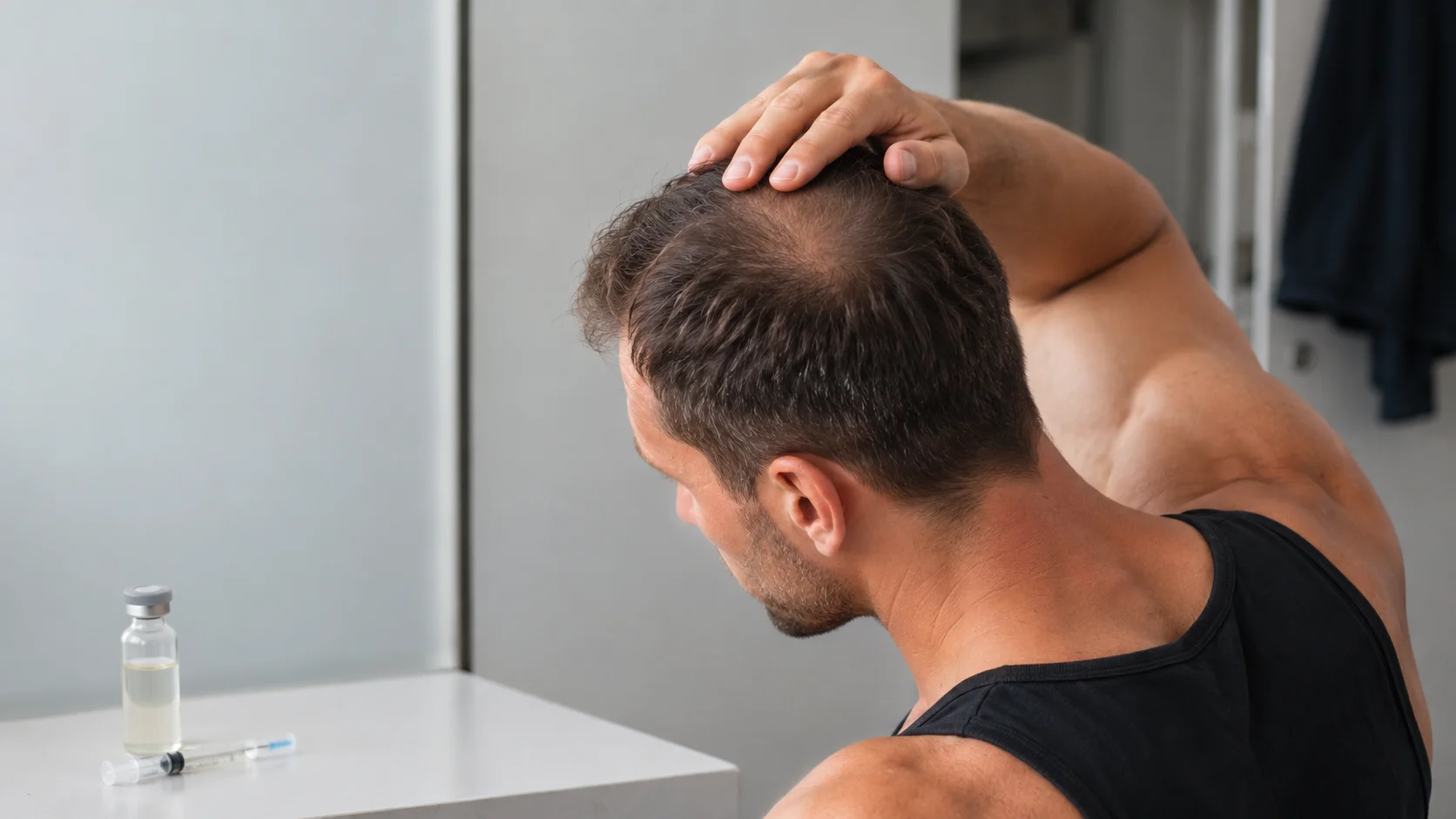
Androgenetic alopecia, also known as pattern hair loss, can sometimes look diffuse, especially in women. Instead of dramatic shedding, it often causes gradual thinning over the crown, widening of the part, or reduced density while the frontal hairline may remain partly preserved.
In men, it often affects the temples and crown, but some people experience more diffuse thinning. Pattern hair loss involves follicle miniaturization, where hairs become finer and shorter over time.
Nutritional Deficiencies
Iron deficiency, low ferritin, insufficient protein intake, vitamin D deficiency, zinc deficiency, and restrictive dieting may contribute to shedding in some people. However, supplements only help when a deficiency or insufficiency is actually present. Taking high doses without testing can be ineffective or harmful.
Thyroid and Hormonal Factors
Both underactive and overactive thyroid function can be associated with diffuse shedding. Hormonal changes after pregnancy, menopause, stopping birth control, or conditions involving androgen excess may also contribute.
Medications and Medical Treatments
Certain medications can trigger diffuse shedding. Examples may include some retinoids, anticoagulants, beta blockers, anticonvulsants, antidepressants, hormone-related medications, and chemotherapy drugs. Chemotherapy more often causes anagen effluvium, which can produce rapid shedding because actively growing hairs are affected.
Medication-related hair loss should be discussed with a clinician. Stopping a prescribed medication without medical guidance can be unsafe.
Scalp Disease
Seborrheic dermatitis, psoriasis, fungal infection, folliculitis, and inflammatory scalp disorders may contribute to shedding or make hair loss more noticeable. If diffuse loss is accompanied by itching, pain, scaling, redness, pustules, or crusting, the scalp itself needs careful assessment.
Diffuse Shedding vs Diffuse Thinning
Shedding and thinning are related but not identical. Shedding refers to more hairs falling out than usual. Thinning refers to reduced visible density or smaller hair shaft diameter.
Telogen effluvium often causes shedding. Androgenetic alopecia often causes gradual thinning. Some people have both at the same time. For example, a person with early pattern hair loss may experience a major telogen effluvium after illness, making the thinning suddenly more obvious.
This overlap is one reason self-diagnosis can be difficult.
How Diffuse Hair Loss Is Diagnosed
Diagnosis starts with a detailed history. Timing, onset, triggers, medications, menstrual history, pregnancy history, diet, weight changes, illnesses, family history, and scalp symptoms all matter.
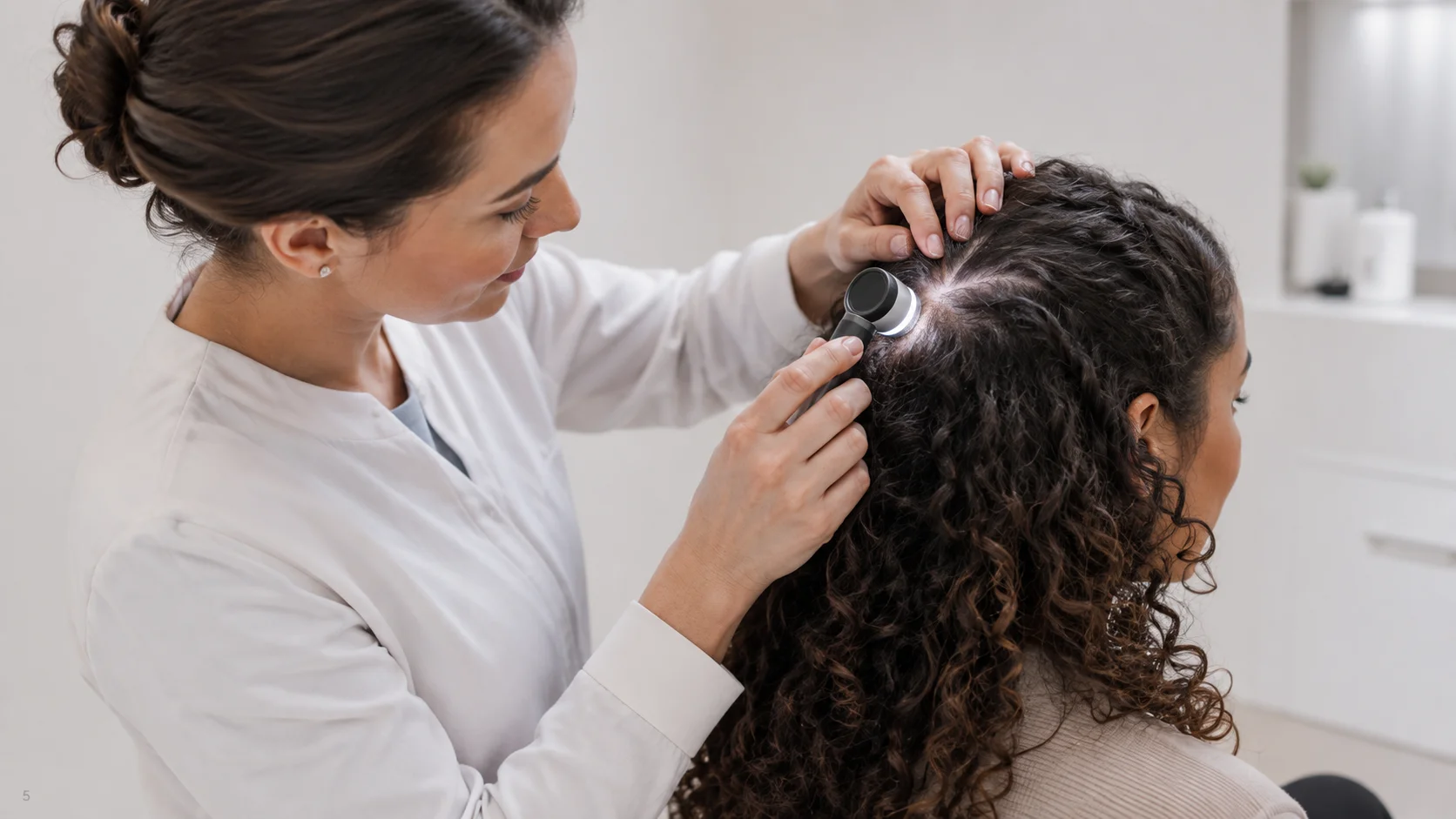
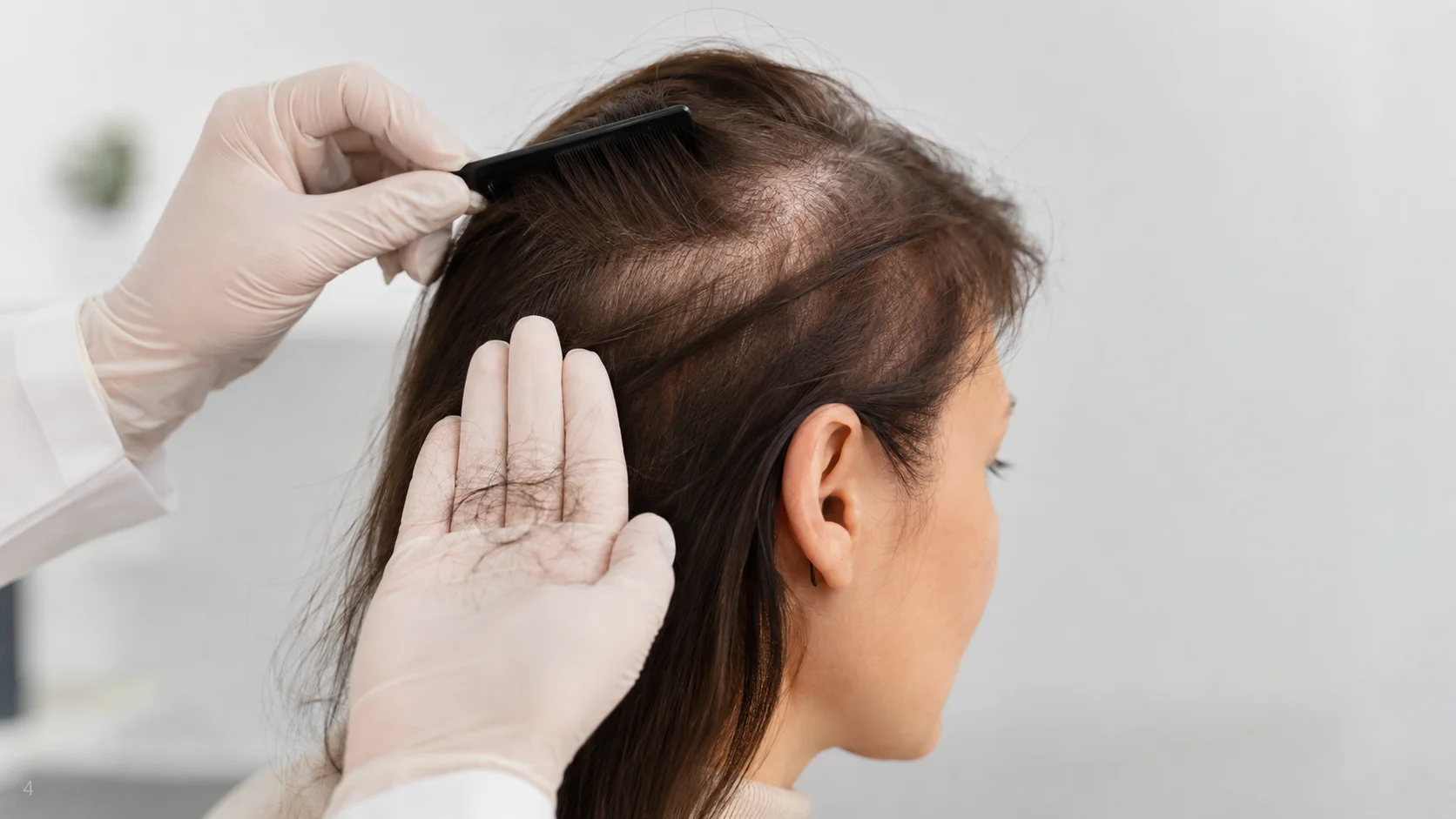
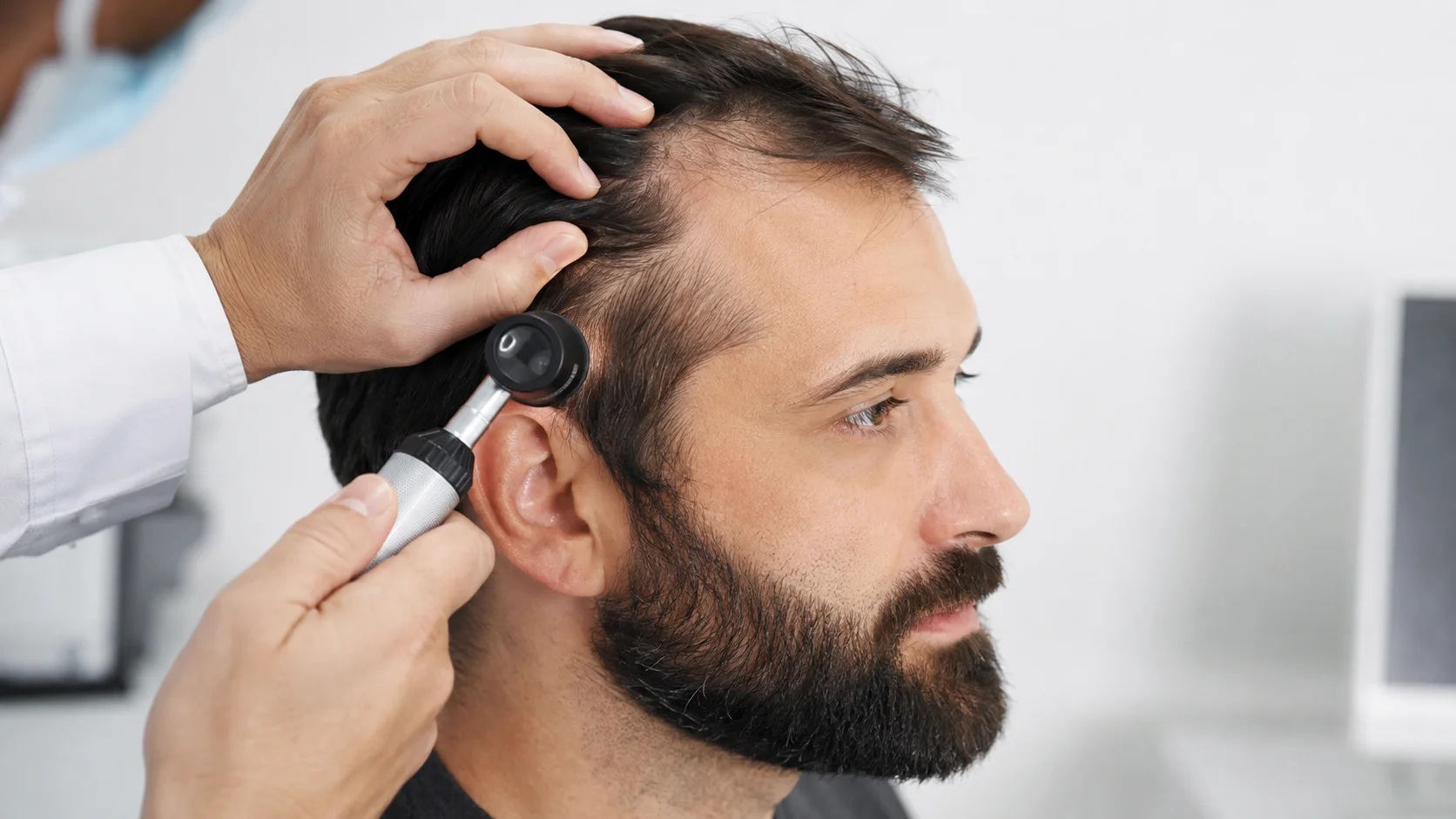
A clinician may examine the scalp, assess the distribution of thinning, perform a hair pull test, and use dermoscopy or trichoscopy to look for miniaturization, inflammation, scaling, broken hairs, or loss of follicle openings.
Blood tests may be considered depending on the case. Common tests may include complete blood count, ferritin or iron studies, thyroid function, vitamin D, zinc, and hormone testing when symptoms suggest androgen excess or endocrine imbalance.
A scalp biopsy is not needed for every case, but it may be recommended when the diagnosis is unclear, shedding is persistent, inflammation is present, or scarring alopecia is suspected.
Treatment Depends on the Cause
There is no single treatment for diffuse hair loss because diffuse loss is a pattern, not a diagnosis.
For telogen effluvium, management focuses on identifying and correcting triggers where possible. This may include improving nutrition, treating iron deficiency, addressing thyroid disease, reviewing medications, and allowing time for the hair cycle to normalize.
For androgenetic alopecia, treatments may include topical minoxidil, oral medications in appropriate candidates, hormonal treatments when indicated, low-level laser therapy, platelet-based procedures, or hair transplantation in selected cases. The right option depends on sex, age, medical history, pregnancy plans, severity, and goals.
For scalp disease, treatment may involve medicated shampoos, anti-inflammatory medications, antifungal therapy, antibiotics, or other targeted treatments. Treating inflammation can reduce shedding and protect scalp health.
What Results Are Realistic?
Hair growth is slow. Even when the cause is corrected, visible improvement may take several months. Shedding may slow before density returns. In telogen effluvium, regrowth often appears as short new hairs, but full cosmetic recovery can take longer.
In pattern hair loss, the goal is often stabilization and modest thickening rather than complete reversal. Treatments work best when started early, before extensive miniaturization has occurred.
Any treatment plan should be judged over an appropriate timeline. Constantly changing products every few weeks can make it harder to know what is helping.
Practical Hair Care During Diffuse Loss
Gentle care can reduce breakage while the underlying cause is being addressed. Use a shampoo schedule that keeps the scalp clean without excessive dryness. Condition the lengths and ends. Avoid tight hairstyles, harsh brushing, high heat, aggressive chemical processing, and heavy product buildup.
Hair fibers, volumizing products, styling changes, and scalp concealers can improve appearance temporarily. These are cosmetic tools, not treatments, but they may help people feel more comfortable while medical causes are being evaluated.
FAQ
Is diffuse hair loss permanent?
It depends on the cause. Telogen effluvium is often temporary, while androgenetic alopecia can be progressive. Scarring causes are less common but require urgent evaluation.
How long does diffuse shedding last?
Acute telogen effluvium often improves within months after the trigger resolves, but chronic shedding can last longer. Persistent loss should be assessed.
Can stress cause diffuse hair loss?
Yes, significant physical or emotional stress can trigger telogen effluvium. The shedding usually appears months after the stressor, not immediately.
What blood tests are useful for diffuse hair loss?
Testing depends on symptoms, but iron studies, thyroid function, complete blood count, vitamin D, and selected hormone tests may be considered.
Does shampoo cause diffuse hair loss?
Shampoo is rarely the main cause of true diffuse hair loss. Harsh products may cause irritation or breakage, but persistent shedding needs broader evaluation.
The Bottom Line
Diffuse hair loss can be alarming, but it is also a pattern with many possible explanations. The most important step is identifying whether the main issue is shedding, gradual thinning, scalp inflammation, medication effect, nutritional deficiency, hormonal change, or a combination of factors.
A careful diagnosis prevents wasted time on products that cannot address the underlying cause. With the right evaluation, many forms of diffuse hair loss can be managed, improved, or stabilized.
This article is for general informational purposes only and does not replace individualized medical advice, diagnosis, or treatment. If you have sudden, persistent, or unexplained hair loss, consult a qualified healthcare professional.