How to Prevent Hair Loss Caused by Thyroid Disease
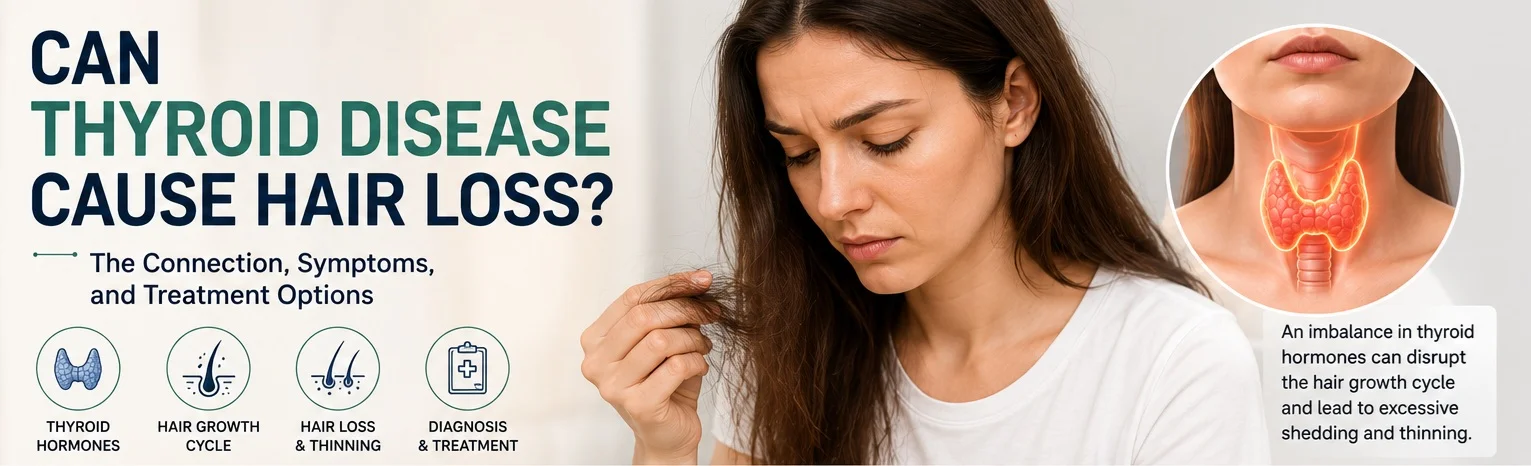
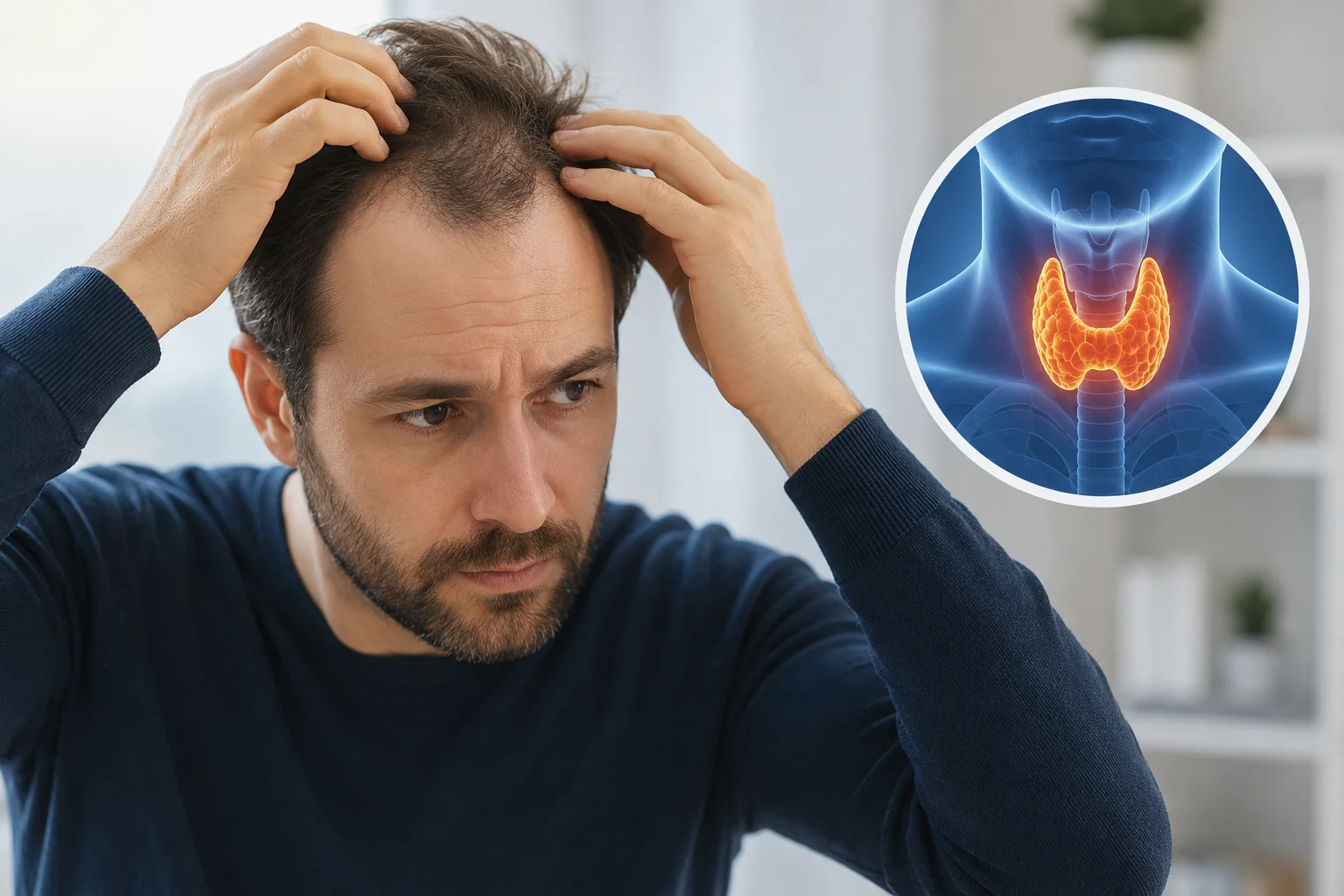
Thyroid hormones regulate many essential functions throughout the body, including metabolism, skin health, and the normal hair growth cycle. When thyroid hormone levels become too low or too high, hair follicles may stop functioning normally, leading to increased shedding and diffuse thinning across the scalp.
Unlike androgenetic alopecia, which usually follows a recognizable pattern, thyroid-related hair loss often affects the entire scalp. Many people notice more hair than usual on their pillow, in the shower, or while brushing their hair. Because hair grows in cycles, this shedding may not begin until several weeks or even months after thyroid function becomes abnormal.
The good news is that thyroid-related hair loss is often reversible. Once thyroid hormone levels are restored to a healthy range, many hair follicles gradually resume their normal growth cycle. However, hair recovery takes time. Even after successful treatment, noticeable improvement usually requires several months because new hairs need time to grow.
Managing thyroid-related hair loss involves more than simply reducing shedding. The underlying thyroid disorder should always be treated first, while proper nutrition helps provide the nutrients necessary for healthy hair production. In some individuals, supportive hair restoration treatments may also be considered after thyroid function has stabilized.
This article explains how thyroid hormone treatment, nutrition, and supportive therapies work together to help manage hair loss caused by thyroid disease.
Thyroid Hormone Treatment
Treating the underlying thyroid disorder is the most important step in managing thyroid-related hair loss. Hair follicles depend on normal thyroid hormone activity to maintain a healthy growth cycle. If hormone levels remain abnormal, treatments aimed only at the scalp are unlikely to provide lasting improvement.
Hypothyroidism
Hypothyroidism occurs when the thyroid gland does not produce enough thyroid hormone. This slows many normal body functions, including the biological processes that support healthy hair growth. As a result, more hair follicles may enter the resting phase of the hair cycle, leading to increased shedding and diffuse thinning.
Treatment usually involves levothyroxine, a synthetic form of thyroxine (T4) that replaces the hormone the body is lacking. The goal is to restore thyroid hormone levels to the normal range and correct the underlying hormonal imbalance rather than simply stopping hair loss.
Hair recovery does not happen immediately after treatment begins. Hair follicles need time to complete their natural growth cycle, so noticeable improvement often develops gradually over the following months.
Hyperthyroidism
Hyperthyroidism develops when the thyroid gland produces excessive amounts of thyroid hormone. Although the hormonal imbalance differs from hypothyroidism, excessive thyroid hormone can also disrupt the normal hair growth cycle and trigger diffuse shedding.
Treatment depends on the underlying cause and may include antithyroid medications, radioactive iodine therapy, surgery, or a combination of these approaches. Regardless of the treatment method, restoring thyroid hormone levels to a healthy range remains the primary objective.
Once hormone levels stabilize, excessive shedding often decreases and hair follicles can gradually return to their normal cycle. Recovery, however, is usually gradual rather than immediate.
Why Hormone Treatment Comes First
Many people first consider shampoos, supplements, or cosmetic procedures when they notice hair loss. While some of these options may help support hair growth, they cannot correct the hormonal imbalance responsible for thyroid-related shedding.
For this reason, thyroid hormone treatment should always be the first priority. Once thyroid function has stabilized, clinicians can better evaluate how much natural regrowth occurs and whether additional hair-focused therapies may be appropriate.
Monitoring Thyroid Function
Successful treatment requires regular follow-up rather than a single prescription. Blood tests such as thyroid-stimulating hormone (TSH) and, when appropriate, free T4 and free T3 help determine whether thyroid hormone levels remain within the target range.
Maintaining stable hormone levels provides the best environment for hair follicles to recover. Even after laboratory values normalize, patients should remember that hair growth recovers more slowly than thyroid hormone levels. Visible improvements often appear after three to six months, although recovery may take longer depending on the severity of the condition.
Nutrition
Once thyroid hormone levels have been appropriately managed, nutrition becomes an important part of supporting healthy hair growth. Hair follicles require a steady supply of nutrients to produce strong, healthy hair fibers, and nutritional deficiencies may contribute to continued shedding in some individuals.
However, supplements should not be taken simply because hair loss is present. Most vitamins and minerals are beneficial only when a true deficiency has been identified. Whenever possible, nutritional deficiencies should be confirmed through medical evaluation before supplementation is considered.
Protein
Hair is made primarily of keratin, a structural protein. Consuming enough protein helps provide the amino acids needed for continuous hair production. Good dietary sources include lean meat, fish, eggs, dairy products, legumes, soy products, nuts, and seeds.
Iron
Iron deficiency has been associated with diffuse hair shedding, particularly when iron stores are low. If laboratory testing confirms iron deficiency, increasing dietary iron intake or taking supplements under medical supervision may support hair recovery. Iron supplementation should not be started without medical guidance.
Vitamin D
Vitamin D contributes to immune function and normal hair follicle biology. People with autoimmune thyroid disorders, such as Hashimoto's thyroiditis, may also have vitamin D deficiency. Correcting a documented deficiency supports overall health, although vitamin D alone has not been shown to reverse thyroid-related hair loss.
Zinc
Zinc supports normal cell growth, protein synthesis, and tissue repair, all of which are important for healthy hair follicles. Supplementation is generally recommended only when zinc deficiency has been confirmed.
Vitamin B12
Vitamin B12 is essential for DNA synthesis and healthy red blood cell production. Deficiency may occur more frequently in individuals with autoimmune thyroid disease and should be corrected when identified. While restoring normal vitamin B12 levels supports overall health, it is not considered a standalone treatment for thyroid-related hair loss.
Selenium
Selenium helps regulate thyroid hormone metabolism and supports the function of enzymes involved in thyroid hormone activation. Both deficiency and excessive intake may affect thyroid health, so supplementation should only be considered when medically appropriate.
Iodine
Iodine is required for thyroid hormone production, but excessive iodine intake may worsen certain thyroid disorders, particularly autoimmune thyroid disease. Unless iodine deficiency has been confirmed, supplementation is generally unnecessary.
Healthy Lifestyle
Nutrition works best when combined with healthy daily habits. Eating a balanced diet, maintaining a healthy body weight, exercising regularly, getting adequate sleep, managing stress, and avoiding smoking all contribute to overall health and may support the normal hair growth cycle.
Although these measures cannot replace thyroid hormone treatment, they help create a healthier environment for hair follicles during recovery.
Supportive Hair Restoration Treatments
For many people, hair growth gradually improves once thyroid hormone levels have returned to a healthy range. However, recovery is not always immediate. Hair follicles require time to complete their natural growth cycle, and some individuals may continue to experience reduced hair density or slower regrowth for several months.
In these situations, supportive hair restoration treatments may be considered. It is important to understand that these therapies do not treat thyroid disease itself. Instead, they aim to support hair follicle function after the underlying hormonal imbalance has been corrected.
The choice of treatment should always be individualized and discussed with a qualified healthcare professional based on the patient's overall health, thyroid status, and type of hair loss.
Mesotherapy
Mesotherapy is a minimally invasive treatment in which small amounts of vitamins, amino acids, minerals, peptides, or other active ingredients are injected into the superficial layers of the scalp. The goal is to deliver these substances closer to the hair follicles and improve the local environment that supports hair growth.
Although mesotherapy has become increasingly popular in aesthetic medicine, treatment protocols vary considerably between clinics. The ingredients used, injection techniques, treatment intervals, and number of sessions are not standardized, making direct comparisons between studies difficult.
Current scientific evidence for mesotherapy is limited and has primarily focused on androgenetic alopecia rather than thyroid-related hair loss. While some studies suggest that selected patients may experience improvements in hair density or hair quality, there is currently insufficient evidence to conclude that mesotherapy is an effective treatment specifically for hair loss caused by thyroid disease.
For individuals whose thyroid hormone levels have already been stabilized but who continue to experience reduced hair density, mesotherapy may be considered as a supportive option. However, it should be viewed as an adjunct to appropriate medical treatment rather than a replacement for correcting thyroid dysfunction.
Platelet-Rich Plasma (PRP)
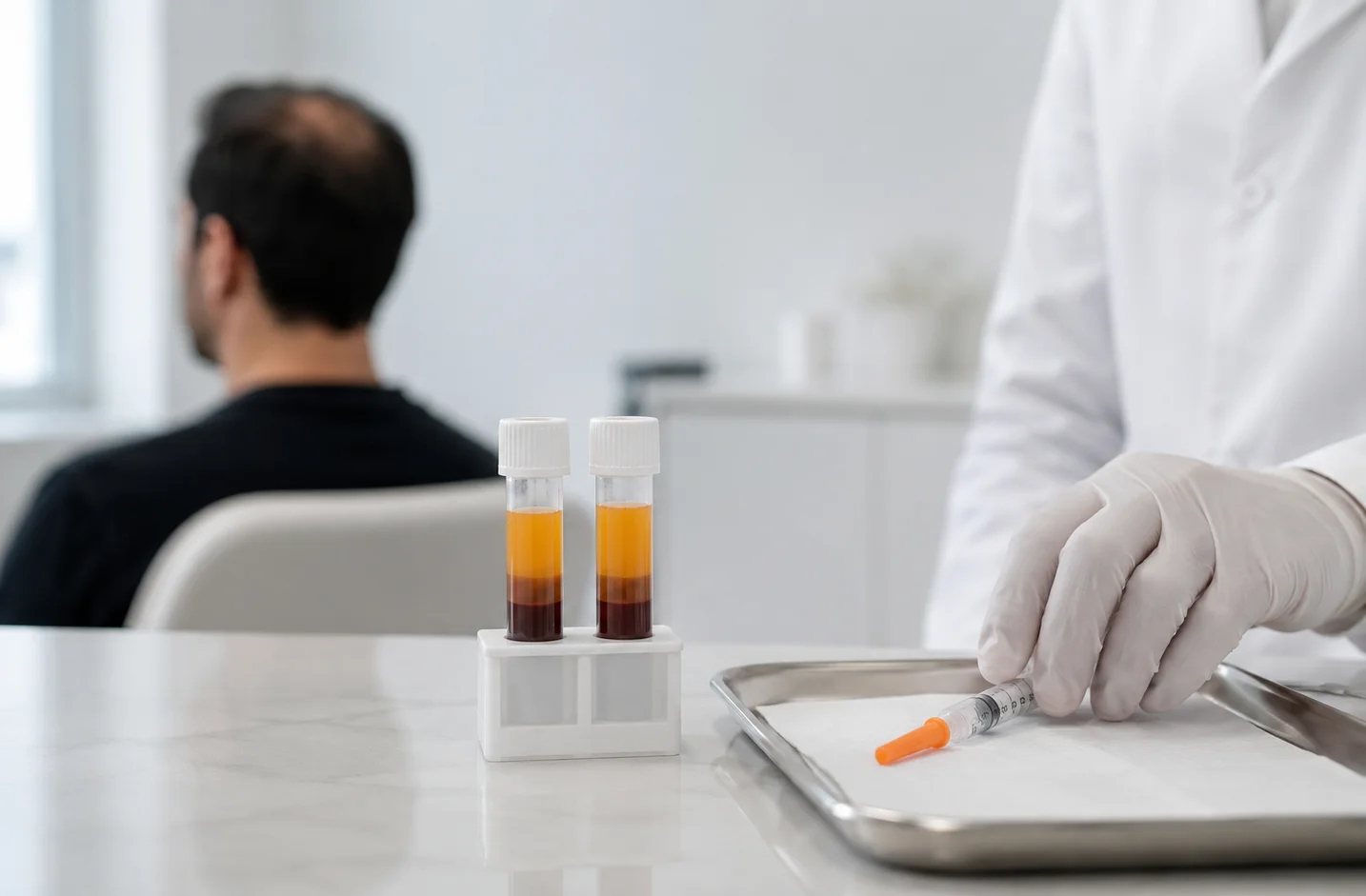
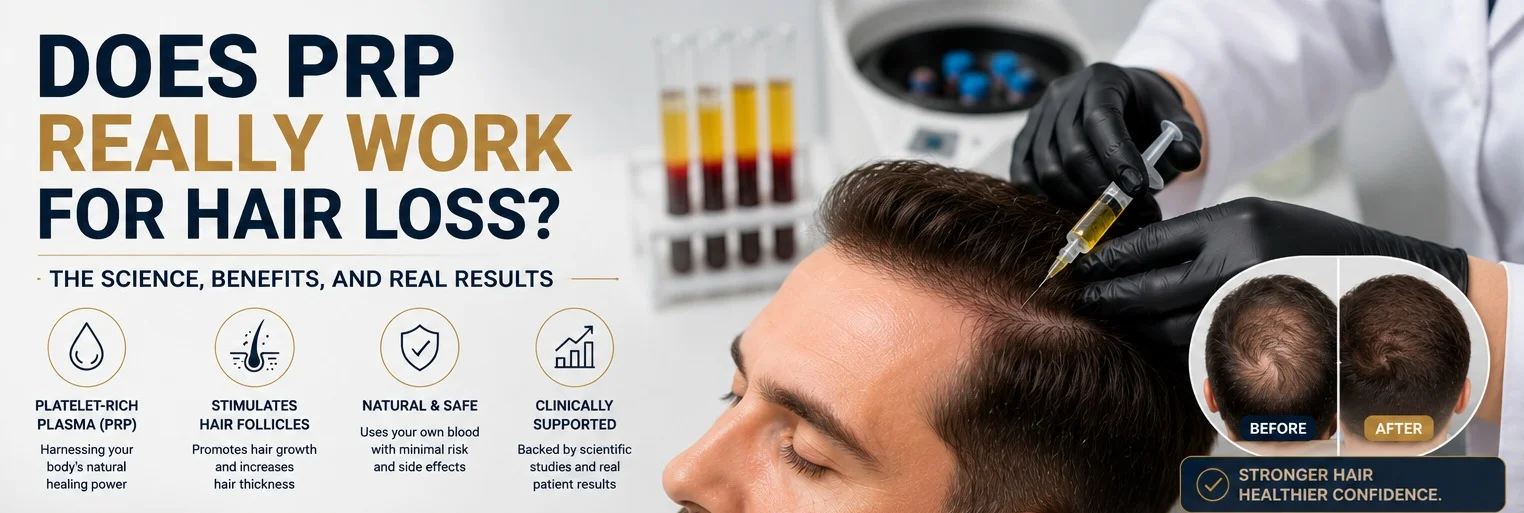
Platelet-rich plasma (PRP) therapy uses a concentrated portion of the patient's own blood that contains a high concentration of platelets and naturally occurring growth factors. After a blood sample is collected, it is processed in a centrifuge, and the platelet-rich plasma is injected into areas of the scalp affected by hair thinning.
Researchers believe that the growth factors released by platelets may help support hair follicle activity, improve the local healing environment, and encourage follicles to remain in the active growth phase. Because the treatment uses the patient's own blood, the risk of allergic reactions is generally low.
PRP has been studied extensively in androgenetic alopecia, where several clinical trials have reported improvements in hair density and hair thickness for some patients. However, evidence specifically evaluating PRP for thyroid-related hair loss remains very limited.
For this reason, PRP should not be considered a primary treatment for thyroid-induced hair loss. Instead, it may be discussed as a supportive therapy for carefully selected individuals after thyroid hormone levels have been successfully controlled and other possible causes of persistent hair loss have been evaluated. As with any procedure, treatment outcomes vary, and multiple sessions are usually required before improvement can be assessed.
Low-Level Laser Therapy (LLLT)
Low-level laser therapy (LLLT), also known as red light therapy or photobiomodulation, uses low-intensity laser or light energy to stimulate biological activity within hair follicles. Unlike surgical lasers, LLLT does not damage tissue or generate significant heat.
Although the exact mechanisms are still being investigated, laboratory studies suggest that LLLT may increase cellular energy production, improve local blood circulation, and support the normal activity of hair follicle cells. These effects may help create an environment that is more favorable for healthy hair growth.
Most clinical research involving LLLT has focused on male and female pattern hair loss, where several studies have demonstrated modest improvements in hair density. In contrast, research specifically examining LLLT for thyroid-related hair loss is currently scarce.
As a result, LLLT should be considered a supportive option rather than an established treatment for thyroid-induced hair loss. Individuals whose thyroid disease has been appropriately treated but who continue to experience reduced hair density may discuss LLLT with their healthcare provider as part of a comprehensive hair restoration plan. Consistent treatment over several months is generally necessary before any potential benefit can be evaluated.