Can Thyroid Disease Cause Hair Loss?
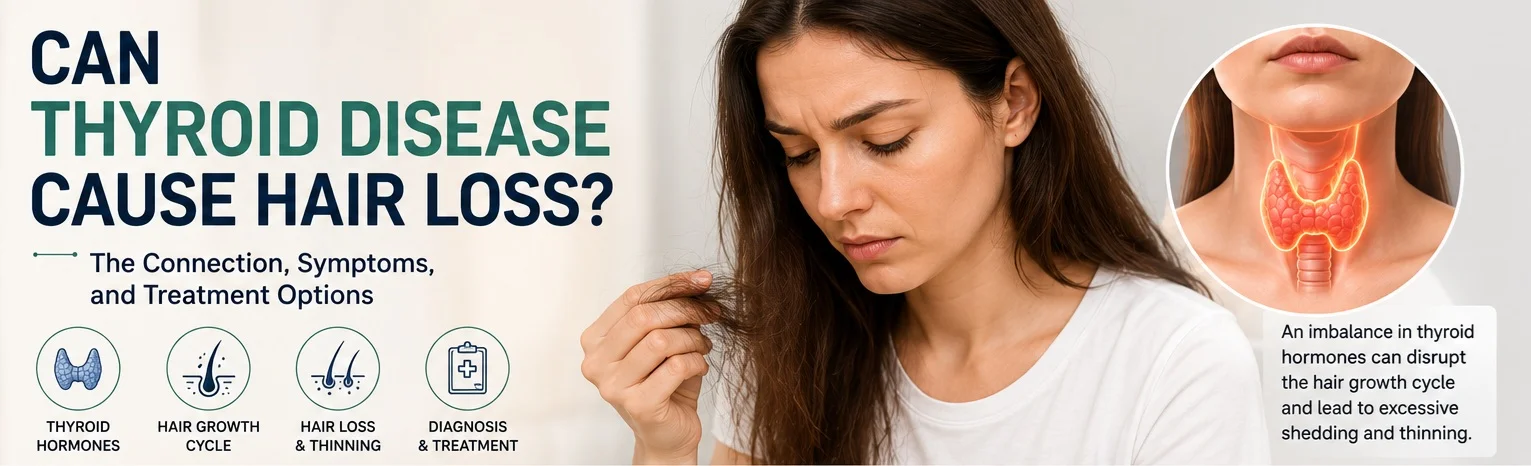
Hair loss can be influenced by a wide range of factors, including genetics, stress, nutritional deficiencies, hormonal imbalances, and underlying medical conditions. Among the medical causes, thyroid disorders are one of the most commonly overlooked contributors to excessive hair shedding and thinning.
Many people experiencing unexplained hair loss wonder whether their thyroid gland could be responsible. The answer is yes. Both an underactive thyroid (hypothyroidism) and an overactive thyroid (hyperthyroidism) can disrupt the normal hair growth cycle and lead to noticeable hair loss.
In this article, we explore the connection between thyroid disease and hair loss, the symptoms to watch for, available treatment options, and whether hair can grow back after thyroid levels are corrected.
What Is the Thyroid Gland?
The thyroid is a small butterfly-shaped gland located at the front of the neck.
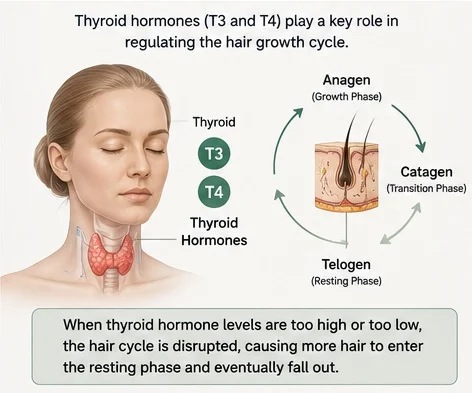
Although relatively small, it plays a crucial role in regulating many bodily functions through the production of hormones, primarily:
- Thyroxine (T4)
- Triiodothyronine (T3)
These hormones influence:
- Metabolism
- Energy production
- Body temperature
- Heart rate
- Skin health
- Nail growth
- Hair growth
When thyroid hormone levels become too high or too low, various body systems may be affected, including the hair follicles.
How Does the Thyroid Affect Hair Growth?
Hair follicles are highly active structures that require a steady supply of nutrients, oxygen, and hormonal signals to function properly.
The normal hair cycle consists of three phases:
Anagen Phase
The active growth phase where hair continuously grows.
Catagen Phase
A short transitional stage.
Telogen Phase
The resting phase before hair sheds naturally.
Thyroid hormones help regulate these stages. When hormone levels become abnormal, more hair follicles may prematurely enter the resting phase, resulting in increased shedding and diffuse thinning.
Can Hypothyroidism Cause Hair Loss?
Yes.
Hypothyroidism occurs when the thyroid gland does not produce enough hormones.
Common causes include:
- Hashimoto's thyroiditis
- Autoimmune disorders
- Thyroid surgery
- Certain medications
- Iodine deficiency
Hair loss associated with hypothyroidism typically develops gradually.
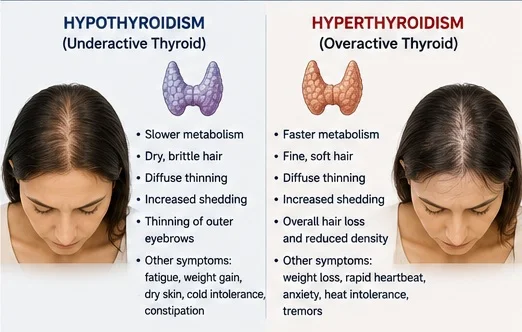
Characteristics of Hypothyroid Hair Loss
People with hypothyroidism may experience:
- Diffuse thinning across the scalp
- Increased hair shedding
- Dry and brittle hair
- Loss of hair volume
- Slower hair growth
In some cases, thinning of the outer third of the eyebrows is considered a classic sign of hypothyroidism.
Can Hyperthyroidism Cause Hair Loss?
Yes.
Hyperthyroidism occurs when the thyroid gland produces excessive amounts of hormones.
Common causes include:
- Graves' disease
- Thyroid nodules
- Thyroid inflammation
Excess thyroid hormone can accelerate the body's metabolic processes, including hair follicle cycling.
Characteristics of Hyperthyroid Hair Loss
Hair loss related to hyperthyroidism often presents as:
- Widespread thinning
- Excessive daily shedding
- Fine, soft hair texture
- Reduced hair density
The hair loss is usually diffuse rather than localized to a specific area.
What Does Thyroid-Related Hair Loss Look Like?
Unlike male pattern baldness, thyroid-related hair loss usually affects the entire scalp.
Patients often notice:
- More hair in the shower
- Hair accumulating on brushes
- Reduced ponytail thickness
- Visible scalp through the hair
- Loss of overall volume
The shedding tends to occur evenly rather than creating distinct bald patches.
Other Symptoms That May Accompany Thyroid Hair Loss
Because thyroid hormones affect many body systems, hair loss is often accompanied by additional symptoms.
Symptoms of Hypothyroidism
- Fatigue
- Weight gain
- Dry skin
- Cold intolerance
- Constipation
- Depression
- Slow heart rate
Symptoms of Hyperthyroidism
- Weight loss
- Rapid heartbeat
- Anxiety
- Tremors
- Excessive sweating
- Heat intolerance
- Difficulty sleeping
If hair loss occurs alongside these symptoms, thyroid testing may be recommended.
How Is Thyroid Disease Diagnosed?
Doctors typically diagnose thyroid disorders through blood tests.
Common tests include:
- TSH (Thyroid-Stimulating Hormone)
- Free T3
- Free T4
- Thyroid antibodies
These tests help determine whether thyroid hormone levels are outside the normal range and identify possible autoimmune causes.
Can Hair Grow Back After Thyroid Treatment?
In many cases, yes.
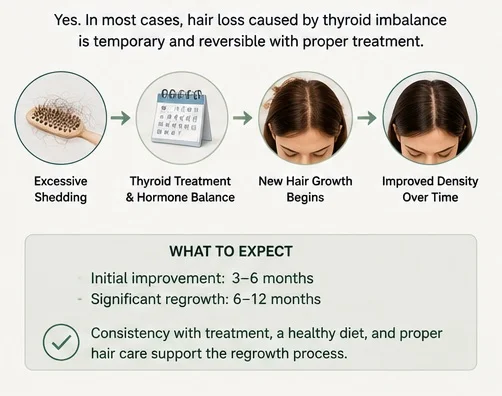
When thyroid hormone levels are restored to a healthy range, hair follicles often return to their normal growth cycle.
However, hair regrowth takes time.
Most patients begin to notice improvement:
- Within 3 to 6 months after treatment
- Continued improvement over 6 to 12 months
Because hair growth is naturally slow, patience is essential during recovery.
Can Thyroid Medication Cause Hair Shedding?
Sometimes.
It is not uncommon for temporary shedding to occur shortly after starting thyroid medication.
This usually happens because the body is adjusting to hormonal changes rather than because the medication is harming the hair.
The shedding is often temporary and may improve as hormone levels stabilize.
Who Is Most at Risk?
Certain groups are more likely to develop thyroid-related hair loss.
These include:
Women
Women are significantly more likely to experience thyroid disorders than men.
Individuals with Autoimmune Conditions
Autoimmune diseases frequently occur together and may increase the risk of thyroid dysfunction.
Adults Over 30
Thyroid disorders become more common with age.
People with a Family History of Thyroid Disease
Genetics can play an important role in thyroid health.
Can Thyroid Hair Loss Be Prevented?
Not all thyroid disorders can be prevented, but early diagnosis and treatment can reduce the risk of prolonged hair loss.
Helpful strategies include:
- Regular medical checkups
- Following prescribed treatment plans
- Maintaining a balanced diet
- Managing stress
- Monitoring thyroid hormone levels
Is Hair Transplantation Recommended for Thyroid Hair Loss?
Hair transplantation is generally not considered the first treatment option for thyroid-related hair loss.
Since thyroid hair loss is often reversible, doctors typically recommend correcting the hormonal imbalance before considering surgical interventions.
Once thyroid levels stabilize, many patients experience significant natural recovery.
When Should You See a Doctor?
You should consider medical evaluation if you experience:
- Persistent hair shedding
- Sudden thinning
- Unexplained fatigue
- Weight changes
- Dry skin
- Heart rhythm changes
Early diagnosis can improve both overall health and hair recovery outcomes.
Conclusion
Thyroid disease can absolutely contribute to hair loss. Both hypothyroidism and hyperthyroidism may disrupt the normal hair growth cycle, leading to diffuse thinning and increased shedding across the scalp.
The good news is that thyroid-related hair loss is often reversible when the underlying hormonal imbalance is properly treated. If you suspect your thyroid may be affecting your hair, blood testing and professional medical evaluation can help identify the cause and guide appropriate treatment.
Addressing thyroid health not only supports healthier hair growth but also improves overall well-being and quality of life.
Some people also ask about supportive options like whether a dermaroller can help hair loss.
Sources / References
- American Thyroid Association (ATA)
- National Institutes of Health (NIH)
- National Health Service (NHS)
- American Academy of Dermatology (AAD)
- Mayo Clinic – Thyroid Disease and Hair Loss
- Cleveland Clinic – Thyroid Disorders
- British Thyroid Foundation