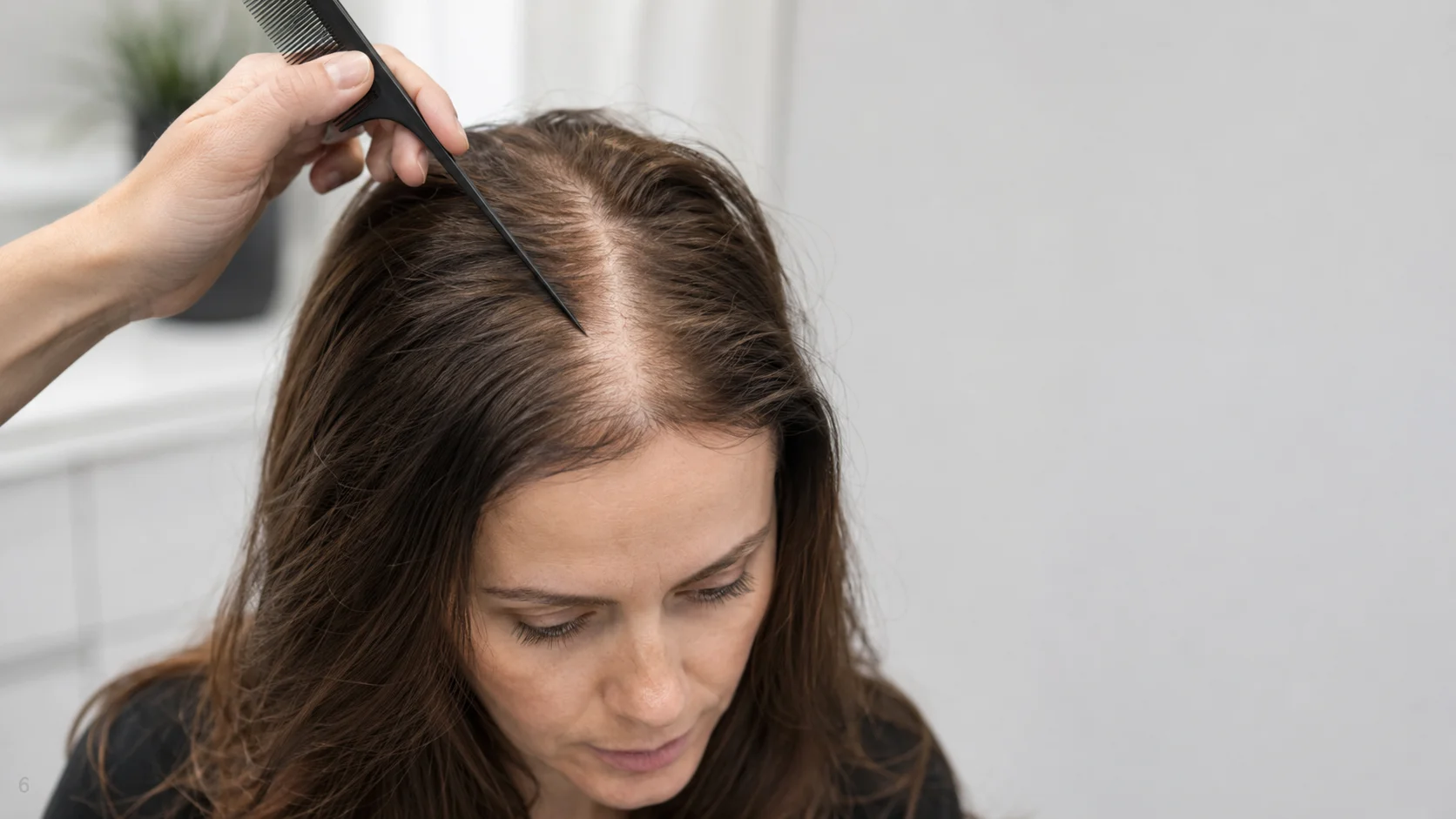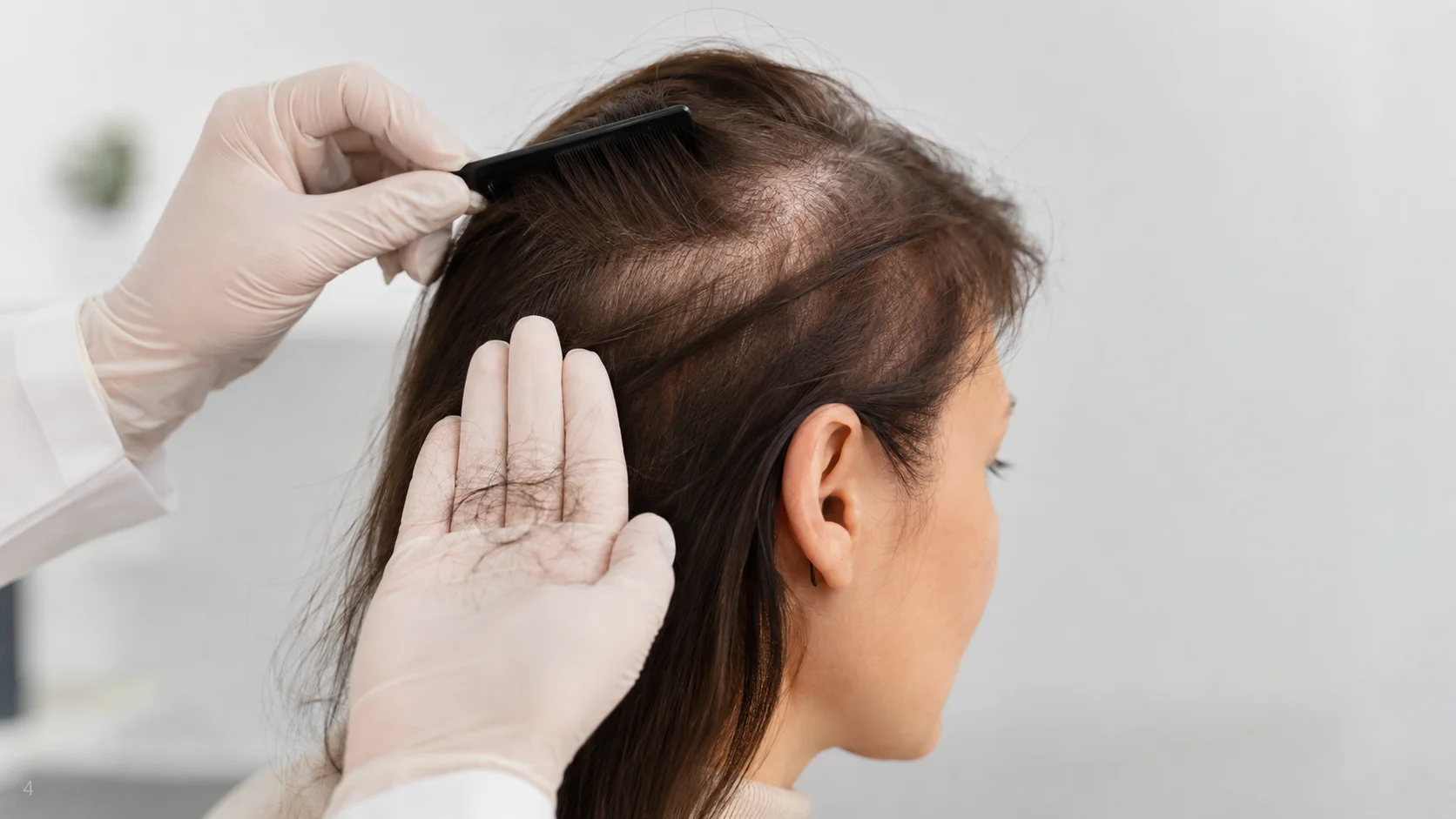
Chronic cutaneous lupus erythematosus is a long-lasting autoimmune skin disease that can affect the scalp and cause permanent hair loss. Discoid lupus erythematosus is its most common form and is particularly associated with scaly plaques, pigment changes, scarring, and cicatricial alopecia.
Scalp involvement deserves timely dermatological assessment. Hair may regrow where follicles are inflamed but still intact, but established scar tissue cannot produce new hair. The main treatment objective is therefore to suppress active disease before further follicles are destroyed.
How Chronic Cutaneous Lupus Affects Hair Follicles
In cutaneous lupus, abnormal immune activity produces inflammation in the skin. When this inflammation surrounds and damages the follicular structures responsible for regeneration, the follicle can be replaced by scar tissue.
Early lesions may contain inflammation and reversible hair loss. As disease progresses, affected areas can become thin, firm, or smooth, and follicular openings disappear. Hair loss in these scarred areas is permanent.
This differs from nonscarring alopecia, in which follicles remain structurally capable of producing hair. It also differs from the diffuse nonscarring shedding that can occur in association with systemic lupus, illness, medication, or other triggers.
Causes and Risk Factors
The exact cause is not fully understood. Genetic susceptibility, immune dysregulation, ultraviolet exposure, and environmental influences may contribute.
Sunlight can provoke or worsen cutaneous lupus activity. Smoking is associated with more difficult-to-control disease and may reduce response to some treatments. Certain medicines can produce lupus-like skin eruptions, although medication-related disease must be distinguished from chronic cutaneous lupus.
The condition is not contagious, and it is not caused by inadequate hair care. Chemical processing or tight styling may irritate an already sensitive scalp, but they do not create the underlying autoimmune disease.
Scalp Symptoms and Signs
Discoid lesions commonly affect the scalp, face, and ears. Appearance varies with disease stage and skin tone.
Active scalp disease may cause:
- Red, violet, or deeply discolored plaques
- Adherent scale
- Follicular plugging
- Itching, tenderness, burning, or soreness
- Areas of reduced density or patchy hair loss
- Prominent small blood vessels
- Changes in pigmentation
As damage accumulates, plaques may become atrophic and scarred. The center can appear pale or depigmented, while the border remains darker or inflamed. In darker skin tones, pigment alteration may be especially prominent and can persist after inflammatory activity improves.
Smooth white areas without follicular openings suggest established scarring. The visible edge of a patch may remain active even when its center is no longer inflamed.
Is Chronic Cutaneous Lupus the Same as Systemic Lupus?
No. Chronic cutaneous lupus primarily affects the skin, and many people with localized discoid lupus do not have systemic lupus erythematosus.
However, skin disease can occasionally occur alongside or precede systemic involvement. Medical evaluation may therefore include questions about joint symptoms, mouth ulcers, unusual fatigue, chest pain, fevers, circulation changes, or kidney-related symptoms.
The presence of scalp lesions alone cannot establish or exclude systemic lupus. Likewise, a positive screening blood test does not by itself prove that a person has systemic disease.
How Scalp Disease Is Diagnosed
Diagnosis combines clinical examination, scalp magnification, medical history, and often a skin biopsy.
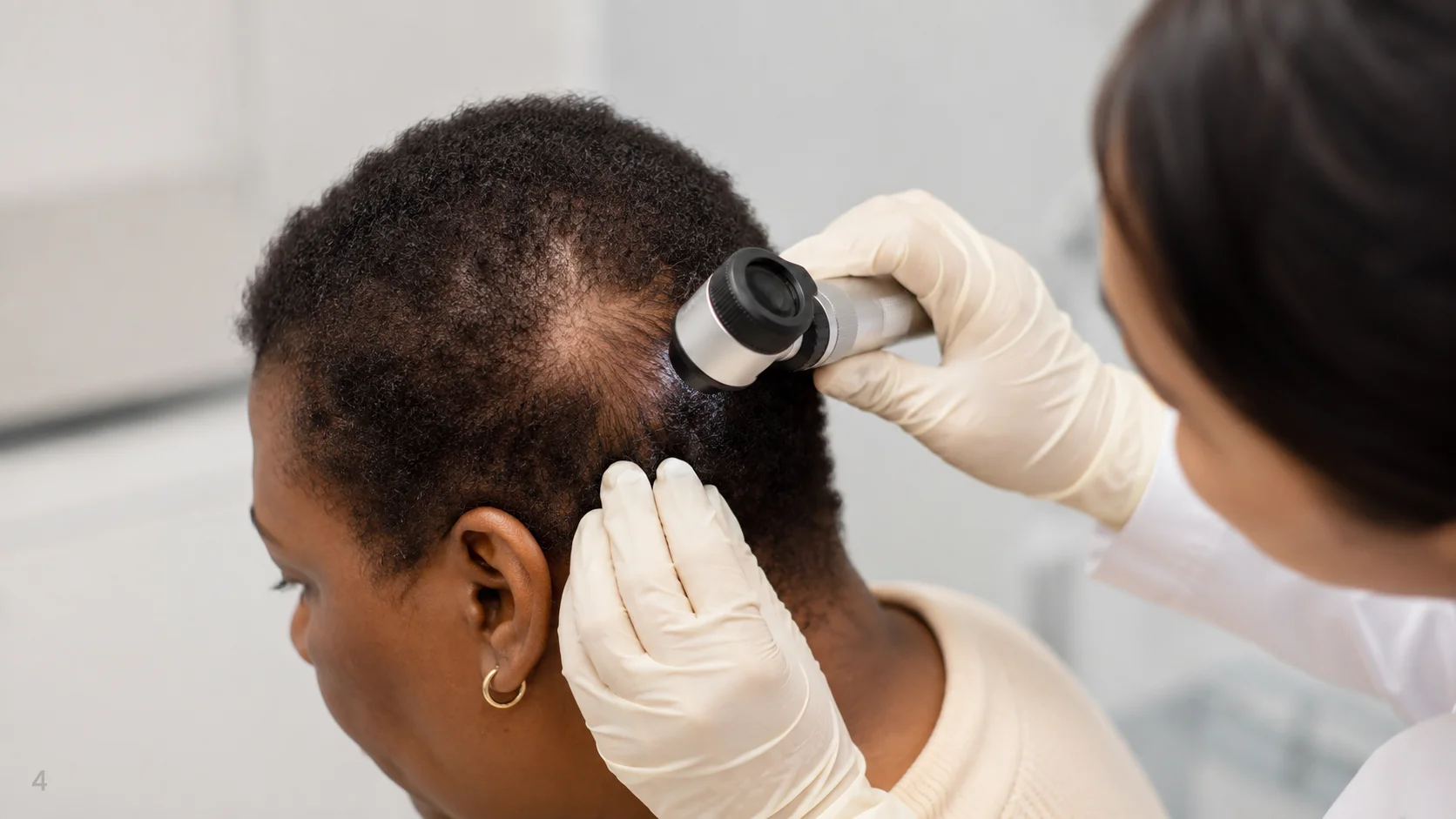
Dermoscopy may reveal follicular plugs, enlarged yellow dots, pigment patterns, prominent vessels, white scarring, and loss of follicular openings. These findings can help identify active areas and distinguish lupus from other scarring alopecias.
A biopsy is usually taken from an active margin rather than the center of a fully scarred patch. Histopathology can demonstrate characteristic inflammation and tissue changes. Direct immunofluorescence may sometimes provide additional information.
Blood count, kidney function, urine testing, inflammatory markers, and autoantibody tests may be selected according to the clinical picture. Normal blood tests do not automatically exclude chronic cutaneous lupus limited to the skin.
Conditions That May Look Similar
Lichen planopilaris, central centrifugal cicatricial alopecia, frontal fibrosing alopecia, fungal infection, and other inflammatory scalp disorders can resemble chronic cutaneous lupus. Advanced scarring conditions may become particularly difficult to distinguish by appearance alone.
Pattern hair loss and alopecia areata are usually nonscarring. Visible follicular openings are generally preserved, although a person may have more than one condition at the same time.
Because treatments differ, self-diagnosis based on photographs is unreliable.
Treatment Priorities
Treatment aims to stop inflammation, prevent new lesions, limit scarring, and control symptoms. Existing scarred areas are not expected to regrow hair, so waiting for obvious expansion can sacrifice follicles that might otherwise have been preserved.
Sun Protection and Trigger Reduction
Broad-spectrum sun protection, protective clothing, hats, and avoidance of unnecessary ultraviolet exposure can reduce provocation of skin disease. Sunscreen must be applied to all exposed affected areas, not only the scalp.
Smoking cessation is strongly encouraged. Gentle scalp care and avoidance of irritants may reduce additional discomfort, although these measures do not replace anti-inflammatory treatment.
Local Treatments
Potent topical corticosteroids may be prescribed for active scalp plaques. Corticosteroid injections can deliver treatment into selected lesions.
Topical calcineurin inhibitors may be considered in some locations, especially where long-term corticosteroid exposure presents concerns. Treatment selection depends on site, thickness, activity, and the risk of adverse effects.
Systemic Treatment
Antimalarial medicines are commonly used when disease is widespread, persistent, scarring, or insufficiently controlled with local therapy. They require appropriate dosing and ongoing safety monitoring, including eye screening according to clinical recommendations.
Other immune-modifying medicines may be considered for resistant disease. Their potential benefits must be balanced against infection risk, laboratory abnormalities, reproductive considerations, and other adverse effects.
Can Hair Be Restored?
Hair may recover in inflamed areas if follicles have not been irreversibly damaged. Improvement can take months and may remain incomplete.
Once follicular openings have disappeared and biopsy or examination confirms mature scarring, medical treatment cannot recreate those follicles. Surgery is generally considered only after the disease has been inactive and stable for a substantial period. Even then, transplantation into scarred tissue has variable survival and carries a risk of disease reactivation.
Hairpieces, scalp concealers, and styling adaptations can improve appearance. These are cosmetic options and should not be represented as treatments for lupus inflammation.
Frequently Asked Questions
Is hair loss from discoid lupus permanent?
It can be. Hair loss may be reversible during early inflammation, but destruction and scarring of the follicle cause permanent loss.
Can treatment regrow hair in a smooth scarred patch?
Treatment can protect remaining follicles and control activity, but it cannot restore follicles that have already been replaced by scar tissue.
Does every person with scalp discoid lupus have systemic lupus?
No. Many people have disease limited to the skin, but clinical evaluation is appropriate because systemic involvement is possible.
Why is a scalp biopsy performed?
A biopsy can confirm the type of inflammation, separate lupus from other scarring disorders, and guide treatment.
How can active disease be recognized?
Redness, scale, tenderness, itching, expanding borders, follicular plugging, and continuing hair loss can indicate activity. Subtle disease may require dermoscopic assessment.
Why Early Evaluation Matters
Scarring alopecia changes the purpose of treatment. The urgent goal is not simply to stimulate growth; it is to preserve follicles before inflammation causes irreversible destruction. Prompt diagnosis, consistent treatment, sun protection, and structured monitoring offer the best opportunity to limit further loss.
This content is for general informational purposes and does not replace individualized medical advice, diagnosis, or treatment.