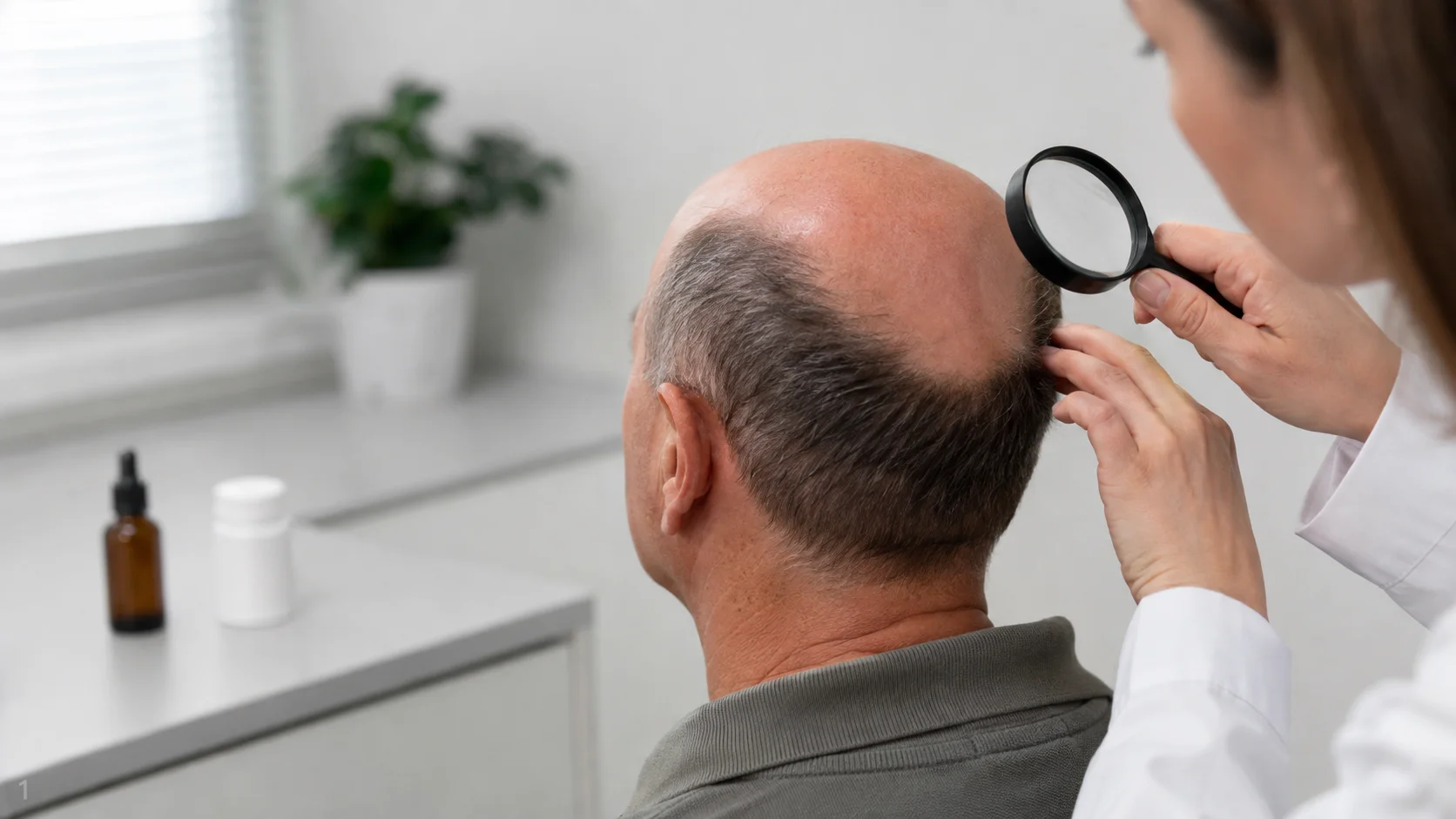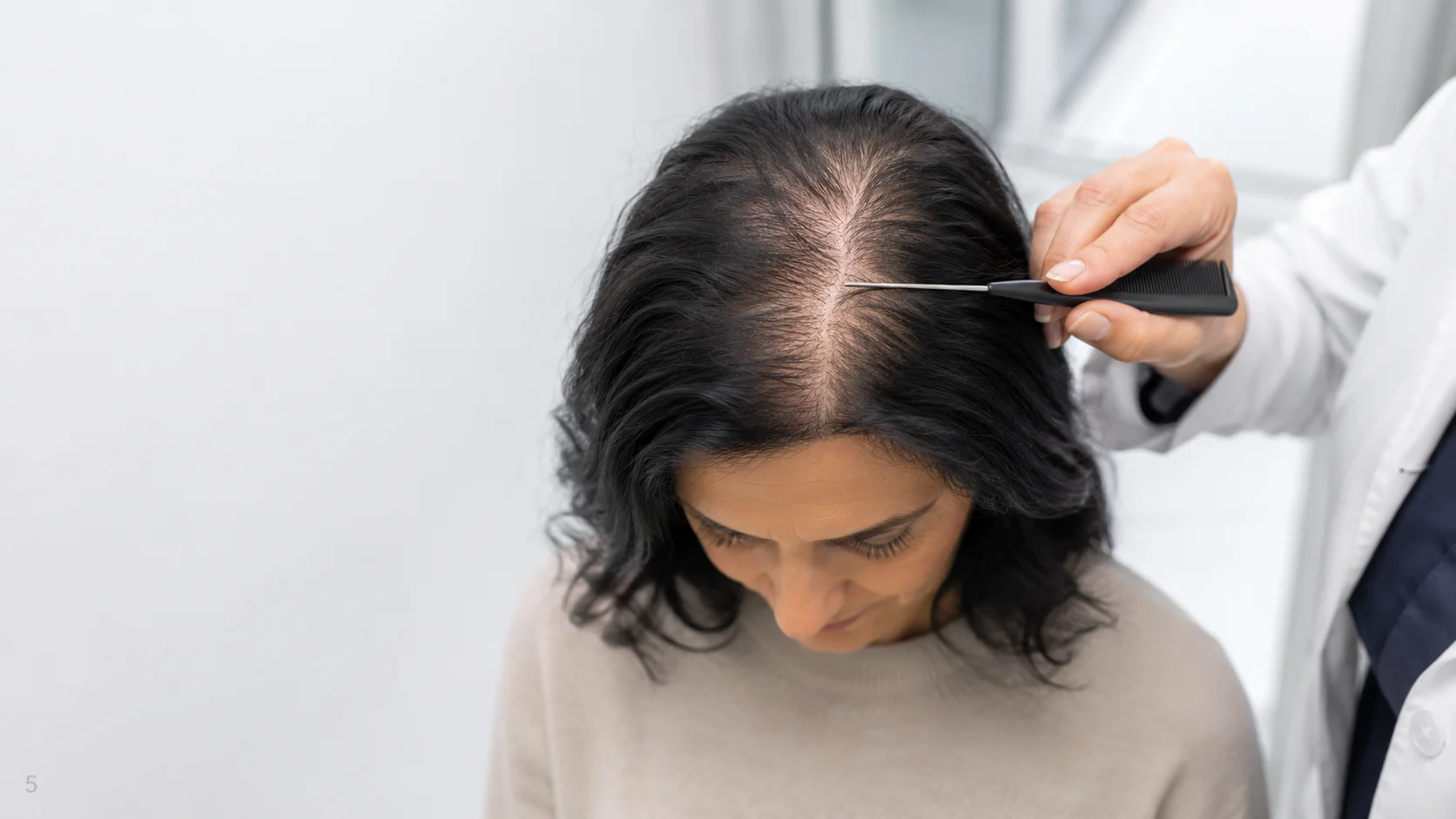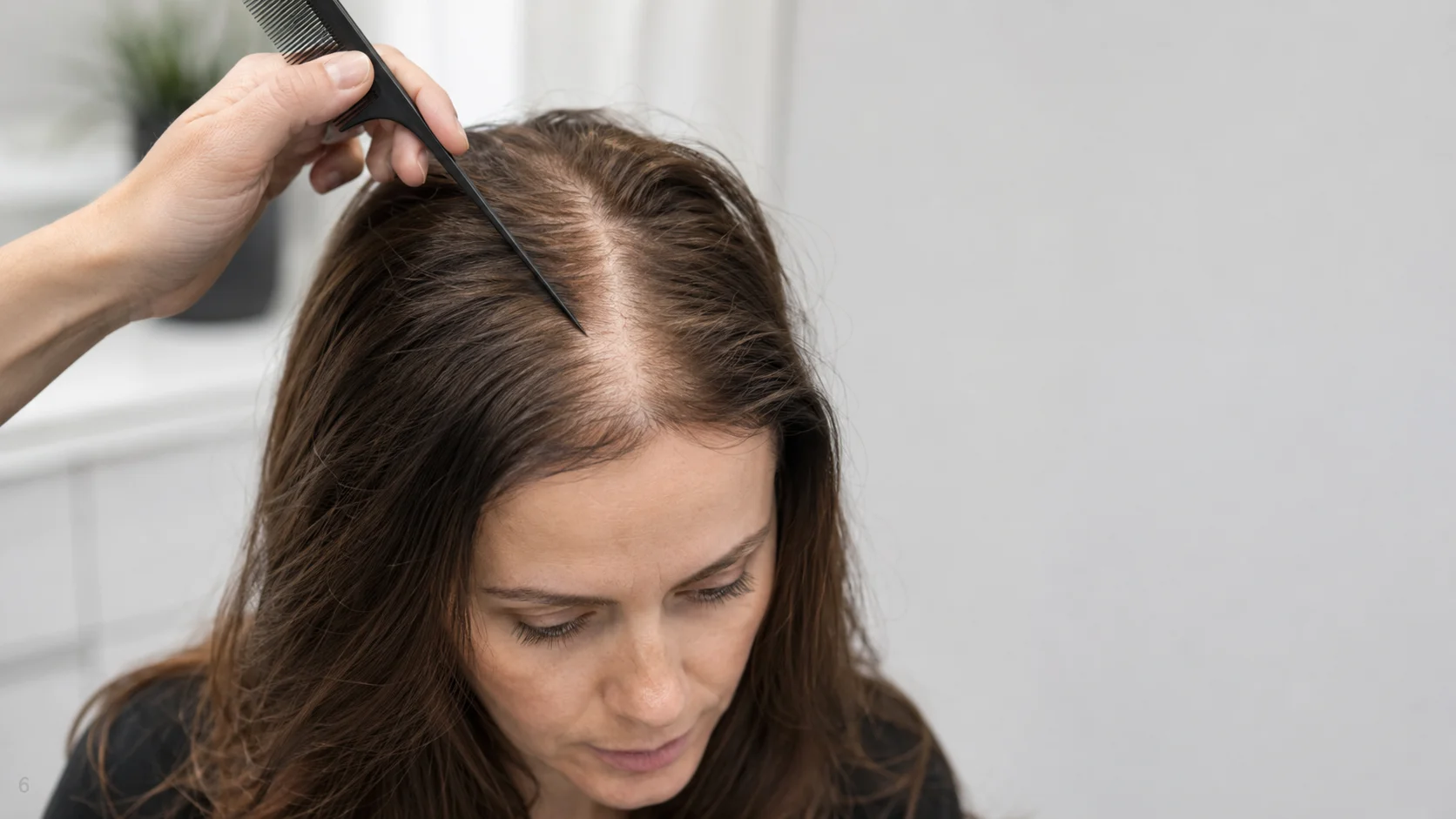
The Olsen Christmas tree pattern is a recognizable presentation of female pattern hair loss in which thinning is most noticeable along the central part and becomes wider toward the frontal hairline. Viewed from above, the affected area may resemble a triangular or Christmas tree shape, with the broader portion at the front.
This pattern describes the distribution of hair loss rather than a separate disease. It usually reflects progressive follicular miniaturization associated with female pattern hair loss, but diagnosis should not be based on appearance alone. Other conditions can produce central or frontal thinning and may require different treatment.
What Is the Olsen Christmas Tree Pattern?
The Olsen pattern is characterized by accentuated thinning along the midline of the scalp. Hair density decreases from the central part toward the front, creating a triangular area of greater scalp visibility.
Unlike the classic Ludwig pattern, which emphasizes diffuse thinning across the crown with relative preservation of the frontal hairline, the Olsen pattern includes more obvious frontal accentuation. The frontal hairline may appear less dense centrally even when its overall outline remains largely intact.
The pattern can be mild and visible only under strong light, or it can become prominent enough to affect styling and frontal coverage.
What Causes This Pattern of Hair Loss?
The Olsen pattern is most commonly associated with female pattern hair loss, a nonscarring condition in which susceptible follicles gradually become smaller. Over repeated hair cycles, affected follicles produce finer, shorter, and less pigmented strands.
Several factors can contribute to this process.
Genetic Susceptibility
Female pattern hair loss often has an inherited component, although the pattern of inheritance is complex. Susceptibility can come from either side of the family, and an obvious family history is not required.
Relatives may show different distributions or degrees of thinning. One person may develop central widening, while another has more diffuse crown loss or temporal recession.
Hormonal and Follicular Influences
Androgens can influence follicular miniaturization, but many women with pattern hair loss have normal blood androgen levels. Local follicular sensitivity may matter more than the amount of hormone circulating in the bloodstream.
Hormonal changes associated with aging and menopause may make thinning more noticeable. However, the Olsen pattern can also occur before menopause.
Women with irregular menstrual cycles, new facial or body hair growth, persistent acne, or other signs of androgen excess may need a targeted hormonal evaluation.
Age and Hair-Cycle Changes
Female pattern hair loss can begin at different ages, but its prevalence generally increases over time. As miniaturization progresses, fewer thick terminal hairs remain available to cover the central and frontal scalp.
Aging can also affect hair growth independently of pattern hair loss. Diagnosis therefore depends on the distribution and follicular changes rather than age alone.
Additional Shedding Disorders
Telogen effluvium can occur alongside female pattern hair loss. Illness, nutritional deficiency, major stress, surgery, rapid weight loss, childbirth, or certain medications may trigger increased shedding and reveal previously subtle patterned thinning.
Treating a temporary shedding trigger may improve overall density, but it does not necessarily reverse the underlying miniaturization.
Common Signs and Symptoms
The Olsen Christmas tree pattern generally develops gradually. Early changes may be easier to see in photographs than in the mirror.
Typical signs include:
- Widening of the central part
- A triangular area of thinning that broadens toward the forehead
- Greater scalp visibility in the front-center region
- Finer and shorter hairs within the affected area
- Reduced volume around the central part
- Difficulty maintaining previous hairstyles
- Relative preservation of density at the sides and back
Some people notice more hair in the shower or on a brush, while others experience little obvious shedding. Pattern hair loss can reduce coverage through gradual miniaturization without causing dramatic daily hair fall.
The scalp should usually retain visible follicular openings. Pronounced redness, burning, pain, scale, pustules, or smooth shiny skin is not typical and should prompt evaluation for another condition.
How It Differs From the Ludwig Pattern
Both the Olsen and Ludwig classifications describe presentations of female pattern hair loss, but they emphasize different distributions.
The Ludwig pattern involves diffuse thinning over the crown and upper scalp. Its three grades describe increasingly severe loss while the frontal hairline is generally preserved.
The Olsen pattern emphasizes central-part widening with frontal accentuation. The part appears progressively broader as it approaches the hairline, creating the characteristic triangular shape.
A person may show features of both patterns. Classification is useful for describing appearance and monitoring change, but it does not replace diagnosis or determine treatment by itself.
How the Olsen Pattern Is Diagnosed
Diagnosis begins with a detailed history and scalp examination. A clinician may ask about the onset and speed of thinning, recent shedding, family history, menstrual history, pregnancy, menopause, health changes, nutrition, medications, and hair-care practices.
The examination should assess the entire scalp rather than only the visible central part. This helps determine whether thinning is patterned, diffuse, patchy, or associated with inflammation.
Dermoscopic Examination
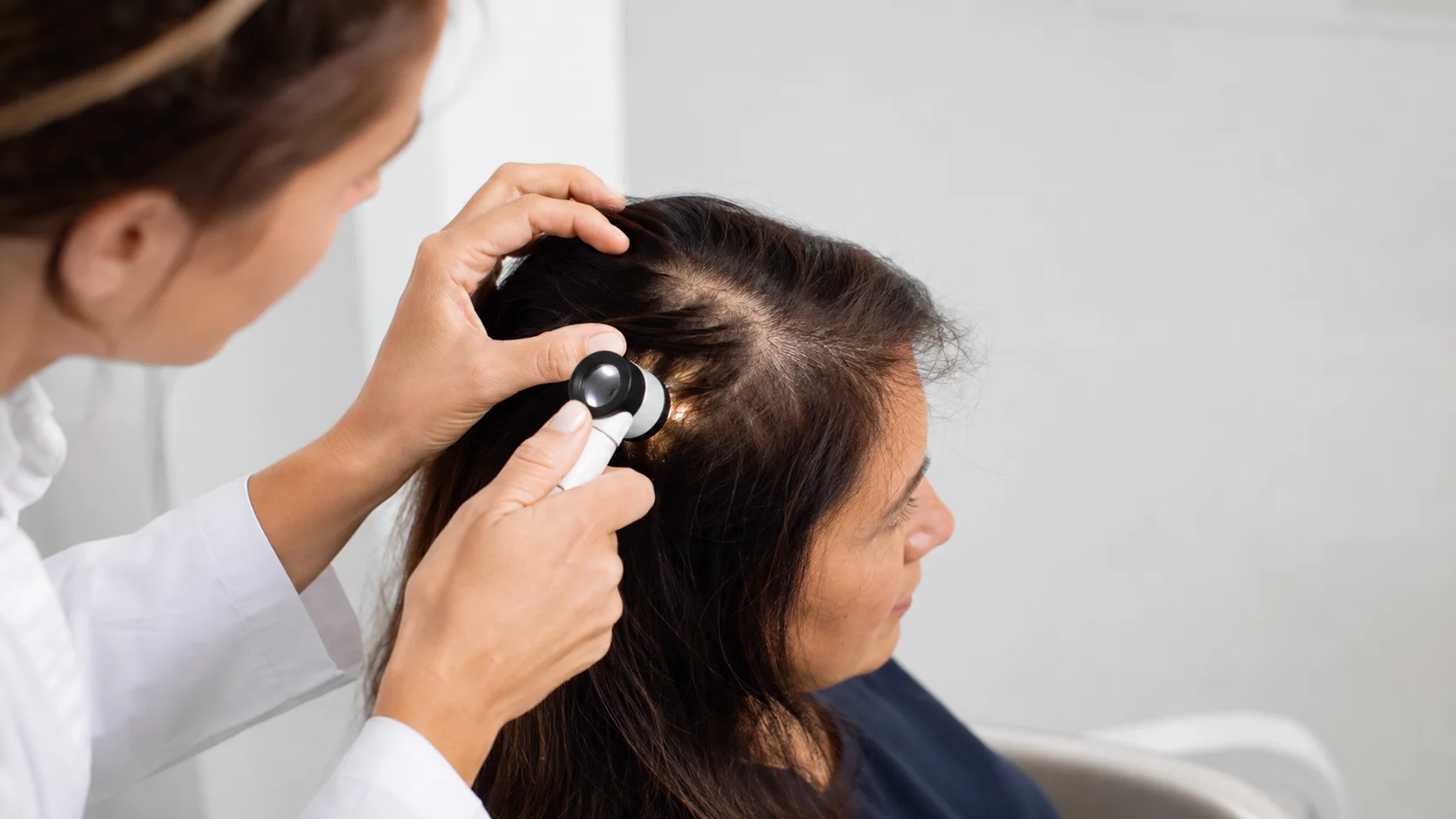
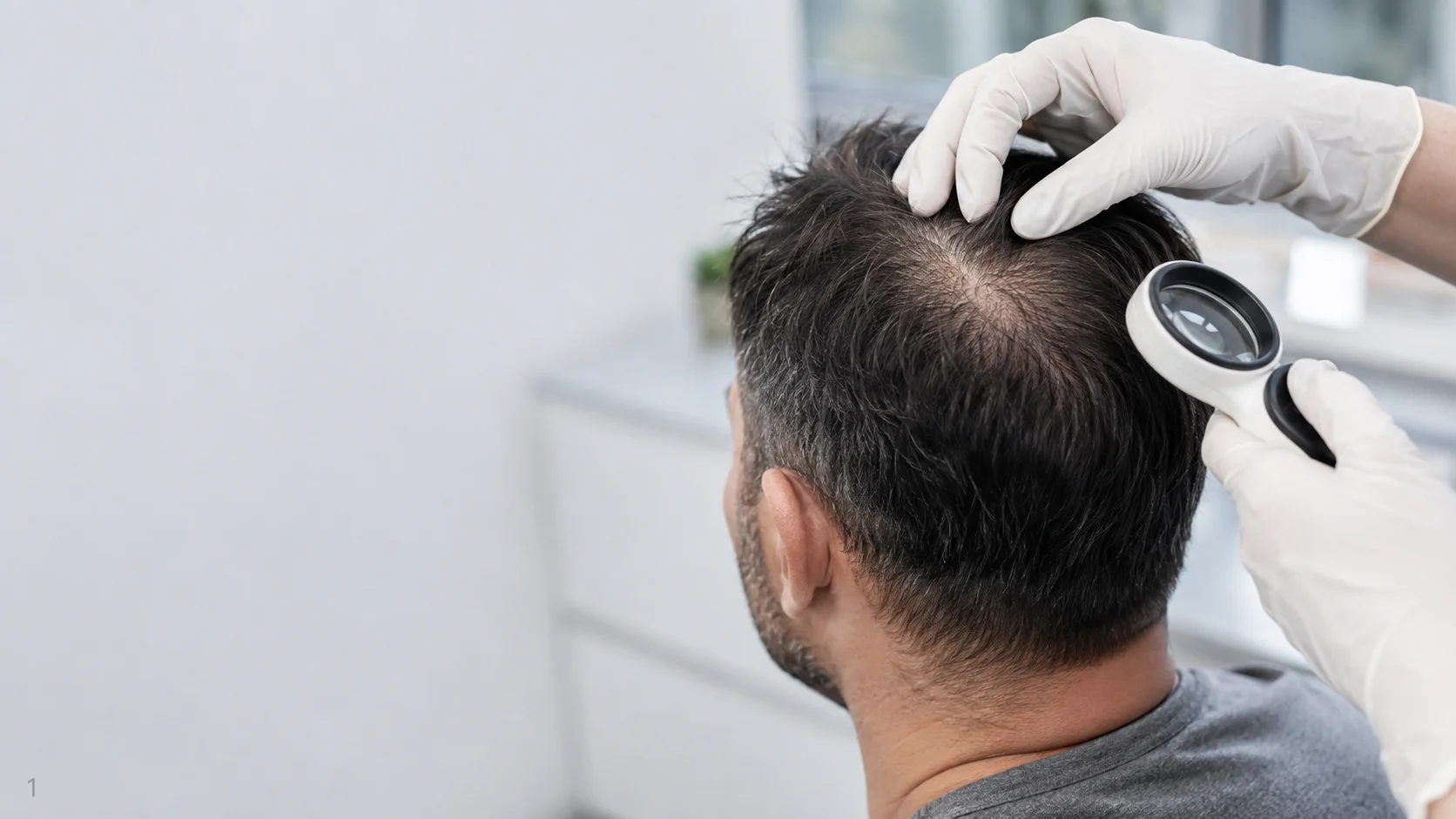
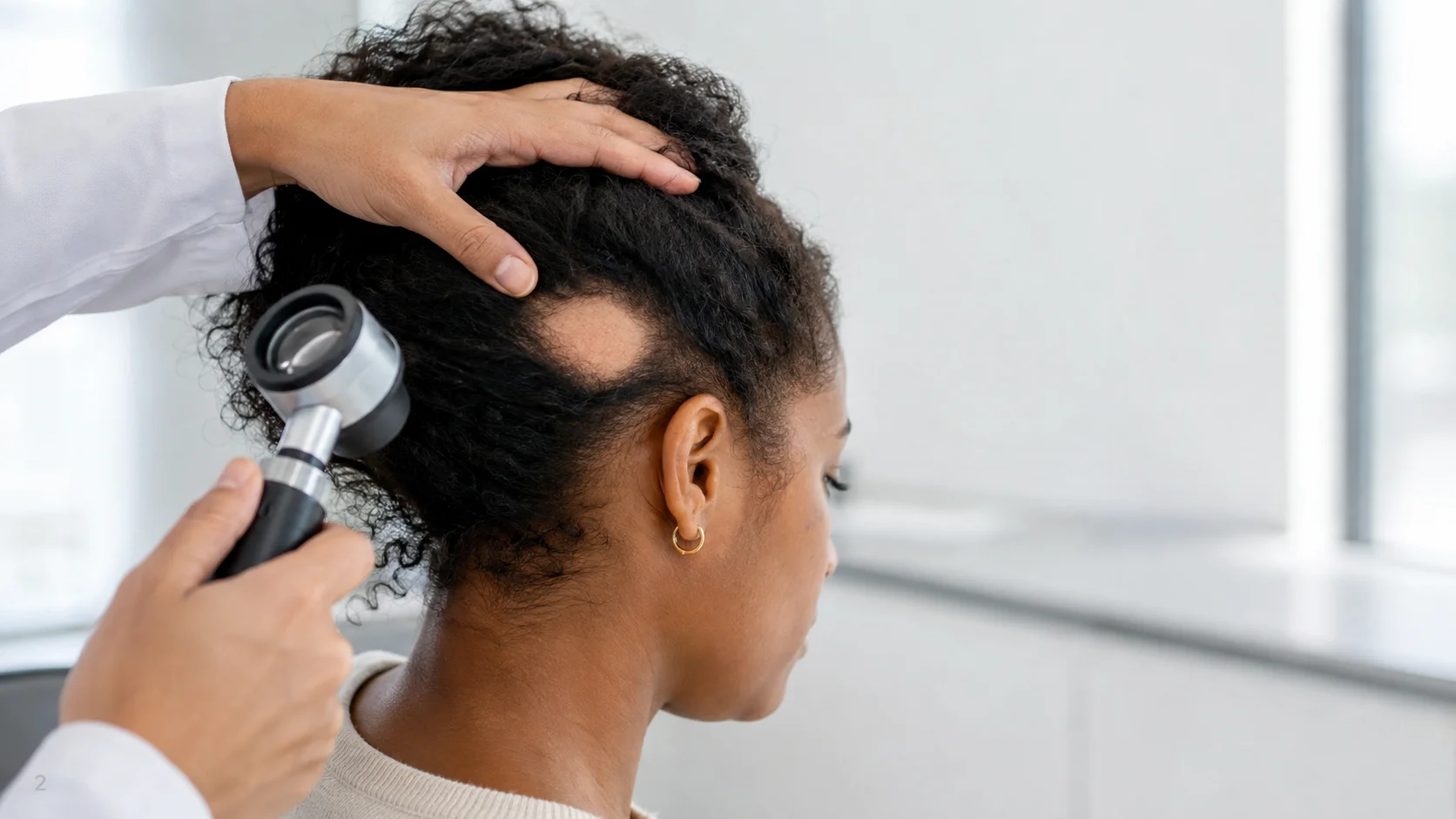
Scalp dermoscopy, also called trichoscopy, provides a magnified view of the follicles and hair shafts. Findings that can support female pattern hair loss include:
- Variation in hair-shaft diameter
- Increased numbers of fine, miniaturized hairs
- More single-hair follicular units in affected areas
- Reduced density compared with the back of the scalp
- Preserved follicular openings
Standardized photographs may be taken to document distribution and monitor progression.
Laboratory Testing
Blood tests are selected according to the person’s history rather than the visual pattern alone. Testing may be appropriate when there is heavy shedding, fatigue, restrictive eating, menstrual disturbance, symptoms of thyroid disease, or clinical evidence of androgen excess.
Possible assessments can include iron status, thyroid function, or selected hormone tests. An abnormal laboratory result should be interpreted in clinical context rather than assumed to explain all hair loss.
Scalp Biopsy
A scalp biopsy is not routinely needed when the history and examination clearly support female pattern hair loss. It may be useful when the diagnosis remains uncertain or when inflammatory or scarring alopecia must be excluded.
Conditions That Can Resemble the Olsen Pattern
Central or frontal thinning is not always female pattern hair loss. Possible alternatives or accompanying conditions include:
- Telogen effluvium
- Traction alopecia
- Frontal fibrosing alopecia
- Central centrifugal cicatricial alopecia
- Alopecia areata
- Nutritional deficiency
- Thyroid-related hair loss
- Hair-shaft breakage
Traction may be suspected when loss corresponds to tightly styled areas. Scarring disorders can produce symptoms, perifollicular scale, discoloration, or loss of follicular openings. Sudden diffuse shedding points toward a hair-cycle disturbance, although it may reveal underlying pattern loss.
Treatment Options
Treatment aims to preserve existing follicles, slow progression, and improve the performance of miniaturized hairs. The triangular distribution does not require an entirely different treatment strategy from other forms of female pattern hair loss.
Topical Minoxidil
Topical minoxidil is a commonly used treatment. It may extend the active growth phase and increase the diameter of some miniaturized hairs.
Consistent use is necessary, and visible improvement generally takes several months. Temporary increased shedding can occur after treatment begins. Scalp irritation and unwanted facial hair growth are possible limitations.
The benefit usually diminishes after treatment is discontinued, so long-term use may be necessary to maintain results.
Oral Minoxidil
Low-dose oral minoxidil may be prescribed off-label to selected patients. It can cause increased body or facial hair growth, fluid retention, changes in blood pressure, rapid heartbeat, or other systemic effects.
A clinician should review cardiovascular history, blood pressure, pregnancy considerations, medications, and potential interactions before prescribing it.
Antiandrogen Treatment
Antiandrogen medicines may be considered for appropriate women, particularly when androgen-related symptoms or continued progression are present. These medications require individualized evaluation and may involve blood tests or monitoring.
Some options are unsuitable during pregnancy because of potential fetal effects. Reliable reproductive counseling is therefore an essential part of treatment planning.
Hair Transplantation
Hair transplantation can be considered when loss is stable, donor density is adequate, and the diagnosis is confirmed. The procedure redistributes existing follicles; it does not create new ones or stop ongoing miniaturization.
Diffuse loss affecting the donor region may make transplantation unsuitable. Careful planning is also needed because the central and frontal areas can continue to thin around transplanted hairs.
Cosmetic Appearance Management
Hair fibers, scalp concealers, volumizing products, strategic part placement, and hairpieces may reduce the contrast between the scalp and hair. These options can provide immediate cosmetic improvement but do not treat follicular miniaturization.
Gentle styling may reduce breakage and traction. However, shampoos and cosmetic products should not be presented as medical treatments for female pattern hair loss.
Monitoring Progress
Daily observation can exaggerate minor changes because lighting, hair cleanliness, moisture, styling, and part placement affect scalp visibility. Standardized photographs taken every few months provide a more reliable record.
Useful photographs should maintain consistent lighting, camera distance, hair length, and part position. Clinical monitoring may also include dermoscopic images or density measurements.
A successful early result may be stabilization rather than dramatic regrowth. Preventing further widening of the central part can be meaningful even when previous density is not fully restored.
Frequently Asked Questions
Is the Christmas tree pattern a separate type of alopecia?
It is a recognized distribution of female pattern hair loss, not usually a separate disease. Other causes must still be excluded when the presentation is atypical.
Why is thinning wider near the forehead?
In the Olsen pattern, miniaturization is accentuated along the central part and front-center scalp. This creates a triangular area that broadens toward the frontal hairline.
Can the Olsen pattern be reversed?
Treatment may slow progression and improve the thickness of miniaturized hairs, particularly when started early. Complete restoration cannot be guaranteed.
Does this pattern mean androgen levels are high?
No. Many women with female pattern hair loss have normal circulating androgen levels. Hormonal testing is usually guided by additional symptoms.
Can the Olsen and Ludwig patterns occur together?
Yes. Female pattern hair loss does not always fit neatly into one visual classification, and mixed features are possible.
When should frontal thinning be evaluated promptly?
Assessment should not be delayed when loss is sudden, painful, itchy, heavily scaly, associated with a receding scar-like hairline, or accompanied by loss of follicular openings.
Understanding the Pattern Without Overinterpreting It
The Christmas tree shape helps describe where thinning is most visible, but it does not reveal the full cause, rate of progression, or best treatment. A careful examination can confirm follicular miniaturization, identify additional shedding, and rule out scarring disease. Treatment can then focus on preserving active follicles and setting realistic expectations for improvement.
This content is for general informational purposes and does not replace individualized medical advice, diagnosis, or treatment.