A trichologist focuses on hair and scalp concerns. Trichology covers topics such as hair shedding, breakage, cosmetic damage, dandruff, scalp discomfort, and the visual assessment of thinning.
A trichologist is not necessarily a medical doctor. Training standards, permitted activities, professional registration, and legal regulation vary substantially between countries. Credentials should therefore be checked rather than inferred from the title alone.
What Does a Trichologist Do?
A trichology consultation commonly begins with a detailed history. The practitioner may ask about:
- When the problem began
- Changes in shedding or density
- Hair-care and styling practices
- Chemical and heat exposure
- Diet and recent weight changes
- Illness, pregnancy, surgery, or stress
- Medications and supplements
- Menstrual or hormonal symptoms
- Family history of hair loss
- Scalp itching, pain, scale, or tenderness
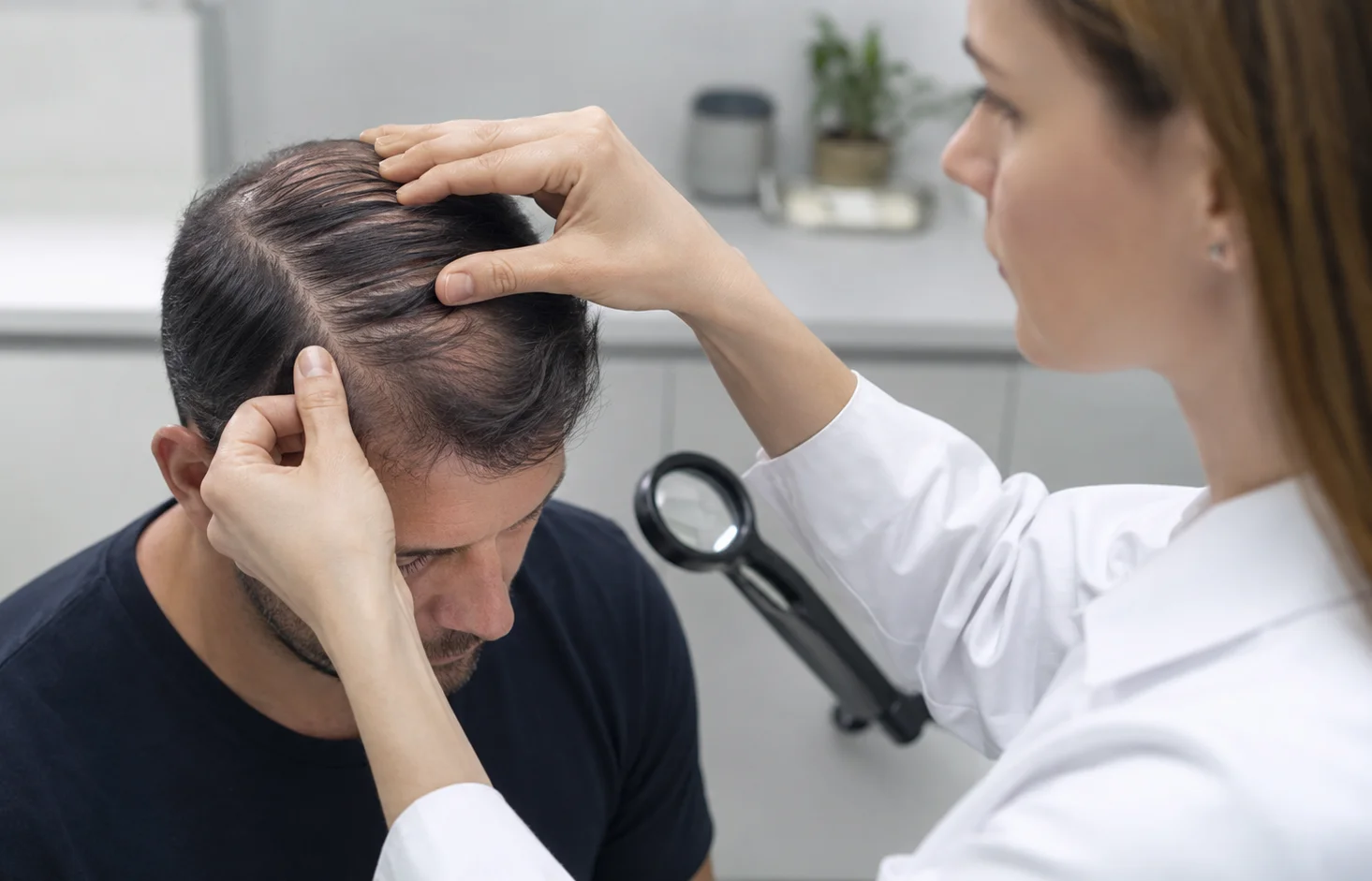
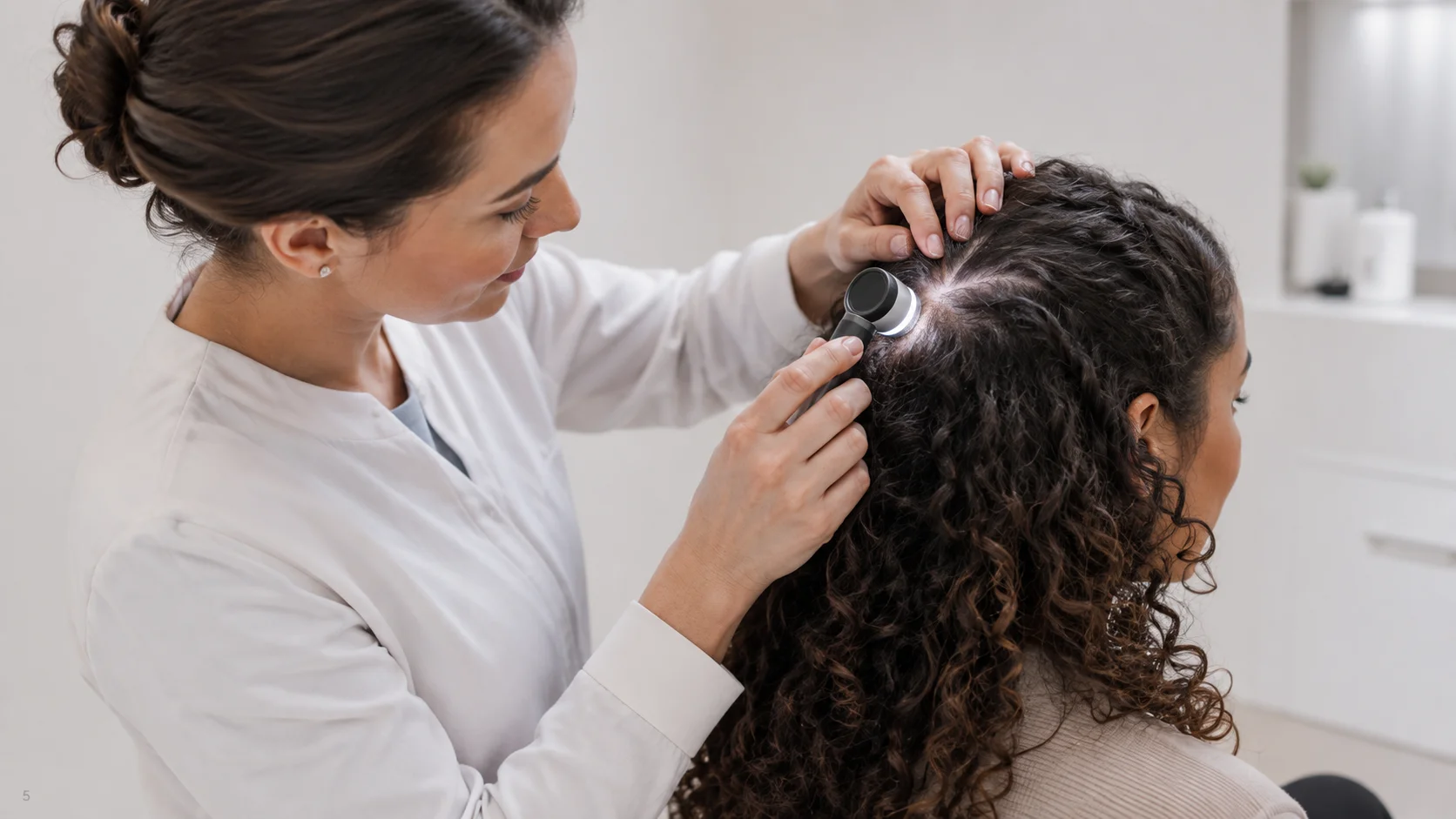
The scalp and hair shafts may then be examined visually and with magnification.
Trichoscopy and Scalp Imaging
Some trichologists use a trichoscope or digital microscope to enlarge the scalp and hair. This can help document:
- Variation in hair-shaft diameter
- Broken hairs
- Follicular-unit composition
- Scale and redness
- Hair density
- Scalp surface changes
- Changes between follow-up visits
Magnified images can support an assessment, but owning a camera does not establish diagnostic expertise. Images must be interpreted in the context of the history and physical findings.
Problems a Trichologist May Help Assess
Depending on training and scope, a trichologist may help with:
- Excessive shedding
- Patterned thinning
- Hair breakage
- Cosmetic or chemical damage
- Dandruff and mild flaking
- Dry or oily scalp concerns
- Hair-care routines
- Traction from styling
- Appearance-management strategies
- Monitoring of hair and scalp changes
A responsible practitioner should recognize when a problem falls outside their expertise and refer the client to a physician.
Trichologist Versus Dermatologist
A dermatologist is a medically qualified physician specializing in skin, hair, and nail disorders. Dermatologists can diagnose medical disease, prescribe medication, request laboratory tests, perform scalp biopsies, and manage inflammatory or scarring alopecia.
A nonmedical trichologist generally cannot independently prescribe prescription-only medication, diagnose systemic disease, order every type of medical test, or perform a biopsy. The precise limitations depend on local law and any other qualifications the person holds.
Some physicians develop a particular interest in hair disorders and may describe their work as medical trichology. In that case, the relevant medical license and specialty credentials should still be verified.
When a Trichologist May Be Useful
A well-trained trichologist may be helpful when the main concern involves:
- Distinguishing apparent breakage from shedding
- Reviewing damaging grooming practices
- Building a gentler hair-care routine
- Documenting density with consistent images
- Managing cosmetic effects of thinning
- Identifying reasons to seek medical assessment
- Providing follow-up support alongside medical care
Trichologists can also spend substantial time discussing routines and appearance concerns that may not fit easily into a short medical appointment.
They should not claim that cosmetic products can cure autoimmune, genetic, endocrine, or scarring hair disorders.
When to See a Dermatologist or Physician First
Medical assessment is more appropriate when there is:
- Sudden or severe shedding
- Smooth bald patches
- Progressive hairline recession or crown thinning
- Pain, burning, pus, or substantial redness
- Thick or adherent scale
- Loss of follicular openings
- Eyebrow or eyelash loss
- Signs of infection
- Menstrual disturbance or androgen-related symptoms
- Unexplained fatigue or systemic illness
- Hair loss following a medication change
- Suspected scarring alopecia
Scarring hair loss is particularly time-sensitive because destroyed follicles cannot be restored.
A physician should also evaluate symptoms suggesting anemia, thyroid disease, hormonal disorders, autoimmune disease, or nutritional deficiency.
Can a Trichologist Diagnose Hair Loss?
This depends on the meaning of “diagnose” and the practitioner’s legal scope. A trichologist may recognize patterns and provide an assessment, but a nonmedical practitioner should not replace a physician when a medical diagnosis is required.
Terms such as “follicle blockage,” “poor scalp circulation,” “toxin buildup,” or “nutritional deficiency” should not be accepted as diagnoses without appropriate evidence.
A high-resolution scalp image alone cannot identify every cause of hair loss.
Can a Trichologist Prescribe Treatment?
A nonmedical trichologist generally cannot prescribe regulated medication unless they hold another professional qualification granting that authority.
They may recommend hair-care changes, cosmetic products, over-the-counter options, or referral for medical treatment. Product sales can create a conflict of interest, so costs, evidence, and alternatives should be discussed transparently.
Blood tests and supplements should not be recommended as standardized packages without considering symptoms, medical history, and the risks of unnecessary treatment.
How to Check a Trichologist’s Credentials
Before booking, ask:
- What qualification do you hold?
- Which organization awarded it?
- Is the title regulated in this country?
- Are you listed on an accredited or recognized register?
- Do you carry professional indemnity insurance?
- What is your referral process?
- Can you prescribe or order medical tests?
- Are products sold during the consultation?
- How are photographs and health information stored?
- What happens if you suspect scarring or systemic disease?
A certificate of attendance at a short course is not equivalent to extensive clinical training.
Warning Signs of an Unreliable Service
Be cautious when a practitioner:
- Guarantees regrowth
- Diagnoses every client with the same problem
- Sells an expensive package before completing an assessment
- Claims one product treats all types of hair loss
- Advises stopping prescribed medication without contacting the prescriber
- Discourages medical evaluation
- Uses microscope images to make unsupported claims
- Promotes unvalidated intolerance or deficiency tests
- Cannot explain their training or referral pathway
Neutral education and appropriate referral are more trustworthy than dramatic promises.
Frequently Asked Questions
Is a trichologist a doctor?
Not necessarily. Many trichologists are nonmedical practitioners, although some doctors also work in trichology.
Can a trichologist prescribe finasteride or oral minoxidil?
Only if the practitioner has a separate medical or prescribing qualification recognized in the relevant jurisdiction.
Can a trichologist perform a scalp biopsy?
A biopsy is a medical procedure and should be performed by an appropriately qualified healthcare professional.
Is a trichologist useful for hair breakage?
A trained practitioner may help identify damaging care practices and distinguish likely shaft breakage from follicular shedding.
Should hair loss be taken to a trichologist or dermatologist?
A dermatologist is the more appropriate first choice for sudden, progressive, patchy, painful, inflamed, or scarring hair loss. A trichologist may provide complementary support.
Choosing the Right Type of Help
A trichologist can offer focused hair-care assessment, imaging, education, and monitoring. Their value depends on training, ethical scope, and willingness to refer. Medical symptoms or progressive follicular loss require a clinician who can diagnose disease, order appropriate investigations, and prescribe treatment.
This content is for general informational purposes and does not replace individualized medical advice, diagnosis, or treatment.