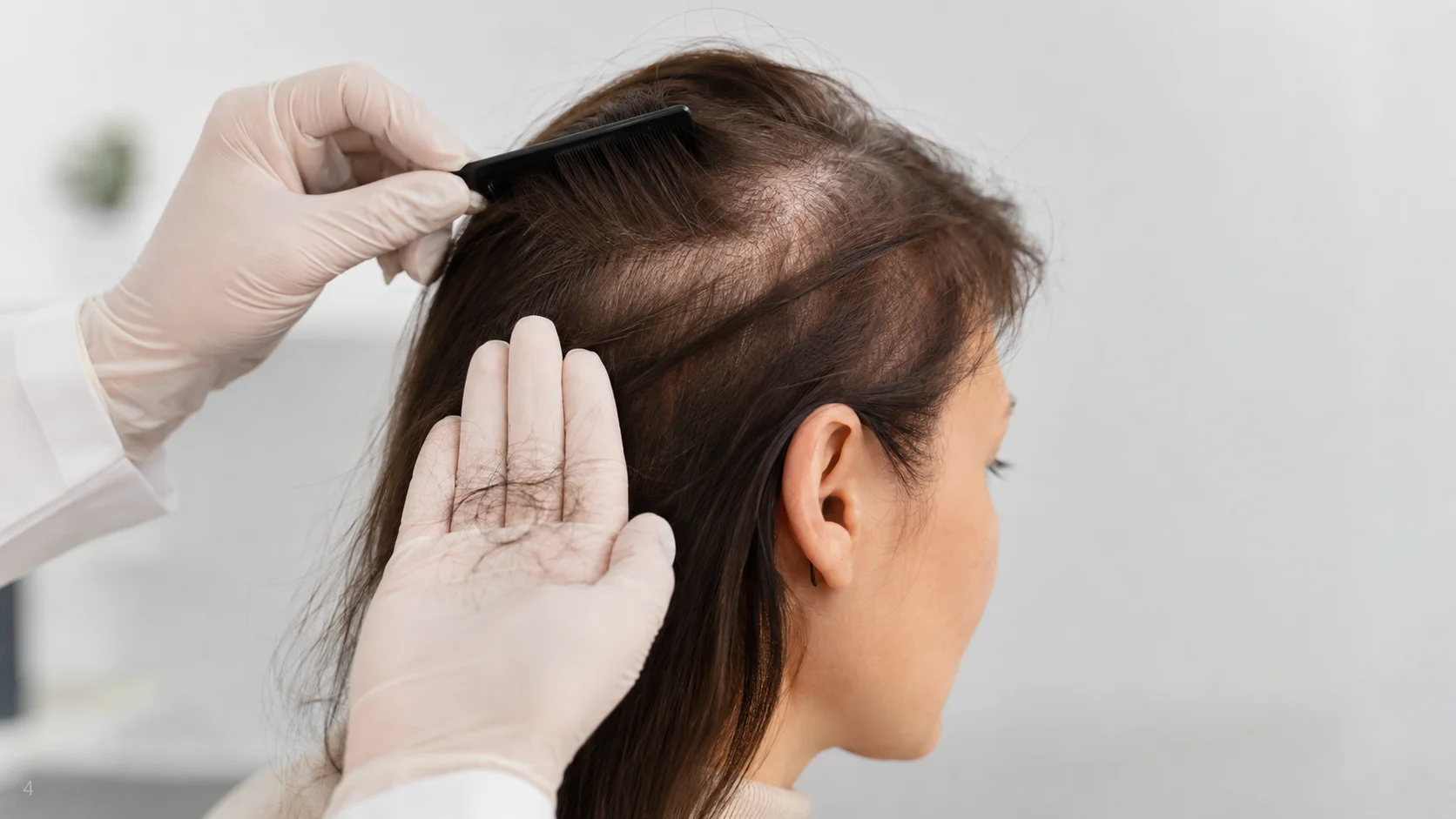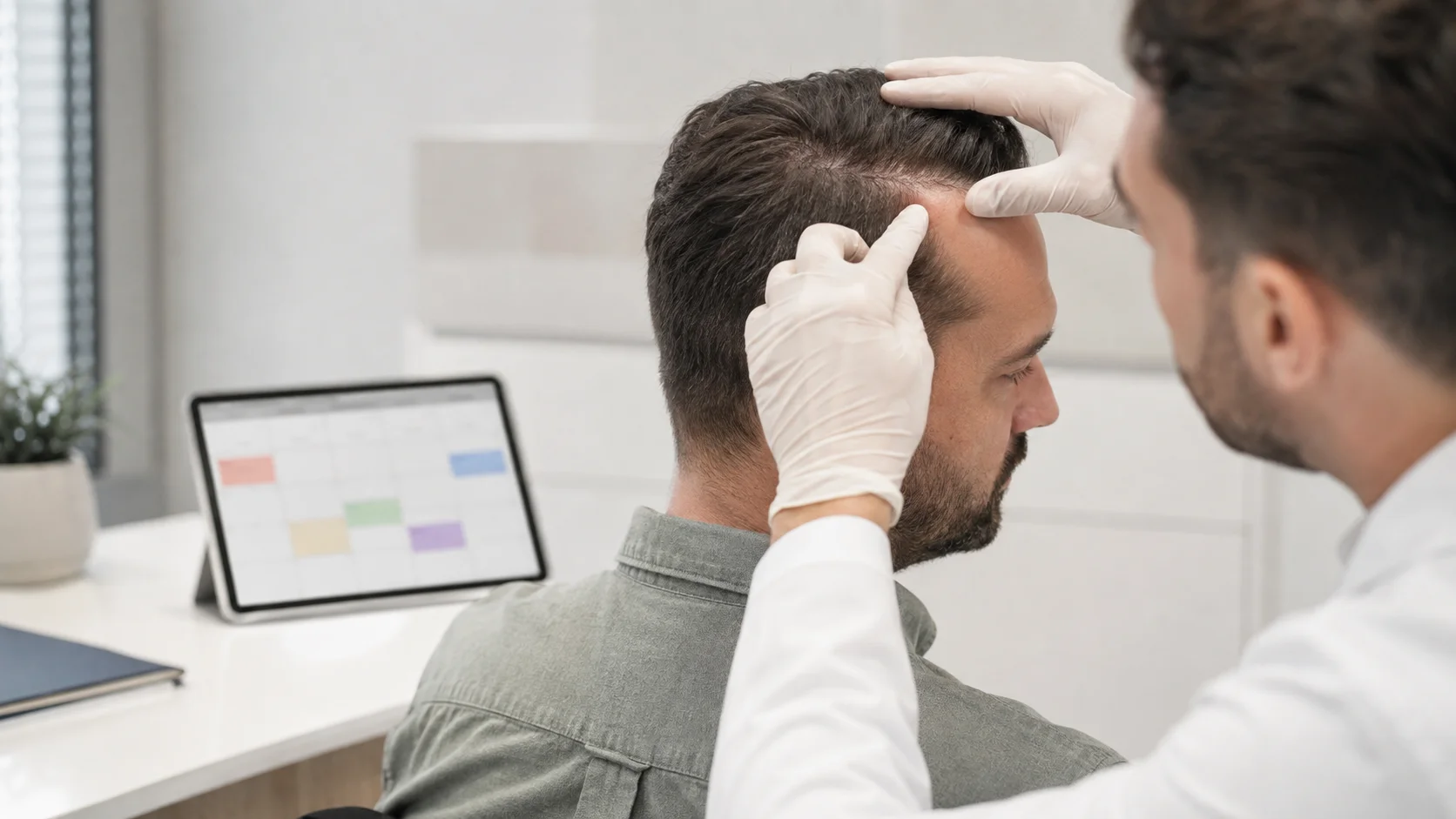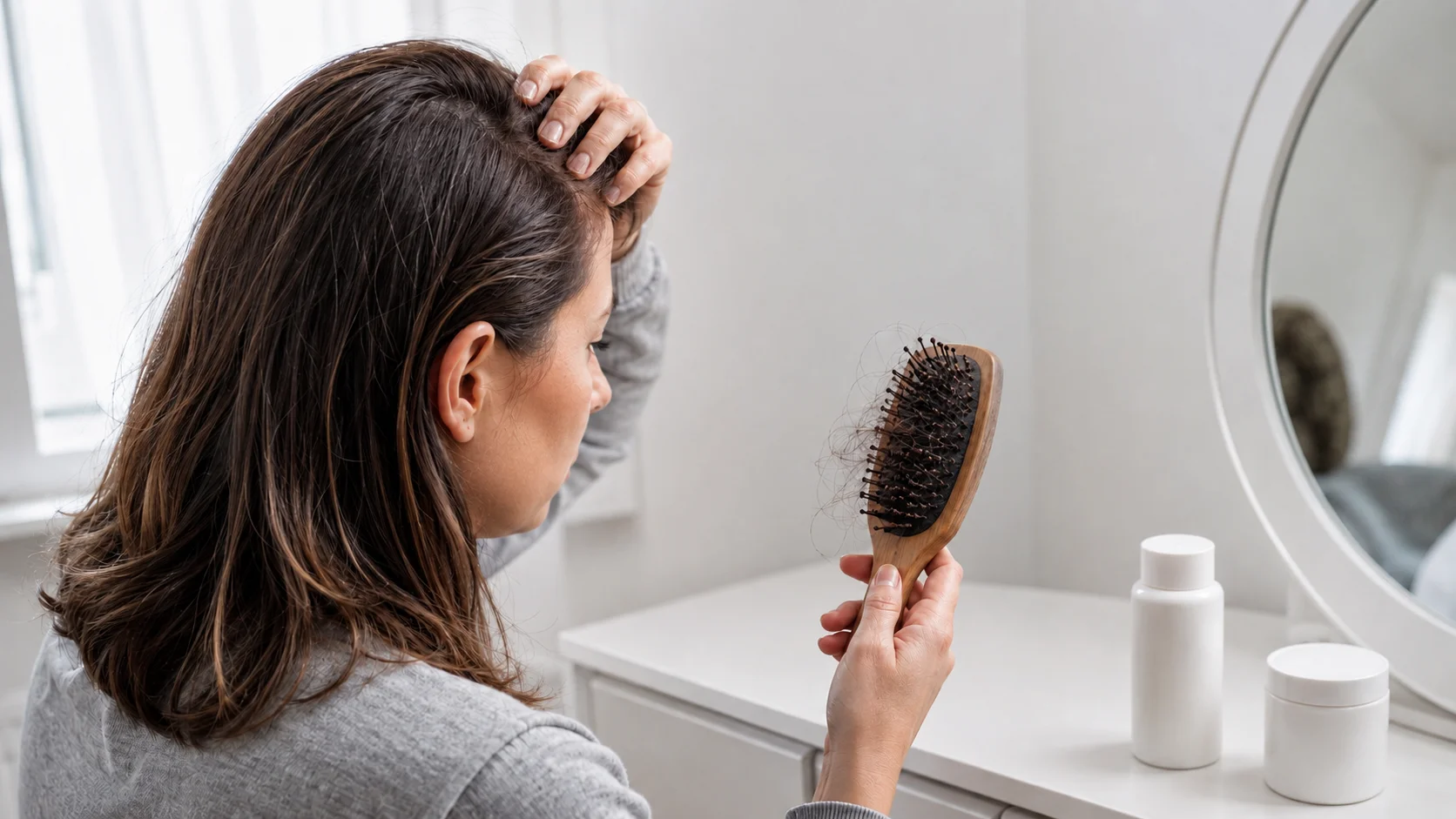
Hair shedding during or after in vitro fertilization can be alarming, particularly when it appears alongside the physical and emotional demands of fertility treatment. Some people notice more hair in the shower, on a brush, or around the hairline during an IVF cycle. Others develop shedding several weeks or months after treatment has ended.
IVF may be associated with temporary shedding, but it is not the only possible explanation. Hormonal shifts, medication changes, physical stress, nutritional deficiencies, thyroid disorders, underlying pattern hair loss, and pregnancy-related changes can overlap. The timing and pattern of the shedding provide important clues.
How IVF May Influence the Hair Cycle
Scalp follicles repeatedly move through phases of active growth, transition, rest, and release. Most follicles are normally in the growth phase, while a smaller percentage are resting or shedding.
A significant hormonal or physiological change can cause more follicles than usual to enter the resting phase. The resulting condition is commonly called telogen effluvium. Because resting hairs are not released immediately, visible shedding often begins two to three months after the triggering event rather than on the day it occurs.
IVF involves controlled changes in reproductive hormones. Depending on the protocol, estrogen and progesterone levels may rise, fall, or be supported with medication. The body may also experience repeated injections, procedures, disrupted sleep, emotional strain, and changes in eating habits. Any combination of these factors may contribute to a temporary shift in the hair cycle.
Can IVF Medications Cause Hair Loss?
Fertility treatment uses different medications for different purposes, so it is not accurate to describe IVF medication as a single drug. A protocol may include medicines that stimulate follicle development, prevent premature ovulation, trigger final egg maturation, or support the uterine lining after retrieval or transfer.
Hair loss is not among the most prominent effects of every fertility medication, and many people complete IVF without noticeable shedding. However, hair changes have been reported with some hormone-related treatments. In other cases, shedding may reflect the overall hormonal transition rather than a direct toxic effect of a particular medication.
The timing can make cause and effect difficult to establish. Shedding that begins during treatment may have been triggered by an earlier illness, dietary change, medication, or stressful event. Shedding that starts after IVF may reflect the hormonal change that occurred when medication ended.
Medication should never be discontinued solely because hair shedding appears. Fertility drugs are prescribed according to a carefully timed protocol, and changing them without medical guidance could disrupt treatment. Concerns should be discussed with the fertility team.
Why Shedding May Start After the IVF Cycle
Delayed shedding is characteristic of telogen effluvium. Follicles affected by a trigger usually remain in place for a period before the hairs are released. This explains why someone may connect the problem to the wrong event or believe that shedding has appeared without a cause.
Potential triggers during the IVF period include:
- Rapid hormonal changes
- Egg retrieval or another procedure
- Illness or fever
- Significant calorie restriction or weight change
- Low iron stores or another nutritional deficiency
- Sleep disruption
- Starting or stopping medication
- Pregnancy, pregnancy loss, or the postpartum period
- Sustained physical or psychological strain
Emotional stress may contribute to shedding, but it should not become a dismissive explanation. A person reporting hair loss deserves an assessment of medical, nutritional, hormonal, and genetic possibilities.
What Temporary IVF-Related Shedding Usually Looks Like
Telogen effluvium generally causes diffuse shedding across the scalp rather than one sharply defined bald patch. The ponytail may feel thinner, the part may look wider, and more full-length hairs may be released during washing or brushing.
The scalp itself usually looks normal. Marked redness, scaling, pustules, scarring, or pain suggests that something else may be occurring and deserves medical evaluation.
Temporary shedding does not ordinarily destroy the follicles. Once the trigger has settled, new growth can begin. However, visible recovery is slow because scalp hair grows gradually. Shedding may improve before density looks restored.
How Long Can the Hair Loss Last?
A short-lived episode of telogen effluvium often settles within several months, but recovery does not follow an exact calendar. The duration depends on whether the trigger has resolved and whether other factors remain active.
Repeated IVF cycles, continuing hormonal treatment, pregnancy, iron deficiency, thyroid dysfunction, or ongoing illness may extend the timeline. If a person already has androgenetic alopecia, temporary shedding can also reveal underlying thinning that was previously less noticeable.
New hairs may initially appear short, fine, or difficult to style. Increasing coverage tends to become more apparent over subsequent months. Persistent shedding beyond roughly six months is often described as chronic and should be assessed rather than automatically attributed to IVF.
Other Causes That Should Be Considered
Iron Deficiency
Low iron stores can contribute to diffuse shedding even when severe anemia is not present. Menstrual blood loss, dietary limitations, pregnancy, and other medical factors may influence iron status.
Iron supplementation should be based on appropriate evaluation. Taking high-dose iron without confirmed need can cause side effects and may be harmful.
Thyroid Disorders
Thyroid dysfunction can affect fertility and hair growth. It may also cause fatigue, weight changes, temperature sensitivity, menstrual changes, or dry skin, although symptoms are not always obvious.
Because thyroid management can be important during fertility treatment and pregnancy, suspected dysfunction should be discussed with the treating clinician.
Nutritional Changes
Reduced appetite, nausea, restrictive diets, rapid weight loss, and inadequate protein intake may affect hair cycling. Hair supplements are not a substitute for identifying a deficiency, and some supplements contain doses or ingredients that may be unsuitable during conception or pregnancy.
Androgenetic Alopecia
Pattern hair loss can coexist with telogen effluvium. It typically produces progressive thinning in characteristic areas rather than sudden shedding alone. An IVF-related shedding episode may make the pattern more visible, but IVF may not be its original cause.
Scalp and Autoimmune Conditions
Alopecia areata may produce smooth patches, while inflammatory or infectious scalp conditions may cause scaling, itching, broken hairs, or discomfort. These patterns require a different diagnostic approach from temporary diffuse shedding.
When to Seek Medical Evaluation
Assessment is advisable when shedding is severe, continues for several months, or causes visible loss of density. Earlier evaluation is appropriate for:
- Clearly defined bald patches
- Scalp redness, pain, sores, heavy scaling, or pustules
- Loss of eyebrows or eyelashes
- Signs of scarring
- Fatigue, dizziness, or other possible deficiency symptoms
- Symptoms suggestive of thyroid dysfunction
- Rapidly progressive thinning
- Hair loss that began before IVF and continues to worsen
A clinician may review the timeline, family history, scalp appearance, medications, diet, menstrual history, and recent health events. Blood testing may be considered according to the individual rather than ordered as the same standard panel for everyone.
Managing Hair Shedding During IVF
The first priority is to protect the fertility treatment plan. Do not stop prescribed hormones or introduce a hair-loss medication without approval from the fertility team.
Gentle hair care can reduce avoidable breakage, although it cannot switch off telogen effluvium. Practical measures include minimizing tight hairstyles, harsh chemical processing, excessive heat, and aggressive detangling. A conditioner can reduce friction, and a wide-tooth comb may make wet-hair handling easier.
A balanced diet with adequate protein, calories, iron, and essential nutrients supports normal hair production. More is not always better: taking multiple “hair growth” supplements can lead to excessive intake, duplicate ingredients, or exposure to substances that have not been established as appropriate during fertility treatment or pregnancy.
Cosmetic fibers, scalp powders, strategic styling, and volumizing products may temporarily reduce the visible contrast between the hair and scalp. These are appearance-management tools, not treatments for the cause of hair loss.
Are Hair-Loss Treatments Appropriate During IVF?
Treatment depends on the diagnosis. Temporary telogen effluvium frequently improves as the triggering circumstances resolve, so medication may not be necessary.
Some established hair-loss drugs are unsuitable during pregnancy or while trying to conceive. Topical products, oral medicines, injections, supplements, and herbal preparations should all be reviewed with the fertility specialist before use. “Natural” does not mean risk-free or pregnancy-compatible.
Procedures such as microneedling, platelet-based treatments, mesotherapy, or elective hair transplantation should not be started simply because shedding is distressing. Their benefits, limitations, medication exposure, and timing need to be considered in the context of IVF and possible pregnancy.
Frequently Asked Questions
Is hair loss during IVF permanent?
It is often temporary when caused by a short-term hormonal or physiological trigger. Persistent or patterned thinning may indicate another condition that needs evaluation.
When does IVF-related shedding begin?
It may appear during treatment, but telogen effluvium commonly becomes noticeable two to three months after the triggering change.
Will stopping IVF medication stop the shedding?
Not necessarily, because hair cycling responds slowly. More importantly, prescribed medication should never be stopped without the fertility specialist’s instructions.
Can IVF reveal female pattern hair loss?
Yes. A temporary increase in shedding can reduce overall density and make an existing pattern more visible, even if IVF did not cause the underlying condition.
Can I take hair vitamins during IVF?
Only after reviewing the product with the fertility team. Some ingredients may duplicate prenatal supplements, exceed appropriate doses, interfere with testing, or be unsuitable during pregnancy.
Does washing less often reduce hair loss?
Less frequent washing may make fewer hairs appear on individual days, but it does not prevent hairs already in the shedding phase from being released.
Focus on the Pattern, Timeline, and Cause
Hair shedding associated with IVF is often a delayed and temporary response to hormonal or physiological change. Still, IVF should not become an automatic explanation for every form of hair loss.
Documenting when treatment stages, medication changes, illnesses, pregnancy events, and shedding occurred can help a clinician identify the most likely trigger. With an accurate diagnosis, unnecessary treatments can be avoided and underlying issues such as iron deficiency, thyroid dysfunction, scalp disease, or pattern hair loss can be addressed appropriately.
This article is for general informational purposes and does not replace individualized medical advice, diagnosis, or treatment.