For men, being part of an IVF treatment cycle does not usually mean receiving the same hormonal medications used for ovarian stimulation. However, some men undergoing fertility evaluation or treatment may be prescribed medications intended to improve hormone levels, sperm production, or testicular function.
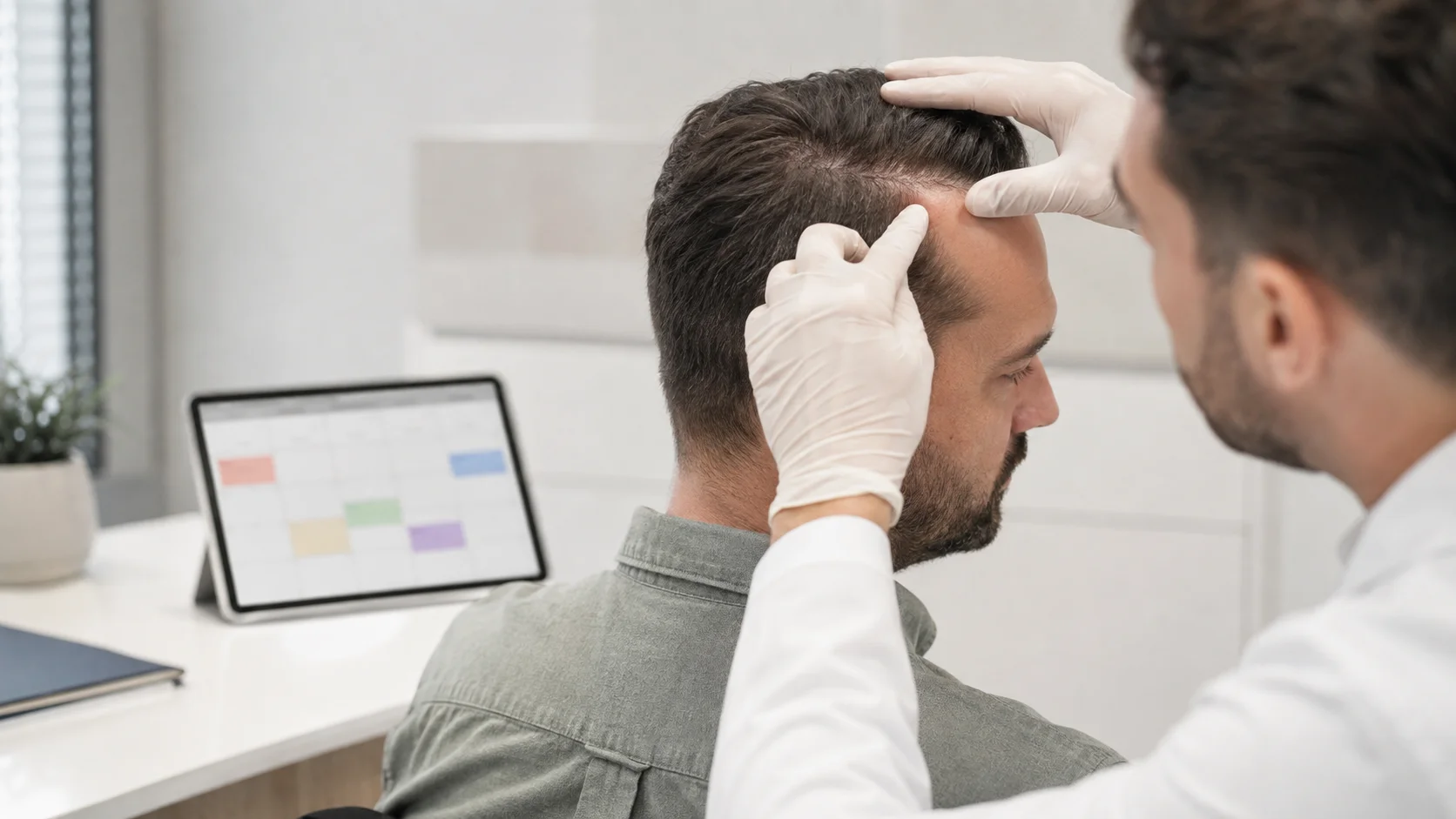
At the same time, men in this age group may already be experiencing androgenetic alopecia, commonly known as male pattern hair loss. When fertility treatment, medication changes, emotional strain, illness, changes in testosterone levels, and an existing genetic tendency toward hair loss overlap, it can become difficult to determine what is actually causing increased shedding.
The important distinction is that IVF itself is not established as a direct cause of hair loss in men. Instead, hair changes during an IVF journey may reflect changes in the man's hormonal environment, medications used for male infertility, temporary telogen effluvium, or progression of pre-existing androgenetic alopecia.
Male Fertility Treatment and IVF Are Not the Same Thing
IVF primarily refers to the process in which eggs are retrieved, fertilized in a laboratory, and embryos are transferred or preserved. The male partner or sperm provider may contribute a semen sample without requiring any medication at all.
However, some men are also being treated for an underlying fertility problem before or during the IVF process.
Depending on the diagnosis, male fertility treatment may involve:
- Human chorionic gonadotropin, or hCG
- Follicle-stimulating hormone, or FSH
- Selective estrogen receptor modulators such as clomiphene
- Aromatase inhibitors such as anastrozole or letrozole
- Treatment of elevated prolactin or another endocrine disorder
- Discontinuation or modification of medications that suppress sperm production
These treatments are not prescribed to every man undergoing IVF. Their use depends on hormone levels, semen analysis, testicular function, diagnosis, and the fertility specialist's treatment strategy.
This distinction matters because a man who notices hair loss during IVF may actually be responding to a change in his own hormonal treatment rather than to the IVF procedure itself.
Hormonal Changes and the Male Hair Follicle
Male pattern hair loss is strongly influenced by genetic sensitivity to dihydrotestosterone, or DHT.
DHT is produced when the enzyme 5-alpha reductase converts testosterone into a more potent androgen. In genetically susceptible scalp follicles, continued DHT exposure can gradually shorten the growth phase of the hair cycle and cause follicular miniaturization.
Male fertility treatment sometimes changes testosterone, estrogen, luteinizing hormone, or follicle-stimulating hormone levels.
For example, hCG can stimulate the testes to produce testosterone. Selective estrogen receptor modulators may encourage the body's own production of LH and FSH, while aromatase inhibitors reduce the conversion of testosterone to estrogen and may increase circulating testosterone in selected patients.
These hormonal changes do not mean that fertility treatment will automatically cause baldness.
The relationship between male fertility medication and scalp hair is much less direct than the relationship between genetics, DHT sensitivity, and established androgenetic alopecia.
However, if a man already has genetically vulnerable follicles, a changing androgen environment may coincide with previously subtle hair loss becoming more noticeable.
Fertility Medications and Hair Loss
There is no single medication called an "IVF drug" for men.
Each medication has a different purpose, and evidence directly connecting commonly used male fertility treatments with clinically significant hair loss remains limited.
Some men using aromatase inhibitors have reported hair changes in clinical studies, but hair loss has not been established as an inevitable or dominant effect of these medications.
Likewise, hCG may increase testosterone in men with certain hormonal deficiencies, but this does not mean that hCG directly causes androgenetic alopecia.
The more useful question is whether a medication has changed the hormonal environment in a man who was already genetically predisposed to male pattern hair loss.
Medication should never be stopped simply because hair shedding appears. Altering a fertility protocol without medical guidance can affect hormone levels and treatment goals.
Temporary Shedding Can Occur Alongside Fertility Treatment
Not every episode of hair loss in a man undergoing IVF-related treatment is androgenetic alopecia.
Telogen effluvium is a temporary form of diffuse shedding that can occur after a significant physiological or systemic trigger.
Potential triggers include:
- Illness or fever
- Major changes in medication
- Rapid weight loss or calorie restriction
- Nutritional deficiency
- Surgery or another physical stressor
- Sleep disruption
- Significant psychological strain
- Major hormonal changes
The timing is particularly important.
Telogen effluvium usually does not begin immediately after a triggering event. Increased shedding commonly becomes visible several weeks to a few months later because affected follicles must first move through the resting phase of the hair cycle.
This delay can make it easy to blame the most recent medication or IVF appointment even when the actual trigger happened earlier.
Temporary Shedding Versus Male Pattern Hair Loss
The pattern of hair loss can provide useful clues.
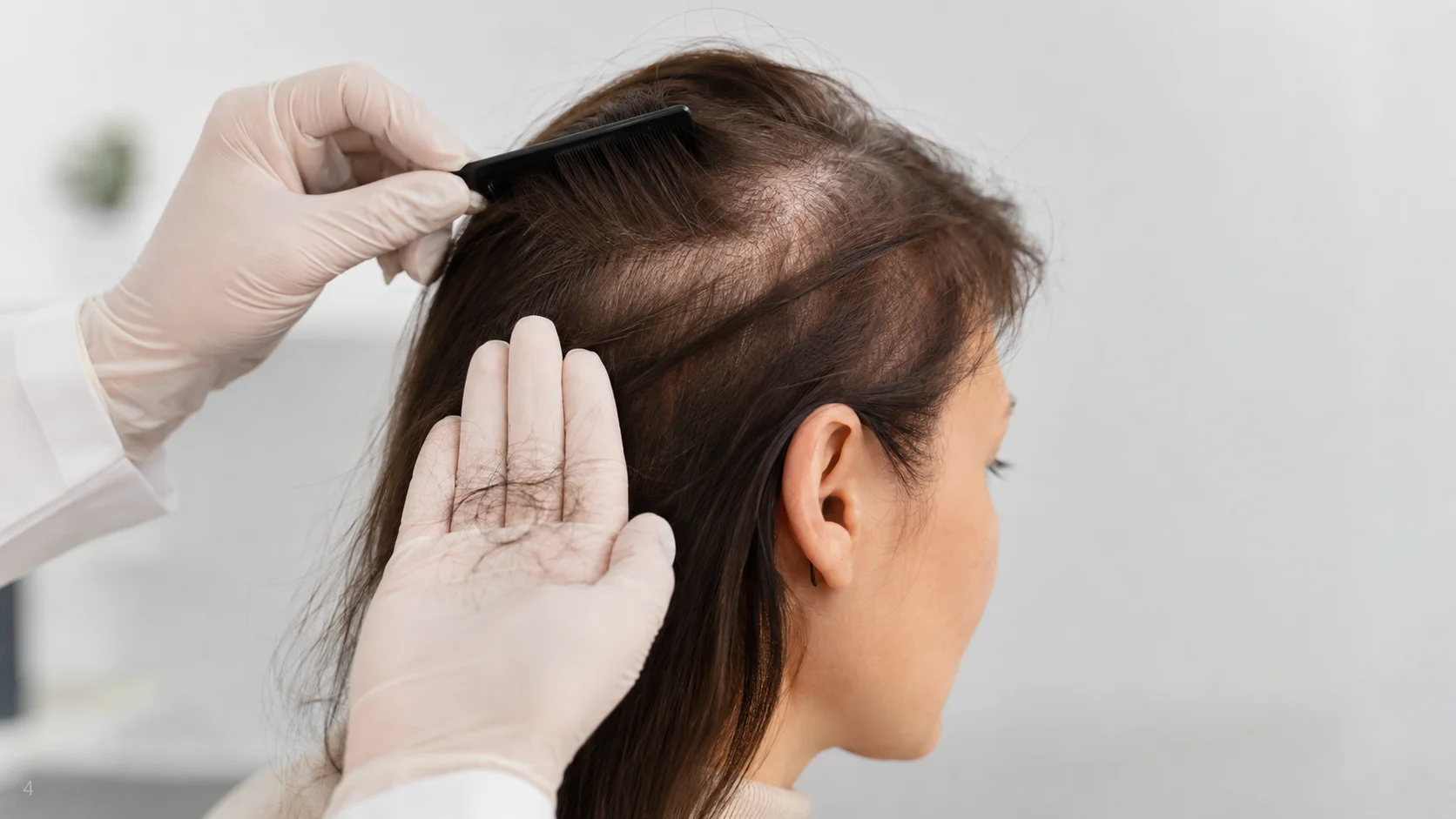
Telogen effluvium usually causes increased shedding across much of the scalp. A man may notice substantially more hair during washing, drying, or brushing without a clear new bald area.
Androgenetic alopecia usually follows a more recognizable pattern.
Common changes include:
- Recession at the temples
- Gradual thinning of the frontal hairline
- Reduced density through the mid-scalp
- Thinning at the crown
- Progressive miniaturization of hairs in affected areas
The two conditions can also occur together.
A temporary episode of shedding may reduce overall density enough to reveal male pattern hair loss that had previously been difficult to notice.
In that situation, the fertility treatment may have coincided with the discovery of androgenetic alopecia without being its original cause.
Hair-Loss Medications Require Special Attention During Fertility Treatment
The relationship between fertility treatment and hair loss becomes particularly important when a man is already taking medication for androgenetic alopecia.
Finasteride and dutasteride reduce the conversion of testosterone to DHT and are commonly used to slow male pattern hair loss.
Some studies have reported changes in semen volume, sperm count, or motility in men using 5-alpha reductase inhibitors. These changes do not occur in every patient and may improve after the medication is discontinued, but the issue is particularly relevant for men already undergoing fertility evaluation.
A man using finasteride or dutasteride should therefore tell his fertility specialist before semen analysis, sperm retrieval, or IVF treatment.
This does not mean that every man trying to conceive must automatically stop the medication.
The decision should be individualized according to:
- Semen analysis results
- Fertility diagnosis
- Medication dose and duration
- Previous response to treatment
- Hair-loss severity
- The fertility specialist's recommendations
Stopping medication without medical guidance may unnecessarily sacrifice hair-loss control, while continuing a medication without mentioning it may complicate the assessment of an abnormal semen analysis.
Testosterone Treatment Deserves Particular Caution
Men sometimes assume that testosterone treatment should improve fertility because testosterone is associated with male reproductive function.
In reality, externally administered testosterone can suppress the signals from the pituitary gland that stimulate sperm production.
For this reason, testosterone replacement therapy and fertility treatment require careful coordination.
A man trying to preserve or improve fertility should make sure that his fertility specialist knows about testosterone injections, gels, pellets, anabolic steroids, or other androgen use.
This is also relevant to hair loss because higher androgen exposure may accelerate genetically determined male pattern hair loss in susceptible individuals.
Evaluating Hair Loss During an IVF Journey
A useful evaluation begins with the timeline.
A clinician may ask:
- When did shedding begin?
- Was there a medication change two or three months earlier?
- Is the loss diffuse or concentrated at the temples and crown?
- Was hair thinning already present before fertility treatment?
- Is there a family history of male pattern hair loss?
- Has there been illness, fever, surgery, weight loss, or major dietary change?
- Which fertility medications are currently being used?
- Is the patient also taking finasteride, dutasteride, minoxidil, testosterone, or supplements?
Scalp examination can help distinguish diffuse shedding from progressive follicular miniaturization.
When appropriate, a clinician may also investigate nutritional, thyroid, hormonal, or other medical factors based on the patient's history.
How Long Hair Changes May Last
Temporary telogen effluvium usually improves after the underlying trigger has resolved, although visible recovery takes time.
Shedding may decrease before density appears normal because new hairs grow gradually.
Androgenetic alopecia behaves differently.
Male pattern hair loss is typically progressive and does not resolve simply because an IVF cycle has ended. If a fertility-related hormonal change coincides with the appearance of male pattern thinning, the underlying genetic condition may continue after fertility treatment is complete.
This is why identifying the pattern is more useful than assuming that all hair loss during IVF is temporary.
When Medical Assessment Is Appropriate
Medical evaluation is particularly worthwhile when:
- Hair loss is rapidly progressing
- Clearly defined bald patches develop
- The scalp becomes painful, inflamed, or heavily scaled
- Shedding continues for several months
- Temple, frontal, or crown thinning is steadily progressing
- Hair loss began before IVF and has clearly accelerated
- A fertility medication was recently started or changed
- The patient is taking finasteride, dutasteride, or testosterone
- Semen analysis is abnormal
- Hair loss is accompanied by other hormonal symptoms
Early assessment can prevent two common mistakes: blaming fertility treatment for unrelated genetic hair loss, or treating presumed androgenetic alopecia when the problem is actually temporary shedding.
Frequently Asked Questions
Can IVF cause hair loss in men?
IVF itself has not been established as a direct cause of male hair loss. In men, hair changes during an IVF journey are more likely to involve underlying androgenetic alopecia, medication changes, hormonal treatment for male infertility, or temporary telogen effluvium.
Can hCG cause male pattern baldness?
hCG can increase testosterone production in selected men, but direct evidence that hCG itself causes male pattern baldness is limited. Men with genetically sensitive follicles may nevertheless notice progression of existing androgenetic alopecia when their hormonal environment changes.
Can fertility medication increase DHT?
Some fertility treatments can alter testosterone and estrogen levels. Because DHT is produced from testosterone, changes in androgen levels may influence the hormonal environment, but the effect depends on the medication and the individual.
Can finasteride affect male fertility?
Finasteride has been associated with reduced semen parameters in some men, particularly those already experiencing fertility problems. Improvement has been reported after discontinuation in some patients. A fertility specialist should review its use rather than the patient stopping treatment independently.
Is temporary shedding after fertility treatment permanent?
Telogen effluvium is usually temporary when the trigger resolves. However, temporary shedding can expose underlying androgenetic alopecia, which may continue to progress.
Should a man stop hair-loss medication before IVF?
Not automatically. The fertility specialist should review the specific medication, semen analysis, fertility diagnosis, and treatment plan before any change is made.
Distinguishing Coincidence From Cause
For men, IVF and hair loss can occur at the same time without one directly causing the other.
The male partner may be undergoing hormonal treatment, changing medications, dealing with an underlying fertility condition, or simply reaching the stage at which genetically determined male pattern hair loss becomes visible.
Temporary shedding is also possible after physiological or medication-related changes.
The most useful approach is therefore to identify the pattern of hair loss, review the complete medication history, and coordinate decisions between the fertility specialist and the clinician managing the hair loss.
This article is for general informational purposes and does not replace individualized medical advice, diagnosis, or treatment.