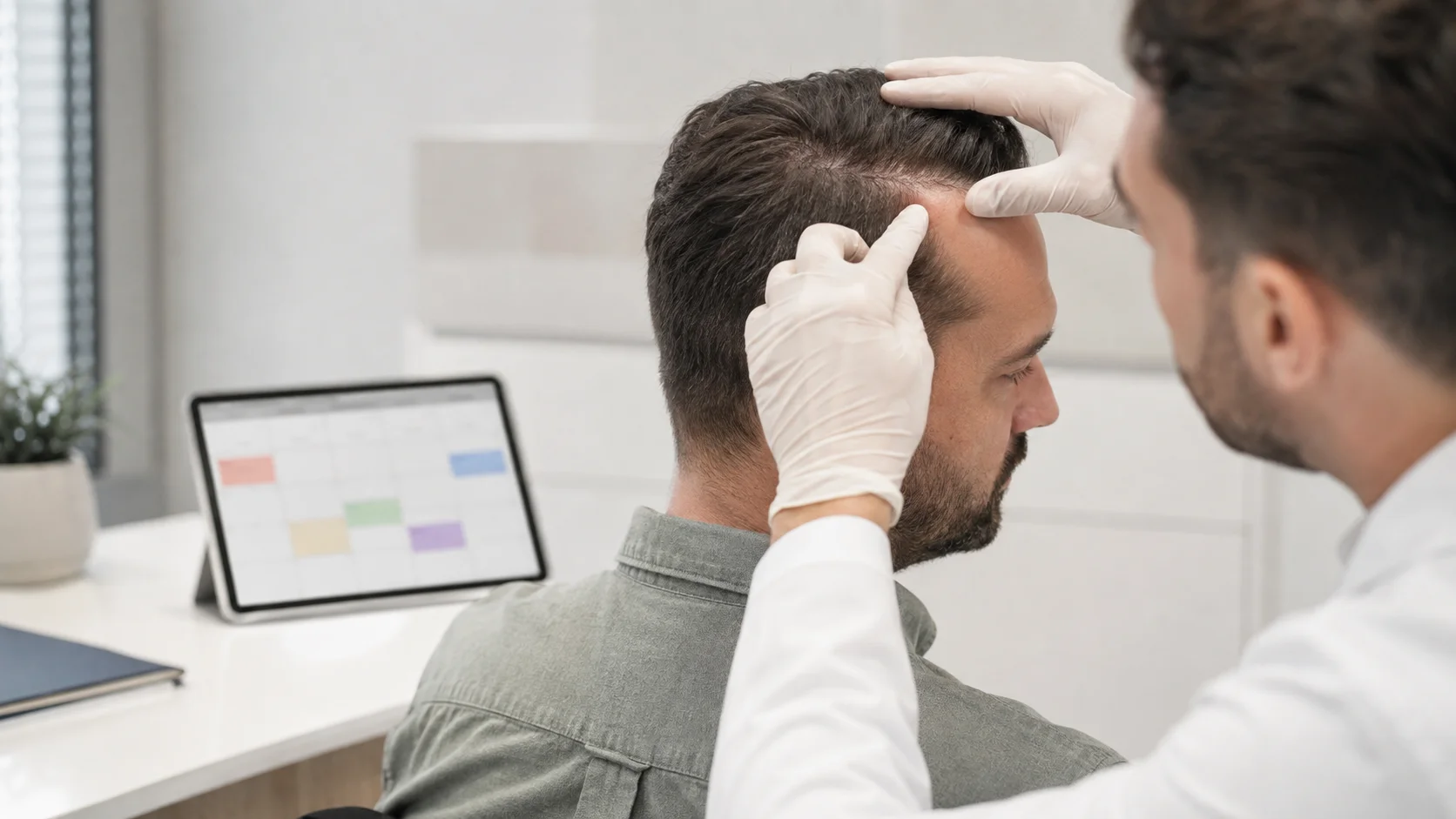
For a man whose partner or fertility team is preparing for IVF, scheduling a hair transplant can raise an unusual but reasonable question: could the transplant, its medications, or the recovery period interfere with fertility treatment?
A hair transplant is an elective scalp procedure. IVF is a time-sensitive reproductive treatment in which the male partner may need semen analysis, semen collection, sperm freezing, hormonal treatment, or in some cases surgical sperm retrieval.
The two treatments affect very different parts of the body, and there is no established evidence that an uncomplicated hair transplant directly reduces sperm production or causes an IVF cycle to fail.
However, the answer is not simply "there is no interaction."
The more relevant issues are medication use, semen quality, timing of sperm collection, existing male fertility treatment, recovery from surgery, and the use of hair-loss drugs such as finasteride or dutasteride.
What "During IVF" Means for the Male Partner
For many men, participation in IVF requires little more than providing a semen sample.
Others may be undergoing investigation or treatment for:
- Low sperm concentration
- Poor sperm motility
- Hormonal abnormalities
- Hypogonadotropic hypogonadism
- Previous testosterone or anabolic steroid use
- Azoospermia
- Ejaculatory problems
- Varicocele or another male reproductive condition
Some men may also need sperm to be collected surgically through procedures such as testicular sperm extraction.
This means that the significance of a hair transplant depends heavily on what is happening on the fertility side.
A man with normal semen parameters who has already frozen an adequate sperm sample is in a very different situation from a man whose fertility specialist is actively adjusting medication in preparation for sperm retrieval.
The Hair Transplant Itself Does Not Target Reproductive Hormones
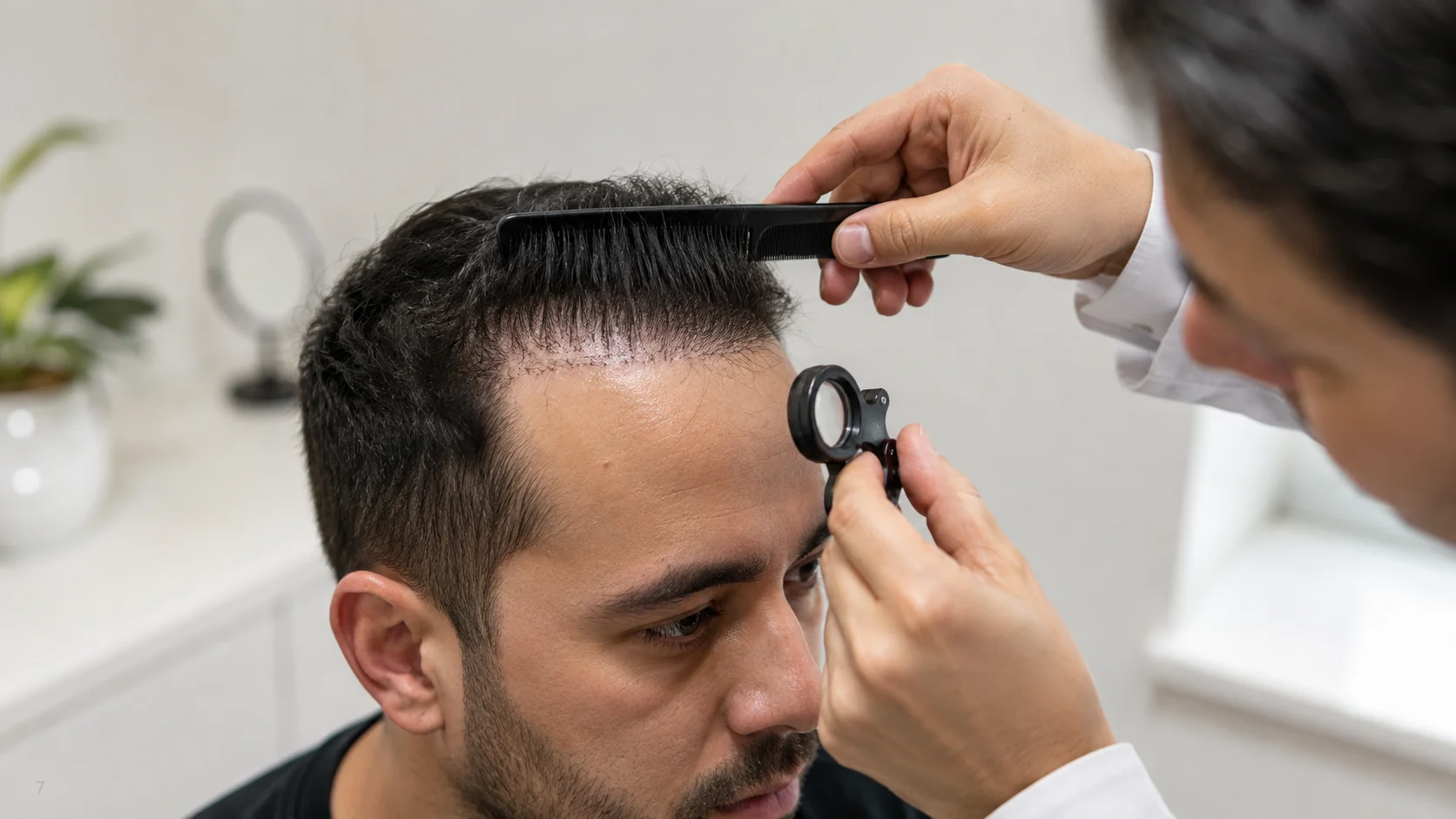
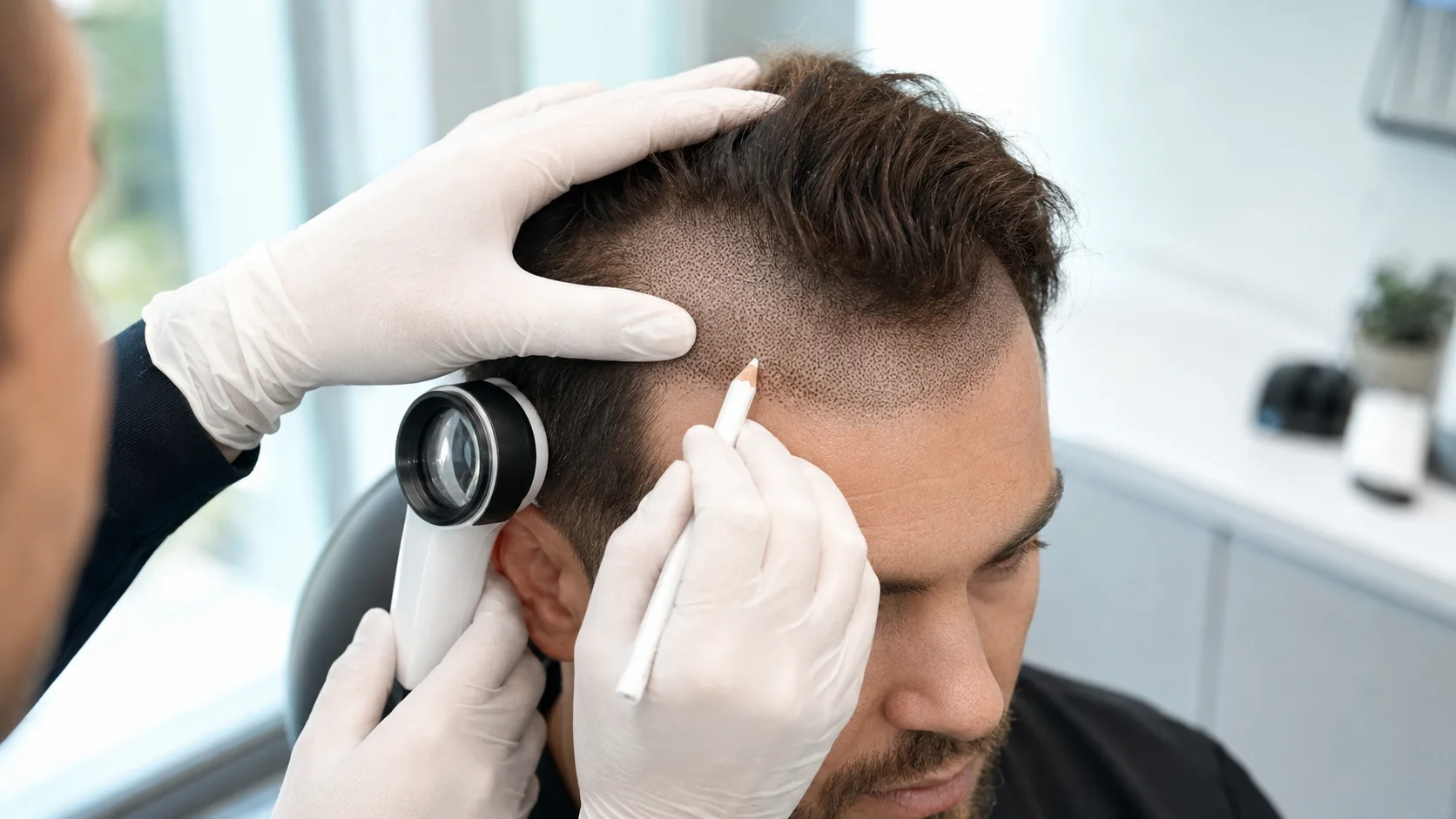
Modern hair transplantation typically uses follicular unit extraction or follicular unit transplantation to move follicles from a donor region to areas affected by hair loss.
The procedure takes place in the scalp and does not directly involve the testes, pituitary gland, or reproductive organs.
Local anesthesia is commonly used, and depending on the clinic and individual case, patients may also receive medications for pain, swelling, anxiety, or infection prevention.
There is currently little direct research specifically examining hair transplantation performed during an IVF cycle in men.
For that reason, it would be inaccurate to claim that the procedure has been proven completely irrelevant to fertility.
At the same time, there is also no established evidence that routine scalp transplantation directly lowers sperm count or prevents fertilization.
The practical issue is usually not the grafts themselves. It is everything surrounding the procedure.
Medication Review Is More Important Than the Surgery Alone
A hair transplant may involve several medications before, during, or after surgery.
Depending on the clinic, these may include:
- Local anesthetics
- Vasoconstrictors combined with anesthetic
- Sedative or anti-anxiety medication
- Antibiotics
- Pain medication
- Anti-inflammatory medication
- Medication used to manage postoperative swelling
- Topical scalp products
- Long-term hair-loss treatments
Most of these medications are used for short periods, but a fertility specialist should still receive a complete list when the man is undergoing active treatment for infertility.
The main question is not usually whether medication in the father's bloodstream can directly reach an embryo.
Paternal exposure works differently from maternal exposure because the male partner does not share a bloodstream with a developing pregnancy.
Instead, clinicians are more concerned about whether a drug could influence sperm production, sexual function, hormone levels, semen analysis, or the man's ability to provide a sample at the required time.
Finasteride and Dutasteride Deserve Special Attention
For men undergoing both hair restoration and fertility treatment, 5-alpha reductase inhibitors deserve more discussion than almost any medication used during the transplant procedure itself.
Finasteride and dutasteride reduce DHT and can help slow the progression of androgenetic alopecia.
They may be used before or after a hair transplant to protect existing non-transplanted hair.
However, research has reported reductions in certain semen parameters in some men using these medications.
Effects can include changes in semen volume, sperm concentration, total sperm count, or motility, although the degree of change varies significantly between individuals.
Some studies have also shown improvement after discontinuation.
This is particularly relevant in men who already have reduced sperm counts or who are being evaluated for infertility.
A hair transplant clinic should therefore not start, stop, or restart finasteride or dutasteride without knowing that the patient is currently undergoing fertility treatment.
Likewise, the fertility specialist should know if either medication is already being used.
Paternal Finasteride Exposure and Pregnancy Are Separate Questions
Concerns about finasteride often become mixed together.
There are actually two different questions.
The first is whether finasteride can affect the man's fertility.
The second is whether a pregnant partner could be exposed to clinically significant amounts of finasteride through semen.
Available evidence suggests that only small amounts of finasteride are present in semen, and exposure through intercourse is not generally expected to deliver a large dose to a developing pregnancy.
However, the possible effect of finasteride on sperm parameters remains relevant for a man already experiencing infertility.
In an IVF setting, the fertility question may therefore be more important than the paternal fetal-exposure question.
Timing Around Semen Collection
A standard hair transplant can take several hours.
Patients may experience scalp tenderness, swelling, disrupted sleep, and a short recovery period afterward.
None of these automatically prevent semen collection, but scheduling both procedures extremely close together may create unnecessary difficulty.
If an IVF clinic has provided a specific date for semen collection, the man should avoid creating a competing elective commitment without discussing it first.
Practical considerations include:
- The duration of the transplant
- Travel between clinics
- Postoperative fatigue
- Pain medication
- Sleep disruption
- The need to avoid strenuous activity
- Whether a repeat semen sample may unexpectedly be required
A hair transplant can usually be moved much more easily than a time-sensitive IVF procedure.
For that reason, fertility appointments should normally take priority when the schedules conflict.
Surgical Sperm Retrieval Changes the Situation
Some men undergoing IVF require testicular sperm extraction, TESE, micro-TESE, or another sperm-retrieval procedure.
In this situation, scheduling a separate elective surgical procedure at nearly the same time provides little practical benefit.
Both procedures may involve medication, recovery instructions, wound care, and physical discomfort.
The fertility procedure should generally be prioritized because its timing may be linked directly to the IVF laboratory schedule.
Hair transplantation can normally be performed later, after the fertility team considers the reproductive procedure complete and the patient has recovered.
Male Fertility Medication Should Not Be Changed for a Hair Transplant
Some infertile men are prescribed hCG, FSH, clomiphene, an aromatase inhibitor, or another medication to support hormone levels or sperm production.
A hair transplant appointment is not a reason to stop these medications independently.
Likewise, a transplant clinic should not advise a patient to discontinue a fertility medication unless the fertility specialist responsible for that treatment agrees.
The reverse also applies.
The hair transplant team should know if the patient is using fertility medication so that the complete medication plan can be reviewed before the procedure.
Testosterone and Anabolic Steroid Use Require Separate Review
External testosterone can suppress the hormonal signals needed for sperm production.
Anabolic-androgenic steroids can have similar effects.
A man may therefore be in the process of stopping testosterone or recovering spermatogenesis with fertility-directed treatment when he considers hair transplantation.
This creates two separate issues.
First, changing androgen levels can affect sperm production.
Second, changing androgen levels may also alter the progression or visibility of androgenetic alopecia.
A transplant should ideally be planned around a reasonably stable understanding of the patient's long-term hair-loss pattern rather than during a rapidly changing hormonal period.
Hair-Loss Stability Matters Before Surgery
Fertility treatment may not directly cause male pattern hair loss, but major medication or hormonal changes can coincide with increased shedding or a change in the apparent density of the scalp.
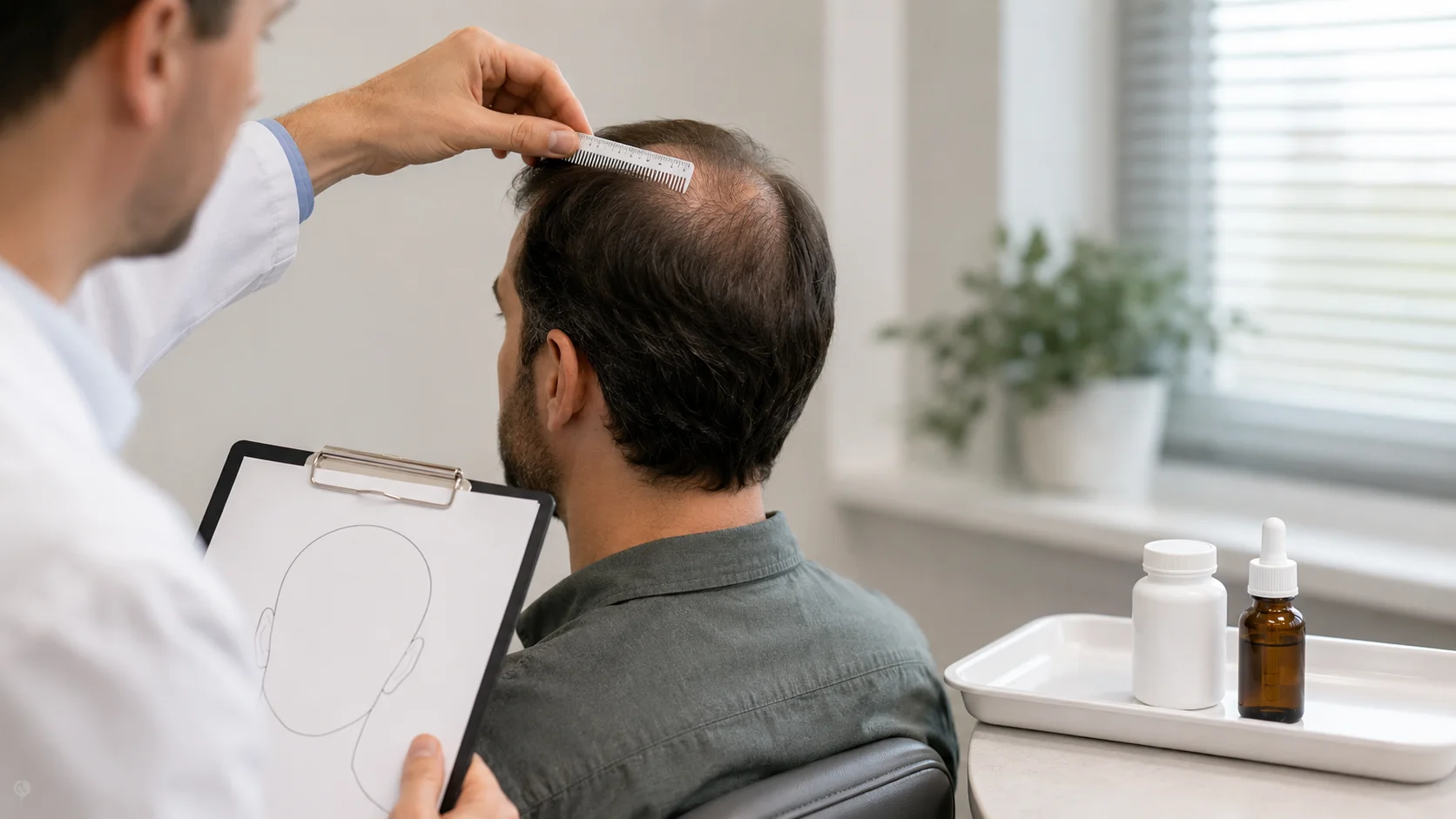
If a man is currently experiencing rapid or unexplained hair loss, transplant planning may be premature.
Hair transplantation redistributes permanent donor follicles. It does not stop ongoing miniaturization of vulnerable non-transplanted hair.
A rapidly changing pattern can make it difficult to determine:
- Where grafts should be placed
- How much density should be added
- How aggressively the hairline should be reconstructed
- How much donor hair should be preserved for future loss
Waiting until the hair-loss pattern is better understood may produce a more sustainable surgical plan.
IVF Success and Hair Transplant Surgery
There is not enough direct research to calculate whether undergoing a hair transplant changes the probability of IVF success.
No responsible article should claim a specific increase or decrease in success rate.
In the male partner, the main fertility-related concerns are more concrete:
- Existing semen quality
- Medication effects
- Planned sperm collection
- Fertility procedures
- Hormonal treatment
- Illness or postoperative complications
- The timing requirements of the IVF laboratory
A straightforward hair transplant performed without complication is not known to directly interfere with fertilization or embryo development.
The decision is therefore mainly one of coordination rather than an absolute medical prohibition.
Situations Where Postponing the Hair Transplant Makes Sense
Postponement may be especially reasonable when:
- Semen analysis is currently abnormal and still being investigated
- A fertility medication has recently been started or changed
- Finasteride or dutasteride use is being reassessed because of semen findings
- Semen collection is scheduled within the immediate recovery period
- TESE or micro-TESE is planned
- The patient's hormonal status is changing significantly
- Hair shedding is currently rapid or unexplained
- The patient has an active infection or another medical problem
- The fertility specialist recommends prioritizing reproductive treatment
- The transplant cannot be performed without interfering with essential IVF appointments
None of these situations means that hair transplantation has permanently become impossible.
In most cases, it simply means that the elective procedure can wait until the more time-sensitive fertility issue is resolved.
A Practical Planning Checklist
Before booking a hair transplant during an IVF treatment period, a man should ideally know:
- Whether another semen sample will be required.
- Whether sperm has already been frozen.
- Whether sperm retrieval surgery is planned.
- Whether he is currently taking fertility medication.
- Whether he uses testosterone or anabolic steroids.
- Whether he takes finasteride or dutasteride.
- Which medications the hair transplant clinic plans to prescribe.
- Whether his hair-loss pattern is currently stable.
- Whether the transplant recovery period conflicts with IVF appointments.
- Whether both medical teams are aware of the complete medication list.
A brief discussion between the fertility specialist and hair transplant clinician can often resolve most uncertainty.
Frequently Asked Questions
Can a man have a hair transplant while his partner is undergoing IVF?
In many cases, yes. A male hair transplant does not directly involve the female partner's IVF procedure. The decision depends on the man's own fertility status, medication use, sperm-collection schedule, and overall health.
Can local anesthesia used for a hair transplant affect IVF?
A scalp procedure performed on the male partner does not expose an embryo through the man's bloodstream. However, the exact medication plan should still be reviewed when the man is receiving fertility treatment or has another medical condition.
Should finasteride be stopped before IVF?
Not automatically. Finasteride can affect semen parameters in some men, so its use should be discussed with the fertility specialist, particularly when semen analysis is already abnormal.
Does a hair transplant reduce sperm count?
There is no established evidence that the hair-transplant procedure itself directly reduces sperm count. Medications, underlying illness, fertility conditions, hormonal treatment, and other factors should be considered separately.
Can I have a hair transplant before providing an IVF semen sample?
It may be possible, but scheduling an elective procedure immediately before a time-sensitive semen collection can create unnecessary logistical and medication issues. The IVF schedule should generally take priority.
Can I have a hair transplant after my sperm has been frozen?
Having an adequate frozen sample may simplify scheduling, but it does not remove the need to review medications, ongoing fertility treatment, or the possibility that additional samples will be required.
Can finasteride taken by the father harm an IVF pregnancy?
Only small amounts of finasteride are found in semen, and paternal exposure through semen is generally expected to be low. The more relevant concern for some men undergoing fertility treatment is the possible effect of finasteride on semen parameters.
Coordinating Two Elective Treatment Plans
For men, hair transplantation and IVF are not inherently incompatible.
A hair transplant does not directly manipulate reproductive hormones or the IVF laboratory process, and paternal medication exposure is fundamentally different from medication exposure in the pregnant patient.
The key issues are the man's own fertility diagnosis, sperm quality, semen-collection schedule, fertility medication, and use of treatments such as finasteride or dutasteride.
When timing is flexible, fertility treatment should usually receive priority because IVF schedules may depend on biological and laboratory deadlines, while hair transplantation can normally be moved to a later date.
With a complete medication review and communication between both clinical teams, many men can plan hair restoration without unnecessarily disrupting their fertility treatment.
This article is for general informational purposes and does not replace individualized medical advice, diagnosis, or treatment.