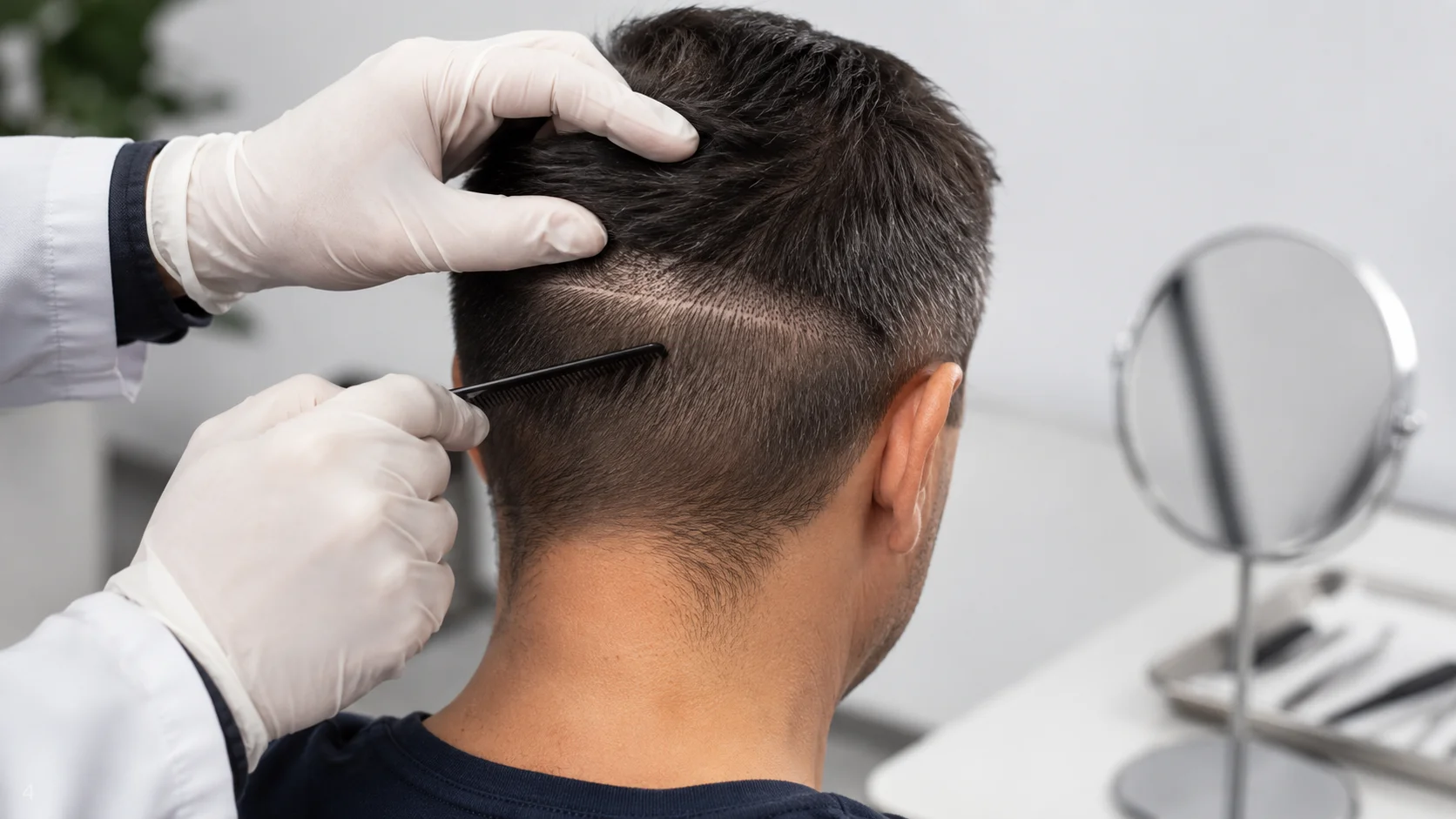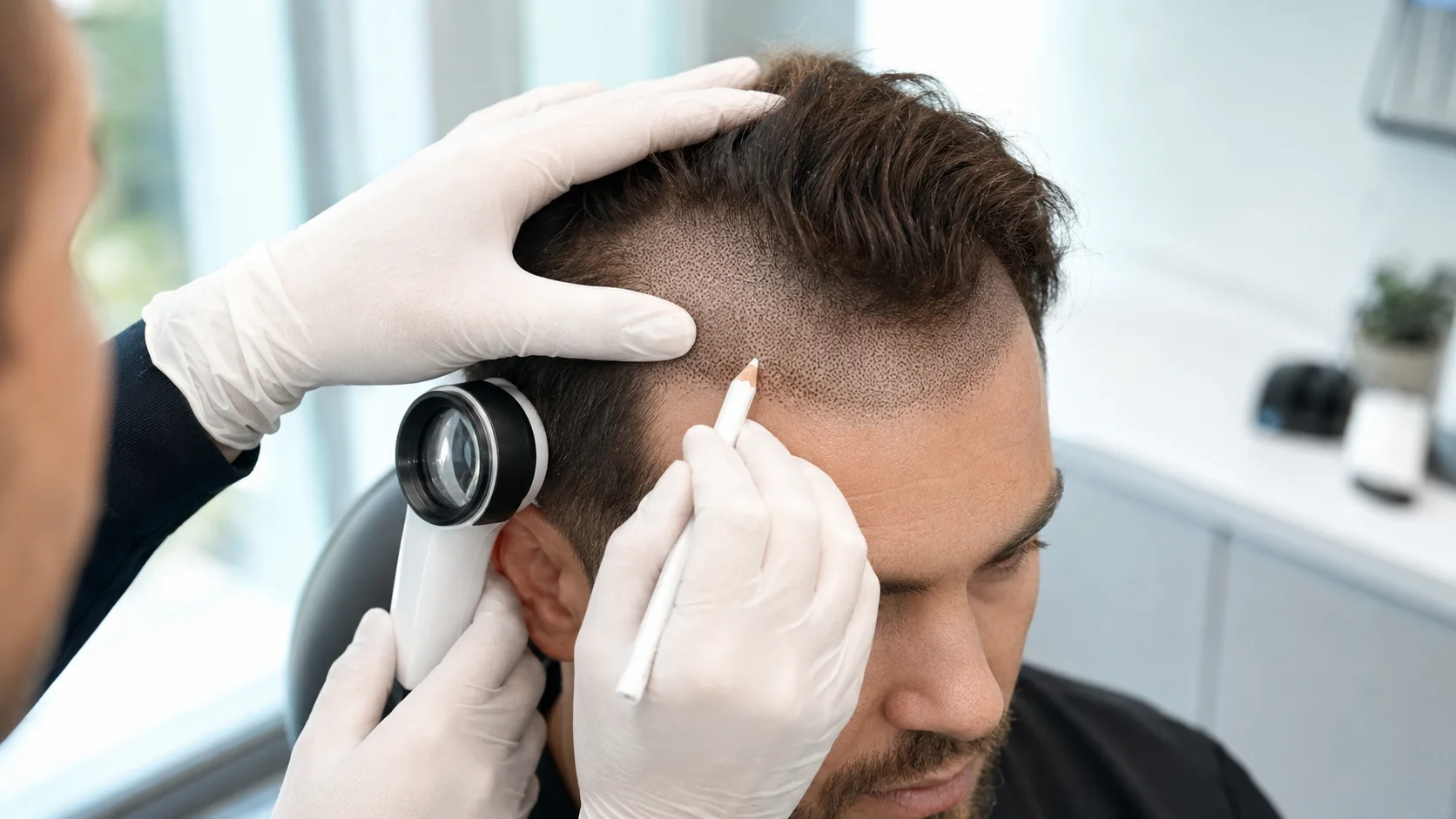
Scalp micropigmentation (SMP) does not automatically prevent someone from having a hair transplant later. Previous SMP does not necessarily exclude someone from FUE or FUT hair transplantation, provided the scalp is healthy and the donor area has suitable characteristics and sufficient hair for transplantation.
However, pigment changes the visual landscape of the scalp. It may conceal thinning, scars, and differences in density that would otherwise help a surgeon assess hair loss. Previous SMP can also influence hairline design, graft distribution, and expectations for the combined result. A careful in-person evaluation is therefore especially important.
Does Scalp Micropigmentation Damage Hair Follicles?
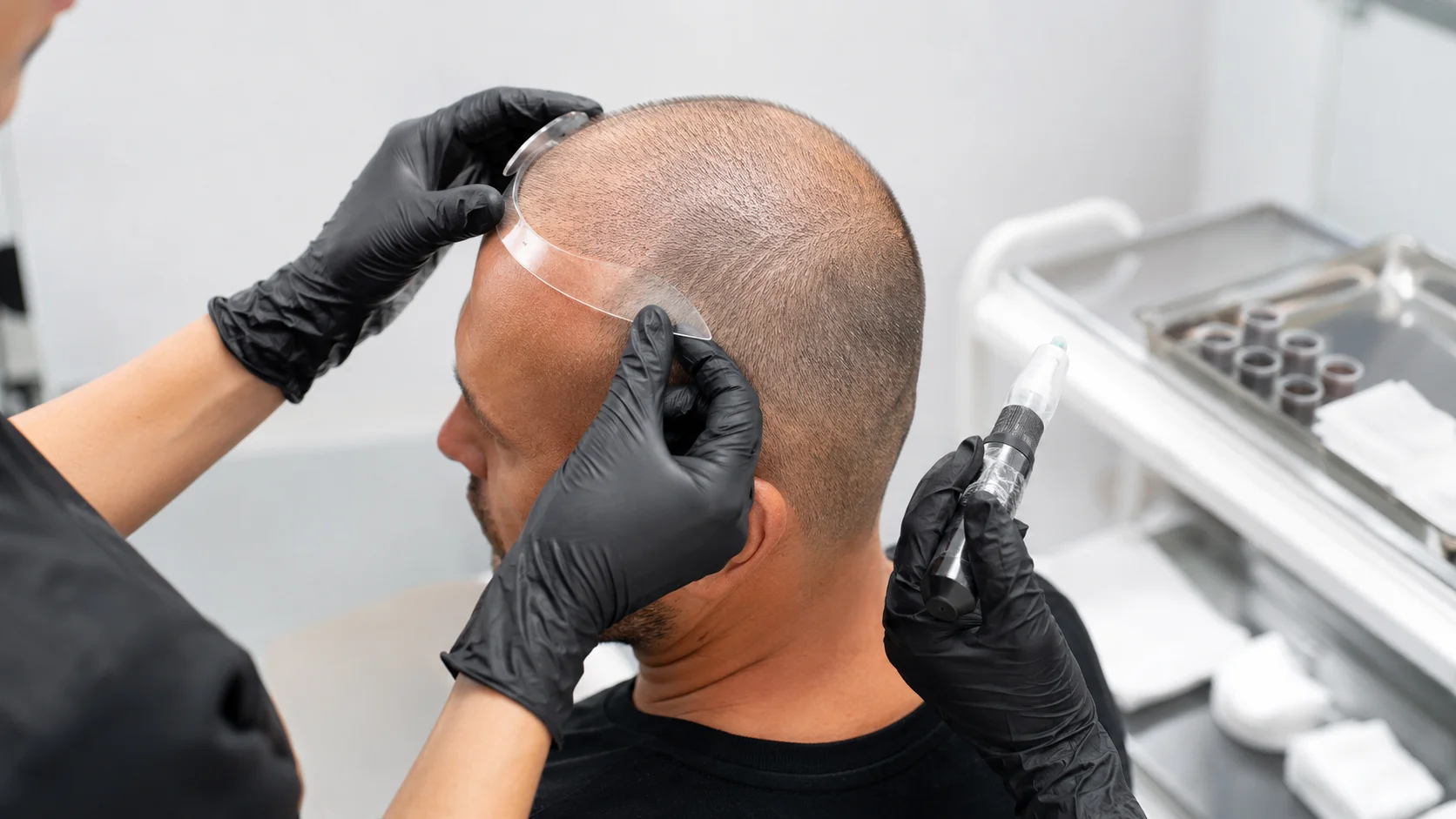
Properly performed SMP places small deposits of pigment in the superficial dermis to create the appearance of closely shaved follicles or reduced contrast between hair and scalp. Hair follicles extend deeper into the skin, so correctly controlled pigment placement is not generally expected to destroy healthy follicles.
This distinction is important: SMP is a cosmetic camouflage technique, not a treatment that preserves follicles, stops hair loss, or produces new hair growth.
Technique still matters. Excessively deep, repeated, or traumatic needle penetration may cause unnecessary bleeding, inflammation, pigment spreading, textural changes, or scarring. Infection and allergic or inflammatory reactions are also possible, although they are not expected outcomes. These complications could affect the condition of the recipient skin and may complicate future surgery.
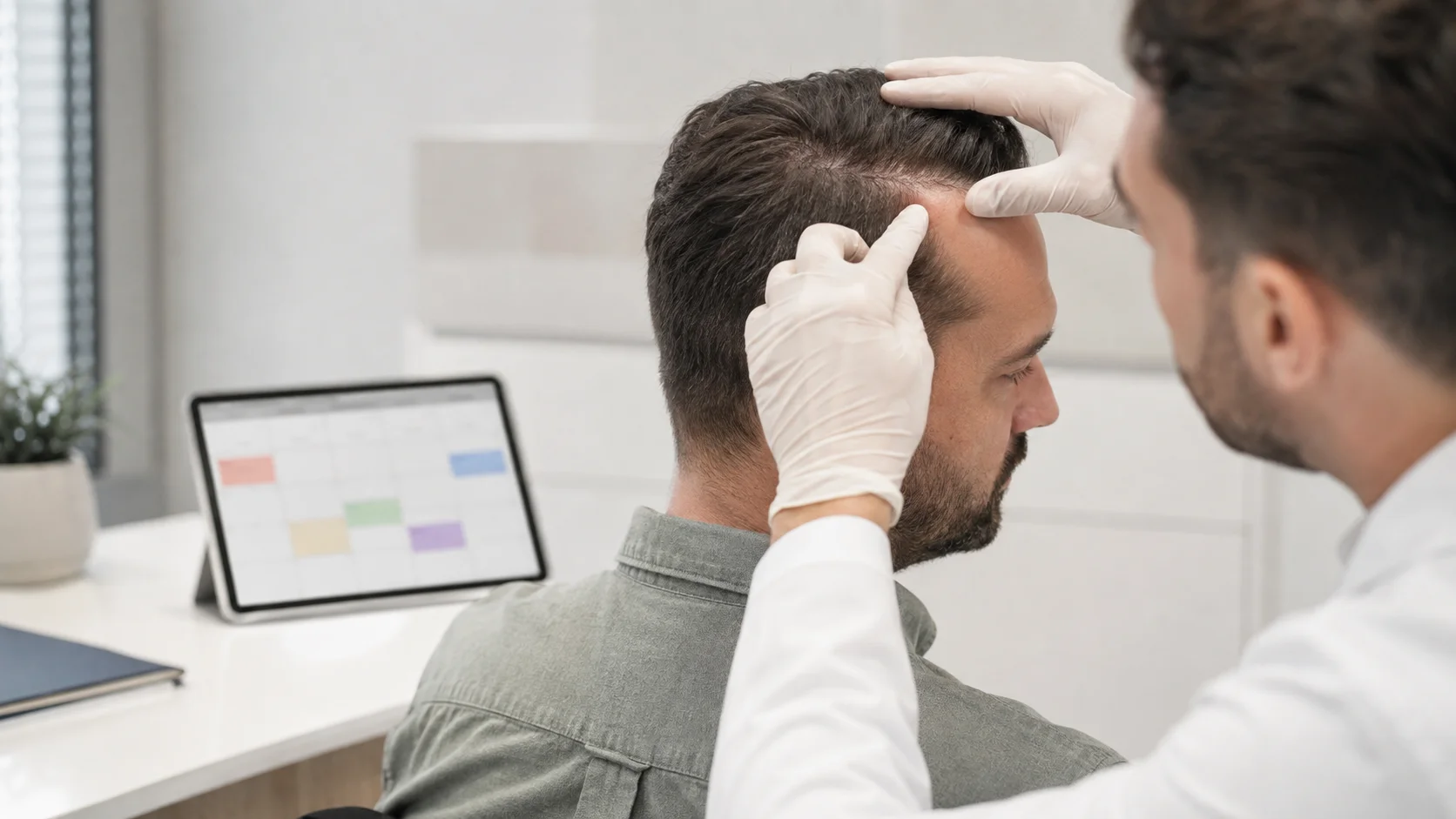
A transplant assessment should look beyond the mere presence of pigment. The clinician needs to determine whether the scalp beneath it is healthy, flexible, and free from active inflammation.
Is a Hair Transplant After SMP Considered Safe?
A previous SMP procedure is not usually a medical contraindication to hair transplantation. Safety depends more heavily on the person’s underlying hair-loss condition, donor supply, scalp health, medical history, and the quality of both procedures.
Before recommending surgery, a qualified medical professional should check for:
- Persistent redness, tenderness, itching, scaling, or swelling
- Nodules, pustules, crusting, or signs of infection
- Raised, thickened, or unusually firm tissue
- Significant pigment migration or excessively deep pigment
- A history of allergic reactions to tattoo pigments
- Progressive or inflammatory forms of alopecia
- Previous scalp surgery and the location of any scars
- Medical factors that could interfere with healing
Active scalp disease should generally be evaluated and controlled before elective transplantation. Performing surgery through inflamed or infected skin may increase healing problems and make the final result less predictable.
Why SMP Changes Surgical Planning
Pigment can make the scalp appear denser than it really is. This is its intended cosmetic effect, but it means the surgeon cannot judge the available hair population by appearance alone.
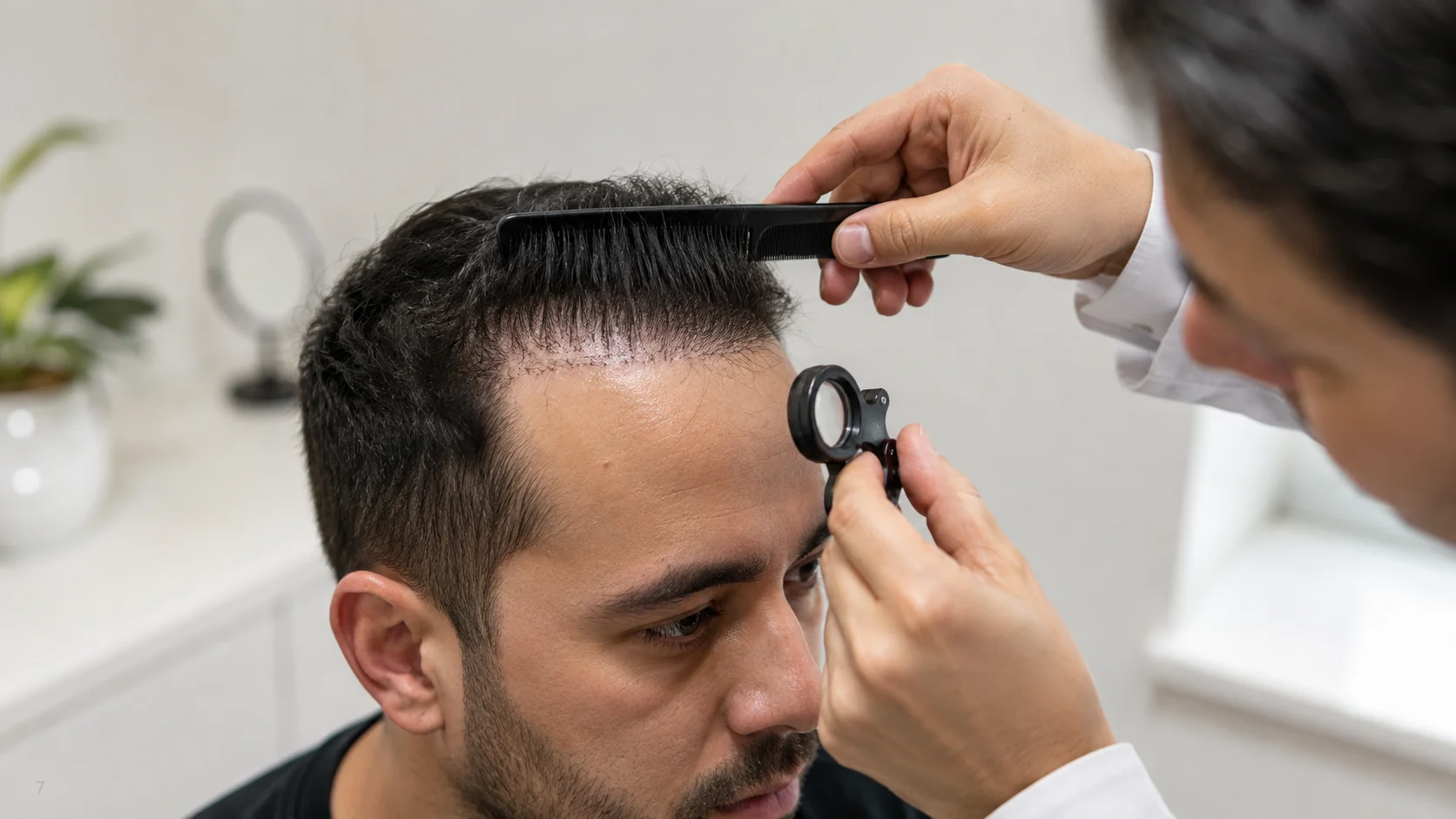
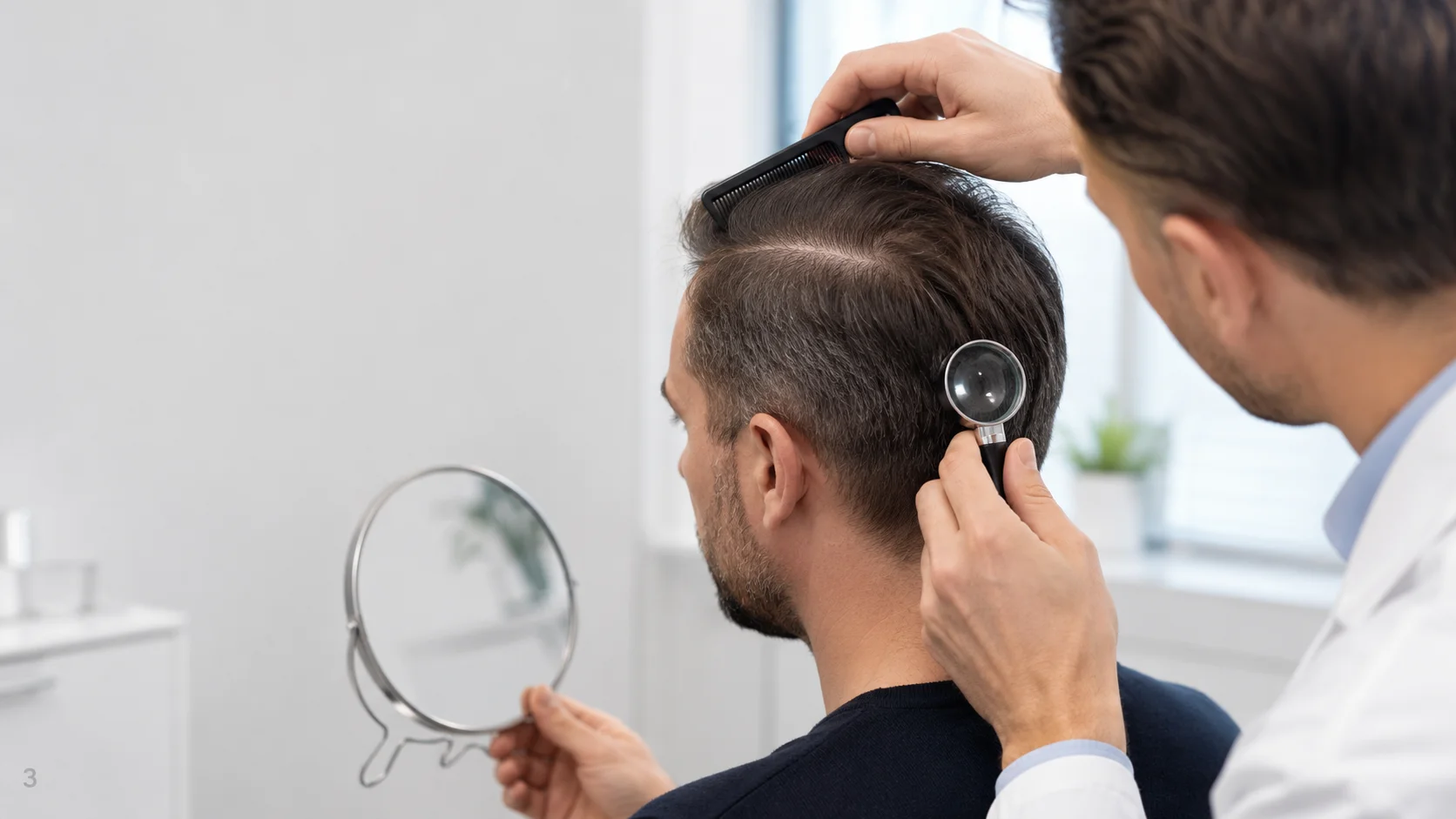
Magnification, scalp examination, and density measurements may be needed to distinguish real follicles from pigment impressions. The assessment should document the distribution, caliber, and miniaturization of existing hair in both the donor and recipient areas.
The Existing SMP Hairline Must Be Reassessed
An SMP hairline may have been designed for a shaved appearance rather than for transplanted hair. It may be lower, sharper, wider, or more symmetrical than a surgeon would recommend based on age, facial proportions, donor capacity, and likely future hair loss.
Placing grafts directly along an unsuitable pigmented outline can turn a cosmetic design problem into a permanent surgical one. The surgeon may instead recommend:
- Positioning the transplanted hairline behind part of the pigment
- Creating a softer, irregular transition with carefully placed grafts
- Adjusting the planned shape to conserve donor hair
- Lightening or removing selected pigment before surgery
- Laser pigment removal is not automatically required.
- Accepting that some pigment may remain visible in front of the new hairline
Laser pigment removal is not automatically required. It may be considered when the SMP is poorly positioned, unusually dark, discolored, or incompatible with a natural long-term transplant design. Removal itself can require multiple sessions and may temporarily irritate the scalp, so it should be coordinated with the surgical plan.
Cosmetic Density Is Not Donor Density
SMP can create the impression that a large bald or thinning area already has some coverage. A hair transplant must still be planned according to the number of usable follicular units available.
Pigment cannot compensate for unsafe donor harvesting. Extracting too many grafts may leave visible thinning, particularly when the hair is worn short. Although SMP can reduce the contrast created by small FUE scars, it should not be treated as permission to overharvest the donor area.
The long-term plan should account for future loss as well as the immediate cosmetic goal. A person may prefer a combined result in which transplanted hair provides texture and coverage while SMP reduces visible scalp contrast. This can be effective, but it remains an illusion of added density rather than an increase in the number of hairs.
Can Grafts Be Implanted Through Pigmented Skin?
Recipient sites can often be created in previously pigmented scalp. The presence of pigment alone does not mean grafts cannot grow.
During surgery, small recipient incisions pass through the skin so follicular units can be placed at the appropriate depth and angle. The surgeon must protect existing hairs, control incision density, and account for any scar tissue or abnormal skin texture. Magnification may be particularly useful because pigment dots can make it harder to identify miniaturized follicles and previous insertion points.
Normal SMP generally occupies a more superficial level than the deeper portion of a transplanted follicle. Nevertheless, there is limited direct clinical research specifically comparing graft survival in pigmented and non-pigmented recipient skin. Claims that SMP has no possible effect under any circumstances would therefore be too broad.
The condition of the tissue is more meaningful than its color. Healthy, supple, fully healed skin is different from skin affected by inflammation, fibrosis, infection, or repeated deep needling.
Could Surgery Change the Appearance of SMP?
Hair transplantation can temporarily alter how scalp pigment looks. Redness, swelling, crusting, shaved hair, and surgical markings may make pigment appear darker, lighter, or uneven during early healing. Recipient incisions may also disrupt individual impressions.
Once the scalp heals, the SMP may still contribute useful background shading. In other cases, its color or pattern may no longer align perfectly with the transplanted hairline and distribution.
The true combined appearance cannot be judged immediately. Transplanted hairs typically shed before entering a gradual growth cycle, and meaningful cosmetic growth takes months. A pigment touch-up performed too early could be based on a temporary pattern rather than the mature transplant result.
How Long Should You Wait After SMP?
There is no universal waiting period that is appropriate for every person. At minimum, the scalp should be completely healed, with no persistent redness, crusting, tenderness, infection, or inflammatory reaction.
The required interval may be longer when SMP involved multiple recent sessions, deep pigment placement, scarring, an allergic reaction, or planned laser removal. A transplant surgeon should evaluate the scalp rather than relying only on the date of the last session.
When someone is considering both procedures but has not yet undergone either, it is often helpful to plan the hair transplant first. SMP can then be used later, if still desired, to soften contrast or camouflage selected areas after the transplant has matured.
FUE or FUT After SMP
Both FUE and FUT may remain possible after scalp micropigmentation.
FUE removes individual follicular units using small punches. Pigment in the donor area may camouflage the resulting small pale dots, but it can also make extraction planning more visually demanding. The clinician still needs to map true donor density and distribute extractions conservatively.
FUT removes a narrow strip of donor scalp and closes the area as a linear incision. Its suitability depends on scalp laxity, hairstyle preferences, previous surgery, and scarring risk. Existing SMP does not determine the choice by itself.
The appropriate method should be selected according to the person’s donor characteristics and long-term restoration plan, not according to which procedure seems easiest to combine with pigment.
Preparing for a Transplant Consultation
People with previous SMP should tell the surgeon when it was performed, how many sessions were completed, and whether any unusual reaction occurred. Earlier photographs showing the scalp before pigmentation can be particularly valuable.
It is also useful to provide information about:
- Previous hair transplants or scalp surgery
- Laser pigment-removal sessions
- Changes in pigment color or shape
- Ongoing hair-loss treatments
- Scalp conditions and dermatologic diagnoses
- Typical hairstyle and preferred shaving length
- Family history and the progression of hair loss
The consultation should produce a plan for both real hair coverage and the visible pigment. That includes discussing what will happen if natural hair continues to thin behind the transplanted zone.
Frequently Asked Questions
Does SMP need to be removed before a hair transplant?
Not routinely. Removal may be useful when the pigment is misplaced, excessively dark, discolored, or inconsistent with the proposed hairline. The decision should be made after the transplant design has been evaluated.
Can SMP hide FUE or FUT scars?
SMP may reduce the color contrast of some healed scars, but it cannot flatten raised tissue, restore missing follicles, or erase the scar itself. Results depend on scar texture, color, blood supply, and the surrounding hair.
Will transplanted hair grow through SMP?
Transplanted grafts may grow normally in healthy, previously pigmented skin. Pigment does not create a physical cap over the follicles. Growth cannot be guaranteed, however, because graft survival depends on many surgical and individual factors.
Can existing hair be damaged during transplantation?
Temporary shedding of nearby hair can occur after surgery. Direct injury is also possible if recipient sites are created without recognizing existing follicles. Careful examination and incision placement are especially important when pigment makes fine hairs harder to see.
When can SMP be touched up after a hair transplant?
A touch-up should wait until the scalp has healed and the developing transplant result can be assessed reliably. Because hair growth continues to change for many months, the timing should be agreed upon with the transplant clinician and an appropriately trained SMP practitioner.
Does SMP improve transplant survival?
No. SMP changes the visual contrast between the scalp and hair but does not improve blood supply, preserve grafts, or stimulate growth. Any apparent increase in density is cosmetic.
Planning the Two Procedures as One Long-Term Result
Hair transplantation and scalp micropigmentation can complement each other, but they perform different jobs. Transplantation redistributes living follicles, while SMP creates a visual impression of greater density or closely shaved hair.
The strongest plan considers hair-loss progression, donor limitations, scalp condition, pigment design, hairstyle, and future maintenance together. Previous SMP may require more detailed assessment, but it does not automatically rule out surgery. The deciding factors are whether the scalp is healthy, the donor supply is appropriate, and the proposed design can remain credible over time.
This content is for general informational purposes and does not replace individualized medical advice, diagnosis, or treatment from a qualified healthcare professional.