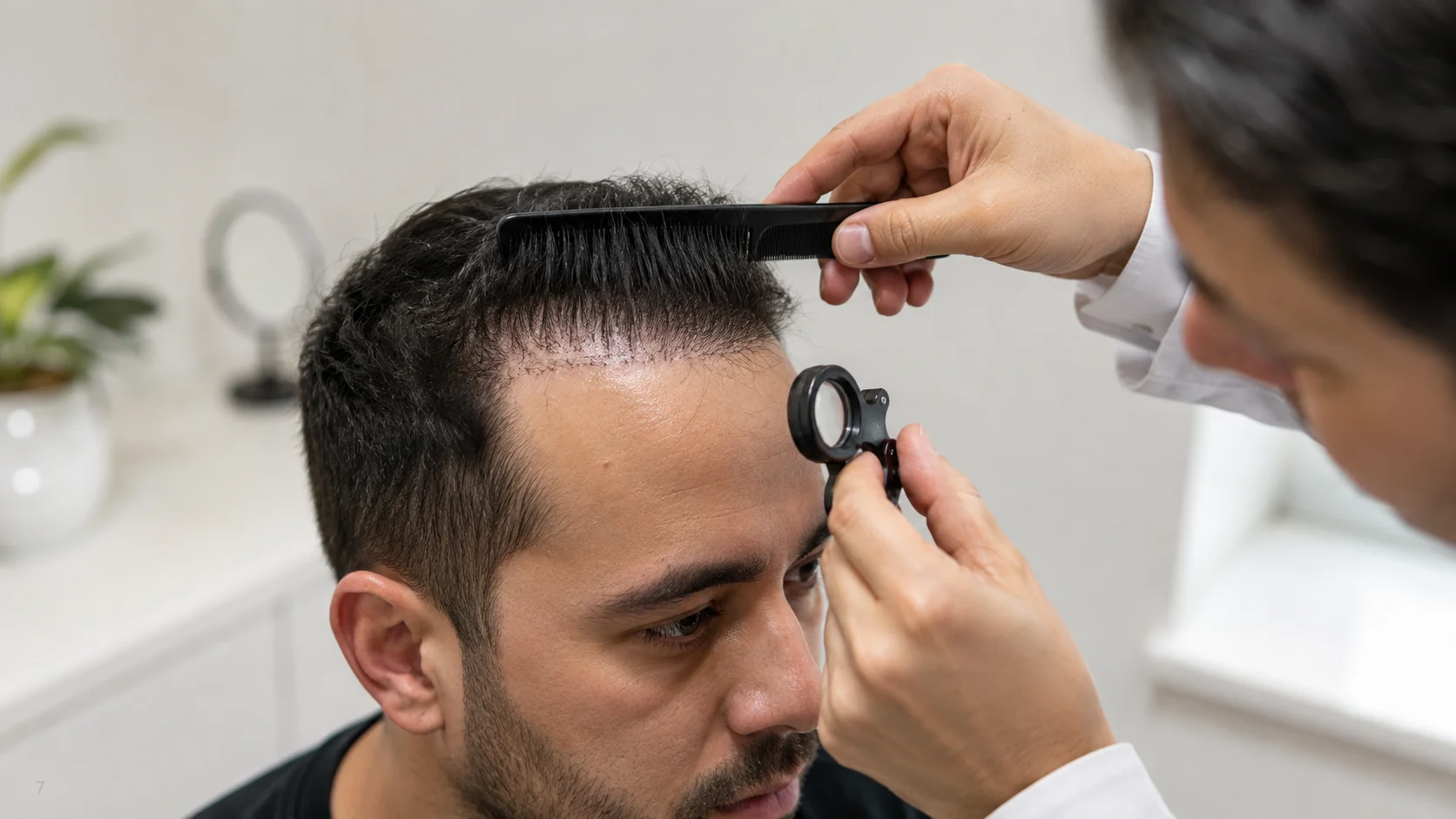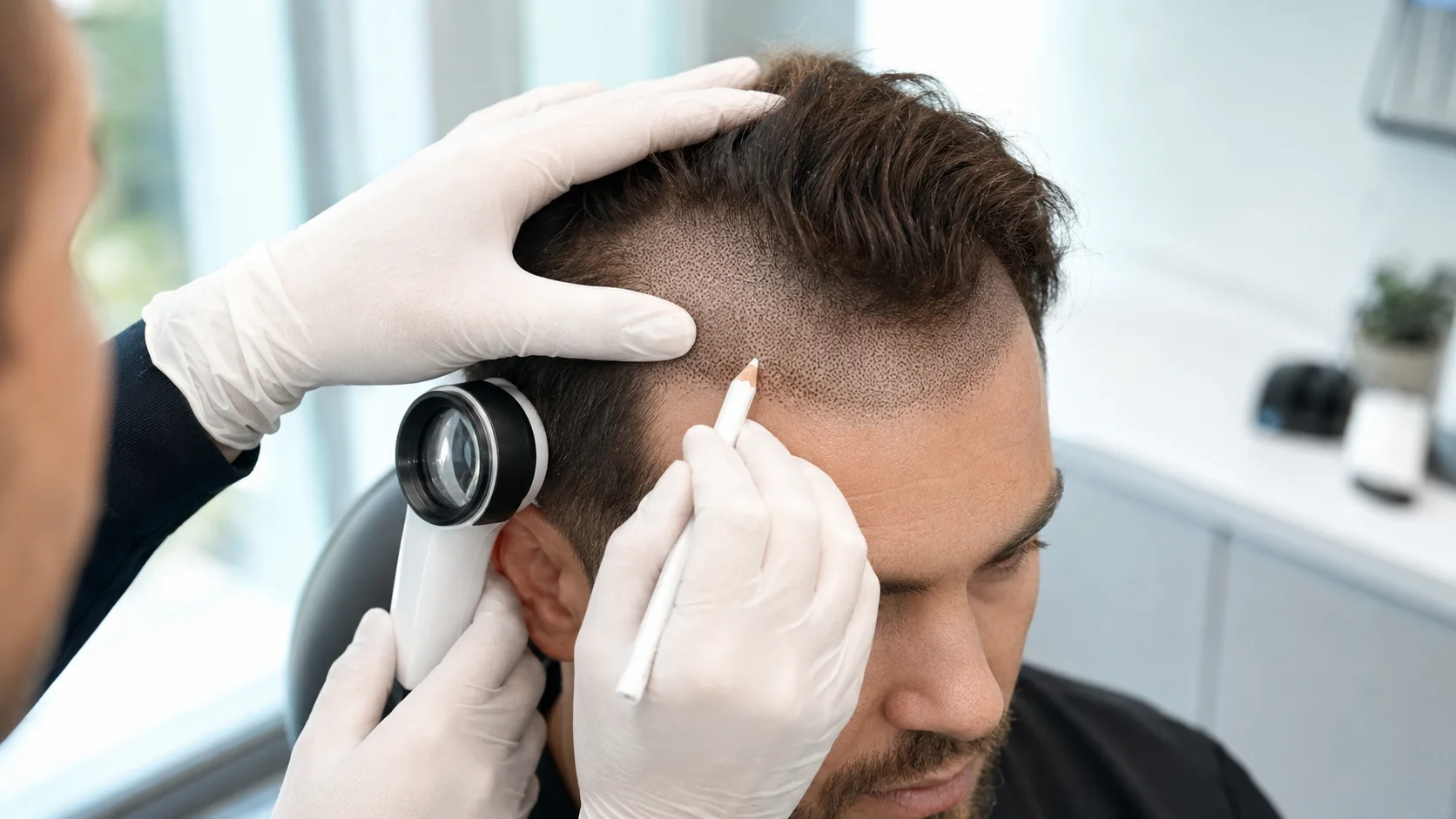
A second hair transplant is possible for many people, but previous surgery does not guarantee continued candidacy. The decision depends on remaining donor capacity, the result and design of the first procedure, continuing native hair loss, scalp health, and what the second operation is expected to accomplish.
The question is not simply whether more grafts can be extracted. A responsible plan must determine whether enough stable donor hair can be removed without creating visible depletion and whether those grafts can produce a worthwhile improvement.
Why People Consider a Second Procedure
A second transplant may be requested to:
- Increase density in a previously treated area
- Address continued native hair loss
- Add coverage to the mid-scalp or crown
- Refine an uneven or sparse hairline
- Repair poor angle, direction, or graft distribution
- Conceal a strip scar or localized donor defect
- Complete a procedure intentionally divided into stages
These goals place different demands on the donor supply. Adding crown coverage may require many grafts, while a localized hairline refinement may require fewer but demand greater technical precision.
Remaining Donor Capacity
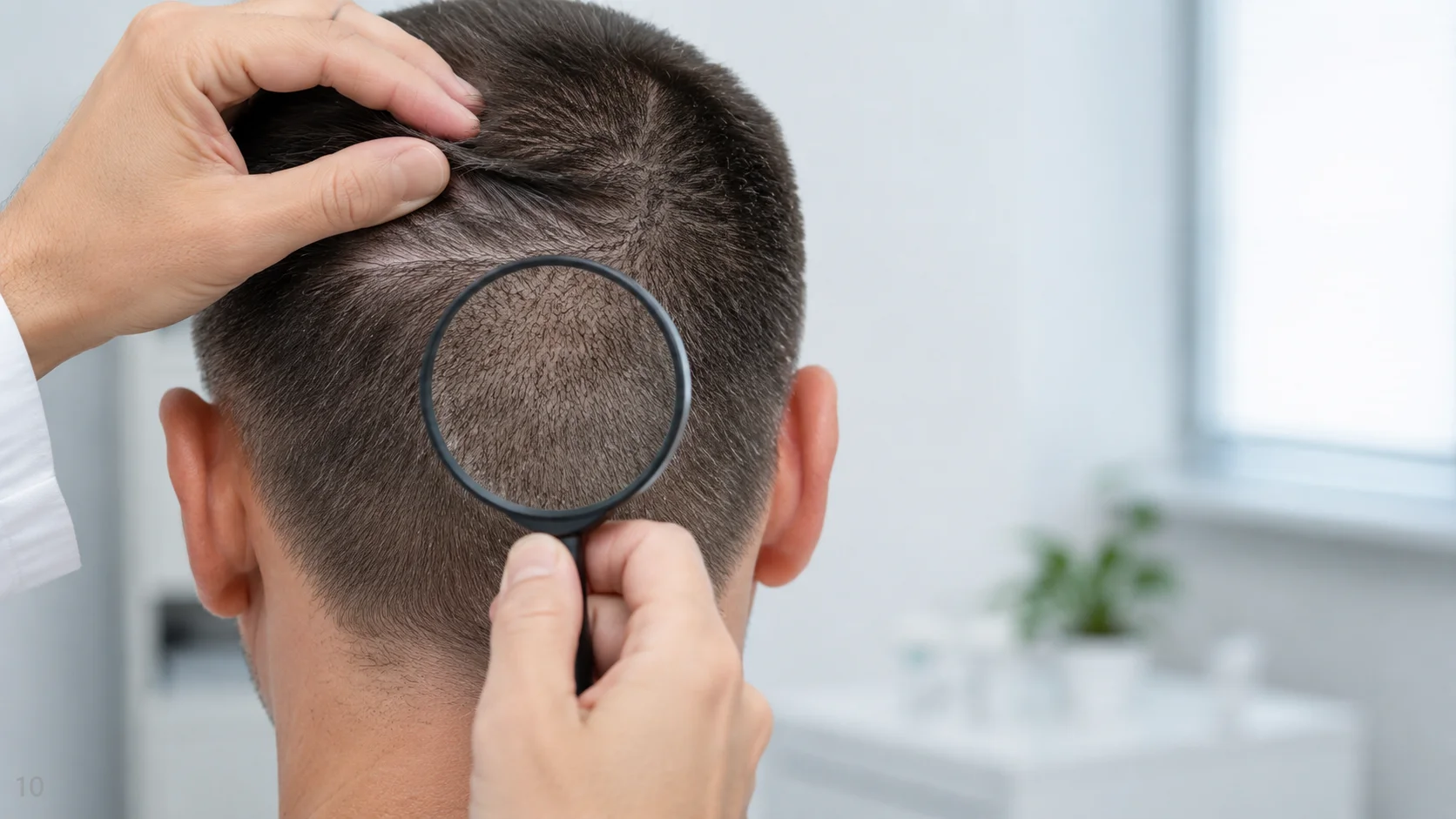
Donor capacity is the number of follicular units that can still be harvested while preserving an acceptable appearance at the sides and back — assessing it accurately before a second procedure is what determines whether more surgery is realistic.
It depends on:
- Current follicular-unit density
- Number of hairs per follicular unit
- Hair-shaft thickness
- Size of the stable donor zone
- Miniaturization within the donor region
- Hair curl and scalp contrast
- FUE extraction pattern
- Width and location of any FUT scar
- Scalp laxity if another strip is considered
- Expected future hair loss
A previous graft count does not reveal remaining capacity by itself. Two people who each had 3,000 grafts removed may have very different residual density and safe limits.
When Can a Second Transplant Be Considered?
The first result should usually be allowed to mature before a second operation is planned in the same recipient region. Growth continues gradually, and density can change for approximately a year or longer.
Waiting allows the medical team to assess:
- Final growth from the first procedure
- Hair caliber and styling coverage
- Donor-area recovery
- Scar maturation
- Continuing native hair loss
- Whether apparent gaps genuinely require more grafts
A commonly considered interval is around 12 months, although timing varies. Crown growth and repair cases may require longer observation.
An earlier procedure may occasionally be planned for a separate region, but donor healing and lifetime capacity still require consideration. Speed should not take priority over diagnostic clarity or safe extraction.
Has Native Hair Loss Stabilized?
Transplanted follicles may remain stable while surrounding native hair continues to miniaturize. This can create new gaps behind the hairline or around transplanted zones.
Before a second procedure, the pattern and rate of ongoing loss should be evaluated. Medical treatment may be recommended to stabilize susceptible native hair when appropriate.
Finasteride and minoxidil can help preserve or strengthen existing follicles in selected patients, but they do not guarantee stabilization and cannot restore extracted donor hair.
Younger patients and those with strong family histories of advanced loss require particularly conservative planning.
Evaluating the First Transplant
The first procedure should be assessed in both recipient and donor areas. Important questions include:
- Did the grafts grow as expected?
- Is low density caused by limited placement or poor survival?
- Is the hairline appropriately positioned?
- Are angles and directions natural?
- Has native hair thinned around the grafts?
- Is the donor area evenly harvested?
- Are there visible scars or signs of overharvesting?
- Was hair taken outside the stable donor zone?
Poor growth should be investigated before repeating the same surgical approach. Adding grafts without understanding the original failure can waste more donor supply.
Choosing Between FUE and FUT
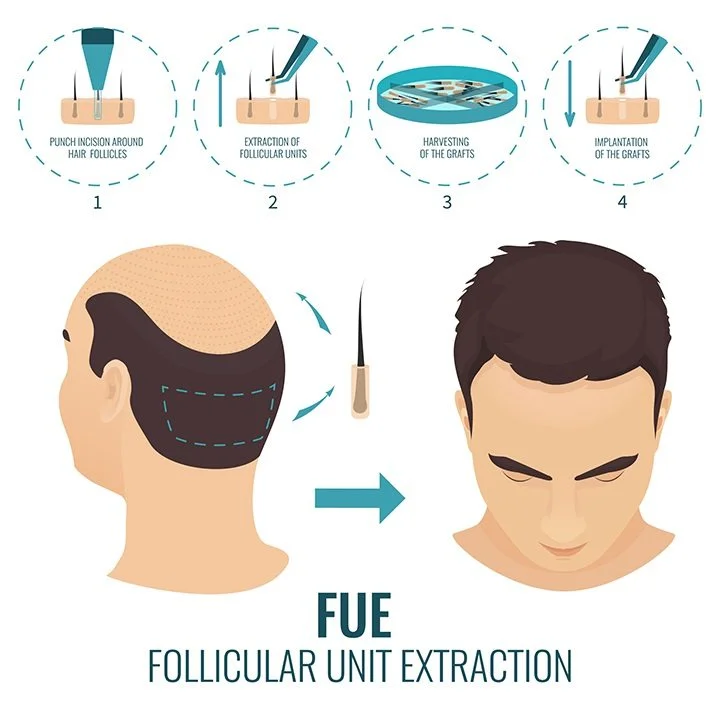
A second procedure does not have to use the same harvesting method (FUE) as the first.
After FUE, a carefully planned FUT procedure may sometimes access donor hair while avoiding further diffuse depletion. Suitability depends on scalp laxity and acceptance of a linear scar.
After FUT, another strip may occasionally be removed through the existing scar, or FUE may be used around it. Multiple linear scars should generally be avoided when one well-planned scar can serve the goal.
Neither technique automatically creates additional donor capacity. Both remove permanent follicles from a finite supply.
Prioritizing the Recipient Area
When donor hair is limited, not every thin region can receive equal density. Planning may prioritize:
- Repairing an unnatural frontal hairline
- Strengthening the frontal third
- Connecting the front and mid-scalp
- Treating a visible crown only if sufficient grafts remain
The crown consumes large numbers of grafts because of its surface area and spiral pattern. Using too much donor hair there can compromise the more visually important frontal frame.
When a Second Transplant May Not Be Advisable
Another procedure may be inappropriate when:
- The donor zone is significantly overharvested
- Donor hairs show extensive miniaturization
- Hair loss is unstable or unexplained
- An inflammatory scalp disorder is active
- Expectations require more density than the donor can supply
- The first transplant has not matured
- Scarring or blood-supply concerns increase surgical risk
- The proposed improvement would be too small to justify further depletion
Declining surgery can be the safer long-term decision.
Frequently Asked Questions
Is there a fixed graft limit for a second transplant?
No. The limit depends on measured residual density, safe-zone size, hair characteristics, previous harvesting, and future needs — see how many transplants a donor area can realistically support over a lifetime.
Must the second transplant use the same technique?
No. FUE and FUT can sometimes be combined across a lifetime, depending on scars, scalp laxity, donor distribution, and personal preferences.
Can a second procedure make the first result denser?
Yes, if enough grafts remain and the recipient scalp can accept additional placement safely. Natural hair direction and blood supply must still be respected.
Should the second transplant be performed by the original surgeon?
Not necessarily. The most important factors are an accurate assessment, access to the original records, appropriate repair experience, and a defensible long-term plan.
Can beard hair be used in a second transplant?
It may supplement scalp hair in selected cases, usually away from the delicate frontal edge. Differences in texture and growth limit where it can be used naturally.
Planning Beyond the Second Operation
A second transplant should be treated as part of lifetime donor management rather than an isolated opportunity to add grafts. The strongest plan accounts for the first procedure, current loss, future progression, and the appearance of both the recipient and donor areas after every extraction.
This content is for general informational purposes and does not replace individualized medical advice, diagnosis, or treatment.