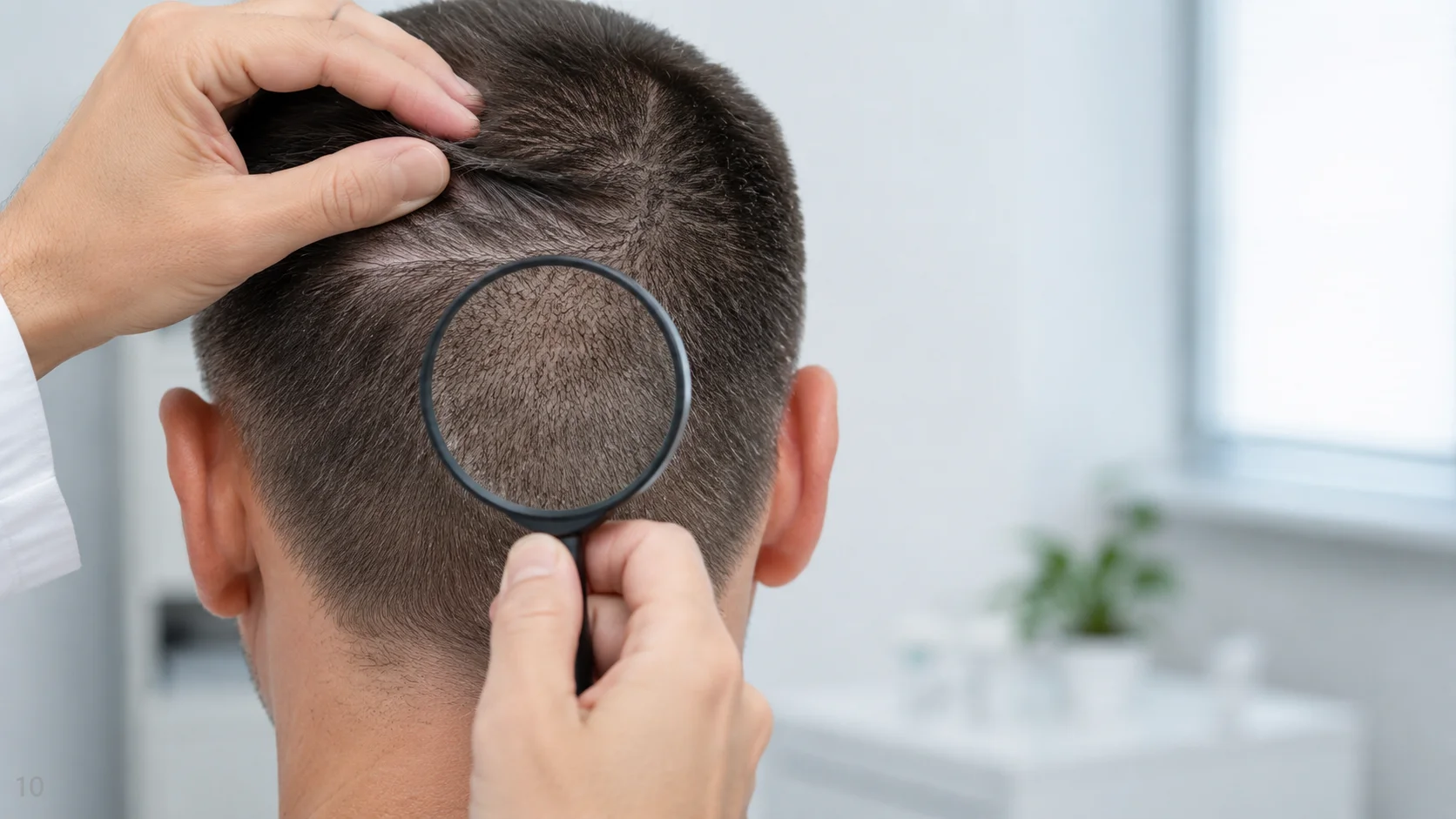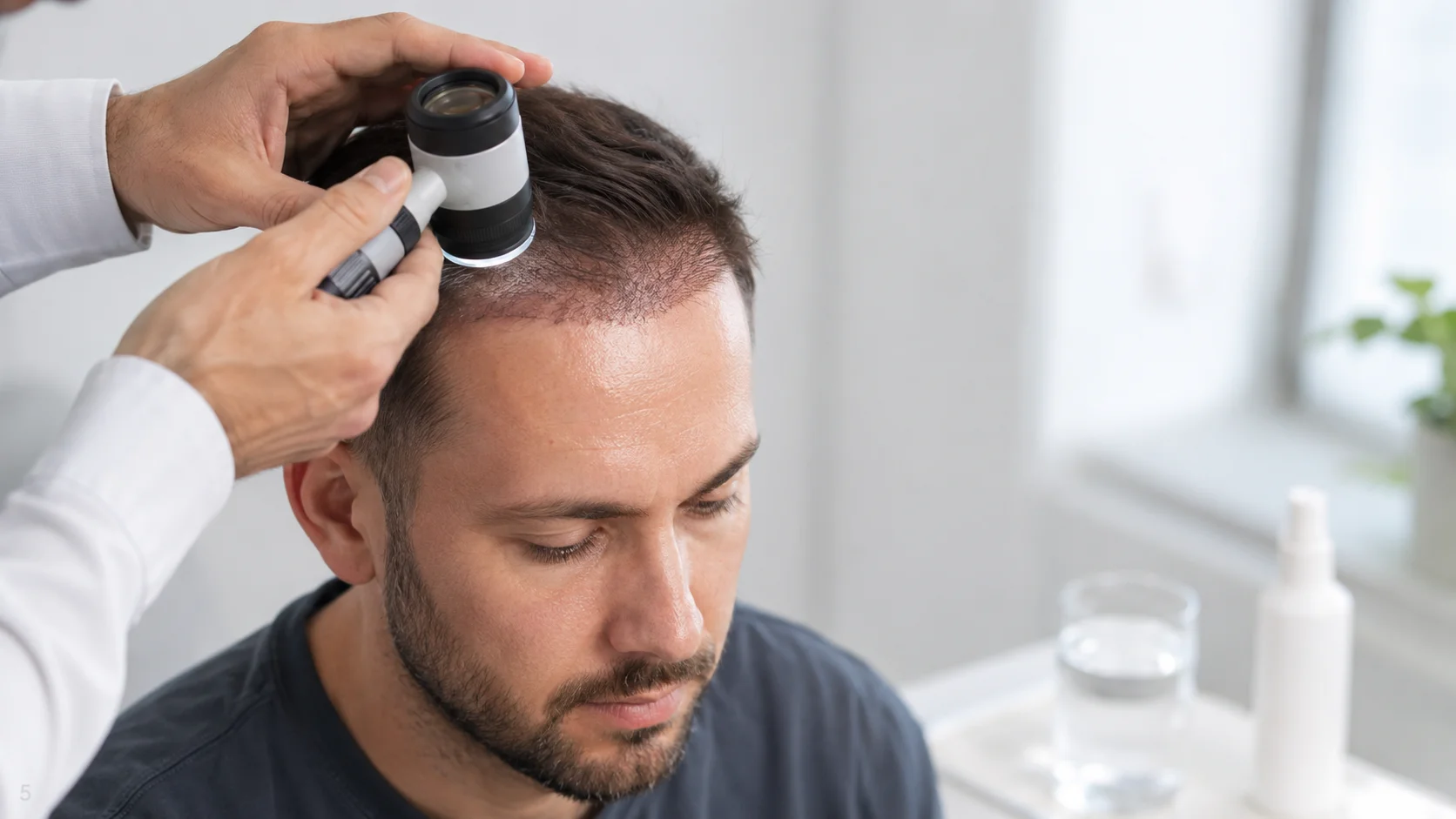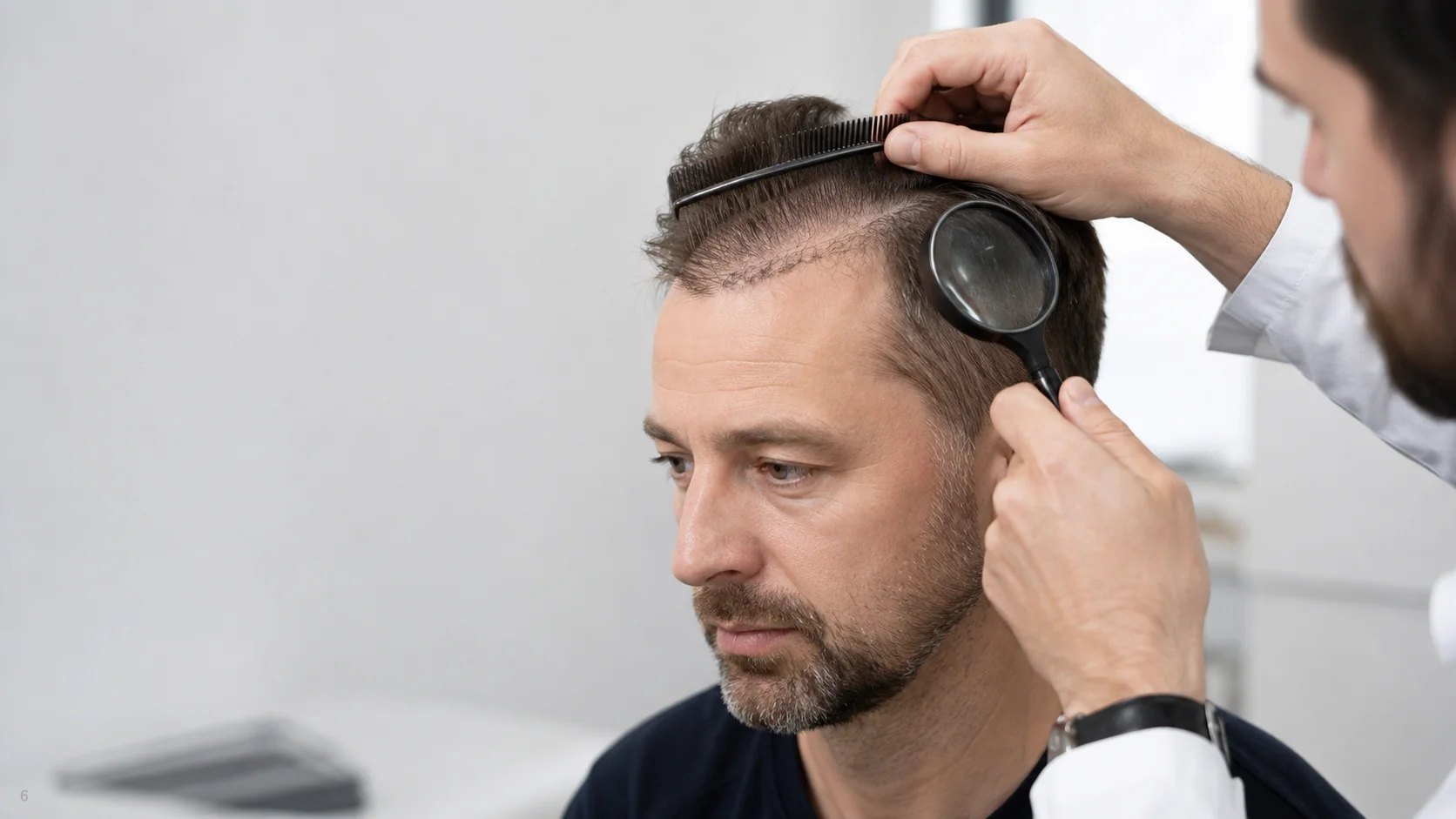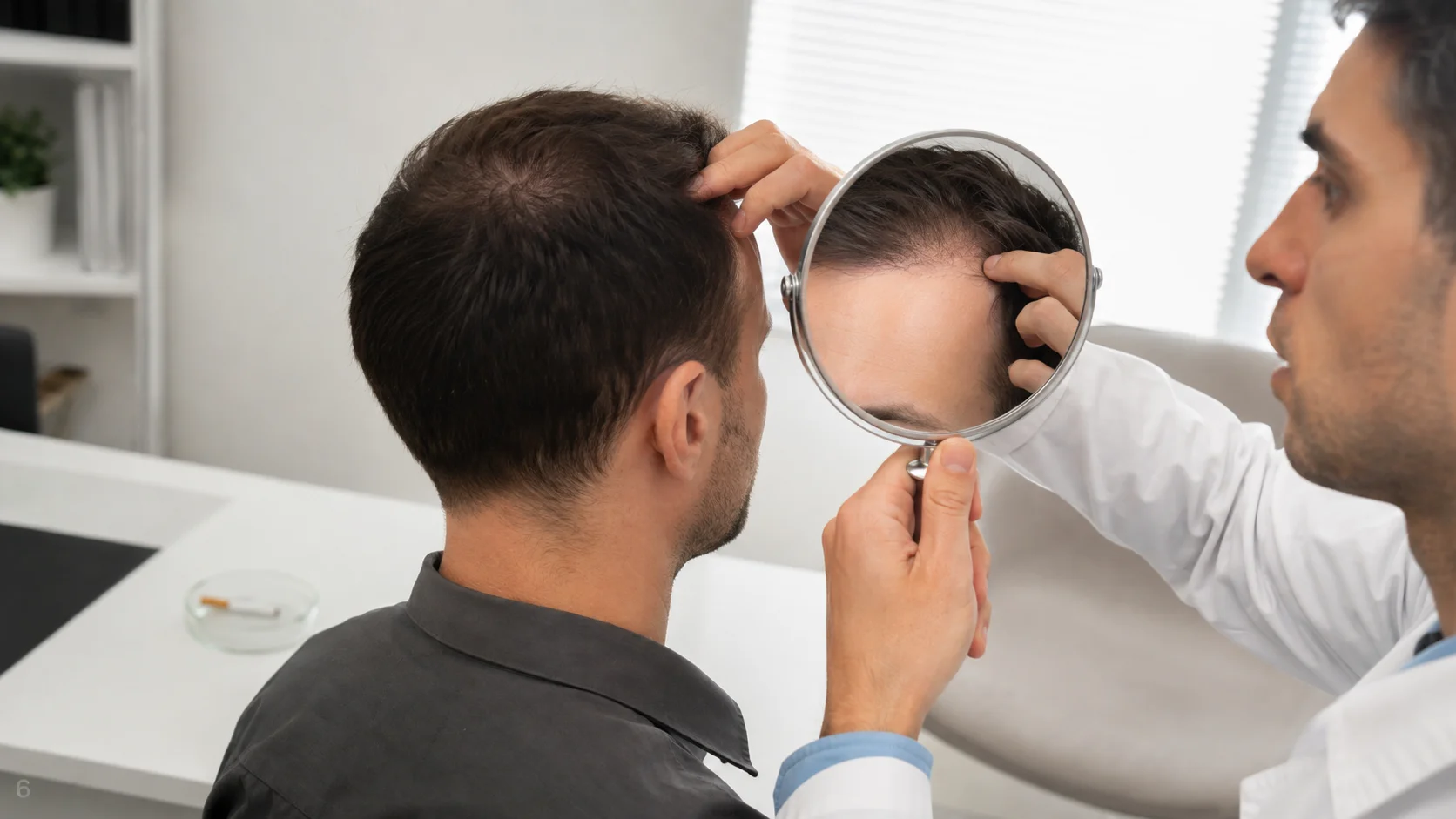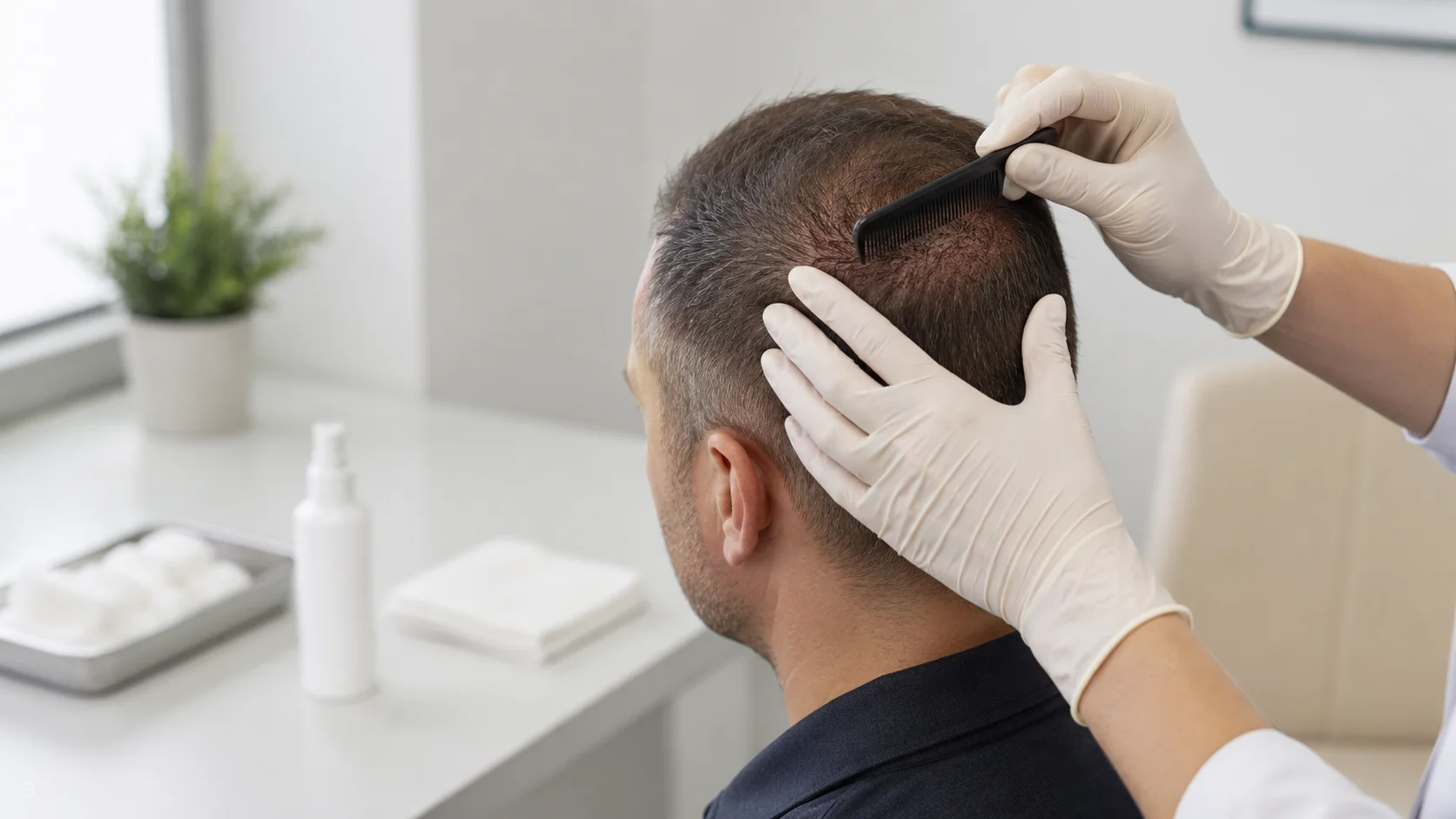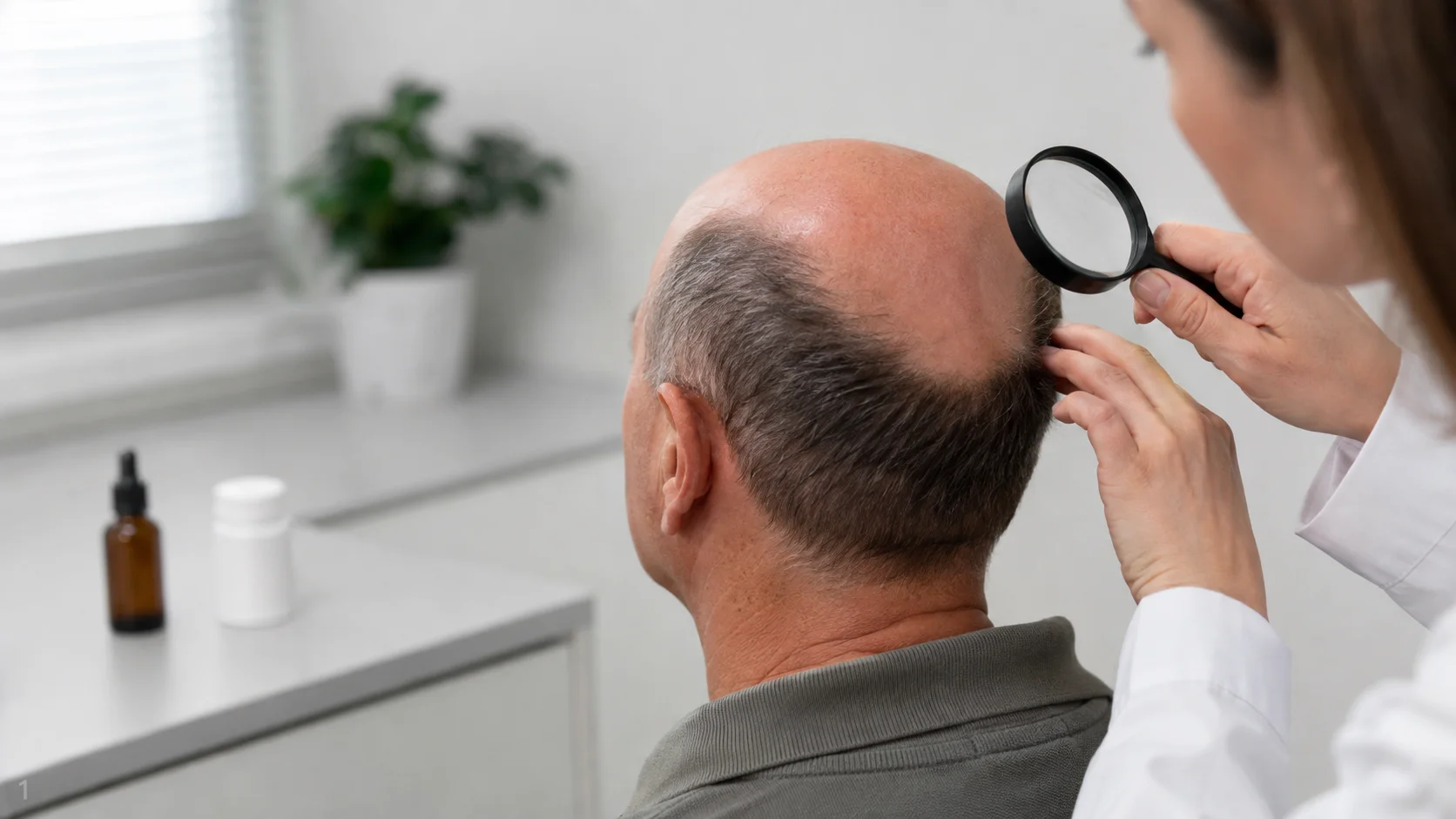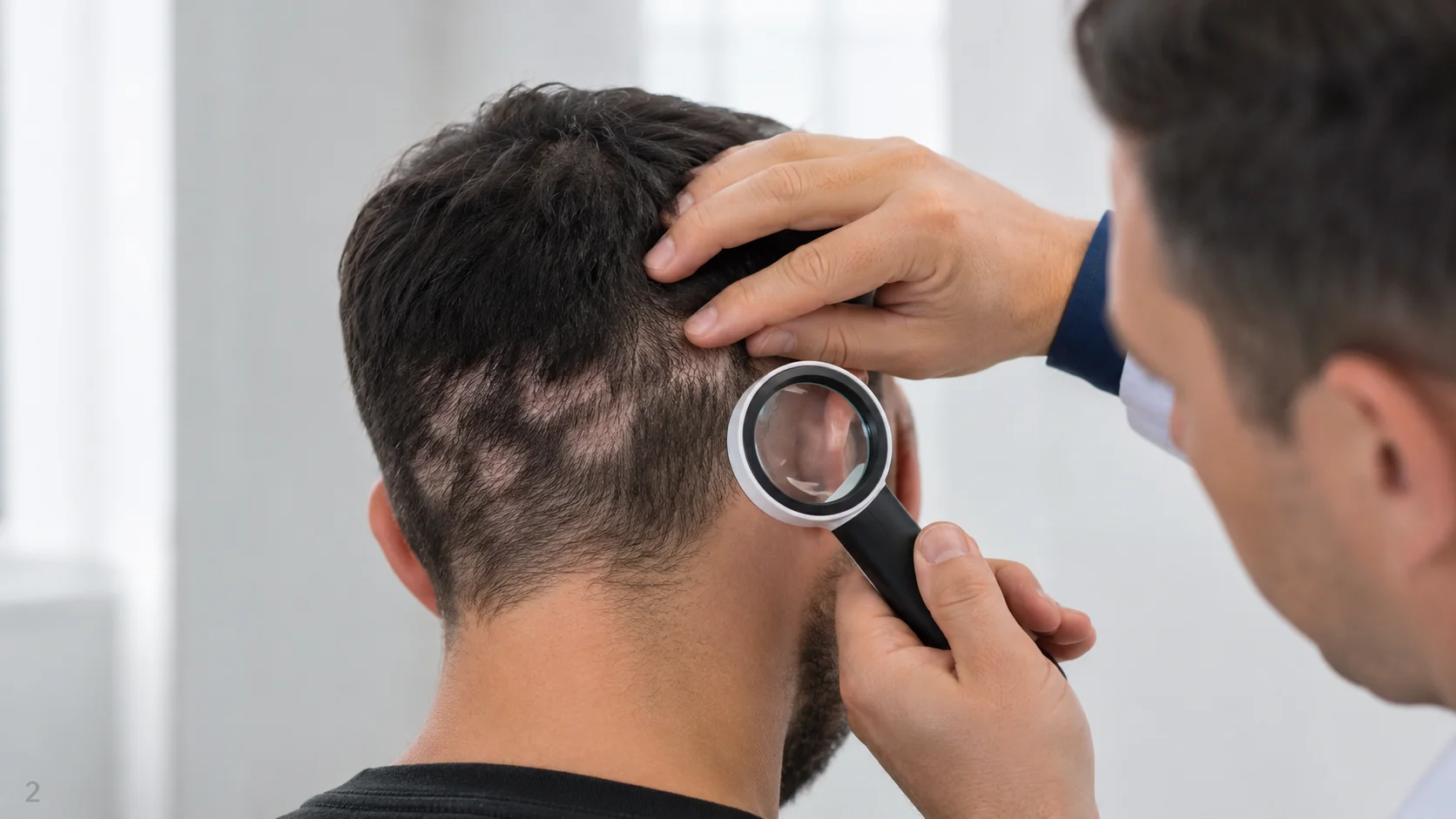
Donor area overharvesting occurs when too many follicular units are removed, extractions are concentrated too closely together, or grafts are taken outside the stable donor zone. The result can be visible thinning, patchiness, scarring, or an irregular appearance at the back and sides of the scalp.
Follicles removed during follicular unit excision do not grow back in their original locations. Repair therefore focuses on improving the appearance of the remaining donor area rather than replenishing its original follicle count.
How Overharvesting Happens
A safe FUE plan considers how many grafts can be removed without reducing residual density below a cosmetically acceptable level. This limit varies between individuals.
Overharvesting may result from:
- Removing too many grafts in one session
- Concentrating punches within a small zone
- Repeatedly extracting from the same areas
- Ignoring naturally low donor density
- Harvesting from miniaturized or unstable regions
- Using an inappropriate punch size or technique
- Creating excessive scarring around extraction sites
- Planning by graft target rather than measured donor capacity
A high graft count does not prove that overharvesting occurred. The relevant issue is how many grafts were taken relative to the donor area’s size, density, hair caliber, extraction pattern, and long-term stability.
Signs of an Overharvested Donor Area
The donor region may look thin immediately after surgery because the hair has been shaved and extraction sites remain visible. Swelling, redness, crusting, and temporary shock loss can also distort the appearance.
Persistent signs of overharvesting may include:
- Moth-eaten or patchy density
- Areas of scalp visibility that do not improve with hair growth
- Sharp differences between extracted and untouched zones
- An unusually high number of pale FUE scars
- Visible depletion at ordinary hair lengths
- Thin upper or lower donor borders
- Difficulty concealing the area with styling
- Reduced capacity for future procedures
Assessment should not rely on early postoperative photographs alone. Temporary donor shock loss can take several months to recover, and scar color may continue to mature.
Overharvesting Versus Shock Loss
Shock loss is temporary shedding of existing donor hairs after surgery. It can occur because of surgical stress, local inflammation, vascular disruption, or trauma to nearby follicles.
When affected follicles remain healthy, regrowth often begins over subsequent months. Overharvesting, by contrast, represents permanent removal or damage.
Trichoscopy can help distinguish empty extraction sites, scarring, miniaturization, and short regrowing hairs. Comparison with preoperative photographs is particularly valuable.
A final diagnosis may need to wait until healing and temporary shedding have had sufficient time to resolve.
Why the Safe Donor Zone Matters
The safe donor zone is the region expected to retain hair despite progression of androgenetic alopecia. Its boundaries are not identical for every person.
Age, family history, retrograde thinning, diffuse unpatterned alopecia, side density, and miniaturization can all reduce the stable zone. Follicles harvested too high, too low, or too far forward may later miniaturize after transplantation.
A donor area can therefore be overused in two ways: it may be visibly depleted at the time of surgery, or it may contain transplanted follicles that prove unstable years later.
Long-Term Risks
Overharvesting can affect more than the current appearance. It may:
- Permanently reduce donor density
- Limit or prevent a second transplant
- Make short hairstyles impractical
- Expose extraction scars
- Create an uneven transition into unharvested hair
- Reduce options for repairing the recipient area
- Worsen visually as surrounding donor hair thins with age
A depleted donor zone cannot always support both donor repair and improvement of the original recipient result. Priorities may have to be chosen carefully.
How Overharvesting Is Evaluated
A repair assessment should include the full scalp rather than the donor area alone. Useful information includes:
- Preoperative and immediate postoperative photographs
- Number and location of recorded extractions
- Current follicular-unit and hair density
- Hair-shaft diameter
- Degree of miniaturization
- FUE scar size and distribution
- Remaining safe donor boundaries
- Beard or body-hair characteristics
- Continuing recipient-area hair loss
Hair should be examined at more than one length. Very short hair may emphasize pale scars, while longer hair can reveal whether residual density provides adequate coverage.
Can an Overharvested Donor Area Be Repaired?
Repair may improve appearance, but full restoration is rarely possible. The best option depends on the amount of depletion, remaining donor supply, scar pattern, hairstyle, and expectations.
Scalp Micropigmentation
Scalp micropigmentation places small pigment impressions between remaining hairs to reduce scalp contrast. It can make diffuse depletion and FUE scars less visible, especially with a short hairstyle.
It does not add density. Pigment can fade or change over time, and poor color, depth, or pattern selection can create another cosmetic problem.
Transplanting Hair Into the Donor Area
Remaining scalp grafts can sometimes be placed into the depleted zone. This may be reasonable for localized defects, but using scarce scalp donor hair to repair the donor region leaves fewer grafts for the top.
Beard hair may be considered because its caliber can provide coverage. However, beard hair differs in texture and growth behavior and must be distributed carefully.
Hair-Length and Styling Changes
Allowing the donor hair to grow longer may conceal mild or moderate depletion. A gradual fade can sometimes make density transitions less noticeable than a uniformly short cut.
This is appearance management rather than biological repair, but it may be the lowest-risk option.
Scar Revision
Large, irregular, or confluent scars may occasionally be treated surgically. Suitability depends on scalp laxity, blood supply, scar location, and the risk of creating additional tension or widening.
Laser procedures should be approached cautiously because further injury can alter pigmentation or scarring without restoring follicles.
Can Medication Help?
Minoxidil may strengthen surviving miniaturized hairs when androgenetic alopecia contributes to donor thinning. Finasteride or other appropriate medical treatment may help stabilize susceptible native hair.
Medication cannot replace extracted follicles or erase FUE scars. Its role is limited to improving or preserving living hairs.
Frequently Asked Questions
Do FUE extraction sites grow new follicles?
No. Once a follicular unit has been removed, that site does not regenerate a replacement follicle.
How soon can overharvesting be confirmed?
Severe depletion may be apparent earlier, but temporary shock loss and scar maturation can affect appearance for months. A premature conclusion can be misleading.
Can scalp micropigmentation restore density?
No. It reduces visual contrast but does not add hair.
Can another FUE procedure even out the donor area?
Removing additional follicles rarely repairs genuine depletion and may worsen it. Any further extraction requires careful density mapping.
Does overharvesting always mean the surgeon removed too many grafts?
Not necessarily. Poor distribution, harvesting outside the stable zone, large scars, low starting density, or unexpected donor miniaturization can also create a depleted appearance.
Prevention Is More Predictable Than Repair
Donor overharvesting is difficult to correct because the original follicle supply cannot be recreated. Measured density, conservative safe-zone boundaries, evenly distributed extractions, and lifetime planning are more reliable than attempting repair after depletion has occurred.
This content is for general informational purposes and does not replace individualized medical advice, diagnosis, or treatment.