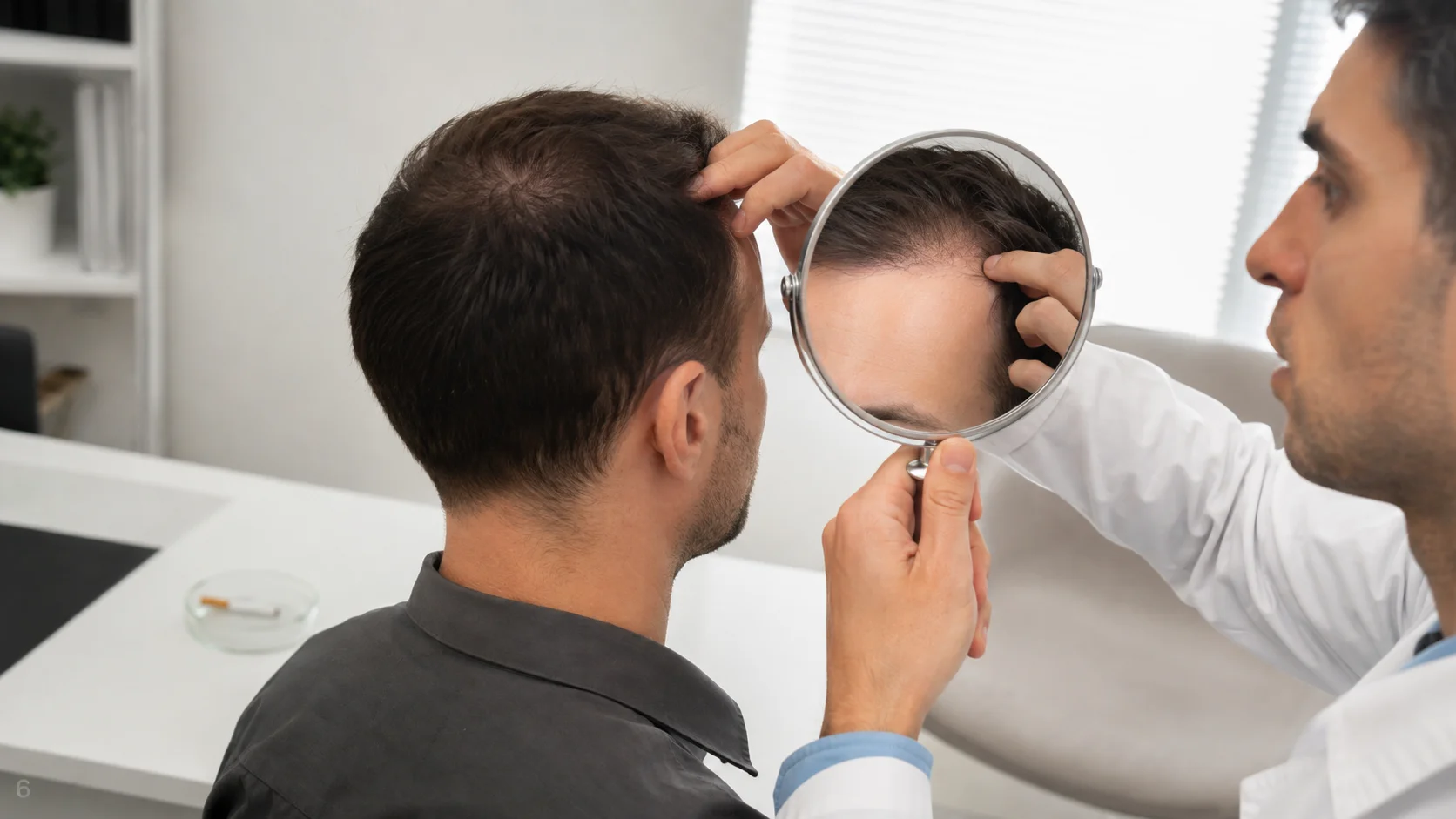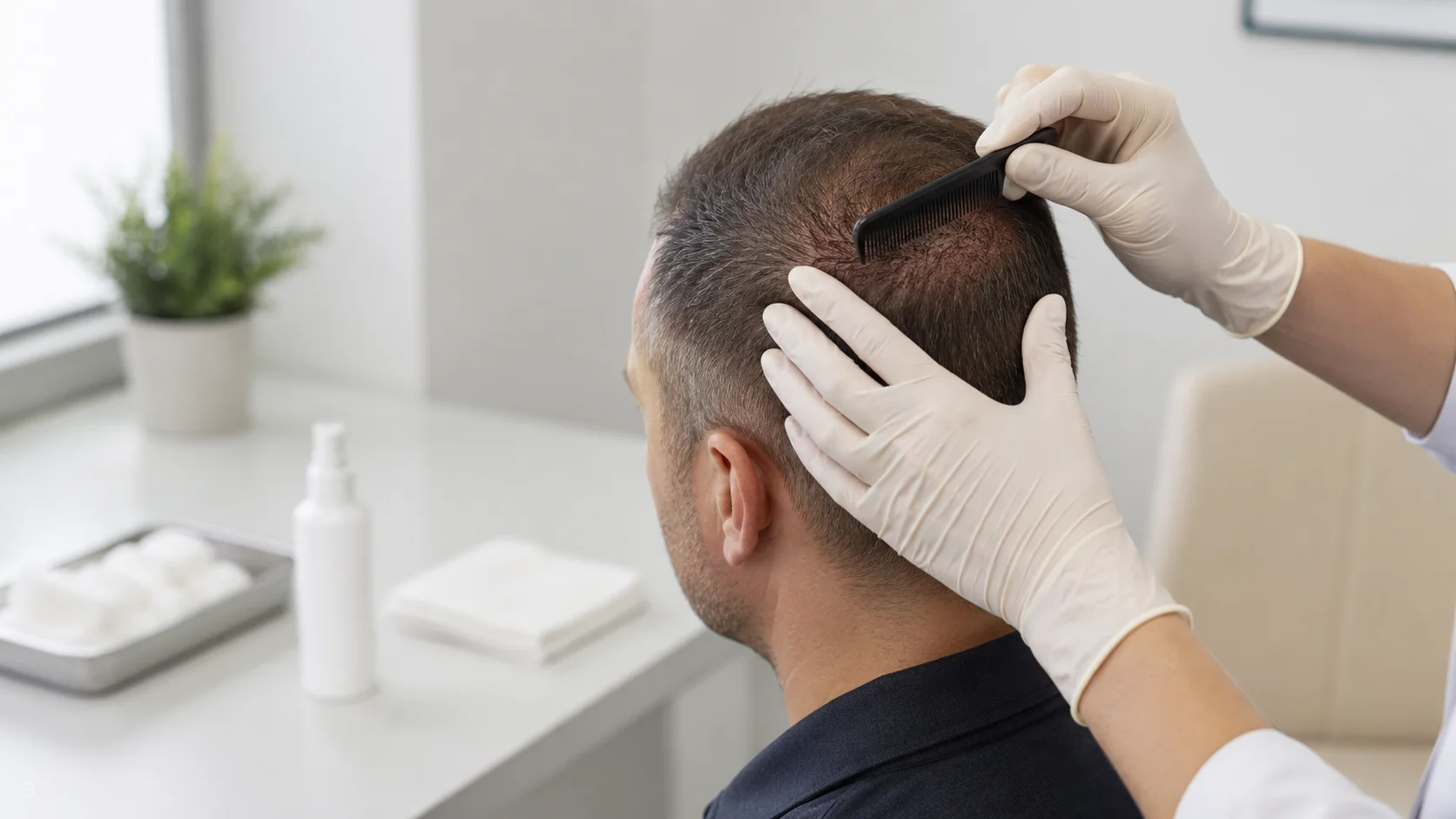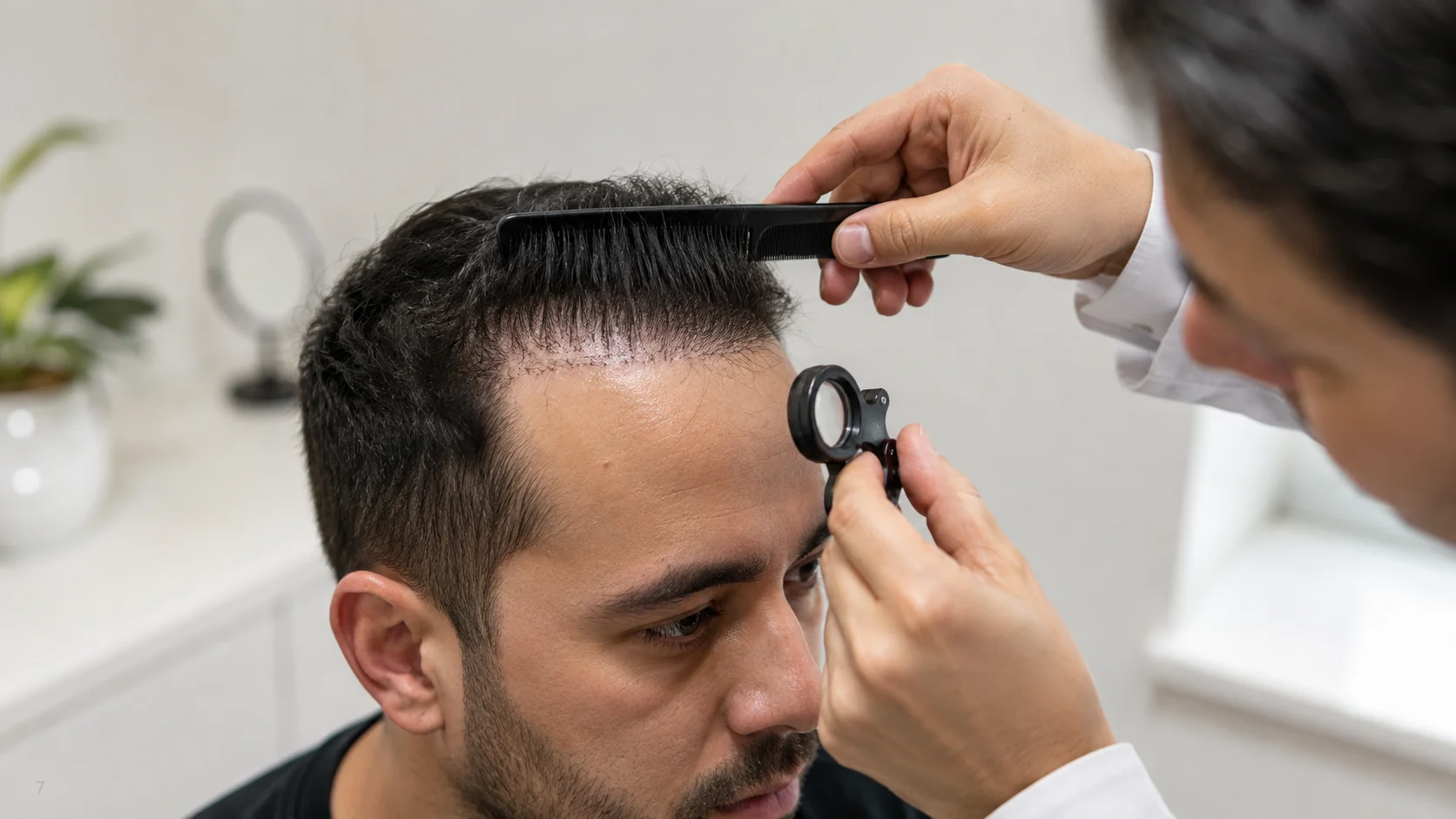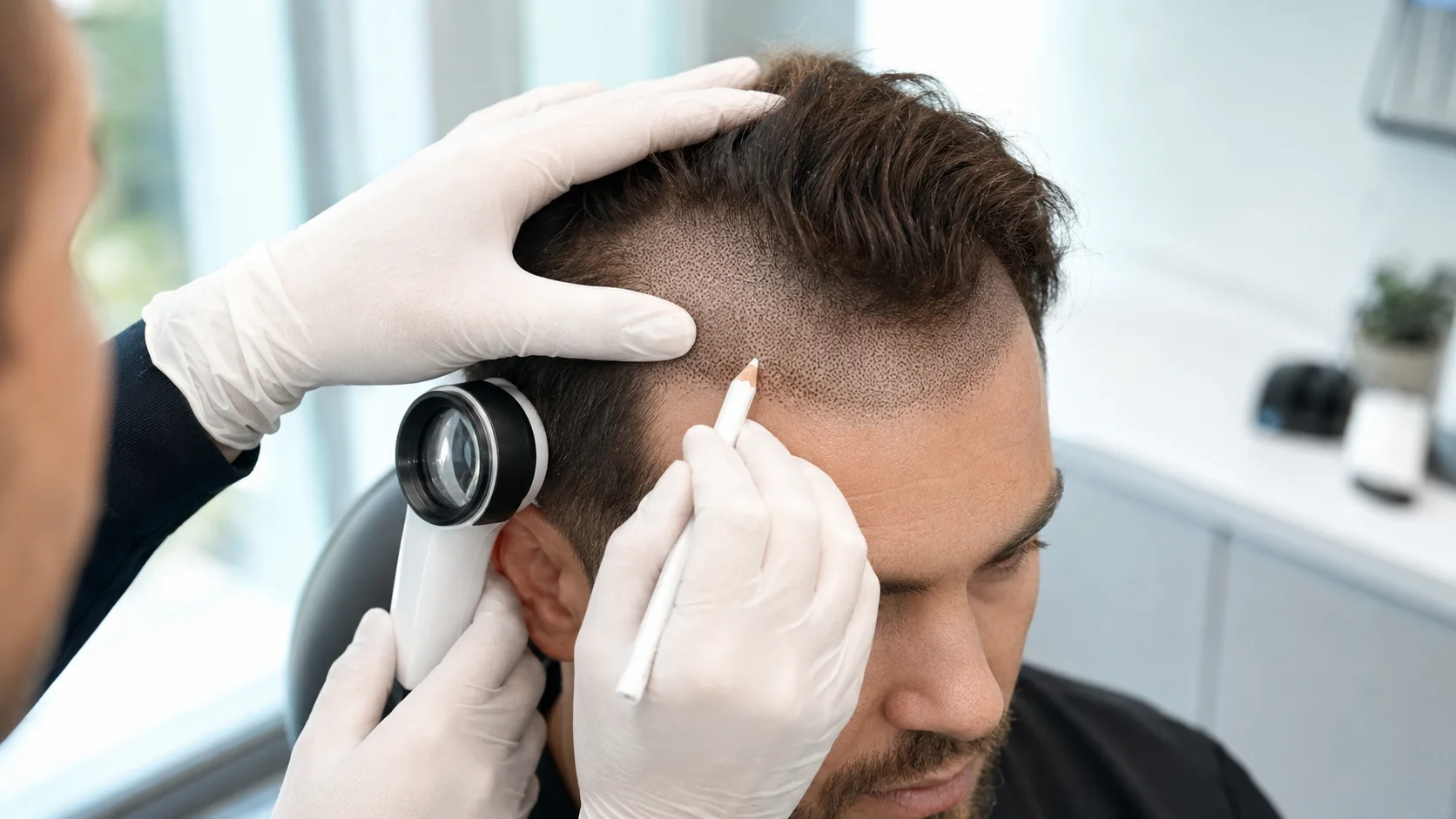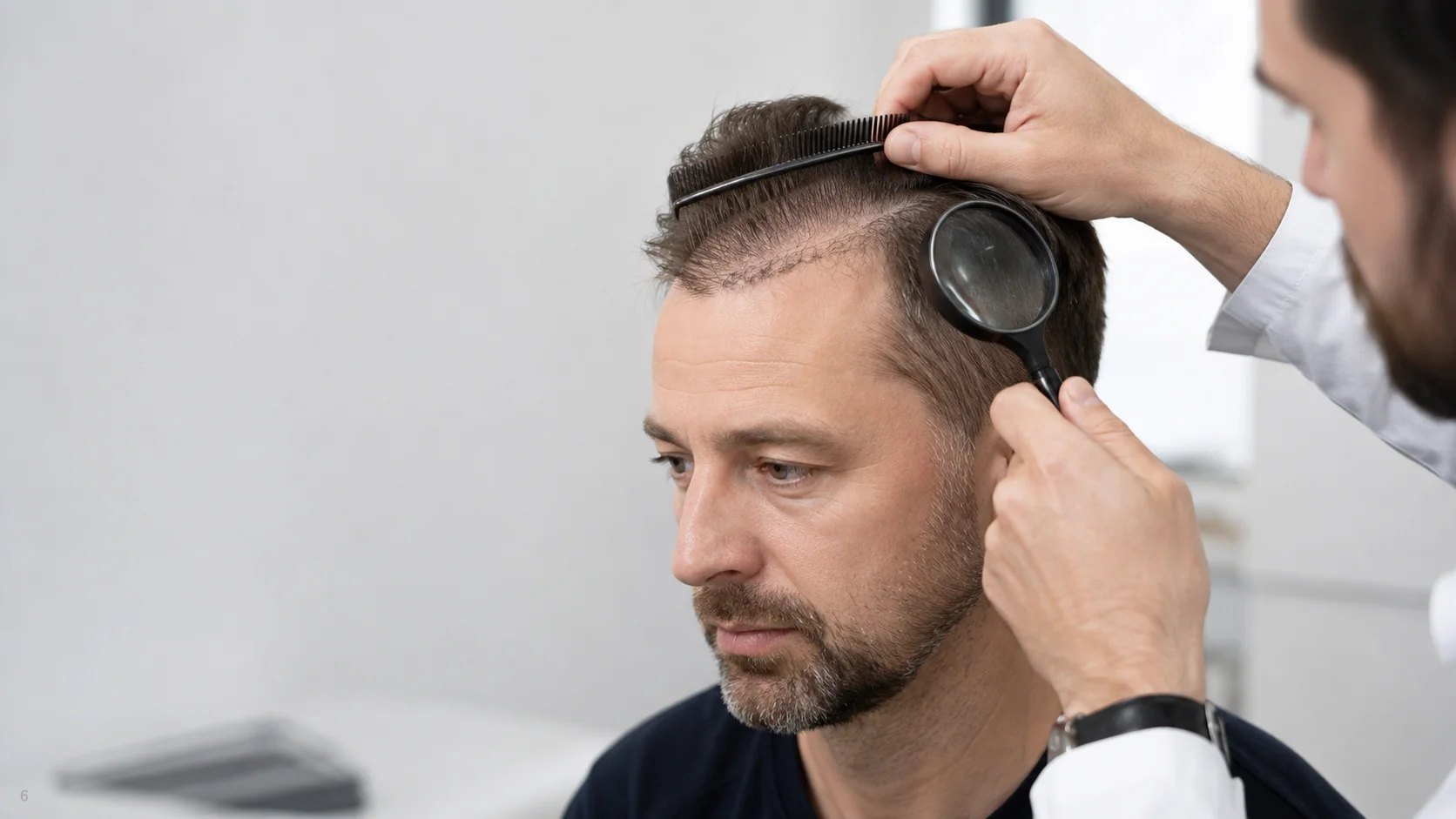
Many disappointing hair transplant results can be improved, but repair is usually more complex than a first procedure. The available options depend on what went wrong, how much stable donor hair remains, the condition of the recipient scalp, and whether the original result has fully matured.
Repair cannot always produce the result that should have been achieved initially. Previous surgery may have consumed donor follicles, created scarring, or established an unnatural design that requires several corrective steps.
When Is a Hair Transplant Considered Failed?
“Failed” can describe several different problems:
- Limited or patchy graft growth
- Insufficient visual density
- An unnatural hairline
- Incorrect graft angles or directions
- Visible multi-hair grafts at the front
- Pitting, cobblestoning, or recipient scarring
- Donor overharvesting
- A widened FUT scar
- Continued native loss around transplanted hair
- A result that does not match the agreed plan
Some concerns are temporary. Transplanted shafts commonly shed after surgery, early growth can be uneven, and hair may continue to mature for approximately a year or longer. Crown results can take particularly long to show their final appearance.
A repair decision should not be based on the first few postoperative months unless there is a clear medical complication.
Why Grafts May Grow Poorly
Low growth can result from problems at several stages of surgery.
Donor Selection Problems
Grafts taken from miniaturized or unstable donor regions may produce weak growth or thin in later years. Poor-caliber donor hair can also create less coverage even when the follicles survive.
Follicle Damage
Transection during harvesting, crushing during handling, dehydration, prolonged storage, or traumatic implantation can reduce survival. These factors are usually impossible to reconstruct precisely after surgery, but operative records may provide useful clues.
Recipient-Site Factors
Dense packing, scar tissue, poor blood supply, active inflammation, infection, or excessive tissue trauma can compromise growth. Smoking, uncontrolled diabetes, and other healing-related factors may contribute.
Incorrect Diagnosis
Hair transplantation is unsuitable during active inflammatory scarring alopecia and may be unreliable in unstable alopecia areata or diffuse donor miniaturization. A poor result may reflect the wrong diagnosis rather than implantation technique alone.
Poor Growth Versus Continuing Hair Loss
A transplant can grow successfully while the overall result becomes thinner because untreated native hair continues to miniaturize. This may create gaps behind the hairline, around implanted clusters, or between the front and crown.
Comparison with preoperative photographs can help distinguish surviving transplanted hair from lost native density. Medical treatment may be appropriate when androgenetic alopecia remains active.
Adding grafts without stabilizing ongoing loss can create another temporary improvement followed by further isolation of the transplanted hair.
How a Repair Assessment Is Performed
A repair consultation should evaluate the recipient and donor areas together. Important information includes:
- Preoperative and postoperative photographs
- Previous graft counts
- FUE or FUT harvesting records
- Location of extractions and scars
- Hairline position and shape
- Graft angles and directions
- Follicular-unit composition
- Residual donor density
- Donor miniaturization
- Scalp inflammation and scarring
- Current medical treatment
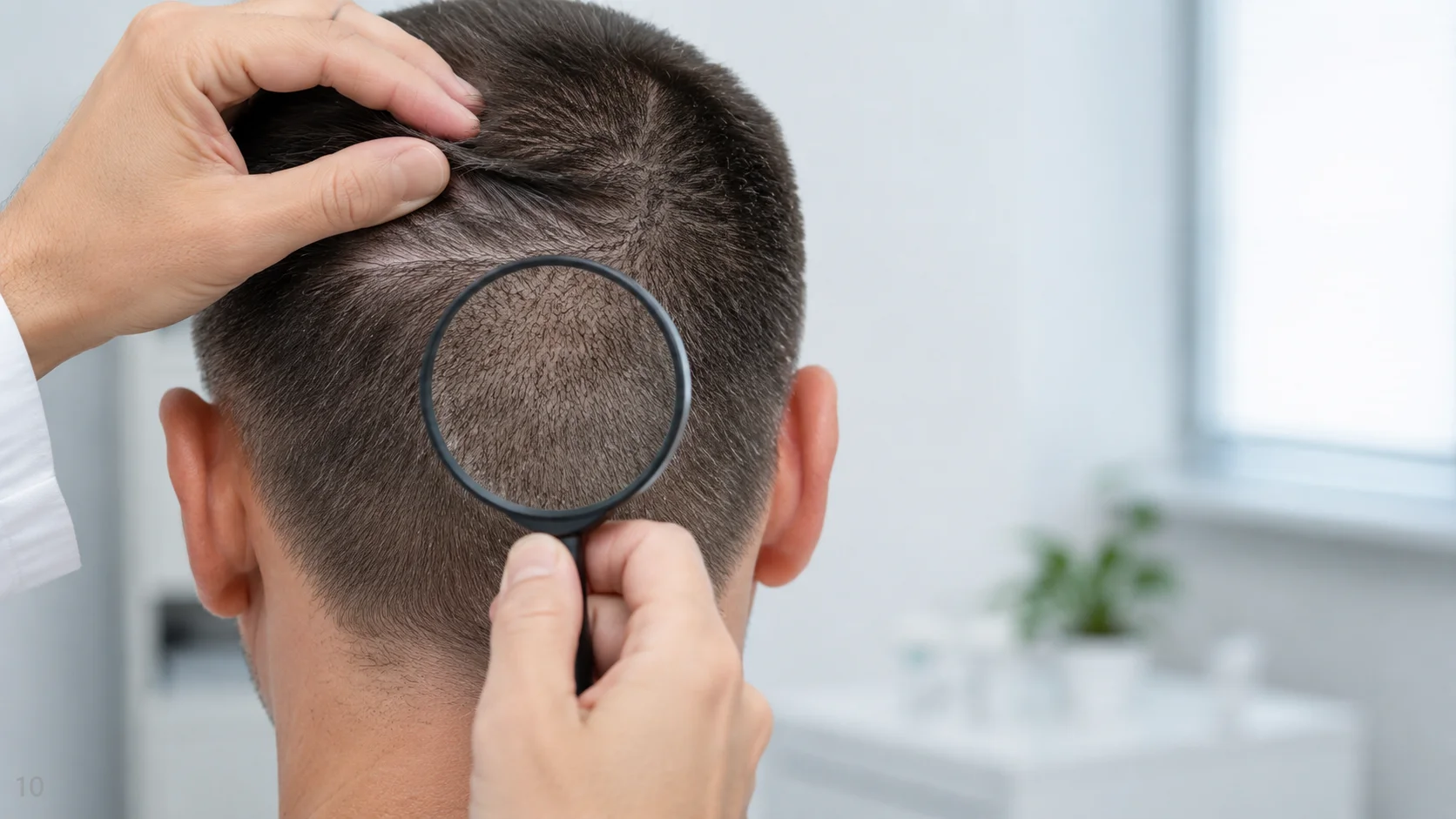
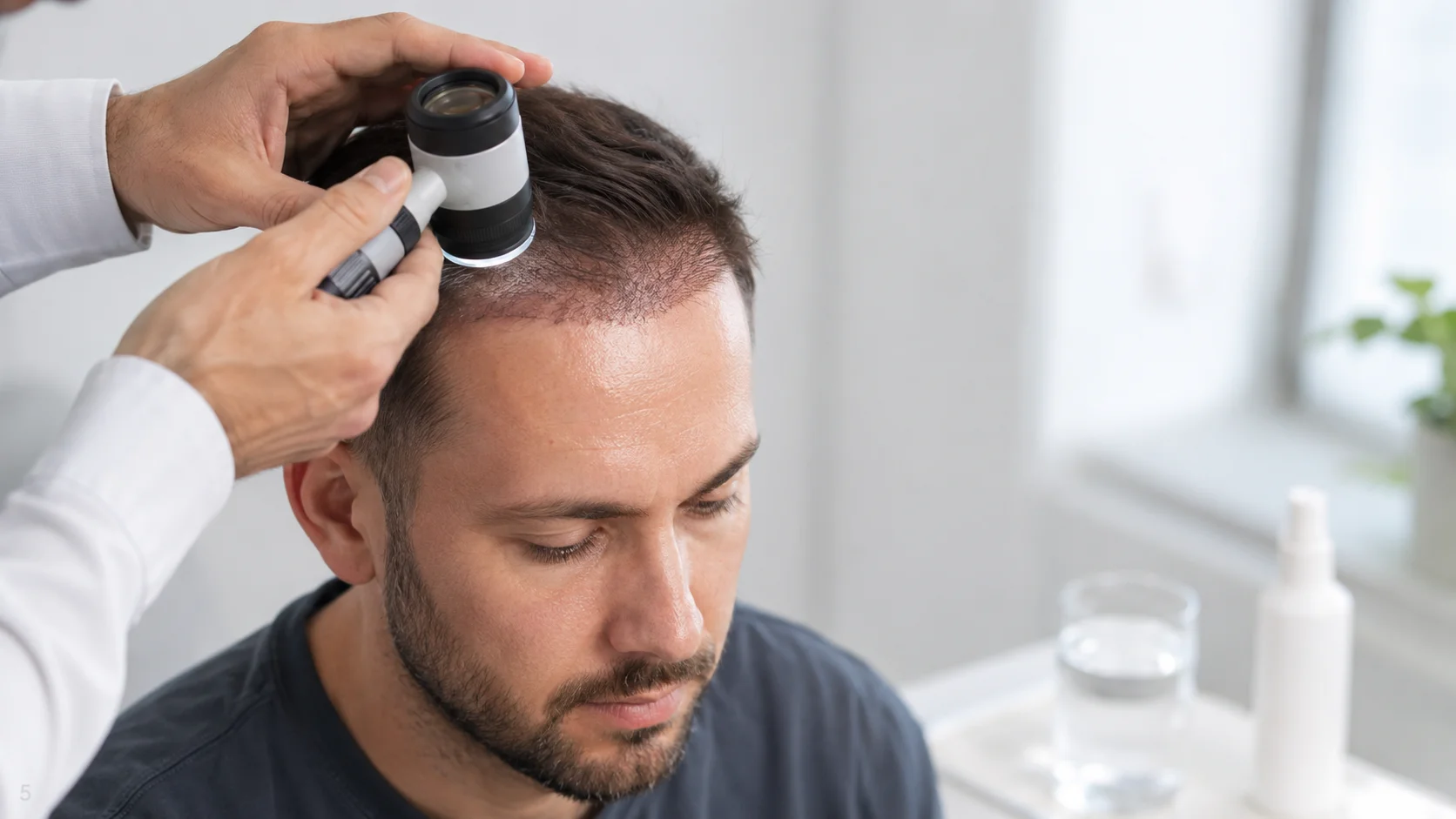
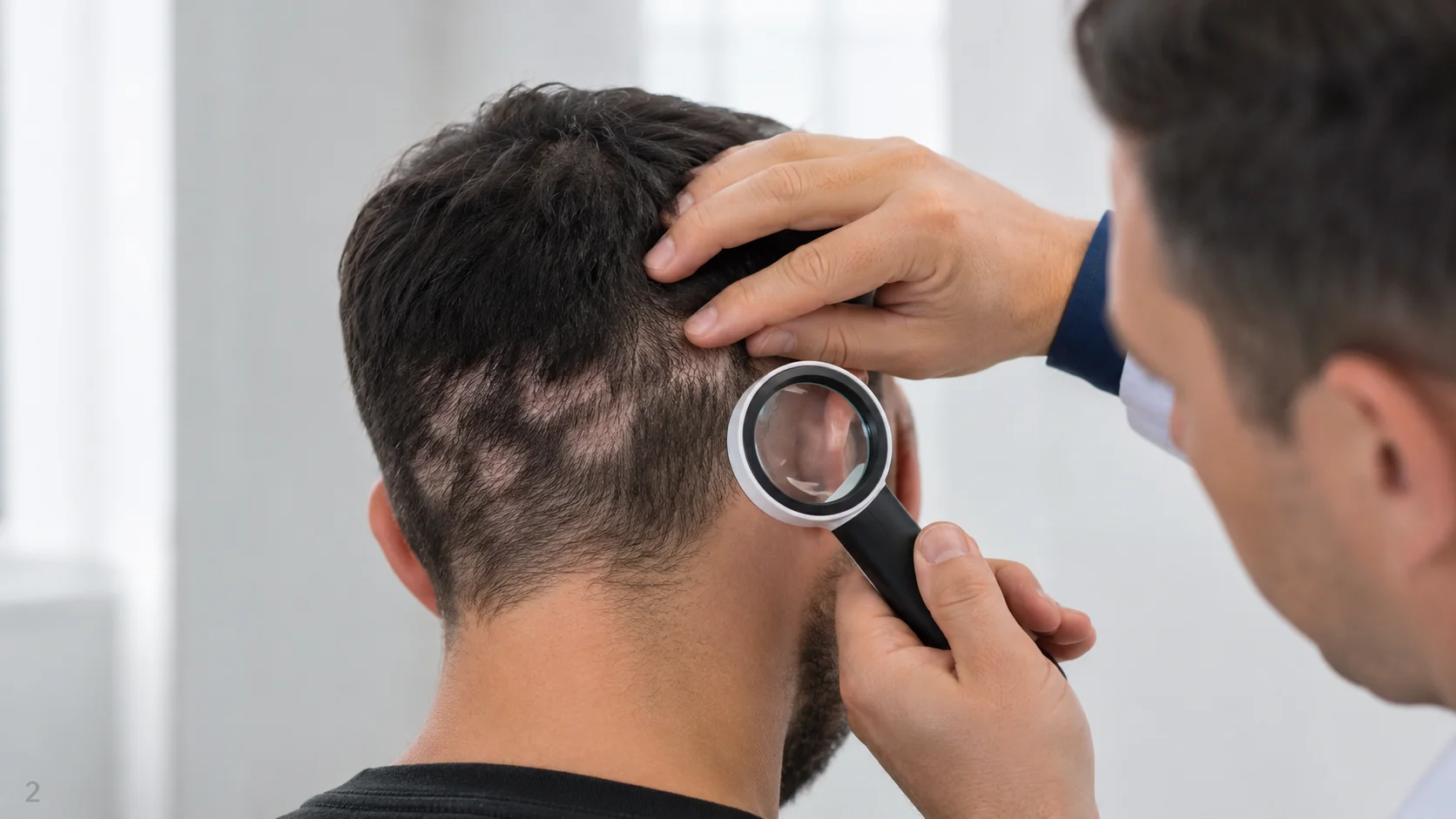
Trichoscopy may help identify miniaturization, scarring, surviving grafts, and inflammatory disease. A biopsy may be needed when the scalp diagnosis is uncertain.
Adding Grafts for Low Density
When the design is acceptable and enough donor hair remains, additional follicular units can be placed between existing hairs. This can improve coverage in a sparse hairline, frontal scalp, mid-scalp, or crown.
The surgeon must avoid damaging existing grafts and should account for recipient blood supply. Scarred or densely incised tissue may not safely accept the same placement density as untreated scalp.
More grafts cannot correct badly oriented hair. Increased density may make incorrect angles even more noticeable.
Repairing a Pluggy or Straight Hairline
A harsh frontal edge may be softened by placing fine single-hair grafts in front of larger units. Small irregularities and gradual density transitions can disguise a straight boundary.
When the existing hairline is already too low, adding grafts in front may worsen the problem. Selected grafts may need to be removed through FUE-style extraction or small excisions.
Removed grafts can sometimes be dissected and reused, but survival is not guaranteed. Removal can also leave tiny scars or pigment changes.
Correcting Wrong Angles and Directions
Misangled grafts may stand upright, point backward, or conflict with surrounding hair. Their direction cannot be changed simply by trimming or training the hair.
Possible approaches include:
- Removing selected offending grafts
- Camouflaging them with correctly angled grafts
- Using longer styling to control their appearance
- Combining removal and camouflage over staged procedures
Dense groups of incorrectly angled grafts are especially difficult to repair because extraction can damage neighboring follicles or recipient skin.
Managing Recipient Scarring
Pitting occurs when grafts sit below the surrounding skin. Cobblestoning creates raised or uneven tissue around implantation sites.
Mild surface irregularity may soften with time. Persistent problems can require graft removal, scar excision, resurfacing, or camouflage. Every additional procedure carries a risk of further texture or pigment change.
Repairing the Donor Area
A widened FUT scar may sometimes be revised surgically or camouflaged with carefully placed FUE grafts. Scalp micropigmentation can reduce contrast in suitable scars.
Diffuse FUE overharvesting is more difficult because the missing follicles cannot be regenerated. Hair-length adjustments, scalp micropigmentation, or carefully selected beard or body grafts may improve appearance without restoring original density.
When Repair Surgery May Not Be Appropriate
Another operation may not be advisable when:
- Donor supply is severely depleted
- Donor follicles show extensive miniaturization
- Scalp inflammation remains active
- The first result has not matured
- Expectations exceed the available resources
- Scar tissue has poor vascularity
- The proposed improvement is too small to justify additional risk
A hair system, scalp micropigmentation, concealers, or a shorter hairstyle may provide a more predictable cosmetic result.
Frequently Asked Questions
How long should someone wait before declaring a transplant unsuccessful?
A meaningful assessment generally requires about 12 months, and crown maturation may take longer. Clear design or medical complications can be evaluated sooner.
Can failed grafts be transplanted again?
New grafts may be placed if the recipient scalp and donor supply are suitable. The cause of the original failure should be investigated first.
Can an unnatural hairline be raised?
Selected grafts may be removed, but raising a low hairline is technically difficult and can require staged treatment.
Does repair always require more grafts?
No. Repair may involve graft removal, scar treatment, medical stabilization, scalp micropigmentation, or cosmetic camouflage.
Can repair produce a perfect result?
Improvement may be possible, but complete correction cannot be guaranteed. Previous scarring and donor depletion create permanent constraints.
Repair Begins With Identifying the Failure
The safest corrective plan addresses the specific cause rather than simply adding another large session. Waiting for maturity, confirming the diagnosis, measuring remaining donor capacity, and prioritizing the most visible problems can prevent a disappointing result from becoming more difficult to manage.
This content is for general informational purposes and does not replace individualized medical advice, diagnosis, or treatment.