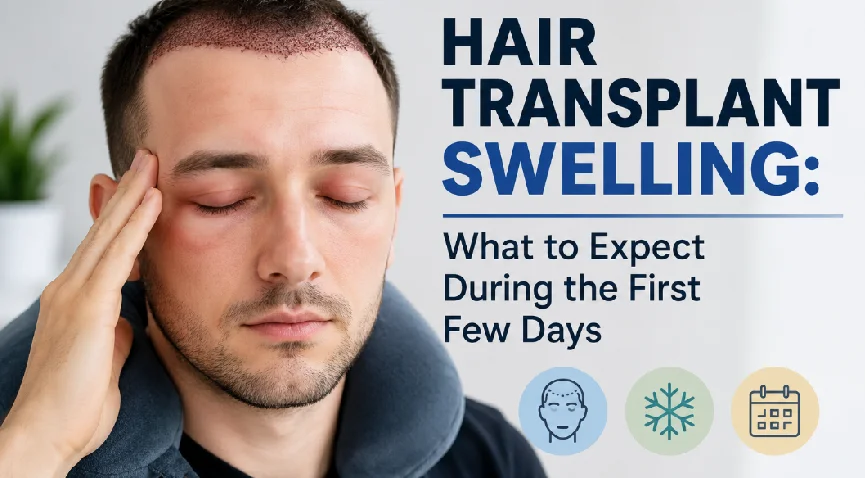
Swelling of the forehead, eyelids, or face is a common early effect of hair transplant surgery. It often becomes noticeable two or three days after the procedure, even when the scalp looked relatively normal immediately afterward. The swelling may then move downward from the forehead toward the eyes, nose, or cheeks before gradually resolving.
Although the appearance can be alarming, uncomplicated postoperative swelling is usually temporary. It does not automatically indicate infection, an allergic reaction, or damage to the transplanted grafts. The timing, associated symptoms, and rate of improvement help distinguish expected edema from a problem requiring medical attention.
Why Swelling Occurs After a Hair Transplant
Hair transplantation creates many small recipient sites in the scalp. This controlled tissue injury activates the body’s normal inflammatory and healing response, allowing fluid to collect temporarily within the surrounding tissues.
The surgical team may also inject a tumescent solution into the scalp during the procedure. Depending on the protocol, this solution can contain saline, local anesthetic, and other medications. It helps numb the area, control bleeding, create working space, and improve access during graft placement.
Some of the injected fluid remains in the tissues temporarily. Combined with normal postoperative inflammation, it can contribute to swelling during the first several days.
Why the Swelling Moves Into the Forehead and Face
Fluid does not always remain where it was initially injected. Gravity and the tissue planes beneath the skin can guide it downward from the scalp.
The forehead and eyelid tissues are relatively loose, allowing fluid to accumulate visibly. Swelling may therefore follow a recognizable progression:
- Puffiness develops near the frontal scalp or forehead.
- It moves toward the eyebrows.
- The upper eyelids may become swollen.
- In more pronounced cases, swelling reaches the lower eyelids, nose, or cheeks.
- The fluid is gradually reabsorbed as healing continues.
This movement can make the face look more swollen even though the scalp itself appears to be improving. It does not necessarily mean that the underlying reaction is becoming more severe.
When Does Hair Transplant Swelling Begin?
Postoperative swelling often starts within the first two or three days. It may peak around days two to four and then improve over the following several days.
Many cases resolve within approximately five to seven days. Mild bruising around the eyes can take longer to disappear, sometimes remaining visible after the swelling has settled.
The exact timeline varies according to:
- The amount and location of injected fluid
- The number and distribution of recipient sites
- Individual inflammatory response
- Skin and tissue characteristics
- Postoperative sleeping position
- Surgical technique
- Medications used during and after the procedure
A large transplant session does not guarantee severe swelling, but more extensive tissue treatment and greater fluid use may contribute in some cases.
How Severe Can the Swelling Become?
Swelling may be limited to mild forehead puffiness, or it may become pronounced enough to narrow the eyes temporarily. The face can appear asymmetrical as fluid moves through the tissues.
The visual change is often more dramatic than the physical discomfort. Expected postoperative edema is generally soft and improves progressively. It should not usually cause severe pain, breathing difficulty, high fever, or rapidly worsening illness.
Anyone unable to open an eye, experiencing significant pressure, or uncertain whether the reaction is normal should contact the treating team. Even when the cause is uncomplicated swelling, the clinician may want to review photographs or perform an examination.
Does Swelling Harm the Transplanted Grafts?
Routine forehead or facial swelling does not generally mean that grafts have been dislodged. The fluid usually travels through tissue below or beyond the recipient sites rather than pushing the follicles out.
Graft displacement is more commonly associated with direct rubbing, scratching, impact, or inappropriate handling during the early healing period. Swelling alone is not evidence that the transplant has failed.
However, patients should avoid pressing on the recipient area in an attempt to move the fluid. Massage or manual drainage should be performed only if the surgical team specifically recommends and demonstrates it.
How Postoperative Swelling May Be Reduced
Aftercare instructions vary, so the treating team’s directions should take priority. Common measures may include the following.
Keep the Head Elevated
Sleeping with the head and upper body raised may help limit fluid pooling around the forehead and eyelids. A reclined or supported position can also reduce accidental contact between the grafts and bedding.
The precise angle and duration should follow the surgical instructions. Elevation should be comfortable and stable rather than forcing the neck into an awkward position.
Avoid Sleeping Face Down
A face-down position may increase facial pressure and can place the recipient area at risk of rubbing. Side sleeping may also allow swelling to appear more pronounced on one side.
Patients are often asked to sleep on their back during early recovery, but the recommended period depends on the procedure.
Use Cold Compresses Only as Directed
A cool compress may be permitted on the forehead or around the eyes, away from the grafts. Ice should not be applied directly to the skin or transplanted area.
Pressure and moisture can disturb healing grafts. The location, duration, and frequency of compress use should therefore be confirmed with the treating team.
Follow the Medication Plan
Some surgical protocols include corticosteroids or other medications intended to reduce postoperative edema. These medicines have potential adverse effects and are not appropriate for everyone.
Do not start, increase, or extend a steroid, antihistamine, anti-inflammatory medicine, or diuretic without professional instructions. Swelling after a transplant is not a reason to take someone else’s medication.
Stay Appropriately Hydrated
Normal hydration supports general recovery. Excessive water intake does not flush swelling away faster, and deliberately restricting fluids is not an appropriate strategy unless a clinician has given specific medical instructions.
Avoid Strenuous Activity
Intense exercise, bending, heavy lifting, and heat exposure may increase throbbing, sweating, or swelling during early recovery. Activity should be resumed according to the postoperative schedule.
What Not to Do
Swelling can make people eager to intervene, but aggressive home treatment may create additional problems.
Avoid:
- Pressing or massaging the grafts
- Puncturing or attempting to drain the swelling
- Applying ice directly to the recipient area
- Using unapproved creams or essential oils
- Taking diuretics without medical supervision
- Doubling prescribed medication
- Wearing a tight headband unless instructed
- Ignoring worsening symptoms because swelling is considered common
A tight or incorrectly positioned band can place pressure on healing tissue. Any postoperative headband should be used only according to the surgical team’s protocol.
Normal Swelling Versus a Possible Complication
Expected edema usually appears gradually, follows the downward movement of fluid, and improves within several days. It may feel tight or uncomfortable, but severe systemic symptoms are not typical.
Contact the treating team promptly if swelling is accompanied by:
- Increasing or severe pain
- Spreading redness or warmth
- Pus or foul-smelling drainage
- Fever or chills
- Significant tenderness in the donor or recipient area
- Skin that becomes dark, pale, blistered, or unusually firm
- Swelling that worsens after initially improving
- Persistent swelling beyond the expected recovery period
- New vision changes
- Severe headache or neurological symptoms
These features may indicate infection, bleeding beneath the skin, an unusual inflammatory reaction, or another complication requiring assessment.
When Facial Swelling Could Be an Allergic Reaction
An allergic reaction may cause facial swelling, but its pattern can differ from routine postoperative edema. Allergy-related swelling may develop rapidly and occur with hives, widespread itching, lip or tongue swelling, wheezing, dizziness, or difficulty breathing.
Possible triggers include medications, antiseptics, dressings, or other materials used around the procedure.
Difficulty breathing, throat tightness, tongue swelling, faintness, or rapidly progressing facial swelling requires emergency medical care. It should not be watched at home as ordinary transplant swelling.
Does FUE Cause Less Swelling Than FUT?
Both follicular unit extraction and follicular unit transplantation can be followed by forehead or facial edema. The swelling is influenced more directly by recipient-site treatment, fluid use, inflammatory response, and postoperative factors than by the donor-harvesting method alone.
FUE and FUT create different donor wounds, but both may involve similar preparation of the recipient area. Choosing a technique solely to avoid facial swelling would therefore oversimplify the decision.
Frequently Asked Questions
Why Did My Face Swell Three Days After the Transplant?
Delayed swelling is common because injected fluid and inflammatory edema take time to move from the scalp into the forehead and facial tissues. Day two or three is a typical time for it to become noticeable.
Why Are My Eyelids Swollen?
Fluid can travel downward through the loose tissues of the forehead and collect around the eyes. Eyelid swelling can look dramatic but often improves as the fluid is reabsorbed.
How Long Does Hair Transplant Swelling Last?
Many cases improve within five to seven days. Bruising or discoloration may take longer. Persistent, worsening, painful, or unusually late swelling should be assessed.
Can I Massage the Swelling Away?
Do not massage the recipient area. Even forehead massage should be performed only when the surgical team has approved the technique and location.
Will Swelling Affect My Final Hair Growth?
Uncomplicated postoperative edema is not generally expected to affect final growth. Complications such as infection or tissue injury are different and require prompt treatment.
Why Is One Side of My Face More Swollen?
Sleeping position and the path of fluid movement can produce temporary asymmetry. Marked one-sided swelling with pain, redness, warmth, or worsening symptoms should be reported.
What to Expect
Forehead and facial swelling after a hair transplant usually results from a combination of injected surgical fluid, controlled tissue injury, inflammation, gravity, and temporary changes in fluid drainage. It commonly peaks several days after surgery and resolves as the body absorbs the excess fluid.
Following the prescribed sleeping, activity, medication, and scalp-care instructions can make recovery more predictable. When swelling is severe, painful, persistent, or accompanied by symptoms such as fever, spreading redness, hives, or breathing difficulty, it should be assessed rather than assumed to be routine.
This content is for general informational purposes and does not replace individualized medical advice, diagnosis, or treatment.