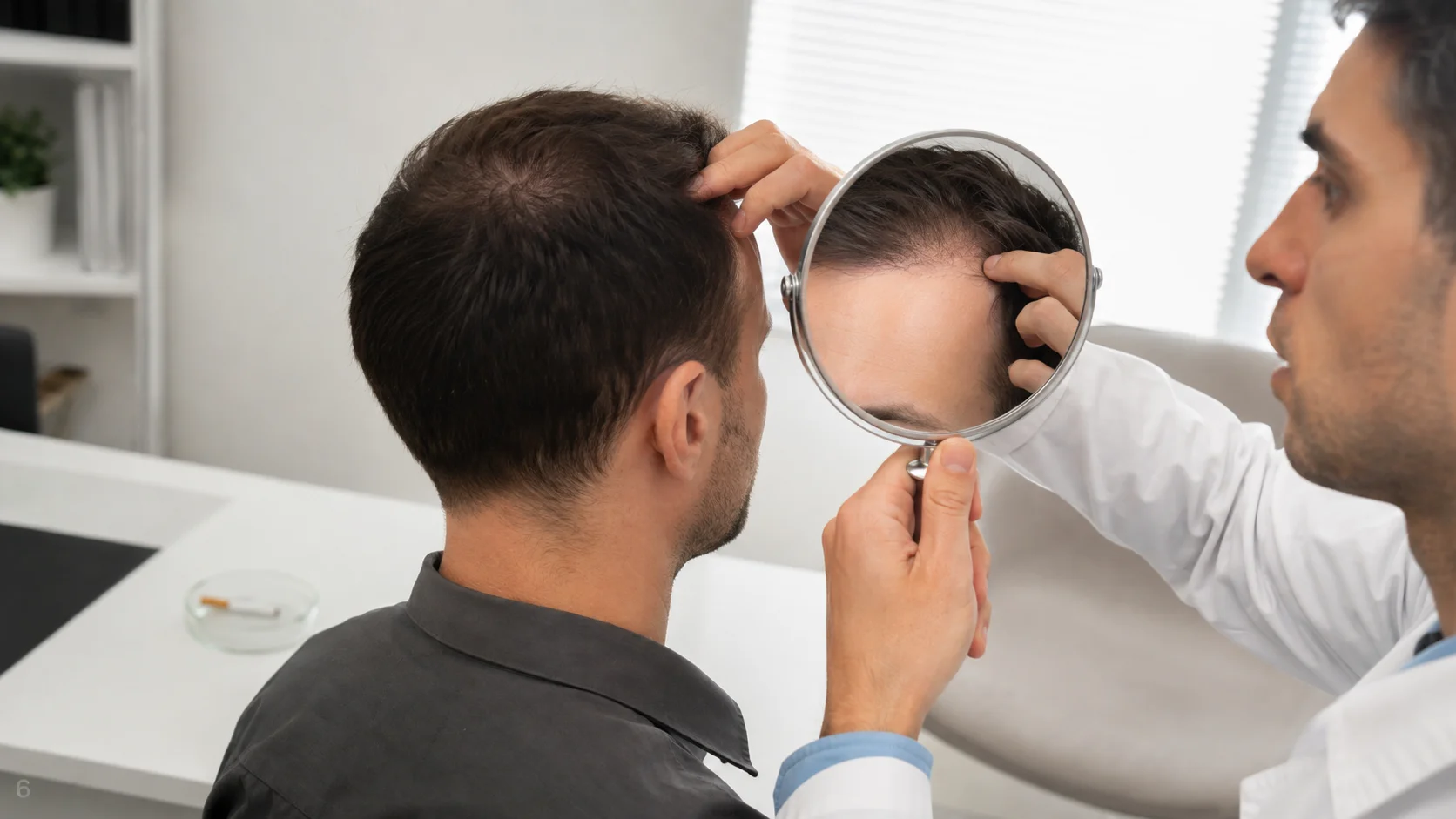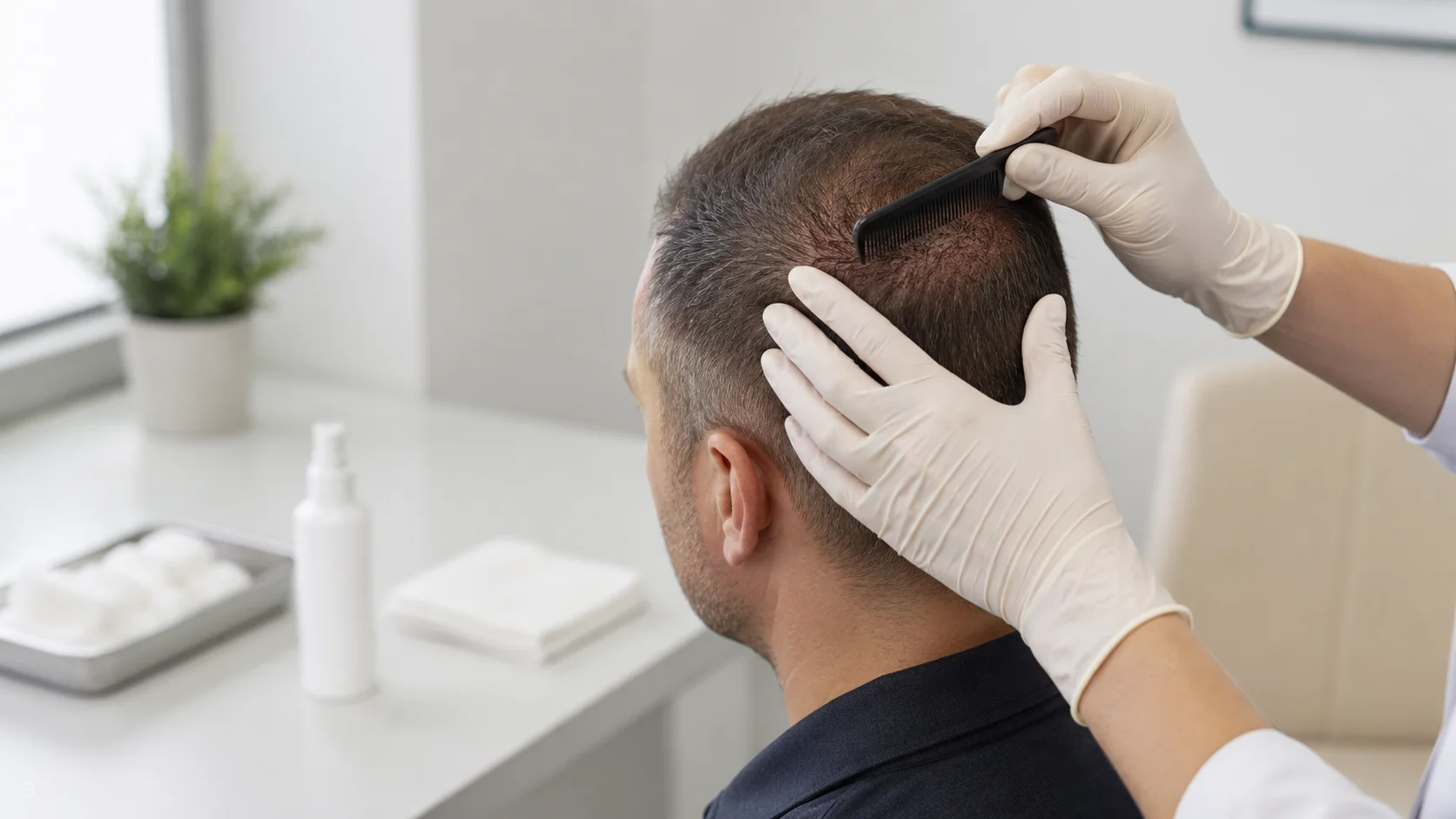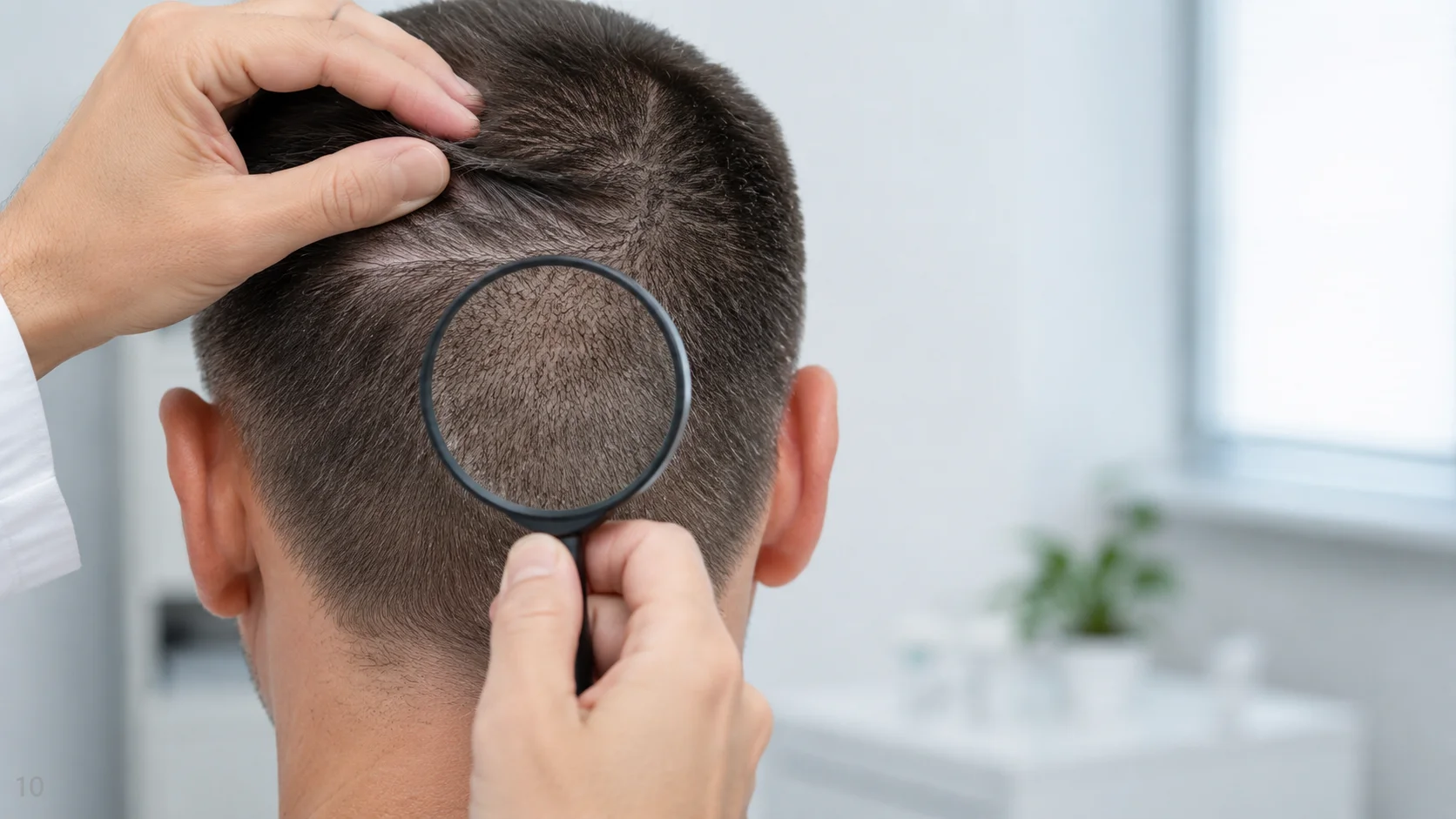
During follicular unit excision, individual follicular units are removed through small circular openings in the donor area. The wounds usually heal relatively quickly, but every extraction permanently reduces the number of follicles at its original location and leaves a tiny scar.
A well-planned donor area can retain a natural appearance because extractions are distributed among the remaining hair. The long-term result depends on starting density, punch size, extraction pattern, healing, hairstyle, and future thinning.
The First Few Days
Immediately after FUE, the donor area commonly shows:
- Small red extraction points
- Pinpoint bleeding or dried blood
- Short crusts
- Tenderness or tightness
- Mild swelling
- Itching as healing begins
- Temporary numbness or altered sensation
These findings should gradually improve. Increasing pain, spreading redness, pus, fever, substantial bleeding, or darkening skin requires prompt communication with the treating medical team.
Postoperative instructions should be followed for washing, prescribed medication, sleeping, exercise, and sun exposure.
Crusting and Surface Healing
Small crusts form over extraction sites and usually loosen during the early healing period. Picking or scratching can cause bleeding, irritation, pigment changes, or additional scarring.
The outer skin may close within days, but deeper tissue remodeling continues for considerably longer. An area that looks healed on the surface has not necessarily reached its final color or texture.
Redness can persist longer in some skin types or after a large session. Sun exposure may make lingering color differences more noticeable.
Does Donor Hair Grow Back?
The follicles removed by FUE do not grow back in their original positions. Hair later seen in the donor area comes from follicles that were not extracted.
The donor region can still look full when enough hair remains to cover the spaces. This is why extraction density and distribution matter.
Claims that FUE causes complete donor regrowth should be treated cautiously. Temporary hair shedding may recover, but extracted units are permanently relocated.
Temporary Donor Shock Loss
Native hairs around extraction sites can enter a shedding phase after surgery. This donor shock loss may make the area look thinner or more uneven several weeks after the procedure.
Healthy affected follicles often regrow over subsequent months. Recovery may be less predictable when surrounding hairs were already miniaturized or when surgery caused excessive trauma.
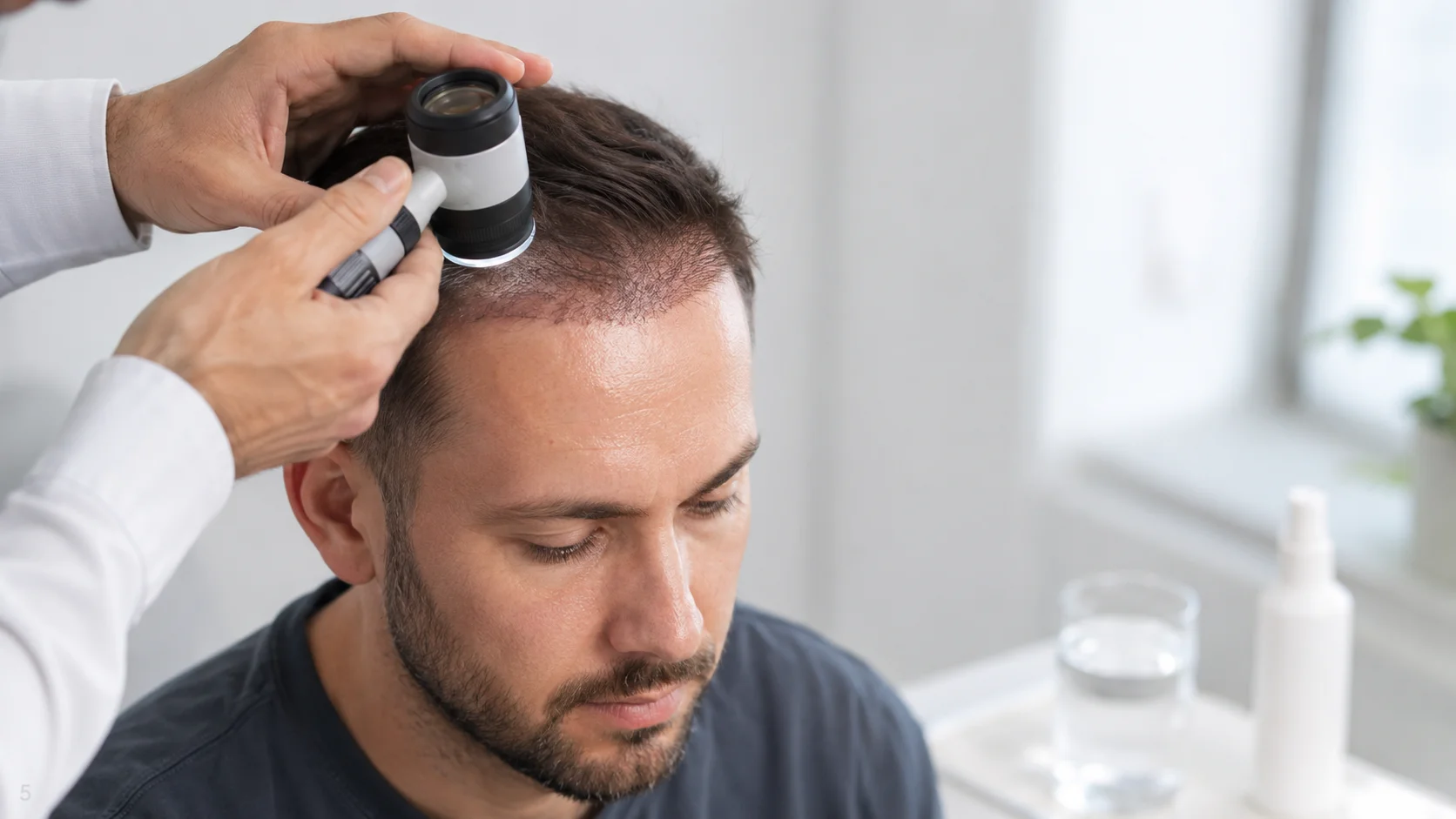
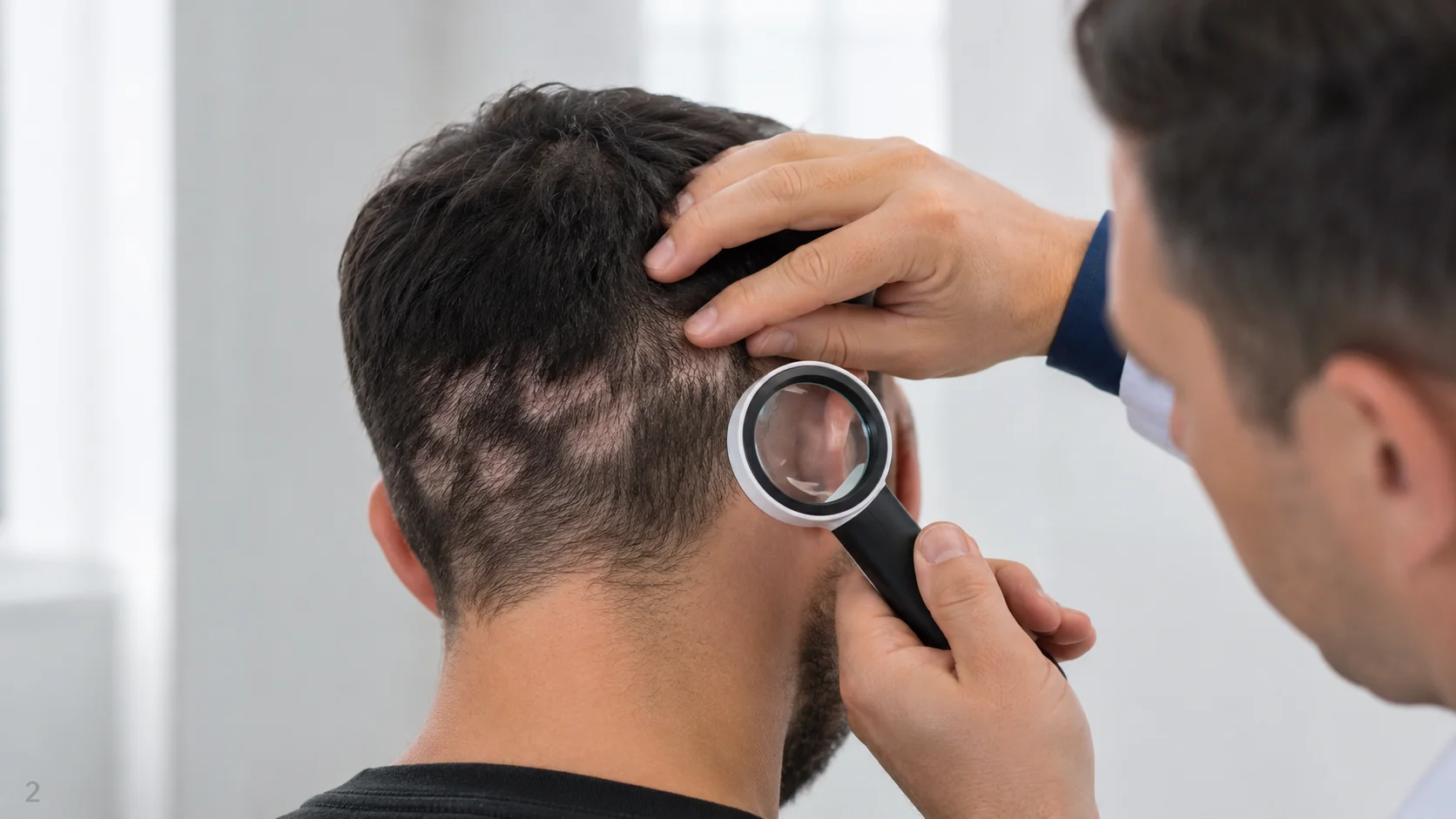
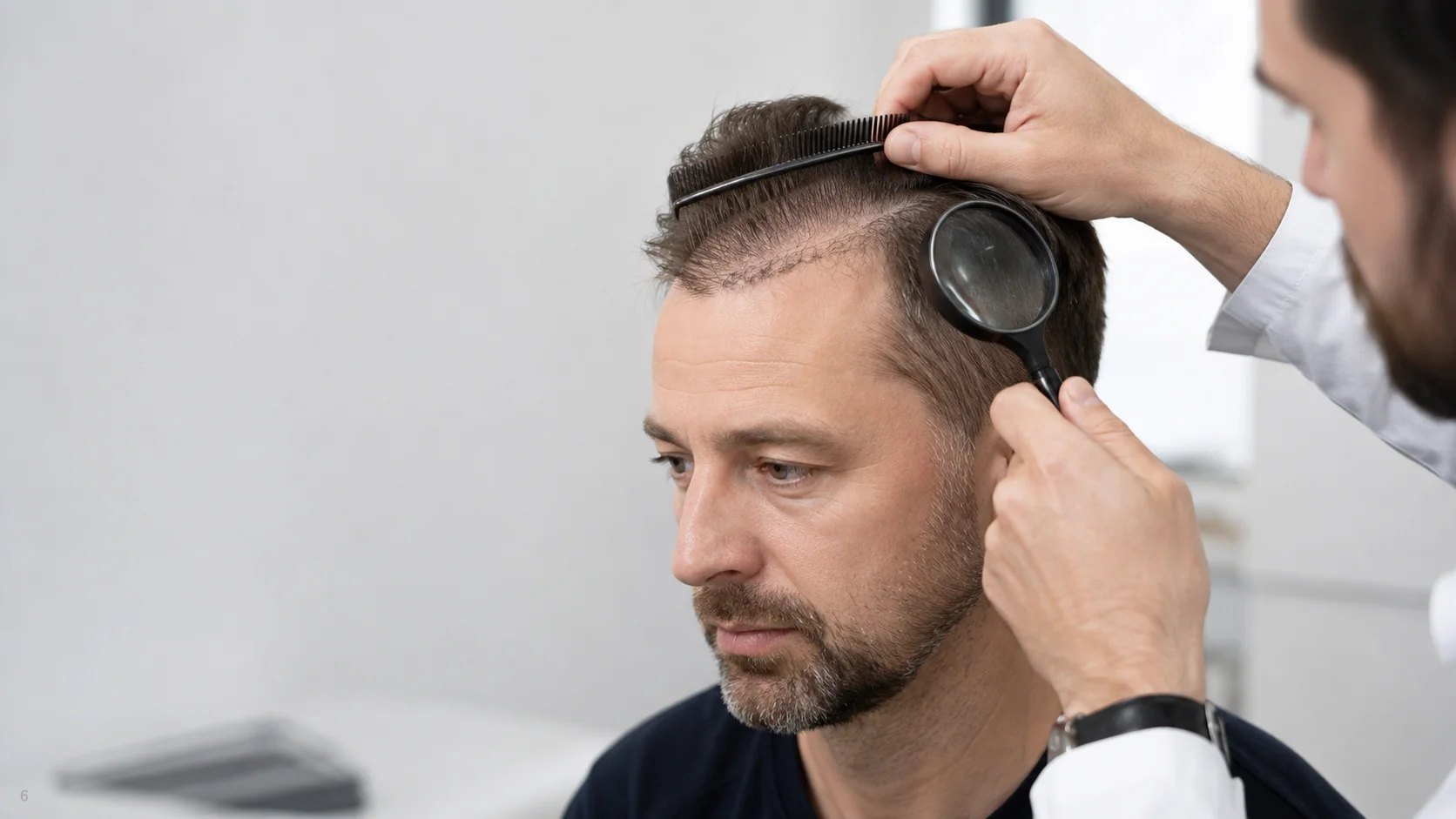
Early patchiness does not automatically prove overharvesting. Trichoscopy and comparison with preoperative photographs can help distinguish short regrowing hairs from permanent extraction gaps.
Changes in Donor Density
FUE deliberately lowers donor density. The aim is to keep that reduction below the level at which it becomes cosmetically obvious.
Visibility depends on:
- Starting follicular-unit density
- Percentage removed from each zone
- Hair-shaft thickness
- Number of hairs per remaining unit
- Curl and styling
- Hair-to-scalp color contrast
- Punch size
- Scar pigmentation
- Hair length
- Future androgenetic thinning
Uniform distribution generally produces a more natural result than concentrated extraction. Harvesting repeatedly from the same patch can create a moth-eaten appearance.
FUE Scarring
FUE is sometimes described as scarless, but this is inaccurate. Each punch creates a small round scar.
With appropriate technique, individual scars may be difficult to see beneath surrounding hair. They can become more visible when the head is closely shaved, when many sites overlap, or when pale scars contrast with darker skin.
Scar appearance is influenced by punch diameter, depth, spacing, skin healing, postoperative inflammation, and personal scarring tendency.
Hypertrophic or keloid scarring is uncommon but possible, especially in predisposed individuals.
Numbness, Tingling, and Itching
Temporary sensory changes can occur because small superficial nerves are affected by thousands of punch sites. Numbness, tingling, or sensitivity usually improves as healing progresses.
Persistent pain, worsening burning, weakness, or prolonged sensory disturbance should be evaluated. Severe symptoms are not a routine consequence that should simply be ignored.
Itching is common during healing, but vigorous scratching can damage the surface. Only recommended scalp products should be used during the early postoperative period.
Folliculitis and Cysts
Small inflamed bumps can develop when hair fragments, damaged follicles, or keratin become trapped. Mild folliculitis may resolve with appropriate care, but persistent, painful, or draining lesions need assessment.
Self-draining bumps or repeatedly applying harsh antiseptics can prolong inflammation and increase pigment or scar changes.
How Long Until the Donor Area Looks Normal?
Surface wounds often improve substantially within the first couple of weeks. Hair length then becomes an important factor in concealment.
Shock loss, redness, pigment changes, or scar maturation may require several months. The final appearance should not be judged from the immediate shaved postoperative state.
A donor area that remains significantly patchy after an adequate recovery period should be measured rather than assessed only through casual photographs.
Long-Term Donor Appearance
A conservatively harvested donor area may maintain good coverage at ordinary hair lengths. Very short cuts can reveal dot scars even when extraction was technically appropriate.
Appearance can change years later if:
- Androgenetic loss narrows the stable donor band
- Retrograde thinning affects the lower border
- Additional FUE sessions reduce residual density
- Hair caliber decreases with age
- Previously hidden scars become exposed
- Grafts were harvested outside the safe zone
Lifetime planning must account for these possibilities before the first extraction.
What If the Donor Area Looks Overharvested?
A proper evaluation should distinguish permanent depletion from shock loss, existing low density, donor miniaturization, and temporary contrast caused by short hair.
Management may include:
- Allowing more recovery time
- Growing the hair longer
- Treating miniaturized surviving hair when appropriate
- Scalp micropigmentation
- Carefully selected graft placement into depleted regions
- Beard or body hair in limited repair cases
Additional FUE is not a logical treatment for true overharvesting unless it forms part of a carefully calculated redistribution strategy. Removing more hair can worsen depletion.
Frequently Asked Questions
When can the donor area be washed?
Washing instructions vary by procedure and dressing. The treating team’s specific protocol should be followed rather than a generic online schedule.
Do FUE scars disappear?
They may fade and become difficult to see, but they do not disappear completely.
Is patchiness normal after FUE?
Temporary unevenness can result from shaving, crusting, redness, and shock loss. Persistent moth-eaten density may indicate poor extraction distribution or overharvesting.
Can the donor area be shaved after FUE?
It can eventually be shaved after healing, but short hair may expose pale extraction scars or density reduction.
Does the donor area return to its original density?
No. Extracted follicles are permanently removed. The goal is for remaining hair to preserve an acceptable visual density.
When should donor-area symptoms be evaluated urgently?
Increasing pain, spreading redness, pus, fever, tissue darkening, substantial bleeding, or worsening swelling requires prompt medical contact.
Healing and Depletion Are Different Issues
The donor skin generally heals after FUE, but healing does not replace the extracted follicles. A successful donor result combines uncomplicated wound recovery with conservative, evenly distributed removal that remains visually acceptable at the person’s preferred hair length.
This content is for general informational purposes and does not replace individualized medical advice, diagnosis, or treatment.