There is no universal limit on the number of hair transplant procedures a person can have. Some people undergo one operation, while others have several staged procedures or later repair work.
The true limit is not the number of surgeries. It is the amount of stable donor hair that can be removed without creating unacceptable depletion, combined with the ability of the recipient scalp to tolerate further surgery.
Why Procedure Count Can Be Misleading
One person may have three conservative sessions totaling fewer grafts than another person’s single large procedure. Counting operations therefore provides little information about remaining capacity.
Each procedure can affect:
- Residual donor density
- FUE scar distribution
- FUT scar width and scalp laxity
- Recipient scarring
- Blood supply
- Available graft types
- Future design options
A lifetime plan should track cumulative graft use rather than treating each operation as a fresh donor supply.
What Determines Lifetime Donor Capacity?
Donor capacity varies according to:
- Safe donor area size
- Follicular-unit density
- Total hair density
- Hair-shaft diameter
- Hairs per follicular unit
- Degree of miniaturization
- Hair texture and curl
- Scalp and hair color contrast
- Previous extraction pattern
- Age and future donor thinning
- Scalp laxity for FUT
Published ranges cannot establish an individual limit. Direct measurement at several donor locations is required.
Why Removed Follicles Matter
FUE removes follicular units individually. Those follicles do not regenerate in the donor area. If extraction is distributed conservatively, surrounding hair may conceal the spaces.
FUT removes a strip of donor scalp and closes the resulting wound as a linear scar. It can yield many grafts while preserving density above and below the scar, but repeated strips are limited by scalp laxity and scar behavior.
Neither method creates new hair. They access the same finite biological resource in different ways.
Can FUE and FUT Be Combined?
A combined lifetime strategy may increase access to donor hair in suitable patients. For example, FUT can preserve surrounding donor density for later FUE, while FUE can provide additional grafts without creating another linear incision.
This does not make the supply unlimited. The existing scar, residual density, scalp laxity, hairstyle, and willingness to accept different scar patterns must be considered.
Repeated FUE after heavy extraction can cause visible patchiness. Repeated FUT can produce a widened scar if closure tension becomes excessive.
Why Future Hair Loss Changes the Calculation
Androgenetic alopecia is progressive. A patient who appears to need only frontal restoration may later lose the mid-scalp or crown.
An aggressive first procedure can consume donor hair before the final pattern becomes clear. This is especially concerning when a young patient receives a low hairline or dense crown.
Long-term planning may reserve grafts for:
- Loss behind the transplanted hairline
- Expansion of the crown
- Density refinement
- Repair of scars or poor growth
- Changes in donor stability
Medical treatment may help preserve native hair, but future surgical planning should not assume perfect lifelong response.
How Previous Surgery Is Assessed
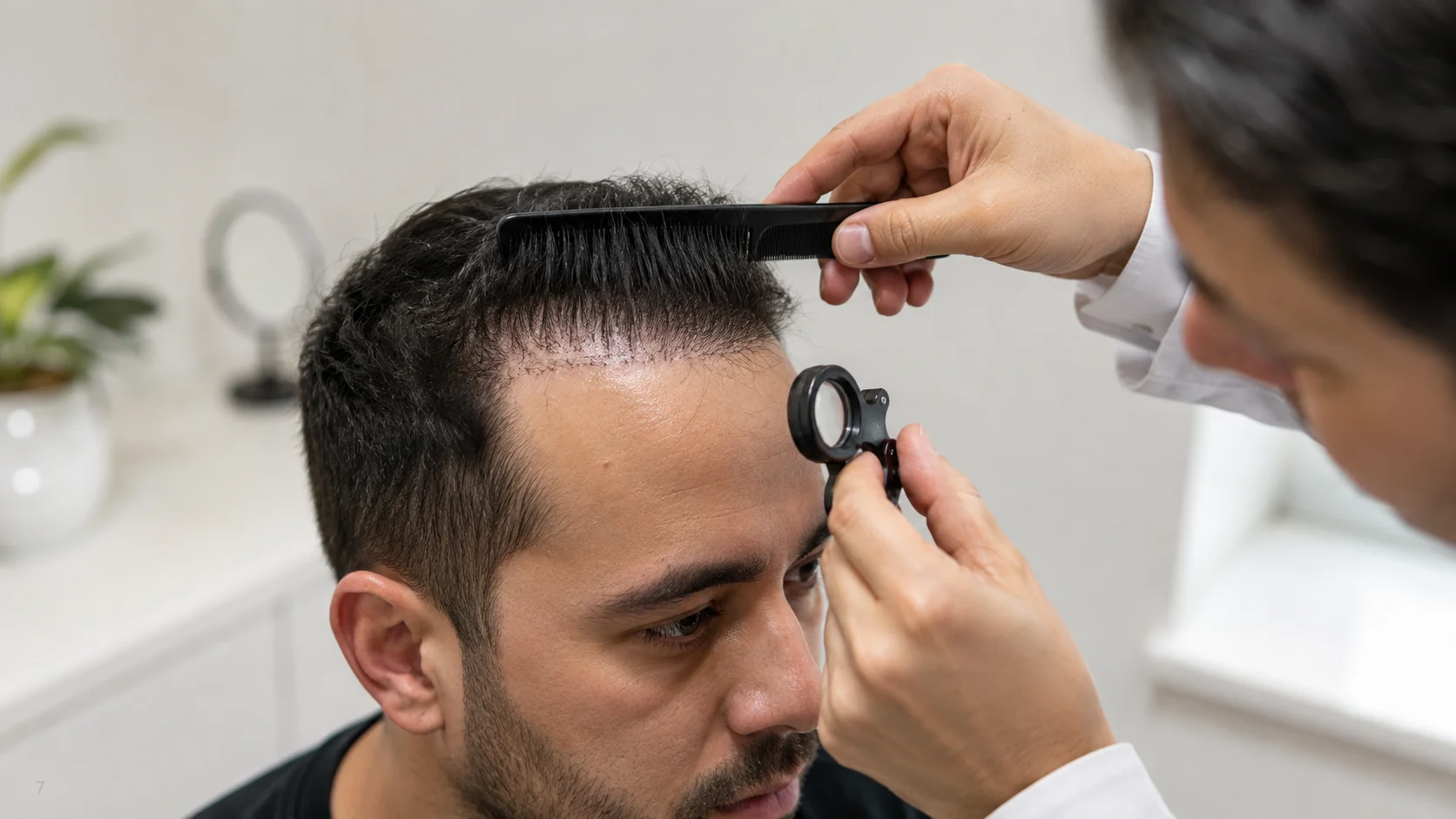
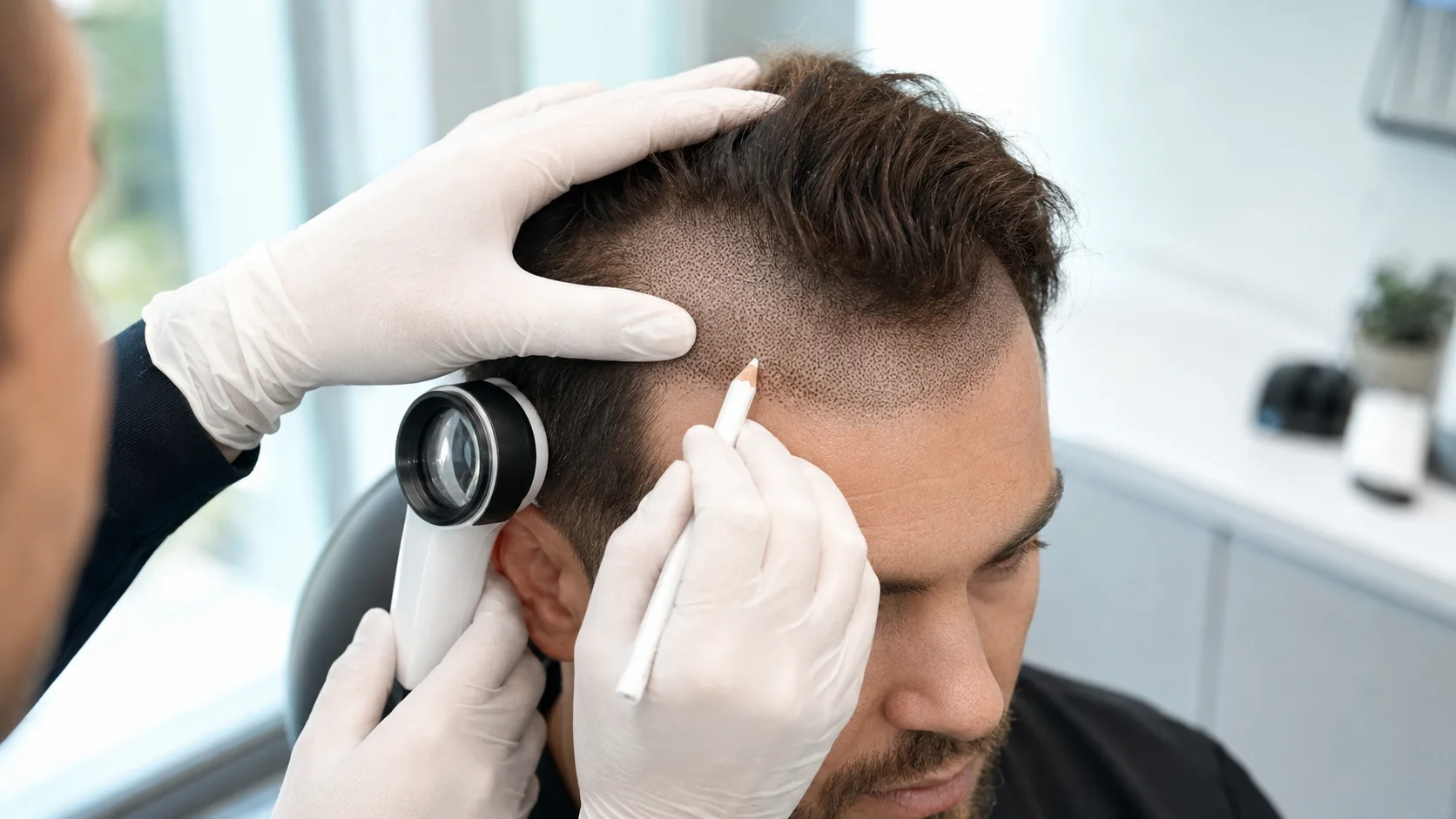
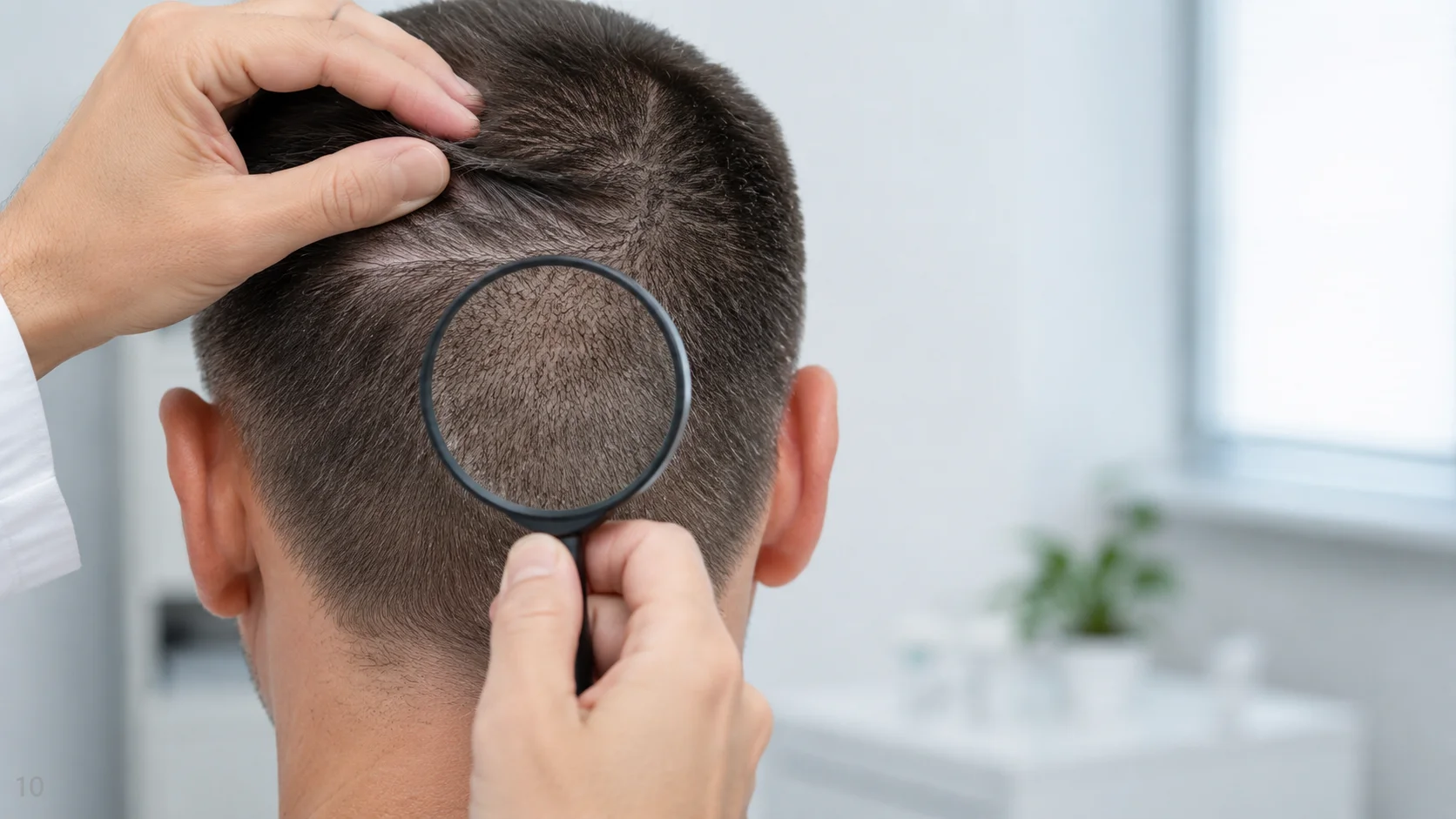
Before another procedure, the donor area should be remeasured. The original density estimate is no longer valid after grafts have been removed.
Evaluation may include:
- Current follicular-unit density
- Number and distribution of FUE scars
- Existing FUT scar quality
- Scalp laxity
- Donor miniaturization
- Extraction outside the safe zone
- Remaining single- and multi-hair units
- Recipient priorities
- Growth from previous procedures
Operative reports and immediate postoperative photographs can clarify how the donor area was used.
Timing Between Procedures
When another transplant will add density to the same recipient area, the previous result should generally be allowed to mature. This commonly means waiting around a year, with longer observation sometimes appropriate for the crown or complex repair.
Waiting helps reveal true growth, recipient scarring, donor recovery, and continued native loss. A premature second procedure may place grafts where additional density was not ultimately necessary.
Separate planned stages may follow a different timetable, but donor healing and cumulative extraction remain relevant.
Signs the Surgical Limit May Be Near
Further surgery may be unsafe or cosmetically unhelpful when:
- The donor region appears visibly depleted
- Follicular-unit density is low
- Miniaturization affects the safe zone
- Multiple scars limit usable tissue
- Scalp laxity is poor
- Only unstable border hair remains
- Recipient demand greatly exceeds available grafts
- Another session would create little visible improvement
- Body-hair characteristics are unsuitable
A technically possible extraction is not automatically a responsible one.
Can Beard or Body Hair Extend the Limit?
Beard hair can supplement scalp grafts because it is often coarse and provides useful bulk. It is generally better suited to areas behind the frontal edge or to selected donor-repair situations.
Chest and other body hair may have shorter growth cycles, different curl, and less predictable length or survival. These sources should be considered supplementary.
Using body hair does not remove the need to conserve scalp donor follicles.
Alternatives When Donor Hair Is Exhausted
When further extraction would create unacceptable damage, options may include:
- Scalp micropigmentation
- A hair system
- Hair fibers when enough hair remains
- A shorter or altered hairstyle
- Medical preservation of native hair
- Selective graft removal in repair cases
- Accepting lower density in less visible regions
These approaches may be more predictable than forcing another surgery with insufficient resources.
Frequently Asked Questions
Is there a maximum number of hair transplants?
No fixed number applies to everyone. Lifetime donor capacity, previous graft use, scarring, and recipient needs establish the practical limit.
Can someone have three or four procedures?
Possibly, if the procedures are conservative and enough stable donor hair remains. The number alone does not establish safety.
Does FUE allow unlimited sessions because it has no linear scar?
No. Each extraction permanently removes a follicular unit and leaves a small scar.
Can medication increase donor capacity?
Medication may strengthen miniaturized living hairs, but it does not create new donor follicles or restore extracted units.
Should grafts be saved for the crown?
The answer depends on priorities and future loss. Frontal and mid-scalp coverage often receives greater visual priority because crown treatment can consume many grafts.
The Lifetime View
The safest transplant plan treats donor hair as a limited resource from the first operation onward. The goal is not to maximize the number of procedures or grafts removed, but to preserve a natural appearance across the recipient and donor areas as hair loss evolves.
This content is for general informational purposes and does not replace individualized medical advice, diagnosis, or treatment.