Scalp micropigmentation can replace a hair transplant only when the desired result is a cosmetic illusion rather than new hair growth. It deposits pigment into the scalp to imitate closely shaved follicles or reduce the visual contrast between hair and skin. A hair transplant moves living follicles that can produce growing hair.
Neither option is universally better. The appropriate choice depends on whether someone wants real, styleable hair or the appearance of greater coverage, as well as donor availability, hair-loss pattern, scalp health, maintenance preferences, and tolerance for surgery.
What Is Scalp Micropigmentation?
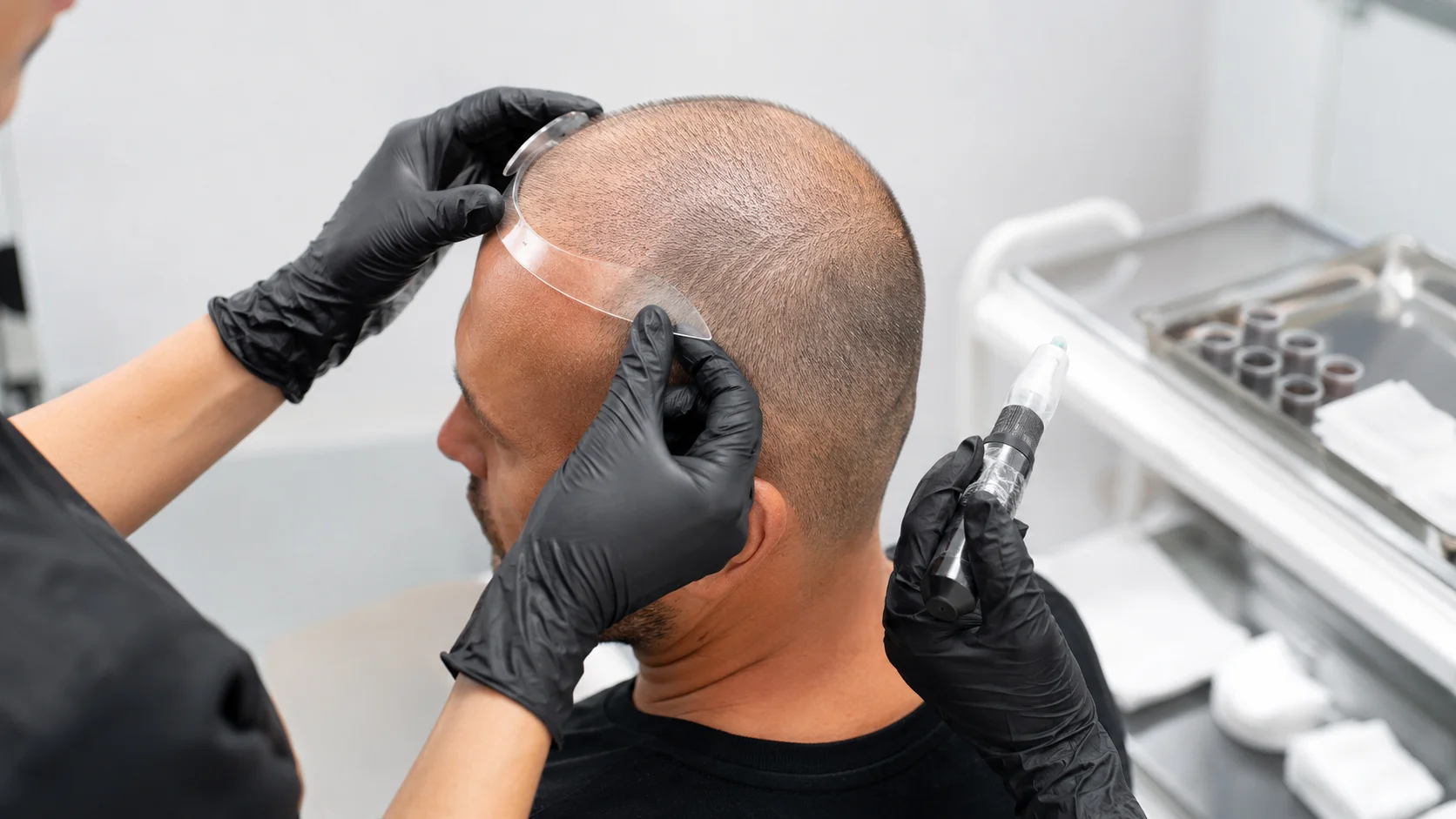
Scalp micropigmentation, often abbreviated as SMP, is a cosmetic procedure in which small pigment impressions are placed in the scalp. When performed well, these impressions resemble the shadow created by hair follicles cut close to the skin.
SMP can be used to:
- Create a shaved-head appearance
- Reduce visible scalp contrast under thinning hair
- Define or reconstruct the appearance of a hairline
- Camouflage selected transplant scars
- Make areas of diffuse thinning appear denser
It does not stimulate follicles, stop progressive hair loss, or create hair shafts. Describing it as a hair tattoo is understandable, although its technique, pigment selection, and visual goals differ from conventional decorative tattooing.
How a Hair Transplant Is Different
A hair transplant redistributes existing follicles, usually from the back or sides of the scalp to thinning or bald areas. The two main harvesting approaches are follicular unit extraction and follicular unit transplantation.
Once established, transplanted follicles can produce real hair that grows and can be washed, cut, and styled. Surgery does not create an unlimited supply of follicles, and it cannot always reproduce the density someone had before hair loss.
The surrounding non-transplanted hair may also continue to thin. Long-term planning is therefore important, even when the transplanted follicles themselves remain stable.
When SMP Can Function as an Alternative
SMP may serve as a practical alternative for someone who is comfortable maintaining a very short or shaved hairstyle. In this setting, pigment can imitate the look of evenly distributed stubble without requiring donor follicles.
It may also be considered when:
- Donor hair is insufficient for meaningful transplant coverage
- Hair loss is too extensive for realistic surgical density
- Surgery is not medically appropriate
- The individual does not want an operation
- Transplant scars need cosmetic camouflage
- The main goal is lower scalp-to-hair contrast
- A faster visual change is preferred over biological growth
For a person seeking a shaved appearance, SMP may provide the desired visual result more efficiently than transplanting hair that will then be cut extremely short.
When SMP Cannot Truly Replace a Transplant
SMP cannot provide the movement, texture, or styling options of real hair. Someone who wants to grow a new hairline, comb the hair, change its parting, or feel actual strands in a bald area will not receive those benefits from pigment.
It may also be less convincing when viewed very close, under harsh lighting, or if the pigment impressions are too large, dark, uniform, or densely packed. Quality depends heavily on technique and design.
As natural hair continues to thin, the relationship between the pigment and remaining hair can change. This may require additional sessions, a shorter haircut, or a revised plan.
Comparing the Results
Hair Growth
A transplant produces growing hair from transferred follicles. SMP produces no hair growth.
Visual Density
SMP reduces contrast and can make existing hair look fuller. A transplant adds actual hairs, but donor limitations may prevent dense coverage of a large area.
Hair Length
SMP works most predictably as a shaved effect or as subtle background shading beneath existing hair. A transplant allows the moved hair to grow.
Recovery
SMP generally involves less downtime than surgery, although the scalp may appear red or sensitive temporarily. Hair transplantation involves surgical wounds, crusting, activity restrictions, and a much longer wait for mature growth.
Maintenance
Transplanted follicles do not normally require pigment touch-ups, although ongoing hair loss may need medical or surgical management. SMP pigment can fade or change over time and may require refreshing.
Reversibility
Neither choice should be treated casually. SMP can sometimes be lightened or removed with laser treatment, but removal may require multiple sessions and can have limitations. Transplanted follicles can be difficult to redistribute if the design is poor.
Risks and Limitations of SMP
SMP is less invasive than hair-transplant surgery, but it is not risk-free. Possible problems include:
- Infection
- Allergic or inflammatory reactions
- Unnatural pigment color
- Blurred or enlarged impressions
- An overly straight or artificial hairline
- Uneven fading
- Poor matching with future hair loss
- Scarring in susceptible individuals
- Dissatisfaction that requires correction or removal
Sterile technique and appropriate infection-control practices are essential. Pigment composition, practitioner training, and regulation vary between locations, so credentials and healed results deserve careful review.
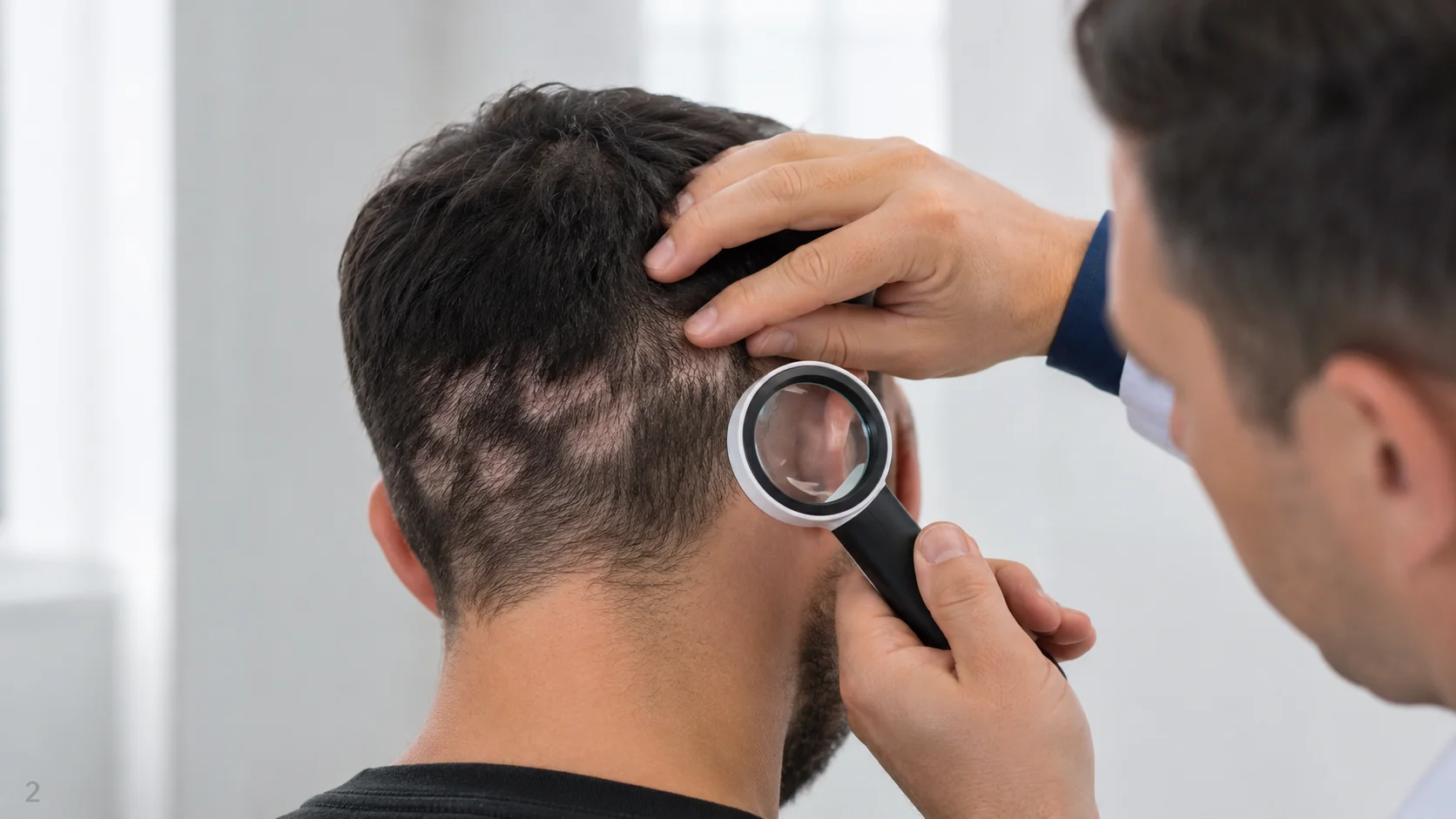
An active scalp condition should be controlled before SMP. Significant dermatitis, psoriasis, infection, unexplained patchy loss, or scarring alopecia may require medical assessment first.
Risks and Limitations of Hair Transplantation
Hair transplantation carries the risks associated with a surgical procedure. These may include infection, bleeding, scarring, temporary shedding, altered sensation, poor growth, unnatural design, and overharvesting of the donor area.
The largest practical limitation is donor supply. A severely depleted donor region cannot provide unlimited coverage, and using too many grafts early may leave fewer options for future progression.
Results also take time. Transplanted shafts commonly shed before new growth begins, and the appearance usually develops over many months.
Can SMP and a Hair Transplant Be Combined?
Yes. The two procedures can be complementary because they address different visual components.
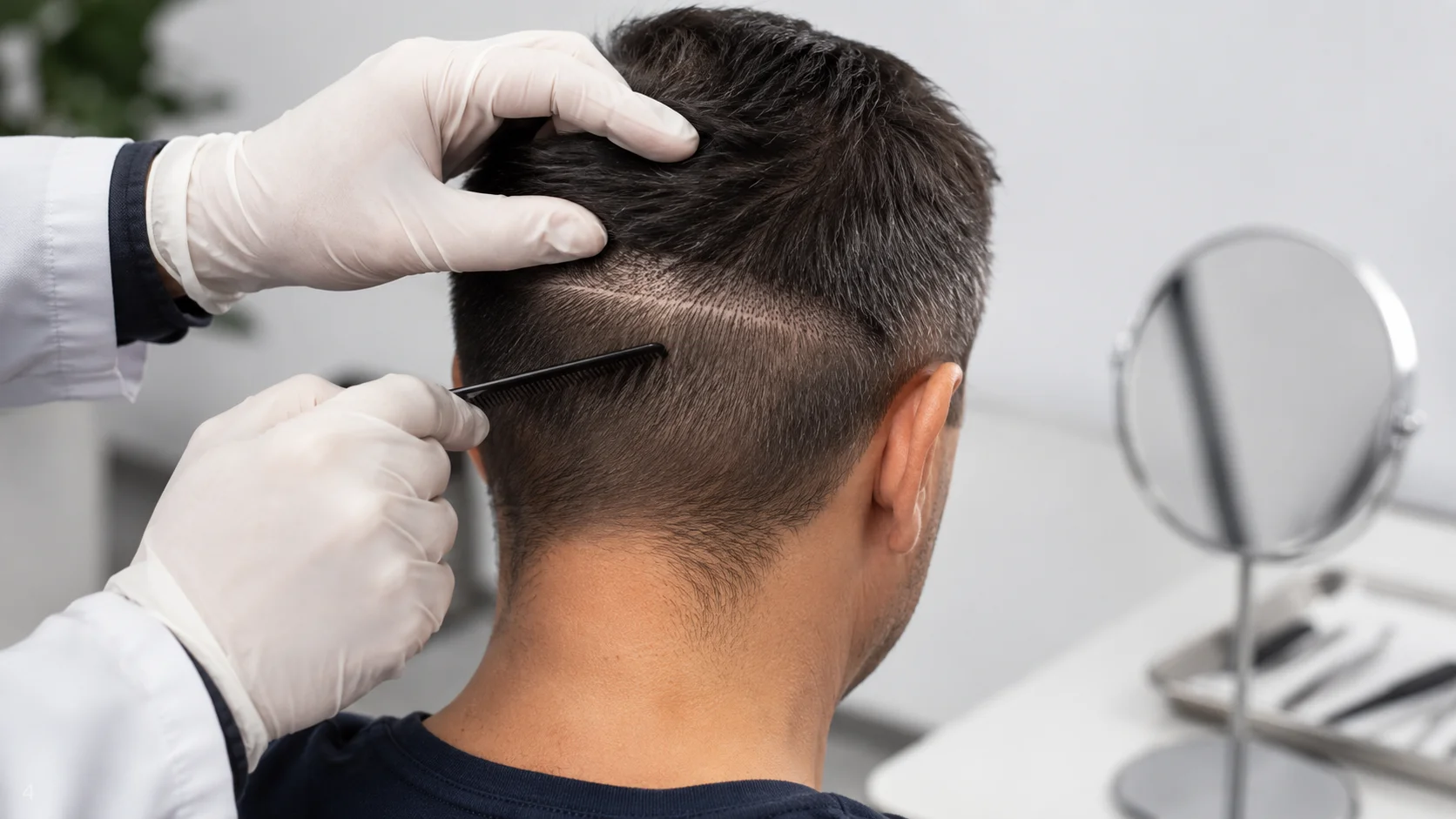
SMP may be placed between transplanted hairs to reduce visible scalp contrast when safe additional graft density is not possible. It can also help soften the appearance of follicular unit extraction dots or a linear donor scar.
The order and timing should be planned carefully. Pigment placed before surgery may influence hairline design or become less suitable after hair-loss progression. SMP performed after transplantation should wait until the scalp has healed sufficiently.
Coordination between qualified professionals helps prevent pigment from conflicting with the surgical plan.
Choosing Between the Two
The most useful starting question is not which procedure is better, but what outcome is actually wanted.
SMP may fit someone who prioritizes:
- A shaved or closely cropped look
- No hair-restoration surgery
- Cosmetic camouflage
- Reduced scalp contrast
- A solution that does not depend on donor density
A hair transplant may fit someone who prioritizes:
- Real growing hair
- Styling flexibility
- Physical restoration of a hairline
- Use of adequate, stable donor follicles
- Acceptance of surgery and a long growth timeline
Age, progression, medical diagnosis, scalp condition, and long-term expectations should all influence the decision.
Frequently Asked Questions
Does Scalp Micropigmentation Look Like Real Hair?
It can resemble shaved follicle stubble or background density, but it does not have the texture or movement of hair. Realism depends on pigment color, dot size, spacing, hairline design, and fading.
Does SMP Fade?
Yes. Pigment commonly softens over time because of skin turnover, immune processing, sun exposure, and other factors. Maintenance sessions may be needed.
Can SMP Damage Hair Follicles?
When performed correctly at an appropriate depth, SMP is intended to place pigment without destroying follicles. Poor technique, infection, or scarring could potentially affect the scalp.
Is SMP Better for Extensive Baldness?
It can create a consistent shaved appearance even when donor supply is limited. It cannot provide longer growing hair over the bald area.
Can I Have a Hair Transplant After SMP?
Potentially, yes, but existing pigment may influence surgical planning. The scalp, pigment pattern, and proposed hairline should be assessed before proceeding.
Which Option Lasts Longer?
Transplanted follicles may produce hair for many years, but the surrounding loss can progress. SMP can also remain visible for years, although fading and touch-ups are expected. Longevity is not the same as a permanently unchanged result.
A Cosmetic Substitute, Not a Biological One
Scalp micropigmentation can replace the visual purpose of a hair transplant for selected people, particularly those who want the look of a shaved head or greater contrast reduction. It cannot replace the biological outcome of moving follicles and growing real hair.
A good decision begins with an accurate hair-loss diagnosis and a realistic definition of success. For some people, that means surgery. For others, pigment is the more practical choice. In selected cases, combining the two can provide a more balanced result than either method alone.
This content is for general informational purposes and does not replace individualized medical advice, diagnosis, or treatment.