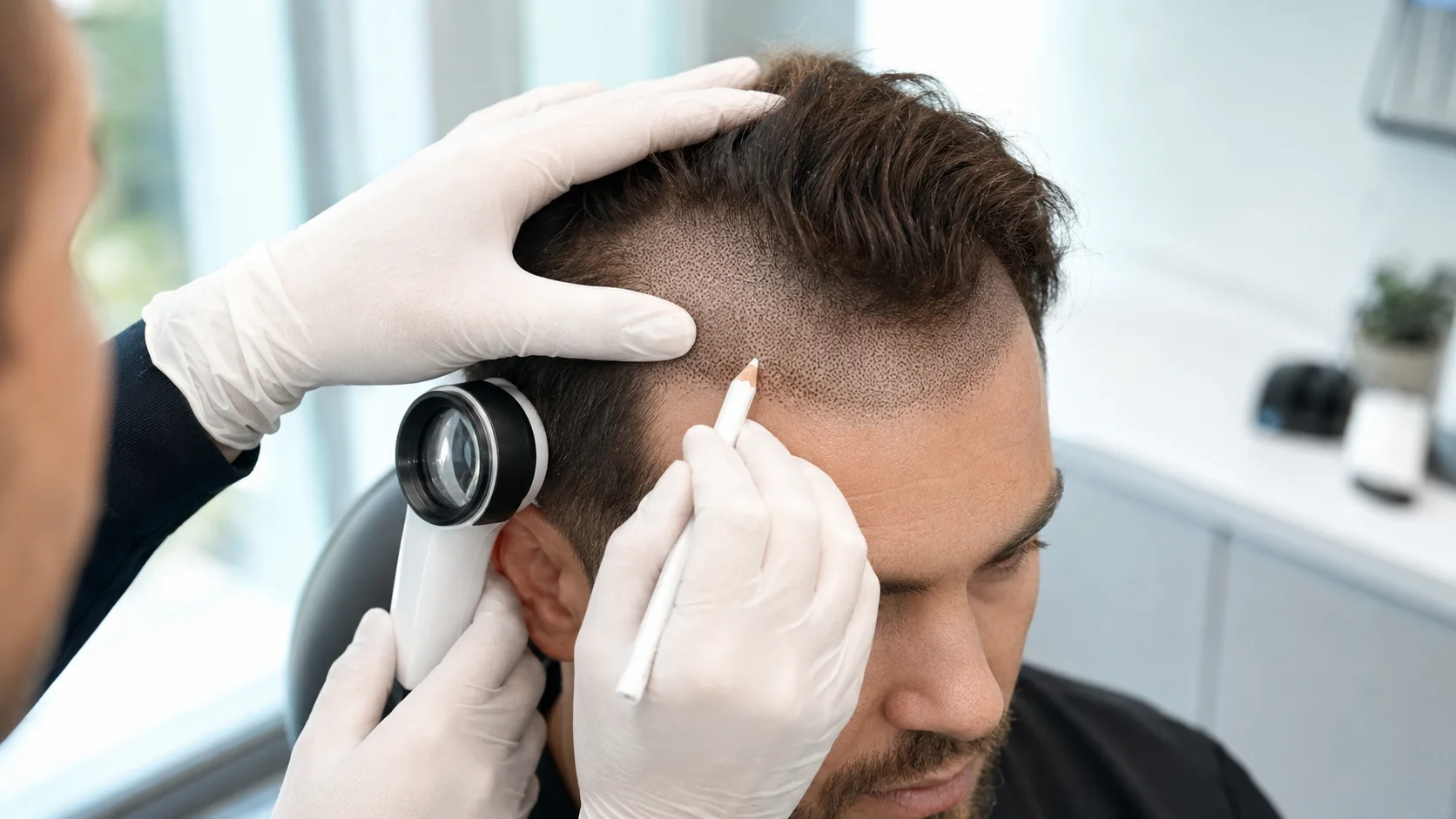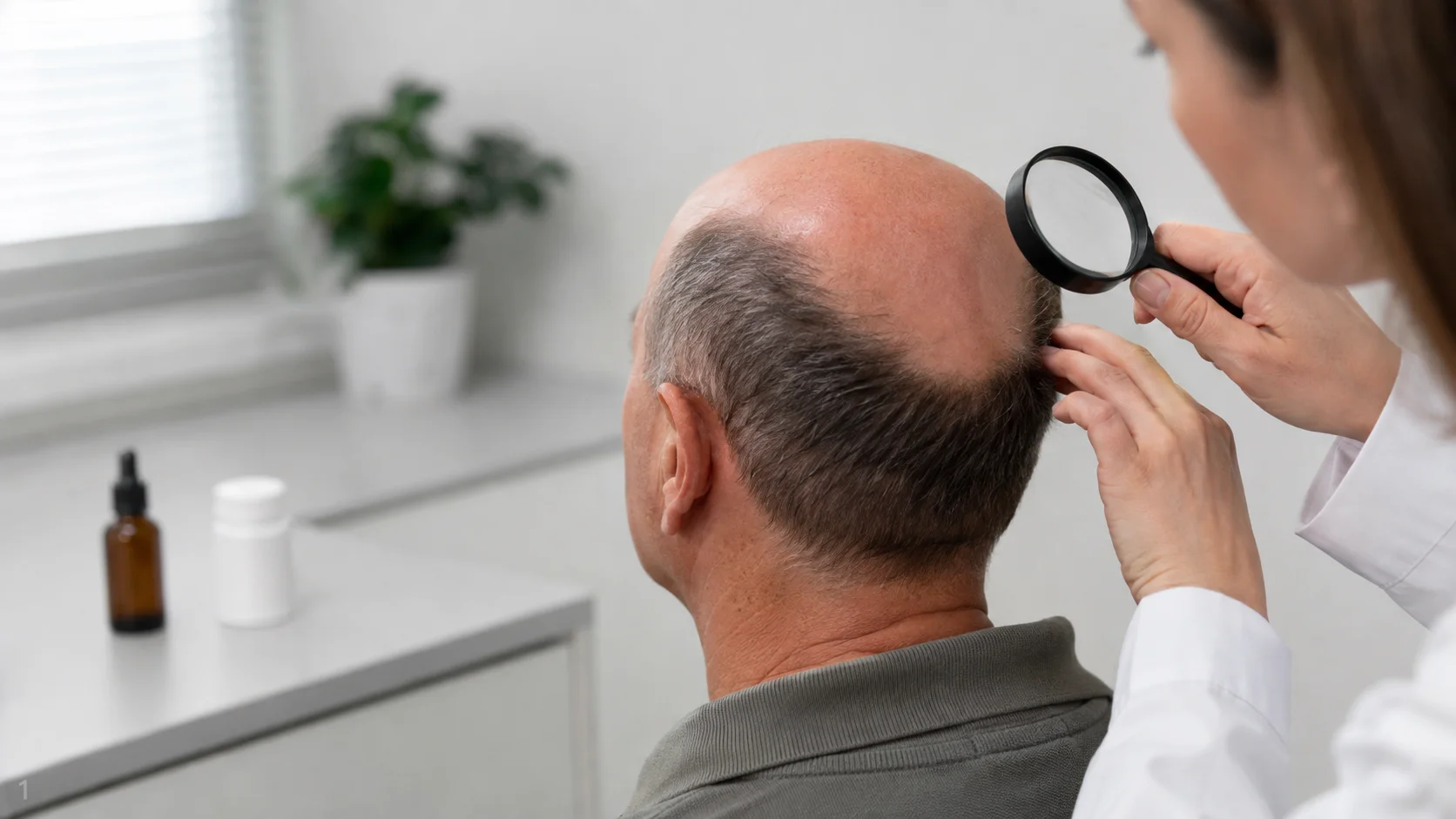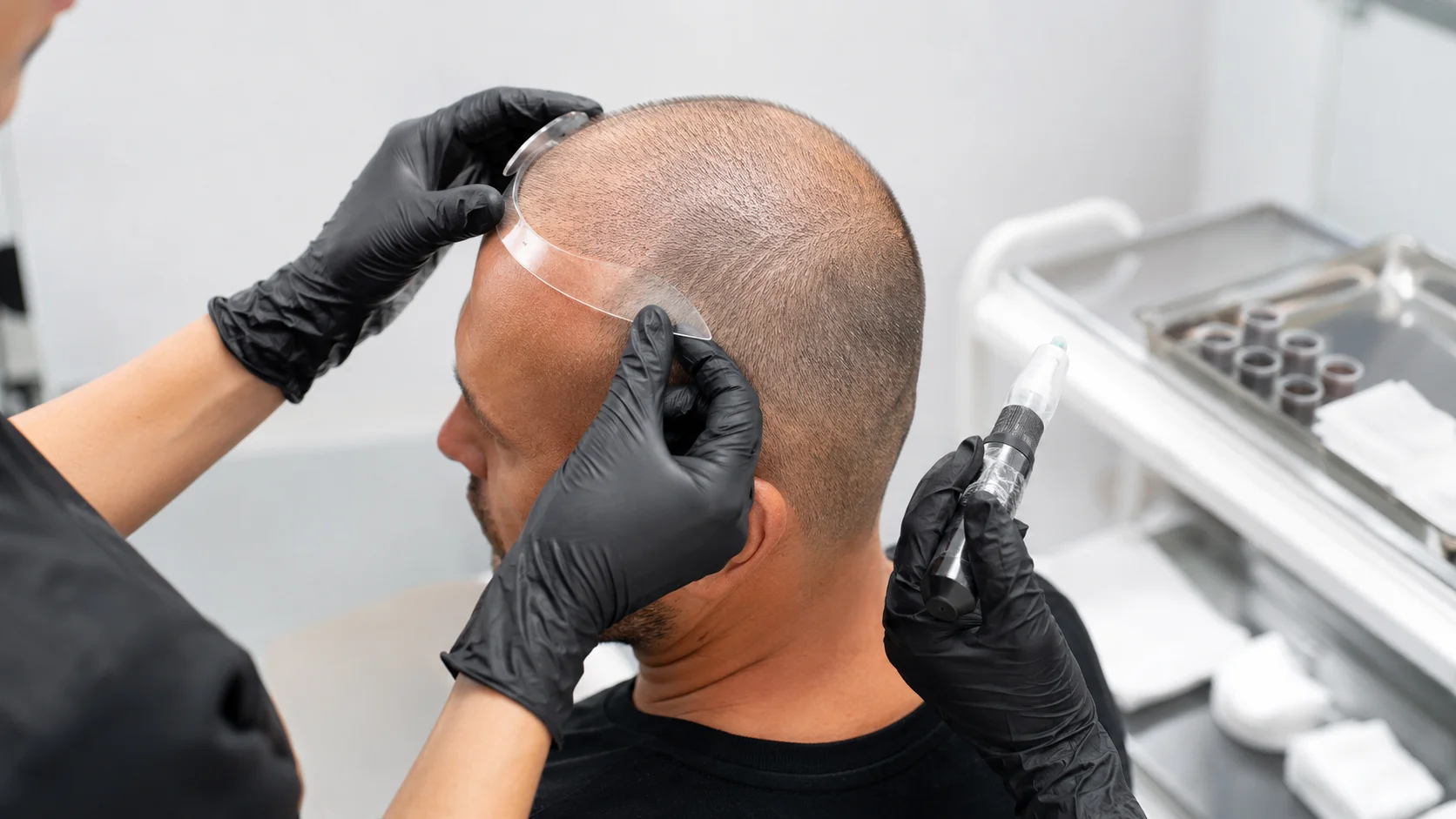
Scalp micropigmentation, often shortened to SMP, is a non-surgical cosmetic procedure that places tiny pigment deposits into the scalp to create the appearance of hair follicles or visual density. It is used specifically for scalp-related concerns such as male pattern baldness, diffuse thinning, visible scalp contrast, post-transplant camouflage, and scar blending.
SMP does not regrow hair. It does not stop hair loss, stimulate follicles, or change the biological cause of thinning. Its purpose is visual: to reduce the contrast between hair and scalp, recreate the look of a closely shaved hairline, or make thinning areas appear denser.
Because SMP is sometimes grouped under the broader category of dermopigmentation, confusion is common. Dermopigmentation can include brows, beard, areola, and scar camouflage across different body areas. SMP is narrower. It focuses on the scalp and requires design choices that match hair loss pattern, hairline shape, skin tone, remaining hair, and long-term balding progression.
How SMP Works
During SMP, a practitioner uses specialized equipment to place small dots of pigment into the scalp. These dots are designed to resemble tiny hair follicles or shaved stubble. The result depends on dot size, spacing, pigment tone, depth, hairline design, and how the pattern blends with existing hair.
SMP usually requires more than one session. The first session builds a foundation, while later sessions add density, adjust tone, and refine blending. The scalp may look darker at first, then soften as it heals.
A natural result should not look like a solid block of color. The goal is controlled irregularity, subtle layering, and realistic spacing. This is especially important at the hairline, where overly sharp or dark work can appear artificial.
SMP for Norwood Pattern Hair Loss
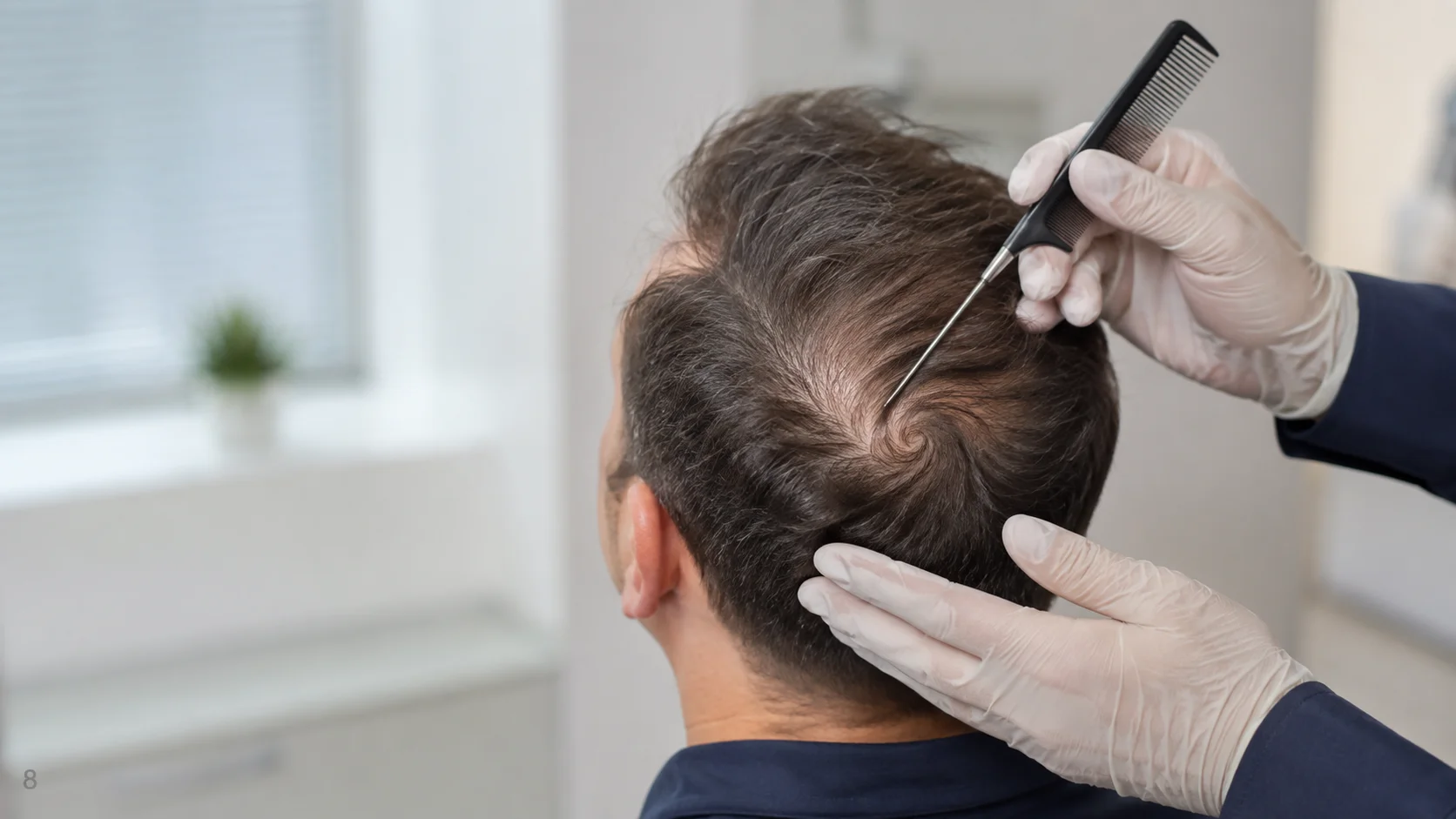
Many SMP patients have Norwood-pattern male hair loss. The Norwood scale describes common stages of male pattern baldness, from early temple recession to advanced baldness across the frontal, mid-scalp, and crown areas.
For early recession, SMP may help create the appearance of a stronger hairline when hair is kept very short. For more advanced Norwood patterns, SMP can recreate the look of a shaved head with visible follicle shadow.
Hairline design is central. A low, straight, aggressive hairline may look unnatural as a person ages or if surrounding hair continues to thin. A mature, slightly irregular hairline often creates a more believable result.
SMP planning should also consider future hair loss. If native hair continues to thin beyond the treated area, additional sessions may be needed to maintain a balanced appearance.
SMP for Density Illusion
Not everyone who considers SMP is fully bald. Some people have diffuse thinning or visible scalp show-through while still having existing hair. In these cases, SMP may be used to create a density illusion.
The pigment reduces the color contrast between hair and scalp, making thinning look less obvious under certain lighting conditions. This can be helpful in the crown, mid-scalp, or parting areas.
Density SMP works best when there is enough existing hair to create texture above the pigmented scalp. If hair is long, very thin, or unevenly distributed, results may be less predictable. SMP cannot create real volume or replace the movement of natural hair.
Lighting also matters. Harsh overhead light can reveal thinning more than soft light. A good SMP result should improve appearance in everyday conditions, but it cannot make all scalp visibility disappear.
SMP After Hair Transplant Surgery
Scalp micropigmentation is sometimes used after hair transplantation to improve the visual appearance of density or camouflage scars. It may be considered when transplanted density is lower than desired, donor scars are visible, or contrast between hair and scalp remains noticeable.
For recipient areas, SMP can help reduce scalp show-through between transplanted hairs. For donor areas, it may help camouflage linear scars from strip surgery or small dot-like scars from follicular unit extraction.
Timing is important. The scalp should be fully healed before pigment is placed. Active redness, inflammation, poor healing, or unstable scars may not be suitable for immediate SMP.
SMP should not be used to hide a medical complication without proper evaluation. If there is ongoing inflammation, infection, pain, or unusual scarring, medical assessment comes first.
SMP for Baldness and the Shaved Look
For people with advanced baldness, SMP may create the appearance of a cleanly shaved head. This is one of the most common uses of the procedure. The pigment mimics follicle shadow across bald areas so the scalp appears less bare.
This style works best when the surrounding hair is kept very short. If longer hair remains on the sides or back while the top is pigmented, the difference in texture can make the result less natural. Many people who choose this approach commit to regular shaving or close trimming.
The shaved-look effect can be especially useful for people who do not want surgery, are not good candidates for hair transplantation, have limited donor hair, or prefer a low-maintenance visual solution.
Benefits of SMP
SMP can offer several appearance-related benefits when performed well.
Potential benefits include:
- A fuller-looking scalp without surgery
- The look of shaved hair follicles in bald areas
- Reduced scalp contrast in thinning zones
- Camouflage for some hair transplant scars
- No need for donor hair
- Short recovery compared with surgical options
- A stable cosmetic effect when hair is kept appropriately styled
The main benefit is visual predictability. Unlike medical treatments that depend on follicle response, SMP creates an immediate cosmetic framework. However, the final healed result still depends on technique, skin response, pigment behavior, and aftercare.
Risks and Limitations
SMP is generally considered cosmetic, but it still involves breaking the skin. Risks include infection, allergic reaction, swelling, tenderness, pigment fading, pigment spreading, color mismatch, unnatural hairline design, and dissatisfaction with the result.
Long-term fading is expected. Touch-ups may be needed. Pigment can change over time due to skin biology, sun exposure, immune response, and technique.
The biggest aesthetic risks are often design-related. A hairline that is too low, too dark, too symmetrical, or too sharply edged can be difficult to live with. Poor blending with existing hair can also make the work obvious.
Correction may be possible with laser removal or revision, but it can be time-consuming, expensive, and imperfect.
Who May Be a Good Candidate?
SMP may be suitable for people who understand that it is cosmetic and who are comfortable with the hairstyle needed to support the result. It may be considered for:
- Norwood-pattern male hair loss
- Advanced baldness with a shaved-head preference
- Diffuse thinning with enough existing hair for blending
- Crown thinning where scalp contrast is the main concern
- Hair transplant scar camouflage
- Low-density transplant results needing visual support
It may be less suitable for people expecting real hair growth, those unwilling to keep hair short when needed, people with active scalp disease, unstable scars, unrealistic hairline goals, or a rapidly changing hair loss pattern without a long-term plan.
SMP vs Hair Transplant and Medical Treatment
SMP, hair transplantation, and medical treatment solve different problems.
A hair transplant moves real follicles and can create actual hair growth in selected candidates. Medical treatments such as minoxidil, finasteride, or dutasteride may help preserve or improve existing hair in appropriate cases. SMP changes the visual appearance of the scalp with pigment.
These options can sometimes be combined. A person may use medical treatment to stabilize hair loss, transplantation to restore hair in selected areas, and SMP to reduce contrast or camouflage scars. But SMP alone does not preserve native hair or prevent future thinning.
This distinction protects expectations. SMP can be a strong cosmetic solution, but it should be chosen for the right reason.
FAQ
Does scalp micropigmentation grow hair?
No. SMP does not grow hair or stimulate follicles. It creates the appearance of follicles or density by placing pigment into the scalp.
How long does SMP last?
Results can last for years, but fading is expected over time. Touch-ups may be needed depending on skin type, sun exposure, pigment behavior, and technique.
Is SMP good for Norwood baldness?
It can be useful for many Norwood-pattern hair loss cases, especially when the goal is a shaved-head look. Hairline design and future hair loss planning are essential.
Can SMP hide hair transplant scars?
SMP may help camouflage some donor scars or reduce contrast in low-density transplant areas. The scar should be mature and stable before treatment.
Does SMP look natural?
It can look natural when the pigment, dot pattern, density, and hairline design are carefully matched. Poorly designed SMP can look too dark, flat, or artificial.
Final Thoughts
Scalp micropigmentation is a specialized cosmetic procedure for the scalp. It can create the look of shaved follicles, reduce scalp contrast, support the appearance of density, and camouflage selected hair transplant scars. For people with Norwood-pattern hair loss or advanced baldness, it can offer a non-surgical way to manage appearance.
The key is understanding what SMP can and cannot do. It can improve the visual impression of the scalp, but it does not treat the medical cause of hair loss. A natural result depends on careful design, experienced technique, realistic expectations, and a plan for future hair changes.
This article is for general informational purposes only and does not replace personalized medical advice, diagnosis, or treatment from a qualified healthcare professional.