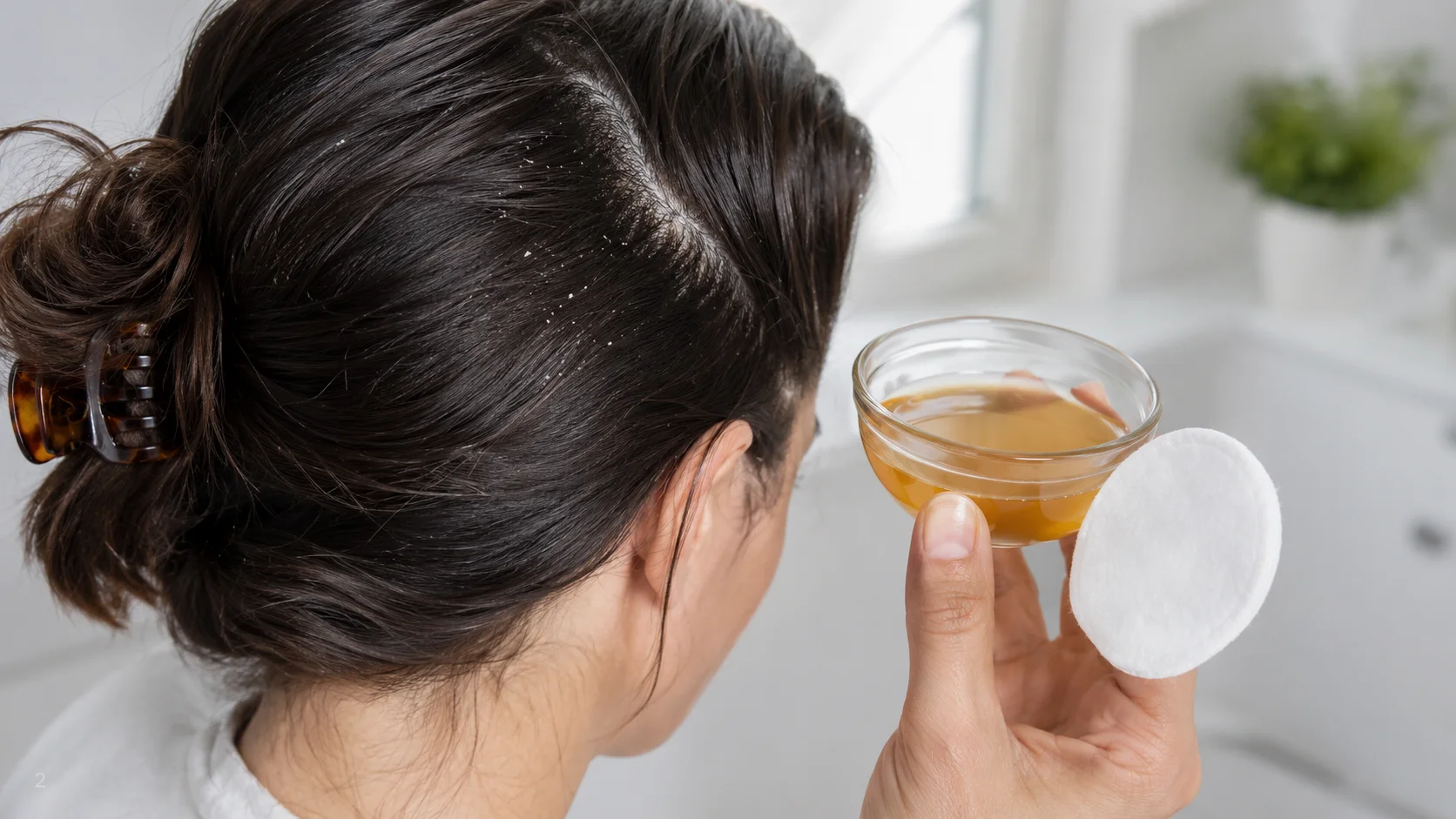
Apple cider vinegar is frequently recommended as a natural remedy for dandruff. Supporters claim that its acidity and antimicrobial properties can rebalance the scalp, control yeast, and remove flakes. These ideas may sound plausible, but there is not enough reliable clinical evidence to show that apple cider vinegar treats dandruff effectively.
It can also irritate the scalp, especially when used undiluted. Before trying it, it helps to understand what dandruff actually is and why an acidic kitchen ingredient is not equivalent to a tested anti-dandruff treatment.
Why People Use Apple Cider Vinegar for Dandruff
Apple cider vinegar is produced by fermenting apple juice. Its main active component is acetic acid, which gives it a low pH and its characteristic smell.
Several proposed benefits have made it popular in scalp-care routines:
- Its acidity might reduce certain microorganisms.
- It may help loosen residue or surface flakes.
- It could temporarily change how the hair shaft feels.
- Some users report less oiliness or itching.
Most claims are based on laboratory findings about vinegar, general knowledge about acidity, or personal experiences. None of these demonstrates that apple cider vinegar reliably controls dandruff on a living human scalp.
A substance may affect microorganisms in a laboratory without being effective, tolerable, or appropriately concentrated for routine skin use.
What Causes Dandruff?
Dandruff is influenced by several interacting factors rather than poor hygiene alone. These include oil production, individual skin sensitivity, scalp-barrier function, and the activity of Malassezia yeast, which normally lives on the skin.
In susceptible people, byproducts created as Malassezia interacts with scalp oils may trigger irritation and faster skin-cell turnover. The result is visible flaking, sometimes accompanied by itching.
Dandruff can also be confused with:
- A dry scalp
- Seborrheic dermatitis
- Psoriasis
- Eczema
- Contact dermatitis
- Product buildup
- Fungal scalp infections
Because these conditions have different causes, a remedy that appears helpful for one may aggravate another.
What the Evidence Says About Apple Cider Vinegar
There is no strong clinical evidence showing that apple cider vinegar is an effective dandruff treatment. Its acidity may inhibit some microorganisms under laboratory conditions, but the concentration required can be irritating to human skin.
Claims that vinegar restores an ideal scalp pH are also too simplistic. Healthy skin is naturally somewhat acidic, but scalp symptoms cannot generally be corrected just by applying an acidic liquid. Skin pH is only one part of a much more complex barrier and microbial environment.
Apple cider vinegar may remove some residue or temporarily change the feel of oily hair. That cosmetic effect should not be mistaken for control of the biological processes involved in dandruff.
Can It Make Dandruff Worse?
Yes. Apple cider vinegar can cause burning, redness, dryness, and irritant contact dermatitis. Irritation damages the scalp barrier and may create more itching and flaking, making the original concern appear worse.
The risk is greater when vinegar is:
- Applied undiluted
- Left on for an extended period
- Used on scratched or broken skin
- Combined with exfoliating acids or other irritating products
- Applied frequently
- Used on eczema, psoriasis, or an already inflamed scalp
Allergic reactions are less common than irritation but remain possible. A painful, swollen, blistered, or weeping scalp requires prompt medical attention.
If You Choose to Try It
Apple cider vinegar is not necessary for treating dandruff, and a tested anti-dandruff shampoo is generally a more predictable option. Someone who still chooses to experiment should take a cautious approach.
Never use it on broken, severely inflamed, or infected-looking skin. It should be substantially diluted, tested on a small area first, kept away from the eyes, and rinsed out promptly. Stop immediately if burning, redness, or increased itching occurs.
There is no clinically established dilution or schedule for dandruff treatment. This uncertainty is itself a limitation: home recipes may differ widely in acidity and exposure time.
Children and people with chronic skin conditions should not be treated with a homemade acidic scalp preparation without appropriate professional guidance.
Better-Supported Dandruff Options
Anti-dandruff shampoos use active ingredients selected to address yeast, scaling, or skin-cell turnover. Depending on the formulation, these may include:
- Ketoconazole
- Selenium sulfide
- Zinc pyrithione where available
- Piroctone olamine
- Salicylic acid
- Coal tar
These ingredients do not all work in the same way. Antifungal shampoos target yeast, while salicylic acid helps lift scale. A product that loosens flakes may not control the process causing them, so treatment sometimes needs to be adjusted.
Using the product correctly matters. Medicated shampoo generally needs direct contact with the scalp and may need to remain there briefly before rinsing. Directions vary, and overuse may dry or irritate the scalp.
Dandruff or Dry Scalp?
A dry scalp and dandruff can both produce flakes, but they are not identical. Dry-scalp flakes are often smaller and accompany tightness or generalized dryness. Dandruff may produce larger or oilier flakes and can be associated with itching and greasy areas.
The distinction is not always obvious. Applying vinegar to a genuinely dry or irritated scalp may increase discomfort rather than solve it.
A gentle fragrance-free shampoo and reduced exposure to harsh products may be more appropriate for simple dryness. Persistent greasy scaling may respond better to an anti-dandruff active ingredient.
When to Seek Professional Advice
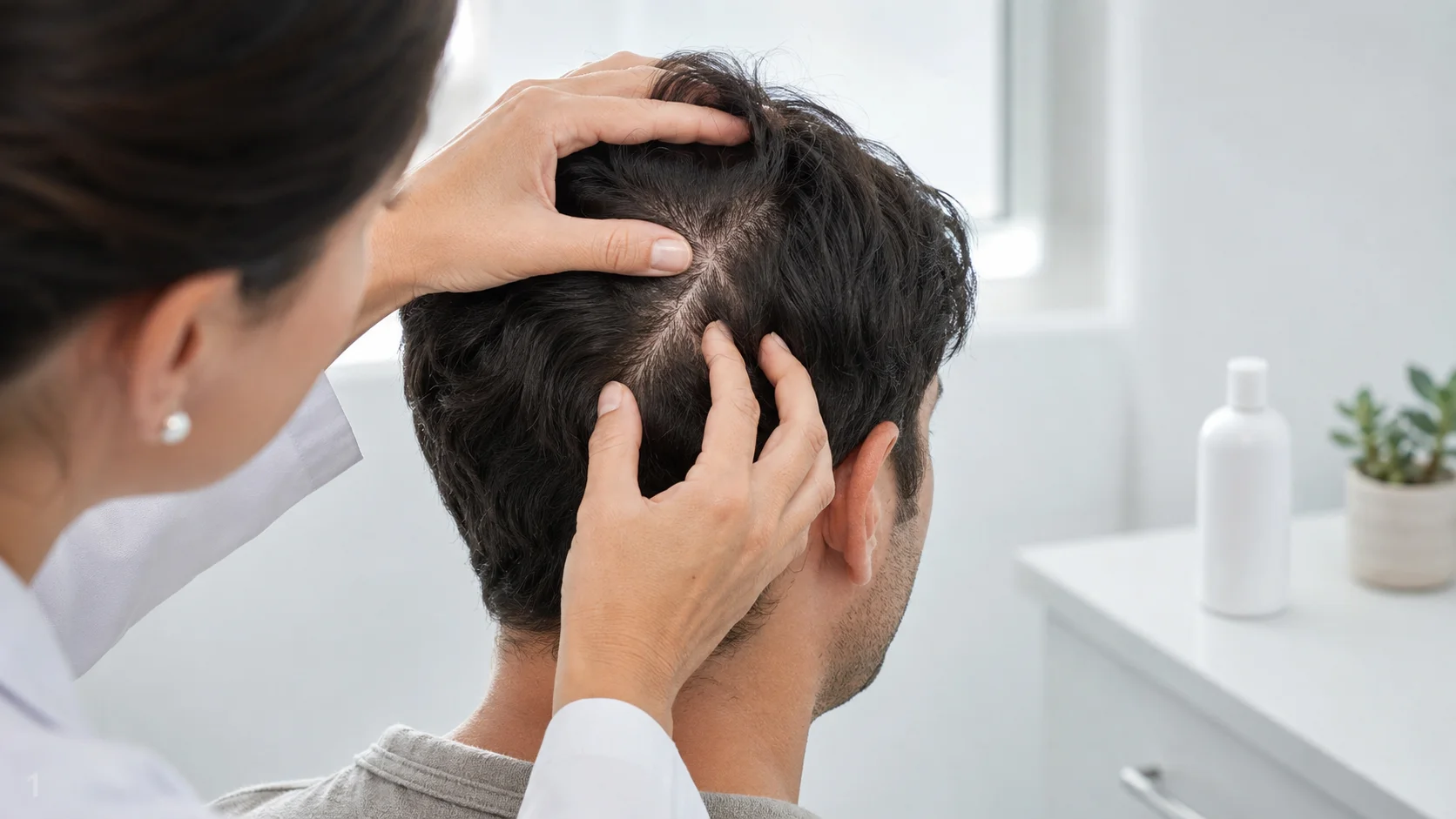
Mild dandruff can often be managed with nonprescription shampoo. An assessment is advisable when symptoms are severe, painful, spreading, or resistant to several weeks of appropriate care.
Seek help when there is:
- Significant redness or swelling
- Thick plaques or heavy crusting
- Pus, bleeding, or open sores
- Circular patches with broken hairs
- Patchy or sudden hair loss
- Symptoms involving the face or body
- A reaction after using vinegar or another home remedy
A clinician can distinguish routine dandruff from conditions that require prescription treatment or a different management strategy.
Frequently Asked Questions
Does Apple Cider Vinegar Kill the Fungus That Causes Dandruff?
Apple cider vinegar has demonstrated antimicrobial activity in some laboratory settings, but that does not prove it safely or reliably controls Malassezia-related dandruff on the scalp.
Can Apple Cider Vinegar Remove Flakes?
It may loosen residue or superficial scale in some cases. Removing visible flakes temporarily is not the same as treating the underlying cause.
How Often Should It Be Used?
There is no evidence-based frequency for using apple cider vinegar against dandruff. Repeated exposure increases the possibility of irritation, particularly if the mixture is strong.
Can Apple Cider Vinegar Help Hair Growth?
There is no convincing evidence that applying apple cider vinegar stimulates hair growth. It should be regarded as a cosmetic or home-care ingredient, not a hair-loss treatment.
Is Diluted Vinegar Safe for Every Scalp?
No. Even diluted vinegar can sting or irritate sensitive, inflamed, scratched, or diseased skin. Individual tolerance varies, and dilution does not guarantee safety.
A Practical Conclusion
Apple cider vinegar has a popular reputation as a natural dandruff remedy, but its benefits remain unproven. Any temporary improvement may reflect residue removal or changes in oiliness rather than dependable treatment of dandruff.
It also carries a genuine risk of scalp irritation. For recurring flakes and itching, a properly used anti-dandruff shampoo offers a clearer rationale and more predictable formulation. Symptoms that do not respond should be evaluated instead of treated with increasingly concentrated home remedies.
This content is for general informational purposes and does not replace individualized medical advice, diagnosis, or treatment.