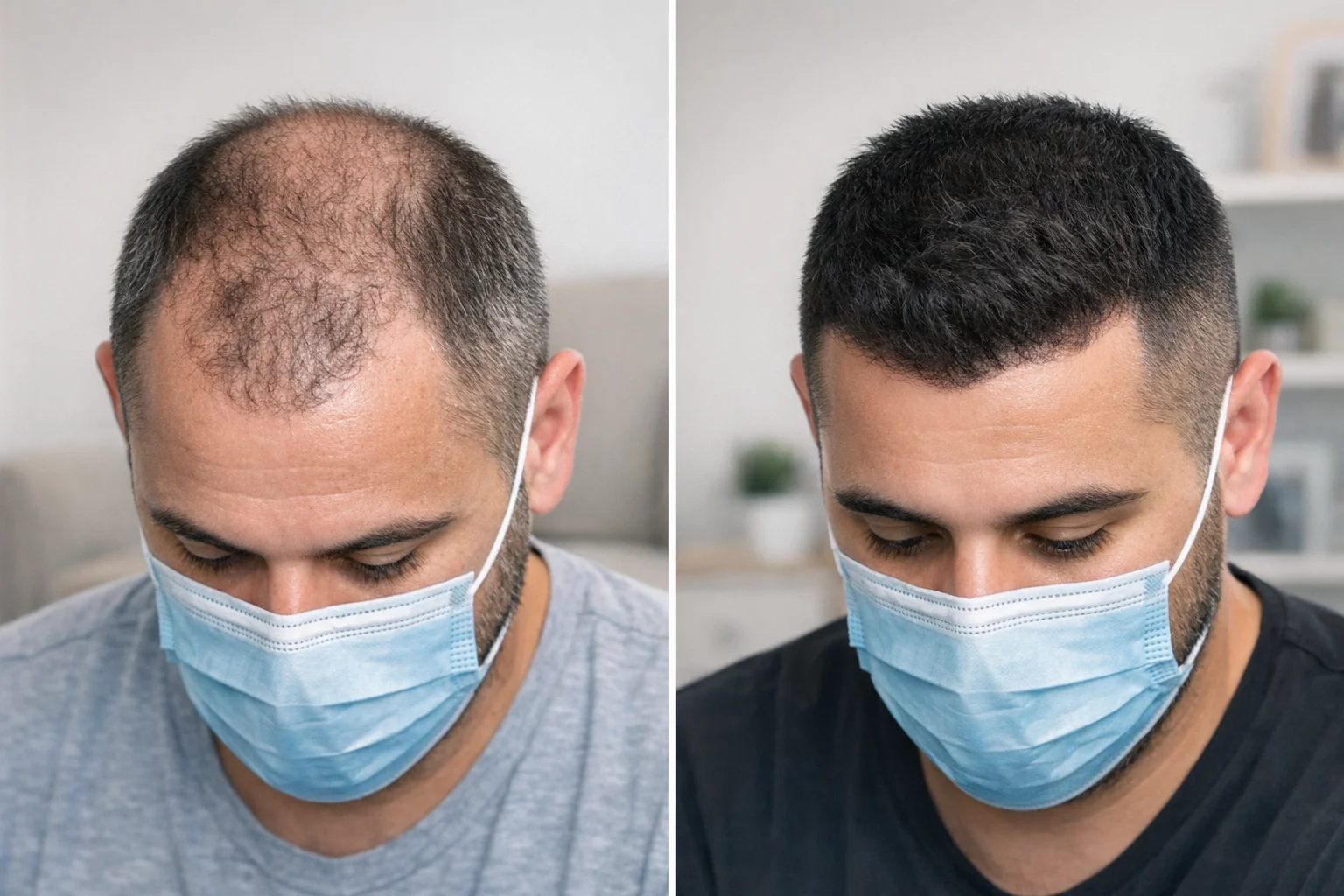
Many people wait to seek help for hair loss until thinning becomes obvious. This is understandable, but it can sometimes limit treatment options. In many types of hair loss, earlier evaluation may help identify the cause, protect existing hair, and create a more realistic treatment plan.
You should consider seeking advice about hair loss treatment when you notice persistent shedding, a widening part, a receding hairline, reduced density, patchy hair loss, scalp symptoms, or a clear change from your usual pattern. Treatment should begin only after the likely cause is understood, because different types of hair loss require different approaches.
Why Timing Matters
Hair loss treatments often work best when there are still active follicles to support. In some conditions, treatment may help slow progression, improve density, or reduce shedding. However, areas where follicles are no longer active may be less responsive to non-surgical options.
This is a key reason timing matters with medications such as topical minoxidil or finasteride. Both are generally considered more effective at slowing or partially reversing early to moderate thinning than at regrowing hair in areas that have been bald for a long time, since follicles that have stopped producing hair are harder to reactivate. Starting early does not mean starting treatment impulsively. It means taking changes seriously enough to get the right evaluation.
Hair loss can be genetic, hormonal, nutritional, inflammatory, autoimmune, stress-related, medication-related, or linked to other health factors. The timing and choice of treatment depend on the diagnosis.
Early action may also help reduce anxiety. When people do not understand why their hair is changing, they often try multiple products without a clear plan. A structured approach is usually more useful than guessing.
Signs It May Be Time to Seek Evaluation
Not every bad hair day is a sign of hair loss. However, certain patterns deserve attention.
Common signs include:
- More hair shedding than usual for several weeks
- A widening part or more visible scalp
- A receding hairline or thinning temples
- Reduced ponytail thickness
- Patchy hair loss
- Scalp itching, redness, scaling, pain, or burning
- Sudden shedding after illness, stress, childbirth, dieting, or medication changes
- Hair breakage that may be confused with shedding
A professional assessment can help separate shedding, breakage, and true density loss. This distinction matters because the treatment approach may be completely different.
Do You Need Treatment Immediately?
Not always. Some temporary shedding conditions may improve once the trigger resolves, although evaluation can still be helpful. Other forms of hair loss may progress gradually and benefit from earlier management.
For example, hereditary pattern hair loss often develops slowly. Treatment with minoxidil or finasteride may be considered when early thinning first becomes noticeable, especially if there is a family history or ongoing progression, because these medications tend to have more to work with while follicles are still miniaturizing rather than after they have gone dormant. In contrast, patchy hair loss or scalp inflammation may need prompt medical evaluation because the cause may require specific care rather than these standard pattern-hair-loss treatments.
The key is not to self-diagnose based only on appearance. Similar-looking hair loss patterns can have different causes.
Why the Cause Comes Before the Treatment
Hair loss treatment is not one-size-fits-all. A treatment that may be appropriate for one condition may be ineffective or unsuitable for another.
A proper evaluation may include a history, scalp examination, hair pull testing, dermoscopy, blood tests, or referral when needed. The goal is to understand whether the issue is shedding, miniaturization, breakage, inflammation, scarring, or another process.
Once the likely cause is clearer, treatment options may include topical minoxidil, oral or topical finasteride, PRP (platelet-rich plasma) sessions, low-level laser therapy (LLLT), correction of deficiencies, anti-inflammatory treatment, lifestyle changes, hair care changes, or, in areas with limited regrowth potential, a hair transplant. The right timing depends on the diagnosis and individual risk factors.
What Happens If You Wait?
Waiting does not always cause harm, especially in temporary shedding. However, with progressive hair loss, waiting may allow more follicles to miniaturize or become less responsive to medications such as minoxidil or finasteride. This can make it harder to regain density later, and may narrow the options to procedures like a transplant rather than medical management alone.
Delaying evaluation may also allow treatable scalp conditions or nutritional issues to continue. If hair loss is affecting confidence or daily life, seeking guidance early can help you make decisions with better information.
Frequently Asked Questions
Should I start hair loss treatment at the first sign of shedding?
Not automatically. Shedding can have many causes, and some are temporary. If shedding is persistent, sudden, severe, or unusual for you, evaluation is a better first step than starting random products.
Is early treatment always more effective?
Early treatment may be helpful in many progressive hair loss conditions, including with medications like minoxidil or finasteride, but effectiveness depends on the cause, treatment type, consistency, and individual response. No treatment works for everyone.
Can I wait and see what happens?
In some cases, yes. If shedding follows a known temporary trigger, monitoring may be reasonable. However, visible thinning, patchy loss, scalp symptoms, or steady progression should be assessed sooner.
What if I am not ready for medication?
A consultation can still be useful. Understanding the cause of hair loss does not obligate you to start medication. It can help you compare options, including non-medication approaches like LLLT or procedural options, along with risks, expectations, and timing.
Final Thoughts
The best time to think about hair loss treatment is when you first notice a consistent change, not necessarily when hair loss has become advanced. Early evaluation can clarify the cause and help you decide whether treatment, monitoring, or another approach makes sense.
Treatment decisions should be individualized. The goal is to choose the right option for the right diagnosis at the right time.
This content is for general informational purposes only and does not replace individualized medical advice, diagnosis, or treatment.