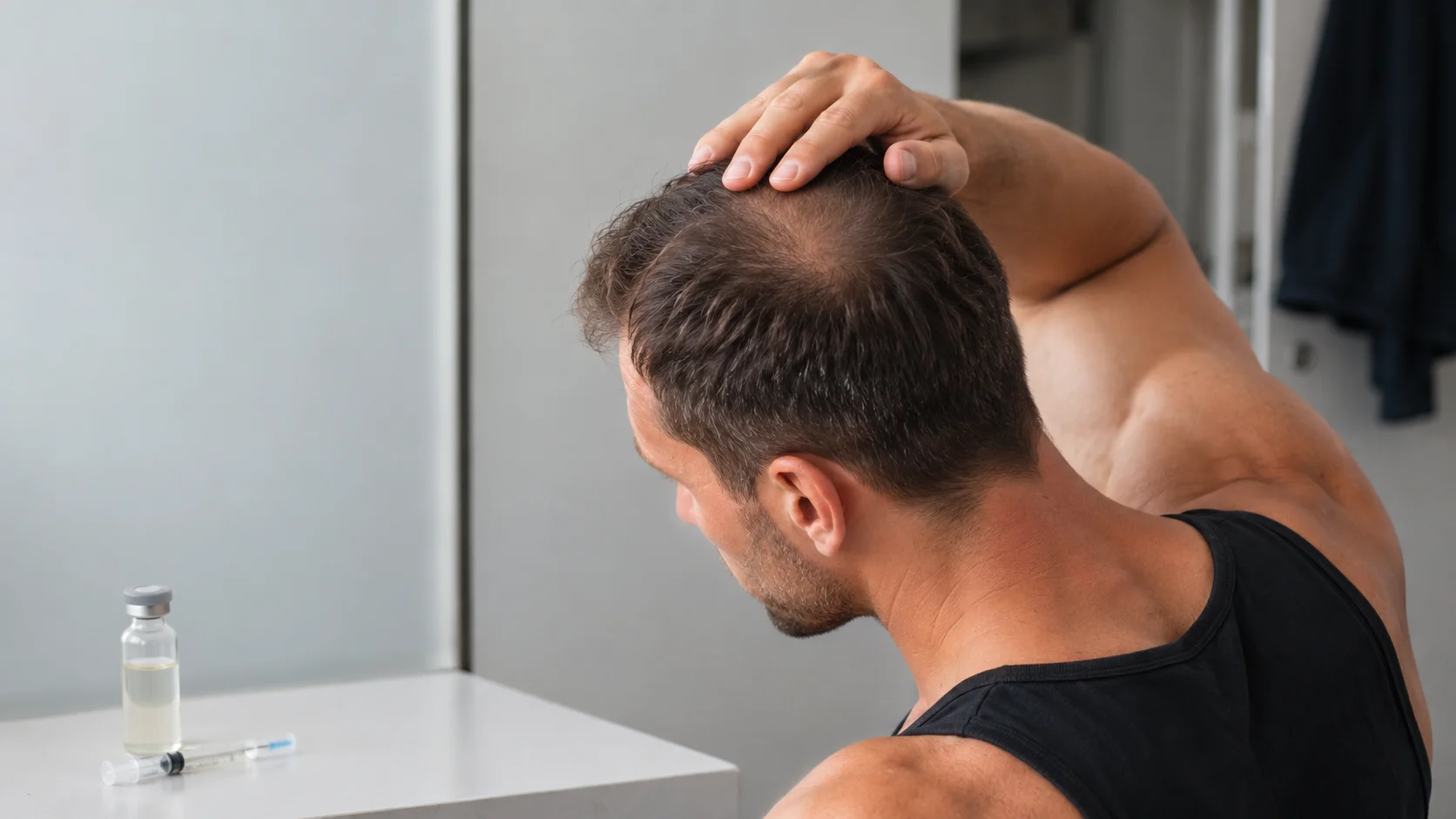
Anabolic steroid cycles can contribute to hair loss, particularly in people who are genetically susceptible to androgenetic alopecia. Testosterone and related anabolic-androgenic steroids do not affect everyone’s hair in the same way, but they may accelerate follicle miniaturization and make pattern hair loss noticeable earlier than it otherwise would have been.
The risk is not limited to the scalp. Steroid use can also cause acne, increased body hair, menstrual changes, voice changes, fertility problems, and potentially serious cardiovascular, liver, hormonal, and psychological effects. Hair loss may be the most visible concern, but it should not be considered in isolation from these broader health risks.
How Testosterone Can Affect Scalp Hair
Testosterone is an androgen, a group of hormones involved in characteristics such as muscle development, body hair, and sexual function. Some testosterone is converted by the enzyme 5-alpha-reductase into dihydrotestosterone, commonly called DHT.
In genetically sensitive scalp follicles, DHT can shorten the active growth phase and gradually miniaturize the follicles. Each successive hair may become shorter, finer, and less pigmented. Over time, affected follicles may produce hair that is difficult to see.
This is the central process in androgenetic alopecia, also known as male or female pattern hair loss. Raising androgen exposure through a bodybuilding steroid cycle may intensify this process in susceptible individuals.
Does Everyone Who Uses Steroids Lose Hair?
No. Genetic susceptibility is a major part of the equation.
Some people can experience substantial androgen exposure without developing obvious scalp hair loss. Others may notice rapid recession or thinning after a relatively short period. A family history of pattern hair loss can indicate increased susceptibility, although the absence of an obvious family history does not guarantee protection.
Several factors may influence the outcome:
- The specific substances used
- Total androgenic exposure
- Length and frequency of cycles
- Individual sensitivity to DHT and other androgens
- Existing follicle miniaturization
- Age and baseline hair density
- Other health, nutritional, or hormonal factors
A compound described informally as “mild” or “hair-safe” can still present a risk. Underground products may also be mislabeled, contaminated, or contain different concentrations than expected.
Can Testosterone Replacement Therapy Cause the Same Problem?
Medically supervised testosterone replacement and bodybuilding steroid cycles are not equivalent. Replacement therapy is intended to bring testosterone into an appropriate physiological range for a diagnosed medical need. Bodybuilding cycles may involve much higher exposure, multiple substances, or fluctuating hormone levels.
Nevertheless, medically prescribed testosterone may still accelerate pattern hair loss in a genetically susceptible person. Anyone who notices new recession or thinning after starting treatment should discuss it with the prescribing clinician. Changing or stopping prescribed hormone therapy without medical guidance can create additional health problems.
What Steroid-Related Hair Loss Usually Looks Like
Androgen-related loss generally follows a recognizable pattern.
In men, it may appear as:
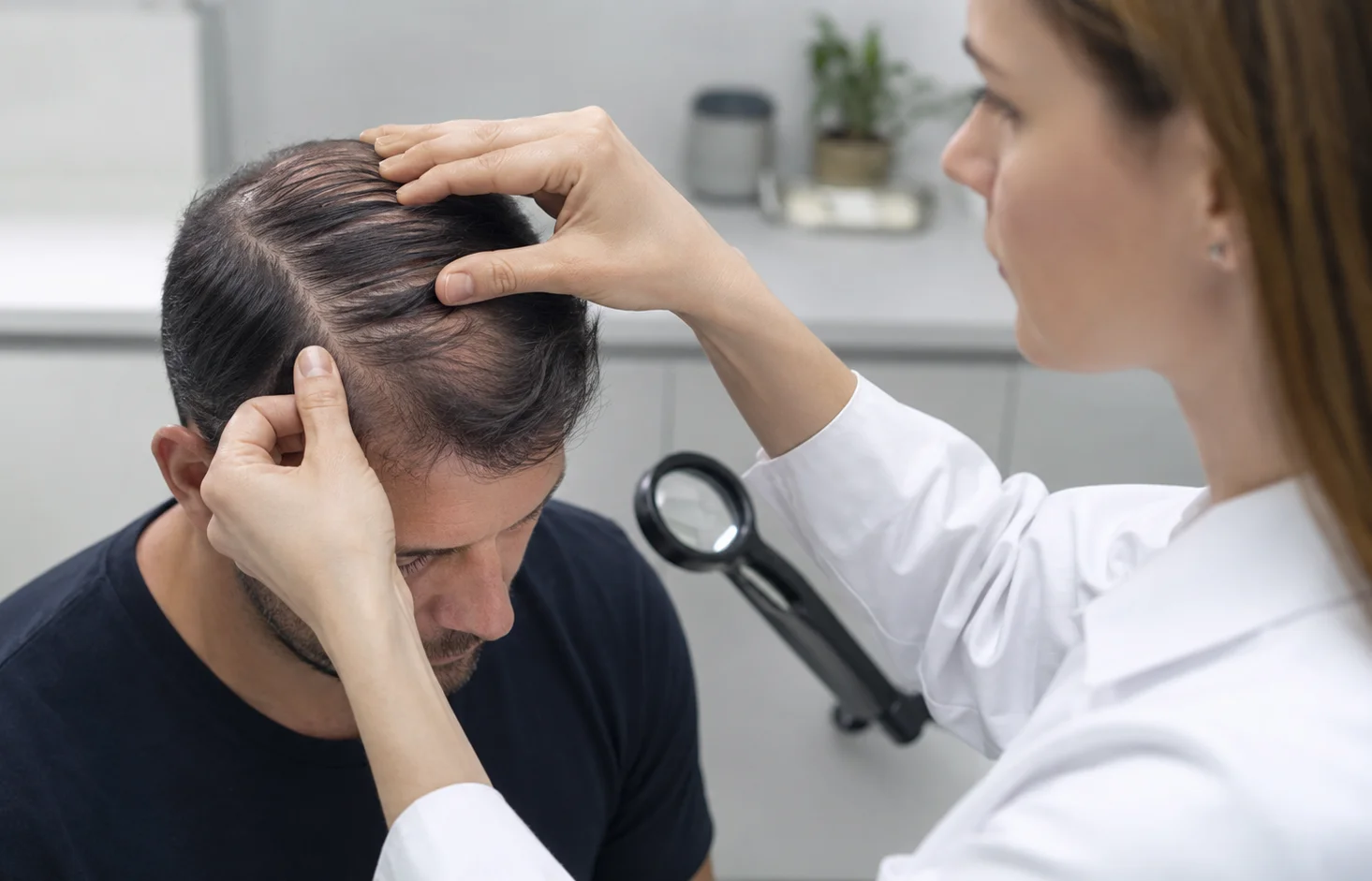
- Recession at the temples
- A more prominent M-shaped hairline
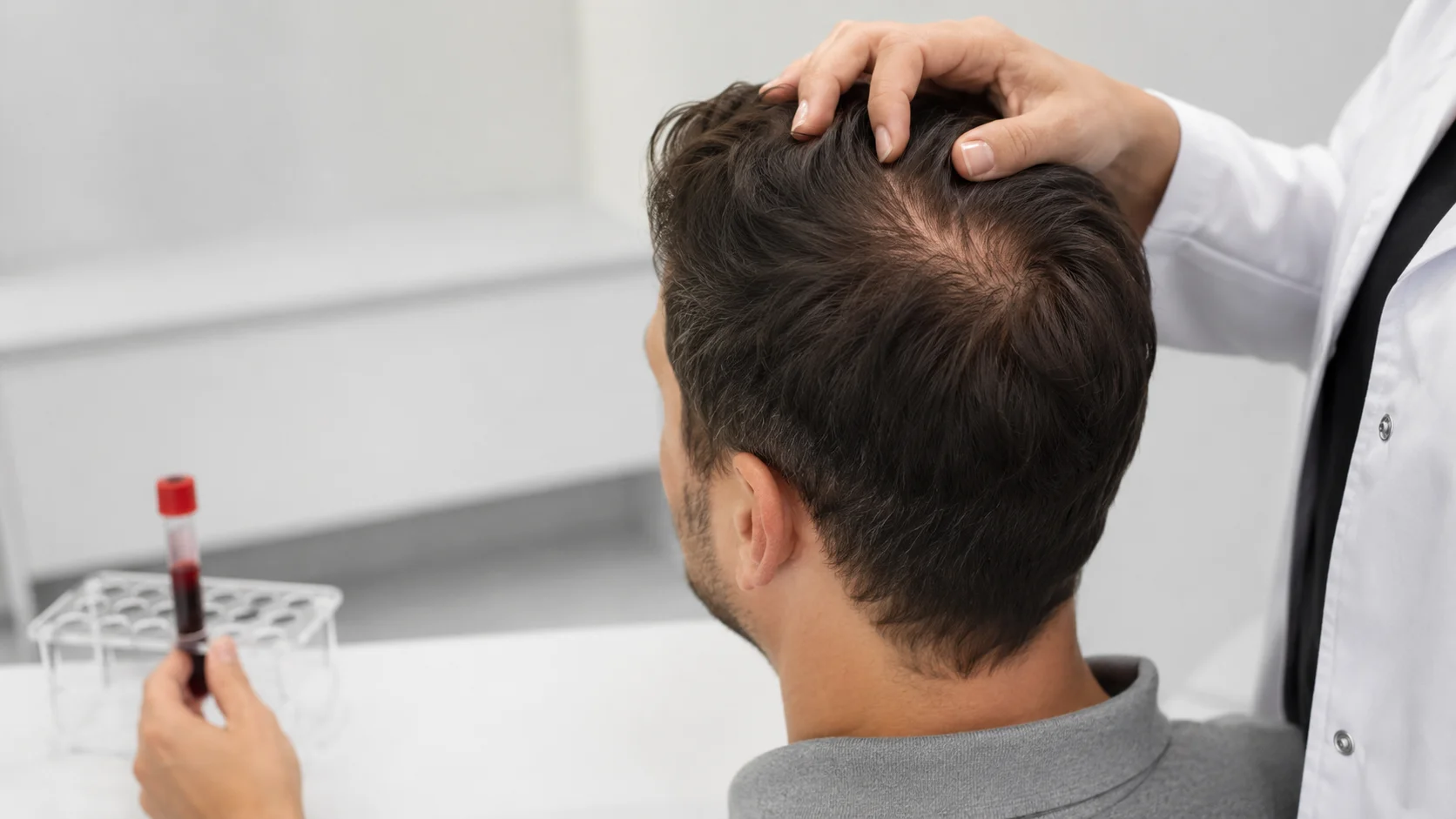
- Thinning at the crown
- Reduced density across the top of the scalp
In women, androgen exposure may cause widening of the part, reduced central density, or more diffuse thinning over the top of the scalp. Increased facial or body hair, acne, menstrual disruption, or voice changes may occur at the same time.
Sudden shedding from the entire scalp is less typical of androgenetic alopecia. It may represent telogen effluvium, which can follow hormonal changes, illness, severe dieting, nutritional deficiency, psychological stress, or the physical strain associated with an intensive training regimen. More than one form of hair loss can occur simultaneously.
Is the Hair Loss Reversible After Stopping Steroids?
The answer depends on the cause, severity, and duration.
If shedding is primarily telogen effluvium caused by a hormonal transition or nutritional stress, density may gradually improve after the trigger resolves. Recovery generally follows the slow pace of the hair cycle and may take several months.
Established follicle miniaturization is less predictable. Removing an androgenic trigger may reduce further acceleration, but it does not guarantee that miniaturized follicles will fully recover. The longer a follicle has remained severely miniaturized, the less likely complete restoration may be.
Stopping a cycle can also produce significant hormonal changes. Medical support is appropriate, especially when there are symptoms such as depression, sexual dysfunction, breast tenderness, testicular changes, menstrual disruption, or severe fatigue.
Can Finasteride Prevent Hair Loss During a Steroid Cycle?
Finasteride reduces the conversion of testosterone to DHT by inhibiting type II 5-alpha-reductase. It is an established treatment for male androgenetic alopecia, but it should not be viewed as a universal protective shield against steroid-related hair loss.
Not all anabolic steroids depend on conversion to DHT to exert androgenic effects. Some compounds can affect androgen receptors directly, while others form metabolites that finasteride does not meaningfully block. The interaction between finasteride and a particular steroid regimen may also be medically complex.
Finasteride can cause adverse effects and is not appropriate for everyone. It should not be self-prescribed simply to make nonmedical steroid use appear safer.
What About Minoxidil?
Topical minoxidil can support hair growth in some people with androgenetic alopecia. It does not lower androgen levels or prevent androgens from acting on susceptible follicles, so it does not remove the underlying steroid-related trigger.
Low-dose oral minoxidil is also used off-label for certain hair-loss conditions, but it has systemic cardiovascular effects and requires medical assessment. Neither form makes an anabolic steroid cycle medically safe.
How to Evaluate Hair Loss During a Cycle
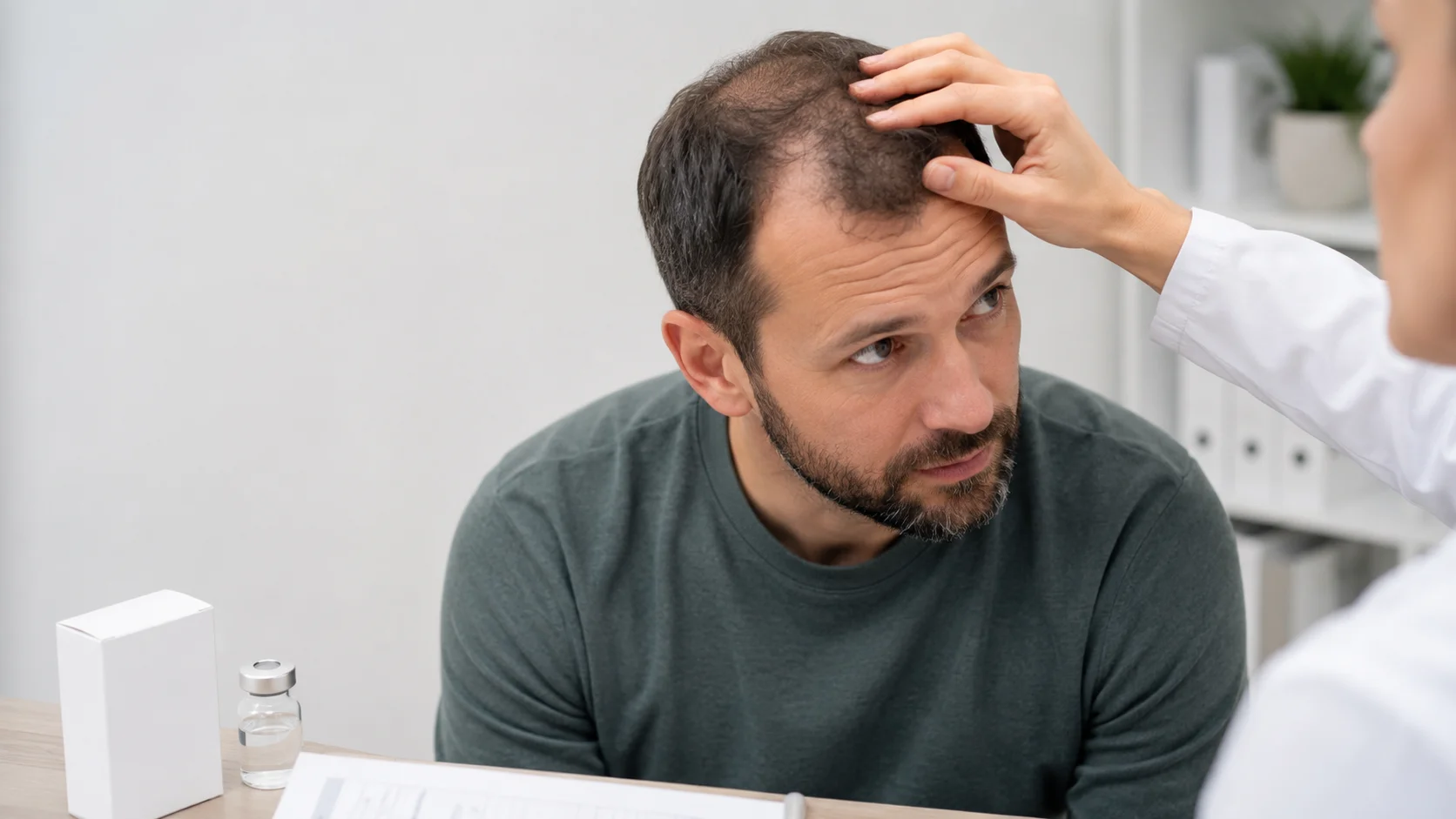
Early assessment can help distinguish pattern hair loss from temporary shedding or another condition. A dermatologist may review the timing of symptoms, family history, substances used, scalp distribution, and associated medical changes.
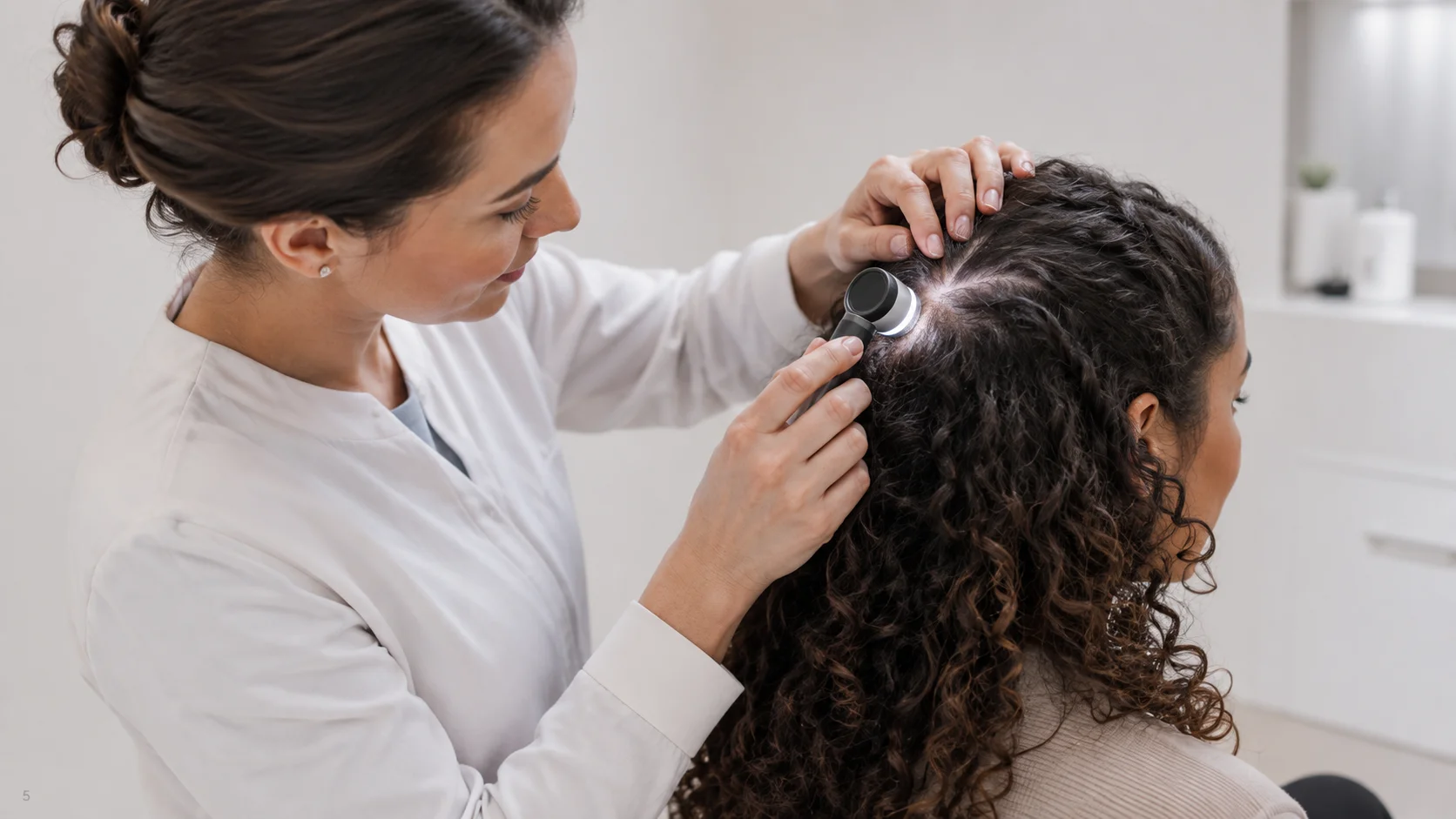
Evaluation may include scalp examination, magnified assessment of follicle miniaturization, standardized photographs, and selected blood tests when diffuse shedding or hormonal disruption is suspected. Giving the clinician an accurate account of steroid and supplement use is important for both diagnosis and safety.
Practical Steps That May Reduce Further Damage
The most direct way to remove steroid-related androgen exposure is to avoid nonmedical anabolic steroid use. Someone already using these substances should seek qualified medical advice rather than relying on advice from unregulated suppliers or online cycle protocols.
Other useful measures include:
- Avoiding severe calorie restriction and nutritionally unbalanced cutting diets
- Getting sufficient protein, iron, and essential nutrients
- Treating scalp inflammation or severe dandruff
- Avoiding tightly pulled hairstyles and aggressive chemical processing
- Taking consistent photographs under the same lighting
- Seeking early assessment for rapid recession or diffuse shedding
Hair supplements will not counteract genetically driven miniaturization unless an actual deficiency is present.
Frequently Asked Questions
Can one testosterone cycle cause permanent hair loss?
It is possible for a cycle to accelerate androgenetic alopecia in a highly susceptible person. Whether the visible change becomes permanent depends on the degree of miniaturization, the person’s genetics, and how early the process is addressed.
Does DHT-blocking shampoo prevent steroid-related hair loss?
Shampoos may support scalp hygiene or help manage inflammation, but they have not been shown to reliably protect genetically sensitive follicles from the androgen exposure associated with steroid cycles.
Will hair loss stop immediately after a cycle ends?
Not necessarily. Hair cycling is delayed, so shedding may continue for weeks or months. Pattern hair loss may also continue because genetic susceptibility remains even after the added androgen exposure ends.
Are women at risk from anabolic steroids?
Yes. Women may develop scalp thinning alongside acne, facial hair growth, menstrual changes, voice deepening, and other signs of androgen exposure. Some changes may not fully reverse, making prompt medical evaluation important.
Can a hair transplant repair steroid-related hair loss?
A transplant can redistribute permanent donor hair, but it does not stop ongoing loss in non-transplanted follicles. Active or unstable loss should be evaluated before surgery, and continued androgen exposure may complicate long-term planning.
The Bottom Line
Bodybuilding steroid cycles can trigger or accelerate hair loss, especially in people with genetically sensitive follicles. The degree of risk cannot be predicted reliably from the compound name, family history, or experience of other users.
Hair-focused medications may be appropriate after professional assessment, but they cannot eliminate the wider health risks of nonmedical steroid use. New recession, thinning, or diffuse shedding warrants an honest medical evaluation that considers both the scalp and the effects of androgen exposure on the whole body.
This content is for general informational purposes and does not replace individualized medical advice, diagnosis, or treatment.