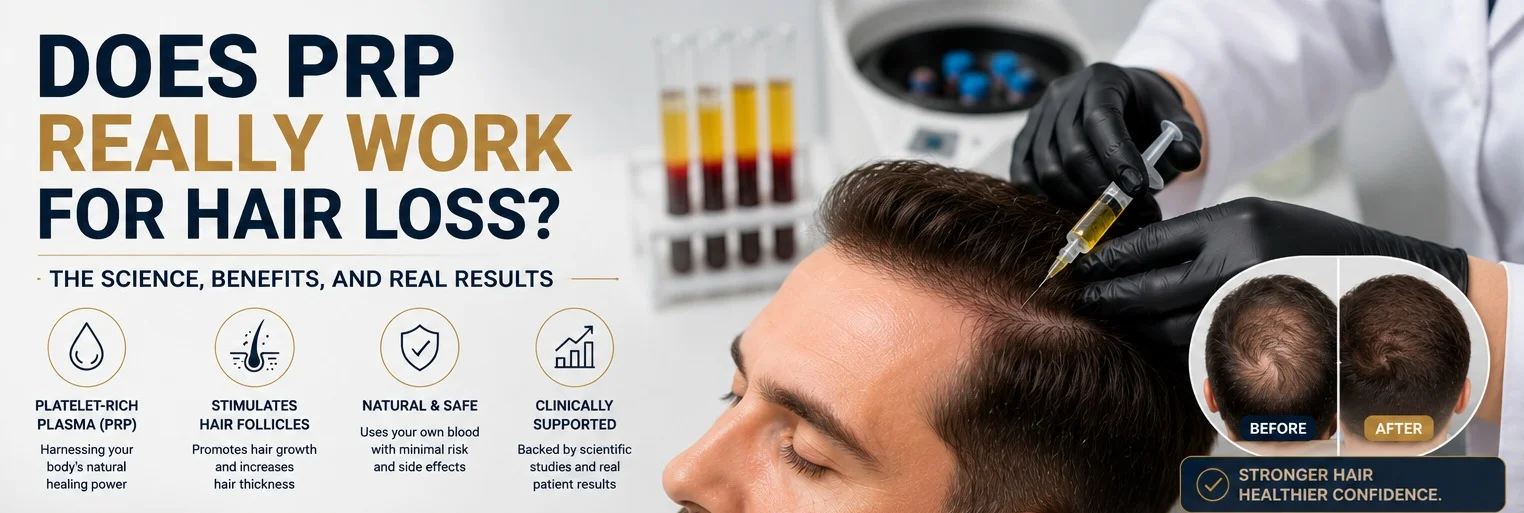
Injectable platelet-rich fibrin, often shortened to iPRF or I-PRF, is an autologous treatment being studied for hair loss. Autologous means it is prepared from a person’s own blood. Like platelet-rich plasma, iPRF contains platelets and growth-factor-related signaling molecules that may influence tissue repair and follicle activity. Unlike conventional PRP, iPRF is prepared in a way that allows a fibrin matrix to form, which may release growth factors more gradually.
Interest in iPRF for hair loss is growing, especially for androgenetic alopecia. However, it is important to describe the evidence accurately. iPRF is promising, but it is not a guaranteed cure, and research is still developing. Treatment protocols vary widely, and long-term comparative evidence remains limited.
What Is iPRF?
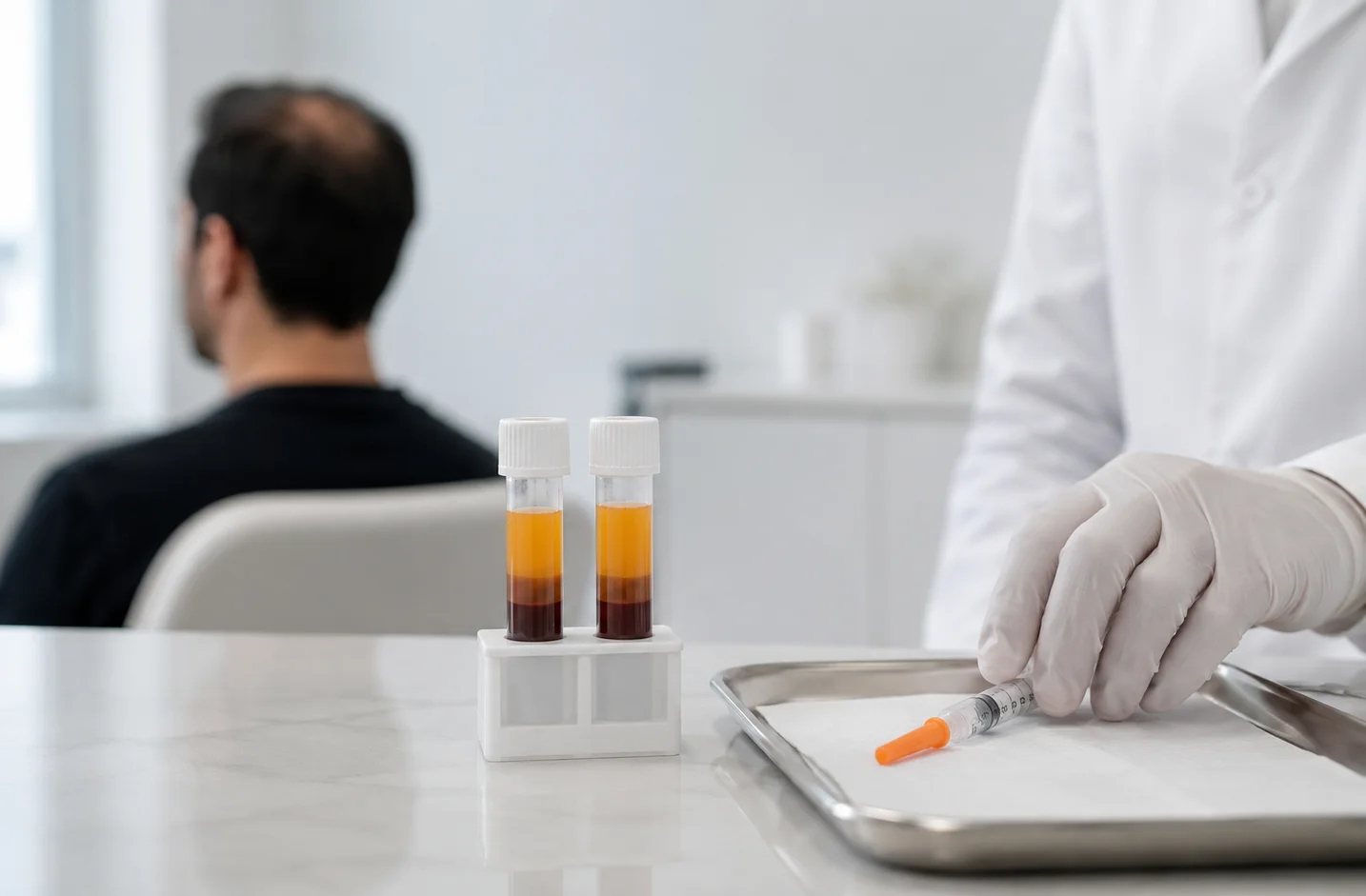
iPRF is a blood-derived concentrate prepared without adding anticoagulants in many protocols. A blood sample is drawn and centrifuged at a lower speed than many traditional PRP protocols. This can produce a liquid fibrin-rich product that remains injectable for a limited period before clotting.
The fibrin component is important because it can act as a biological scaffold. Platelets, leukocytes, cytokines, and growth factors may become part of this matrix. The theory is that this structure allows a slower release of signaling molecules compared with some PRP preparations.
In hair restoration, iPRF is injected into the scalp in areas of thinning hair. It is usually discussed for non-scarring hair loss, especially androgenetic alopecia, rather than for areas where follicles are already absent.
How iPRF May Work
The proposed mechanism involves platelet-derived growth factors and other signaling molecules that may support follicle cycling, local blood vessel activity, wound healing, and cellular communication around the follicle.
Hair follicles are complex mini-organs influenced by genetics, hormones, inflammation, vascular signals, immune activity, and the hair cycle. iPRF does not change inherited androgen sensitivity in the same way that anti-androgen medications may. It also does not create new follicles where follicles have been destroyed.
Its potential role is supportive: improving the environment around existing follicles and possibly encouraging thicker growth in follicles that are still capable of responding.
iPRF vs PRP
PRP and iPRF are related but not identical. PRP is usually prepared with anticoagulants and is designed to concentrate platelets in plasma. iPRF is typically prepared without anticoagulants and contains a fibrin network that may trap cells and growth factors.
The possible advantage of iPRF is slower growth factor release and a more natural fibrin scaffold. The possible disadvantage is that preparation and injection timing can be more technically sensitive because clotting can occur. Protocols are less standardized than many patients realize.
At present, PRP has a larger body of research for androgenetic alopecia than iPRF. iPRF has encouraging early evidence, but it should not be presented as definitively superior across all patients.
What Happens During the Procedure?
A typical iPRF session begins with a medical assessment to determine whether the person is a reasonable candidate. The clinician may review the type of hair loss, medical history, medications, pregnancy status, scalp disease, and expectations.
During the procedure, blood is drawn into tubes and processed in a centrifuge. The iPRF layer is collected and injected into thinning scalp areas using small needles. Some practices use topical anesthetic, vibration, cooling, or local techniques to reduce discomfort.
The procedure may take less than an hour, depending on preparation and the number of treatment areas. Mild redness, swelling, tenderness, pinpoint bleeding, or temporary soreness can occur afterward.
How Many Sessions Are Needed?
There is no universally accepted protocol. Some clinics use a series of monthly sessions followed by maintenance treatments. Others use different intervals based on hair loss severity and response.
This variability is one of the limitations in the evidence. If studies use different centrifuge speeds, blood volumes, injection depths, session numbers, and outcome measures, it becomes harder to compare results.
Patients should ask what protocol is being used, what evidence supports it, how results will be measured, and when the treatment will be considered unsuccessful if there is no response.
What Does the Evidence Show?
Current evidence suggests iPRF may improve hair density, hair thickness, or patient-reported outcomes in some people with androgenetic alopecia. Small studies, case series, and comparative studies have reported encouraging results.
However, the evidence is still limited compared with more established treatments. Many studies have small sample sizes, short follow-up periods, variable preparation methods, and limited blinding. More high-quality randomized controlled trials are needed to clarify who benefits most, how long results last, and how iPRF compares with PRP, minoxidil, oral medications, and combination therapy.
It is reasonable to describe iPRF as an emerging treatment with promising but still developing evidence. It should not be described as proven to work for everyone.
Who May Be a Candidate?
iPRF may be considered for selected people with early to moderate androgenetic alopecia who still have active follicles in the thinning area. It may also be discussed as an adjunct to other treatments, such as topical minoxidil or medical therapy, when appropriate.
It is less likely to help areas that are completely bald and shiny, where follicles are no longer present. It is not an appropriate primary treatment for active scarring alopecia unless the inflammatory disease is diagnosed and medically controlled. It is also not a substitute for treating thyroid disease, nutritional deficiency, traction, or autoimmune hair loss.
Potential Benefits
Possible benefits may include improved hair shaft thickness, improved density in responsive follicles, reduced shedding in some cases, and a treatment approach that uses the person’s own blood rather than a synthetic medication.
Some people are attracted to iPRF because it is drug-free in the conventional sense. Still, “natural” does not mean guaranteed, risk-free, or appropriate for every diagnosis.
Risks and Limitations
Common short-term side effects may include injection discomfort, bruising, swelling, redness, tenderness, headache, or temporary shedding. Infection is uncommon when proper sterile technique is used but remains a procedural risk.
Limitations include cost, need for repeated sessions, lack of standardized protocols, variable response, and limited long-term data. People with platelet disorders, certain blood conditions, active infection, uncontrolled scalp inflammation, or specific medication considerations may not be good candidates.
Results are not immediate. Hair changes usually take months to assess because the hair cycle is slow.
FAQ
Is iPRF better than PRP for hair loss?
It is too early to say that iPRF is consistently better. iPRF may offer slower growth factor release, but PRP has more published evidence overall.
Does iPRF regrow hair in bald areas?
It is unlikely to regrow hair where follicles are absent or scarred. It is more plausible in thinning areas where follicles still exist.
How long does iPRF take to work?
Visible changes, if they occur, usually take several months. Hair density and thickness should be assessed with consistent photos or clinical measurements.
Is iPRF safe?
Because it uses the person’s own blood, allergy risk is low, but injection-related risks still exist. Safety depends on patient selection, sterile technique, and proper preparation.
Can iPRF replace minoxidil or other treatments?
Not necessarily. It may be used as an adjunct in selected cases, but evidence-based medical treatments may still be appropriate depending on the diagnosis.
The Bottom Line
Injectable platelet-rich fibrin is an emerging hair loss treatment that uses a person’s own blood components and a fibrin matrix to potentially support existing follicles. The concept is scientifically plausible, and early studies are encouraging, especially for androgenetic alopecia.
Still, iPRF is not a cure, not a guaranteed solution, and not yet as well standardized as patients may assume. The best use of iPRF is within a diagnosis-based hair loss plan, with realistic expectations and objective follow-up.
This article is for general informational purposes only and does not replace individualized medical advice, diagnosis, or treatment. If you are considering iPRF for hair loss, consult a qualified healthcare professional experienced in hair and scalp disorders.