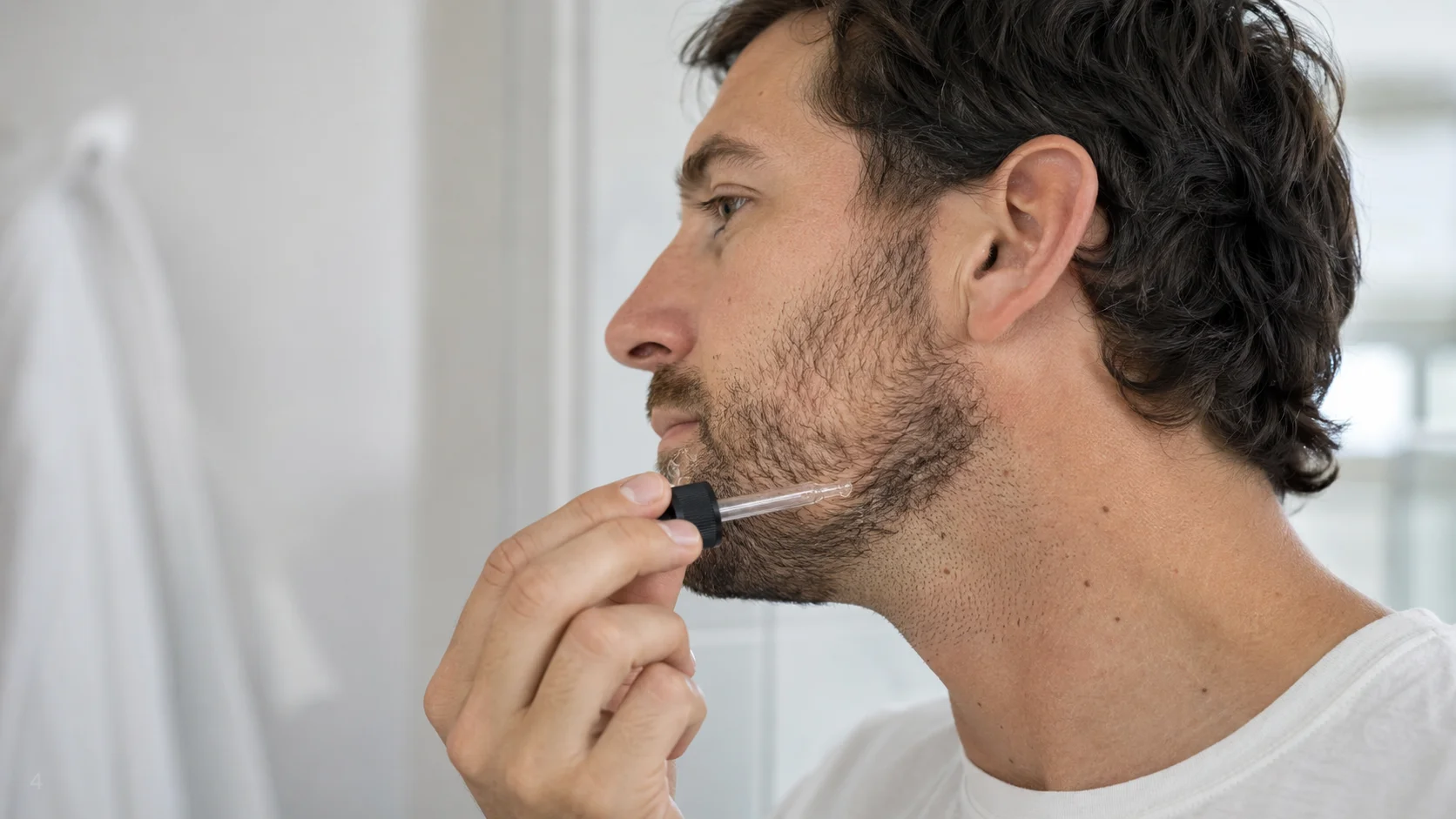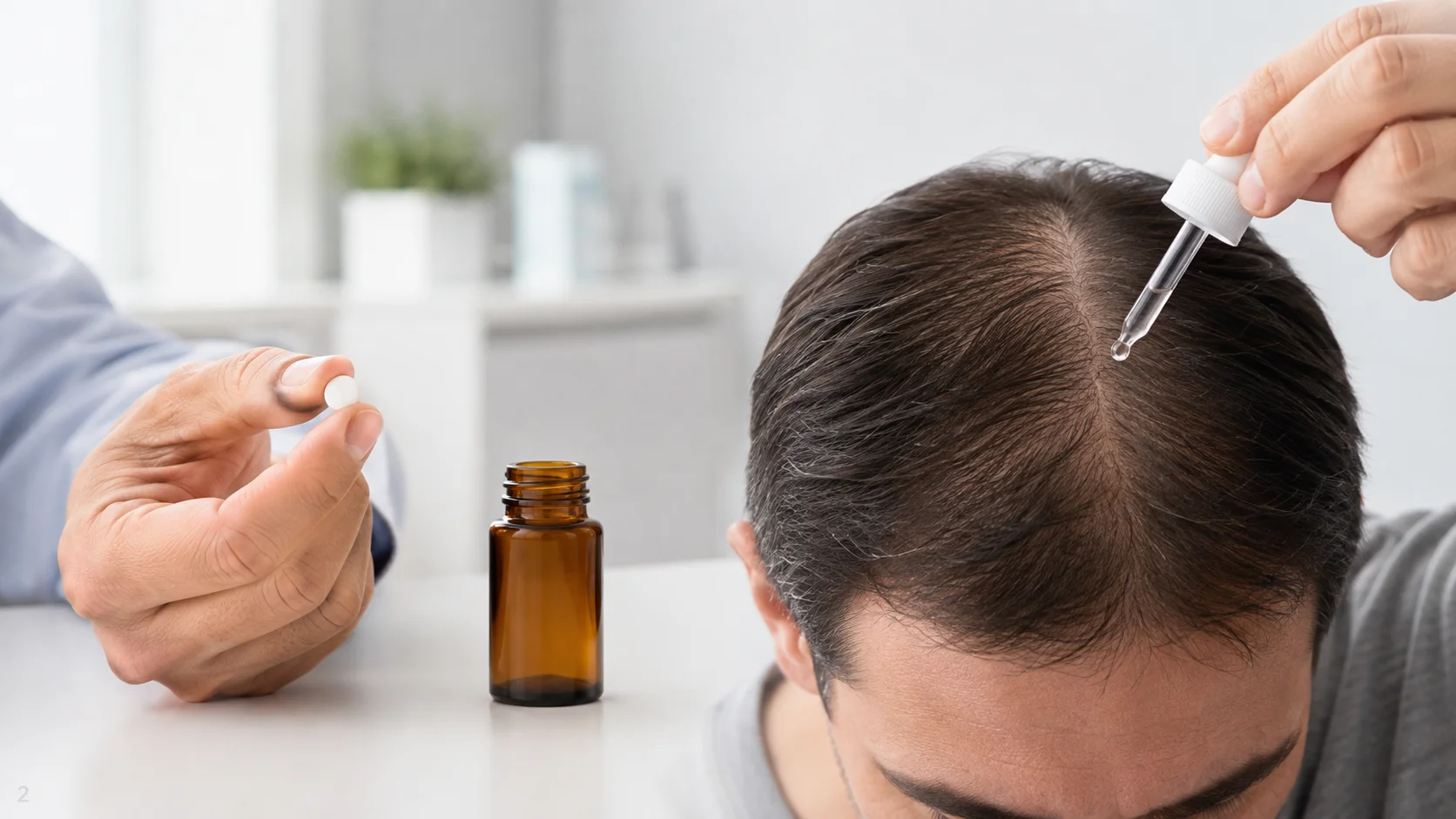
Oral and topical minoxidil can both support hair growth, but neither form is automatically better for everyone. Topical minoxidil has a long history of use for pattern hair loss and limits most drug exposure to the application area. Low-dose oral minoxidil can be more convenient and may help people who cannot tolerate or consistently apply a topical product, but it exposes the whole body to the medication.
Comparative clinical trials have generally found similar improvements in hair density over several months, although results vary among individuals and study populations. The more meaningful difference is often the balance between convenience, scalp tolerability, systemic risk, and the person’s medical history.
How Minoxidil Supports Hair Growth
Minoxidil was originally developed as an oral blood-pressure medication. Its hair-growth effects led to topical formulations designed for the scalp.
Its exact actions in hair follicles are still being studied. Minoxidil appears to help prolong the active growth phase, increase follicle size in responsive follicles, and encourage some resting hairs to re-enter growth. It does not directly block DHT and does not cure the genetic tendency behind androgenetic alopecia.
Both forms require ongoing use to maintain benefits. Hair retained or grown because of minoxidil is commonly lost gradually after treatment is discontinued.
Topical Minoxidil
Topical minoxidil is applied directly to a dry scalp, commonly as a solution or foam. Depending on the formulation and clinical instructions, it may be used once or twice daily.
It is widely used for male and female pattern hair loss. Because the medication is delivered locally, systemic absorption is usually much lower than with oral treatment.
Potential Advantages
Topical minoxidil may be preferred because:
- It has extensive clinical experience for pattern hair loss
- Most exposure is concentrated at the scalp
- It avoids taking a systemic medication
- It is available without a prescription in many countries
- Different formulations may accommodate scalp sensitivity or styling needs
It is often the logical first option when there is no reason to avoid topical application.
Limitations and Side Effects
The most common problems are local irritation, itching, dryness, flaking, or residue. Liquid formulations may contain ingredients that irritate some scalps, while foam may be better tolerated by certain users.
Application can be inconvenient, particularly for people with long or dense hair. The medication needs to reach the scalp rather than merely coating the hair. Inconsistent use can limit results.
Unwanted facial hair may develop if the product runs onto the face, transfers from the hands, or contacts pillows before drying. Rarely, systemic absorption may contribute to dizziness, palpitations, swelling, or changes in blood pressure. Such symptoms warrant medical advice.
Low-Dose Oral Minoxidil
Low-dose oral minoxidil is prescribed by clinicians for several hair-loss conditions. Its use for hair loss is off-label in many regions, meaning the oral medication was not originally approved for that purpose.
A tablet removes the need for daily scalp application. This can improve consistency for people who dislike topical residue, have scalp irritation, or find application impractical.
Potential Advantages
Oral minoxidil may offer:
- Simple, consistent administration
- No topical residue or change in hair texture
- No application-related scalp irritation
- Distribution to follicles across the scalp
- A possible option when topical treatment has been poorly tolerated
Convenience can matter because a treatment cannot work reliably if it is used only occasionally.
Systemic Risks
Oral minoxidil reaches the entire body. Unwanted hair growth on the face or body is among the most frequently reported effects. Other possible effects include headache, light-headedness, ankle swelling, fluid retention, faster heart rate, and palpitations.
More serious cardiovascular complications appear uncommon at the low doses used in dermatology, but uncommon does not mean impossible. Oral minoxidil is a potent vasodilator at its original blood-pressure doses and carries important prescribing warnings.
People with cardiovascular disease, low blood pressure, kidney problems, fluid-balance disorders, or relevant medication use need particularly careful assessment. Pregnancy, breastfeeding, age, and other health factors must also be considered.
What Comparative Evidence Shows
Available randomized trials and pooled analyses suggest that oral and topical minoxidil can produce broadly similar average improvements in hair density and diameter for androgenetic alopecia over approximately six months. One trial in men did not find oral treatment clearly superior for the main hair-density outcomes, although photographic assessment favored oral minoxidil at the crown.
These findings do not establish that the two options are interchangeable for every patient. Studies have used different doses, formulations, populations, and outcome measures. Follow-up has also been relatively short compared with the years that pattern hair loss treatment may be continued.
Unwanted hair growth is generally more common with oral minoxidil because every hair-bearing region may be exposed. Topical treatment, meanwhile, is more likely to cause local scalp symptoms.
Which Option Is Better for Men?
For many men, topical minoxidil is a reasonable starting point because it is established, accessible, and has less systemic exposure. Oral minoxidil may be considered when application is impractical, topical irritation persists, or an adequate topical trial has not produced a satisfactory plan.
The location of loss also matters. Minoxidil can help both crown and frontal thinning, but dramatic reconstruction of a deeply receded hairline should not be expected. Combining minoxidil with an appropriate DHT-directed treatment may be considered for male androgenetic alopecia because the medications address different aspects of the condition.
Which Option Is Better for Women?
Both topical and low-dose oral minoxidil are used in women with pattern hair loss. Topical minoxidil often remains the first approach, while oral treatment may be discussed when topical use is difficult or ineffective.
Women may be especially concerned about facial hypertrichosis. Oral treatment can increase this risk. Pregnancy planning is also important because minoxidil is generally avoided during pregnancy and breastfeeding unless a qualified clinician determines otherwise.
Women with sudden thinning, irregular periods, acne, increased facial hair, or other hormonal symptoms should be evaluated for an underlying condition rather than assuming all thinning is genetic.
Initial Shedding and the Treatment Timeline
Either form can cause a temporary increase in shedding during the early treatment period. This may occur as follicles transition into a new growth cycle. It does not happen to everyone and should be distinguished from severe, persistent, or patchy loss.
Visible improvement usually requires patience. Early changes may take three to six months, and a fair assessment may require longer. Standardized photographs are often more reliable than checking the mirror every day.
Minoxidil does not work for every person. Advanced areas where follicles are no longer viable are less likely to respond than recently miniaturized areas.
Can Oral and Topical Minoxidil Be Used Together?
Using both is not automatically more effective and may increase drug exposure or side effects. Combination use should be directed by a clinician rather than improvised.
When response is inadequate, it is also important to verify the diagnosis. Iron deficiency, thyroid disease, inflammatory scalp disorders, alopecia areata, medication effects, and other causes may require different management.
Frequently Asked Questions
Is oral minoxidil stronger than topical minoxidil?
Oral treatment distributes the medication systemically, but comparative evidence does not show that it is universally more effective. The best choice depends on response, tolerability, adherence, and medical risk.
Which form causes more unwanted hair growth?
Oral minoxidil is generally more likely to cause facial or body hair growth. Topical minoxidil can also cause unwanted facial hair, particularly through transfer or runoff.
Does topical minoxidil affect blood pressure?
Systemic effects are uncommon when topical treatment is used correctly, but absorption can occur. Dizziness, chest discomfort, palpitations, faintness, or swelling should be assessed promptly.
Can I switch from topical to oral minoxidil?
A clinician can plan a transition based on your diagnosis, current response, blood pressure, medications, and health history. Switching without guidance may interrupt treatment or create unnecessary exposure.
What happens if minoxidil is stopped?
Benefits generally fade after discontinuation. Hair that was maintained by treatment may be shed over the following months as the underlying hair-loss process continues.
Choosing Between Them
Topical minoxidil offers extensive experience and lower systemic exposure, making it suitable for many first-time users. Low-dose oral minoxidil offers convenience and avoids scalp application but requires individualized prescribing and cardiovascular consideration.
The right comparison is therefore not simply which form grows more hair. It is which option offers a reasonable chance of sustained use with an acceptable risk profile for a particular person.
This content is for general informational purposes and does not replace individualized medical advice, diagnosis, or treatment.