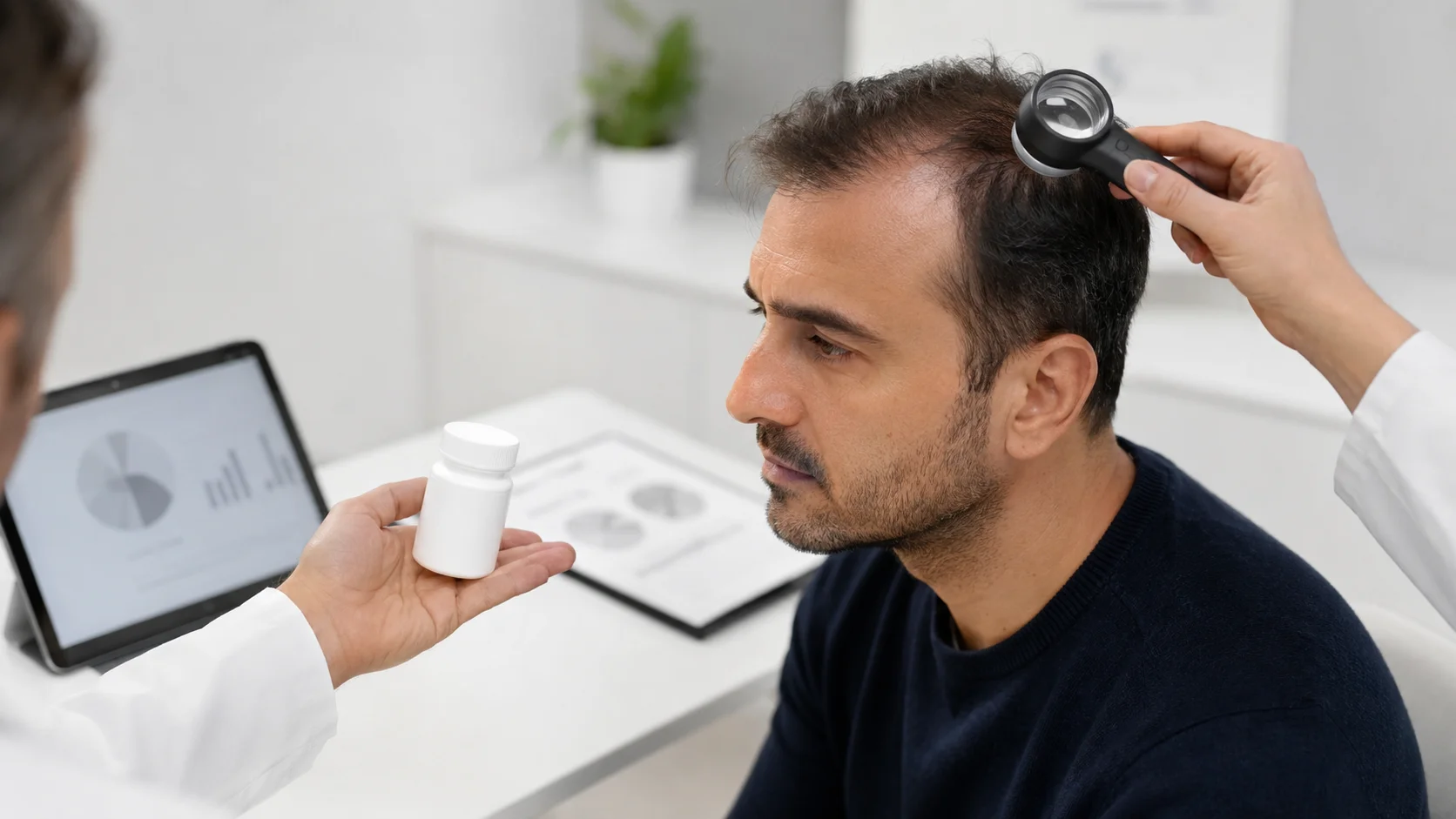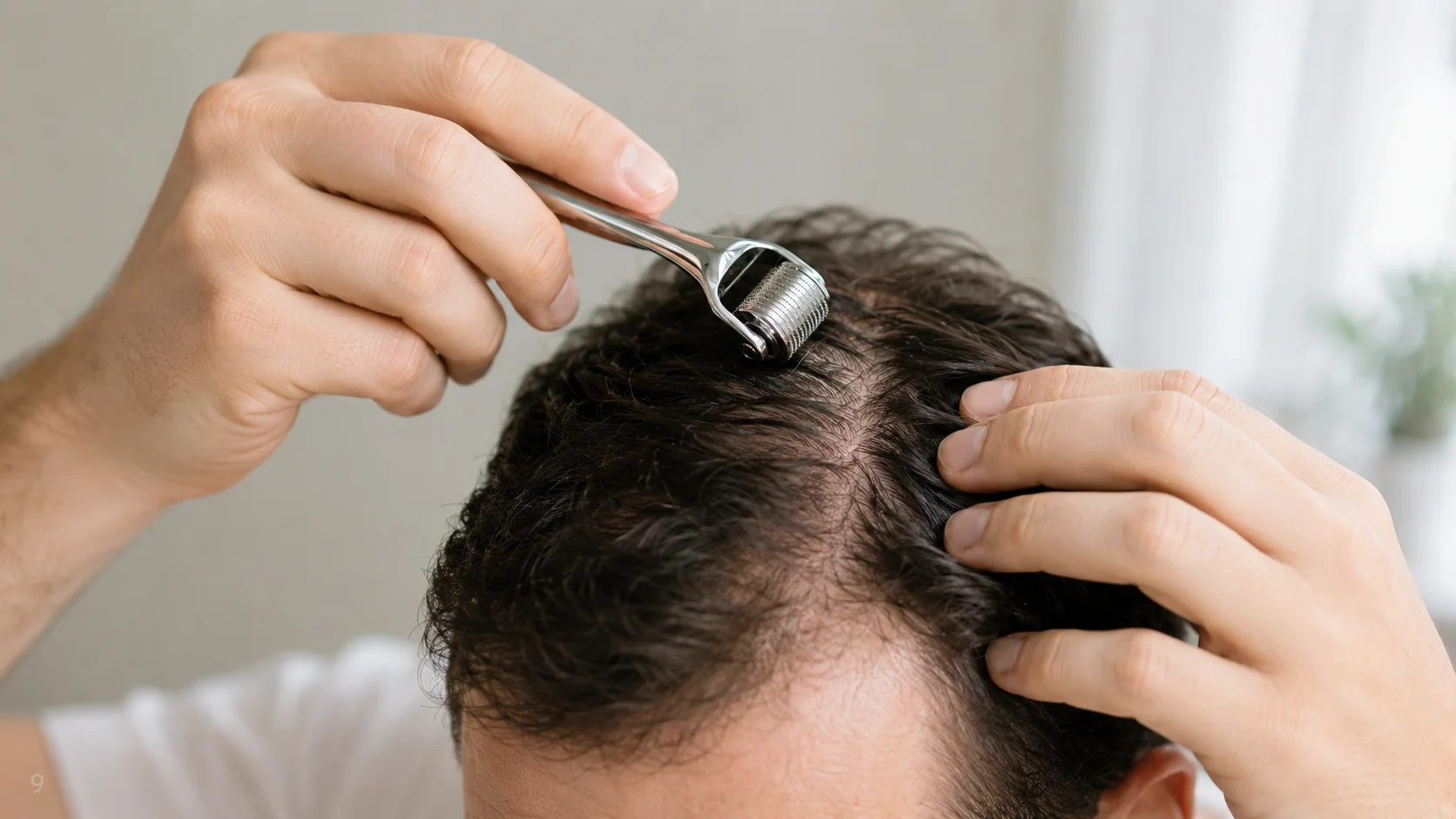
A dermaroller may support treatment for androgenetic alopecia, particularly when microneedling is combined with topical minoxidil. Clinical trials and systematic reviews have reported improvements in hair count with combination treatment, but study methods vary and the best needle depth, frequency, and long-term schedule remain uncertain.
Microneedling is not appropriate for every type of hair loss. Home dermarolling also introduces risks that may be underestimated, including infection, inflammation, scarring, pigment changes, and increased absorption of products applied to freshly needled skin.
What Is a Dermaroller?
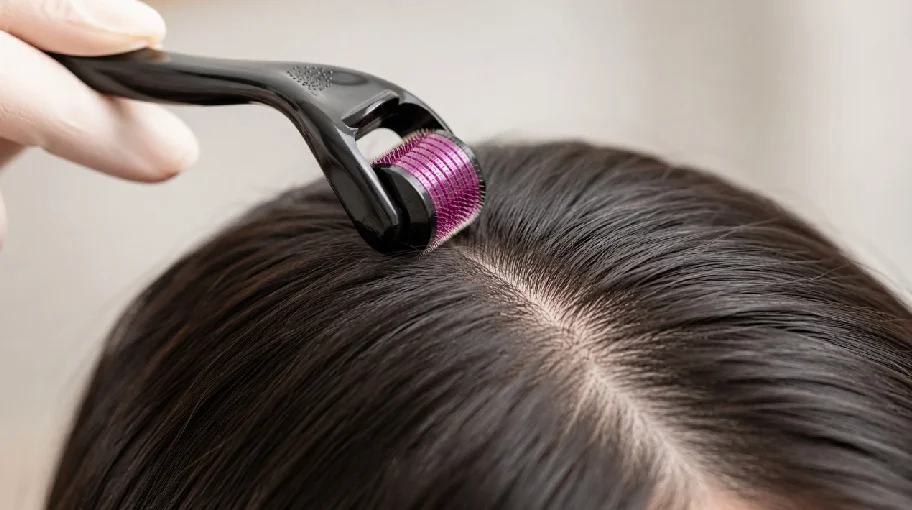
A dermaroller is a handheld cylinder covered with small needles. Rolling it over the scalp creates numerous controlled punctures, a process generally described as microneedling.
Professional microneedling may instead use a motorized pen or another device that allows more consistent control of depth and placement. This distinction matters because published results involving supervised procedures cannot automatically be reproduced with a consumer roller.
Needle length, pressure, number of passes, treatment interval, hygiene, and the condition of the scalp can all change the risk and effect.
How Microneedling Might Affect Hair Growth
Microneedling creates controlled skin injury. The repair response may activate signaling pathways, growth factors, and cellular activity relevant to the hair follicle. It may also influence the environment around miniaturized follicles.
A second proposed effect is enhanced penetration of topical products. This could increase delivery into the skin, but greater absorption is not automatically beneficial. It can also increase irritation and potentially raise systemic exposure.
These mechanisms remain areas of research. Microneedling does not manufacture new follicles, and it cannot reliably revive follicles destroyed by scarring.
What the Evidence Shows
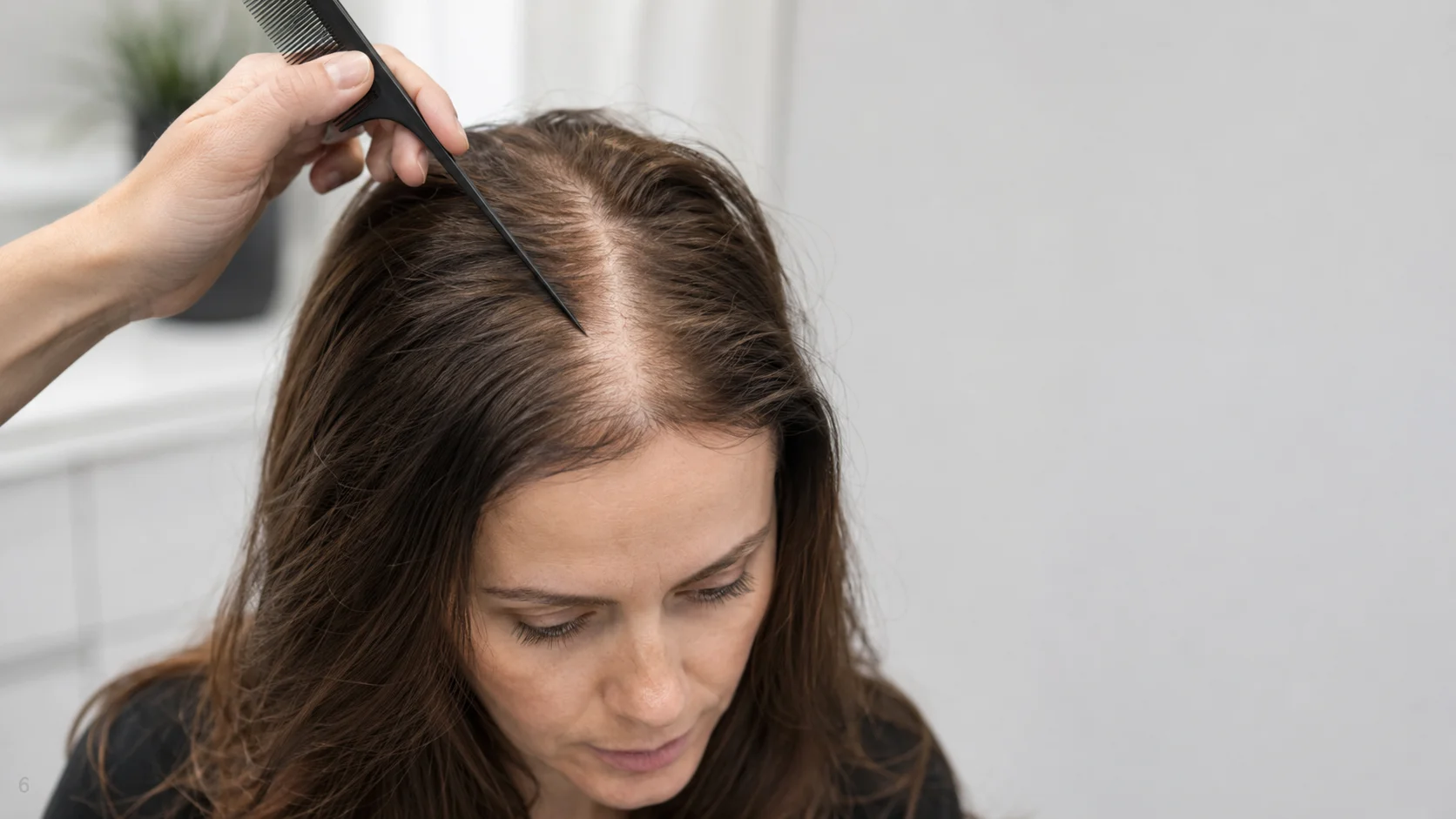
Research is most developed for androgenetic alopecia, the common pattern form of hair loss. Multiple trials have compared minoxidil alone with minoxidil plus microneedling, and meta-analyses generally report a greater improvement in hair count with combination therapy.
The findings are promising, but the evidence has important limitations:
- Studies use different devices and needle depths.
- Treatment intervals vary.
- Minoxidil strengths and schedules differ.
- Sample sizes are often modest.
- Blinding can be difficult.
- Follow-up may be too short to establish durability.
- Hair-count methods are not uniform.
Evidence for microneedling alone is less established than evidence for combination therapy. There is also no universally accepted protocol that a person can safely copy from a single study.
Dermarolling With Minoxidil
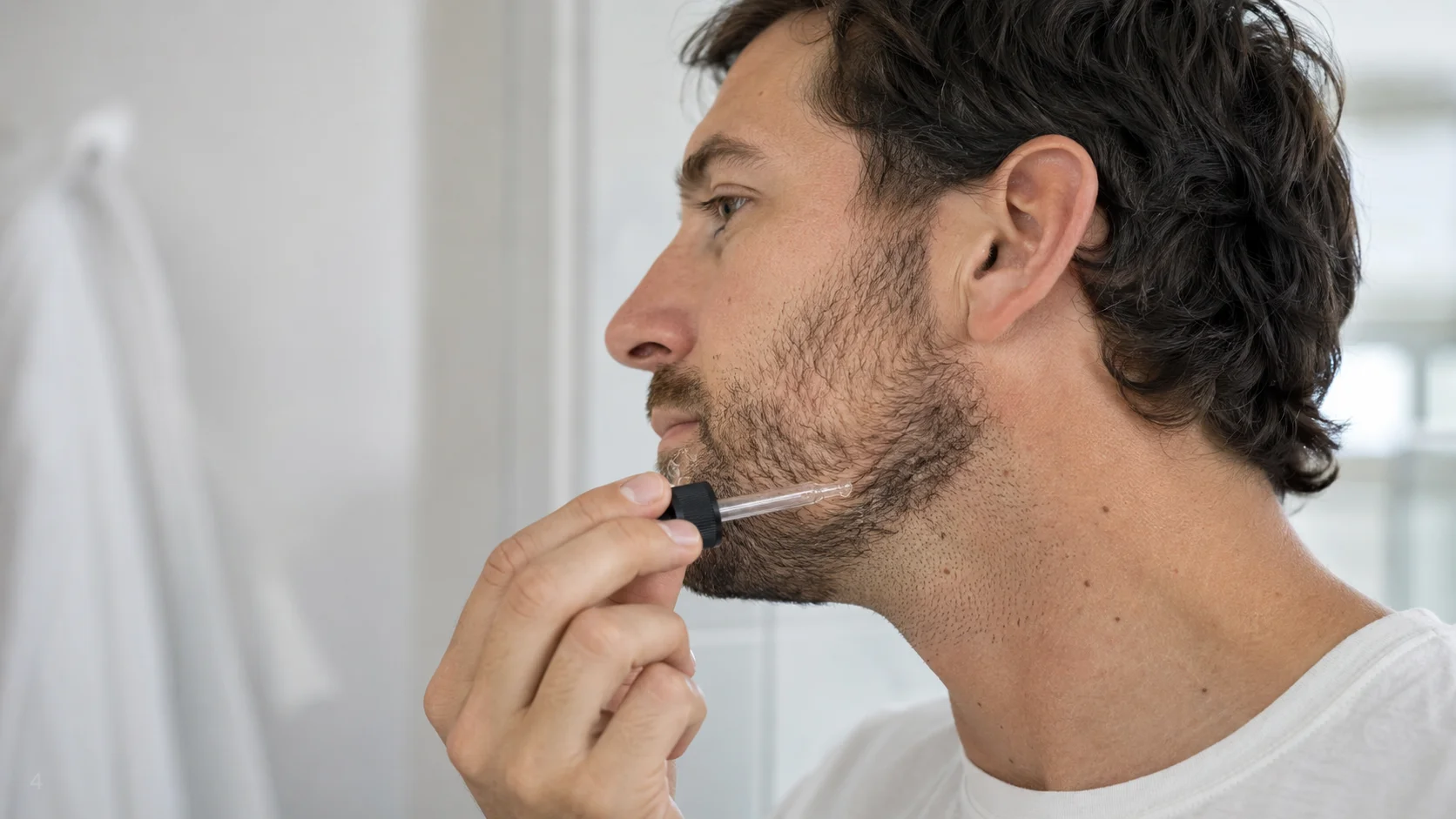
Microneedling and minoxidil are frequently discussed together because the combination has produced encouraging trial results. However, applying minoxidil immediately after a deeper session may increase burning, irritation, and absorption.
This raises the possibility of systemic adverse effects such as dizziness, rapid heartbeat, or changes in blood pressure in susceptible users. The correct interval between needling and topical medication depends on the procedure depth, skin response, and clinician’s protocol.
More absorption does not necessarily mean more hair growth. Applying extra minoxidil or placing it on visibly injured skin without guidance can increase risk.
Which Hair-Loss Conditions May Benefit?
Microneedling is primarily studied as an adjunct for androgenetic alopecia. It may be considered for selected adults after the diagnosis has been established and contraindications have been reviewed.
Evidence is insufficient to support unsupervised dermarolling for every form of alopecia. It may be inappropriate or harmful in:
- Active scarring alopecia
- Scalp infection
- Severe seborrheic dermatitis
- Active psoriasis or eczema
- Folliculitis
- Unexplained patchy hair loss
- Open wounds
- Bleeding disorders
- Conditions that impair healing
- A tendency to form keloid scars
Alopecia areata and scarring disorders require diagnosis-specific decisions. Intentionally injuring an inflamed or infected scalp can worsen the condition or obscure its clinical appearance.
At-Home Versus Professional Microneedling
At-home rollers are easy to purchase, but availability does not establish safety. Consumer devices may have inconsistent needle quality, become blunt, collect debris, or be difficult to disinfect adequately.
Professional treatment offers:
- Assessment of the hair-loss diagnosis
- Selection of appropriate depth
- More consistent device control
- Sterile or single-use components
- Monitoring for adverse reactions
- Coordination with topical or oral treatment
Professional treatment still has risks and does not guarantee growth. Its main advantage is a more controlled environment and an individualized protocol.
Needle Depth and Frequency
There is no single best needle length or schedule established for all users. Research protocols range considerably, and deeper is not necessarily better.
Short needles may mainly affect the surface and product penetration, while longer needles create more substantial injury, discomfort, and downtime. Excessive depth or frequent treatment may maintain chronic inflammation rather than allowing normal repair.
Bleeding should not be treated as proof of an effective session. Aggressive pressure and repeated passes can increase tissue damage without demonstrating additional benefit.
Because device measurements, scalp thickness, and technique vary, translating a millimeter value from a study into home use is unreliable.
Risks and Side Effects
Expected short-term effects can include redness, tenderness, mild swelling, and pinpoint bleeding. More concerning complications may include:
- Bacterial or fungal infection
- Persistent inflammation
- Contact dermatitis
- Post-inflammatory pigmentation changes
- Scarring
- Worsening of an existing scalp disorder
- Broken hair shafts
- Transmission of blood-borne infection from shared devices
- Increased absorption of topical medication
A roller should never be shared. Reusing a contaminated or damaged device can expose the scalp to microorganisms and create irregular injury.
Alcohol applied directly to freshly needled skin may cause substantial irritation, while casual rinsing may not adequately disinfect a reusable device. This is one reason professional, single-use systems may provide more reliable infection control.
What to Avoid After Microneedling
Freshly treated skin is more vulnerable to irritation and contamination. Depending on the depth and professional instructions, it may be necessary to avoid:
- Unapproved topical medications
- Essential oils
- Hair dye or chemical treatments
- Fragranced scalp products
- Heavy sweating
- Swimming
- Direct sun exposure
- Scratching or picking
- Unclean hats, pillowcases, or equipment
The appropriate recovery period varies. A clinician’s protocol should take priority over generalized online advice.
When Results May Appear
Hair-cycle changes take time. A meaningful evaluation usually requires several months, not several sessions over a few weeks.
Progress should be assessed with standardized photographs and, when available, clinical measurements. Redness or temporary swelling can make the hair look different immediately after treatment and should not be mistaken for growth.
If treatment is stopped, the long-term outcome may depend on whether an accompanying therapy such as minoxidil is continued. Maintenance schedules have not been standardized.
Frequently Asked Questions
Does a Dermaroller Work Without Minoxidil?
It may have biological effects on its own, but the strongest current evidence generally concerns its use alongside another treatment. More rigorous research is needed on microneedling alone.
Can a Dermaroller Create New Hair Follicles?
There is no established evidence that it creates an unlimited supply of new human follicles. Its proposed role is to influence existing follicular and wound-healing pathways.
Is More Bleeding Better?
No. Visible bleeding is not a measure of hair-growth effectiveness. Excessive injury can increase pain, inflammation, infection risk, and scarring.
Can I Apply Minoxidil Immediately After Dermarolling?
That may increase irritation and absorption. The interval should follow a clinician-directed protocol based on the needle depth and individual response.
Can Dermarolling Make Hair Loss Worse?
Aggressive technique, infection, dermatitis, scarring, or repeated trauma can worsen scalp health and potentially contribute to breakage or shedding.
How Often Should I Use a Dermaroller?
There is no universal evidence-based frequency. Appropriate spacing depends on depth, device, scalp condition, and the treatment plan.
Can I Dermaroll Over Dandruff?
Active inflammation, scratching, or significant scaling should be evaluated and controlled first. Needling an irritated scalp may worsen symptoms and introduce infection.
Its Proper Role in Hair-Loss Care
Microneedling is a promising adjunct for pattern hair loss, especially when used with established treatment under a structured protocol. It is not a universal regrowth tool, and the variation between studies makes confident do-it-yourself instructions difficult to justify.
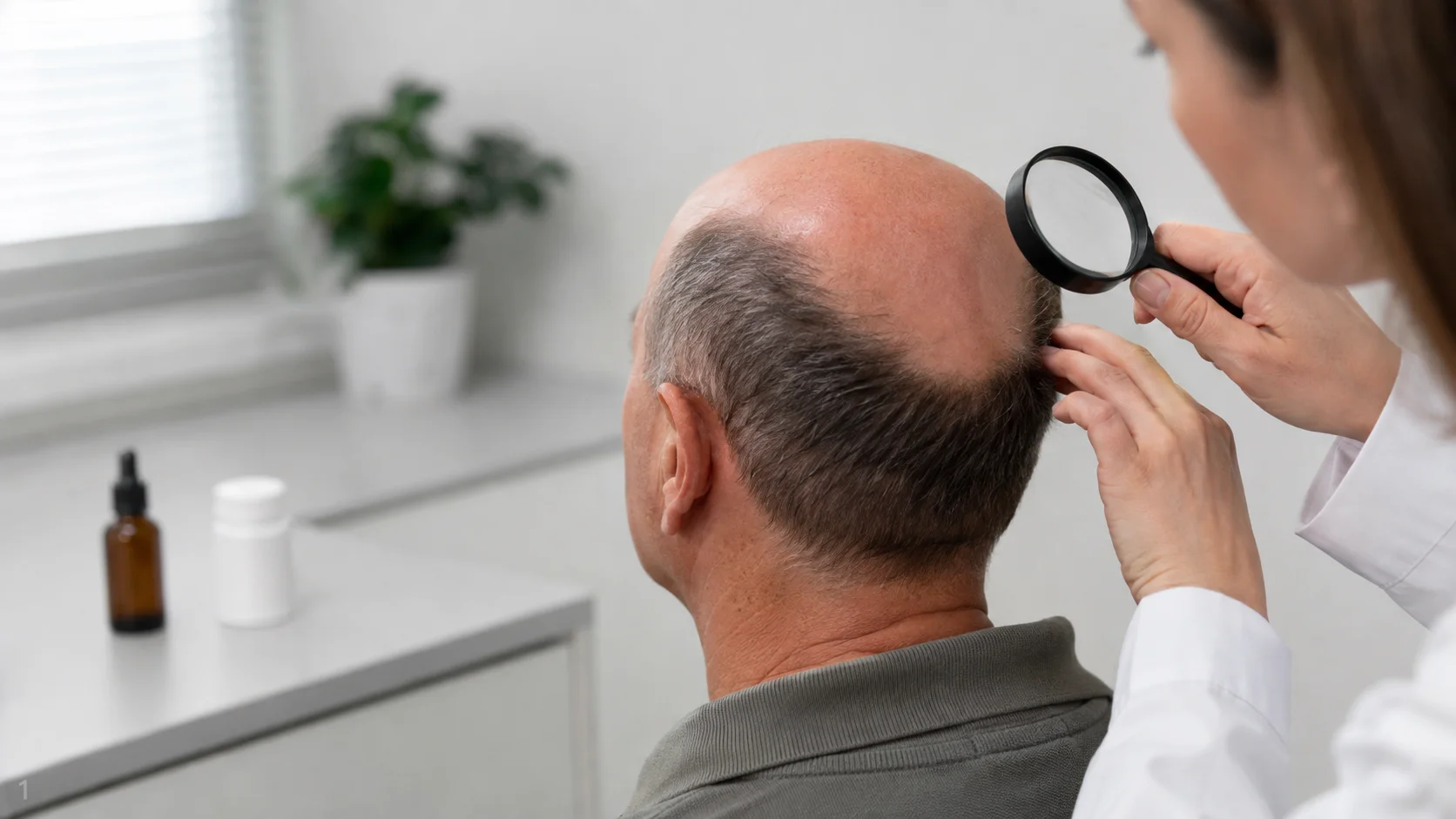
The safest approach begins with diagnosis, scalp examination, and a discussion of whether microneedling adds enough potential benefit to outweigh its risks. Controlled treatment may support existing follicles; uncontrolled injury can create an entirely new scalp problem.
This content is for general informational purposes and does not replace individualized medical advice, diagnosis, or treatment.