How to Protect Your Hair from Heat Damage
Heat damage happens when styling tools weaken the hair shaft, reduce moisture, and make strands more prone to roughness, split ends, or breakage. It does not usually happen from one careful styling session, but repeated high heat can gradually affect hair quality.
Protecting your hair from heat damage means controlling temperature, reducing frequency, using gentler technique, and supporting the hair with the right care routine.
How Heat Affects the Hair Shaft
Hair is made of protein-based fibers protected by an outer cuticle layer. When exposed to high heat, the cuticle can become rougher and less able to retain moisture.
Over time, heat-styled hair may look dull, feel dry, tangle more easily, or break at the ends. Damage is often more noticeable in bleached, color-treated, fine, curly, or already fragile hair.
Once the hair shaft is damaged, it cannot fully repair itself in the same way living tissue can. Good care can improve feel and appearance, but prevention is especially important.
Use the Lowest Effective Temperature
Higher heat is not always better. Many people use more heat than their hair actually needs.
Fine, fragile, or chemically treated hair usually requires less heat than thick or coarse hair. Starting with a lower setting and increasing only if necessary can reduce unnecessary exposure.
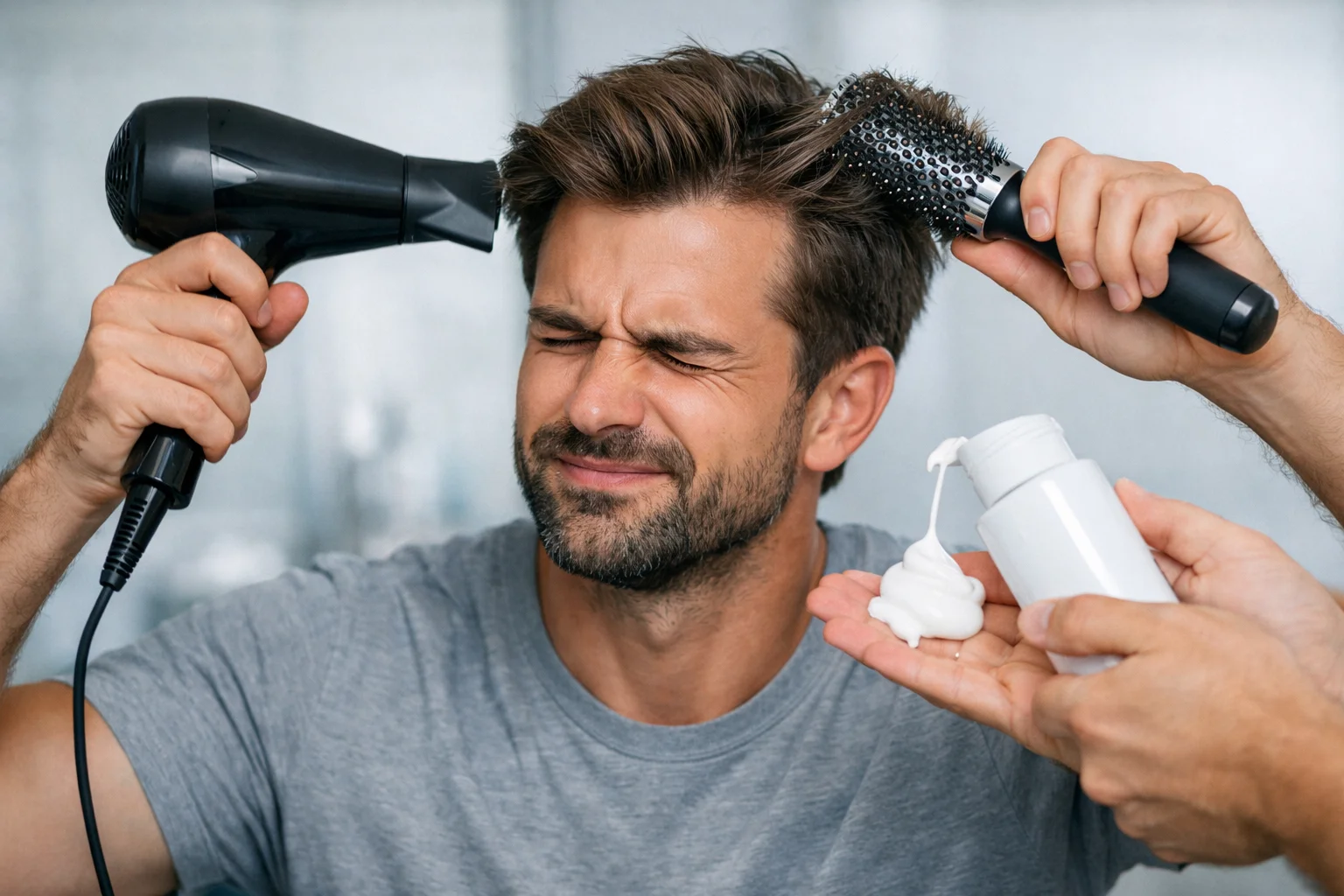
Flat irons, curling irons, and hot brushes should not be held in one place for too long. Slow repeated passes can be more damaging than one careful pass at an appropriate temperature.
Do Not Heat Style Soaking Wet Hair
Most hot tools should be used only on dry hair unless the tool is specifically designed for damp styling. Applying high heat to wet hair can create rapid water evaporation inside the strand, which may increase damage.
Before using a flat iron or curling tool, make sure the hair is fully dry. If blow drying first, use controlled heat and avoid concentrating the dryer on one section for too long.
Use Heat Protection Wisely
Heat protectant products can help reduce some heat-related stress, but they do not make hair immune to damage. They work best as part of a broader routine that includes moderate temperature and careful technique.
Apply the product evenly according to instructions. Too much product may leave buildup, while uneven application may leave some areas less protected.
Heat protection is helpful, but it should not be used as permission to style at the highest setting every day.
Reduce Frequency When Possible
Heat damage is often cumulative. Even moderate heat can become a problem if used daily on fragile hair.
Reducing heat styling frequency can make a noticeable difference over time. Some people alternate between heat-styled days and lower-heat styles, such as loose waves, gentle updos, rollers, wrapping, or air drying.
The goal is not necessarily to avoid heat forever. It is to use it more intentionally.
Support Hair Between Styling Sessions
Hair that is regularly heat styled may need extra attention. Conditioner, leave-in products, gentle detangling, regular trims, and reduced friction can all help maintain better hair quality.
Avoid combining multiple stressors at once when possible. For example, bleaching, frequent heat styling, tight hairstyles, and rough brushing together may increase the risk of breakage.
For general hair care fundamentals beyond heat styling, see our hair care essentials guide.
Frequently Asked Questions
Can heat damage cause hair loss?
Heat damage usually causes breakage rather than true permanent hair loss. However, breakage can make hair look thinner, especially around the ends or hairline.
How often is it safe to use heat tools?
There is no universal safe number. It depends on hair type, tool temperature, technique, and existing damage. Less frequent use is generally gentler.
Do heat protectants really work?
Heat protectants may reduce some damage, but they cannot block all effects of high heat. Temperature control and styling technique still matter.
What are signs of heat-damaged hair?
Common signs include dryness, rough texture, split ends, dullness, frizz, tangling, and breakage.
Can heat-damaged hair be repaired?
Products can improve softness and manageability, but severely damaged hair cannot be fully restored. Trimming damaged ends may be needed in some cases.
Final Thoughts
Protecting your hair from heat damage is mostly about moderation and technique. Lower temperatures, fewer passes, full drying before hot tools, heat protection, and gentle handling can all reduce stress on the hair shaft.
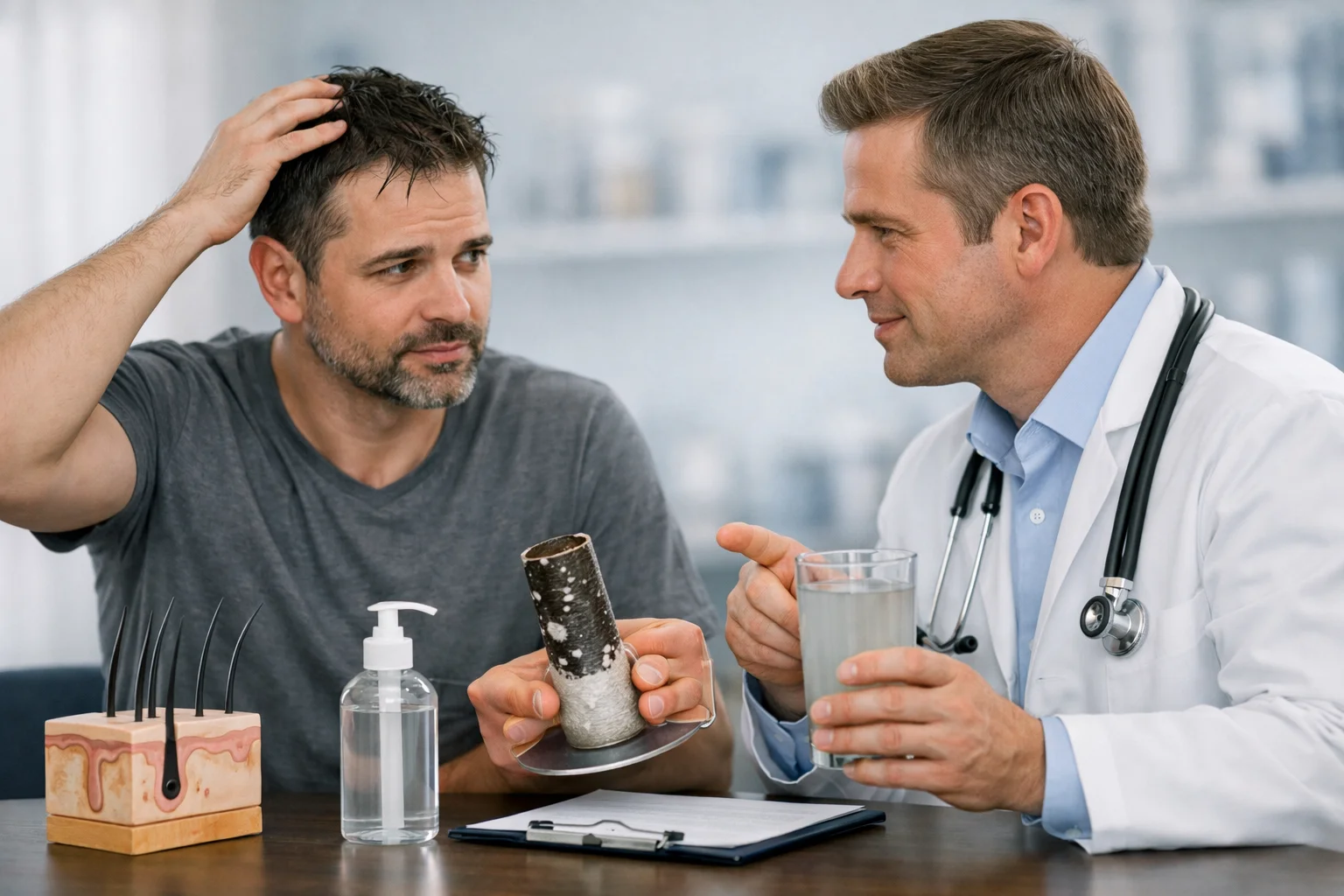
Heat styling can still be part of a hair care routine, but it should be used with awareness. If the hair is becoming increasingly brittle, breaking easily, or thinning suddenly, professional guidance may help identify whether heat damage or another issue is involved.
This article is for general educational purposes only and is not a substitute for personalized medical or dermatological advice.