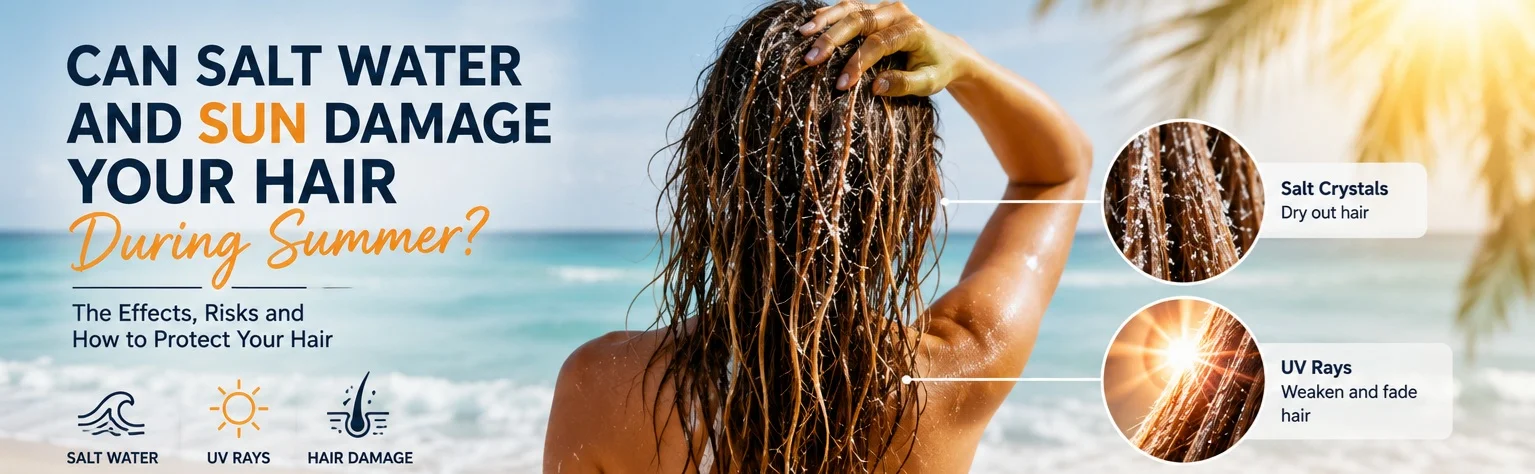
Can Salt Water and Sun Damage Your Hair During Summer?
Summer is synonymous with beach vacations, swimming in the sea, and spending long hours under the sun. While these activities can be enjoyable and beneficial for overall well-being, many people wonder whether salt water and intense sun exposure can negatively affect their hair.
If you've noticed your hair feeling dry, brittle, tangled, or dull after a beach holiday, you're not imagining it. Both salt water and ultraviolet (UV) radiation can impact the health and appearance of your hair. However, understanding how these factors affect your hair can help you take preventive measures and maintain healthy, strong locks throughout the summer.
In this article, we'll explore the effects of salt water and sun exposure on hair, discuss who may be most vulnerable to damage, and share practical tips for protecting your hair during the warmer months.
How Does Hair Become Damaged?
To understand how summer conditions affect hair, it's important to first understand hair structure.
Each hair strand consists of three main layers:
- Cuticle: The outer protective layer
- Cortex: The middle layer responsible for strength, elasticity, and color
- Medulla: The innermost core
Healthy hair has a smooth, intact cuticle that protects the inner layers. When the cuticle becomes damaged, moisture escapes more easily, leading to dryness, breakage, frizz, and loss of shine.
Environmental factors such as sunlight, salt water, wind, and heat can gradually weaken this protective barrier.
How Does Salt Water Affect Hair?
Salt water itself is not inherently harmful, but prolonged and repeated exposure can contribute to hair damage.
Salt Water Draws Moisture Out of Hair
Sea water contains high concentrations of salt. Salt has hygroscopic properties, meaning it attracts and absorbs moisture.
When hair is exposed to salt water for extended periods, moisture may be drawn away from the hair shaft, leaving hair feeling:
- Dry
- Rough
- Brittle
- More prone to tangling
People with naturally dry, curly, or chemically treated hair often notice these effects more quickly.

Increased Friction and Breakage
As hair becomes dehydrated, the cuticle can become rough and lifted. This increases friction between strands, making hair more susceptible to:
- Split ends
- Breakage
- Frizz
- Knotting
Long hair is particularly vulnerable because older hair ends have already experienced years of environmental exposure.
Can Salt Water Cause Hair Loss?
Salt water itself does not directly cause permanent hair loss.
However, excessive dryness and scalp irritation may contribute to temporary shedding in some individuals. People who already suffer from scalp conditions or fragile hair may experience increased breakage that can make hair appear thinner.
Importantly, salt water does not damage hair follicles beneath the scalp, meaning it does not cause permanent baldness.
How Does Sun Exposure Damage Hair?
Many people protect their skin from UV radiation but forget that hair is also vulnerable to sun damage.
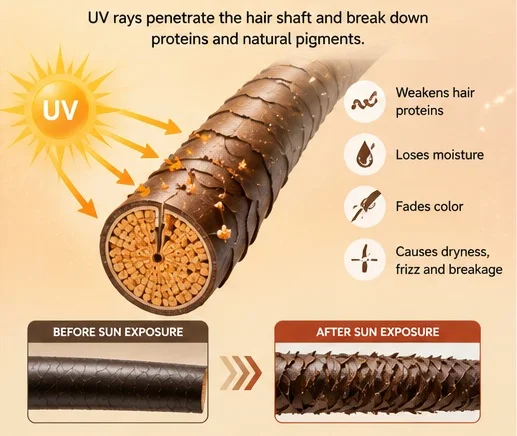
UV Rays Weaken Hair Proteins
Hair is primarily composed of a protein called keratin.
Prolonged UV exposure can break down keratin proteins, weakening the structural integrity of the hair shaft. As a result, hair may become:
- Less elastic
- More fragile
- More prone to breakage
Over time, repeated sun exposure can lead to visible signs of hair aging.
Loss of Hair Moisture
Sunlight increases water evaporation from the hair shaft.
When moisture levels decrease, hair can become:
- Dry
- Dull
- Coarse
- Difficult to manage
This effect is often intensified when combined with salt water exposure.
Hair Color Fading
UV radiation can also affect hair pigments.
Natural hair color may become lighter after prolonged sun exposure, while dyed hair may fade more quickly.
Blonde, red, and chemically colored hair often show the most noticeable color changes.
The Combined Effect of Salt Water and Sun
While salt water and sunlight can each affect hair individually, their combination often produces the most noticeable damage.
A typical beach day may involve:
- Hours of UV exposure
- Repeated contact with salt water
- Wind exposure
- Heat and dehydration
Together, these factors can accelerate moisture loss and increase stress on the hair cuticle.
As a result, many people notice:
- Increased dryness
- Frizziness
- Loss of shine
- Tangling
- Split ends
Fortunately, most of these effects are temporary and can be minimized with proper hair care.
Is Summer Hair Damage Permanent?
In most cases, summer-related hair damage is not permanent.
The hair shaft itself is not living tissue, meaning damaged sections cannot fully repair themselves. However, healthy hair growth continues from the follicle beneath the scalp.
Once environmental stressors are reduced and appropriate care is implemented, newly growing hair should remain healthy.
Regular trims can also help remove damaged ends and improve overall appearance.
Who Is Most Vulnerable to Summer Hair Damage?
Some individuals are more susceptible to damage from salt water and sun exposure than others.
Higher-risk groups include:
People with Color-Treated Hair
Chemical coloring can make hair more porous and vulnerable to moisture loss.
Individuals with Curly or Coarse Hair
Curly hair naturally tends to be drier because scalp oils have greater difficulty traveling along the hair shaft.
People with Bleached Hair
Bleaching weakens the hair cuticle and increases sensitivity to environmental stress.
Individuals with Long Hair
Hair ends are the oldest part of the strand and have experienced years of wear and tear.
How to Protect Your Hair at the Beach
Fortunately, protecting your hair during summer is relatively simple.
Wet Your Hair Before Swimming
Hair acts like a sponge. Saturating your hair with fresh water before entering the sea may reduce the amount of salt water absorbed.
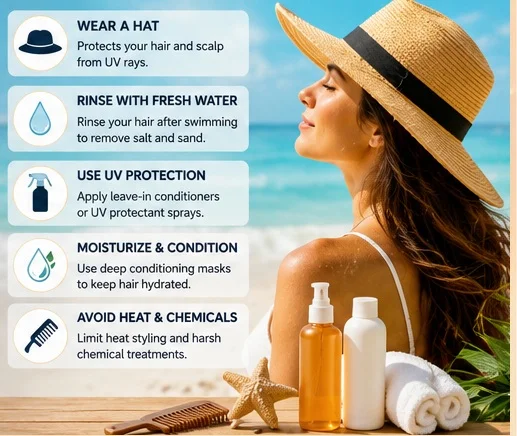
Wear a Hat
A wide-brimmed hat provides excellent protection against UV radiation and helps prevent scalp sunburn.
Use UV Protection Products
Many leave-in conditioners and hair sprays contain UV filters specifically designed to protect hair from sunlight.
Rinse Hair After Swimming
Rinsing your hair with fresh water immediately after swimming helps remove salt deposits and reduces dehydration.
Deep Condition Regularly
Moisturizing masks and conditioners can help restore hydration lost during beach activities.
Stay Hydrated
Hydration supports overall hair and scalp health. Drinking sufficient water may help maintain optimal moisture balance.
What About Hair Transplant Patients?
Individuals who have recently undergone a hair transplant should be particularly cautious.
During the healing period, newly transplanted grafts are more sensitive to environmental factors.
Most surgeons recommend avoiding:
- Swimming pools
- Sea water
- Prolonged sun exposure
for several weeks after the procedure.
Patients should always follow the specific post-operative instructions provided by their hair transplant specialist.
Signs Your Hair Needs Extra Care
Consider increasing your hair care routine if you notice:
- Excessive dryness
- Increased tangling
- Split ends
- Loss of shine
- Increased breakage
- Rough texture
Addressing these signs early can help prevent more significant damage.
Conclusion
Salt water and sun exposure can affect the health and appearance of your hair, especially during the summer months. While neither factor typically causes permanent hair loss, both can contribute to dryness, brittleness, breakage, and color fading.
Fortunately, simple preventive measures such as wearing a hat, rinsing hair after swimming, using UV-protective products, and maintaining proper hydration can significantly reduce the risk of damage.
With the right care, you can enjoy beach days and sunny holidays while keeping your hair healthy, strong, and vibrant throughout the summer.
Sources / References
- Journal of Cosmetic Dermatology
- Skin Cancer Foundation – UV Radiation and Hair Damage
- British Association of Dermatologists
- Cleveland Clinic – Hair Care and Environmental Damage