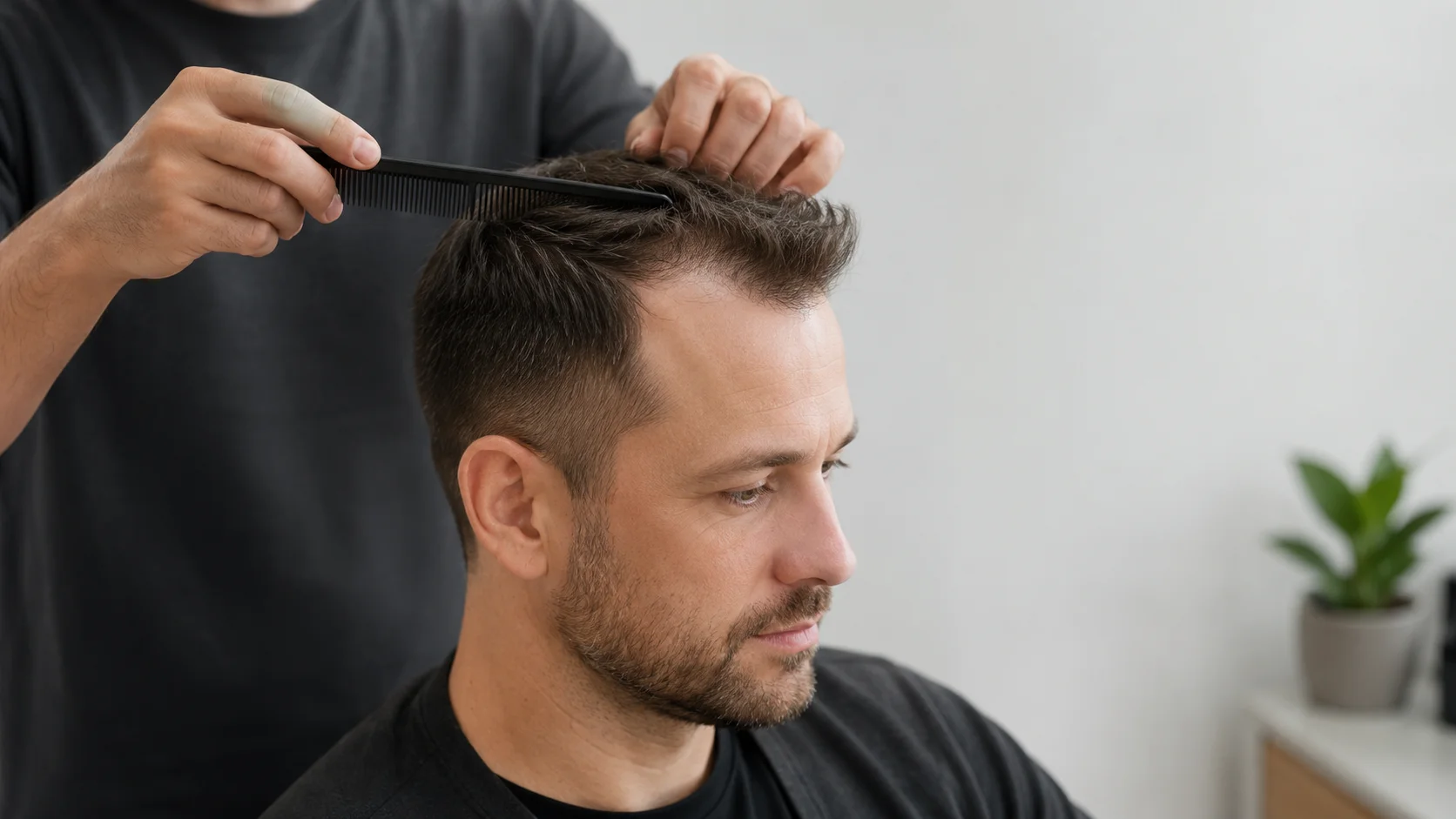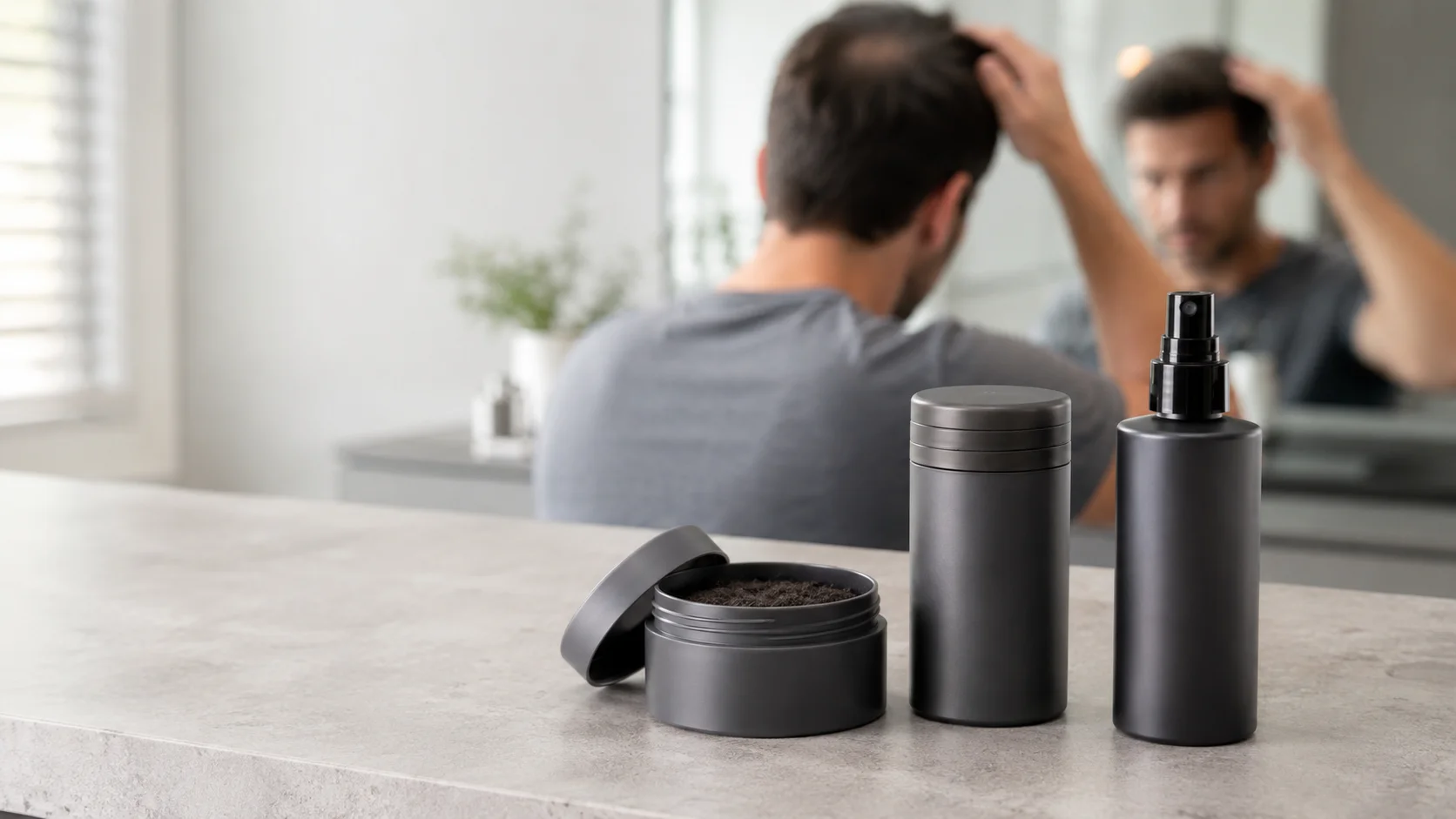
Hair fibers can improve the appearance of thinning hair in some cases, but Norwood 4 hair loss presents a specific challenge. At this stage, recession at the temples is usually more advanced, and there may also be visible thinning or loss at the crown. Because hair fibers need existing hair to attach to, their effectiveness depends on how much hair remains in the areas someone wants to cover.
For some people with Norwood 4 hair loss, fibers can make the mid-scalp or crown look denser. For others, especially where the front hairline has receded significantly or the crown has a larger bare area, fibers may offer only limited improvement.
The most helpful way to think about fibers is not “Can they hide Norwood 4 completely?” but “Which parts of Norwood 4 hair loss can they soften, and where do their limits become visible?”
Understanding Norwood 4 Hair Loss
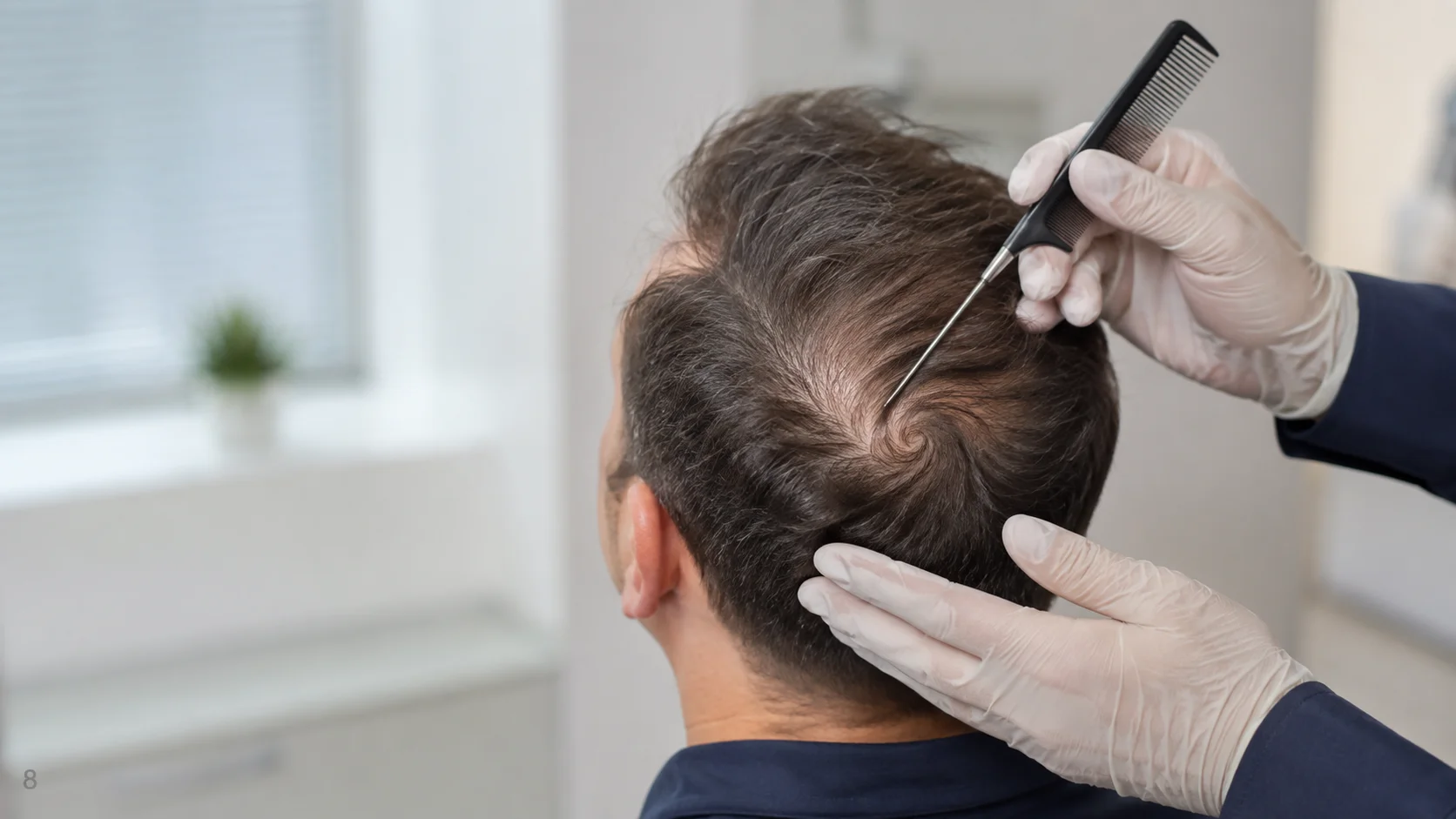
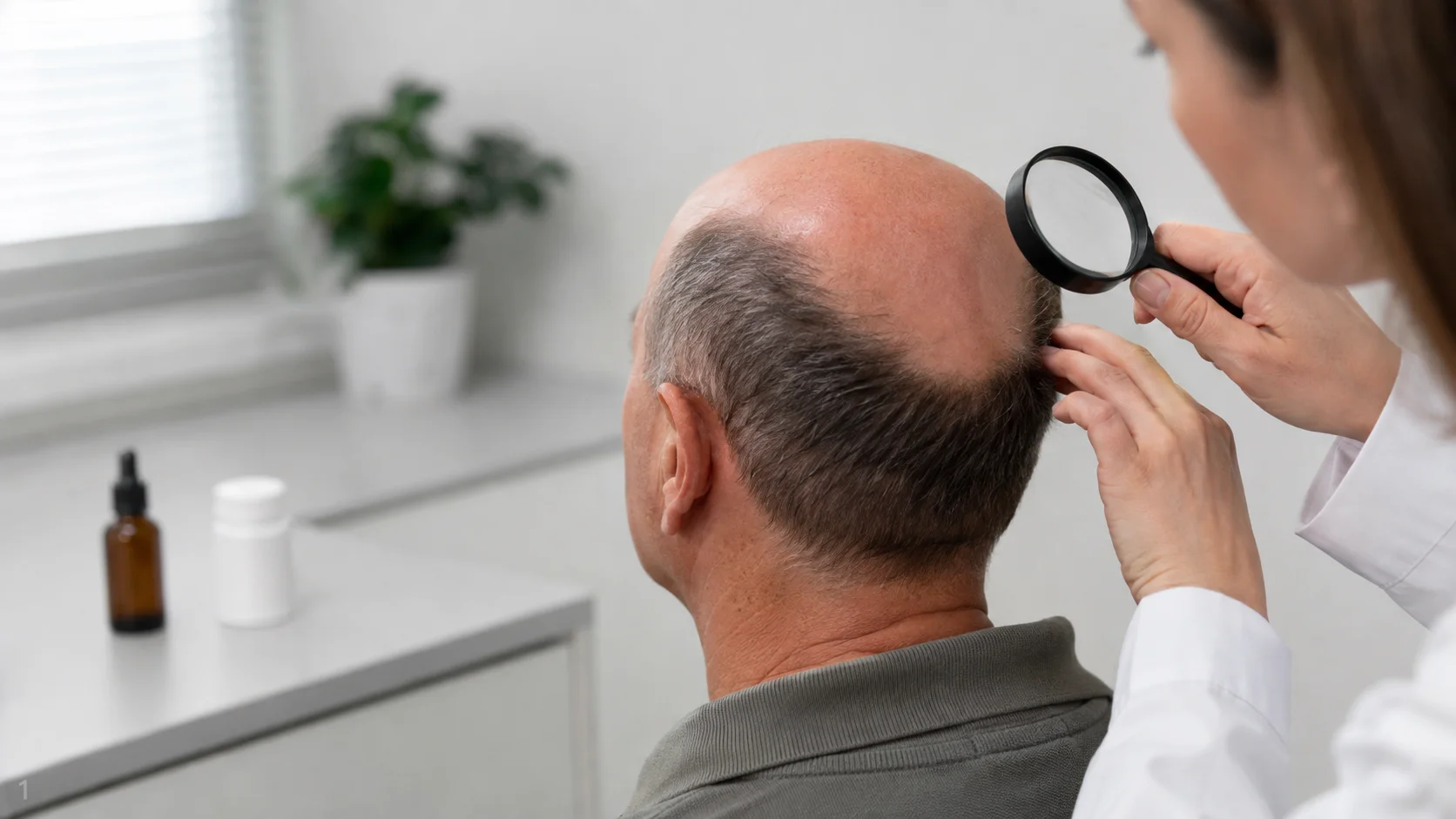
The Norwood scale is commonly used to describe patterns of male pattern hair loss. Norwood 4 usually means there is clear recession at the temples and a more noticeable change in the frontal hairline. Many people at this stage also have thinning or a bald spot at the crown, although the exact pattern can vary.
There may still be a bridge of hair between the frontal area and crown. The sides and back of the scalp are usually denser than the top. This contrast can make thinning more visible, especially under bright light.
Norwood 4 is not the same for everyone. One person may have a stronger crown with deeper temple recession, while another may have a larger crown area but more frontal hair remaining. This is why cosmetic results can vary widely.
How Hair Fibers Work
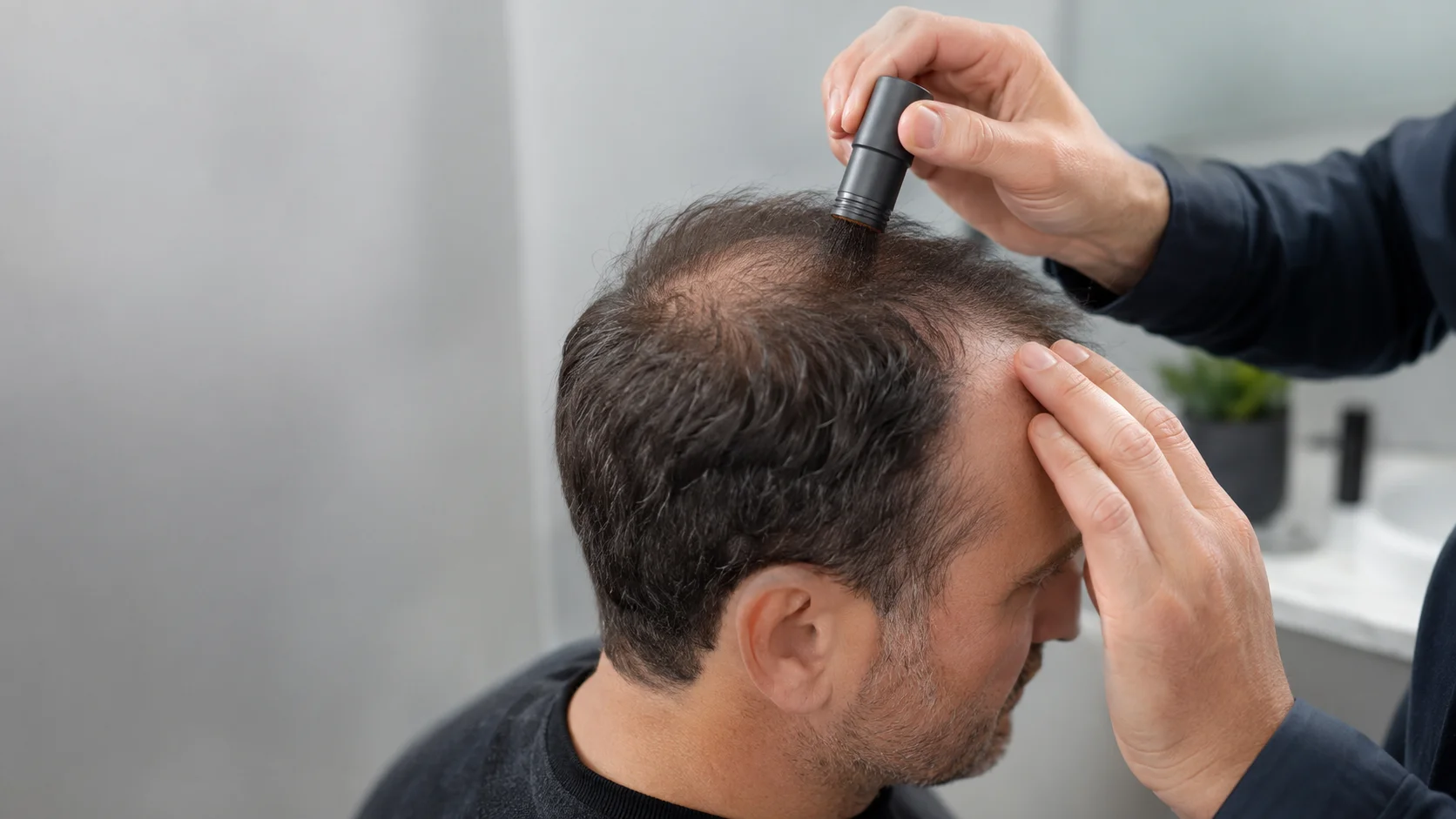
Hair fibers are small cosmetic particles that cling to existing hair strands. They make the hair appear thicker and reduce the contrast between the scalp and surrounding hair. They are usually applied to dry hair and may be set with a fixing spray.
Fibers do not create new hair. They do not attach well to smooth bare scalp, and they cannot rebuild a natural hairline where there is little or no hair. They work best when the thinning area still contains enough short or fine hairs for the fibers to grip.
This is the main reason Norwood 4 can be difficult. Some areas may still respond well, while others may not have enough hair for the product to look convincing.
Where Hair Fibers May Help at Norwood 4
The Crown
If the crown has thinning but not a completely bare spot, hair fibers may reduce scalp visibility. This is often one of the better areas for fiber use because surrounding hair can help blend the result.
Application can be tricky because the crown is hard to see directly. Using a hand mirror or asking a barber for styling advice may help. A light fixing spray can improve hold, especially if the hair is exposed to movement or humidity.
If the crown is mostly bare, fibers may settle on the scalp rather than attach to hair. This can look dusty or uneven.
The Mid-Scalp
The mid-scalp may respond well if there is diffuse thinning with remaining hair. Fibers can make the area look more uniform and reduce the contrast between thicker and thinner zones.
This is often where fibers look most natural, because the product is surrounded by existing hair and is not forming a visible edge.
Blending Between Thicker and Thinner Areas
Fibers may help soften the transition between dense side hair and thinning top hair. They can make the overall pattern look less stark, especially when paired with a shorter haircut.
This does not fully hide the Norwood pattern, but it can make the appearance more balanced.
Where Hair Fibers Usually Struggle
The Frontal Hairline
The frontal hairline is the most difficult area to conceal with fibers. At Norwood 4, the temples are usually recessed enough that there may not be enough hair at the front edge for fibers to attach naturally.
If too much product is used, the hairline can look sharp, dusty, or artificial. A natural hairline has irregular density and soft transitions. Fibers can struggle to recreate that subtle pattern, especially at close range.
Some people use a very small amount to reduce scalp contrast behind the front line, but trying to draw a new hairline with fibers is usually not realistic.
Deep Temple Recession
Temple recession creates open spaces where there may be little or no hair. Fibers do not perform well in these areas because they need hair strands, not bare skin.
A hairstyle that brings some hair forward or diagonally may soften the temples better than fibers alone. However, if the recession is advanced, styling has limits too.
Large Bare Crown Areas
If the crown has progressed from thinning to a smooth bald spot, fibers may not provide convincing coverage. They may collect unevenly, transfer easily, or appear as colored dust on the scalp.
In this situation, a shorter haircut, scalp micropigmentation, medical management, or hair transplant evaluation may be more relevant depending on the person’s goals and suitability.
What Results Are Realistic?
Hair fibers may make Norwood 4 hair loss look less noticeable, but they are unlikely to make the hair look like a dense Norwood 1 or Norwood 2 hairline. Expectations matter.
A realistic outcome may include:
- reduced scalp visibility in the crown or mid-scalp
- a fuller look in photos from certain angles
- better blending between thinner and thicker areas
- improved confidence for specific occasions
- less benefit at the temples and frontal hairline
Results may also change throughout the day. Wind, sweat, rain, hats, and touching the hair can affect the product. Fibers may look better indoors than outdoors in direct sunlight.
The most natural result is usually a modest improvement, not complete concealment.
Haircut and Styling Choices Matter
Hair fibers work better when the haircut supports them. Long hair can separate and reveal product buildup. Very dense sides can make the top look thinner by contrast. A balanced shorter cut often gives fibers a better foundation.
For Norwood 4, useful styling approaches may include a textured crop, short side-swept style, crew cut, or carefully blended short cut. The style should avoid relying on long strands to cover large recessed areas.
Matte styling products are usually better than shiny gels. Shine can increase scalp contrast and make thin areas more visible. Heavy products can also cause hair to clump, reducing the natural look of fibers.
A practical routine may involve styling the hair first, applying fibers lightly, checking the result in different lighting, and then using a small amount of setting spray.
Common Mistakes With Fibers at Norwood 4
One common mistake is applying fibers too heavily to the front hairline. This can create an obvious artificial edge. Another is using a shade that is too dark, which can make the covered area look flat compared with natural hair.
Applying fibers to bare scalp is another frequent issue. The product may appear to work briefly in a mirror, but it often becomes obvious up close or after movement.
People may also forget that fibers can transfer. Pillowcases, hats, collars, hands, and rain can disturb the result. This does not make fibers unusable, but it means they should be tested before important events.
Are Hair Fibers a Treatment for Norwood 4 Hair Loss?
No. Hair fibers are cosmetic products. They do not slow hair loss, treat androgenetic alopecia, strengthen follicles, or regrow hair. They can change how hair looks temporarily, but they do not change the underlying pattern.
Norwood 4 hair loss may continue to progress in some people. If someone wants to explore treatment, they may need a professional evaluation to discuss medical options, hair transplant suitability, or long-term planning.
A person can use fibers while also exploring treatment, but the two should not be confused. Cosmetic coverage is about appearance today. Treatment planning is about the underlying condition and future goals.
Alternatives and Complementary Options
If fibers are not enough, several appearance-management options may be considered.
A shorter haircut can reduce contrast and make thinning look more intentional. Colored scalp powders may help reduce shine or contrast in specific areas, though they have similar limitations on bare skin. Thickening sprays can add volume where hair remains but usually do not conceal large areas.
Scalp micropigmentation may create the appearance of shaved hair density for some people, especially with shorter styles. It is cosmetic and requires careful consideration of provider skill, color, hairline design, and long-term maintenance.
Hair transplant surgery may be an option for selected individuals, but Norwood 4 planning requires careful assessment of donor hair, hair loss stability, expectations, and future progression. It is not suitable for everyone.
Medical treatments may be appropriate for some people depending on the diagnosis, health profile, and professional guidance.
FAQ
Can hair fibers completely hide Norwood 4 hair loss?
Usually not completely. Hair fibers may improve the appearance of thinning areas where hair remains, but they often struggle with deep temple recession, a very sparse frontal hairline, or large bare crown areas.
Do hair fibers work on a bald crown?
They work best when the crown still has hair. On a smooth bald crown, fibers have little to attach to and may look powdery or uneven.
Can hair fibers create a new hairline?
Hair fibers are not ideal for creating a new hairline. They may soften thinning behind the front edge, but drawing a new frontal border often looks artificial.
Are hair fibers noticeable up close?
They can be, especially if too much is applied, the color is too dark, or the product is used on bare scalp. Light application and good color matching improve the result.
Can I use hair fibers every day?
Many people use cosmetic fibers regularly, but they should be washed out properly and discontinued if irritation occurs. Daily use does not treat hair loss.
Final Thoughts
Hair fibers can help some people with Norwood 4 hair loss, especially when thinning remains in the crown or mid-scalp. They are less effective for deep temple recession, a sparse frontal hairline, or large bare areas.
The best results are usually subtle and realistic. Fibers may improve density on existing hair, but they cannot replace lost hair or stop progression. For people concerned about ongoing hair loss, a professional evaluation can help clarify whether cosmetic management, medical treatment, surgery, or another approach is most appropriate.
This content is for general informational purposes only and does not replace individualized medical advice, diagnosis, or treatment from a qualified professional.