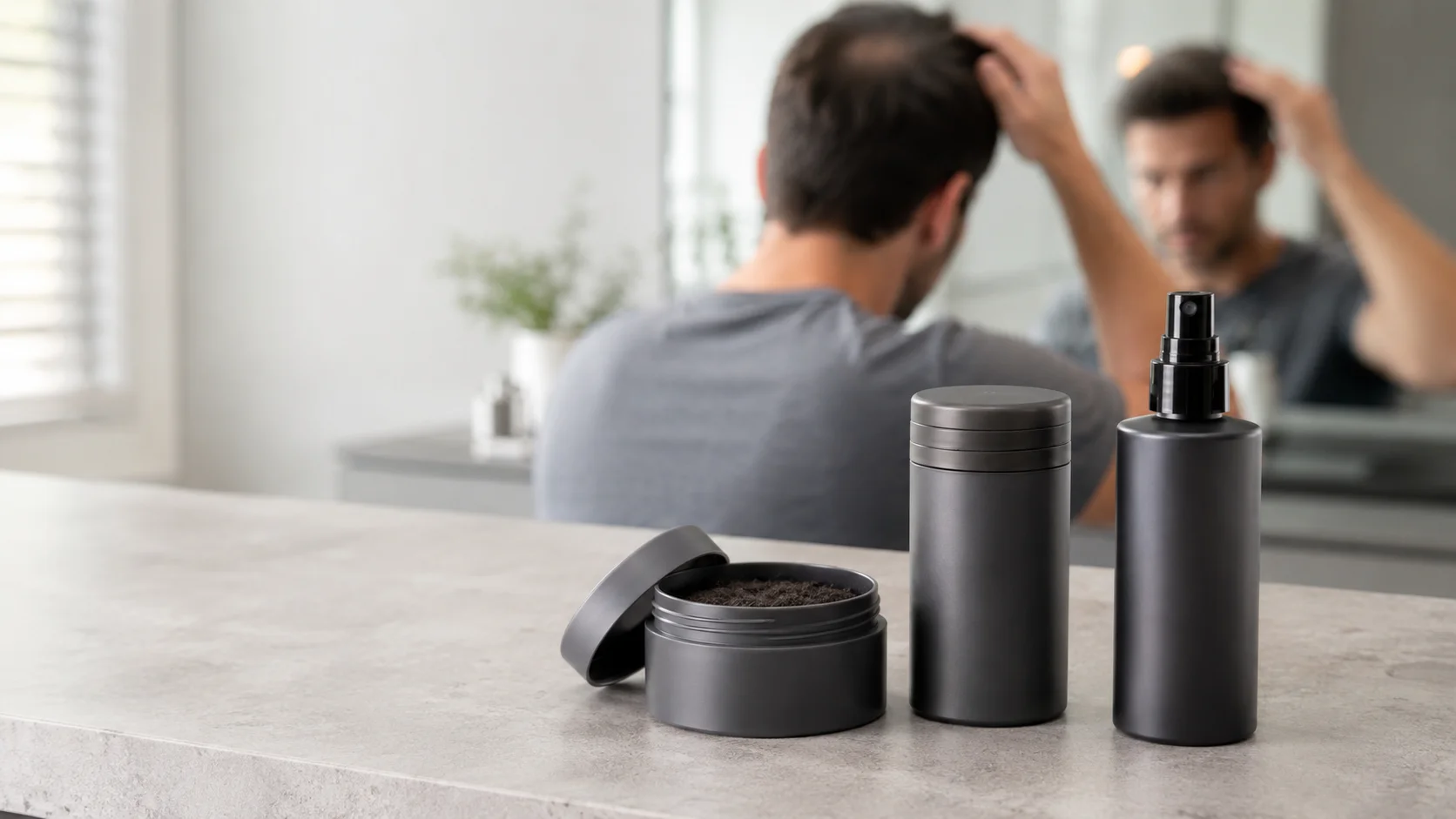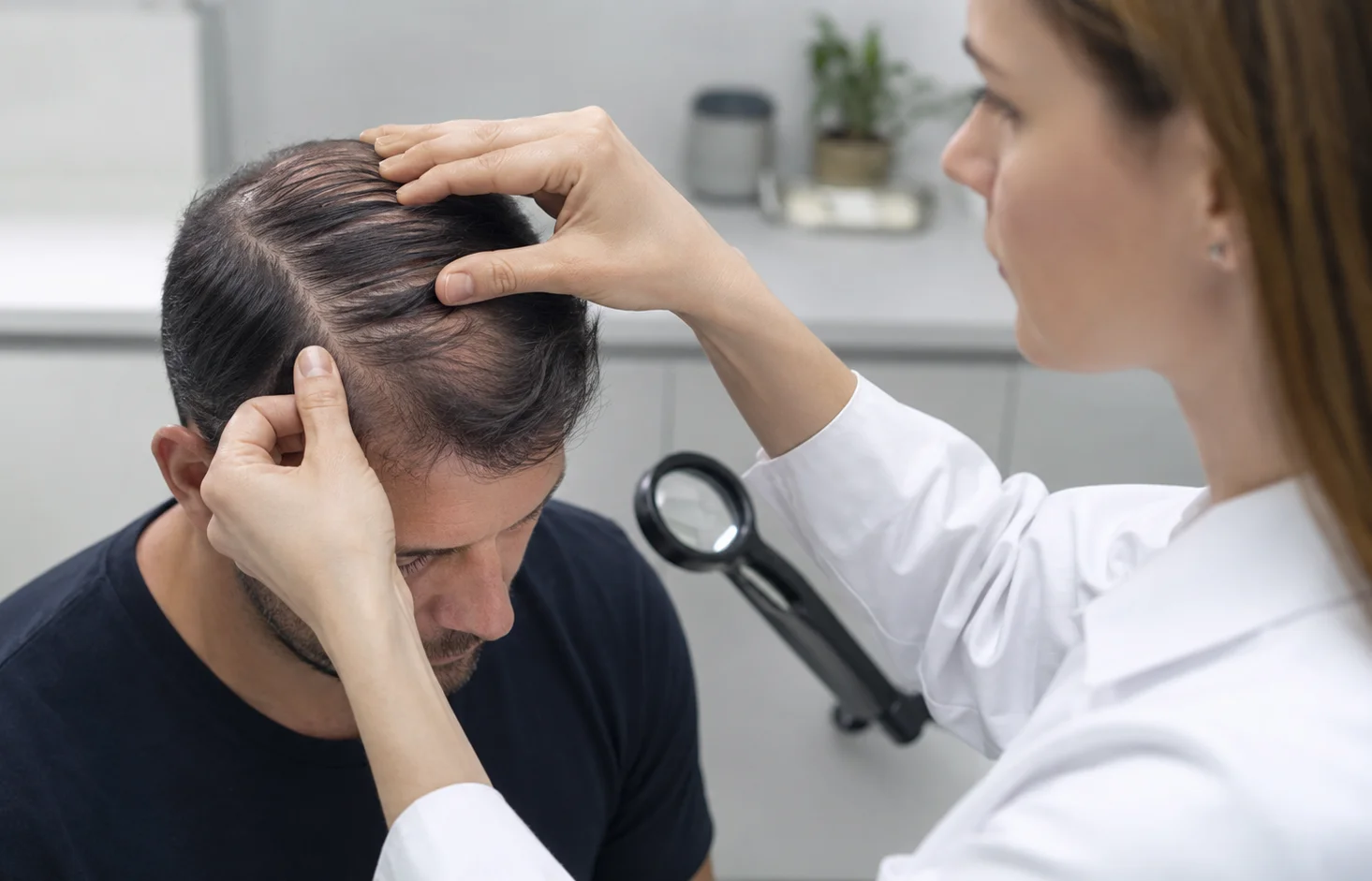
Hair fibers, hair powders, and thickening sprays are all designed to make hair look fuller, but they do not work in the same way. Some products cling to existing hair strands, some reduce scalp shine, and others add texture or volume. Choosing between them depends on the pattern of thinning, hair length, styling routine, and how natural the result needs to look in daily life.
These products are cosmetic appearance-management tools. They do not treat hair loss, prevent progression, or regrow hair. Their value is temporary: they can improve the look of density until the next wash or until the product wears off.
For many people, the best choice is not simply the product that creates the most coverage. It is the product that looks natural, fits their routine, and works realistically with the amount of hair they still have.
What Are Hair Fibers?
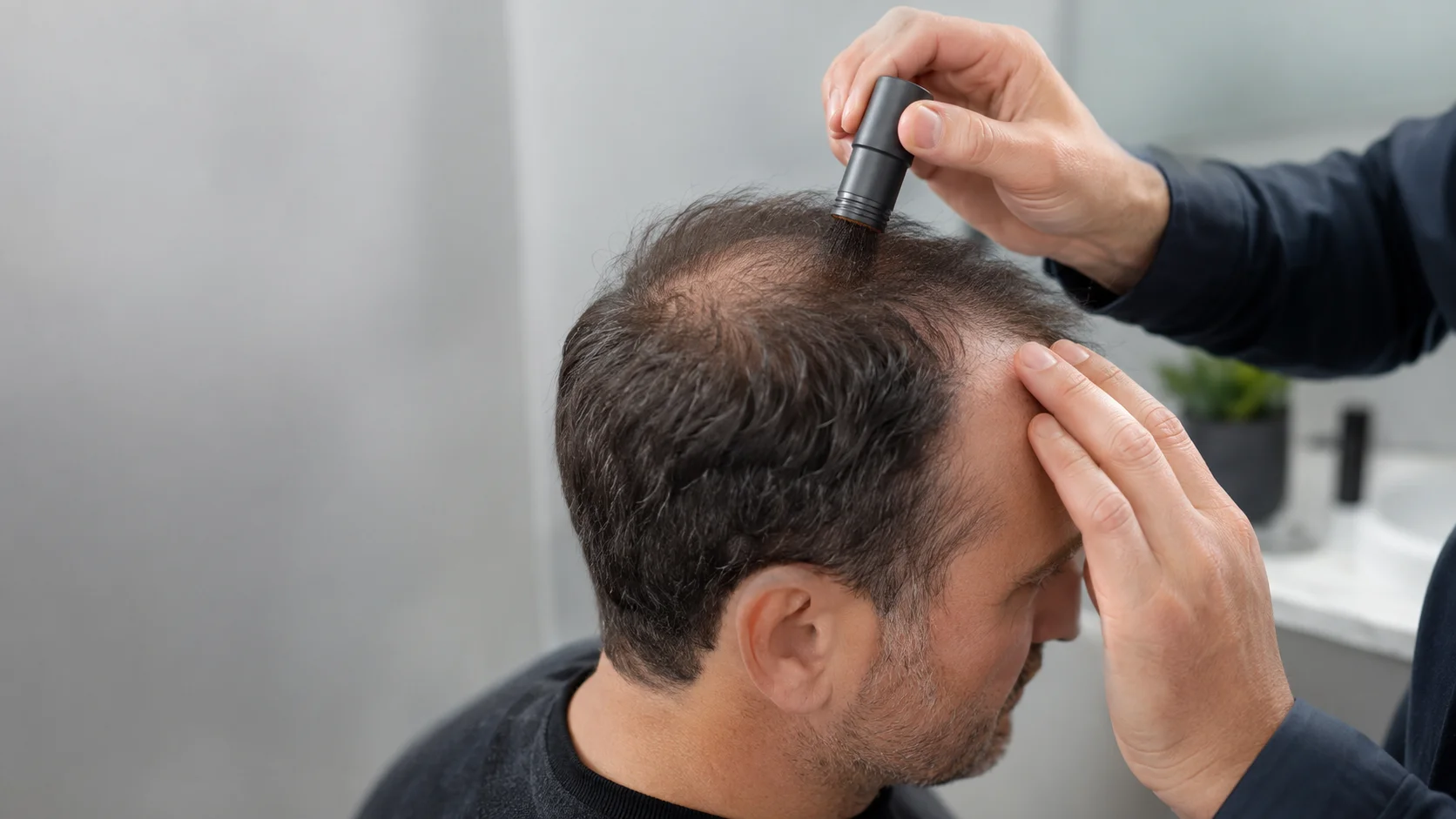
Hair fibers are small particles, often made from keratin-like or plant-based materials, that attach to existing hair through static charge and product texture. They are usually sprinkled or sprayed onto thinning areas, then lightly set with a fixing spray.
Fibers are most useful when there is still enough existing hair for them to cling to. They can make the hair look denser by increasing the visual thickness of individual strands and reducing the contrast between hair and scalp.
They work especially well for diffuse thinning on the crown or top of the scalp. They are less effective on completely bare skin because there is little or nothing for the fibers to attach to.
What Are Hair Powders?
Hair powders can refer to several types of products. Some are volumizing powders that add grip and texture at the roots. Others are colored scalp powders that reduce the contrast between the scalp and hair.
Volumizing powders are usually applied near the roots to create lift. They can make fine hair look less flat, but they do not provide the same direct coverage as fibers.
Colored scalp powders are closer to cosmetic concealers. They are often pressed, brushed, or dabbed onto visible scalp areas. They may help along parts, hairlines, and small thinning patches where the scalp is showing.
The result depends heavily on color match and application. A poor match can look dusty or artificial, especially in bright light.
What Are Thickening Sprays?
Thickening sprays are styling products that coat the hair shaft or add texture, making hair feel and appear fuller. They are often applied to damp hair before blow-drying, although some formulas can be used on dry hair.
Unlike fibers or colored powders, thickening sprays usually do not conceal the scalp directly. Instead, they help the hair stand up, separate less, or hold a fuller shape.
They can be useful for early thinning, fine hair, or people who want a natural style without visible cosmetic coverage. They may not be enough when scalp visibility is moderate to advanced.
Hair Fibers vs Hair Powders vs Thickening Sprays: The Main Difference
The simplest way to compare them is by what they are trying to improve.
Hair fibers improve the appearance of density by clinging to existing hair. Hair powders either add root texture or color the scalp to reduce contrast. Thickening sprays increase volume and body through styling support.
In practice:
- Hair fibers are best for visible thinning where there is still enough hair.
- Colored powders are useful for scalp contrast, part lines, and small exposed areas.
- Volumizing powders help create lift and texture.
- Thickening sprays are best for overall volume and light thinning.
Some people use more than one product. For example, a thickening spray may be used before styling, with a small amount of fiber added afterward. However, layering too many products can make hair look heavy, dull, or unnatural.
Which Product Looks Most Natural?
The most natural product is the one that matches the thinning pattern. For early thinning, a thickening spray may look more natural because it does not create visible coverage. It simply improves the way the hair holds shape.
For moderate thinning, fibers can look natural if there is enough hair for attachment and the color match is accurate. The application should be light and gradual. Too much fiber can create a flat, powdery surface that looks less realistic.
Colored powders can look natural when used sparingly along a part line or hairline. They can look obvious if applied too heavily or if the color is too dark.
Natural results usually depend on three things: color match, lighting, and restraint. A product that looks good in a bathroom mirror may look different in sunlight, under office lights, or after sweating.
Which Product Is Best for Different Types of Thinning?
Diffuse Thinning on Top
Hair fibers are often the strongest option for diffuse thinning because they can reduce scalp visibility across a wider area. Thickening spray may help create volume before fibers are applied.
A colored scalp powder can also help if the scalp is very visible, but it should be blended carefully.
Thinning Crown
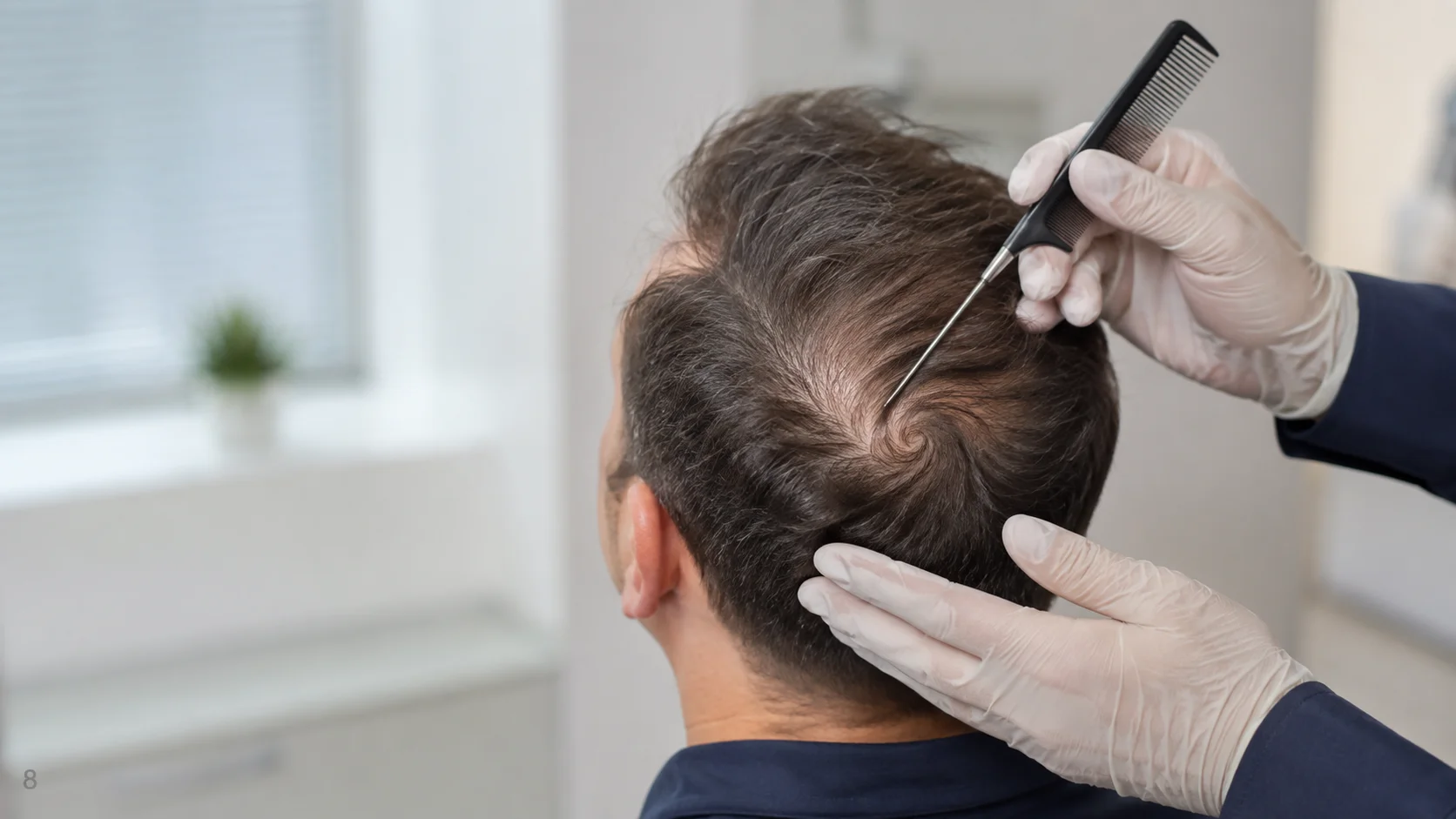
The crown can respond well to fibers if there is still hair in the area. Application may be harder because the crown is difficult to see without a mirror. A light setting spray may help the result last longer.
If the crown has a large bare spot, fibers may not perform well because they need existing hair to hold onto.
Widening Part
Colored scalp powder can be helpful for a widening part because it reduces the contrast between the scalp and hair. Fibers may also work, but they can be harder to control along a narrow line.
Thickening sprays can support volume but may not fully address scalp visibility.
Receding Hairline
Hairlines are challenging for all concealers because the front edge is highly visible. Colored powders may work for small areas, but they must be applied lightly. Fibers can look unnatural if they create a sharp artificial border.
For a receding hairline, hairstyle choice often matters as much as the product.
Fine Hair Without Obvious Bald Spots
Thickening sprays and volumizing powders are often enough for fine hair that lacks body but does not have strong scalp visibility. These products support shape rather than trying to conceal.
Durability, Sweat, and Daily Wear
No cosmetic hair product is permanent. Fibers may stay in place during normal daily activity, especially with a fixing spray, but they can be affected by heavy sweating, rain, friction, or touching.
Powders may transfer to fingers, hats, pillowcases, or clothing if not set properly. Thickening sprays usually have less visible transfer but may lose volume over time.
People who exercise frequently, wear helmets or hats, or work in humid conditions may need to test products carefully. A product that works well for a short meeting may not hold up through a long day outdoors.
Application Mistakes to Avoid
The most common mistake is using too much product. More coverage does not always mean a better result. Heavy application can make hair look dusty, stiff, or unnaturally dense compared with surrounding areas.
Another mistake is choosing a color that is too dark. A slightly softer match often looks more natural than a very intense shade.
It is also important to avoid applying cosmetic products to irritated or broken skin. If the scalp is inflamed, itchy, painful, or flaking significantly, it may be better to pause cosmetic coverage and seek appropriate guidance.
For best results, apply products in layers. Start lightly, check in different lighting, and add only where needed.
Are These Products Safe for Hair?
Most cosmetic fibers, powders, and sprays are designed for external use and are generally tolerated by many people. However, individual reactions can happen. Some products may cause dryness, irritation, itching, buildup, or sensitivity, especially with frequent use.
They should be washed out regularly. Leaving heavy cosmetic buildup on the scalp for long periods may make the scalp feel uncomfortable, even if it does not directly cause hair loss.
These products do not usually address the underlying cause of thinning. If hair loss is progressing, relying only on cosmetic coverage may delay evaluation. That does not mean cosmetic products are wrong; it simply means they should be understood as appearance tools.
Which One Should You Choose?
Choose hair fibers if you have visible thinning but still have enough hair in the area for the fibers to attach to. They are often best for the crown and diffuse thinning on top.
Choose colored hair powder if the main issue is scalp contrast along a part, hairline, or small exposed area. It can be useful when careful placement matters.
Choose thickening spray if your hair is fine, flat, or mildly thinning and you want more volume without obvious coverage. It is often the easiest option for a natural everyday look.
Choose volumizing powder if your hair needs root lift and texture, especially for short to medium styles. It is more of a styling aid than a concealer.
The best choice may change over time. Early thinning may only need styling support, while more visible thinning may require concealing products or a different haircut.
FAQ
Do hair fibers work better than hair powders?
Hair fibers may work better for diffuse thinning where there is enough hair for attachment. Hair powders may work better for part lines, scalp contrast, and smaller areas that need precise coverage.
Can thickening spray hide bald spots?
Thickening spray can add volume, but it usually does not hide true bald spots. It works best when there is still enough hair to style.
Can I use hair fibers and thickening spray together?
Yes, some people use thickening spray first to create volume, then apply fibers after the hair is dry and styled. The combination should be used lightly to avoid buildup.
Do hair fibers damage hair?
Hair fibers are cosmetic and do not usually damage hair when used as directed and washed out regularly. However, irritation or buildup can occur in some people.
Which product is best for a receding hairline?
A receding hairline is difficult to conceal naturally. A light colored powder or careful styling may help in early recession, but heavy fibers at the front can look artificial.
Final Thoughts
Hair fibers, hair powders, and thickening sprays each solve a different cosmetic problem. Fibers add the look of density, powders reduce scalp contrast or add texture, and thickening sprays help hair hold fuller shape.
The most realistic results come from matching the product to the thinning pattern and applying it with restraint. These products can be useful confidence tools, but they are not medical treatments and should not be treated as a substitute for evaluating ongoing hair loss.
This content is for general informational purposes only and does not replace individualized medical advice, diagnosis, or treatment from a qualified professional.