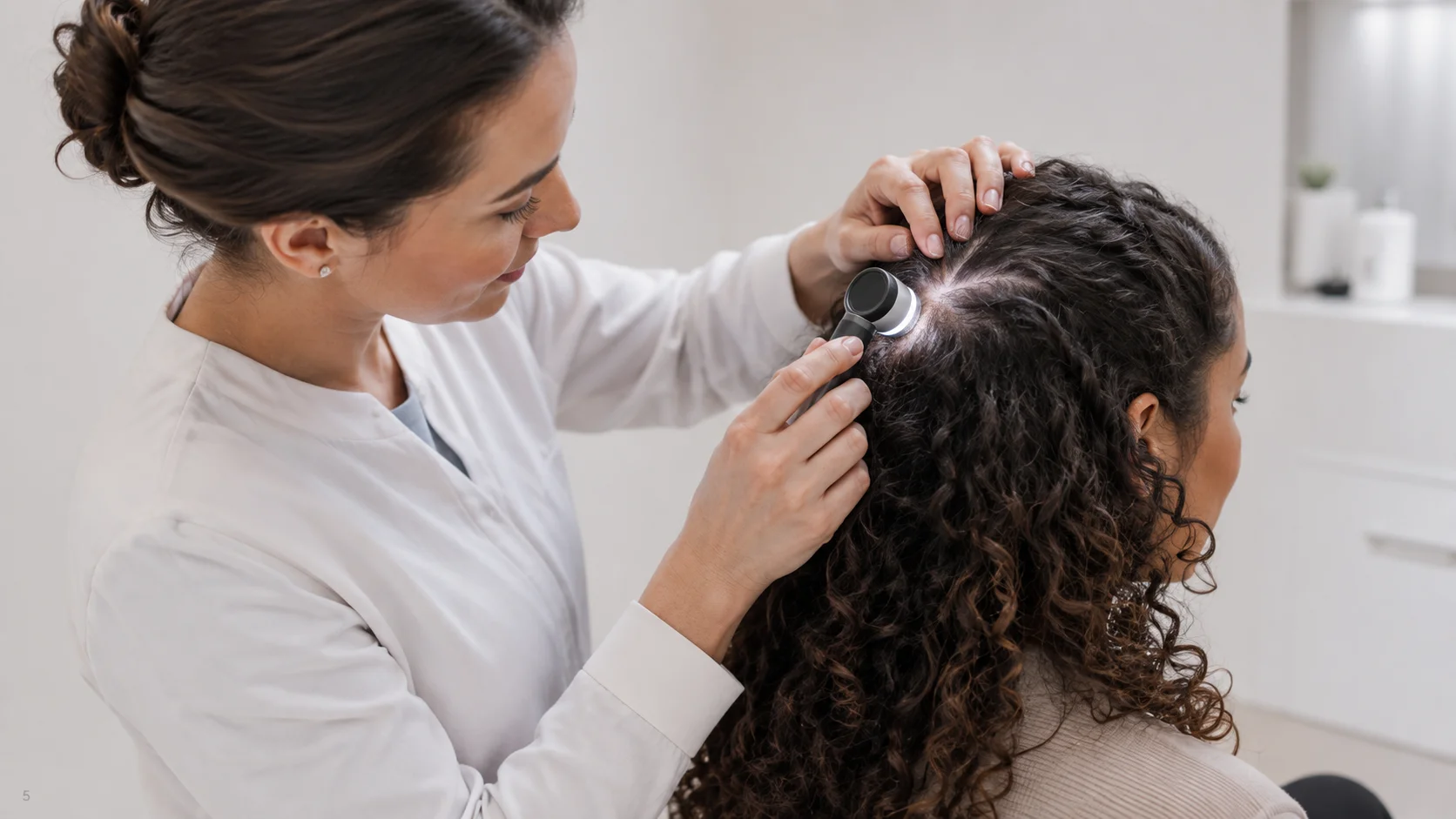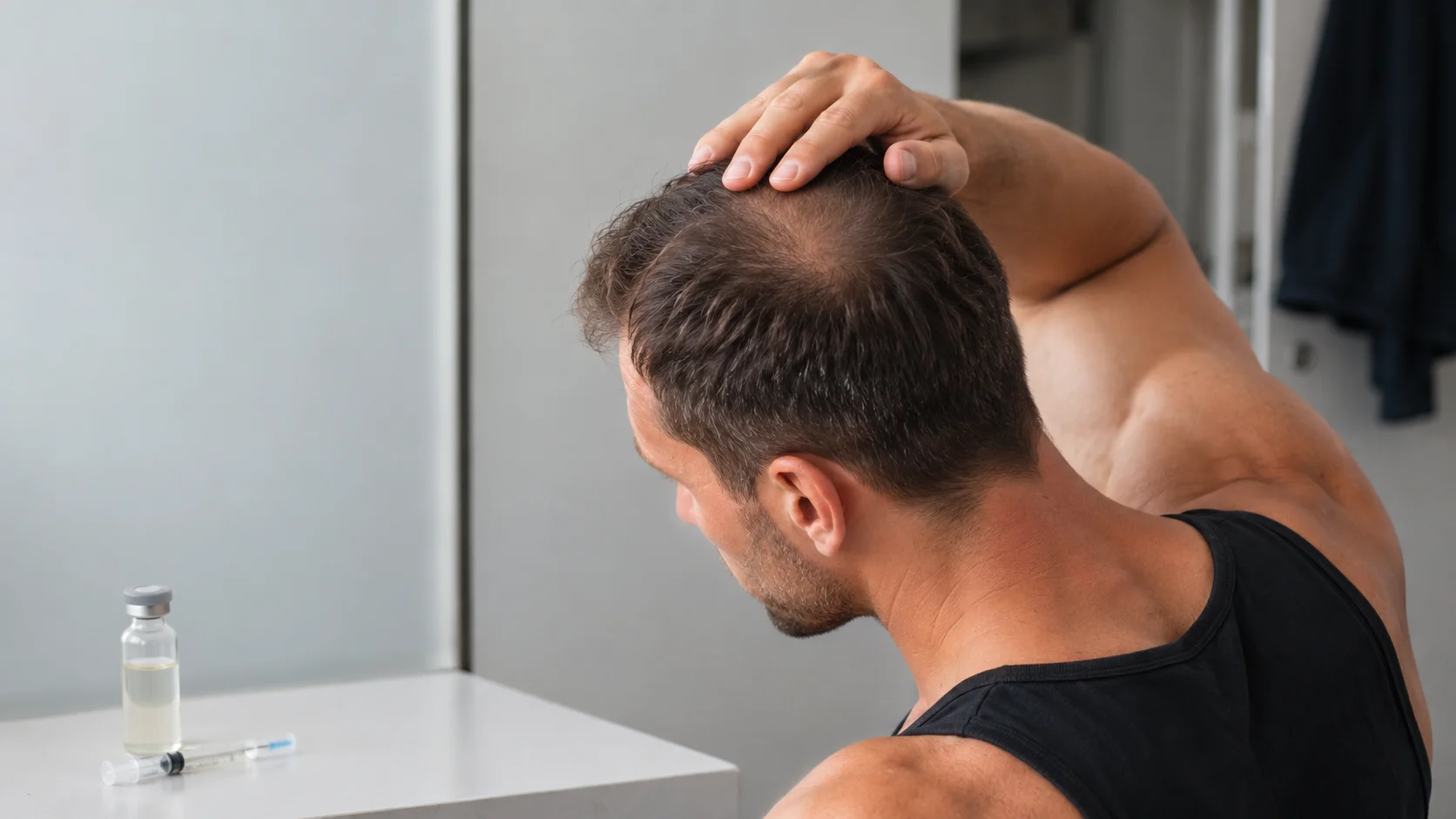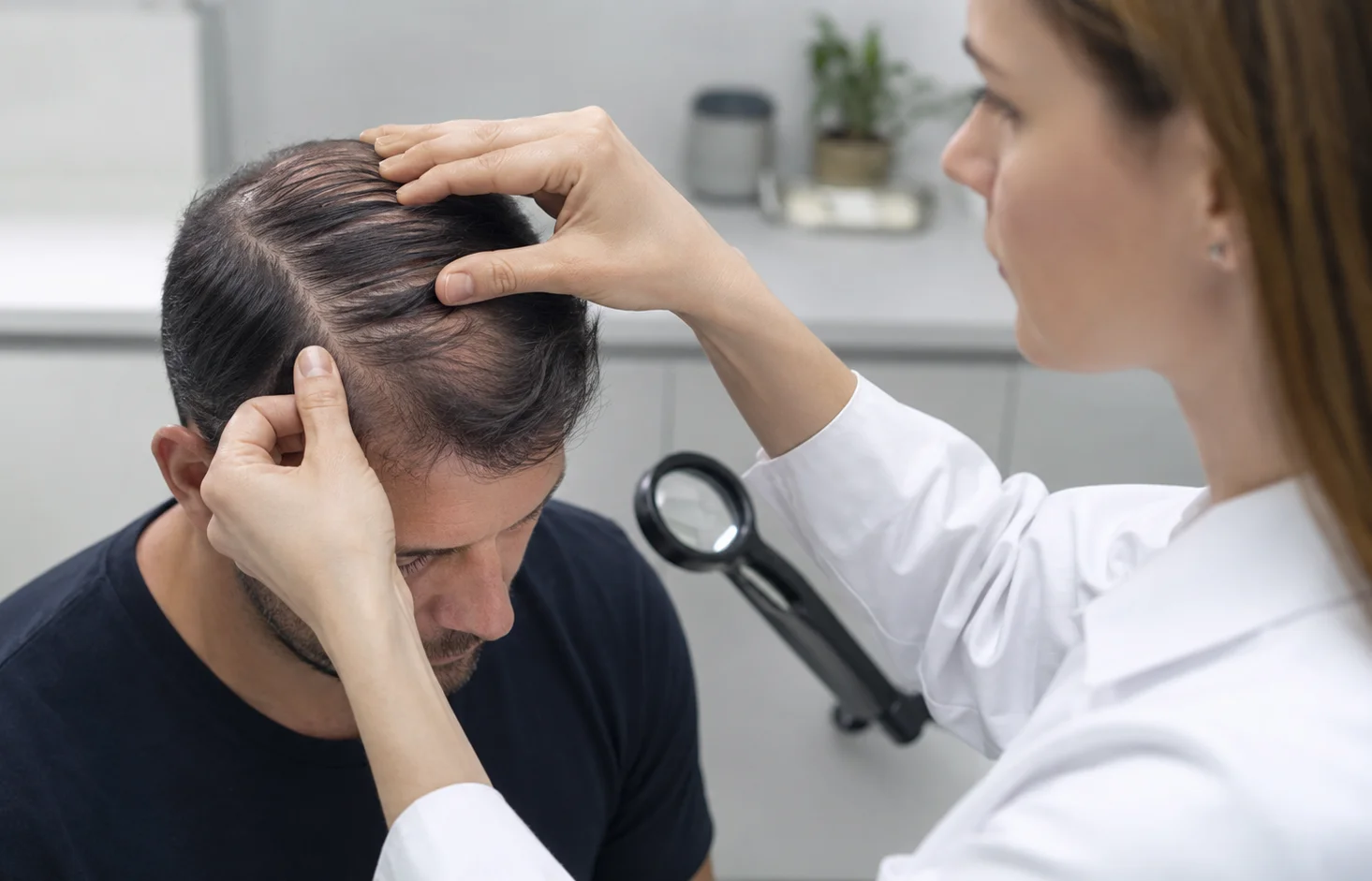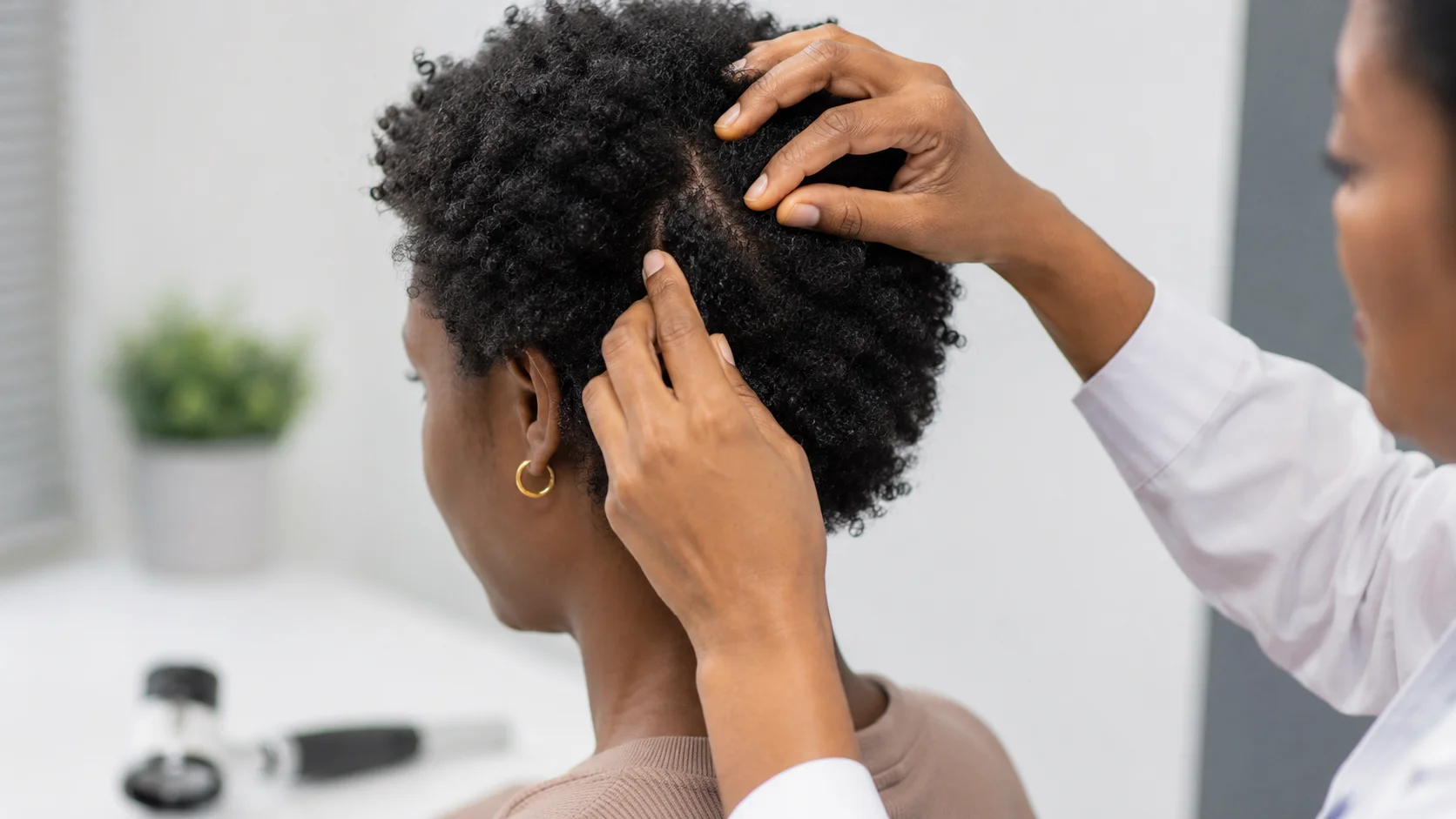
Traction alopecia is hair loss caused by repeated pulling tension on the hair follicles. It is most often linked to hairstyles that place prolonged stress on the hairline, temples, or other high-tension areas of the scalp. Over time, this mechanical stress can weaken follicles, cause inflammation, and eventually lead to permanent hair loss if the tension continues.
Unlike genetic pattern hair loss, traction alopecia is not primarily driven by hormones or inherited follicle sensitivity. It is caused by external force. This makes early recognition especially important because changing hair practices can often stop progression before permanent damage occurs.
Traction alopecia can affect anyone, but it is more common in people who regularly wear tight hairstyles, extensions, weaves, braids, buns, ponytails, locs, or hairpieces that pull on the scalp. It can also occur with repeated use of rollers, tight headwear, or certain styling routines.
How Traction Alopecia Develops
Hair follicles are resilient, but they are not designed to tolerate constant pulling. When tension is repeated day after day, the follicle and surrounding skin may become irritated. Early on, the hair may simply break or shed more easily. If the pulling continues, inflammation can damage the follicle.
In the early stages, traction alopecia may be reversible. The follicle may still be alive and able to produce hair again once tension is removed. In later stages, scarring can develop around the follicle. Once scarring destroys the follicle, regrowth becomes much less likely.
This is why traction alopecia should be taken seriously even when it starts as mild thinning around the edges.
Common Causes
The most common cause is long-term hairstyling tension. The risk depends on how tight the style is, how long it is worn, how often it is repeated, and whether the scalp shows warning signs.
Common contributors include:
- Tight braids or cornrows
- High-tension ponytails or buns
- Heavy extensions or weaves
- Tight loc maintenance
- Hairpieces attached with tension
- Repeated use of rollers or tight clips
- Chemical processing combined with tension
- Heat styling on already fragile hair
- Tight head coverings or helmets in some cases
Traction alopecia is often multifactorial. For example, hair that has been chemically relaxed, bleached, or heat-damaged may be more vulnerable to breakage and traction injury.
Early Signs and Symptoms
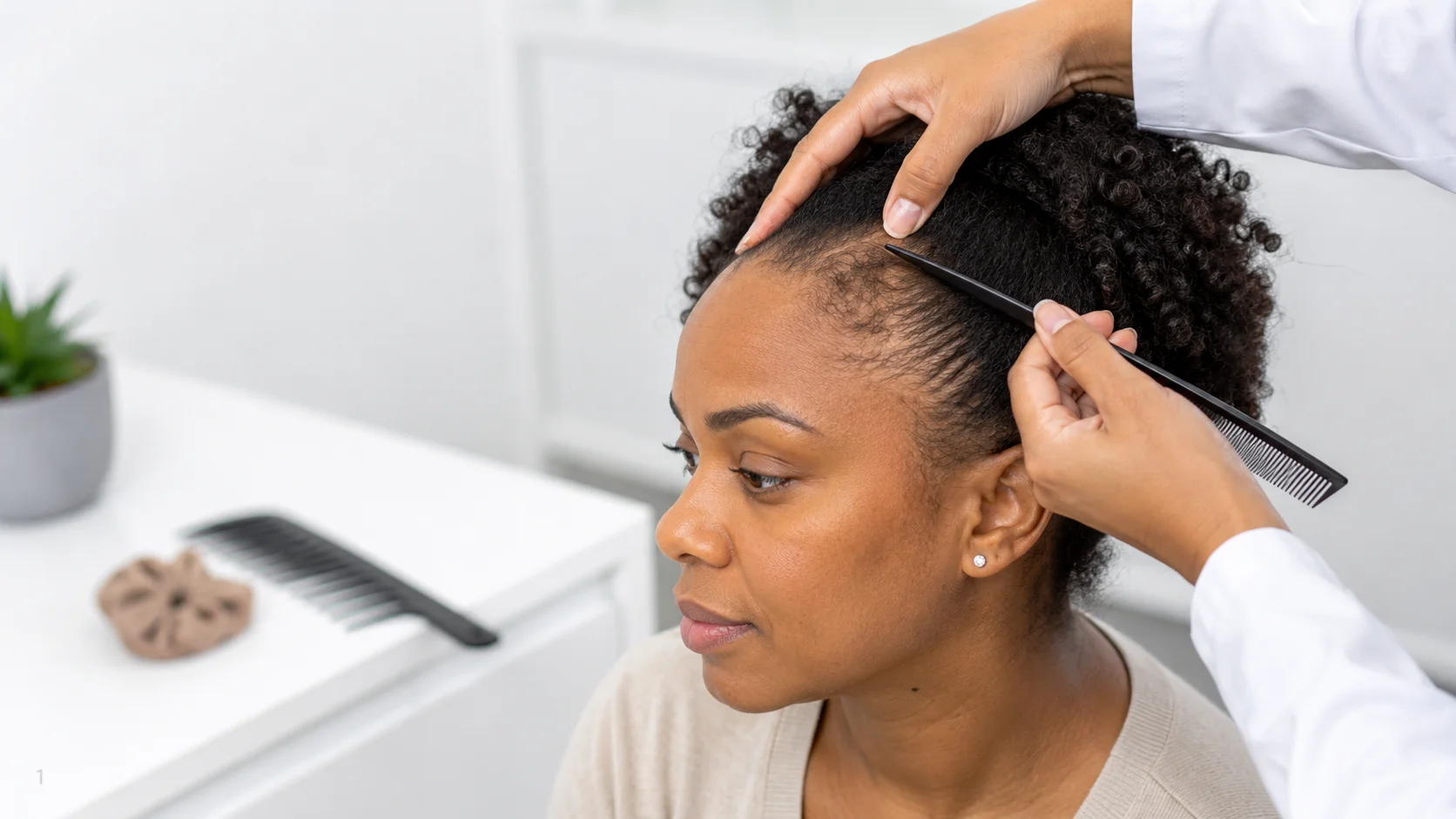
Traction alopecia often begins along the frontal hairline, temples, or above the ears. These areas are commonly pulled by tight styles and are visually noticeable.
Early signs may include:
- Thinning edges
- Short broken hairs along the hairline
- Tenderness or soreness after styling
- Redness or small bumps near follicles
- Itching or burning in tight areas
- Wider parts where tension is repeated
- Hair loss matching the direction of pulling
One important warning sign is pain. A hairstyle that hurts is placing excessive stress on the scalp. Pain, bumps, or tightness should not be dismissed as normal.
Can Traction Alopecia Become Permanent?
Yes. Traction alopecia can become permanent if the tension continues long enough to scar the follicles. Early traction alopecia is usually non-scarring and may improve. Advanced traction alopecia may become scarring, meaning the follicle openings can disappear and the skin may look smooth or shiny.
Permanent traction alopecia is more difficult to treat. Medical therapy may reduce inflammation if it is present, but lost follicles cannot always be restored. Hair transplantation may be considered in selected stable cases, but only after the traction has stopped and the scalp is healthy.
Prevention
Prevention focuses on reducing repeated tension. The goal is not to avoid all styling, but to protect the follicles from chronic pulling.
Helpful strategies include:
- Choosing looser hairstyles
- Avoiding styles that cause pain or tightness
- Taking breaks between braids, weaves, or extensions
- Reducing the weight of added hair
- Varying part lines and tension points
- Avoiding tight styles on wet or fragile hair
- Limiting heat and harsh chemical processing
- Removing extensions promptly if irritation develops
- Keeping scalp symptoms under observation
Protective styling should truly protect the hair and scalp. If a style causes soreness, bumps, or thinning, it is not protective for that person.
Treatment Options
The first treatment is removing the source of traction. Without this step, other treatments are unlikely to help much.
If the condition is early, hair may gradually regrow over several months after tension is reduced. Gentle hair care, avoiding additional trauma, and treating scalp inflammation may support recovery.
A clinician may consider treatments such as topical anti-inflammatory medication when there is redness, itching, or follicle irritation. Minoxidil may be discussed in some cases to support regrowth, especially when follicles are still active. It is not a cure for scarring, and it should be used with realistic expectations.
If permanent loss has occurred and the condition is stable, surgical restoration may be considered. However, hair transplantation into traction alopecia areas requires careful evaluation because scarred or inflamed skin may not support grafts well.
Traction Alopecia vs Other Hair Loss Conditions
Traction alopecia can resemble other forms of hair loss, especially at the hairline. It may be confused with androgenetic alopecia, alopecia areata, frontal fibrosing alopecia, or breakage from hair shaft damage.
Pattern hair loss usually follows genetic thinning patterns. Alopecia areata often causes sharply defined patches. Frontal fibrosing alopecia is a scarring inflammatory condition that can cause hairline recession and eyebrow loss. Hair shaft breakage may cause short hairs without true follicle loss.
Because treatments differ, diagnosis matters. Persistent, painful, patchy, or scarring hair loss should be evaluated.
Recovery Timeline
Recovery depends on severity. Early traction alopecia may show reduced shedding and new short hairs after tension is removed, but visible improvement can take months. Hair grows slowly, and damaged follicles need time to re-enter a productive growth phase.
If follicles have scarred, regrowth may be limited or absent. In these cases, the main goal becomes stopping progression and discussing cosmetic or surgical options only when the scalp is stable.
Taking standardized photos can help track subtle progress. Daily checking often makes changes harder to judge.
FAQ
Is traction alopecia reversible?
It can be reversible in early stages if tension is stopped before permanent follicle damage occurs. Advanced scarring traction alopecia may not fully regrow.
What hairstyles cause traction alopecia?
Any style that repeatedly pulls on the scalp can contribute, including tight braids, ponytails, buns, weaves, extensions, locs, and hairpieces.
How do I know if my hairstyle is too tight?
Pain, scalp soreness, bumps, redness, headaches, or thinning edges are warning signs that the style may be too tight.
Can minoxidil help traction alopecia?
Minoxidil may help in some early or non-scarring cases, but it cannot restore follicles that have been permanently scarred.
When should I see a professional?
Seek evaluation if thinning progresses, the scalp is painful or inflamed, follicle openings disappear, or hair does not improve after reducing tension.
Final Thoughts
Traction alopecia is a preventable form of hair loss when it is recognized early. The most important step is reducing repeated pulling before follicles become permanently damaged.
Good hair care should support both appearance and scalp health. Looser styling, tension breaks, and early attention to warning signs can make a meaningful difference. This topic naturally connects with Hairloss Authority guides on scarring alopecia, hair breakage, hair care routines, and hair transplant eligibility for stable hair loss.
This article is for general informational purposes only and does not replace individualized medical advice, diagnosis, or treatment from a qualified healthcare professional.