Hair loss in Afro-textured hair deserves careful discussion because several different issues can look similar from the outside. Thinning may come from true follicle loss, temporary shedding, breakage along the hair shaft, styling-related tension, inflammatory scalp disease, genetic pattern hair loss, or a combination of factors.
Afro-textured hair is structurally diverse, and it should not be described as fragile by default. However, tightly coiled and curved fibers can be more vulnerable to dryness, friction, tangling, and breakage when hair care practices are too harsh for the hair’s structure. At the same time, some medical causes of hair loss are more commonly discussed in people of African descent, including traction alopecia and central centrifugal cicatricial alopecia, or CCCA.
The key is to separate cosmetic breakage from follicle-level hair loss and to recognize warning signs early. This is especially important for scarring alopecias, because once follicles are permanently damaged, regrowth becomes much more difficult.
Breakage Is Not the Same as Hair Loss
Breakage happens when the hair shaft snaps. The follicle may still be alive and capable of producing hair, but the strand does not retain length or density because it breaks before it can grow out.
Hair loss, by contrast, involves shedding from the root or damage to the follicle itself. A person may notice more hairs with bulbs, widening parts, smooth patches, or visible scalp.
This distinction matters. Breakage may improve with gentler detangling, reduced heat, better moisture retention, less chemical overlap, and lower-friction styling. Follicle-level hair loss may require diagnosis and medical treatment.
Traction Alopecia
Traction alopecia is caused by repeated pulling on the hair follicles. The American Academy of Dermatology notes that tight cornrows, locs, braids, buns, ponytails, updos, weaves, extensions, and some head coverings can contribute when they place constant tension on the scalp.
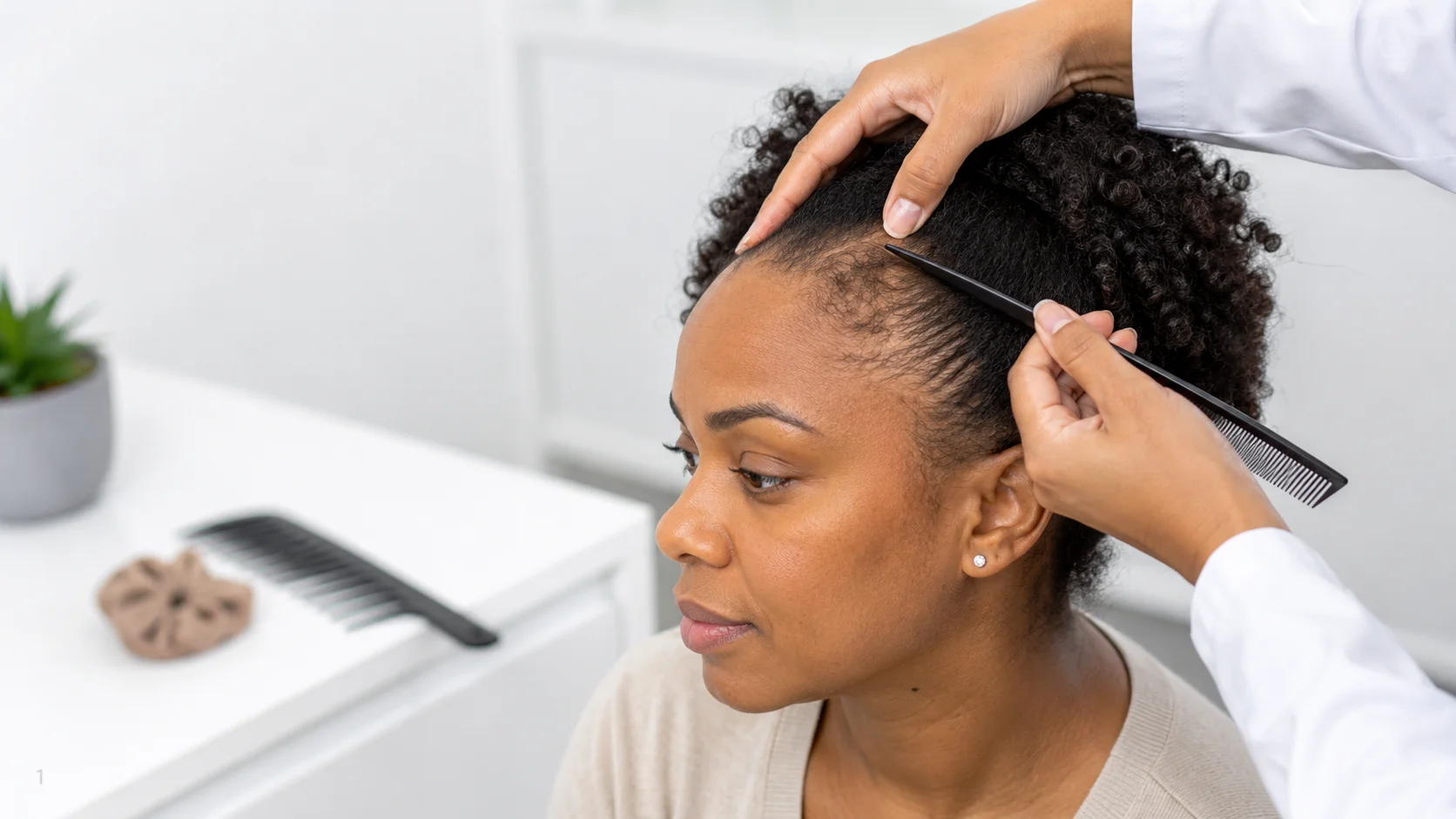
In Afro-textured hair, traction alopecia often appears around the hairline, temples, edges, and areas where styles pull most tightly. Early signs may include pain, bumps, stinging, crusting, broken hairs, or a receding hairline.
Early traction alopecia may improve when tension is removed. Long-standing traction can become scarring, and once shiny smooth areas appear, regrowth is less likely. A style should not need to hurt in order to be neat or long-lasting.
CCCA: A Scarring Alopecia That Needs Early Care
Central centrifugal cicatricial alopecia is a scarring form of hair loss that often begins near the crown and spreads outward. It is more commonly reported in Black women, although it can affect others.
CCCA is not simply “damage from styling.” The American Academy of Dermatology states that the cause is complex and not fully understood. Hairstyles and grooming practices may play a role, but this has not been proven. Some people with CCCA have never used relaxers, and many people who use relaxers never develop CCCA.
That nuance matters. CCCA should not be reduced to personal hair choices. A better explanation is that CCCA may involve inflammation, genetic susceptibility, scalp biology, and possibly hair care factors, with research still evolving.
Symptoms can include crown thinning, itching, burning, tenderness, scaling, hair breakage, or a smooth-looking scalp in later stages. Early diagnosis is important because treatment may help reduce inflammation and preserve remaining follicles.
Pattern Hair Loss in Afro-Textured Hair
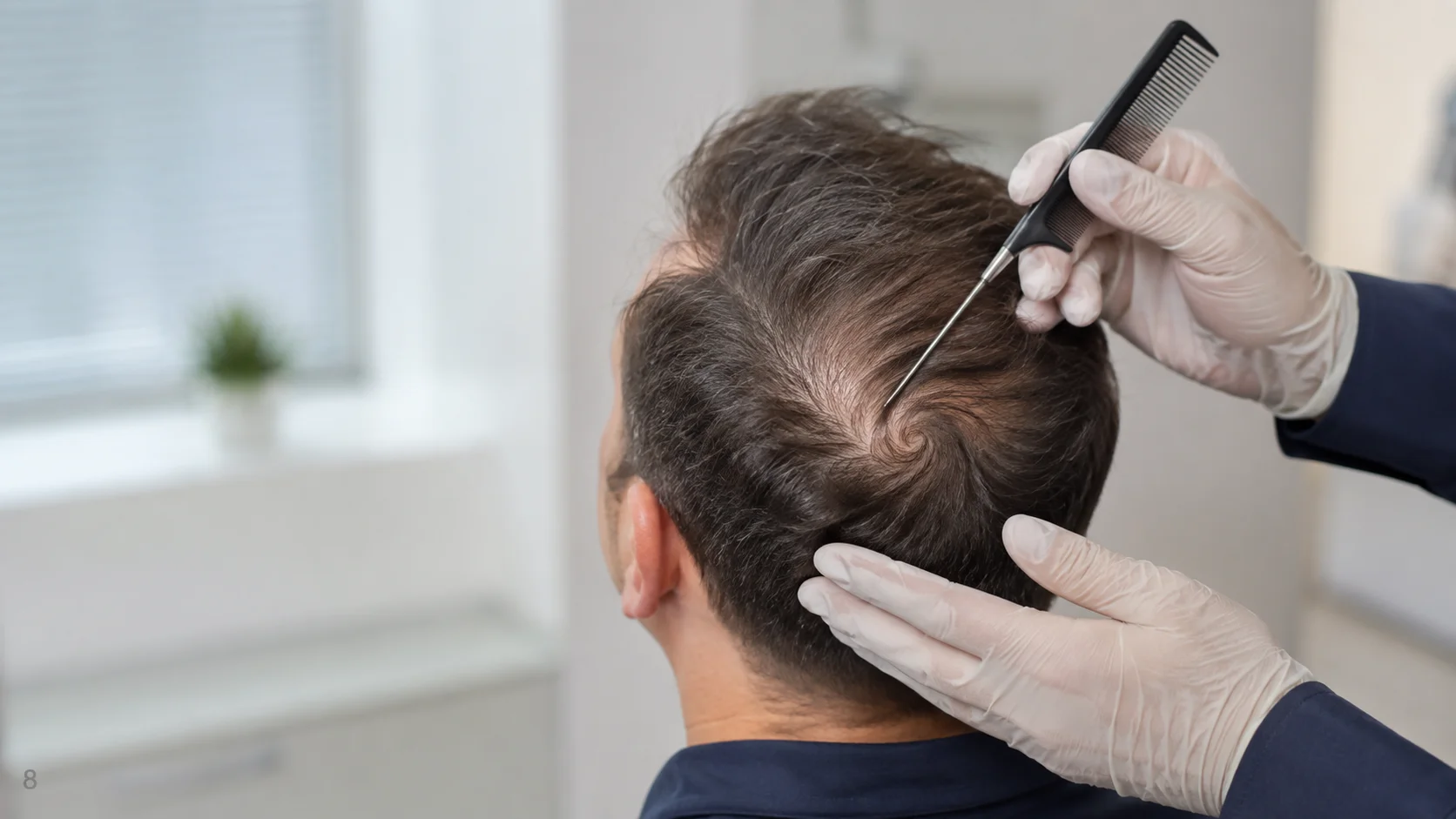
Androgenetic alopecia can affect people of all hair textures. In women, it may appear as widening of the part or reduced density over the crown. In men, it may appear as recession, crown thinning, or both.
In Afro-textured hair, pattern hair loss can be mistaken for breakage or traction. A clinician may look for miniaturized hairs, compare density across scalp regions, and consider whether the pattern fits genetic hair loss.
Treatment options depend on the diagnosis, age, sex, medical history, pregnancy plans, and personal preferences. Cosmetic styling changes can help appearance, but they should not be presented as medical treatment for pattern hair loss.
Scalp Inflammation and Infection
Itching, flaking, pustules, pain, crusting, or tenderness can suggest scalp inflammation. Possible causes include seborrheic dermatitis, psoriasis, folliculitis, fungal infection, allergic contact dermatitis, or inflammatory alopecia.
Heavy oils and styling products may make the hair feel softer for some people, but they do not treat every scalp condition. In some cases, buildup can worsen irritation or make the scalp harder to evaluate. Persistent symptoms should be assessed rather than managed by changing products repeatedly.
Hair Care Considerations That Reduce Avoidable Damage
A safer routine usually focuses on lowering tension and friction while keeping the scalp clean. Useful principles include detangling gently from ends to roots, avoiding styles that cause pain, reducing frequent high heat, spacing chemical treatments, protecting hair at night, and avoiding chemical overlap such as relaxing and bleaching close together.
Protective styles can be helpful when they reduce daily manipulation, but they are not automatically protective. They can become harmful if they are too tight, too heavy, installed on irritated scalp, or left in long enough to cause matting and buildup.
When to Seek Evaluation
Professional evaluation is important when hair loss is painful, patchy, spreading, centered at the crown, associated with scaling or bumps, or leaving smooth shiny areas. It is also important when edges continue thinning despite looser styling.
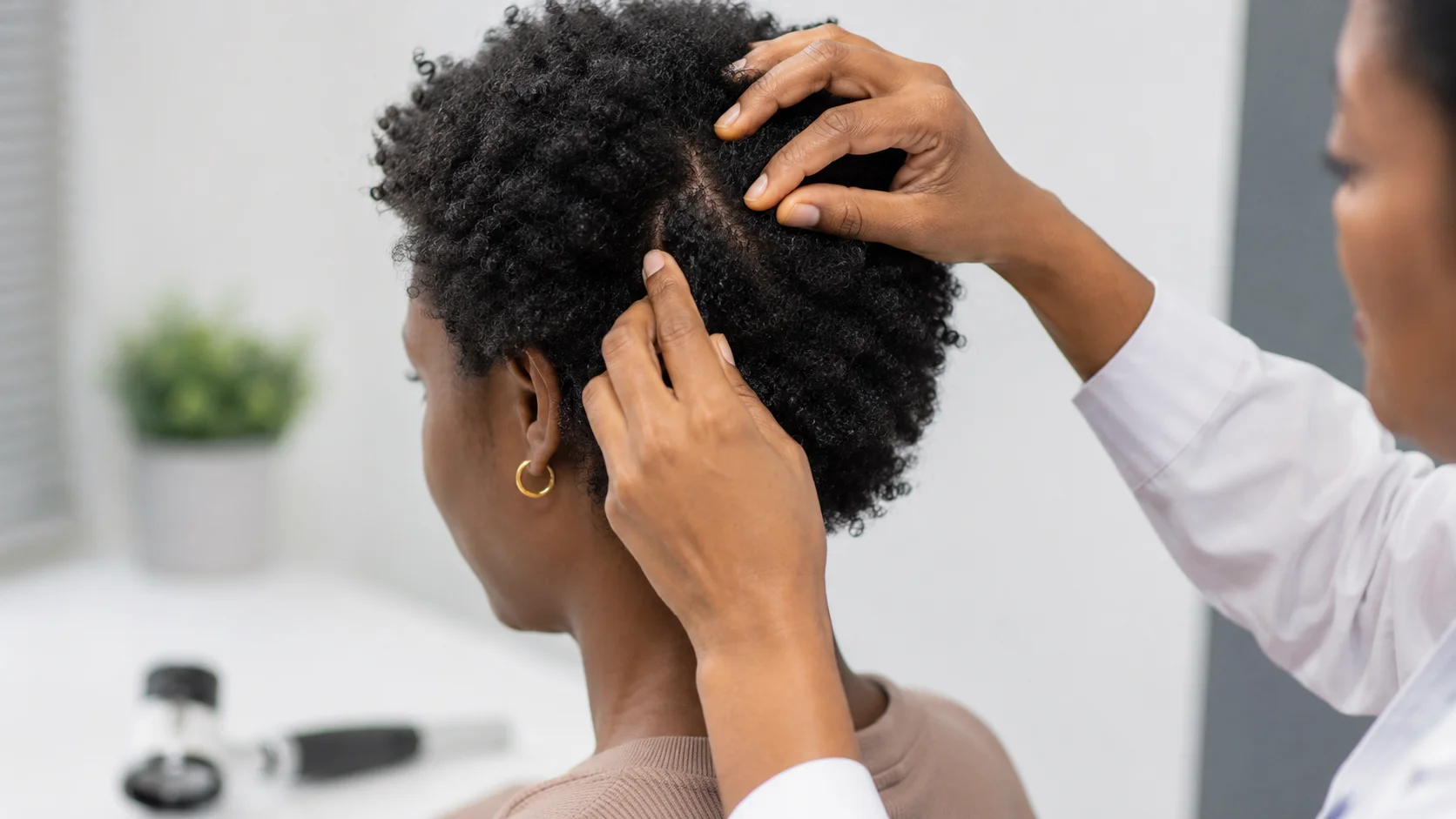
A clinician may examine the scalp, review styling history, check for miniaturization, order blood tests, or perform a scalp biopsy if scarring alopecia is suspected.
Sources
American Academy of Dermatology, Hairstyles That Pull Can Lead to Hair Loss
American Academy of Dermatology, Central Centrifugal Cicatricial Alopecia Causes
DermNet, Central Centrifugal Cicatricial Alopecia
StatPearls, Traction Alopecia
FAQ
Is hair loss in Afro-textured hair always caused by styling?
No. Styling tension can contribute, but pattern hair loss, CCCA, scalp inflammation, shedding disorders, hormones, nutrition, and other medical causes may also be involved.
Can traction alopecia grow back?
Early traction alopecia may improve when tension stops. If it becomes scarring, regrowth is less likely.
Is CCCA proven to be caused by relaxers or tight styles?
No. These practices may be relevant for some people, but the American Academy of Dermatology notes that a direct cause has not been proven.
How can I tell breakage from hair loss?
Breakage often creates short snapped hairs and uneven length. Hair loss often causes shedding from the root, widening parts, patches, or visible scalp.
A Better Way to Think About Afro-Textured Hair Loss
The most useful approach is not blame or guesswork. Afro-textured hair loss should be evaluated with respect for hair structure, styling culture, scalp health, and medical risk. Gentle care can reduce avoidable breakage and traction, while early diagnosis can help protect follicles when inflammation or scarring is present.
This article is for general informational purposes only and does not replace individualized medical advice, diagnosis, or treatment. Anyone with persistent, painful, patchy, or worsening hair loss should seek evaluation from a qualified healthcare professional.