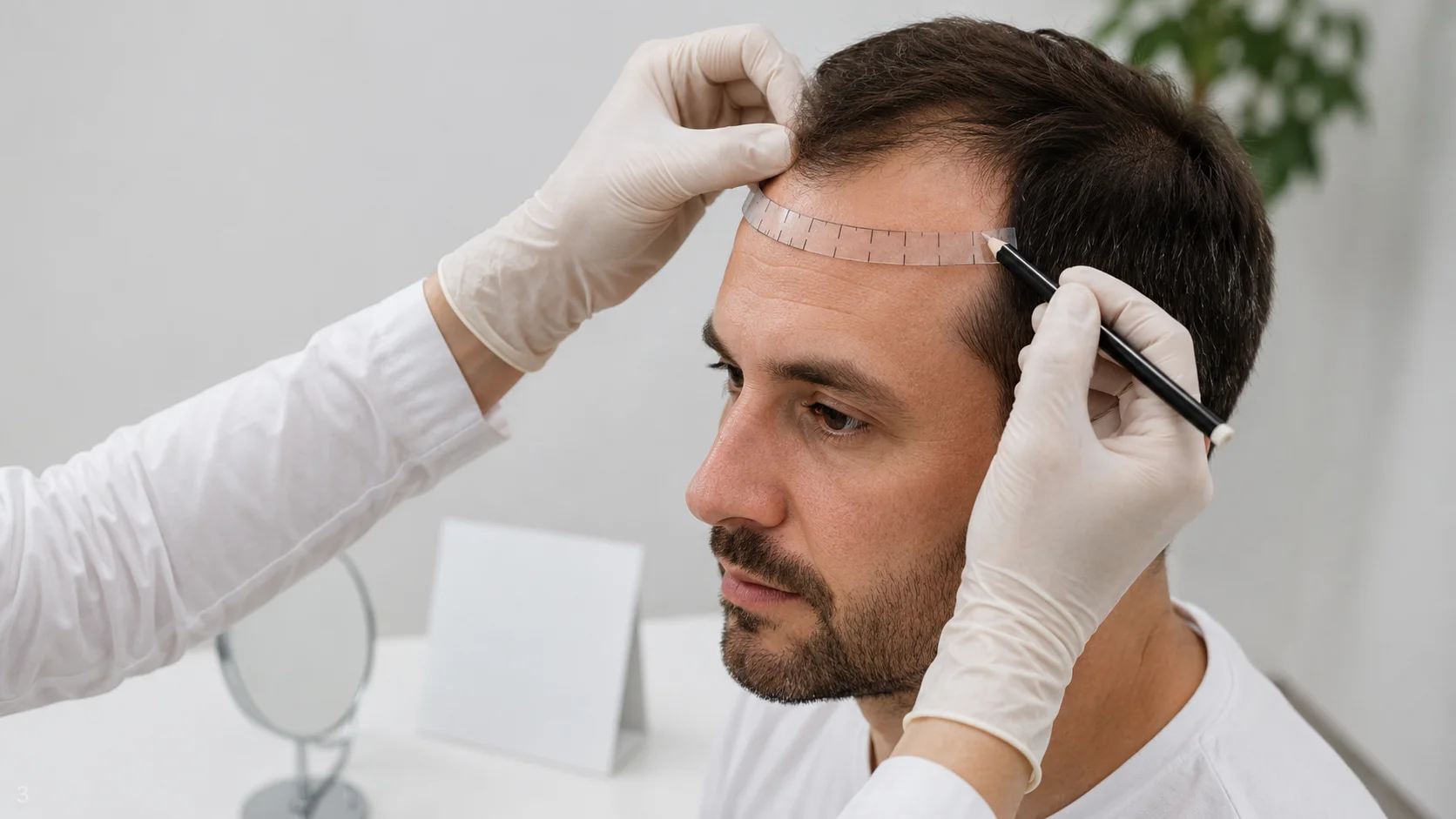
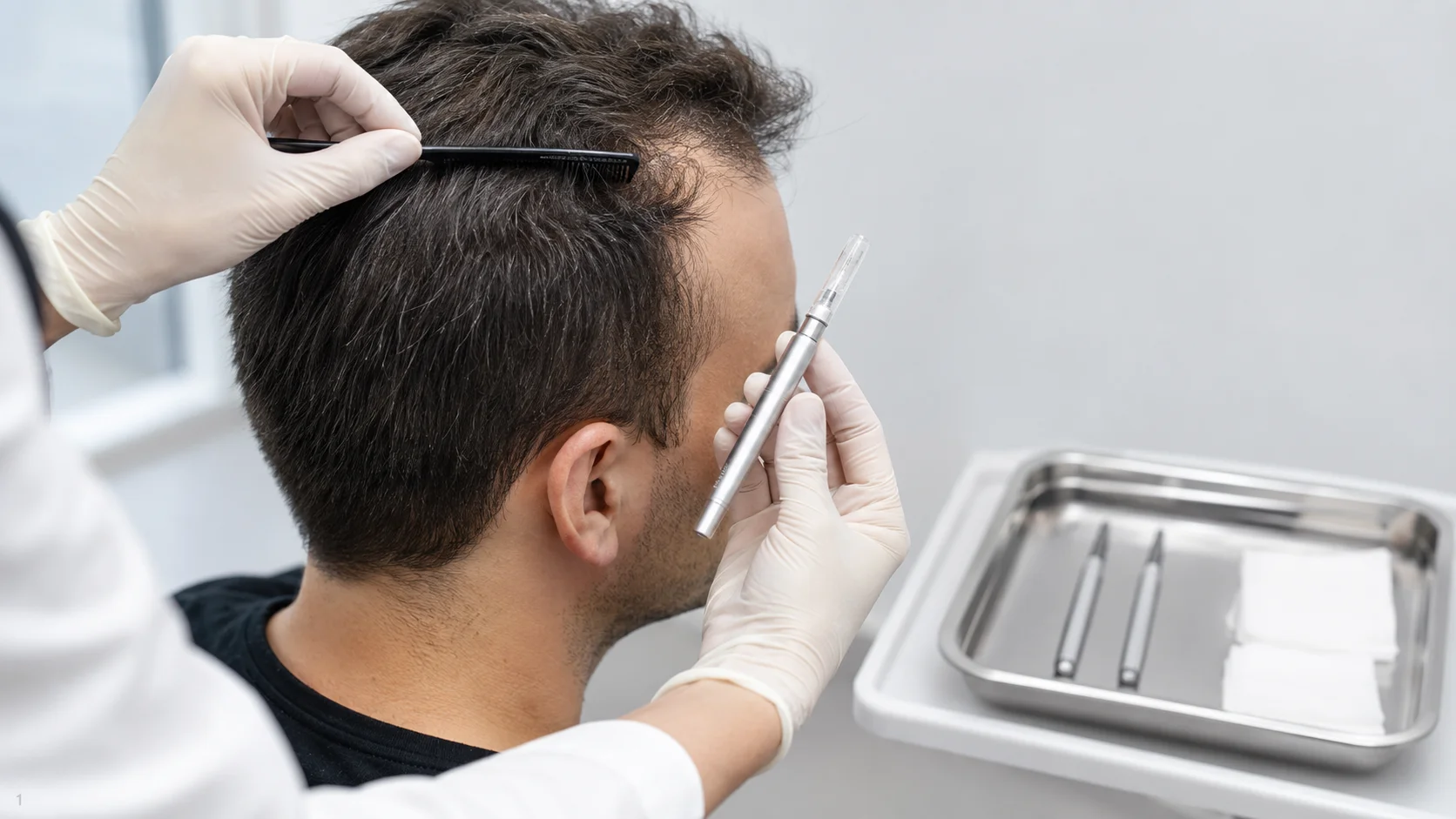
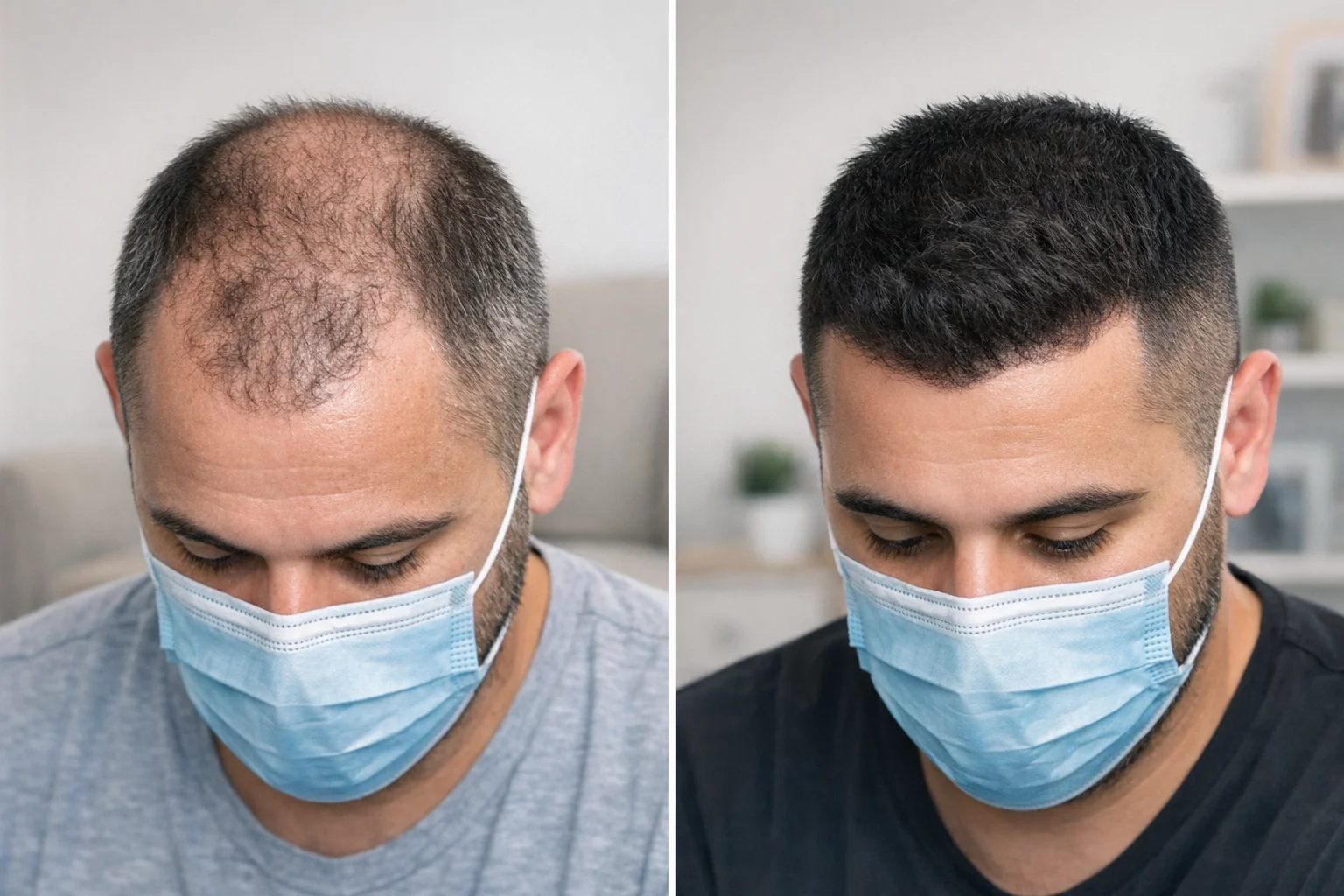
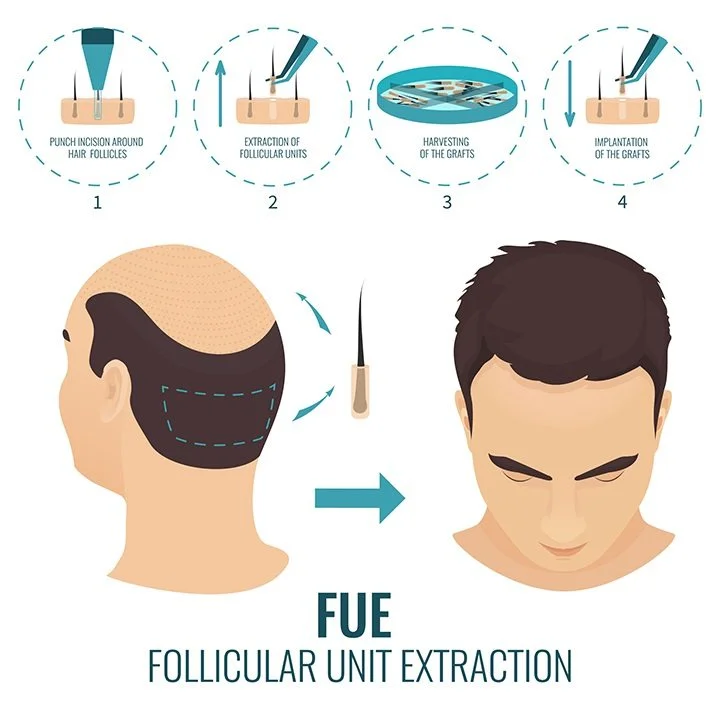
Hair transplant density is one of the main factors people notice when judging a result, but it is also one of the most misunderstood. A natural result is not created by placing the highest possible number of grafts into the scalp. It comes from balancing coverage, donor supply, hair characteristics, scalp safety, and long-term hair loss planning.
Many patients ask how dense a hair transplant can be. The more useful question is how much density can be created safely and naturally for that individual. A dense-looking result depends on more than graft count. Hair caliber, curl, color contrast, graft survival, placement angle, and distribution all influence the final appearance.
A responsible density plan aims to look believable now and remain manageable as hair loss continues over time.
What Hair Transplant Density Means
Hair transplant density usually refers to how many follicular units are placed within a given area. In clinical planning, this may be discussed as follicular units per square centimeter. In everyday terms, it means how full the transplanted area appears.
However, numerical density does not tell the whole story. Two patients can receive the same number of grafts and look very different. Someone with thick, wavy, low-contrast hair may appear fuller than someone with fine, straight, dark hair against a light scalp.
Density is both mathematical and visual. The surgeon places grafts, but the eye perceives coverage.
Natural Density vs Maximum Density
Natural density is not the same as maximum density. Native hair density in a non-bald scalp is often higher than what can safely be recreated with transplantation in one session.
Trying to match original teenage density is usually unrealistic, especially in advanced hair loss. Dense packing beyond the scalp’s capacity may increase trauma, affect blood supply, or reduce graft survival.
A natural result uses density strategically. The frontal hairline often needs refined placement and enough density to frame the face. The mid-scalp may need balanced coverage. The crown may require careful planning because it can consume many grafts due to its circular pattern.
The goal is visual harmony, not simply the highest number.
Donor Supply Sets the Limit
Every hair transplant depends on donor hair. Donor supply is limited, and it must last for the patient’s lifetime. This is one of the most important density constraints.
If too many grafts are used early or concentrated poorly, future options may be reduced. This matters because androgenetic alopecia can progress over time.
A density plan should consider:
- Current hair loss pattern
- Likely future progression
- Donor density and scalp laxity
- Hair caliber
- Previous surgeries
- Desired hairstyle
- Age and family history
- Medical stabilization when appropriate
Using donor hair wisely often means accepting a moderate but natural density rather than chasing excessive numbers.
Hair Characteristics That Affect Density
Hair characteristics can dramatically change the appearance of density.
Thicker hair shafts provide more coverage than fine hair. Curly or wavy hair can create more visual volume than straight hair. Lower contrast between hair color and scalp color makes thinning less obvious. Longer hair may provide layering, while very short hair reveals scalp contrast more easily.
Follicular units also vary. Some grafts contain one hair, while others contain two, three, or more hairs. Single-hair grafts are often used in the hairline for softness. Multi-hair grafts may be placed behind the hairline to create fullness.
A good transplant does not distribute grafts randomly. It uses different graft types according to the visual needs of each area.
Hairline Density
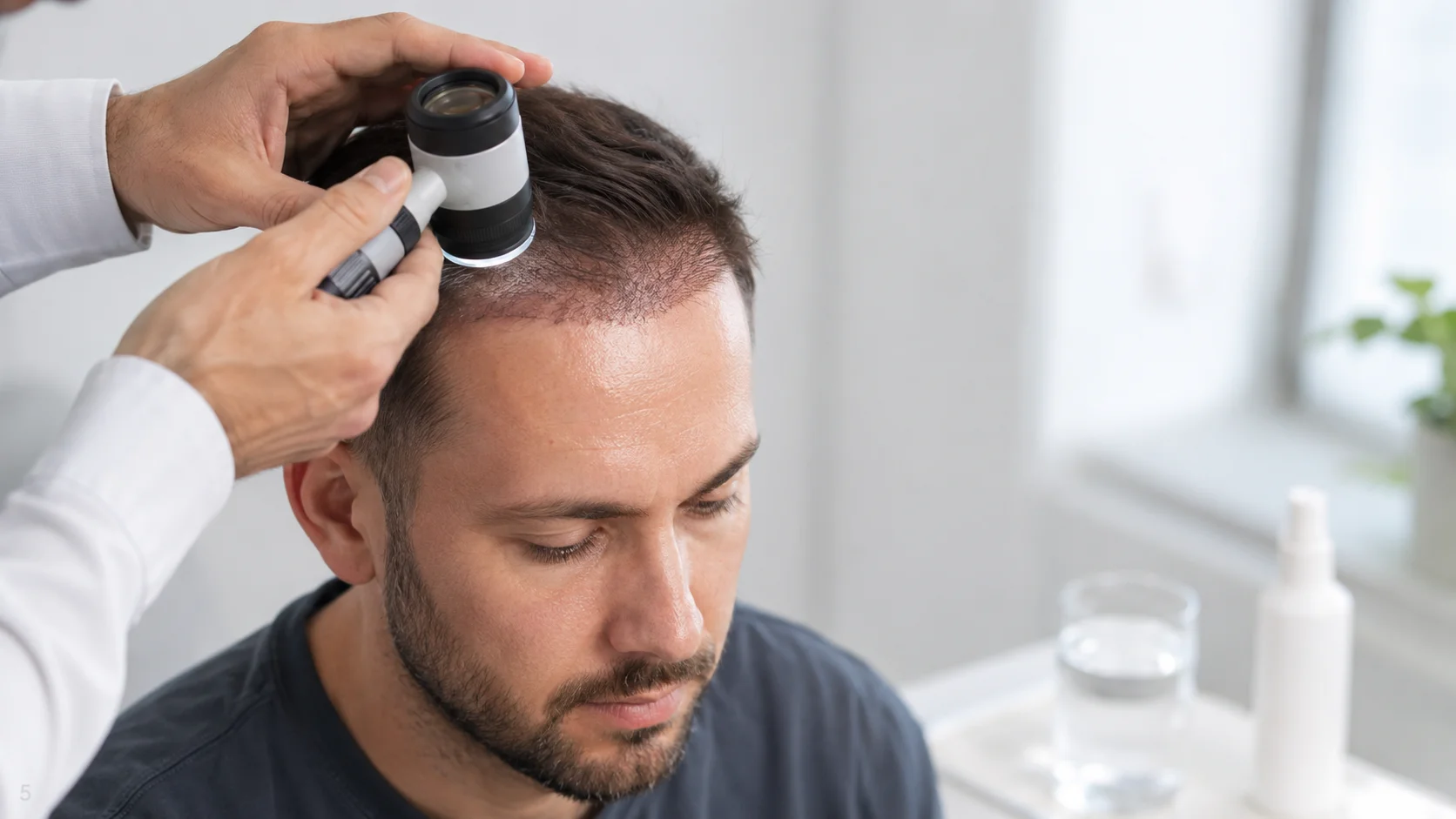
The hairline is the most visible part of many hair transplants. It must look natural at conversational distance and under everyday lighting.
Hairline density is not only about packing grafts. It also depends on irregularity, softness, transition, angle, and direction. The front edge should usually contain finer single-hair grafts, with stronger density gradually building behind it.
A hairline that is too dense, too straight, too low, or too uniform can look artificial. A hairline that is too sparse may fail to frame the face. Planning requires restraint and detail.
This topic naturally connects with dedicated guidance on hairline design, because density and design cannot be separated.
Crown Density
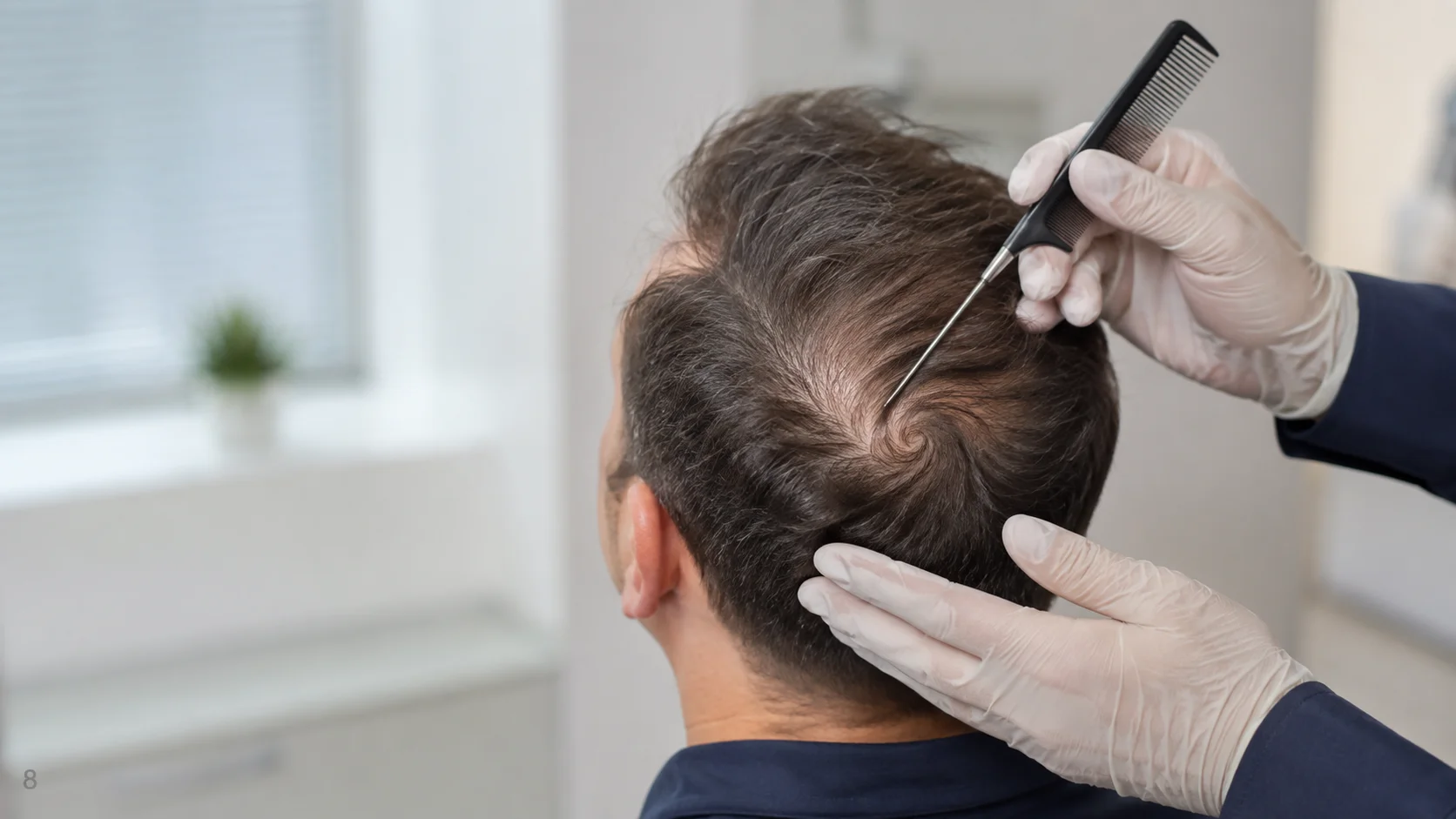
The crown is one of the most challenging areas for density planning. Hair grows in a whorl pattern, and the scalp may show through more easily because hairs radiate in different directions.
The crown can require many grafts to create a modest visual improvement. For patients with limited donor supply or ongoing hair loss, aggressive crown work may not be the best first priority.
A conservative crown plan may be more appropriate when the frontal hairline and mid-scalp need coverage. In some cases, medical treatment may be discussed to help preserve existing crown hair.
Density and Graft Survival
More grafts do not always mean a better result. Grafts need oxygen and nutrients from the surrounding tissue as they heal. If recipient sites are too dense or traumatic, survival may be affected.
Surgical factors that influence survival include:
- Recipient-site spacing
- Incision size
- Tissue trauma
- Graft handling
- Time outside the body
- Hydration and storage
- Implantation depth
- Postoperative care
A responsible surgeon balances desired density with scalp safety. Healthy survival is more valuable than an impressive graft number on paper.
One Session vs Multiple Sessions
Some patients can achieve their goals in one session. Others may need staged procedures. Staging can be useful when hair loss is advanced, donor planning is complex, or the goal is to refine density after initial growth.
A second session should usually be considered only after the first result has matured enough to evaluate. This may take 12 months or longer, especially in the crown.
Staged planning can protect donor resources and allow adjustments based on real growth rather than assumptions.
Common Misconceptions About Density
Several misconceptions can lead to disappointment.
One is that a transplant can restore original adolescent density in all cases. This is rarely realistic.
Another is that the clinic offering the largest graft number will produce the best result. Very high graft counts can be risky if donor management and survival are not carefully controlled.
A third misconception is that density alone creates naturalness. Poor angles, harsh hairlines, pluggy graft placement, or bad distribution can look unnatural even if many grafts grow.
Natural density is an aesthetic and medical plan, not a simple number.
FAQ
What determines hair transplant density?
Density depends on donor supply, graft number, hair caliber, curl, color contrast, recipient area size, surgical technique, and long-term planning.
Can a hair transplant match natural hair density?
Sometimes it can look visually dense, but recreating original native density is often unrealistic, especially in advanced hair loss.
Is higher graft density always better?
No. Excessive density can increase scalp trauma and may affect graft survival. Safe, strategic density is more important.
Why does the crown need so many grafts?
The crown has a circular growth pattern and often shows scalp easily. It can require many grafts for a relatively modest visual change.
Can density be improved later?
In selected cases, a second procedure may improve density after the first transplant has matured and donor supply is reassessed.
Final Thoughts
Hair transplant density is about visual strategy, not just numbers. A natural result depends on using limited donor hair wisely, matching placement to hair characteristics, and respecting the scalp’s healing capacity.
The best density plan creates believable coverage while preserving options for the future. Readers exploring this topic may also benefit from related Hairloss Authority articles on hairline design, shock loss, graft survival, FUE, FUT, and hair transplant eligibility.
This article is for general informational purposes only and does not replace individualized medical advice, diagnosis, or treatment from a qualified healthcare professional.