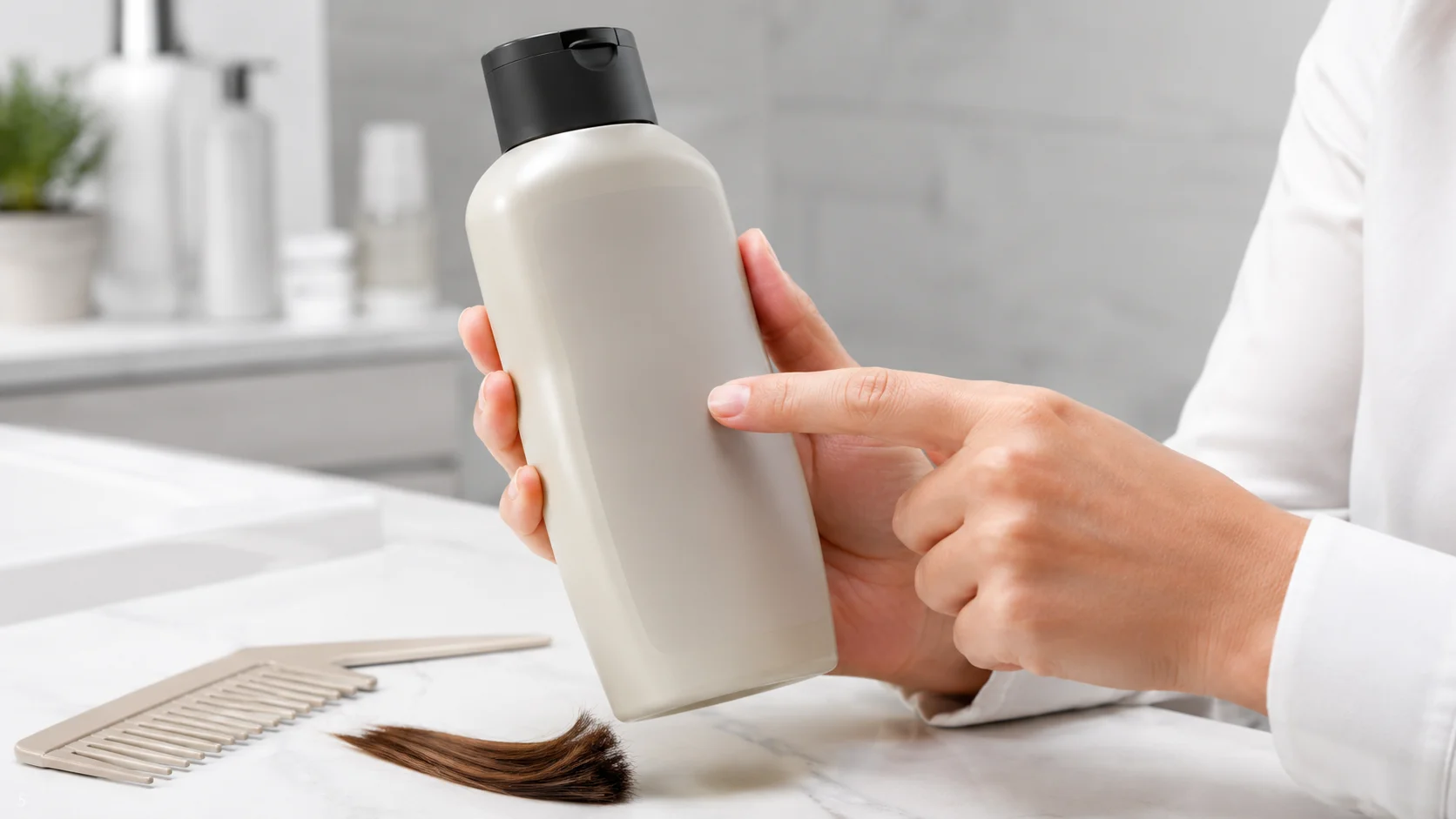
Reading shampoo ingredients can make hair care choices less confusing. A shampoo label may look like a long chemical list, but most ingredients serve a practical function: cleansing, foaming, conditioning, thickening, preserving, adjusting pH, adding fragrance, or improving texture.
Understanding ingredient lists does not mean memorizing every chemical name. It means recognizing categories, knowing what they usually do, and avoiding common misconceptions. This is different from choosing a shampoo for a specific hair type. Ingredient reading focuses on interpretation: what is in the formula, why it may be there, and what claims should be viewed cautiously.
Shampoo is a cosmetic cleansing product. It can support scalp and hair hygiene, but it should not be presented as a cure for medical hair loss unless it contains a proven medicated active for a diagnosed scalp condition.
Ingredient Lists: The Basics
Cosmetic ingredient lists usually appear in descending order by concentration until lower-percentage ingredients, which may be listed more flexibly depending on local rules. Water is often first because many shampoos are water-based.
The first several ingredients usually tell you the most about the formula’s cleansing and conditioning profile. Ingredients near the end may still matter, especially preservatives, fragrance allergens, dyes, or active ingredients, but they are usually present in smaller amounts.
Names may follow INCI terminology, which is the standardized naming system used for cosmetic ingredients. This is why labels may use terms such as sodium laureth sulfate, cocamidopropyl betaine, glycerin, dimethicone, or polyquaternium.
Surfactants: The Cleansing Agents
Surfactants are the ingredients that help shampoo remove oil, sweat, styling residue, and dirt. They reduce surface tension so water can lift away buildup.
Common surfactants include:
- Sodium lauryl sulfate
- Sodium laureth sulfate
- Ammonium lauryl sulfate
- Cocamidopropyl betaine
- Sodium cocoyl isethionate
- Decyl glucoside
- Coco-glucoside
Sulfates are often described as harsh, but the reality is more nuanced. Some sulfate-based shampoos can be strong cleansers, which may be useful for oily scalps or heavy buildup. They may also feel drying for some hair types or sensitive scalps.
“Sulfate-free” does not automatically mean gentle. A sulfate-free formula still contains surfactants, and its mildness depends on the full formulation, concentration, pH, and how the shampoo is used.
Conditioning Ingredients
Many shampoos include conditioning agents to reduce friction and improve hair feel after cleansing. These ingredients do not repair hair permanently, but they can make the hair shaft feel smoother and easier to manage.
Common conditioning ingredients include:
- Dimethicone
- Amodimethicone
- Polyquaterniums
- Guar hydroxypropyltrimonium chloride
- Behentrimonium compounds
- Cetrimonium chloride
Silicones are often misunderstood. They can reduce friction, improve shine, and help protect fragile hair from mechanical damage. Some people dislike buildup or heaviness, especially on fine hair, but silicones are not inherently harmful.
The practical question is whether the formula suits the person’s hair texture, scalp oil level, styling routine, and cleansing frequency.
Humectants and Moisture-Related Ingredients
Humectants attract water and can help improve the feel of the hair or scalp. Common examples include glycerin, propylene glycol, panthenol, aloe-derived ingredients, and hyaluronic acid.
In a rinse-off shampoo, these ingredients may have limited contact time, so claims should be realistic. They may support formula feel, but they are not the same as a leave-on conditioner or treatment.
Oils and butters may also appear in shampoos, such as argan oil, coconut oil, shea butter, or sunflower seed oil. In rinse-off formulas, they may contribute softness or marketing appeal, but their effect depends on concentration and formulation.
Proteins and Bonding Claims
Some shampoos include proteins or amino acids, such as hydrolyzed keratin, hydrolyzed wheat protein, silk amino acids, or collagen-derived ingredients. These can temporarily coat or interact with the hair surface, improving feel or reducing roughness.
They do not permanently rebuild damaged hair into its original state. Hair shafts are dead fibers, and severe damage cannot be biologically healed. Cosmetic ingredients can improve appearance and manageability, but the effect is usually temporary.
Bond-building claims should also be read carefully. Some technologies may reduce breakage or improve hair feel, but shampoo contact time is short. Leave-on or treatment products may have a different role.
Preservatives
Preservatives help prevent microbial growth in water-based products. They are important for safety. Without preservatives, shampoos could become contaminated during normal bathroom use.
Common preservatives include:
- Phenoxyethanol
- Sodium benzoate
- Potassium sorbate
- Benzyl alcohol
- Ethylhexylglycerin
- Methylisothiazolinone
- Methylchloroisothiazolinone
Some preservatives can irritate sensitive skin or trigger allergy in susceptible individuals. This does not mean all preservatives are bad. It means people with scalp dermatitis or known allergies may need to read labels carefully and consider patch testing under professional guidance.
Fragrance and Essential Oils
Fragrance may appear as parfum, fragrance, aroma, or individual fragrance allergens depending on labeling rules. Essential oils may also be used for scent or marketing appeal.
Fragrance is a common cause of irritation or allergic contact dermatitis in sensitive individuals. A pleasant scent does not tell you whether a shampoo is good for hair health.
Essential oils are not automatically safer than synthetic fragrance. Natural ingredients can still irritate the scalp or cause allergic reactions.
pH Adjusters, Thickeners, and Texture Ingredients
Some ingredients are included to make the product stable, pleasant, and easy to use. These may not directly affect hair growth or scalp health, but they influence the formula.
Examples include:
- Citric acid for pH adjustment
- Sodium chloride for thickening some formulas
- Carbomer or acrylates copolymers for texture
- Disodium EDTA for formula stability
- Dyes for appearance
These ingredients are not automatically concerning. A shampoo is a complete formulation, not just a list of isolated ingredients.
Ingredients Linked to Scalp Conditions
Some shampoos contain medicated or functional ingredients aimed at dandruff, seborrheic dermatitis, or scalp scaling. These may include ketoconazole, selenium sulfide, zinc pyrithione where allowed, ciclopirox, salicylic acid, sulfur, or coal tar depending on local regulations.
These ingredients are different from standard cosmetic ingredients. They may help specific scalp conditions, but they are not general hair growth cures. If flaking, itching, redness, or inflammation persists, medical evaluation may be needed.
Hair Loss Claims on Shampoo Labels
Shampoo can reduce breakage, improve scalp cleanliness, or support a healthier grooming routine. It usually cannot reverse androgenetic alopecia, scarring alopecia, postpartum shedding, or post-illness telogen effluvium.
Claims such as “anti-hair loss,” “strengthening,” or “stimulating” should be interpreted carefully. Sometimes they refer to reduced breakage rather than reduced follicle shedding. Breakage and hair loss are not the same.
A shampoo that makes hair feel thicker may improve appearance by coating the hair shaft or adding texture. That is cosmetic thickening, not follicle regrowth.
How to Read a Label Practically
A practical approach is to identify the formula’s main purpose.
First, look at the cleansing system. Stronger surfactants may suit oily scalps or heavy styling buildup, while milder systems may suit frequent washing or sensitive scalps.
Second, look for conditioning agents if the hair is dry, curly, long, bleached, or prone to tangling.
Third, check fragrance and preservatives if the scalp is sensitive.
Fourth, separate cosmetic claims from medical claims. A shampoo can help manage the hair shaft and scalp surface, but persistent hair loss needs proper diagnosis.
FAQ
Are sulfates bad for hair?
Not always. Sulfates are effective cleansers. They may feel drying for some people, but they can work well for oily scalps or buildup.
Is sulfate-free shampoo always better?
No. Sulfate-free shampoos still use cleansing agents. The full formulation matters more than one label claim.
Do silicones damage hair?
Silicones do not inherently damage hair. They can improve smoothness and reduce friction, though some formulas may feel heavy on fine hair.
Can shampoo stop hair loss?
Most shampoos cannot stop medical hair loss. They may reduce breakage or support scalp hygiene, but shedding or thinning needs proper evaluation.
Are natural shampoo ingredients safer?
Not automatically. Natural ingredients, including essential oils, can irritate or trigger allergies in some people.
Final Thoughts
Shampoo ingredient lists become easier to understand when you read them by function. Surfactants cleanse, conditioners improve feel, preservatives protect the formula, fragrance adds scent, and specialty ingredients may target specific scalp concerns.
The best label reading habit is cautious interpretation. A shampoo can be a useful hair care product, but it should not be mistaken for a medical treatment for hair loss. This article naturally connects with Hairloss Authority guides on choosing shampoo by hair type, dandruff and scalp health, hair breakage, and cosmetic thickening products.
This article is for general informational purposes only and does not replace individualized medical advice, diagnosis, or treatment from a qualified healthcare professional.