Can You Get a Hair Transplant If You Have Psoriasis?
Psoriasis is a chronic inflammatory skin condition, and when it appears on the scalp it sits directly in the surgical field of a hair transplant. That overlap - not the diagnosis itself - is what makes psoriasis relevant to surgical planning. Many people with psoriasis are still reasonable candidates once the skin is stable.
When Plaques Sit in the Donor or Recipient Area
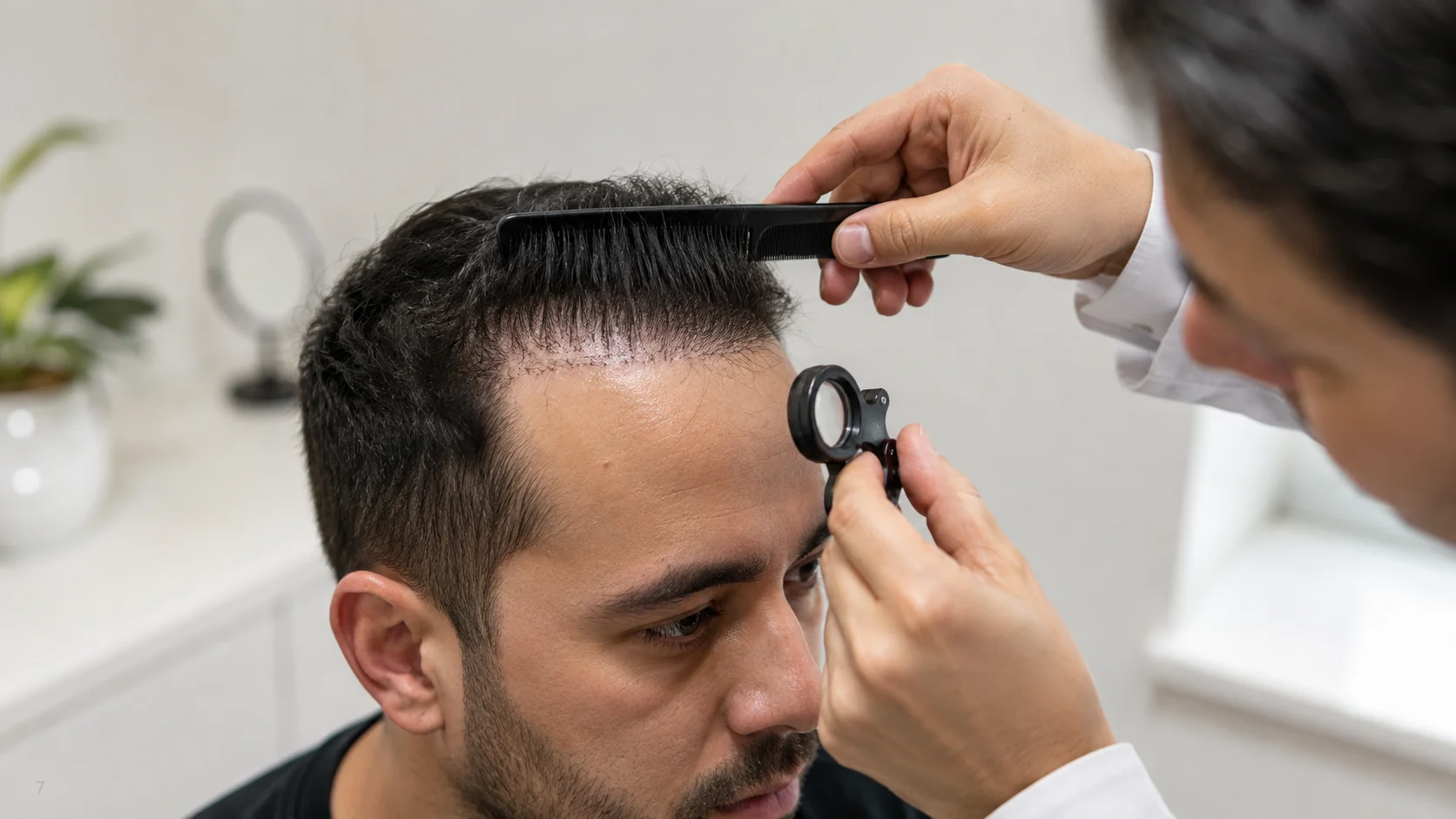
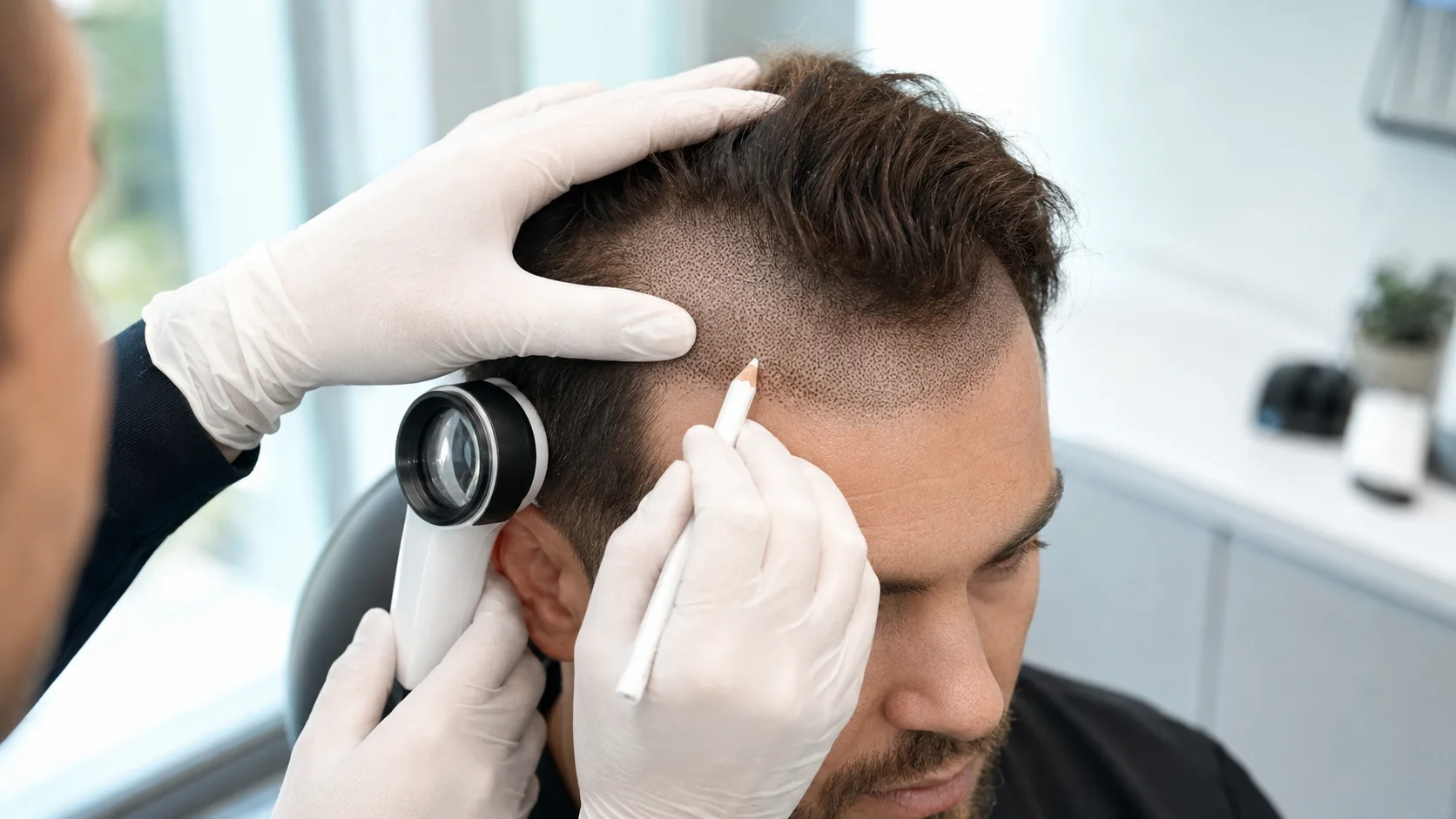
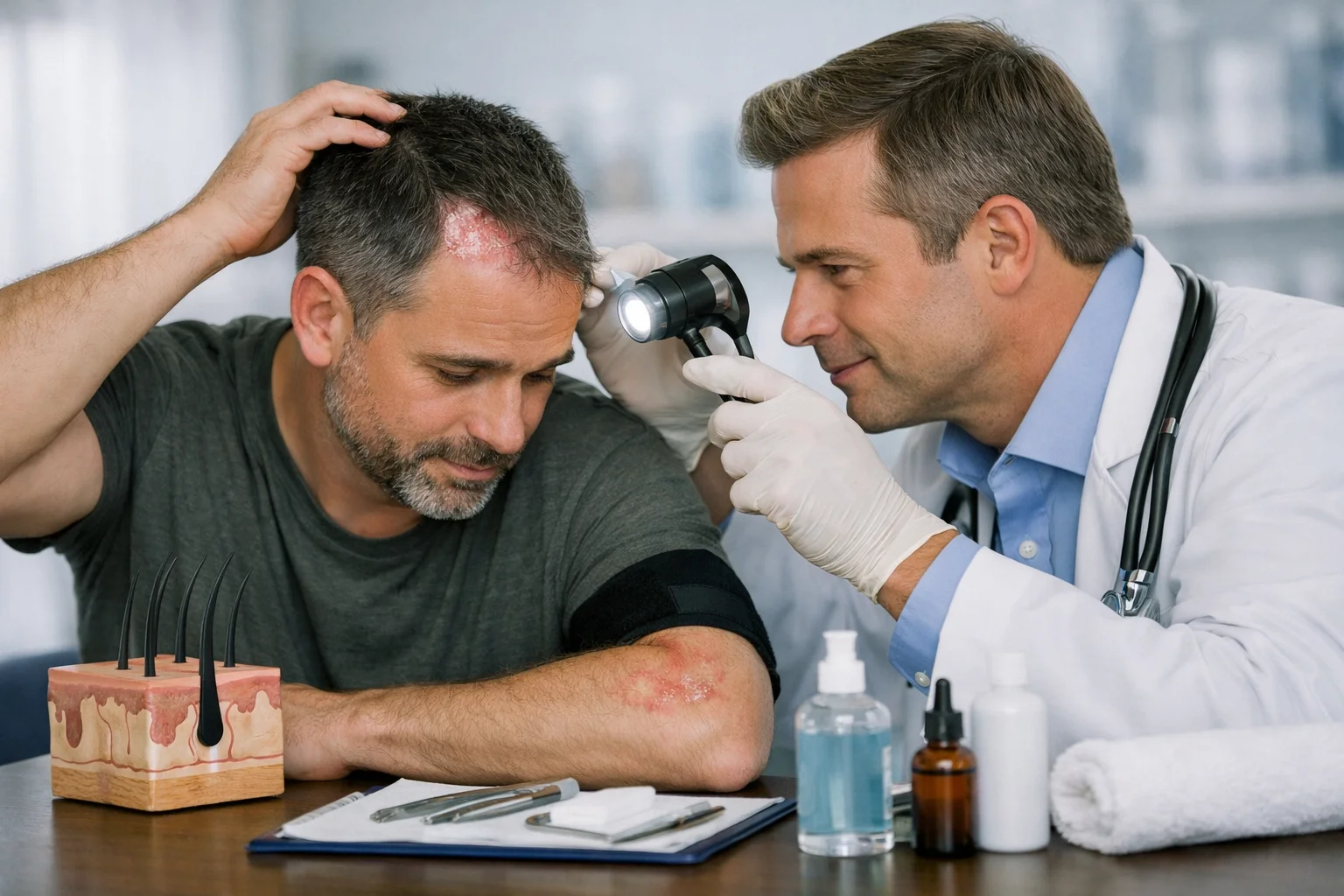
Active psoriasis plaques are thickened, scaly, and often inflamed. If plaques are present in the donor strip or extraction zone, follicular unit extraction becomes technically harder - the tool has to work through irregular, flaking skin rather than a smooth surface, which can affect graft quality. If plaques sit in the recipient area, placing grafts into inflamed skin is both more uncomfortable for the patient and less predictable for healing, since inflamed tissue does not behave like calm, healthy skin.
For this reason, many surgeons prefer to see the surgical zones free of active plaques before scheduling, even if psoriasis is present and stable elsewhere on the body.
The Koebner Phenomenon and Surgical Trauma
One consideration specific to psoriasis is the Koebner phenomenon, a well-documented pattern in which new psoriasis lesions can form at the site of skin trauma - cuts, scratches, or other injury - in people who are prone to it. As outlined by the AAD, this response does not occur in everyone with psoriasis, but it is unpredictable enough that a hair transplant, which involves thousands of small controlled injuries across the scalp, deserves extra thought in patients with a known Koebner history.
Anyone who has noticed new psoriasis patches appearing after a cut, scrape, tattoo, or previous surgery should mention this specifically during consultation, since it changes the risk conversation.
Timing Around a Flare
Psoriasis tends to move in cycles of flare and remission rather than staying constant. Scheduling surgery during a flare - especially one involving the scalp - raises the odds of complications and makes it harder to tell normal post-surgical redness apart from a psoriasis flare in the days after the procedure. Many clinics will ask patients to wait until a flare has settled and the scalp has returned to its baseline before booking a date.
Topical and Systemic Treatment Review
People managing psoriasis with topical steroids, vitamin D analogues, or systemic treatments such as biologics should disclose all of them before surgery. Some systemic psoriasis treatments modulate the immune system, which is relevant to both infection risk and wound healing. The goal is not to stop treatment unilaterally but to coordinate timing with both the prescribing dermatologist and the surgical team.
Frequently Asked Questions
Can psoriasis cause hair transplant failure?
Psoriasis itself does not automatically cause graft failure, but active inflammation, scratching, or a flare in the surgical field can interfere with healing.
Is it safe to transplant into an area with active plaques?
Generally no. Most surgeons prefer the donor and recipient areas to be clear of active plaques before proceeding.
Can surgery trigger a new psoriasis flare?
It's possible in people prone to the Koebner phenomenon, where skin trauma can trigger new lesions. This risk should be discussed if you have a personal history of it.
Do biologic medications for psoriasis affect surgical planning?
They can, since some affect immune response. All current psoriasis treatments should be disclosed before scheduling.
Final Thoughts
Psoriasis does not automatically prevent hair transplant surgery, but active scalp involvement, a history of the Koebner phenomenon, and current treatment all factor into timing and planning. The strongest candidates are usually those whose skin is stable and clear of active plaques in the surgical zones.
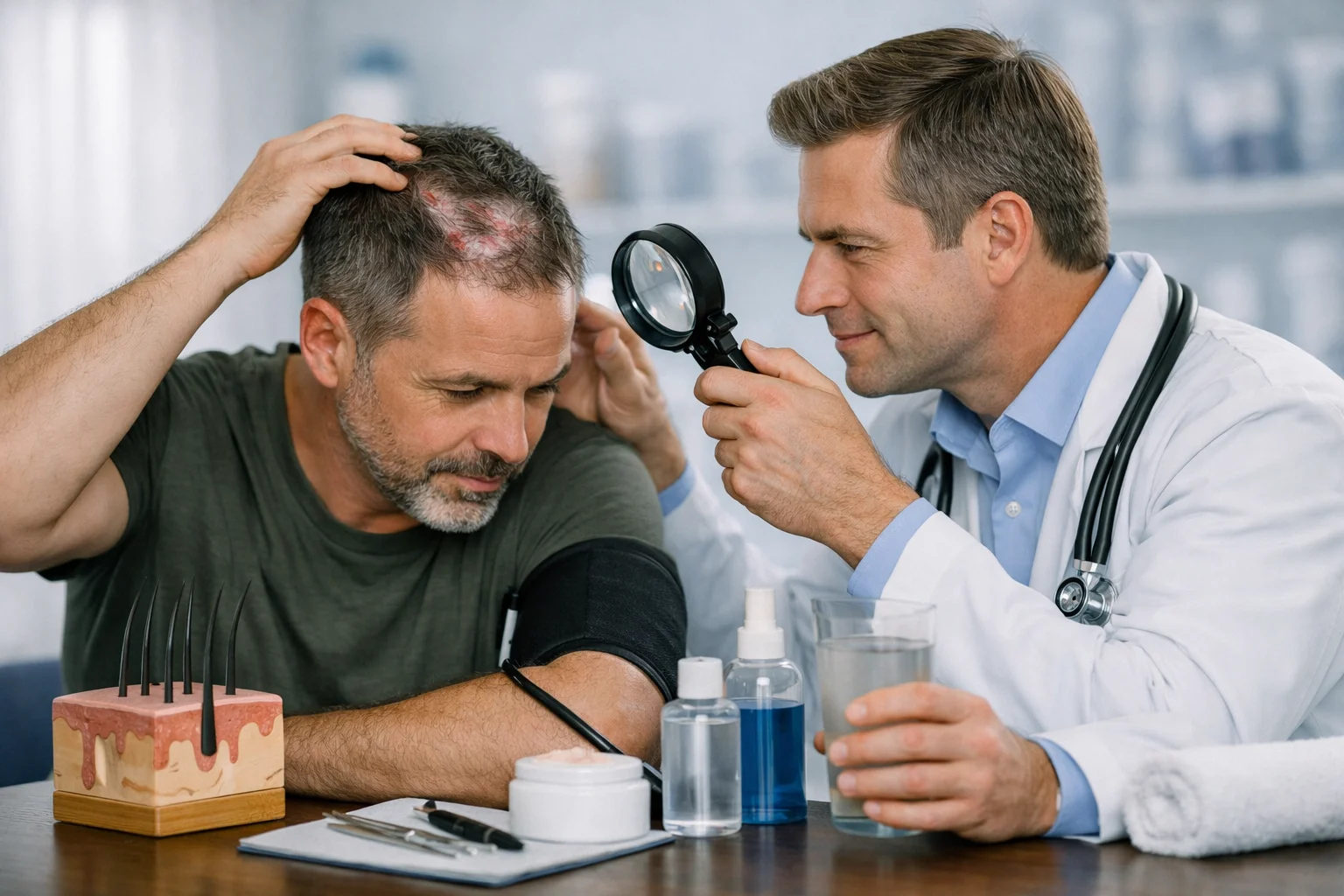
A comparable evaluation - focused on skin stability rather than blood pressure or blood sugar - is used for hair transplant eligibility with eczema.
This article is for general educational purposes only and does not substitute for advice from a qualified dermatologist or hair restoration surgeon.