Many people wonder whether using more than one hair loss treatment can improve results. In some cases, combination therapy may be appropriate because different treatments can address different parts of the hair loss process.
Hair loss treatments can sometimes be combined, but they should be chosen based on the diagnosis, safety profile, medical history, and treatment goals. More treatment is not automatically better. A combination plan should be structured, monitored, and adjusted if side effects, irritation, or poor response occur.
What Combination Therapy Means
Combination therapy means using two or more approaches as part of one treatment plan. These may include topical treatments, oral medications, procedural therapies, scalp treatments, nutritional correction, or hair care changes.
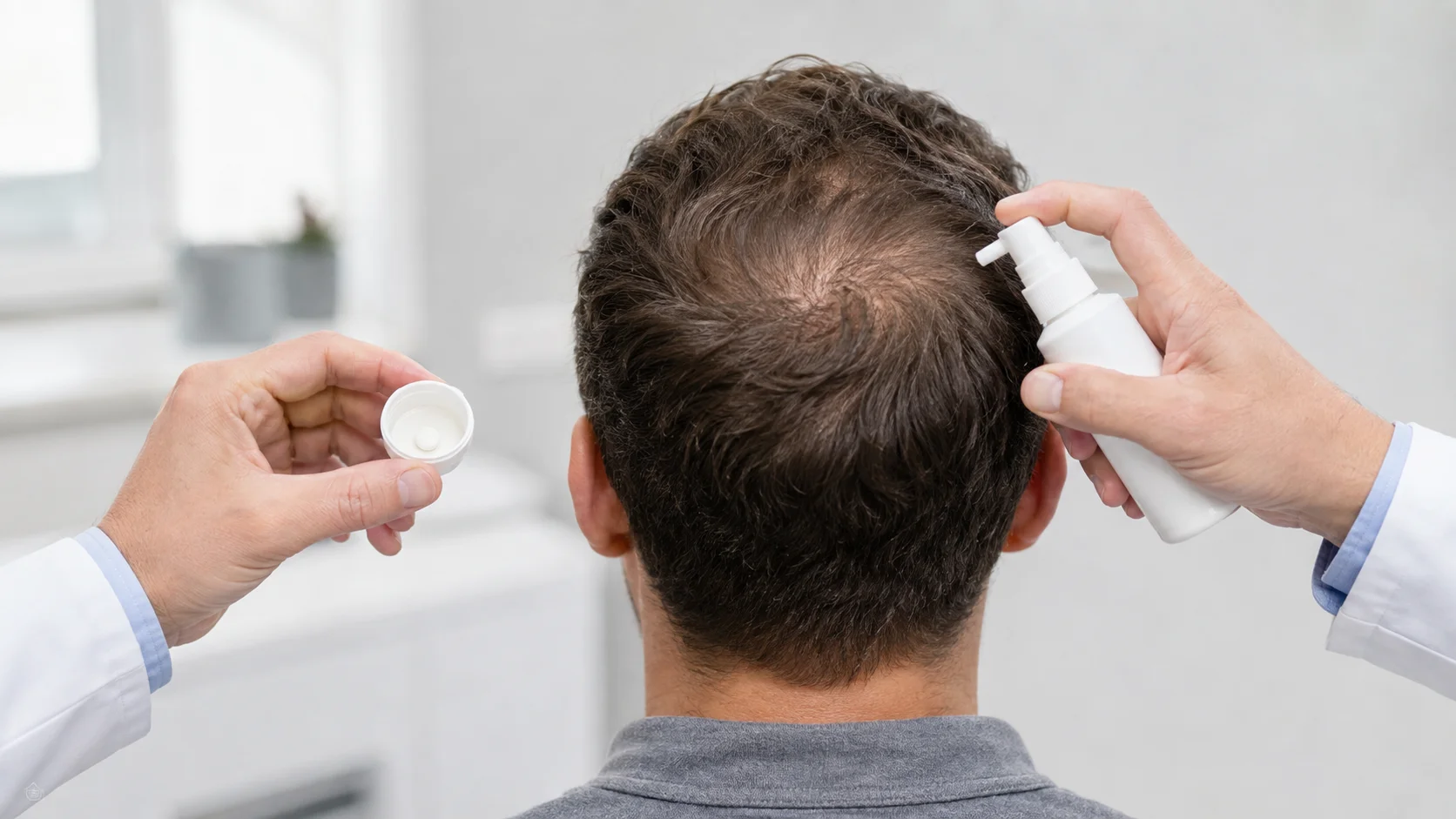
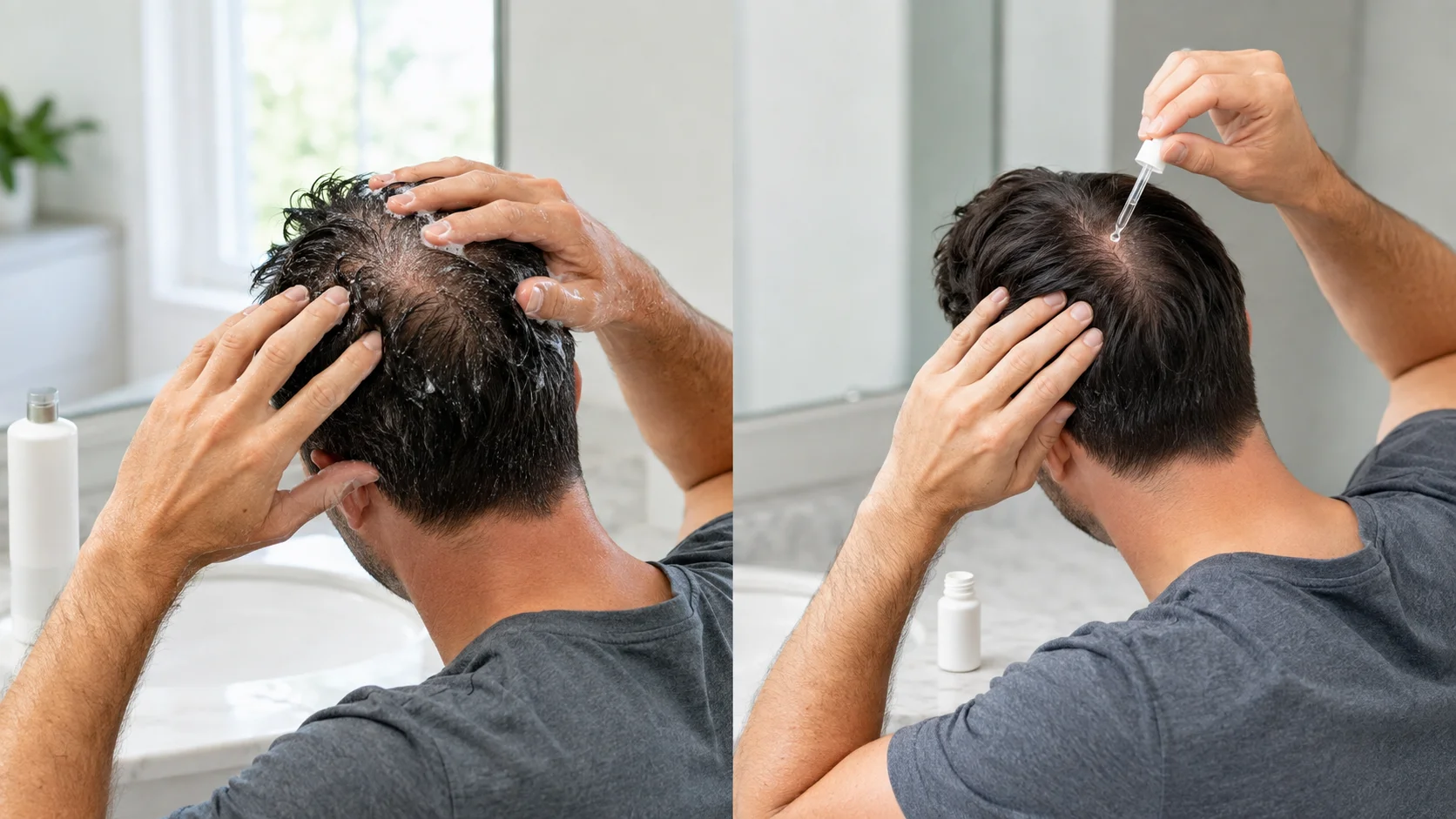
A well-known example is pairing topical minoxidil with finasteride. Minoxidil is applied to the scalp to support hair growth, while finasteride is taken orally to reduce DHT, the hormone linked to hereditary thinning. Because the two work through different mechanisms, one supporting growth and the other slowing the process that causes miniaturization, they are often used together rather than as substitutes for each other.
The goal is not to add as many treatments as possible. The goal is to address the specific causes contributing to hair loss. For example, one treatment may target progression, another may support growth, and another may reduce scalp inflammation or correct a deficiency.
A thoughtful combination plan should have a clear reason for each component. If a treatment does not serve a purpose, it may add cost, inconvenience, or side effect risk without meaningful benefit.
Why Treatments May Be Combined
Hair loss can involve more than one factor. A person may have hereditary thinning along with shedding from stress or low iron. Another person may have scalp inflammation that worsens hair quality or shedding. In these situations, a single product may not address the full picture.
Combination therapy may be considered when:
- Hair loss is progressive and needs long-term management
- One treatment has helped but results are incomplete
- There are multiple contributing causes
- A treatment works better when paired with supportive scalp care
- A professional wants to target both shedding and miniaturization
- A person needs a plan that balances effectiveness and tolerability
Some professionals also add low-level laser therapy (LLLT) or PRP (platelet-rich plasma) sessions alongside minoxidil or finasteride, particularly when density improvement has slowed on medication alone. In cases where thinning has already progressed to areas with little regrowth potential, a hair transplant may be planned alongside ongoing medical treatment, with medication used to help protect the surrounding non-transplanted hair. The decision should be individualized. Two people with similar-looking thinning may need different combinations.
When Combination Therapy May Not Be Appropriate
Combination therapy is not always the right choice. If the diagnosis is unclear, adding multiple treatments can make it harder to know what is helping or causing side effects.
It may also be unnecessary for mild or temporary shedding that is likely to recover once the trigger resolves. In some cases, starting with one treatment, such as minoxidil alone, and tracking the response is more practical before adding a second option.
People who are pregnant, trying to conceive, breastfeeding, managing chronic medical conditions, or taking other medications should be especially cautious. Finasteride and dutasteride, for example, are not recommended for women who are or may become pregnant, so combination plans involving these medications require careful screening.
Safety Considerations Before Combining Treatments
The main safety concerns include irritation, unwanted systemic effects, medication interactions, overuse, and unrealistic expectations. Even topical treatments like minoxidil can cause scalp dryness, itching, redness, or shedding changes in some people.
A professional may consider factors such as age, sex, medical history, blood pressure, hormonal status, scalp condition, and other medications before recommending a plan. This is especially important when oral treatments such as finasteride or dutasteride, or procedures such as PRP or a transplant, are involved.
It is also important to introduce treatments in a way that allows progress and side effects to be tracked. Starting several treatments at exactly the same time may make it difficult to know which one is helping or causing a problem.
How to Track a Combination Plan
Combination therapy should be assessed over months, not days. Hair growth is slow, and visible improvement may take time.
Useful tracking methods include:
- Baseline photos from consistent angles
- Notes on shedding changes
- Scalp symptom tracking
- Side effect monitoring
- Follow-up reviews at planned intervals
- Honest recording of missed applications or doses
If the plan is too complicated to follow consistently, it may need to be simplified. A realistic plan is often more effective than an ambitious one that is hard to maintain.
Frequently Asked Questions
Is combining hair loss treatments more effective than using one treatment?
It can be for some people, especially when treatments address different causes or mechanisms, such as pairing minoxidil with finasteride. However, combination therapy is not automatically better and should be guided by diagnosis and safety.
Can I combine treatments on my own?
It is better to seek professional guidance, especially if medications, procedures, scalp irritation, or medical conditions are involved. Combining treatments without a plan can increase side effects or confusion.
How long does combination therapy take to work?
Many plans require at least three to six months for early assessment, with fuller evaluation often taking longer. The timeline depends on the condition and treatments used.
What if I get side effects from one part of the plan?
The plan may need adjustment. A professional can help identify which treatment is likely causing the issue and whether to reduce, stop, or replace it.
Final Thoughts
Combination therapy can be useful in hair loss management, but it should be purposeful. Each treatment should have a clear role, and the overall plan should be safe, realistic, and based on the type of hair loss being treated.
The best results usually come from accurate diagnosis, consistent use, careful monitoring, and reasonable expectations.
This content is for general informational purposes only and does not replace individualized medical advice, diagnosis, or treatment.