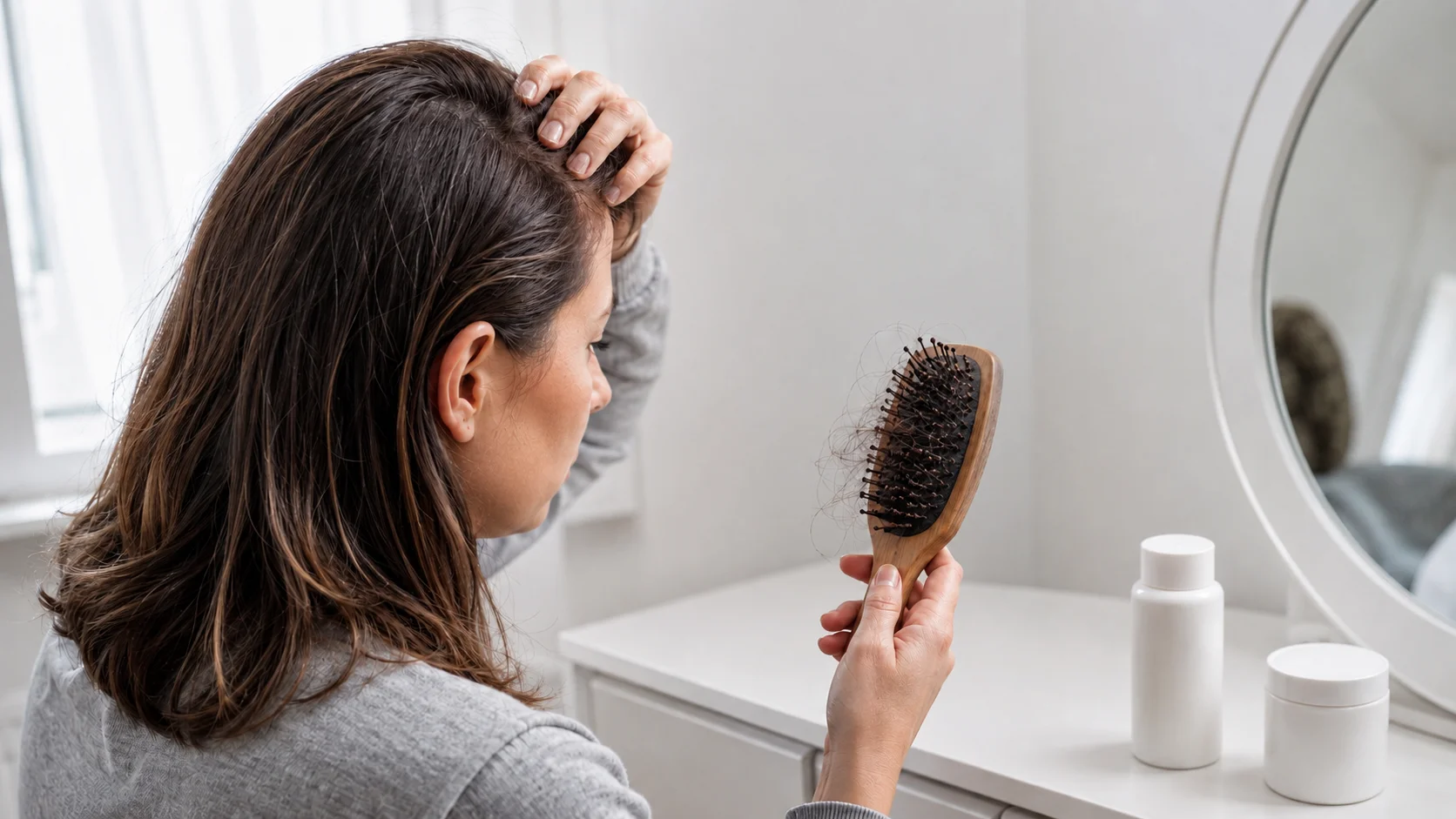
Hair loss, also known as alopecia, is a common condition affecting both men and women of all ages. It may develop gradually or occur suddenly and can be temporary or permanent depending on the underlying cause. While shedding 50–100 hairs per day is considered normal, excessive or persistent hair loss often signals an underlying issue that requires attention.
Hair loss can affect the scalp, eyebrows, beard, or other areas of the body and may have a significant psychological and emotional impact. This overview introduces the main causes and categories of hair loss; for hormone-specific mechanisms, see what DHT is and how it causes hair loss.
How Hair Growth Works
Hair grows in a natural cycle consisting of three main phases:
Anagen (Growth Phase)
This is the active growth stage where hair follicles produce new hair. It can last between 2 to 7 years, determining hair length and density.
Catagen (Transition Phase)
A short transitional phase lasting around 2–3 weeks, during which hair growth stops and the follicle begins to shrink.
Telogen (Resting Phase)
Hair rests for several months before eventually shedding and being replaced by new growth. Disruptions in this cycle are one of the main causes of hair loss.
Common Types of Hair Loss
Androgenetic Alopecia
Also known as male pattern baldness and female pattern hair loss, this is the most common form of hair loss and is primarily influenced by genetics and hormones.
Telogen Effluvium
Temporary hair shedding triggered by stress, illness, surgery, hormonal changes, or nutritional deficiencies.
Alopecia Areata
An autoimmune condition causing patchy hair loss on the scalp, face, or body.
Traction Alopecia
Hair loss caused by constant pulling or tension from hairstyles such as tight ponytails, braids, or extensions.
Scarring Alopecia
A rare form of hair loss where hair follicles are permanently destroyed due to inflammation or autoimmune disorders.
What Causes Hair Loss?
Hair loss can result from multiple factors, including:
- Genetics
- Hormonal imbalances
- Stress and anxiety
- Poor nutrition
- Medical conditions
- Medications
- Lifestyle factors
Hair Loss in Men vs Women
- Men typically experience receding hairlines and thinning at the crown, most often from androgenetic alopecia.
- Women usually notice overall thinning without a receding hairline; see how DHT and hormones affect hair loss in women for more detail.
Can Hair Loss Be Prevented?
While not all types of hair loss are preventable, early diagnosis and proper care can significantly slow progression.
Hair Loss Treatments Overview
- Medical treatments
- Non-surgical therapies
- Lifestyle adjustments
- Advanced clinical solutions
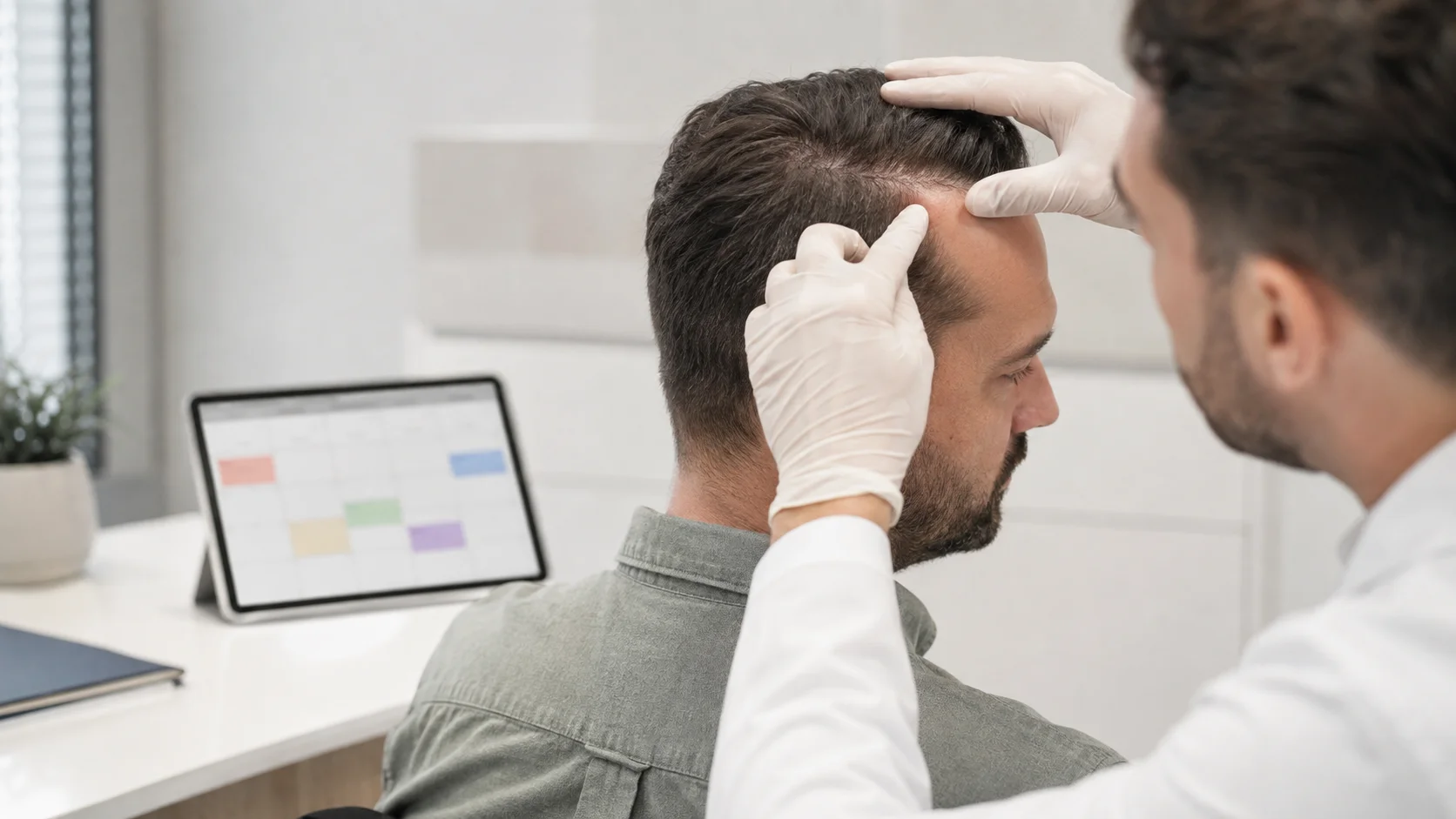
When Should You See a Specialist?
- Hair loss is sudden or excessive
- Bald patches appear
- Hair loss is accompanied by itching, pain, or redness
- There is a family history of severe hair loss
In most cases, the most common hormonal driver behind pattern hair loss is DHT and how it causes hair loss, though the causes above should all be considered before assuming a hormonal cause.
This content is for general informational purposes only and does not replace individualized medical advice, diagnosis, or treatment from a qualified healthcare professional.