FDA-Approved and FDA-Cleared Hair Loss Treatments: Minoxidil, Finasteride, and Low-Level Laser Therapy
Hair loss is one of the most common concerns affecting both men and women. While countless products claim to slow hair loss or stimulate new growth, only a small number of treatments have received FDA recognition for specific types of hair loss based on scientific evidence and safety evaluations. This distinction is important because FDA recognition indicates that a treatment has been reviewed for its intended use, though the type of review differs depending on whether a product is a drug or a medical device.
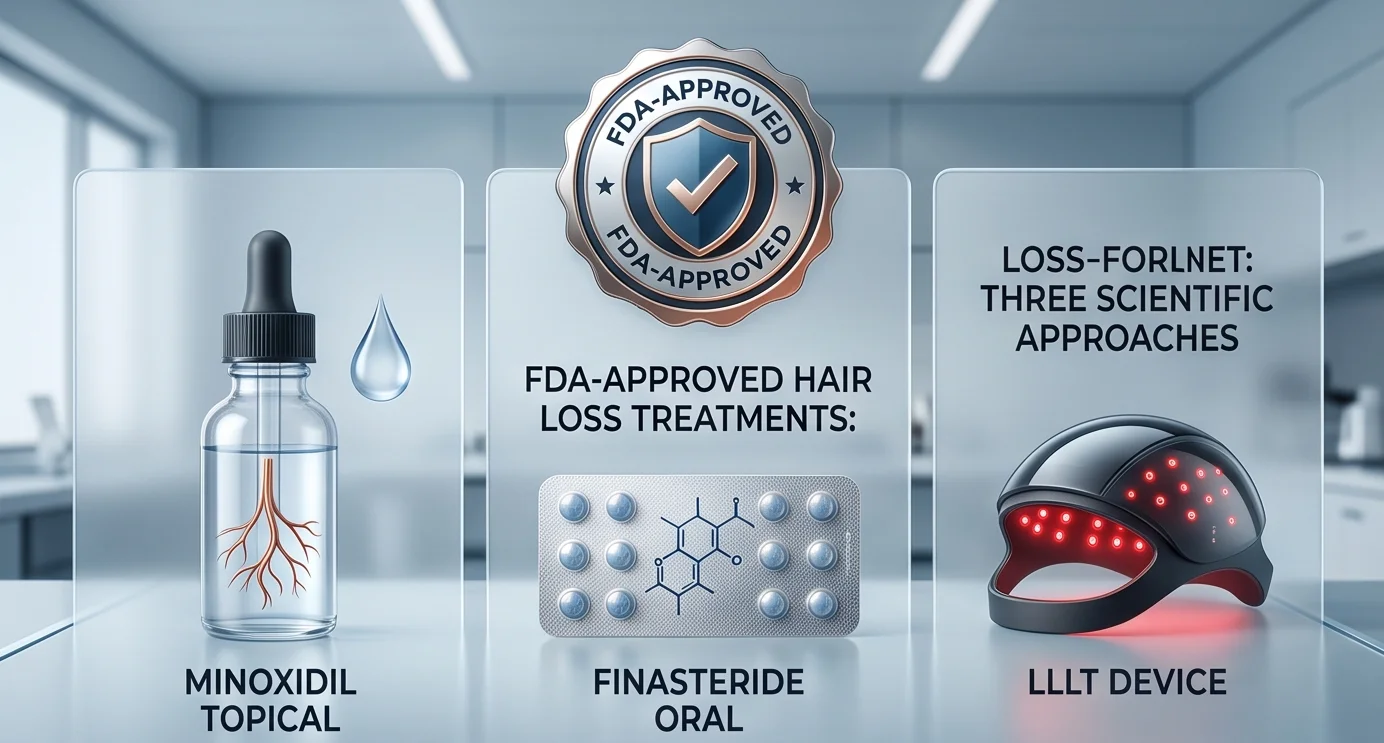
Today, three of the most widely recognized FDA-recognized options are minoxidil, finasteride, and low-level laser therapy (LLLT). Minoxidil and finasteride are FDA-approved drugs, while LLLT devices are generally FDA-cleared medical devices — a related but distinct regulatory pathway explained below. Each treatment works differently, making them suitable for different situations and individual needs.
Understanding how these treatments function, who they may benefit, and what limitations they have can help set realistic expectations. While none of these options can guarantee the same results for everyone, they remain among the most researched approaches available for managing certain forms of hair loss.
Understanding FDA-Approved and FDA-Cleared Hair Loss Treatments
The term FDA-approved applies to drugs and refers to a process in which a company submits clinical trial data demonstrating that a medication is safe and effective for a specific medical purpose. Both minoxidil and finasteride went through this drug approval process.
The term FDA-cleared, on the other hand, applies to certain medical devices — including most LLLT devices such as laser caps, helmets, and combs. Clearance is typically granted through the FDA's 510(k) pathway, which requires a manufacturer to show that a new device is "substantially equivalent" to an already-marketed device, rather than submitting the same level of large-scale efficacy and safety trial data required for drug approval.
Both pathways involve FDA oversight, but they are not interchangeable, and the bar for supporting evidence differs between them. Understanding this difference can help set more accurate expectations about what "FDA-approved" or "FDA-cleared" actually confirms about a product.
It is also important to understand that neither FDA approval nor FDA clearance means a treatment works perfectly for everyone or produces identical results in every individual. Hair growth is influenced by many factors, including genetics, age, hormones, overall health, and the condition of existing hair follicles.
Because of these differences, one treatment may work well for one person while providing only limited improvement for another.
The three approaches discussed in this article all target hair loss differently. One helps stimulate hair follicles from the outside, another works by influencing hormone activity, while the third uses light energy to support scalp health.
Each option has its own advantages, limitations, and ideal candidates.
FDA Approval vs. FDA Clearance: What's the Difference?
Because these terms are often used loosely — and sometimes interchangeably — in marketing materials, it is worth clarifying what each one actually means:
- FDA-approved applies to drugs (such as minoxidil and finasteride). It means the manufacturer submitted clinical trial data on both effectiveness and safety for a specific use, and the FDA reviewed that evidence before granting approval.
- FDA-cleared applies to many medical devices, including most LLLT products. It usually means the device went through the 510(k) process, in which the manufacturer demonstrates that the device is substantially equivalent to a device already on the market — a lower evidentiary bar than the clinical trial process required for drug approval.
This does not mean LLLT is unsafe or that clearance is meaningless — device clearance is still an FDA regulatory pathway with real requirements. It simply means that "approved" and "cleared" reflect different types and levels of evidence, and it is more accurate to describe LLLT devices as FDA-cleared rather than FDA-approved.
Minoxidil
Minoxidil is one of the most widely used topical treatments for hair loss. It is applied directly to the scalp and is commonly available in liquid or foam form.
Although its exact mechanism is still being studied, researchers believe that minoxidil helps improve blood flow around hair follicles while extending the natural growth phase of the hair cycle. This may allow existing follicles to remain active for a longer period, helping produce thicker and healthier-looking hair.
Minoxidil is generally used consistently over an extended period. Since hair growth occurs gradually, visible improvements often require several months of regular application.
It is important to remember that stopping treatment may allow the hair growth cycle to return to its previous pattern over time. Consistency is therefore considered an important part of achieving and maintaining results.
Some individuals notice temporary shedding during the early stages of treatment. This may occur as older hairs enter the next phase of the growth cycle before new hairs begin developing. Although this can be concerning, it is not uncommon during the adjustment period.
Minoxidil is typically viewed as a long-term management option rather than a permanent cure for hair loss.
Finasteride
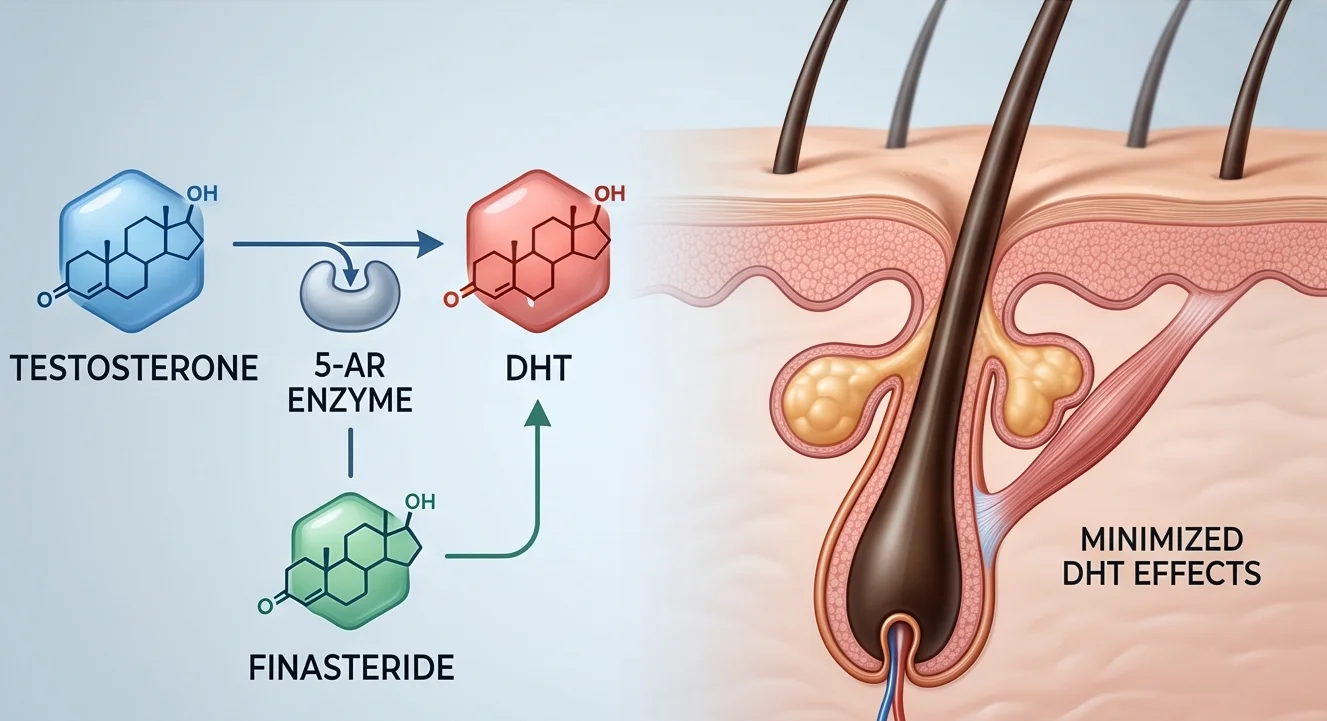
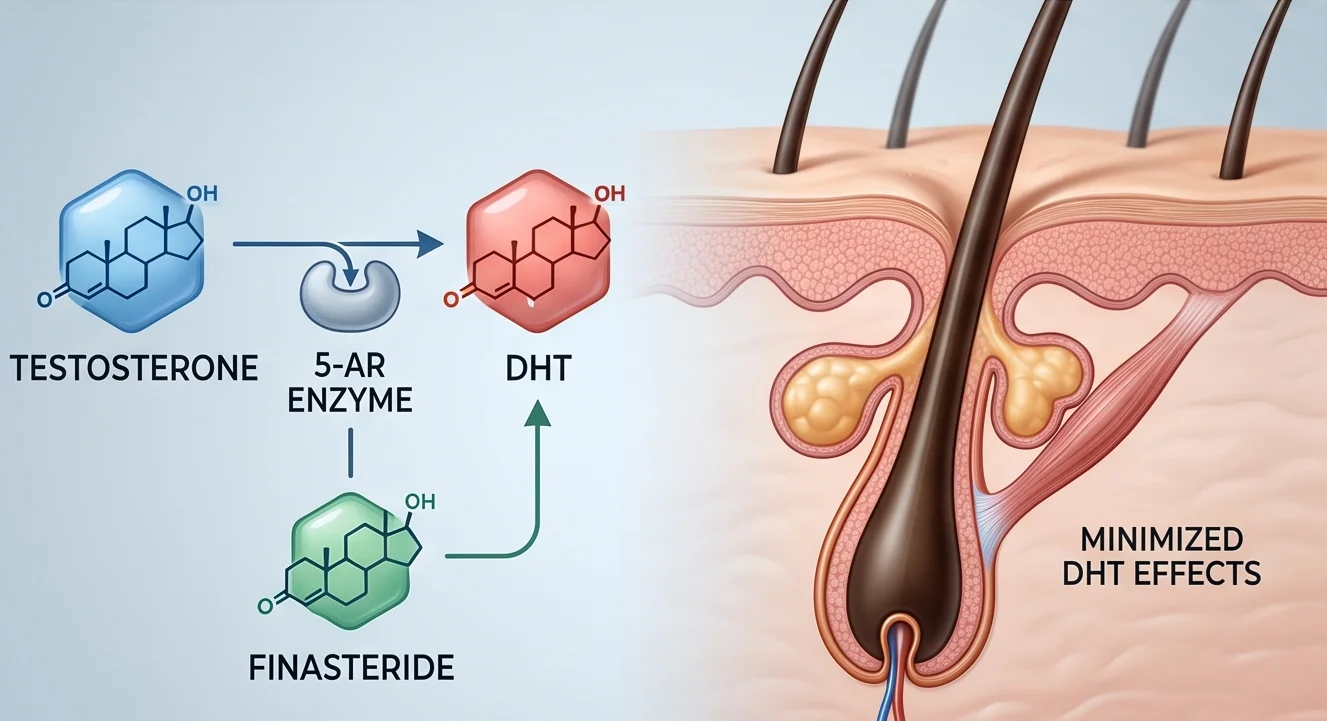
Finasteride is an oral prescription medication that works differently from topical treatments. Instead of acting on the scalp directly, it targets one of the hormones associated with a common form of hair loss.
The medication helps reduce the conversion of testosterone into dihydrotestosterone (DHT), a hormone that can contribute to the gradual shrinking of hair follicles in individuals with androgenetic hair loss. By lowering DHT levels, finasteride may help slow the progression of hair loss and support healthier hair growth over time.
Results usually develop gradually rather than immediately. Many people require several months of consistent use before noticeable improvements become visible. As with other long-term hair loss treatments, maintaining results often depends on continuing treatment as recommended.
Finasteride is not considered appropriate for everyone, and treatment decisions should always take individual health factors into account. Understanding both the potential benefits and possible risks is an important part of making informed choices.
Low-Level Laser Therapy (LLLT)
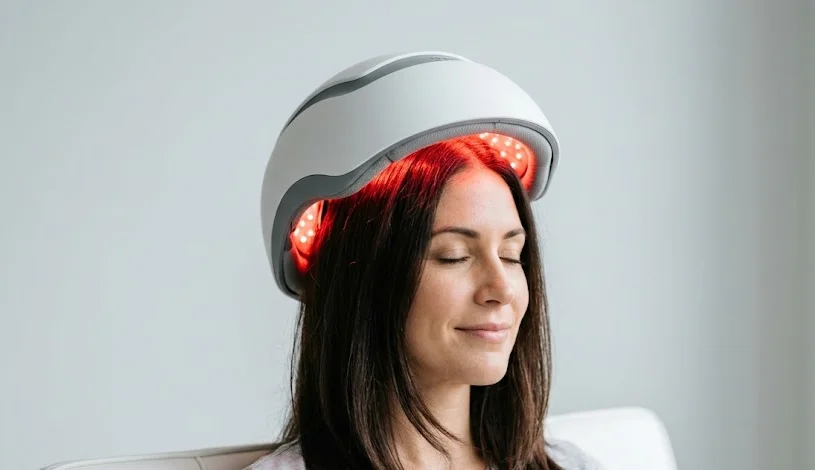
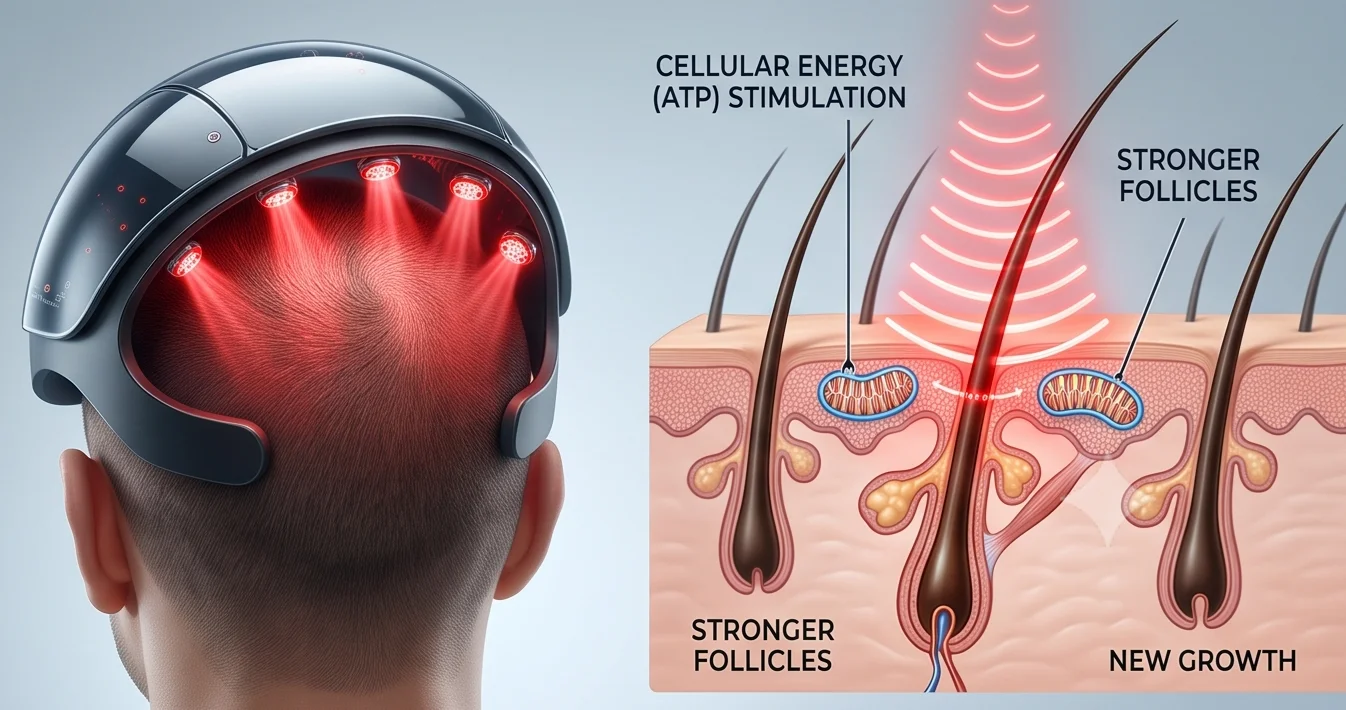
Low-Level Laser Therapy, commonly abbreviated as LLLT, is another FDA-recognized option for certain types of hair loss — specifically as an FDA-cleared device rather than an FDA-approved drug. Unlike medications, this approach uses low-intensity light energy to stimulate the scalp without generating heat or causing damage to the skin.
LLLT devices are available in several forms, including laser caps, helmets, and combs. During treatment, carefully controlled wavelengths of light reach the scalp and are believed to stimulate cellular activity within hair follicles.
Although research is still ongoing, studies suggest that low-level laser therapy may help improve hair density and support healthier hair growth in some individuals when used consistently over time.
One of the advantages of LLLT is that it is completely non-invasive. Sessions are generally painless, require no recovery time, and can often be performed at home using FDA-cleared devices according to manufacturer recommendations.
Like the other treatments discussed here, however, results vary between individuals. Hair growth is a gradual biological process, meaning improvements may require several months of regular use before becoming noticeable.
Choosing the Right Treatment
Each treatment works through a different mechanism, which is why there is no single option that is considered the best choice for everyone.
Minoxidil focuses on supporting active hair follicles through topical application and may improve the overall hair growth environment. Finasteride works internally by reducing the effects of DHT, making it a different type of approach for androgen-related hair loss. Low-Level Laser Therapy relies on light energy to stimulate scalp activity without medication or surgery.
Because every individual experiences hair loss differently, treatment selection should always be based on the underlying cause, overall health, personal preferences, and long-term expectations rather than popularity alone.
It is also important to remember that visible improvements usually require patience. None of these treatments produce immediate results, and consistency remains one of the most important factors in achieving meaningful progress.
For a deeper look at finasteride specifically, see our complete finasteride guide.
and for how minoxidil works in more detail, see how minoxidil works for hair loss.
For more on LLLT specifically, see our full look at low-level laser therapy.
Frequently Asked Questions
Is LLLT actually FDA-approved?
Most LLLT devices are FDA-cleared rather than FDA-approved. Clearance is granted through a different regulatory pathway than drug approval, typically requiring manufacturers to show the device is substantially equivalent to existing cleared devices, rather than submitting the large-scale clinical trial data required for drug approval. This does not mean LLLT lacks evidence — it means the regulatory standard is different from that applied to minoxidil and finasteride.
Which treatment is considered the most effective?
There is no universal answer. The effectiveness of any treatment depends on the type of hair loss, the condition of existing hair follicles, and individual biological factors. What works well for one person may produce different results for another.
Can these treatments be combined?
Some treatment plans may combine different approaches because each works through a different mechanism. However, treatment decisions should always be made carefully and based on individual circumstances, ideally with input from a healthcare provider.
How long does it usually take to see results?
Hair growth is naturally slow. Many individuals begin noticing gradual improvements after several months of consistent treatment, although the timeline varies from person to person.
Do these treatments permanently cure hair loss?
No. These treatments are generally designed to help manage certain types of hair loss rather than provide a permanent cure. Continued use is often necessary to maintain potential benefits.
Final Thoughts
Minoxidil, finasteride, and low-level laser therapy remain among the most researched and recognized options available for managing certain forms of hair loss. Minoxidil and finasteride are FDA-approved drugs backed by clinical trial data, while LLLT devices are typically FDA-cleared through a device-specific regulatory pathway. Each offers a different approach to supporting hair growth, making it important to understand not only how they work, but also what their FDA status actually means before deciding which option may be appropriate.
Although these treatments may help reduce hair loss or improve hair density for many individuals, they should not be viewed as guaranteed solutions. Hair growth depends on numerous factors, including genetics, overall health, hormone levels, lifestyle habits, and the condition of existing hair follicles.
Maintaining realistic expectations, using treatments consistently, and understanding the underlying cause of hair loss remain some of the most important steps toward achieving healthier-looking hair over the long term.