A DHT blood test usually cannot explain hair loss by itself. It can show how much dihydrotestosterone is circulating at the time of collection, but it does not directly measure DHT inside the scalp, follicle sensitivity, androgen-receptor activity, or whether the hair loss is actually androgenetic alopecia — and a normal result does not rule out the condition either.
For a person with classic male pattern hair loss, diagnosis is generally based on the distribution of thinning and evidence of follicle miniaturization rather than a DHT test. Hormonal testing is more useful when symptoms suggest a broader endocrine disorder — a distinction this article works through in both directions, since "is my DHT normal?" and "can a normal result still mean pattern hair loss?" are really the same clinical question asked from two sides.
What a DHT Blood Test Measures
DHT is produced when 5-alpha reductase converts testosterone into a more potent androgen. A serum test estimates the amount circulating in the blood, and the result is compared with a reference range that varies by sex, age, laboratory method, units of measurement, time and conditions of collection, and current medications or hormone use. A reference range is not a hair-loss prediction scale — results near the upper or lower end do not reliably show how scalp follicles are responding.
"Normal" Is a Population Range, Not a Hair-Safety Threshold
Laboratory reference ranges are generally based on values found in a selected population. They help identify unusually low or high results, but they do not define a concentration below which androgenetic alopecia cannot occur. Two people can have the same DHT result and very different hair: one may have genetically resistant follicles, while the other has frontal and crown follicles that miniaturize at ordinary androgen exposure. There is no universally accepted serum DHT threshold that separates people who will keep their hair from those who will develop pattern loss.
Why Follicle Sensitivity Matters More Than the Number
DHT produces its effects by binding to androgen receptors in responsive follicle cells. The number and behavior of those receptors, along with downstream gene activity, influence the follicle's response — susceptible dermal papilla cells may produce signals that shorten the growth phase and suppress healthy hair-fiber production, while resistant follicles exposed to the same circulating DHT remain stable. This is why androgenetic alopecia can be understood as a normal hormone acting on an abnormally susceptible target.
Blood DHT Is Not the Same as Follicle DHT
Hair follicles exist within a local tissue environment. The scalp can produce DHT from testosterone through local 5-alpha-reductase activity, and can also convert DHT into less active metabolites through other enzymes — processes a blood sample cannot capture. Local enzyme activity differs by scalp region and individual: susceptible frontal follicles may experience or interpret androgen signaling differently from follicles at the back of the same head. Scalp biopsies have found regional differences in androgen metabolism and DHT concentration, which helps explain why one scalp area can thin while another remains dense; directly measuring every relevant follicle is neither practical nor necessary in routine care.
What Diagnoses a Pattern More Reliably?
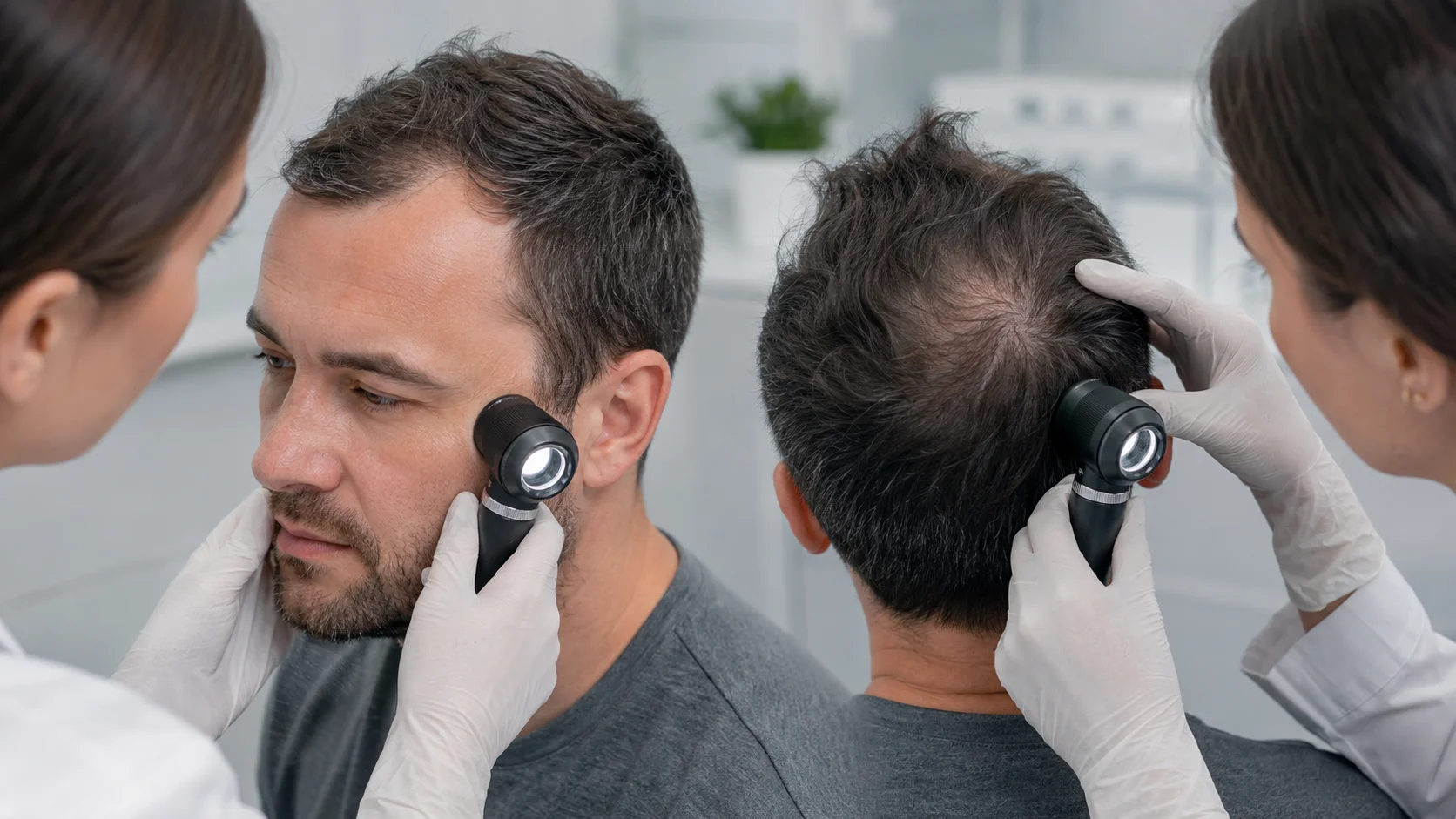
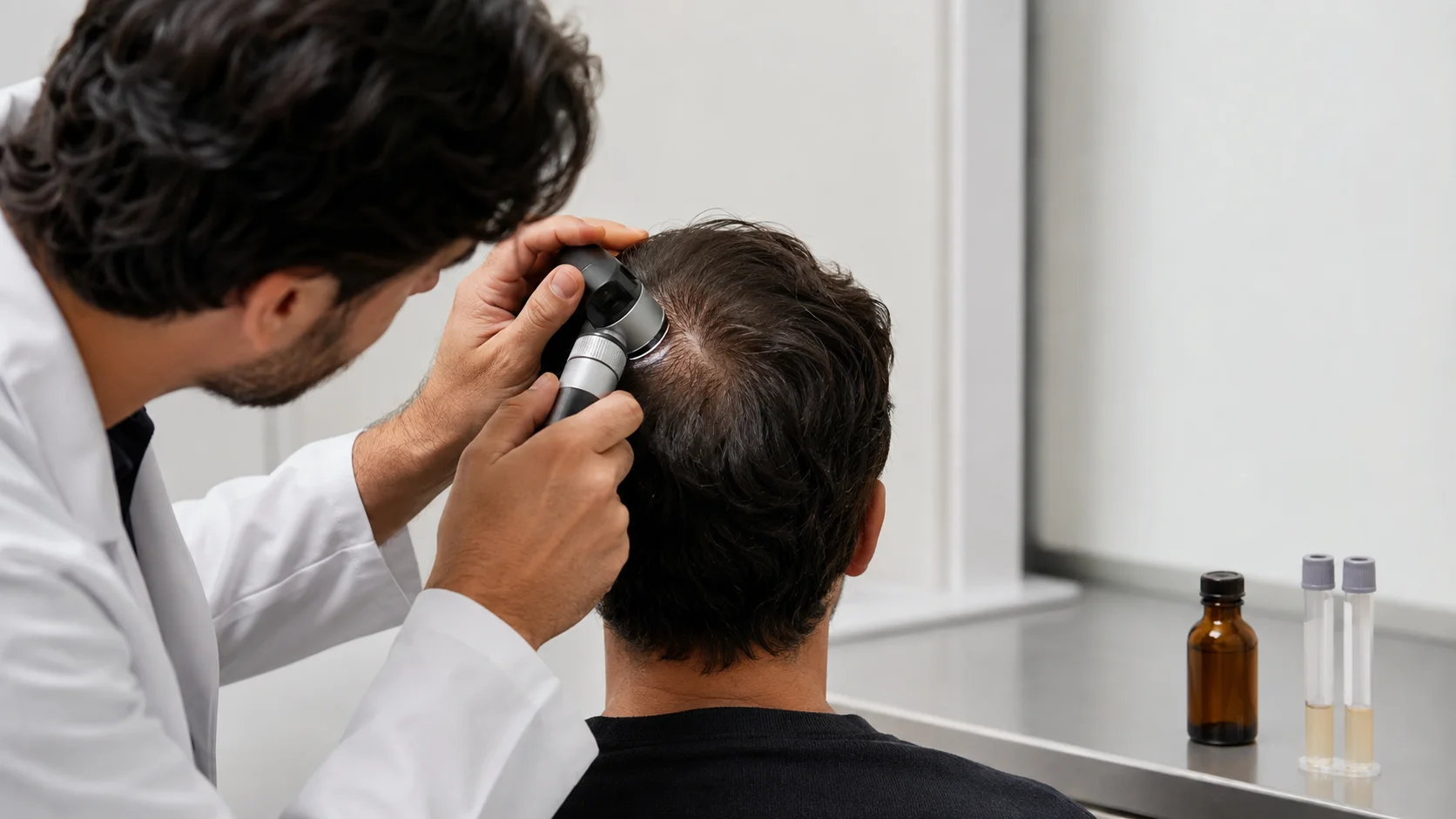
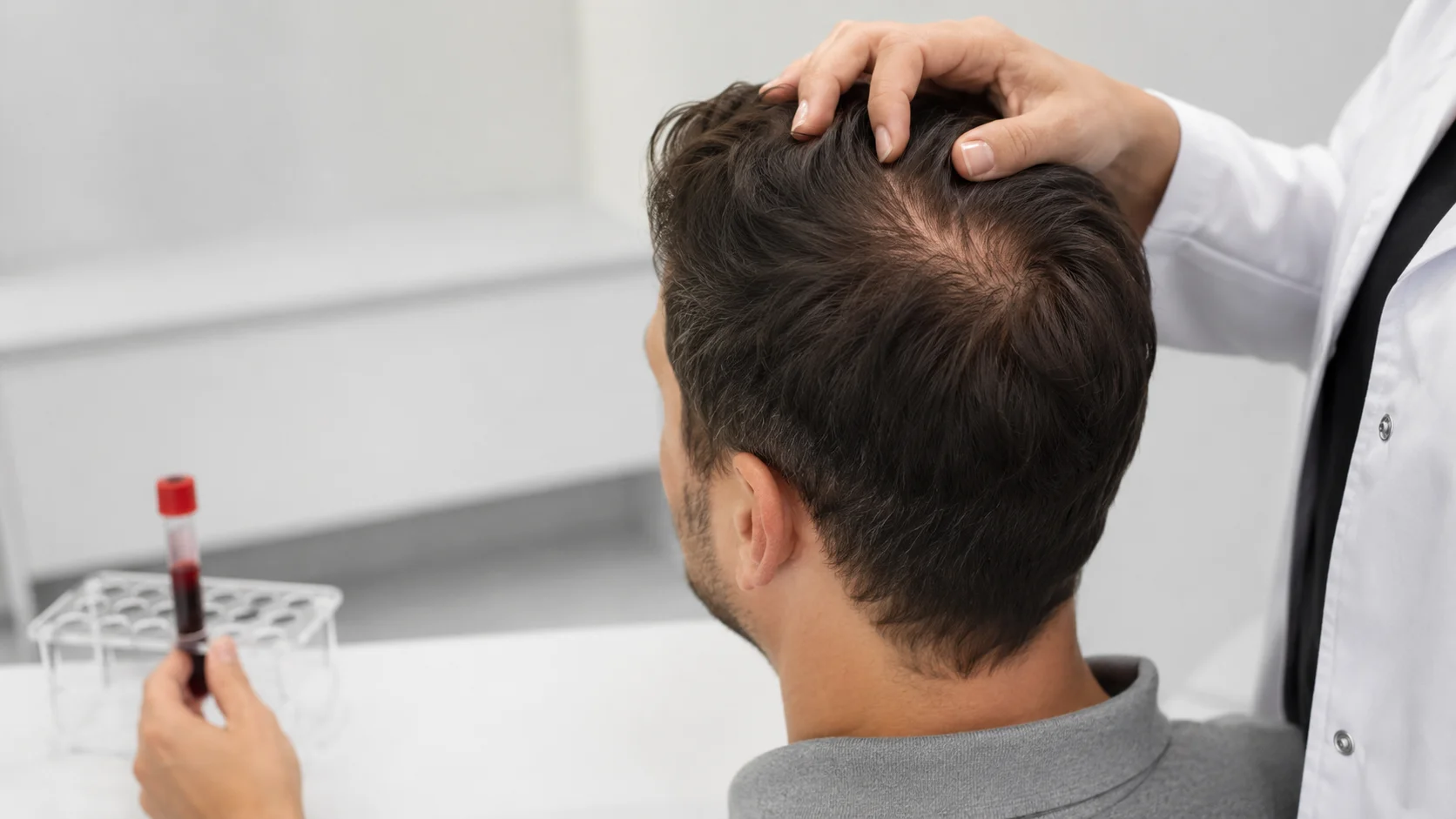
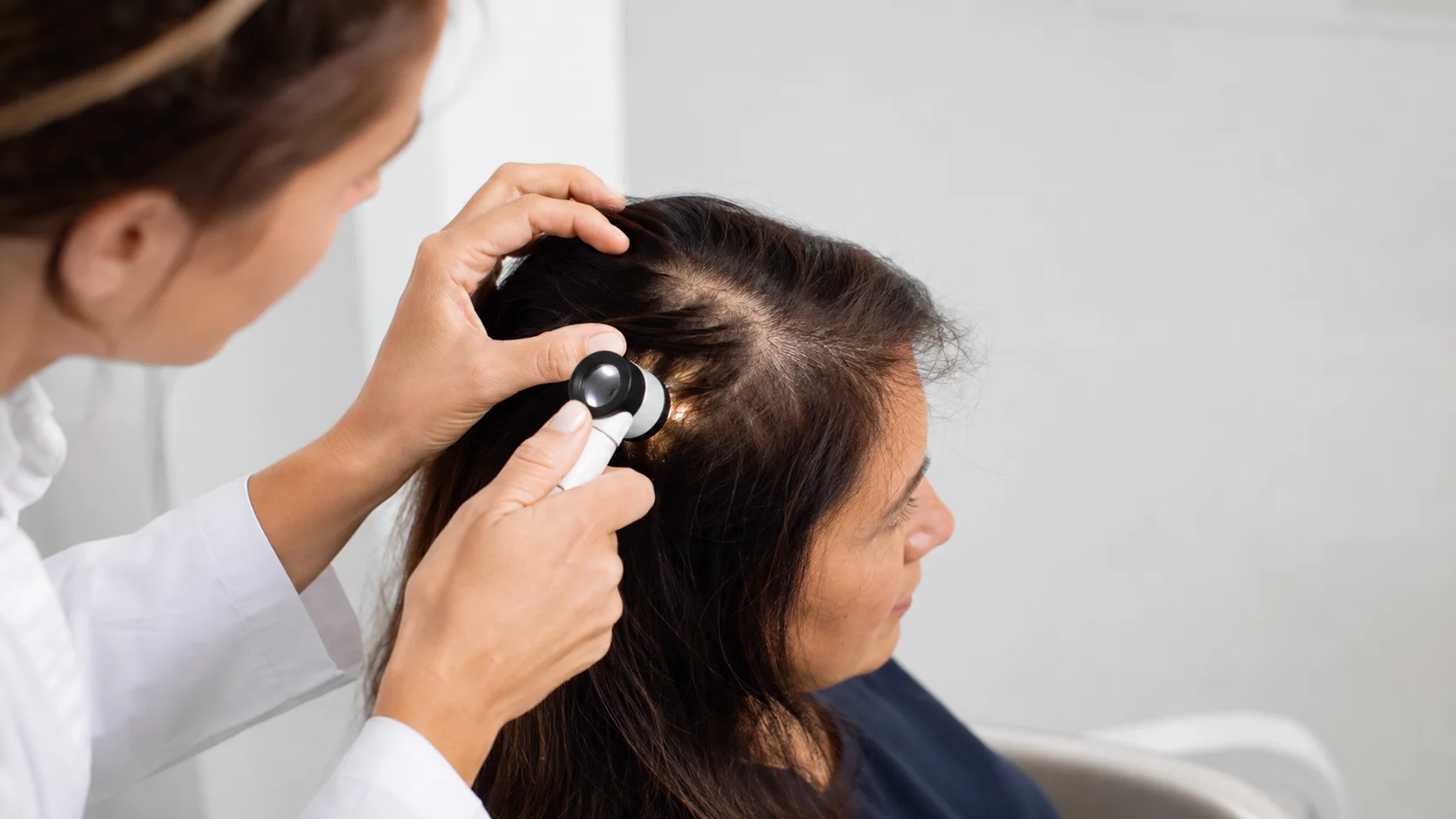
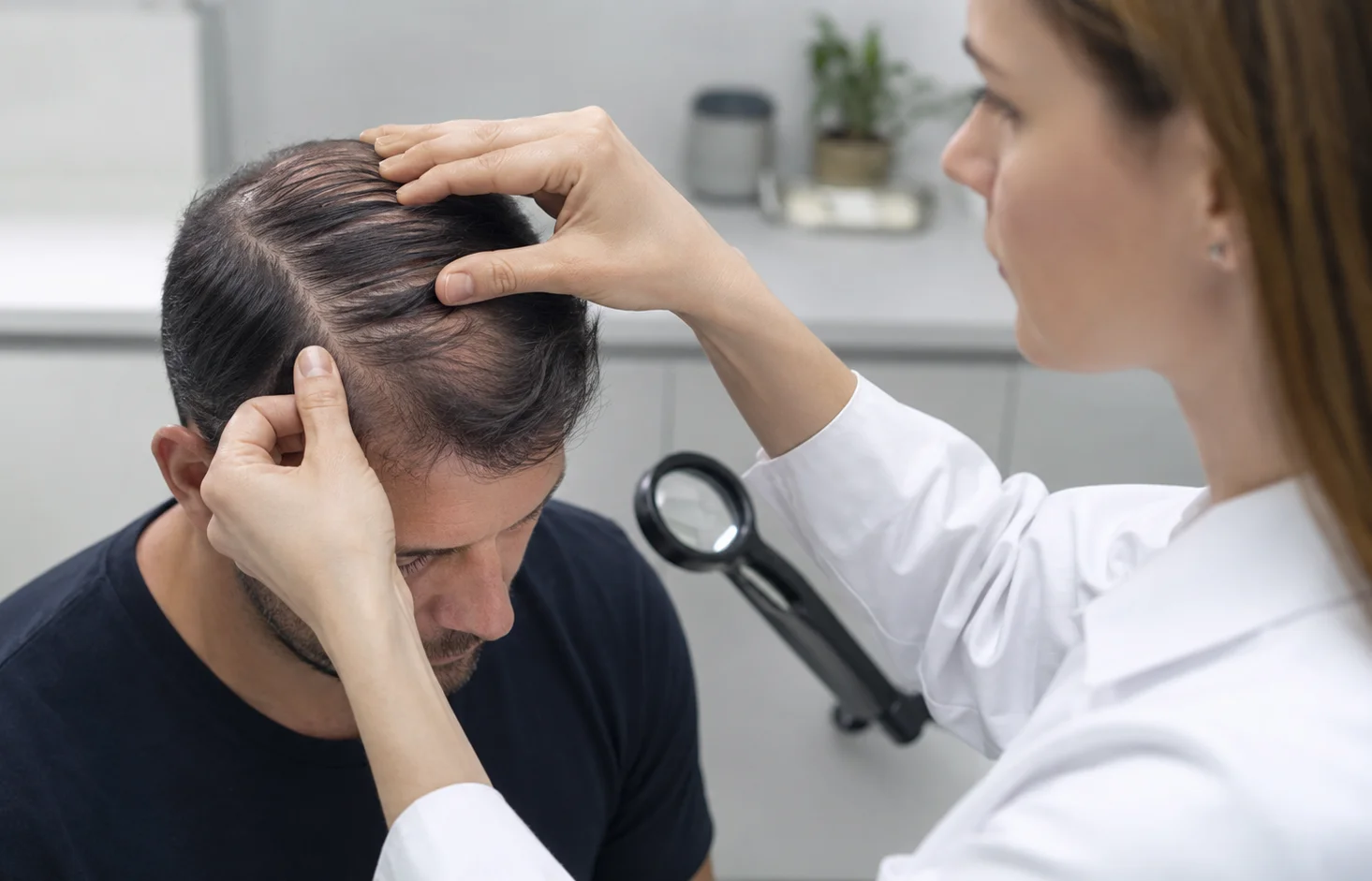
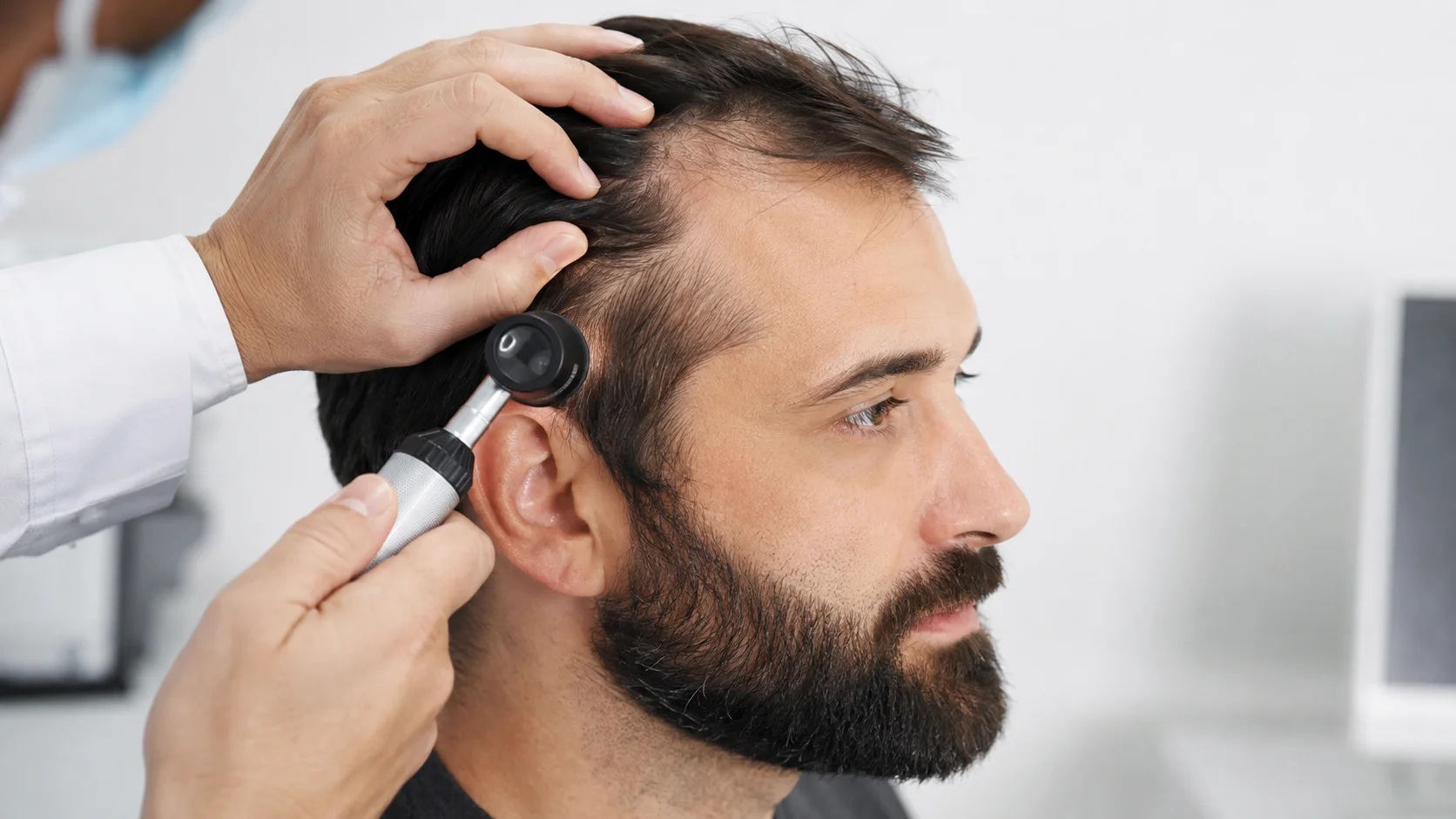
A dermatologist generally evaluates recession at the temples, reduced density at the crown or mid-scalp, widening of the central part, variation in hair-shaft diameter, increased numbers of miniaturized hairs, preservation or thinning of the donor region, rate and duration of progression, family history, and associated scalp symptoms. Trichoscopy can magnify features that are difficult to see with the naked eye, and standardized photographs can establish whether the pattern is progressing, stabilizing, or responding to treatment. These findings usually provide more actionable information than serum DHT.
All scalp follicles receive blood from the same circulation, yet androgenetic alopecia usually targets the temples, frontal scalp, mid-scalp, and crown, while much of the occipital and lateral scalp is relatively spared. If serum DHT alone determined hair loss, this regional pattern would be difficult to explain — follicle identity and local sensitivity provide the missing part, and the pattern itself is therefore clinically informative in a way a single lab value is not.
When Hormone Testing May Be Appropriate
Hormonal evaluation may be useful when the hair-loss presentation is atypical or accompanied by other endocrine symptoms. In women, testing may be considered when thinning occurs with irregular or absent menstrual periods, rapidly developing facial or body hair, severe or sudden acne, fertility concerns, voice deepening, rapid-onset scalp loss, or other signs of virilization — a clinician may select testosterone, free testosterone or a calculated equivalent, DHEAS, and other tests depending on the history, since DHT is not always the most informative androgen measurement. In men, testing may be appropriate when symptoms suggest testosterone deficiency, excessive androgen exposure, an adrenal or testicular disorder, or complications related to hormone or anabolic steroid use.
Diffuse shedding, by contrast, is often unrelated to DHT entirely. Telogen effluvium may follow illness, surgery, childbirth, rapid weight loss, severe stress, medication changes, or nutritional deficiency; depending on the history, evaluation might instead include a blood count, iron studies, thyroid testing, or selected nutritional tests. Ordering a DHT test while overlooking these more likely causes can create false reassurance or unnecessary anxiety.
Can a High DHT Result Prove the Cause?
No. A high result may justify medical interpretation, especially if symptoms of androgen excess are present, but it does not prove that DHT caused the hair loss — the person may have androgenetic alopecia because of follicle sensitivity, another form of hair loss, or both. Laboratory error, supplements, hormone therapy, anabolic steroids, and differences in testing methods must also be considered. Conversely, someone with relatively high serum DHT may retain dense hair entirely if their follicles are resistant to miniaturization — higher exposure and individual susceptibility must interact, and high DHT is neither necessary nor sufficient by itself to explain a case of pattern hair loss. An abnormal result should always be interpreted within the full clinical context rather than treated independently.
Can a Normal Result Rule Out Androgenetic Alopecia?
No. Most people with typical pattern hair loss do not need elevated circulating DHT to develop it — susceptible follicles can miniaturize under ordinary androgen exposure, and normal blood levels are especially common in women with female pattern hair loss. Treatment should not be rejected solely because a DHT result is normal when the clinical diagnosis is otherwise well supported.
What Else Can Cause Hair Loss With Normal DHT?
A normal DHT result is also expected in many conditions unrelated to androgen signaling at all, including telogen effluvium after illness, stress, childbirth, or rapid weight loss; iron deficiency or nutritional inadequacy; thyroid disease; alopecia areata; traction alopecia; fungal or inflammatory scalp disease; scarring alopecia; medication-related shedding; and hair-shaft breakage. More than one condition can occur at the same time, and diffuse shedding can expose pre-existing pattern loss that was previously difficult to notice.
Women, Normal Androgens, and Pattern Hair Loss
Many women with female pattern hair loss have testosterone, DHT, and other androgen results entirely within reference ranges — their follicles may be sensitive to normal androgen exposure, or additional non-androgen pathways may contribute. A normal hormonal evaluation does not make the hair complaint less real and does not exclude female pattern hair loss. In an open, uncontrolled study of 80 women treated with an oral antiandrogen (spironolactone or cyproterone acetate) for at least 12 months, about 44% showed regrowth, 44% showed no change, and 12% continued to lose hair — and baseline serum hormone levels did not predict who would respond (Sinclair R, "Treatment of female pattern hair loss with oral antiandrogens," British Journal of Dermatology 2005). Because the study had no placebo arm, it cannot establish how much of that improvement was drug-driven; it does support the point that a normal hormone panel does not, by itself, rule out a treatment response. Hormone testing still becomes more clinically relevant when thinning is rapid or accompanied by irregular periods, severe acne, increased facial or body hair, fertility problems, or other signs of androgen excess.
Is DHT Testing Useful Before Finasteride?
A baseline DHT test is not routinely required before finasteride is prescribed for an appropriate man with confirmed androgenetic alopecia, and large clinical trials did not require abnormally high baseline DHT for patients to benefit. This is consistent with the dose-response data: finasteride 1 mg reduces scalp DHT by roughly 64% and serum DHT by roughly 71%, and even the lowest effective dose tested (0.2 mg) produced a statistically similar serum reduction (71.4%) — regardless of where a person's DHT started (Drake L et al., J Am Acad Dermatol 1999) — so a pre-treatment number would not change the standard starting dose or the expected pharmacological effect. The more important pre-treatment discussion covers correct diagnosis, potential sexual, breast, fertility, and mood effects, pregnancy-related handling precautions, PSA interpretation where relevant, current medication use, and long-term treatment expectations. A person with normal serum DHT may still benefit from an appropriate DHT-directed treatment, because the goal is to reduce signaling below the threshold that a susceptible follicle experiences as harmful — not to correct an abnormal lab value. Not everyone responds completely: advanced miniaturization, inconsistent use, alternative diagnoses, and non-androgen contributors can all limit results.
Should DHT Be Rechecked During Treatment?
Finasteride and dutasteride lower serum DHT, so a test can demonstrate a pharmacological effect — but it does not necessarily show whether the hair is improving. Hair response should instead be judged through photographs, scalp examination, shedding history, and adequate time; a low DHT result does not guarantee regrowth, and an incomplete numerical reduction does not automatically mean clinical failure. Routine monitoring is generally not required for classic androgenetic alopecia, and testing becomes more useful mainly in specialized endocrine or medication-monitoring situations.
Nor should the goal be to chase the lowest possible number in the first place: more suppression is not automatically better for every person, since DHT has normal biological functions and medications that alter androgen pathways can cause adverse effects. The objective is a clinically useful balance between preserving hair and maintaining an acceptable safety profile — selected with attention to sex, age, pregnancy potential, fertility plans, baseline symptoms, and other health factors, not optimized against a spreadsheet.
Risks of Chasing a Laboratory Number
Trying to reduce DHT to the lowest possible value can encourage unapproved doses, stacked medications, or unregulated supplements. Greater hormone suppression increases exposure to adverse effects without guaranteeing a better cosmetic result. The objective of treatment is not to optimize a DHT spreadsheet — it is to slow or improve a correctly diagnosed condition with an acceptable balance of benefit, risk, and sustainability, which is exactly why the distribution and progression of hair loss, not a single blood value, should drive the diagnosis and the treatment decision.
Frequently Asked Questions
Can a DHT test diagnose male pattern baldness?
No. Male pattern baldness is usually diagnosed clinically through its distribution and evidence of miniaturization.
What does a high DHT blood result mean?
It shows that circulating DHT was above the laboratory's reference range under the collection conditions. A clinician must determine whether it is reproducible, medically significant, and related to any symptoms.
Can DHT be normal with severe hair loss?
Yes. Severity does not correlate reliably with serum DHT, because follicle sensitivity and duration of miniaturization differ from person to person.
Does normal DHT rule out male pattern baldness?
No. Classic pattern, progressive miniaturization, and scalp examination are more important for diagnosis than any single hormone value.
Do I need a DHT test before taking finasteride?
Usually not for a classic presentation, although the prescribing clinician may order tests when the history suggests another hormonal issue.
Which blood tests are more useful for diffuse hair loss?
Testing depends on the history. A blood count, iron studies, thyroid evaluation, and selected nutritional or hormonal tests may be more relevant than DHT.