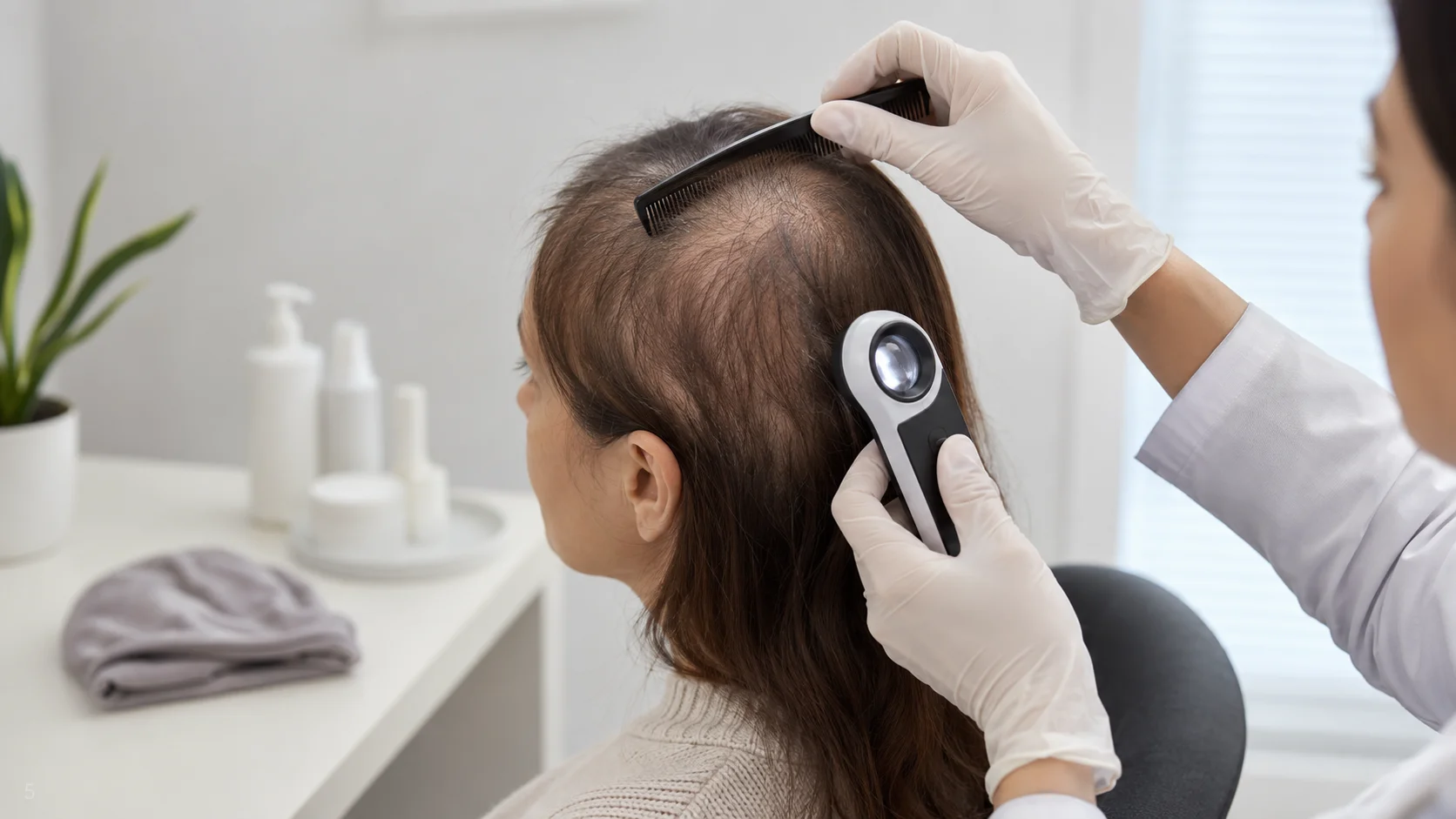
Ozempic has recently become very popular for both type 2 diabetes treatment and weight loss. However, many users have concerns about side effects — one of the most common is: does Ozempic cause hair loss?
Reports of hair shedding have increased alongside Ozempic's growing use for weight loss, particularly among people who lose weight quickly. This article looks at what the current evidence actually shows, what is likely driving hair shedding in these cases, and what can be done to protect hair health.
What Is Ozempic?
Ozempic's active ingredient is semaglutide, a medication originally developed for type 2 diabetes. It is also widely used off-label for weight loss because of its appetite-suppressing effect. Ozempic works by:
- Suppressing appetite
- Slowing the rate of gastric emptying
- Helping regulate blood sugar
- Often leading to significant, sometimes rapid, weight loss
As Ozempic and similar GLP-1 medications have been used more widely for weight loss, reports of hair shedding among users have become more common.
Does Ozempic Directly Cause Hair Loss?
This is the part that gets misunderstood most often. There is currently no established evidence that semaglutide acts directly on hair follicles or is toxic to them. Ozempic's FDA prescribing information does not list hair loss as a common side effect observed in its clinical trials.
What does exist is a temporal association: some people notice hair shedding while they are taking Ozempic. Temporal association means two things are happening around the same time — it is not the same as proof that one caused the other. Adverse event reports submitted to systems like the FDA's FAERS (FDA Adverse Event Reporting System) do include hair loss reports from GLP-1 users, but FAERS is a voluntary reporting database that cannot establish causation on its own; it can only signal that something may deserve further study.
The more consistent explanation, supported by what is already known about hair biology, is that the hair shedding is a downstream effect of rapid weight loss itself — not a direct drug effect on the follicle.
Why Hair Shedding Can Occur While Using Ozempic

1. Rapid Weight Loss and Telogen Effluvium
Rapid or significant weight loss is a well-documented physical stressor on the body, regardless of what caused it — whether from a GLP-1 medication, bariatric surgery, illness, or intensive dieting. This kind of stress can push a larger-than-usual number of hair follicles into the resting phase of the growth cycle, a condition called telogen effluvium. Typical features include:
- Hair entering the resting (telogen) phase earlier than usual
- Diffuse, widespread shedding rather than patchy loss
- Shedding that tends to become most noticeable 2–3 months after the triggering event
Telogen effluvium is usually temporary and tends to resolve once the underlying trigger — in this case, rapid weight change — stabilizes.
2. Caloric and Nutritional Changes
Because Ozempic reduces appetite, overall food intake often drops substantially. This can lead to lower intake of protein and key micronutrients, including:
- Protein
- Iron
- Vitamin B12
- Zinc
Hair follicles are sensitive to nutritional status, and reduced protein or micronutrient intake — a side effect of eating less, not of the drug acting on the scalp — can compound the shedding associated with rapid weight loss.
3. Hormonal and Metabolic Stress
Significant, rapid changes in body weight can also affect hormonal balance more broadly, which may further disrupt the normal hair growth cycle and contribute to temporary thinning.
Put together, these three factors — rapid weight loss, reduced caloric and nutrient intake, and the resulting metabolic stress — offer a more evidence-consistent explanation for reported hair shedding than a direct toxic effect of semaglutide on hair follicles.
Is Hair Loss Linked to Ozempic Use Permanent?
In most cases, no. Hair shedding reported after starting Ozempic is usually temporary, tends to improve as nutritional intake stabilizes, and tends to recover once weight levels off. However, in people who already have an underlying genetic predisposition to hair loss (such as male- or female-pattern hair loss), rapid weight loss can make existing shedding more noticeable or seem to accelerate it, even though the drug itself is not the direct cause.
What Can Be Done to Protect Hair Health While Using Ozempic?
Consume Enough Protein
Protein is a core building block of hair. Even with reduced appetite, aiming to meet daily protein needs can help limit nutrition-related shedding.
Monitor Vitamin, Mineral, and Hormone Levels
The following are commonly checked when evaluating hair shedding:
- Ferritin
- Vitamin B12
- Zinc
- Vitamin D
- Folic acid
- TSH and T3
If bloodwork shows a genuine deficiency, targeted supplementation under medical guidance may help — but supplementing without a confirmed deficiency is unlikely to add benefit.
Avoid Overly Rapid Weight Loss
Where medically appropriate, a more gradual pace of weight loss, discussed with the prescribing physician, may reduce the physical stress associated with telogen effluvium.
Consult a Dermatologist or Hair Specialist
If shedding persists for more than a few months or does not improve as weight and nutrition stabilize, a professional evaluation can help rule out other causes and discuss options such as topical treatments, PRP therapy, or other evidence-based interventions.
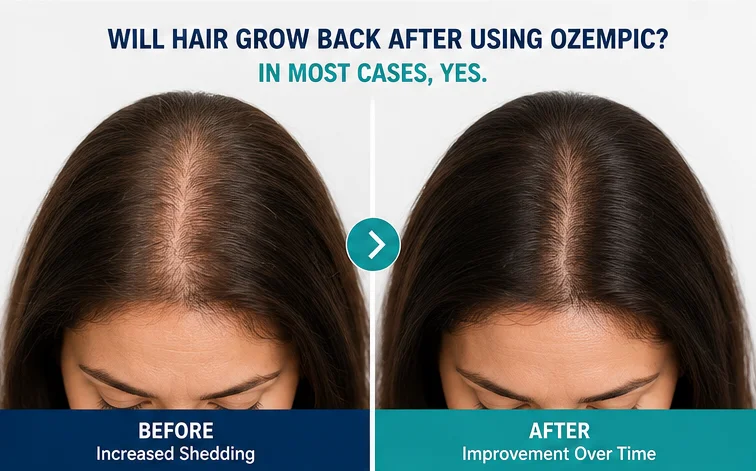
Will Hair Grow Back After Ozempic-Related Shedding?
In cases of temporary telogen effluvium, hair typically grows back as long as the follicles remain viable. Noticeable improvement is often reported within 3–6 months of the shedding trigger resolving. People with an underlying genetic predisposition to hair loss may see only partial regrowth and might benefit from additional, targeted treatment.
Frequently Asked Questions
Does Ozempic directly damage hair follicles?
There is no established evidence that semaglutide has a direct toxic effect on hair follicles. Reported shedding is more consistently explained by rapid weight loss and related nutritional changes than by a direct drug effect.
How soon after starting Ozempic does hair shedding start?
When it occurs, shedding related to telogen effluvium typically becomes noticeable around 2–3 months after a significant weight-loss trigger, which may follow a period of rapid weight change on the medication.
Is hair loss a listed side effect of Ozempic?
Hair loss is not among the common side effects listed in Ozempic's FDA prescribing information. Reports do appear in post-marketing adverse event databases such as FAERS, but these reports do not by themselves establish that the drug causes hair loss.
Can I prevent hair shedding while taking Ozempic?
Maintaining adequate protein and micronutrient intake, avoiding excessively rapid weight loss where possible, and monitoring relevant bloodwork may help reduce the risk or severity of shedding, though it cannot always be fully prevented.
Should I stop taking Ozempic if I notice hair shedding?
Do not stop or adjust a prescribed medication without talking to the prescribing physician first. Hair shedding should be discussed with a doctor, who can assess whether it is related to weight loss, nutrition, or another underlying cause.
Conclusion
Current evidence does not support the idea that Ozempic causes hair loss by directly affecting hair follicles. The more likely explanation is that rapid weight loss, reduced caloric and nutrient intake, and the resulting physical stress can trigger telogen effluvium, a temporary and generally reversible form of shedding. People with a genetic predisposition to hair loss may notice this shedding more, but the underlying trigger is the weight change itself rather than the medication acting on the scalp.
With adequate nutrition, a reasonable pace of weight loss, and follow-up with a healthcare provider when needed, hair shedding associated with GLP-1 medications can usually be managed and tends to improve over time.
Nutritional causes are also worth ruling out, such as vitamin D deficiency and hair loss.
This article is for general informational purposes only and does not constitute medical advice. Consult a licensed healthcare provider before starting, stopping, or changing any medication, and before making treatment decisions related to hair loss.